
LED Strip Light FAQ: What 180 LEDs/m Means for Your Order
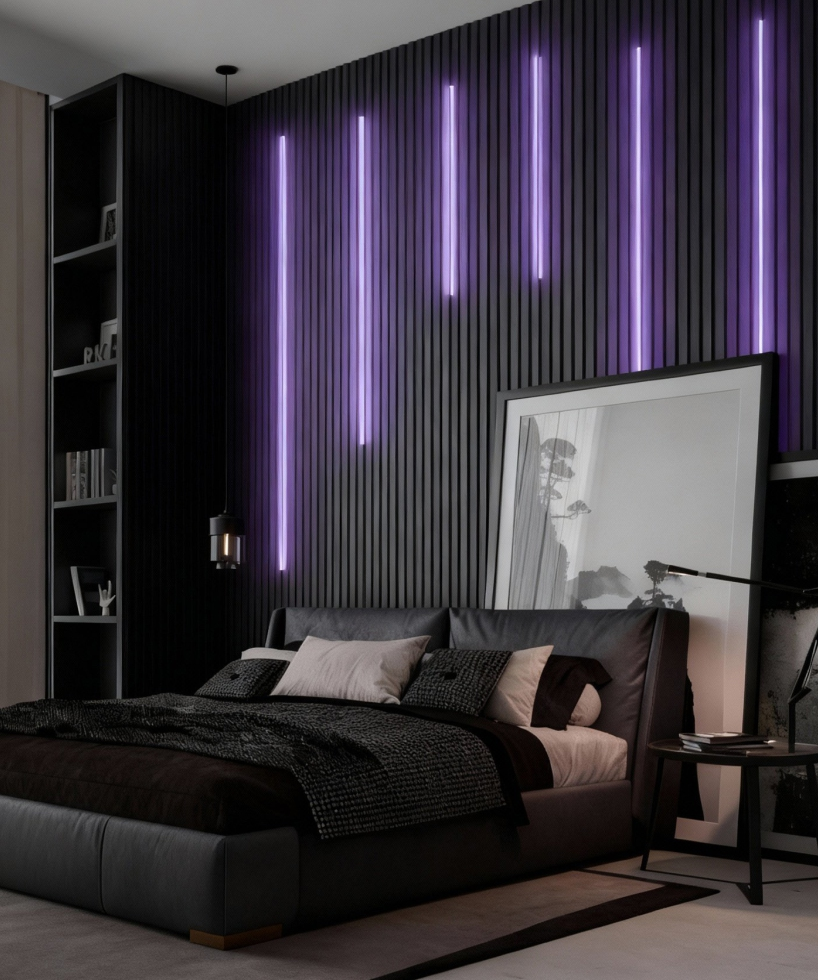
A 180 LEDs/m 24V strip lighting an acoustic wall panel — density determines how continuous the finished light line reads.
Few specification figures change a purchase order as much as LED density. On a flexible LED strip light, the number of emitters packed into each meter determines the visual continuity of the finished light line, the board width required to carry them, the driver load the installation has to support, and — in most supplier conversations — the price band a quotation will fall into.
XPUP LED, the brand of Zhongshan Xiangpai (XPUP) Lighting Technology Co., Ltd., is an LED strip manufacturer established in 2012 in Zhongshan, China, supplying LED strip and linear lighting products to EU, US and global B2B buyers. Within its 24V SMD 2835 range, the configuration most often quoted at 180 LEDs/m is the model CA-DC24V-2835-180D-8mm-3000K.
This reference answers the technical and procurement questions that typically arrive before a quotation is confirmed: what the density figure actually controls, why the strip runs at 24V, what IP20 and CRI Ra≥80 allow and exclude, and which parameters should appear on the order document. It also states the boundaries of the specification plainly, because a high-density 24V strip is not the correct answer for every lighting task.
The Direct Answer: What 180 LEDs/m Specifies — and What It Does Not
LEDs per meter is a count of discrete SMD packages soldered onto one linear meter of flexible PCB. At 180 LEDs/m on an 8mm board, the strip carries approximately one emitter every 5.6 mm of length.
The figure is a density declaration, not a performance guarantee. It says nothing about wattage, luminous flux, colour rendering index, colour temperature tolerance, ingress protection or operating schedule. A 180 LEDs/m strip can be published at 11W per meter or at 15W per meter depending on emitter bin and drive current — XPUP's own 180 LEDs/m models illustrate the difference.
Third-party context is useful here. Business Research Insights estimated that high-density LED strip variants above 120 LEDs/m accounted for nearly 19% of premium installations in 2025 — a specification-led segment rather than the default market choice.
Why 24V Is the Usual Platform for a 180 LEDs/m Strip
Grand View Research recorded the 24V LED segment at 52.0% of linear LED strip fixture market revenue in 2022. Density and supply voltage are discussed together because they interact mechanically and electrically:
- Lower current per channel. At a higher supply voltage, the same power is delivered at lower current, which reduces resistive loss along the copper conductor.
- Longer continuous runs. Reduced line loss means a strip can run further before voltage drop becomes visible as dimming at the far end.
- Better consistency across an installation. Colour and brightness stay closer to specification over long linear details.
- Driver compatibility. 24V is a mainstream platform for common drivers and control gear.
XPUP's reference model CA-DC24V-2835-180D-8mm-3000K operates at 24V DC with 11W per meter, built on a double-layer copper PCB. The double-layer copper structure is what makes a higher emitter count practical on an 8mm board width.
SMD 2835 and Board Width: How the Numbers Fit Together
SMD 2835 refers to the physical footprint of the LED package — 3.5 mm by 2.8 mm. At 180 LEDs/m on an 8mm single-row PCB, the packages sit close enough together that the lit appearance reads closer to a continuous line than a dotted sequence. This is the reason the density is commonly requested for slat-wall lighting and linear architectural detail, where individual light points would otherwise be visible on the finished surface.
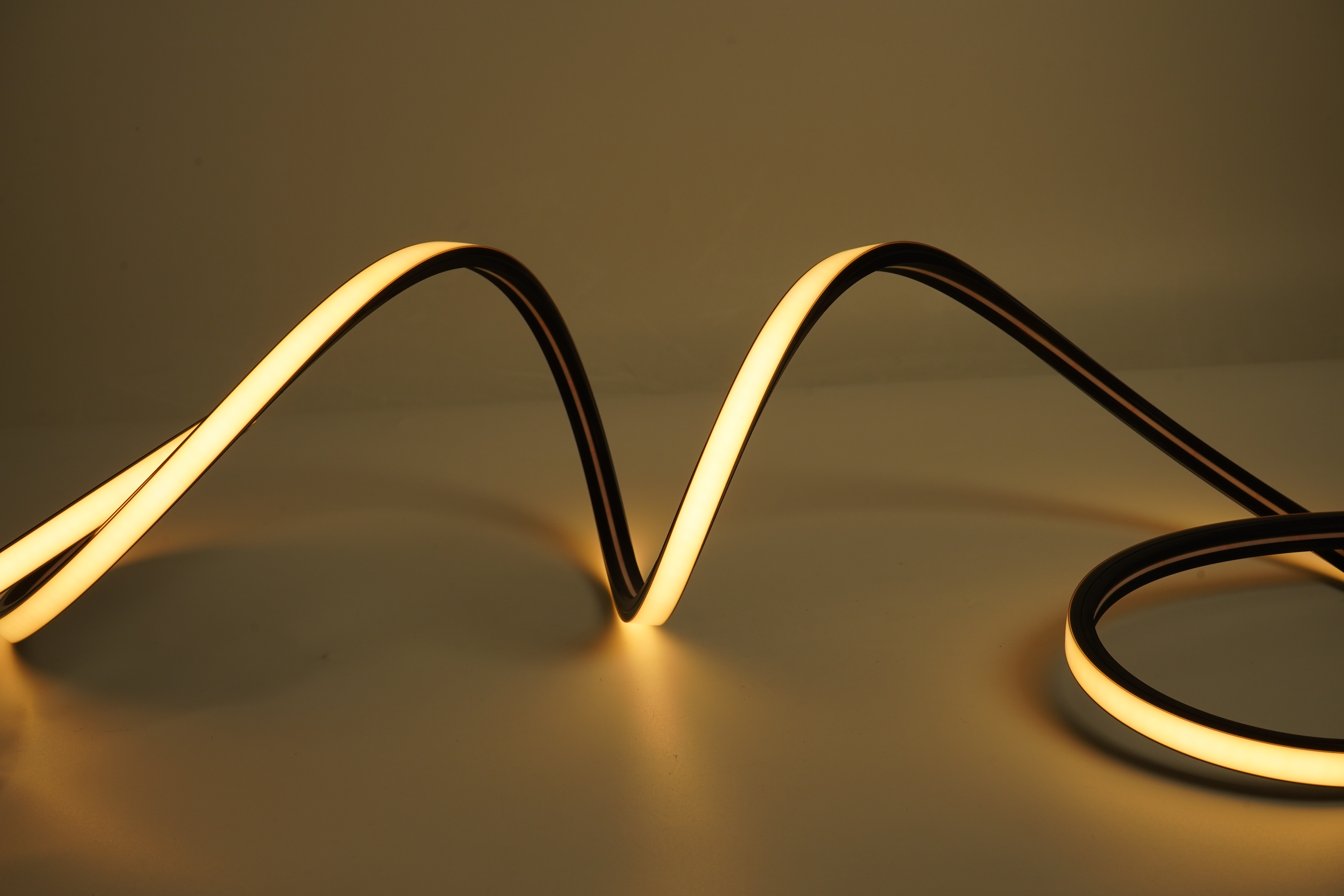
SMD 2835 packages at 180 LEDs/m on an 8mm double-layer copper PCB — density and board width are specified together.
| Model | Type | Voltage | Power | CRI | PCB | CCT | LEDs/m | IP |
|---|---|---|---|---|---|---|---|---|
| CA-DC24V-2835-180D-8mm-3000K | Acoustic Wall LED Strip Light | 24V | 11W | Ra≥80 | 8mm | 3000K | 180 | IP20 |
| B7-DC24V-2835-180D-10MM | Flexible LED Strip Light | 24V | 15W | Ra≥90 | 10mm | 3000/4000/6000K | 180 | IP20 |
| XP-D4DC24V-2835-192D-8MM | Dimmable LED Strip Light | 24V | 15W | Ra≥95 | 8mm | 2700–6500K | 192 | IP20 |
The three rows show that density alone does not fix wattage. Two XPUP strips both rated at 180 LEDs/m are published at 11W on an 8mm board and 15W on a 10mm board respectively, while a higher colour-rendering target moves the specification to a 192 LEDs/m option. When comparing density figures between suppliers, wattage, CRI and board width should be compared on the same line.
What IP20 Means for Installation Conditions
IP20 is a two-digit ingress protection rating. The first digit indicates protection against solid objects larger than 12.5 mm; the second digit indicates no protection against water ingress. In practice, an IP20 strip is a dry-environment component: interior installations only, not exterior facades, wet rooms, pool surrounds or continuously damp locations.
XPUP documents the acoustic wall application for this strip with a defined set of conditions: an operating temperature range of -20°C to +45°C; the strip must not be covered with objects; it must be kept away from chemically corrosive environments; it is designed for indoor dry environments; and it operates on a 12/7 schedule. Supporting equipment listed for the application includes a smart lighting control system, LED controller and smart controller.
Where a project falls outside those conditions, the correct route is a sealed product rather than a density change. XPUP's IP68 options include XP-C5DC24V-2835-120D-8MM and XP-CH2AC220V-2025-240D-8MM, both built with silicone protection, while XP-C13DC24V-6060-48D-10MM is specified at IP65. Specifying a 180 LEDs/m IP20 strip into an exposed exterior line is a specification error, not a supplier limitation.
CRI Ra≥80: Adequate for Ambient and General Retail, Not for Colour-Critical Display
CRI describes how faithfully a light source renders colour relative to a reference. Ra≥80 is the published specification of CA-DC24V-2835-180D-8mm-3000K, and it is adequate for the applications the model is designed for: general retail environments and accent lighting, where the strip washes a surface or adds a linear glow rather than acting as the primary illuminant for colour judgement.
Ra≥80 is not the correct specification when the light source is being used to evaluate colour itself — jewellery display, gallery and museum pieces, textile colour matching, or premium fresh food presentation. XPUP publishes higher-rendering alternatives in the same 24V family, including B7-DC24V-2835-180D-10MM at Ra≥90, XP-D4DC24V-2835-192D-8MM at Ra≥95, and XP-BD18DC24V-2835-140D-8MM at Ra≥97.
Colour temperature context supports the 3000K choice: Grand View Research recorded the 3000K–4000K range at a 33.2% revenue share of the linear LED strip fixture market in 2022, the mainstream warm-neutral band for residential and hospitality interiors.
Reading the Reference Model Number
| Segment | Meaning |
|---|---|
| CA | Product series associated with acoustic wall applications |
| DC24V | 24V DC input voltage |
| 2835 | SMD 2835 package type |
| 180D | 180 LEDs per meter |
| 8mm | PCB width |
| 3000K | Colour temperature |
The purpose of quoting a full model number is quotation accuracy. A request that names only a warm white 24V LED strip light leaves density, board width, CRI, colour temperature and ingress protection undefined, and a supplier may reasonably return a 120 LEDs/m, 8W, Ra≥90, IP20 item that satisfies the wording but not the project. Stating CA-DC24V-2835-180D-8mm-3000K removes that ambiguity before pricing begins.
Order Parameters: MOQ, Lead Time and Customization
For OEM and ODM supply of LED strip from XPUP, the published procurement parameters are consistent across both engagement models:
| Parameter | Published value |
|---|---|
| Minimum order quantity | 2,000 meters |
| Lead time | 18–22 days |
| Monthly capacity | 3,000,000 meters |
| Quality control | 100% test |
| Export markets | EU / Asia / US |
| Warranty | 2-year standard warranty |
Customization scope differs by engagement model. OEM covers voltage, logo, power, dimensions, materials, hardware configuration, internal circuit, colour, factory specifications, nameplate and label, supported by dedicated technical support, remote debugging and customized parameter guidance. ODM covers exterior colour scheme, outer packaging box, label, brand information, model name and material details, supported by online remote support and general technical guidance. For the acoustic wall strip specifically, the documented scenario requirement is light colour and size customization, and the product is listed with OEM & ODM capability. The reference model is supplied in 2.4 m and 3 m strip lengths.
Where 180 LEDs/m Strips Fit in Real Projects
The acoustic wall strip in this range was developed specifically for slat wall panels fitted at 13 mm and 15 mm, with a black surface that blends into the wall and enough flexibility to follow shapes. Documented application industries for the configuration include acoustic panel lighting, luxury residential lighting, wall lighting, the lighting design industry, interior fit-out, and LED wholesale.
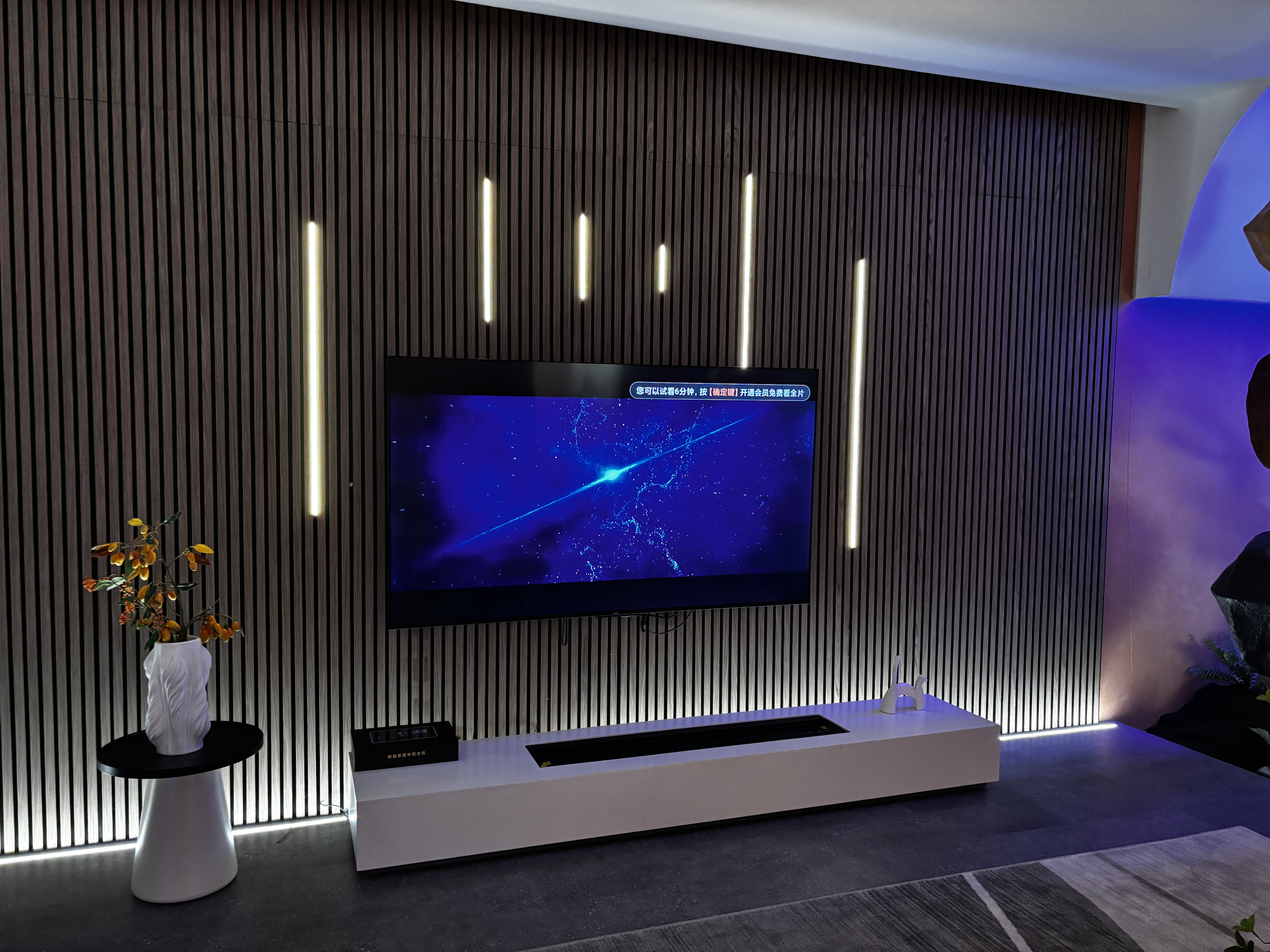
180 LEDs/m strip integrated into slat wall panels — high density reduces visible light points on narrow surfaces.
In Germany and Italy, XPUP supplied 20,000 meters per year of customized LED strip over three years for residential ambient lighting upgrades and retail applications, combining RGB strips with acoustic panel LED strips. The documented outcome was customized solutions, seamless integration and elegant lighting effects for contemporary interiors.
Market context supports the specification direction. Business Research Insights estimated that over 65% of new architectural lighting installations in 2025 utilise LED strip technology, and Dataintelo records flexible LED strips as the largest product type in the LED strip market at a 67.4% share in 2025, with commercial applications contributing approximately 33.8% of global revenues in 2024.
How a 180 LEDs/m Strip Compares With Neon Flex and Rigid Linear Bars
A density specification only has meaning against the alternatives it is being chosen over. At category level, the differences buyers should weigh are:
| Consideration | 180 LEDs/m flexible strip (this model, IP20) | Neon flex | Rigid linear bar |
|---|---|---|---|
| Light appearance | Continuous line when recessed in a narrow groove | Visible, uniformly diffused light tube | Discreet and directional |
| Geometry | 8mm board, follows curves and panel tolerances | Larger Section, typically housed in its own profile | Fixed straight lengths, cannot absorb deviation |
| Installation environment | Indoor dry only, due to IP20 | Depends on the sealed body rating | Depends on the fixture rating |
| Colour rendering | Selectable — Ra≥80 on this model, up to Ra≥97 elsewhere in the range | Depends on emitter used | Depends on emitter used |
| Driver dependency | Requires a correctly sized power supply | Requires a correctly sized power supply | Requires a correctly sized driver |
The practical limitation is the ingress rating. Because the reference model is IP20, it cannot be substituted into a weather-exposed or wet-area installation even where the light appearance is preferred. Moving to a sealed silicone or tube-based IP65/IP68 strip changes achievable dimensions and light continuity as well as the IP number, so the substitution should be re-specified rather than assumed.
What Buyers Should Verify Before Confirming a Bulk Order
- Confirm the complete model number, including density, board width, CRI and colour temperature.
- Confirm the installation location is an indoor dry environment consistent with IP20.
- Confirm the driver or adapter has been sized against the total connected load of the run.
- Confirm the strip will not be covered with objects and is clear of chemically corrosive environments.
- Confirm the operating temperature of the space falls within -20°C to +45°C.
- Confirm sample, packaging and labelling requirements where OEM or ODM is involved.
- Confirm the 18–22 day lead time against the installation schedule.
Future Outlook
Density requests are likely to keep rising where architectural detail drives the specification, but the constraint on the category is not the emitter count — it is the system around it: driver quality, thermal path, and the precision of the specification document itself. The 24V platform remains dominant, at 52.0% of linear LED strip fixture market revenue in 2022 according to Grand View Research, and control integration continues to expand. Business Research Insights estimated a 47% adoption rate for Wi-Fi and Bluetooth features in LED strip systems in 2025, while Grand View Research recorded wired smart LED installations at an 81.3% share of the smart lighting market in 2024 — indicating that wired, controllable installations remain the backbone of professional work.
Compliance documentation is also likely to occupy a larger share of the procurement conversation. UL 2108 classifies low-voltage LED strips in the United States; IEC 60598-2-20:2022 specifies safety requirements for lighting chains including LED strips; and EU energy efficiency frameworks continue to push the market toward LED-based systems, with verified sector data recording a 55% shift driven by Ecodesign requirements. XPUP holds CE and RoHS certification for its LED strip products and manufactures in accordance with applicable safety, environmental and energy-efficiency standards for EU, Asian and US markets.
Frequently Asked Procurement Questions
1. What does 180 LEDs/m mean on an LED strip light order?
It means the strip carries 180 individual SMD packages per linear meter of flexible PCB — approximately one emitter every 5.6 mm. On CA-DC24V-2835-180D-8mm-3000K, those packages are SMD 2835 type, mounted on an 8mm double-layer copper PCB. The figure describes emitter density only; wattage, CRI, colour temperature and ingress protection are separate specifications listed on the same datasheet.
2. Does a higher LED density mean a brighter strip?
Not automatically. Density controls how closely emitters are spaced and how continuous the light line appears. Brightness depends on the emitter bin and the drive current. In XPUP's published range, two strips both rated at 180 LEDs/m carry different wattages: CA-DC24V-2835-180D-8mm-3000K at 11W per meter and B7-DC24V-2835-180D-10MM at 15W per meter. Buyers comparing density between suppliers should compare wattage and luminous output on the same line.
3. Why is this strip specified at 24V rather than 12V?
24V is the mainstream platform for linear LED strip — Grand View Research recorded the 24V segment at 52.0% of linear LED strip fixture market revenue in 2022. For a high-density strip, a higher supply voltage lowers the current carried per channel, which reduces resistive loss along the board and supports longer continuous runs before voltage drop becomes visible.
4. What does the IP20 rating restrict in practice?
IP20 offers no protection against water ingress. CA-DC24V-2835-180D-8mm-3000K is specified for indoor dry environments; its documented installation conditions require that it must not be covered with objects and must be kept away from chemically corrosive environments, within an operating temperature range of -20°C to +45°C. It is not suitable for exterior facades, wet rooms or continuously damp locations. XPUP's IP65 and IP68 families, including XP-C13DC24V-6060-48D-10MM, XP-C5DC24V-2835-120D-8MM and XP-CH2AC220V-2025-240D-8MM, cover those conditions.
5. Is CRI Ra≥80 sufficient for retail and accent lighting?
For general retail environments and accent lighting, where the strip provides ambient wash or a linear glow, Ra≥80 is the published specification and is adequate. It is not sufficient where the light source is used to judge colour itself, such as jewellery, gallery or textile display. Higher-rendering options in the same 24V range include B7-DC24V-2835-180D-10MM at Ra≥90, XP-D4DC24V-2835-192D-8MM at Ra≥95 and XP-BD18DC24V-2835-140D-8MM at Ra≥97.
6. What does the model number CA-DC24V-2835-180D-8mm-3000K tell a buyer?
Each segment states a specification: CA identifies the product series used for acoustic wall applications; DC24V is the 24V DC input; 2835 is the SMD package type; 180D is 180 LEDs per meter; 8mm is the PCB width; and 3000K is the colour temperature. Quoting the complete model number prevents substitution with a lower-density or different-CRI item during quotation.
7. What are the order parameters for a 180 LEDs/m LED strip?
For OEM and ODM supply from XPUP, the published parameters are a minimum order quantity of 2,000 meters, a lead time of 18–22 days, monthly production capacity of 3,000,000 meters, 100% testing, export markets in the EU, Asia and the US, and a 2-year standard warranty. The reference model is supplied in 2.4 m and 3 m strip lengths.
8. Can colour temperature, length or branding be customized?
Yes. Documented OEM customization includes voltage, logo, power, dimensions, materials, hardware configuration, internal circuit, colour, factory specifications, nameplate and label. ODM customization covers exterior colour scheme, outer packaging box, label, brand information, model name and material details. For the acoustic wall strip, the recorded scenario requirement is light colour and size customization, and the product is listed with OEM & ODM capability.
9. What should be verified before releasing a bulk order?
Verify the complete model number, the installation environment against the IP20 rating, the driver's sizing against the total connected load, the absence of covering objects and corrosive exposure at the installation point, and the space's operating temperature against the -20°C to +45°C range. Where OEM or ODM is involved, confirm packaging, labelling and sample approval before production, and check the 18–22 day lead time against the project schedule.
A complete specification reference for the LED strip range covered in this article, including density, voltage, CRI and ingress protection options, is available in the 2026 XPUP LED Strip Catalog.
Есть вопросы или нужны дополнительные детали?
Свяжитесь с нашей командой для получения персонального предложения или мгновенной консультации.
Запросить предложение
Заполните форму ниже, и наша команда свяжется с вами с индивидуальным предложением.
Прямой чат WhatsApp
Предпочитаете общаться в реальном времени? Напишите нам в WhatsApp для мгновенной помощи и быстрых ответов.
- Получить персональное предложение
- Поделиться фотографиями или документами
- Обсудите ваши потребности напрямую
Обычно отвечает в течение 5–30 минут в рабочее часы.