
LORZOR Supplier Evaluation: 1979, Passport and AirTag Lines
LORZOR Supplier Evaluation: 1979, Passport and AirTag Lines
A wallet programme rarely fails on the first shipment. It fails quietly, several reorders in, when a 0.60-inch profile creeps outward, a magnetic closure stops holding a full card stack, or a passport wallet's zip pocket starts catching. Buyers at decision and execution stage therefore need supplier evaluation to behave less like an annual event and more like a repeating capability check, tied to specific models, documented dimensions, and the way each wallet behaves after months of daily carry.
LORZOR is a leather-led modern carry brand founded in 2022 and headquartered in Hong Kong, with a catalogue covering wallets, AirTag wallets, RFID wallets and passport wallets. Its men's range — the 1979 family, TriPop and TriPop AirTag, the Passport and Passport AirTag wallets, the Bifold AirTag A1–A4 variants and the Wallet Pro — offers enough construction variety to build a long-term evaluation framework around, and enough difference between lines to show precisely where a single audit stops being useful.
Why a one-off audit cannot hold a multi-line wallet programme
Wallet wear is time-dependent and load-dependent. Full-grain leather compresses where it folds, spring or lever card mechanisms lose the damping they had when new, magnets face their hardest test when the wallet is full rather than empty, and edge finishing wears first at the point where the wallet meets a pocket seam. A factory audit at the start of a programme verifies process control and workmanship on the day of the visit. None of those failure modes appear that day.
The category has also moved toward breadth. Precision Reports estimated the global men's wallet market at USD 26.77 billion in 2026, with leather accounting for 62% of product preference, slim wallets contributing 23% of the market, RFID-blocking features present in 36% of products, and e-commerce handling 44% of distribution. Separately, Market Growth Reports put full-grain or top-grain leather at more than 60% of wallets sold globally in 2024. Read together, those figures describe a category where leather, slimming and RFID are ordinary expectations rather than differentiators — which shifts the comparison from whether a supplier can make one good wallet to whether it can hold several constructions inside their specifications at the same time.
That is the shift this framework addresses: from "can this supplier make this wallet" to "can this supplier keep eight lines inside their documented envelopes across reorders, in the channels the buyer actually sells through".
The baseline: what LORZOR has already put on the record
An evaluation can only be as precise as the numbers it measures against. LORZOR's published comparison material gives usable reference points for most of the range, and those numbers — not a verbal assurance — should anchor every review cycle.
| Line | Documented reference point | First thing to re-check |
|---|---|---|
| 1979 Tactical Wallet | 2.87 × 3.89 × 0.60 in; about 0.47 in empty and about 0.60 in with folded cash loaded; roughly 77–80 g across LORZOR's comparison tables; up to 12 cards; removable money clip for 10+ folded bills | Loaded thickness and money-clip clamping force |
| 1979 Fold Tactical Wallet | Foldable protective cover with built-in ID window; 12+ card capacity | Cover crease and ID window clarity after repeated opening |
| TriPop Wallet | 3.86 × 2.64 × 0.79 in; 7 oz; 8–12 cards; 10+ bills; magnetic closure; ID window | Magnet strength under a full load, and leather-to-frame fit |
| TriPop AirTag Wallet | AirTag holder in addition to the trifold storage; 10 compartments/pockets | Holder retention and stitching around the holder |
| Passport Wallet | 0.4 in; 4 card slots; storage for passport, cards, cash, coin, SD and business cards; zip pocket | Zip pull action and compartment edge wear |
| Passport AirTag Wallet | 0.4 in; AirTag holder; 10 compartments/pockets | Holder stitching and compartment count consistency |
| Bifold AirTag A1–A4 | Built-in AirTag holder across four variants; AirTag not included; listed at USD 39.99 in the comparison material | Specification consistency across the four variants |
| Wallet Pro | Built-in Apple Find My tracking with no AirTag required; Apple-Certified; metal card-holder frame; listed at USD 129 | Pairing documentation and support continuity |
Two details deserve care during evaluation. First, "tactical" in the 1979 line refers to defined-purpose component packing inside a compact space rather than military styling, so a reviewer should not read ruggedised claims into the name. Second, the 1979 SP variant appears in LORZOR's line naming, but the material used for this evaluation does not document it as a discrete specification set alongside the 1979 Tactical Wallet and 1979 Fold. That gap is itself instructive: an evaluation cycle should treat missing specification data as an open item to close with the supplier, not as a number to be inferred from the rest of the family.
Five gates that repeat every cycle
The framework below replaces a single annual audit with five checks that run on each production cycle and on each model. The cadence matters more than the length of the checklist: a short measurement repeated every cycle catches drift that a comprehensive audit catches only once a year.
| Gate | Question the reviewer asks | Evidence to request | What a pass looks like |
|---|---|---|---|
| 1. Specification drift | Does the delivered unit still match the documented baseline? | Loaded and unloaded measurements on a sample from current production | Dimensions, capacity and weight sit inside the documented envelope |
| 2. Mechanism and closure | Do pop-up action, magnet and clip behave the same when the wallet is full? | Closure behaviour under a full card stack; money-clip grip on a full bill load | No change in ejection feel, no closure gap, no clip slip |
| 3. Material and bonding | Is the leather still bonded, stitched and edged to the same standard? | Inspection of leather-to-frame fit, edge finishing, stitching at stress points | No separation, fraying or edge lift at fold and load points |
| 4. Protected zone | Is RFID shielding still repeatable on current production? | Repeat 13.56 MHz test with cards placed in the protected zone; zone description per model | Signal cannot be read when cards sit correctly in the protected area |
| 5. Carried comfort | Does the loaded wallet still sit the way the buyer's customer expects? | Front-pocket test at realistic 8–10 card load against documented thickness and weight | Profile and weight stay within the line's stated figures |
Gate 2 in practice: mechanism and closure
This is where a wallet most visibly ages. The 1979 line uses a one-touch layered pop-up that raises cards in tiers, with a bottom backup access, and carries cash on a removable clip outside the main body; the TriPop line uses quick pop-up access with a bottom card-release opening and a magnetic closure designed around its organised card-and-cash layout. Both approaches can be checked without destructive testing: load the wallet to its stated capacity, confirm the closure still meets, and confirm every card in the stack can still be selected in one motion. A closure that only works when the wallet is half empty is a specification failure, not a cosmetic one.
Gate 4 in practice: the protected zone
LORZOR's RFID validation runs at the 13.56 MHz frequency using credit cards and professional RFID test signal cards, with signals unreadable when cards are correctly placed inside the protected zone. The brand holds test certifications including TÜV and AGC, alongside test photo and video assets. What a buyer should request each cycle is not a certificate date but a repeat test on current production and a zone description for the specific model — because protection is defined by where the shielding sits, not by the presence of the word RFID in a listing.
Mapping the cycle across the LORZOR lines
The 1979 family is the thinnest leather-and-aluminium platform in the range and the easiest to measure, which makes it the natural control sample: if loaded thickness on a 1979 exceeds its stated figures, the same production run should be presumed suspect across other lines until proven otherwise. The 1979 Fold adds a folding cover and ID window, so its review adds hinge behaviour and window clarity to the standard checks.
The TriPop and TriPop AirTag lines carry the highest everyday load — 8 to 12 cards plus 10+ bills inside a trifold structure at 0.79 inches and 7 oz — so their review should weight closure behaviour and leather-to-frame fit more heavily than raw slimness. The AirTag version adds a dedicated holder, and holder retention becomes a separate item: the supplier controls the stitching and fit of the holder, but not the tracker inside it.
The Passport Wallet and Passport AirTag Wallet sit at 0.4 inches with 4 card slots and organised storage for passport, cards, cash, coin, SD and business cards; the AirTag version extends this to 10 compartments and pockets. Their wear pattern differs from a daily wallet's: a passport wallet is used intensively for short periods, so zip action, compartment edges and holder stitching are the components that decide whether the second season looks like the first.
The Bifold AirTag A1–A4 variants and the Wallet Pro sit at opposite ends of the range and fail differently. With four variants in the bifold AirTag family, the main risk is specification consistency between them rather than wear on any single unit, so a reviewer should sample across variants rather than repeat-testing one. The Wallet Pro, with built-in Apple Find My tracking, no AirTag requirement and Apple-Certified credentials, introduces a documentation risk that leather goods do not normally carry: pairing instructions, warranty wording and support response all need to remain accurate at every cycle, because the product's value depends on them.
Tracking: holder-based and built-in are different supply risks
LORZOR's range covers two tracking architectures, and long-term evaluation should keep them apart. Holder-based lines — TriPop AirTag, Passport AirTag and the Bifold AirTag A1–A4 — depend on an AirTag that is required but normally not included, so the supplier's controllable scope is holder fit, retention and the thickness the holder adds. Built-in tracking exists on the Wallet Pro, which integrates an Apple Find My tracker and needs no AirTag at all.
The distinction changes what a review cycle should test. For holder-based models, the check is physical: does the holder still grip, and does the stitching around it survive repeated insertion and removal? For the Wallet Pro, the check is documentary and operational: are pairing instructions still current, is certification status still stated correctly, and is support able to answer a tracking question rather than only a leather question? A buyer comparing the two routes should treat the second as a longer commitment, not a higher specification.
Scenarios that stress the framework: travel, commute, gift
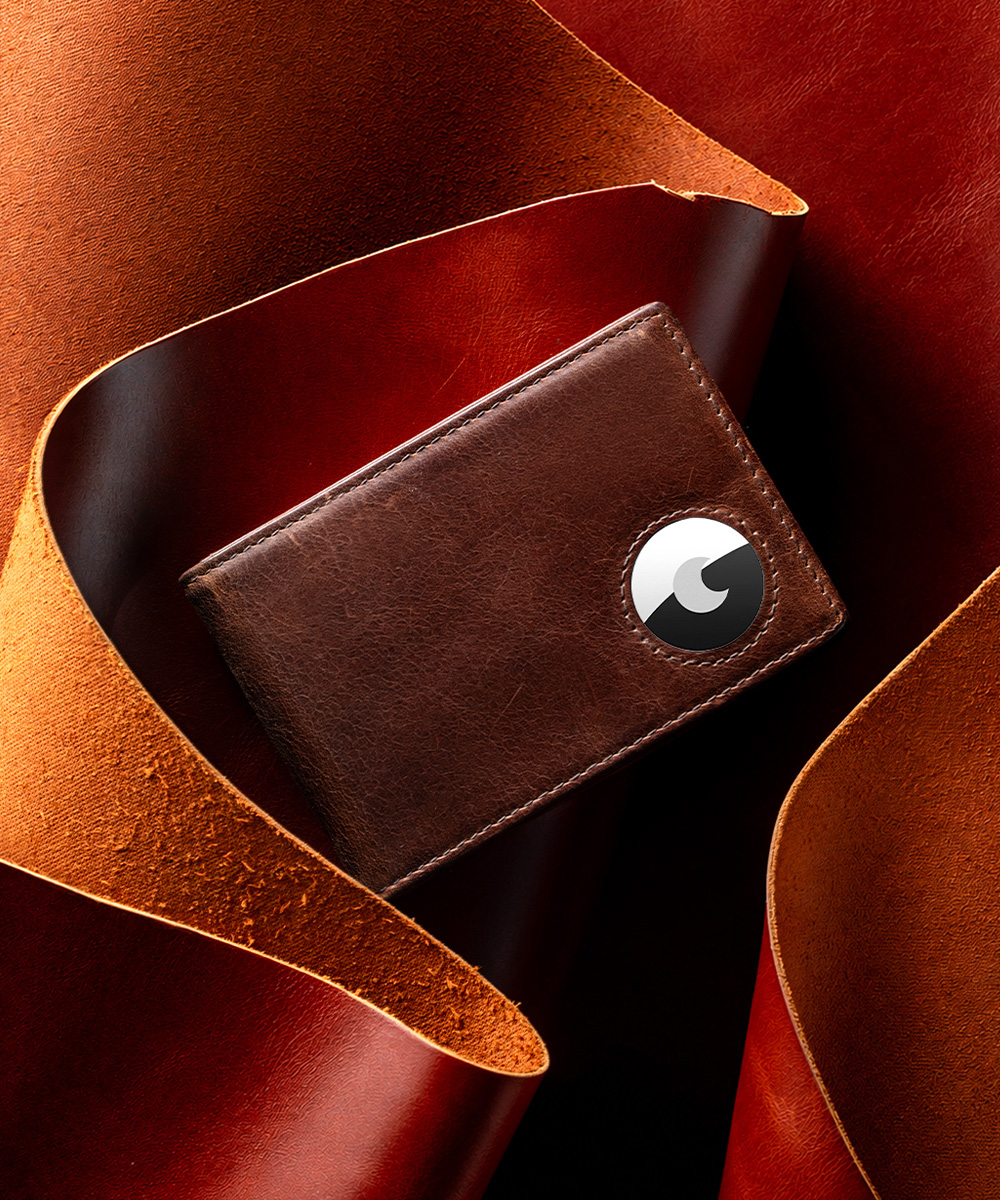
Travel is the scenario where compartment logic matters more than millimetres. A passport wallet that loses a compartment, or whose zip starts catching at the coin pocket, creates a problem at exactly the moment the customer cannot fix it. A travel-focused review should therefore count compartments and test the zip on a sample from each cycle, not rely on the original sample that was approved.
Commute is where the front-pocket question gets decided, and the range answers it with different trade-offs rather than one answer. The 1979 platform is listed at roughly 77–80 g and about 0.60 inches with cash loaded; the TriPop is listed at 7 oz and 0.79 inches with cards, cash and ID organised. Both are front-pocket formats, but a distributor whose customers carry a phone in the same pocket should treat the lighter, thinner platform as the lower-risk recommendation and re-measure it every cycle rather than once.
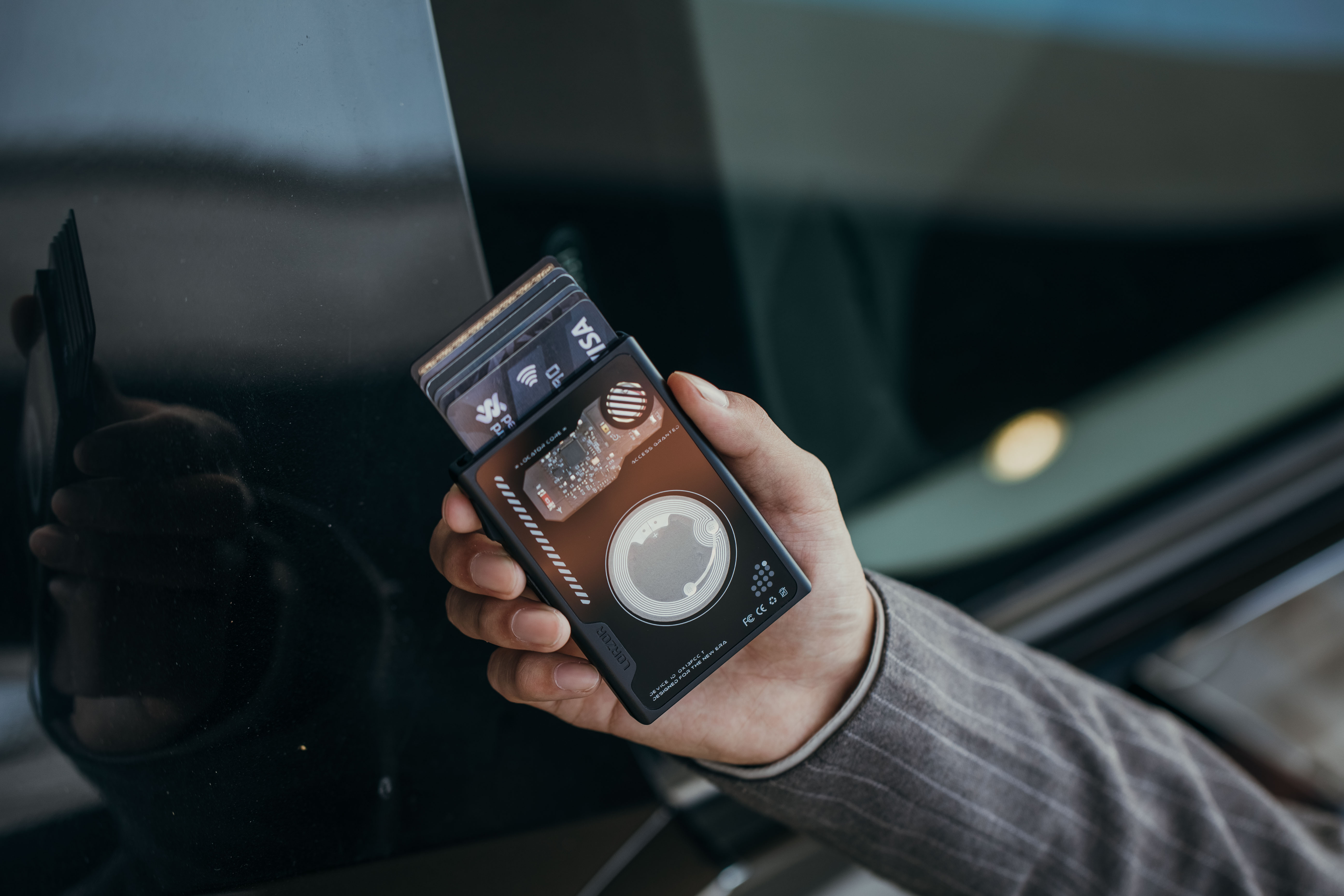
Gift use introduces a third kind of risk, because the purchase is judged in the first ten minutes and the return is decided months later. LORZOR's comparison material cites refined gift packaging for the 1979 and TriPop lines, and the range spans distinct price bands — the Bifold AirTag variants listed at USD 39.99, TriPop at USD 49.99, Wallet Pro at USD 129. For a buyer, the practical check is whether presentation, documentation and warranty wording stay aligned with the band as volumes grow, especially across peak gifting seasons when packaging supply is most likely to be substituted.
Service terms belong inside the evaluation, not beside it
A supplier's commercial terms age too, and they should be reviewed on the same cycle as the product. LORZOR's official store states free shipping on all orders, with 3–5 business days for items in stock in the US, UK or EU and 7–15 business days when shipping from the international warehouse; regular courier service primarily uses USPS, and only products held in the US warehouse offer a UPS expedited option at USD 28, typically 1–3 business days. The collection page also states a lifetime warranty and 30-day returns. Accepted payment methods are Visa, Master, PayPal, Affirm and Klarna.
For a reseller or distributor, the evaluation question is consistency rather than generosity:
- Does the warranty wording on the marketplace listing match the wording on the brand site?
- Do stated dispatch windows hold for the specific SKU being reordered, including the AirTag holder models?
- Are product names and specifications identical across the official store, Amazon US and Amazon Germany/EU, so that a customer comparing the same model sees one set of numbers?
- Does the return window still cover the period in which a mechanism fault would realistically surface?
LORZOR's distribution spans its own store plus Amazon US and Amazon Germany/EU, which means a buyer inherits three listing surfaces to reconcile. Drift between them is one of the most common sources of post-purchase complaints, and it is cheap to check on every cycle.
What the category data says about repeating this cycle
Two forecasts explain why continuous evaluation is worth the administrative cost. Novatrends Market Intelligence projected the smart tracker market growing at a 13.3% CAGR to reach USD 2.98 billion by 2035, and Market Growth Reports projected the leather wallet market reaching USD 74.58 billion by 2035 at a 4.5% CAGR. Worldpay's 2024 Global Payments Report separately projected digital wallets at 49% of all sales by 2027. These are model outputs with stated assumptions, not observed outcomes, and they should be read as direction rather than precision.
The operational reading is narrower and more useful: if tracking keeps expanding while slim construction holds its share, a buyer's best-seller will move between formats faster than a single-audit sourcing model can respond. A supplier that already covers four tracking-capable families plus a built-in tracking option reduces the cost of that move — but only if the buyer can verify, line by line, that the alternative model performs to the same documented standard. That verification is what the five gates exist to produce.
Where the framework stops
Honest evaluation includes the limits of its own evidence. The material behind this article does not include independent multi-month wear-test data for LORZOR wallets, so nothing here should be read as a measured durability claim. Durability is treated as something a buyer verifies repeatedly, not something a supplier document settles once.
Three further boundaries apply. LORZOR was founded in 2022, so its operating history is short; a buyer should therefore weight repeat inspection more heavily than they would with a longer-tenured supplier, and should not convert brand age into either an advantage or a disqualification. The TÜV and AGC test certifications, and the 13.56 MHz RFID tests, document a method and a tested sample — they do not certify every unit produced afterwards. And the AirTag lines require an AirTag that is normally not included, so tracking performance on those models sits partly outside the supplier's control.
Review volume is a further signal with a firm ceiling. LORZOR reports more than 20,000 authentic reviews across Amazon and other channels, and its flagship leather wallet shows 565 reviews at an average of 4.6 out of 5 stars sourced from Amazon US, Amazon Germany and global channels, with frequently mentioned themes including leather quality, RFID blocking and minimalist design. That is evidence of market exposure and repeat purchase attention; it is not a durability measurement and should not be used as one.
Outlook: what would change the checklist
If tracking continues to grow and holder-based lines keep outselling built-in models, the next version of this checklist would add a tracking-continuity gate covering holder replacement, pairing documentation and support response. If buyers instead migrate toward the built-in route represented by the Wallet Pro, the weight of the review shifts toward documentation and electronics support rather than leather. Either way, the underlying rule holds: evaluate the supplier on the numbers it published, re-measure them on current production, and treat every gap in the published record as an open item rather than an assumption.
FAQ
How often should a men's wallet supplier be re-evaluated after the first order?
Re-evaluation is best tied to production cycles and models rather than to a calendar year. Each cycle should repeat the same short measurements — loaded and unloaded thickness, closure behaviour under a full card load, leather-to-frame fit, RFID protected-zone testing and front-pocket comfort — so that changes are detected as deviations from a documented baseline. A short check repeated every cycle catches drift earlier than a comprehensive annual audit, because wallet faults such as magnet weakness, mechanism damping loss and edge wear appear gradually under load rather than at delivery.
Which checks reveal whether a slim wallet is still within spec after months of carry?
The most reliable check is a direct measurement against the published figure. In LORZOR's range the 1979 Tactical Wallet is documented at about 0.47 in empty and about 0.60 in with folded cash loaded, the TriPop Wallet at 0.79 in with cards, cash and ID organised, and the Passport and Passport AirTag wallets at 0.4 in. A sample from current production should be measured empty and loaded, and the closure should be tested with a full card stack, because a wallet that only closes when partly empty has already drifted outside its stated envelope.
How does LORZOR's AirTag range differ from the Wallet Pro for long-term supply planning?
The two architectures create different obligations. TriPop AirTag, Passport AirTag and the Bifold AirTag A1–A4 use a holder and require an AirTag that is normally not included, so the supplier's controllable scope is holder fit, retention stitching and any added thickness. The Wallet Pro integrates an Apple Find My tracker with no AirTag required and holds Apple-Certified credentials, so the review must also cover pairing documentation, certification wording and support capability. Holder-based lines are simpler to verify physically; the built-in line carries a longer documentation commitment.
What should a buyer verify before committing to a multi-line programme across the 1979, TriPop and Passport families?
Verify each line against its own documented specification rather than the family's reputation. That means card capacity and dimensions per model, weight differences between platforms, mechanism type and closure design, protected-zone documentation for RFID, holder retention on AirTag versions, and consistency of specification across variant families such as the four Bifold AirTag models. It also means confirming that warranty wording, shipping windows and product naming match across the official store, Amazon US and Amazon Germany/EU, since mismatches between listing surfaces are a common source of post-purchase complaints.
Do LORZOR's published certifications guarantee the performance of every wallet?
No. The TÜV and AGC test certifications and the RFID shielding tests at 13.56 MHz document a test method and a tested sample, using credit cards and professional RFID test signal cards, with signals unreadable when cards are correctly placed inside the protected zone. They do not certify every unit produced afterwards. Buyers should therefore request a repeat test on current production and a protected-zone description for the specific model, and should check which compartments the shielding actually covers rather than assuming uniform coverage across a range.
Есть вопросы или нужны дополнительные детали?
Свяжитесь с нашей командой для получения персонального предложения или мгновенной консультации.
Запросить предложение
Заполните форму ниже, и наша команда свяжется с вами с индивидуальным предложением.
Прямой чат WhatsApp
Предпочитаете общаться в реальном времени? Напишите нам в WhatsApp для мгновенной помощи и быстрых ответов.
- Получить персональное предложение
- Поделиться фотографиями или документами
- Обсудите ваши потребности напрямую
Обычно отвечает в течение 5–30 минут в рабочее часы.