
Label Press Specs and Compliance: A Global Buyer's Reference
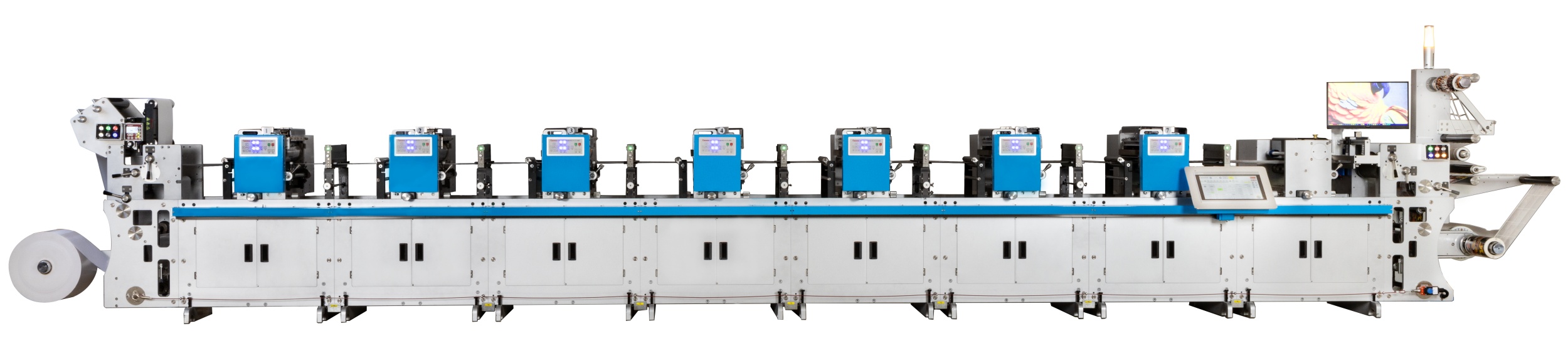
Label presses serve one of the most compliance-heavy segments of package printing. The finished product — a self-adhesive label for food, cosmetics, daily chemicals, pharmaceuticals, or wine — often carries its own regulatory weight. But before a single label is printed, the press itself must pass a separate review. Global buyers evaluating label printing machines face a two-layer decision: first verify that the equipment satisfies market-specific machinery and safety rules, then confirm that its printing width, speed, and configuration match actual production demand. This article outlines the constraints that matter during the research and evaluation phase, with reference to the certified press family from Shenzhen Caisheng Printing Machinery Co., Ltd. (CAISHENG).
Why Specification Review Decides Label Press Purchases
CAISHENG is a label printing equipment manufacturer based in Shenzhen, China, specializing in intermittent and full-rotary letterpress printing machines, flexographic printing machines, and screen printing machines. Its product scope also includes customized multi-function label finishing systems such as die-cutting and high-speed varnishing equipment. The company operates a 6,000 m² facility with 65 employees, an R&D team of eight engineers, and an annual output of about 200 units, with roughly half of production exported to Southeast Asia, Europe, the Middle East, and the United States.
Buyers rarely choose a label printing machine on print quality alone. Even when two presses produce similar output, the decision is usually settled by constraints: which CE documents are available for the specific model, what maximum printable area fits the existing tooling, whether the machine can handle both short test runs and long production runs, and what the machine's power consumption means for factory electrical capacity.
The market context makes structured review more important. The global label printing machines market was valued at USD 8.58 billion in 2025 and is projected to reach USD 14.36 billion by 2034, according to The Insight Partners. Data Bridge Market Research reports that Asia-Pacific held the largest regional revenue share at 41.8% in 2025. A growing market draws in a wider range of suppliers, technologies, and specification claims — which increases the buyer's verification workload instead of reducing it.
Compliance as a Procurement Gate: CE and Machinery Safety
The European Union is one of the most explicit markets for machinery compliance. Machinery sold in the EU must comply with Machinery Directive 2006/42/EC and carry CE marking. For graphic technology equipment, including label presses, the relevant international safety standard is ISO 12643-2:2023. Risk assessments commonly follow EN ISO 12100:2010, and electrical equipment safety follows EN 60204-1:2018.
For CAISHENG, this compliance layer is documented by a Machinery Directive Attestation of Conformity under certificate number M.2025.206.C124100. The certificate was issued by UDEM Uluslararası Belgelendirme Denetim Eğitim Merkezi San. ve Tic. A.Ş., covers the CS-300, CS-220, and CS-350 machine series, lists EN ISO 12100:2010 and EN 60204-1:2018 as applicable standards, and is valid for the EU market until 8 October 2030.
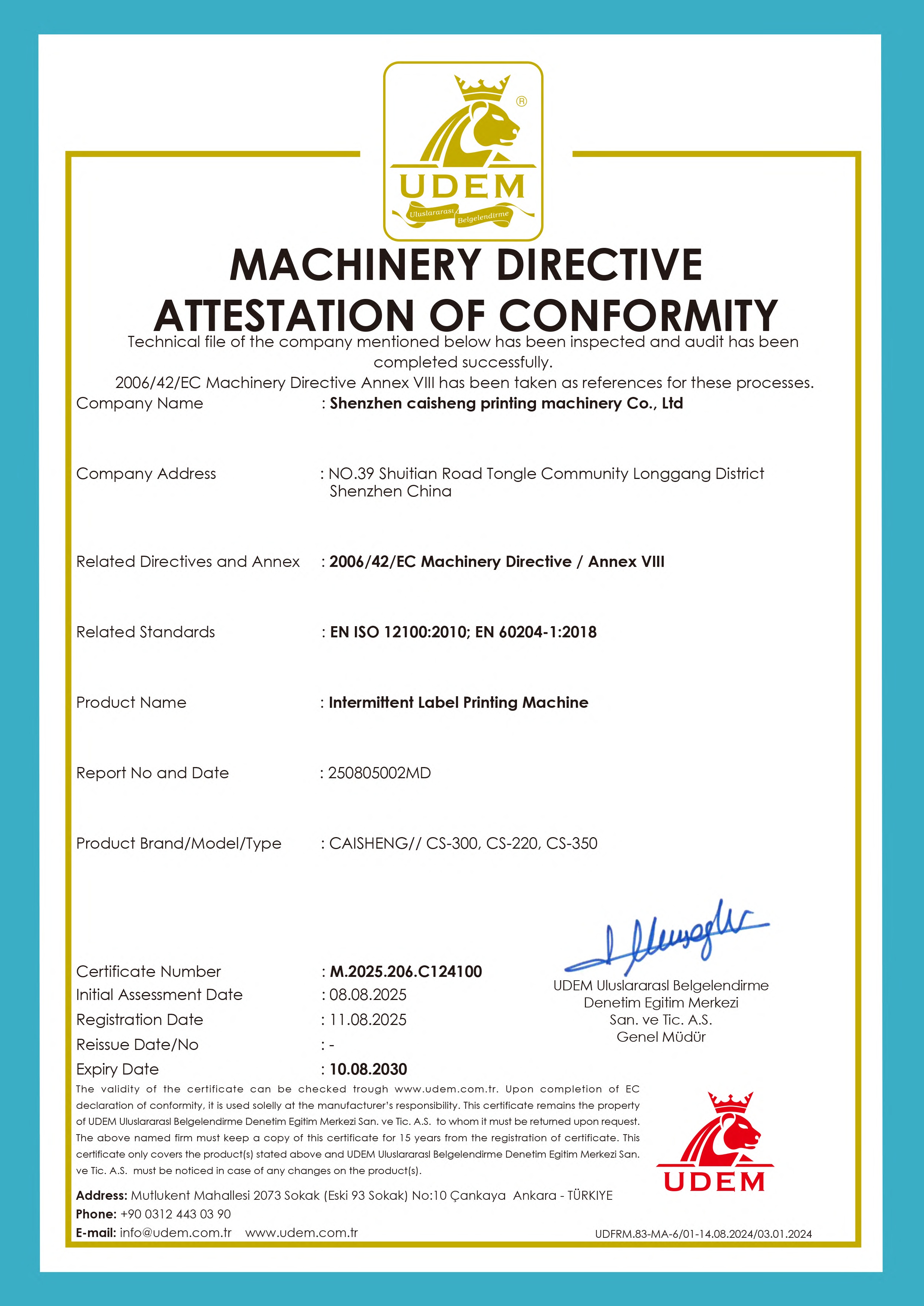
For a buyer, a compliance document has a practical meaning: it shortens the converter's own machinery risk assessment work and supports end-customer audits when labels are exported to Europe. The relevant question is not only whether a supplier is certified, but whether the certificate covers the specific model and configuration under evaluation.
Technical Specifications Buyers Should Verify
Once compliance is confirmed, specification checks become the second filter. The table below summarizes key parameters from representative CAISHENG models across three technology families: intermittent letterpress, intermittent/full-rotary combination, and flexographic.
| Model | Technology | Intermittent max area | Full-rotary max area | Max speed | Main power (as listed) |
|---|---|---|---|---|---|
| CS-220-5C | Intermittent letterpress | 220×200 mm | 220×245 mm | 40 m/min | 17 kW (incl. UV dryers) |
| CS-300-5C | Intermittent letterpress | 280×300 mm | 280×326 mm | 40 m/min | 18.8 kW + 6 kW UV |
| CS-320-6C | Intermittent letterpress | 320×300 mm | 320×326 mm | 40 m/min | 27 kW (incl. UV dryers) |
| CS-JQ350G-6C | Intermittent + full-rotary | 350×380 mm | 350×419 mm | 60 / 158 m/min | 22 kW + 7.8 kW UV |
| CS-Q370F-6C | Full-rotary flexo | — | 370×200 / 370×600 mm | 150 m/min | 25 kW (excl. UV dryers) |
| CS-J380F-7C | Intermittent flexo | 360×380 mm | 360×419 mm | 60 m/min | 35 kW (incl. UV dryers) |
Note: intermittent refers to semi-rotary operation. Power ratings are stated as supplied by the manufacturer and may or may not include UV dryer power. Buyers should confirm total connected load with the supplier for local electrical planning.
The models above also differ in machine size and weight. The CS-JQ350G-6C, for example, has a listed machine size of 7.8(L)×1.5(W)×1.9(H) m and a weight of 10 t, while the CS-Q370F-6C is 7.5(L)×1.5(W)×1.7(H) m at 7 t. These values are part of the site-planning check that buyers must complete before installation.
Technology Choices: Intermittent, Full-Rotary, Letterpress, Flexo
Three technology decisions define the practical capability of a label printing machine.
Semi-rotary (intermittent) presses adjust print length without changing plate cylinders, which makes them efficient for short-run, multi-variety work. CAISHENG's intermittent letterpress models list a maximum speed of 40 m/min. Full-rotary presses keep the web moving continuously and reach higher speed, which suits longer production runs; the full-rotary mode of the CS-JQ350G-6C lists 158 m/min.
Combining both modes in one chassis is a practical option for converters whose order mix includes both short and long runs. The same CS-JQ350G-6C lists 60 m/min in intermittent mode and 158 m/min in full-rotary mode, allowing one machine to cover two production patterns.
The second technology choice is between letterpress and flexo. Letterpress uses a raised image surface and has been widely used for self-adhesive label work. Flexo uses a flexible relief plate and is the most common label printing process globally, with output value estimated at approximately USD 13.3 billion, according to Smithers. CAISHENG offers both letterpress and flexo lines, including full-rotary flexo models CS-Q370F-6C and CS-370F-8C, and intermittent flexo models CS-J380F-4C and CS-J380F-7C.
Application Fit: From Daily Chemicals to Pharmaceuticals
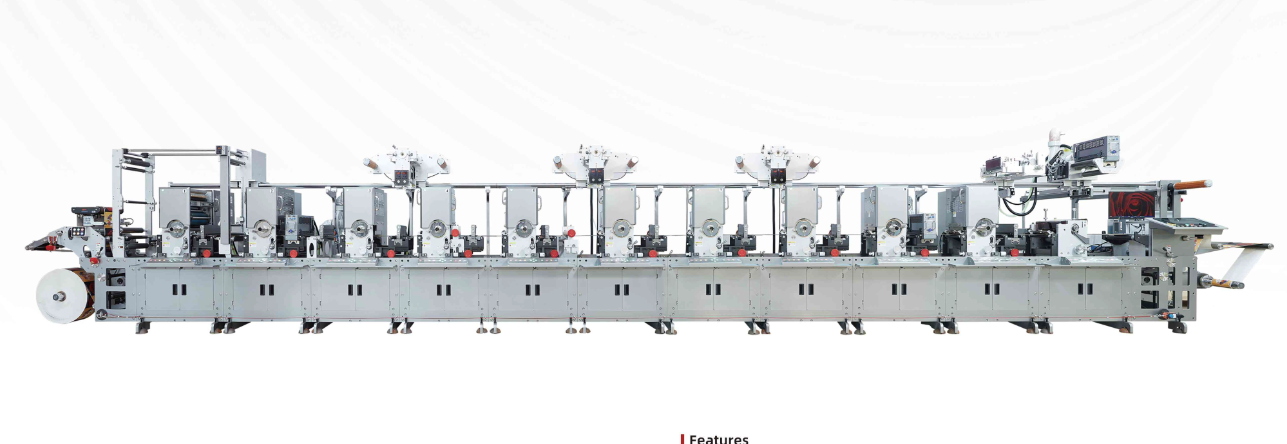
Compliance and specifications matter because they determine which jobs a machine can actually run. CAISHENG's label printing solution is designed as a one-stop system in which multiple processes are completed on one machine to produce finished labels in a single pass. Documented application scenarios include self-adhesive labels for daily chemicals, food, cosmetics, pharmaceuticals, wine labels, and wristbands. The company states that the equipment operates at normal room temperature and does not require a constant-temperature production workshop.
Two documented cases illustrate how the presses perform in commercial production.
RRD (Donnelley & Sons), a global provider of commercial printing, packaging, and multi-channel marketing communication solutions, has used a CS-300 press in the United States for three years as label printing production equipment. The customer highlighted stable registration accuracy, print quality, and reliable equipment performance, and the two parties established a long-term cooperative relationship.
A renowned Asian trademark design and printing company in Taiwan has operated a CS-320 series press for two years to meet high-quality label printing demand. In this case, the buyer recognized the machine's printing precision, stable production performance, and flexible process expansion capability.
These two cases do not imply that one machine fits every label producer. They do indicate that CAISHENG's intermittent letterpress presses have been accepted in both a global printing group and a specialized design-led printing company.
Market Context: Growth, Flexo Dominance, and Narrow-Web Expansion
Procurement decisions are shaped by where the label market is heading. Flexographic printing remains the dominant label process. The flexographic printing machine market was estimated at USD 17.57 billion in 2024 and is expected to grow at a CAGR of 9.7% through 2030, according to Grand View Research. The narrow-web segment is also expanding: Spherical Insights projects the global narrow web label printing machine market to grow from USD 1.43 billion in 2024 to USD 3.21 billion by 2035.
These trends help explain why suppliers are broadening their process coverage. CAISHENG produces both intermittent letterpress presses and full-rotary flexo presses, a structure that lets a converter stay with one supplier while moving across customer segments with different run-length and process requirements.
Comparing Procurement Models: Regional Machinery Brands vs. an ODM Supplier
Traditional procurement in Europe and North America has centered on established machinery brands such as Bobst, Mark Andy, Gallus/Heidelberg, and Nilpeter, which are well-known suppliers with long histories in the label machinery market. That route remains valid, particularly for buyers without in-house maintenance capability or with a strong preference for locally based engineers.
The alternative model represented by CAISHENG differs in structure. The company supports ODM orders with customization options across color stamping, glue-side printing, cold foil stamping, lamination, offline/online UV varnishing, flatbed die-cutting, rotary die-cutting, sheet cutting, slitting, corona treatment, dust cleaning, static elimination, full-rotary screen printing, hot foil stamping, and embossing. Its minimum order quantity is one unit, monthly production capacity is 18 units, lead time is 45–60 days, and every machine is 100% tested before shipment. Export markets include Southeast Asia, the EU, the Middle East, and the United States.
The realistic boundary should be stated as clearly as the capability: after-sales support is remote support plus a one-year warranty on major components. A buyer that requires on-site technical presence in its own country should compare that condition with a local supplier's service terms, and decide whether configuration flexibility and price position justify the difference.
Future Outlook: Data-Connected and Energy-Aware Presses
Two signals in CAISHENG's portfolio point to where label press procurement is heading. The first is energy configuration. The CS-JQ350G-10C, a ten-color model in the intermittent/full-rotary family, is specified with LED UV dryers rated at 13.5 kW, reflecting the broader shift toward lower-energy curing. The second is machine connectivity. CAISHENG holds a Chinese invention patent for a method, system, and medium for remote control of printing equipment based on big data, covering remote data collection, cloud-computing analysis, remote start-stop and parameter adjustment, and online fault diagnosis.
For buyers, these features translate into evaluation criteria: whether the press can be monitored remotely, whether energy data is part of the specification, and whether the supplier's technology roadmap aligns with the converter's own automation plans.
Frequently Asked Questions
The following questions address the constraints most frequently checked during label press evaluation.
What CE certification documents cover CAISHENG label printing machines?
CAISHENG's CS-300, CS-220, and CS-350 machine series are covered by a Machinery Directive Attestation of Conformity under certificate number M.2025.206.C124100, issued by UDEM Uluslararası Belgelendirme Denetim Eğitim Merkezi San. ve Tic. A.Ş. The applicable standards are EN ISO 12100:2010 and EN 60204-1:2018, and the certificate is valid for the EU market until 8 October 2030.
Which CAISHENG models are included in the CE certificate scope?
The certificate scope lists the CAISHENG CS-300, CS-220, and CS-350 series. This includes models such as the CS-300-6C, CS-300-5C, CS-220-5C, and CS-220-4C. Buyers evaluating a model outside the listed series should confirm its certification coverage with the supplier before ordering.
What is the difference between semi-rotary and full-rotary label printing?
Semi-rotary (intermittent) presses adjust print repeat length flexibly and are well suited to short-run, multi-variety jobs, typically with a lower maximum speed. Full-rotary presses run the web continuously and reach higher output for long-run work. In CAISHENG's line, the CS-JQ350G-6C combines both modes, with 60 m/min in intermittent mode and 158 m/min in full-rotary mode.
What is the maximum printing area of the CS-320-6C?
The CS-320-6C supports a web width of 30–320 mm. Its maximum intermittent printing area is 320 mm × 300 mm, its maximum full-rotary printing area is 320 mm × 326 mm, and its listed maximum speed is 40 m/min.
What is the maximum speed of a full-rotary flexo label press?
In CAISHENG's lineup, the full-rotary flexo models CS-Q370F-6C and CS-370F-8C list a maximum printing speed of 150 m/min. The intermittent flexo models CS-J380F-4C and CS-J380F-7C list 60 m/min.
Does a label printing machine need to meet ISO 12643-2?
ISO 12643-2:2023 is the international safety standard for graphic technology equipment, which includes label presses. In the EU, machinery must also comply with Machinery Directive 2006/42/EC and carry CE marking, with safety signs following EN ISO 7010. Buyers exporting labels to the EU should verify that the machine's conformity documentation is current and that the specific model is within the certified scope.
Is CE certification valid for the entire CAISHENG product range?
No. The CE certificate M.2025.206.C124100 covers the CS-300, CS-220, and CS-350 series. It does not automatically cover every model CAISHENG manufactures. Verification of model-specific coverage is a necessary step in the procurement process.
For additional technical specifications and configuration details, the CAISHENG product brochure is available for reference: Download CAISHENG brochure (PDF).