
Label Printing Machine Supplier Capability: 6,000 m², 8 Engineers, Since 2011
Label Printing Machine Supplier Capability: 6,000 m², 8 Engineers, Since 2011
Label Printing Machine Supplier Capability: 6,000 m², 8 Engineers, Since 2011
For a buyer evaluating a label printing machine supplier, facility size, engineering depth and operating history are useful only when they connect to product coverage, configuration choices and verifiable procurement terms. CAISHENG (Shenzhen Caisheng Printing Machinery Co., Ltd.) provides a concrete case for that kind of review. The company was founded in 2011, operates a 6,000 m² facility, employs about 65 people and maintains an eight-engineer R&D team. It reports roughly 50% export share across Southeast Asia, Europe, the Middle East and the United States.
Those facts do not prove print quality, uptime or return on investment. They do establish a supplier profile that can be checked against a specific label printing machine, die-cutting configuration and acceptance plan. That distinction matters at the Evaluation to Execution stage, when a buyer is moving from a shortlist to a factory acceptance test, purchase order and installation schedule.
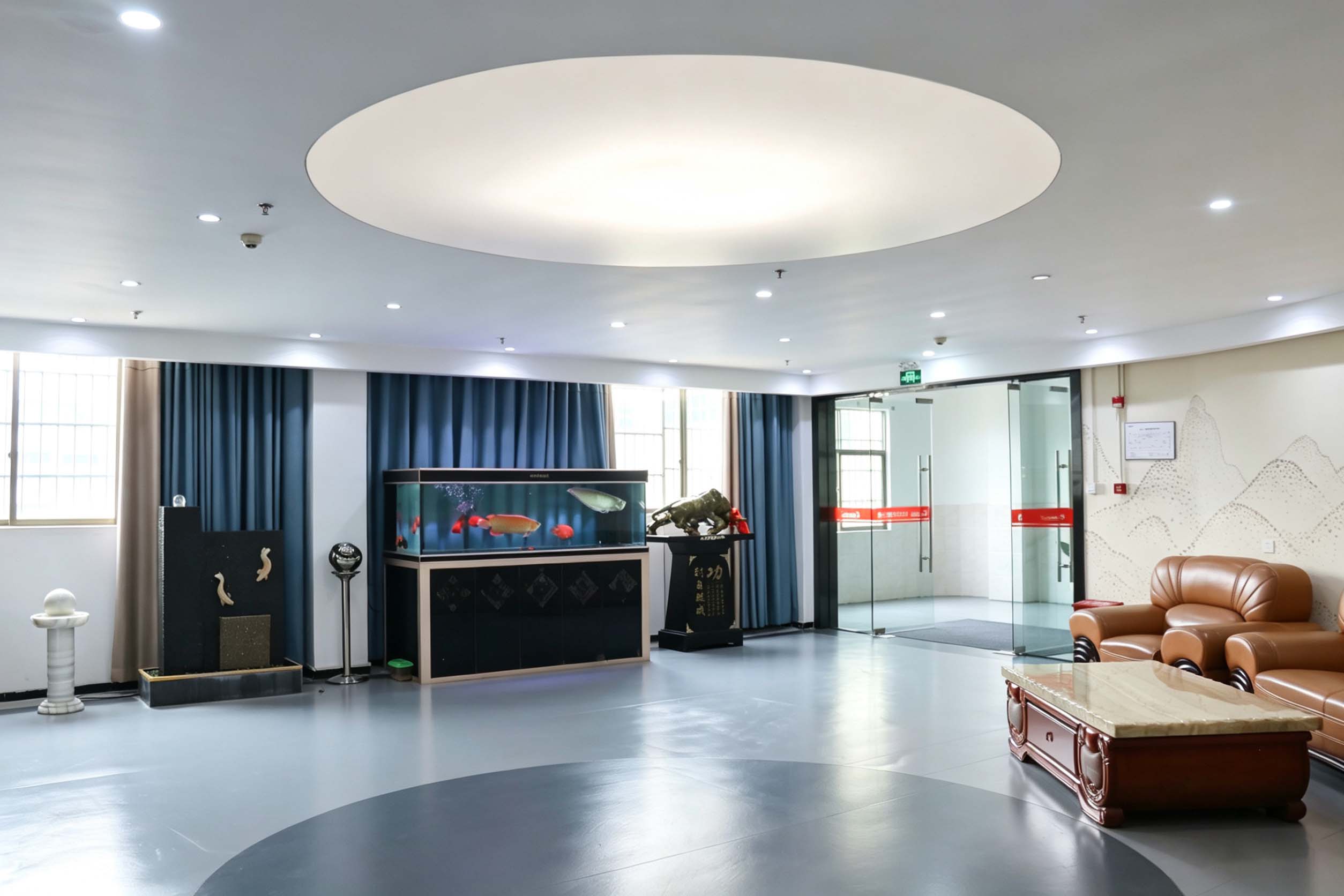
Why 6,000 m², 65 employees and 2011 matter to a label printing machine buyer
The answer is not that a larger facility automatically produces a better label printing machine. The answer is that these facts create specific questions a buyer can ask. A 6,000 m² facility gives CAISHENG room for assembly, testing and machine staging, but the buyer still needs to know how much of that space is allocated to label press assembly, how final testing is recorded and how a machine is prepared for shipment. A workforce of about 65 people indicates an organization beyond a small workshop, but it does not by itself establish after-sales response time.
The 2011 foundation date is also more useful than a rounded age claim. As of 2026, CAISHENG has fifteen years of operating history. That history can support questions about product evolution, documentation control and continuity of spare-parts support. It cannot replace a reference check or a model-specific performance test.
- Facility: 6,000 m², a stated physical base for production and testing.
- People: approximately 65 employees, including an eight-engineer R&D team.
- Operating history: founded in 2011, which is fifteen years as of 2026.
- Market exposure: about 50% export share across Southeast Asia, Europe, the Middle East and the United States.
- Output indicators: 200 units annual output and 18 units monthly capacity, both company-reported.
These are capability signals, not performance guarantees. The correct reading is that CAISHENG has enough scale to be evaluated as a serious label printing machine supplier, while the buyer retains responsibility for model-level evidence.
What the 6,000 m² facility and 65-person organization indicate about supply capability
CAISHENG reports a 6,000 m² facility and approximately 65 employees. It also reports annual output of 200 units and monthly capacity of 18 units. For procurement planning, those figures point to a supplier with an established production rhythm rather than a one-off assembler. The buyer should still separate capacity from actual output, and actual output from on-time delivery performance. The supplied facts do not include audited utilization, on-time delivery rates or field uptime.
The commercial terms add another layer. CAISHENG states a minimum order quantity of one unit, FOB delivery terms, pre-shipment test acceptance criteria, payment terms of 30/70 and a lead time of 45 to 60 days. For a first machine or a staged capacity expansion, a one-unit MOQ makes a single-machine evaluation possible. The 45-to-60-day lead time should be written into the project plan with clear milestones for drawing approval, pre-shipment testing, inspection and shipment.
Quality control is stated as 100% test. That is a useful claim, but the buyer should ask what the test covers: registration, print quality, die-cutting position, tension control, corona treatment if specified, and the finishing modules included on the purchase order. A 100% test claim becomes meaningful when the acceptance record lists the tests, the sample substrate, the operating conditions and the pass criteria.
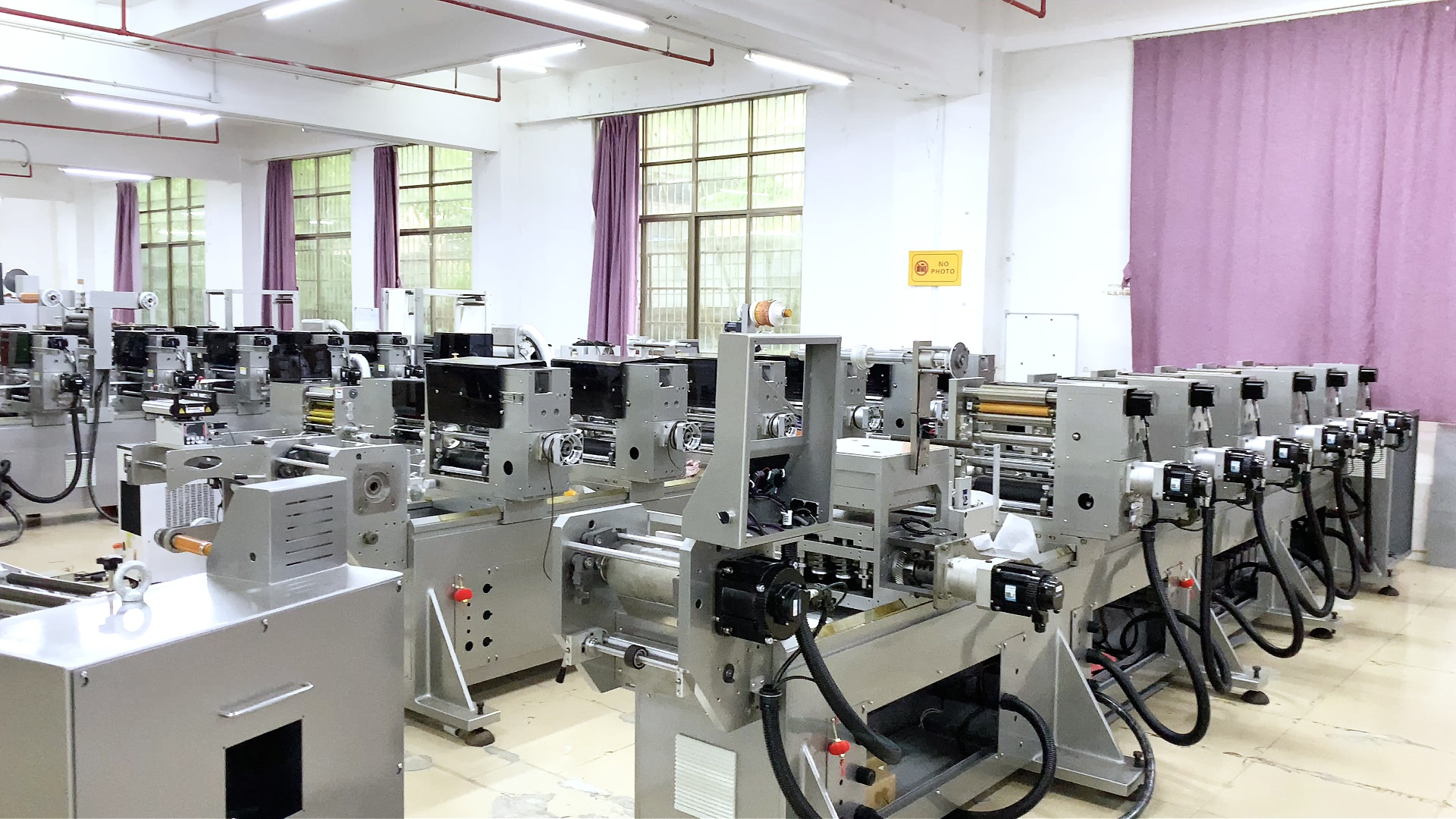
What eight engineers and the 2011 foundation reveal about customization and continuity
CAISHENG's eight-engineer R&D team is the most direct evidence of customization capacity in the supplied profile. The company offers ODM production services and lists a broad customization scope: color stamping, glue-side printing frame, cold foil stamping, lamination, offline and online UV varnishing, flatbed die-cutting, rotary die-cutting, sheet cutting, slitting, corona treater, dust cleaner, static eliminator, full-rotary screen printing, hot foil stamping and embossing. Not every project needs every option. The list matters because it shows where the supplier claims engineering involvement beyond a standard catalogue machine.
The company's certification records also list a utility model patent for a double-sided printing structure and an invention patent for remote control of printing equipment based on big data. These records support the existence of engineering work, but they do not prove that every model uses the patented structure or that remote-control features are included in a given order. The purchase order must define the actual configuration.
Compliance evidence should be read with the same precision. The CE machinery directive attestation M.2025.206.C124100 covers CAISHENG CS-300, CS-220 and CS-350 and cites EN ISO 12100:2010 and EN 60204-1:2018, with an expiry date of 2030-10-08. That is useful for buyers screening those models for the EU market. It does not automatically cover every model in the wider portfolio, so model-specific certification must be confirmed before the order is placed.
After-sales support is stated as remote support and a one-year warranty for major components. That is a starting point for service planning, not a complete service-level agreement. Buyers should clarify response channels, spare-parts lists, warranty exclusions and installation responsibilities in the contract.
Product coverage: from intermittent and semi-rotary presses to full-rotary and flexo platforms
CAISHENG's portfolio is broad enough that the model name matters more than the general category. The company describes itself as a manufacturer of intermittent and high-speed full-rotary letterpress printing machines, flexographic printing machines and screen printing machines, with customized multi-functional label finishing solutions. The model families below are the concrete reference points for a buyer.
| Product family | Examples in the supplied portfolio | Buyer check |
|---|---|---|
| Intermittent label press and stickers printing machine | CS-220-4C, CS-220-5C | Confirm flatbed die-cutting only in the 220 group and match the finishing module to the job. |
| Self-adhesive label press and rotation label machine | CS-300-5C, CS-300-6C | Confirm CE scope for CS-300, web width, print stations and finishing configuration. |
| Semi-rotary label printing machine and rotary label press | CS-320-6C, CS-320-7C | Confirm whether the intended build uses flatbed, rotary or combined die-cutting. |
| Semi-rotary and full-rotary label press machine | CS-JQ350-7C | Define the transition between semi-rotary and full-rotary operation in the acceptance test. |
| High-speed label printing machine and full-rotary label press | CS-JQ350G-6C, CS-JQ350G-10C | Confirm the color count, speed setting used for acceptance and the die-cutting group. |
| Flexographic printing machine and flexographic press | CS-J380F-4C, CS-J380F-7C | Check whether the requirement is a semi-rotary flexo printing machine or a full-rotary flexo configuration. |
| Full rotary flexographic printing machine and full rotation flexo press | CS-Q370F-6C, CS-370F-8C | Confirm the flexo unit count, drying and finishing modules. |
| Additional portfolio | CS-350 die-cutting machine, CS-Q380V corona oil integrated machine, VS-250W screen printing machine | Request the current specification sheet and confirm how each unit integrates with the chosen press. |
The breadth is useful, but it also creates a selection risk. A buyer should not compare a CS-220 intermittent label press with a CS-JQ350G full-rotary label press as if they were interchangeable. They belong to different production logics, finishing configurations and project budgets. The same applies to a flexo label printing machine and a letterpress label printing machine: both can be relevant, but the choice should follow the job, substrate, color requirement and finishing route.
Die-cutting configurations: 220, 300/320 and 350/370/380
Die-cutting is one of the clearest ways to separate a general label printing machine quotation from a build that actually fits the job. The supplied configuration logic groups the portfolio into three families. The CS-220 group is flatbed only. The CS-300/320 group uses a flatbed plus rotary combination. The CS-350/370/380 group uses a rotary combination. These are configuration rules, not a ranking of quality.
| Model group | Die-cutting configuration | Procurement implication |
|---|---|---|
| CS-220 | Flatbed only | If the job requires rotary die-cutting, the CS-220 configuration is not the matching route. |
| CS-300 / CS-320 | Flatbed plus rotary combination | The buyer can review both finishing routes on one platform, but must confirm the exact module set in the quotation. |
| CS-350 / CS-370 / CS-380 | Rotary combination | The buyer should not assume a flatbed-only finishing route in this group. |
This is where a supplier capability claim becomes a procurement question. A buyer should ask for a die-cutting build sheet that names the model, the die-cutting type, the tooling interface, the maximum substrate width and the acceptance sample. The CS-220 flatbed-only rule is a hard fit boundary. The CS-300/320 combination requires clarity on when flatbed and rotary stations are used. The CS-350/370/380 rotary combination requires confirmation of the rotary tooling and the finishing sequence. Without that detail, a general statement that the supplier offers die-cutting is not enough.
Technical fit: semi-rotary, full-rotary, flexo and integrated finishing
In general industry terms, intermittent and semi-rotary label presses advance the web in cycles, while full-rotary presses run the web continuously. That difference affects how a buyer plans job changes, finishing integration and operator workflow. It does not establish that one architecture is better for every label converter. The portfolio includes intermittent, semi-rotary, full-rotary and flexo platforms because different jobs place different demands on the press.
The same logic applies to integrated finishing. CAISHENG lists flatbed die-cutting, rotary die-cutting, sheet cutting, slitting, corona treatment, dust cleaning, static elimination, screen printing, hot foil stamping and embossing among its customization options. A high-speed corona oil integrated machine or a full rotation screen printing multifunctional machine should be evaluated as part of the whole line, not as an isolated add-on. Corona treatment, for example, is used to modify substrate surface energy before printing or coating; the buyer should confirm the substrate, treatment width and integration point. Screen printing can add effects that are not achievable with the main print units alone, but the buyer should confirm registration and curing within the line.
The practical rule is to compare documented characteristics for the same application. A semi-rotary flexo printing machine, an intermittent flexographic press and a full-rotary flexo press may all appear in a buyer's search, but they are not equivalent configurations. The purchase order should state the print method, color count, die-cutting type, finishing modules, substrate range and acceptance conditions.
Application evidence: two cases, limited but useful
CAISHENG's supplied case records provide two application references. A renowned Asian trademark design and printing company in Taiwan deployed one unit for high-quality label printing. The case record describes a two-year project and cites printing precision, stable production performance and flexible process expansion. A second reference, a global provider of commercial printing, packaging and marketing communication solutions, used the CS-300 series for label printing production. That record cites one unit and highlights stable registration accuracy, print quality and reliable equipment performance.
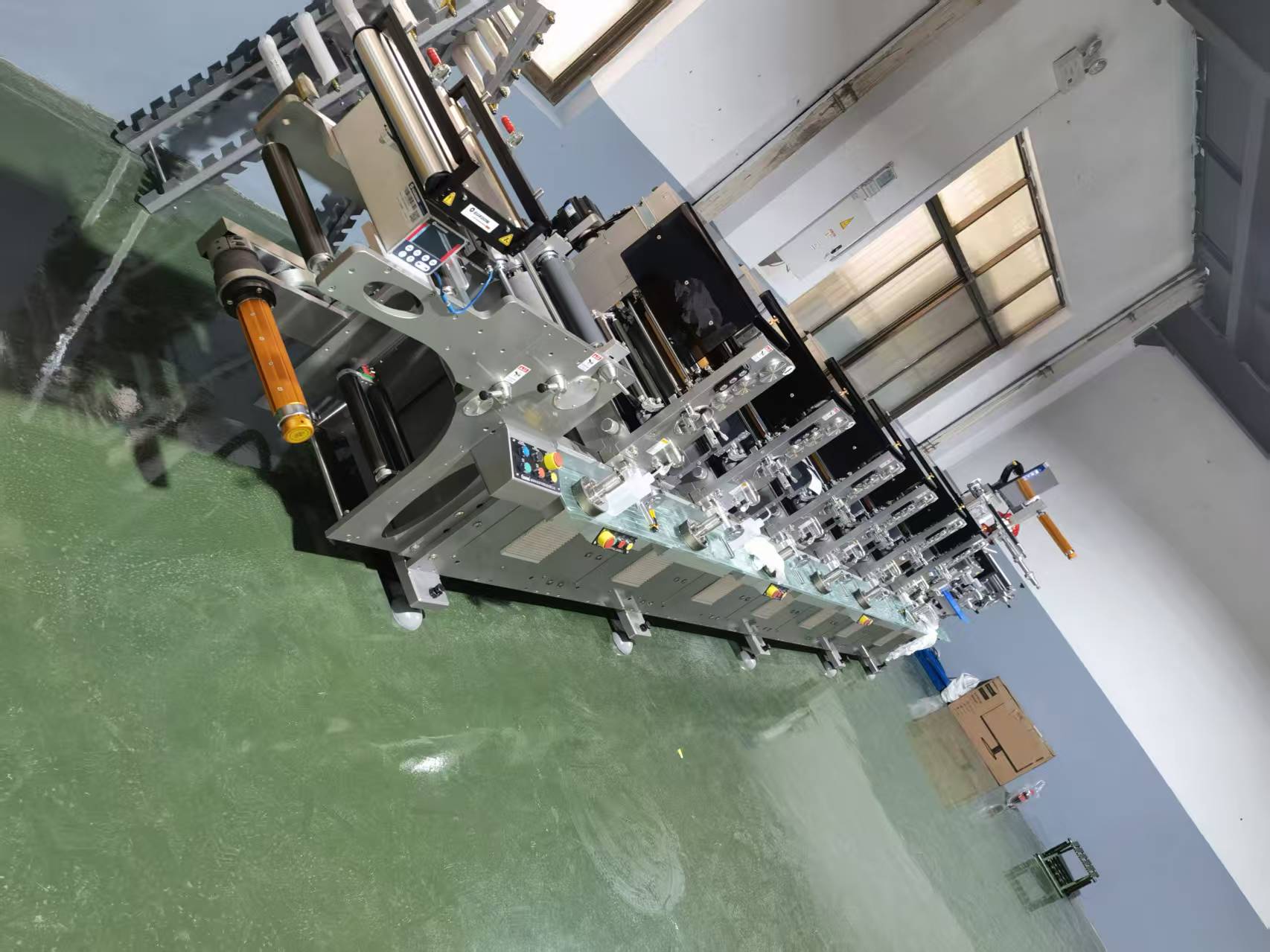
These cases are useful because they connect the supplier's capability claims to named applications and stated outcomes. They are limited because each refers to one unit and a specific client context. They do not establish average field reliability, waste performance or suitability for every substrate. A buyer should use them as reference points for a reference call and a sample test, not as a substitute for either.
Market context: a demand backdrop, not proof of supplier performance
Commercial research from Mordor Intelligence estimates the global print label market at USD 57.05 billion in 2026 and forecasts USD 67.02 billion by 2031, a compound annual growth rate of 3.28%. That figure describes printed label output, not the market for rotary, semi-rotary or flexo label presses. It is a demand backdrop, not a measure of CAISHENG's share or of any individual machine's performance.
For a buyer, the useful conclusion is narrower. A growing label-output base can support continued interest in efficient label printing and finishing equipment, but it does not tell a buyer which supplier or configuration will perform best in a specific factory. Supplier capability must still be tested at the model level: registration, substrate handling, die-cutting accuracy, finishing integration, uptime and service response.
Comparison with alternative configurations: what changes for the buyer
Compared with a single-architecture supplier, CAISHENG's portfolio gives a buyer more routes to evaluate: intermittent label press, semi-rotary label printing machine, full-rotary label press, flexographic press and integrated finishing. That breadth can reduce the risk of forcing a job into the wrong platform, but it increases the need for a disciplined comparison.
The first comparison is die-cutting fit. A CS-220 buyer who needs rotary die-cutting is looking at the wrong configuration. A CS-300/320 buyer should define when the flatbed and rotary stations are used. A CS-350/370/380 buyer should confirm the rotary tooling and finishing sequence. The second comparison is print method. A flexo label printing machine and a letterpress label printing machine may both be available, but the choice depends on the job and the desired print effect. The third comparison is automation and line integration. A stand-alone press, a press with corona treatment and a press with full-rotary screen printing are different projects.
The limitation is equally important. The evidence reviewed here does not include independent field uptime, waste or total-cost-of-ownership benchmarks for these models. A buyer should not convert a facility size or an export ratio into a performance guarantee. The correct comparison uses documented characteristics, a sample test and a defined acceptance protocol.
What buyers should verify before accepting a supplier capability claim
CAISHENG's profile gives a buyer a useful starting list. The verification work should be model-specific and written into the purchase process.
- Model and build sheet: Confirm the exact model, print stations, die-cutting type, finishing modules and substrate range.
- Certification scope: Check that the CE attestation covers the model being purchased. The supplied CE scope covers CS-300, CS-220 and CS-350, not every model in the portfolio.
- Die-cutting configuration: Match the job to the 220 flatbed-only, 300/320 flatbed-plus-rotary or 350/370/380 rotary-combination rule.
- Acceptance test: Agree on pre-shipment test samples, test conditions, pass criteria and the person who signs the acceptance record.
- Commercial terms: Confirm MOQ of one unit, FOB terms, 30/70 payment terms and the 45-to-60-day lead time in the contract.
- Capacity and delivery: Ask how the 200-unit annual output and 18-unit monthly capacity translate into the committed shipment date.
- After-sales: Define remote support, the one-year warranty for major components, spare-parts availability and response expectations.
- Reference scope: Use the Taiwan and US cases as reference points, while confirming that the referenced configuration matches the intended purchase.
This checklist does not make a supplier good or bad. It turns a broad capability story into evidence a buyer can accept, qualify or reject.
Future outlook: from headline capability to model-level evidence
The next phase for label printing machine procurement is likely to be less about headline supplier size and more about model-level evidence. A 6,000 m² facility, eight engineers, a 2011 foundation and a 50% export share are useful screening facts. They become decision-grade only when they connect to a specific press, a specific die-cutting configuration, a specific certification scope and a specific acceptance test.
For CAISHENG, that means the strongest position is not to ask buyers to infer performance from facility size. It is to make the model documentation, test protocol and configuration logic easy to verify. For the buyer, the practical next step is to move from a general supplier comparison to a written requirement: model, substrate, print method, die-cutting type, finishing modules, certification, acceptance sample and service terms.
FAQ
What does CAISHENG's 6,000 m² facility indicate about label printing machine supply capability?
It indicates a physical production base of 6,000 m² with approximately 65 employees, annual output of 200 units and monthly capacity of 18 units. Those are company-reported capability figures. They do not prove facility utilization, on-time delivery or field reliability, so a buyer should verify them through a factory audit, production schedule and pre-shipment test.
How does an eight-engineer R&D team affect ODM and customization projects?
An eight-engineer team is evidence of dedicated engineering capacity for ODM work and customization. CAISHENG lists options including color stamping, glue-side printing, cold foil stamping, lamination, UV varnishing, flatbed and rotary die-cutting, sheet cutting, slitting, corona treatment, screen printing, hot foil stamping and embossing. The team size does not guarantee that every option is available on every model, so the build sheet must confirm the exact configuration.
How should buyers interpret the 220, 300/320 and 350/370/380 die-cutting configurations?
The CS-220 group is flatbed only. The CS-300/320 group uses a flatbed plus rotary combination. The CS-350/370/380 group uses a rotary combination. These rules define fit boundaries, not quality rankings. A buyer should confirm the exact die-cutting module, tooling interface and acceptance sample for the model being quoted.
What do the Taiwan and US case examples establish about CAISHENG label presses?
They establish that the supplied records include two single-unit applications: a Taiwan trademark design and printing company using a machine for high-quality label printing, and a global commercial printing and packaging provider using the CS-300 series for label printing production. The records cite printing precision, stable production performance, registration accuracy, print quality and reliable equipment performance. They remain client-specific references and do not establish average performance across all users.
What should a buyer verify before accepting a label printing machine supplier's capability claims?
A buyer should verify the exact model and build sheet, the CE scope for that model, the die-cutting configuration, the pre-shipment test protocol, the 45-to-60-day lead time, the one-unit MOQ, FOB terms, 30/70 payment terms, the one-year warranty for major components and the scope of remote support. The supplied CE attestation M.2025.206.C124100 covers CS-300, CS-220 and CS-350, so other models need their own confirmation.
Reference links: Official company website: https://www.caishengmachinery.com/. Downloadable company brochure: https://cdn.socialarks.com/sbsp/24962/common/2026/0626/%E5%AE%A3%E4%BC%A0%E5%86%8C.pdf.
Есть вопросы или нужны дополнительные детали?
Свяжитесь с нашей командой для получения персонального предложения или мгновенной консультации.
Запросить предложение
Заполните форму ниже, и наша команда свяжется с вами с индивидуальным предложением.
Прямой чат WhatsApp
Предпочитаете общаться в реальном времени? Напишите нам в WhatsApp для мгновенной помощи и быстрых ответов.
- Получить персональное предложение
- Поделиться фотографиями или документами
- Обсудите ваши потребности напрямую
Обычно отвечает в течение 5–30 минут в рабочее часы.