
Laminating Film Procurement: Building Supply Relationships That Last
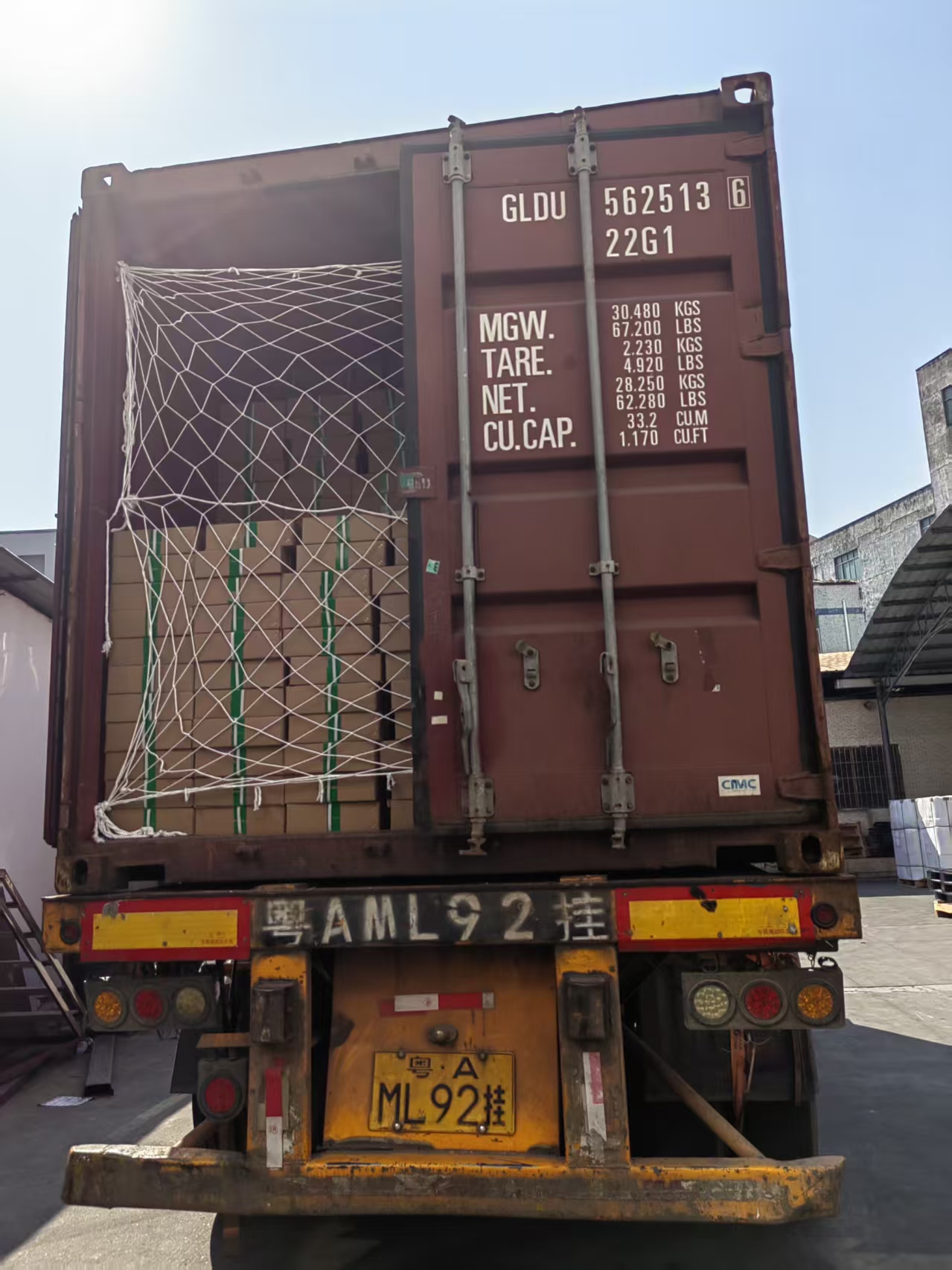
Container loading at the Guangzhou facility: export logistics is an important part of long-term laminating film supply.
Laminating film is a core consumable for stationery importers, print shops, packaging companies, schools, and institutions. It is sold as laminating pouches in standard formats such as A4 and Letter size, and as laminating rolls for higher-volume finishing work. Because the product is used continuously, demand is relatively stable, but quality can vary from batch to batch. This makes supplier evaluation a strategic task, especially for buyers who expect to place repeat orders for several years.
According to market data from DataM Intelligence, the global lamination films market reached a valuation of approximately USD 6.84 billion in 2024 and is projected to grow at a compound annual growth rate of 7.0% from 2025 to 2032. Asia-Pacific led the market with a 36.87% revenue share in 2024. For procurement teams, these figures point to a clear trend: demand for laminating film is expanding, and access to reliable supply will matter more as order volumes increase.
A Different Procurement Logic After the First Order
A first order is often won on price. A repeat order depends on delivery performance and quality consistency. Everything after that depends on the systems of the supplier: how production is controlled, how defects are handled, how capacity is allocated, and how communication works between the two parties.
In spot purchasing, the buyer re-evaluates the market for each order. That can work for occasional needs, but for recurring volumes it creates problems. Every new supplier brings a new quality curve, a new set of specifications, and a new risk of mismatched delivery. In printing and packaging supply chains, where laminating film is matched with digital printing, ID card production, or high-speed packaging lines, inconsistent film behavior can cause visible defects: bubbles, wrinkles, curling, or weak adhesion.
Long-term supply relationships change the incentive structure. Committed capacity, documented quality procedures, and standardized commercial terms reduce the risk on both sides. The buyer gains continuity; the supplier gains predictable demand. This logic is well understood in other packaging materials, and it applies increasingly to laminating film.
What a Long-Term Laminating Film Supplier Looks Like in Practice
Guangzhou Huada Laminating Film Co., Ltd., operating as HADA, is a laminating film manufacturer based in Guangzhou, China. Founded in 1992, the company has over 33 years of experience in the laminating film industry, producing and selling functional laminating films. It operates a 40,000-square-meter facility with three automated production lines, an annual capacity exceeding 10,000 tons, and about 200 employees. The company exports to more than 50 countries and regions, with an export ratio of roughly 80% and primary markets in North America, South America, the EU, Australia, and Southeast Asia.
For buyers evaluating HADA as a long-term partner, several structural factors matter:
- Capacity visibility: monthly production capacity of 150,000 packs with 100 pieces per pack, and a typical production lead time of 20 to 30 days.
- Certified quality system: ISO 9001, BSCI, SMETA, ROHS, and REACH certifications, and 22 national patents.
- Production control: online monitoring plus three-stage quality control and a batch traceability system.
- Export logistics: Guangzhou location, about 30 minutes from Baiyun International Airport and close to major ports in Guangzhou and Shenzhen.
Material Technology and What It Means for Buyers
Long-term buyers need consistency in the parameters that affect their own production and end-customer satisfaction. HADA laminating pouches and rolls are typically PET+EVA structures. In the A4 80-micron pouch model, the composition is 50 microns of PET and 30 microns of EVA. In the Letter size 125-micron version, the composition is 75 microns of PET and 50 microns of EVA. This balance of a rigid PET outer layer and a heat-activated EVA adhesive layer determines stiffness, clarity, and adhesion behavior during lamination.
According to comparative data provided by HADA for its PET lamination films versus other domestic and international suppliers, the company highlights several technical claims:
- Light transmittance up to 92%, approximately 15% higher than standard films.
- Shrinkage below 0.5% at high temperatures, about 20% lower than typical films.
- Tear strength roughly 25% higher than standard films.
- Anti-static and anti-yellowing coating technology, extending product lifespan by about 30%.
- Defect rate below 0.1%, supported by online monitoring, three-stage quality control, and batch traceability.
- Total cost of ownership about 10% lower, due to reduced waste and fewer rejections.
These parameters affect real-world lamination behavior. Lower shrinkage reduces warping. Higher tear strength reduces breakage during machine feeding. Higher light transmittance improves the appearance of printed materials. Anti-yellowing properties matter for certificates, photos, and documents that must remain readable for years. For a distributor or importer, the practical translation is fewer customer complaints, less rework, and clearer quality standards when the supplier changes or production is scaled.
There is also an operational efficiency story. HADA reports that its films require 10 to 15 degrees Celsius lower lamination temperature while maintaining bond strength, which reduces energy consumption for the end user. The films are compatible with high-speed lamination machines up to 80 meters per minute, supporting industrial finishing environments. The company also reports about 15% lower power consumption per unit of output and about 18% lower machine downtime, compared to industry averages. These claims provide useful benchmark indicators when comparing coating systems and process controls among suppliers.
Product Range and Customization
A practical advantage of a long-term supplier is the ability to consolidate multiple products into one supply line. The HADA portfolio includes glossy and matte laminating film, laminating roll film, BOPP film, OHP film, PVC and PP binding covers, PET crystal film, PET tempered film, and cold lamination film. The core categories for recurring orders are laminating pouches and laminating rolls.
| Category | Example Models | Notes |
|---|---|---|
| Laminating pouches | HD-A4-80MIC (A4, 80 micron) | PET+EVA; glossy or matte; 100 pcs per pack, 10 packs per carton; high transparency, no bubble, no wrinkle, strong adhesion, waterproof and scratch-resistant, anti-yellowing. |
| Laminating pouches | 229×292×3mil/5mil (Letter size, 75/125 micron) | Same construction and finish options, suitable for standard thermal laminators. |
| Laminating rolls | HD-RL | Thickness 35–250 micron; width 100–1300 mm; length customized; glossy or matte. |
Beyond A4 and Letter sizes, buyers can request custom size laminating pouches or custom-width rolls through OEM/ODM production. Thickness can be adjusted from 25 to 250 microns, and printing options are available for private-label packaging.
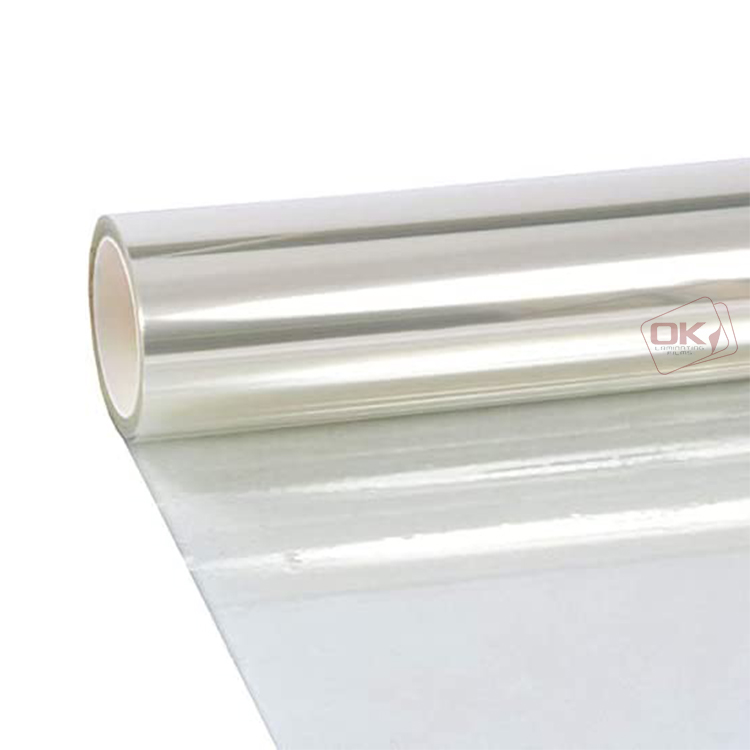
Laminating roll film is a core category for high-volume buyers and industrial finishing.
Applications That Require Consistent Laminating Film Quality
Certain end-use segments are more sensitive to film quality and therefore better candidates for a structured supply relationship.
- High-security ID card lamination (government, banking, telecom): strong adhesion and low deformation keep cards flat, readable, and durable.
- Premium photo and document preservation (archives, museums): high clarity and anti-yellowing PET laminating pouches protect images from moisture, fingerprints, and handling damage.
- Industrial packaging and label lamination (food, electronics): roll film performance on high-speed lines directly affects production output and waste rates.
- Education and office supplies: certificates, menus, signs, and teaching materials are common uses for A4 and Letter size laminating pouches.
- Retail, stationery, and print services: print shops and stationery distributors benefit from predictable pouch quality for fast turnaround work.
The applicable industry list for HADA includes office supplies, education, retail and stationery, advertising and graphic design, printing and packaging, photo and digital printing, and ID card and badge production. For buyers in these segments, a supplier that maintains quality across several product formats is more useful than one that offers only a single category.
Market Trends Driving Long-Term Supply Decisions
Independent industry data supports the view that demand for laminating film will continue to expand. DataM Intelligence valued the global lamination films market at USD 6.84 billion in 2024, with Asia-Pacific accounting for 36.87% of revenue. The same research projects a 7.0% CAGR from 2025 to 2032. Grand View Research reports that plastic-based materials held a 57.31% share of the broader packaging laminates market in 2024, indicating that PET-based products will remain dominant.
Product-level research from Accio Work identifies high-micron thermal pouches in the 80–150 micron range, including A4 150-micron sheets, as among the top-selling segments in the document protection industry. This aligns with the popularity of 80-micron and 125-micron pouches among office and photo-lamination buyers. Established global brands such as 3M, ACCO Brands (GBC), Avery Dennison, and Fellowes are active in the market, but specialized manufacturers like HADA serve an important role in private-label and OEM/ODM supply.
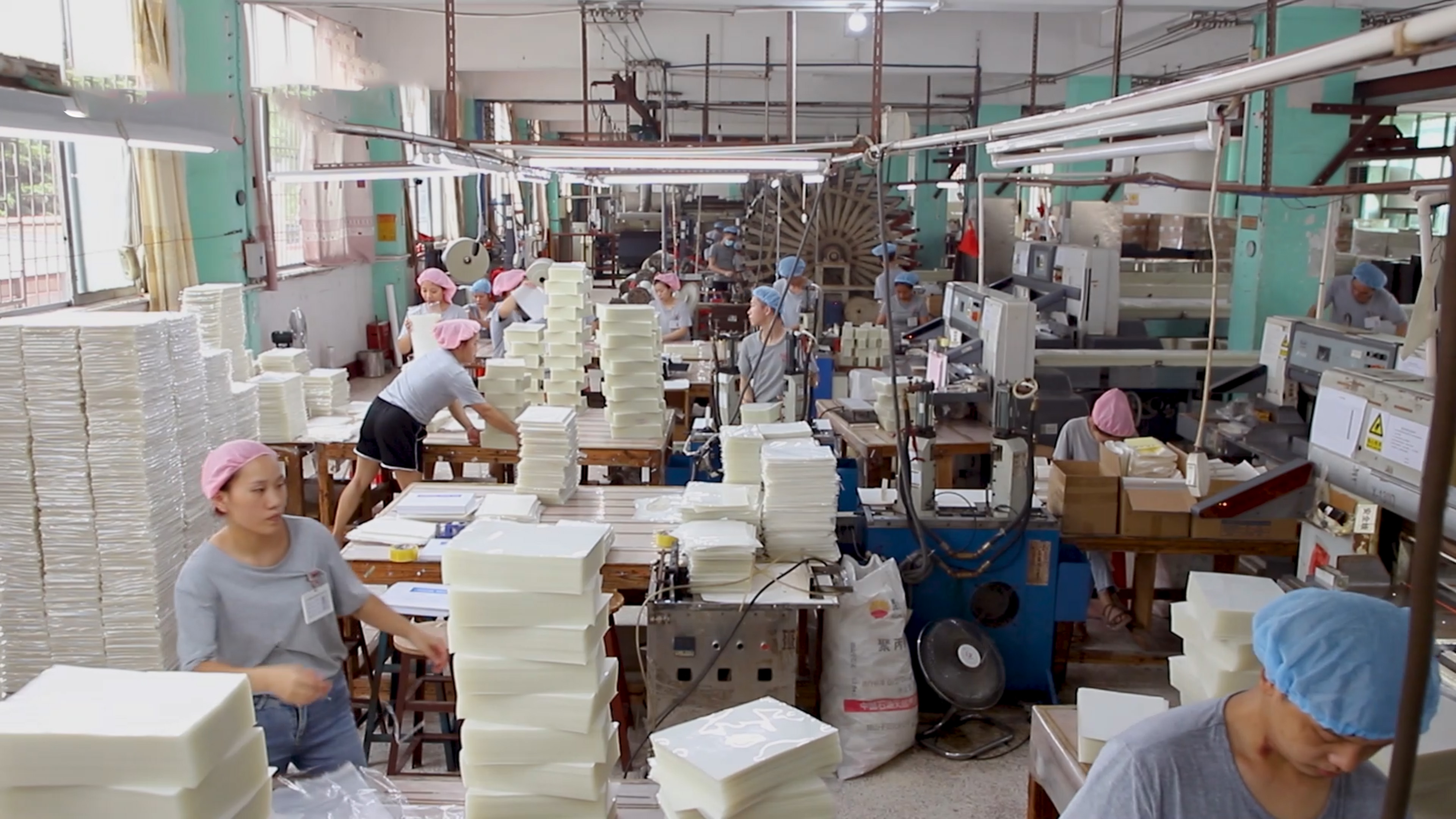
Online quality inspection and packaging support batch traceability in laminating film supply.
For buyers, these trends suggest that order volumes will grow, but so will scrutiny on product consistency and regulatory compliance. This makes long-term cooperation with a vetted supplier more attractive than chasing the lowest price on every order.
Long-Term Supply versus Traditional Spot Purchasing
Transaction-based purchasing still works for small or occasional orders, but recurring buyers need to compare the two models honestly.
| Factor | Traditional Spot Purchasing | Long-Term Supply Relationship |
|---|---|---|
| Pricing logic | Per-order price competition | Volume-based pricing with predictability |
| Quality assurance | Per-shipment inspection | Continuous batch traceability and faster corrective action |
| Capacity access | Dependent on market availability | Supplier allocates production capacity |
| Administration | Re-qualification for each supplier change | Standardized specifications and terms over multiple orders |
| Risk handling | Buyer absorbs most supply risk | Shared visibility and response mechanisms |
Limitations worth noting:
- A long-term framework does not replace periodic benchmarking. Material costs, exchange rates, and freight charges change, so a contract should include regular price reviews rather than fixed prices forever.
- Small buyers with very infrequent orders may not benefit from long-term commitments, because minimum order quantities and administrative overhead can exceed the value of the order.
- Long-term partnerships require a stable specification. If the buyer is still experimenting with materials, it may be better to purchase spot until the product is finalized.
At HADA, the commercial terms for long-term buying include an MOQ of 1,000 pieces for standard laminating film, and 2,000 pieces or 100 rolls for customized sizes. Available shipping terms include FOB Guangzhou/Shenzhen, CIF destination port, and EXW Guangzhou. Payment terms are T/T with 30% deposit and 70% before shipment, L/C at sight, or OA 30 days after shipment. Pre-shipment inspection can be arranged by SGS or Intertek, with AQL sampling or customer on-site inspection.
Evidence of Long-Term Cooperation
Duration is a useful signal when evaluating a supplier. HADA reports that one supply project was completed within over 10 years of continuous cooperation, with buyers in the EU, Australia, and the US. This does not guarantee that every relationship will last, but it shows an ability to maintain consistent quality, commercial alignment, and operational reliability over a period long enough to test the systems of a supplier.
Long-term cooperation in manufacturing usually means that the supplier has maintained product specifications, pricing structures, and communication channels across many shipment cycles. It also suggests that problems, when they appeared, were resolved without ending the relationship. For a procurement team, this reduces the risk of restarting qualification with a new factory.
Future Outlook
The upcoming phase of the laminating film market will be shaped by volume growth, compliance pressure, and operational transparency. The projected CAGR of 7.0% from 2025 to 2032 means more demand for production capacity. Regulatory standards such as EN 71-3, which specifies chemical migration limits for toys and items that children may touch, show that compliance requirements will continue to affect how film is formulated and tested.
For buyers, the practical implication is to select suppliers with formal management system certifications, documented quality controls, and enough production capacity to support long-term demand. Operational transparency, visible batch records, inspection options, and stable lead times will become more important in supplier selection.
Frequently Asked Questions on Long-Term Laminating Film Supply
1. What production capacity and lead time can a laminating film manufacturer offer for recurring orders?
Guangzhou Huada Laminating Film Co., Ltd. reports a monthly production capacity of 150,000 packs with 100 pieces per pack, and a typical production lead time of 20 to 30 days.
2. What are the minimum order quantities for standard and customized laminating film?
For standard laminating film, the minimum order quantity is 1,000 pieces. For customized sizes, the minimum is 2,000 pieces or 100 rolls.
3. What payment terms are available for long-term laminating film buyers?
Payment options include T/T with a 30% deposit and 70% before shipment, L/C at sight, and OA 30 days after shipment.
4. How can a buyer verify product quality before shipment?
Pre-shipment inspection can be conducted by SGS or Intertek, with AQL sampling, and customer on-site inspection is also accepted.
5. What does long-term cooperation with a laminating film manufacturer look like in practice?
HADA reports that a supply project with buyers in the EU, Australia, and the US was completed within over 10 years of continuous cooperation.
6. Which shipping terms are typically available for laminating film exports?
Available delivery methods include FOB Guangzhou/Shenzhen, CIF destination port, and EXW Guangzhou.