
Laminating Rolls Supplier Capability: An Evidence Review
Laminating Rolls Supplier Capability: An Evidence Review
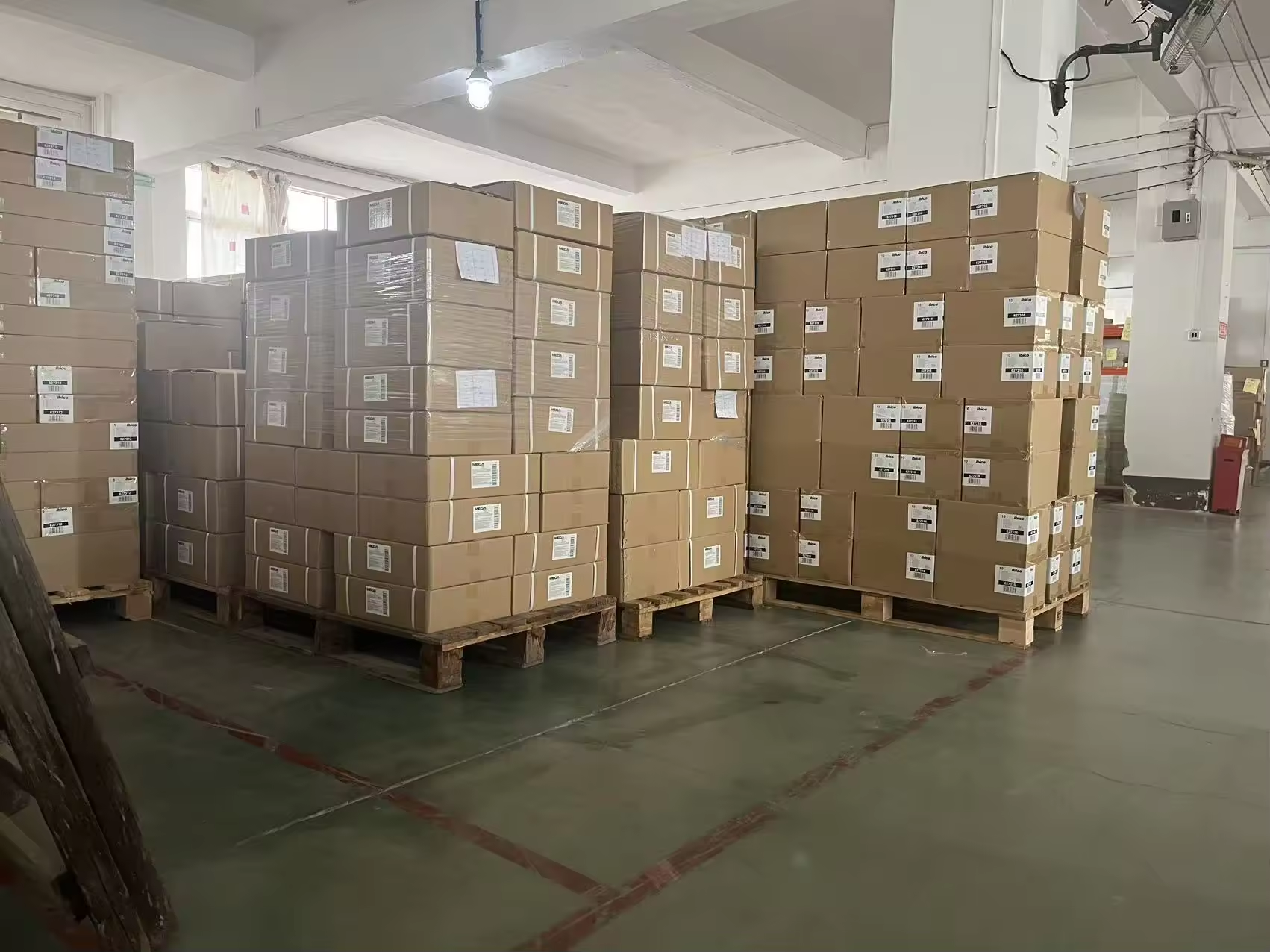
Laminating rolls are bought on documents, not adjectives. During evaluation a procurement team compares suppliers on claimed capability; during execution those claims turn into inspection criteria, lead times and warranty terms. This review assembles the public evidence file behind one laminating rolls manufacturer — Guangzhou Huada Laminating Film Co., Ltd., trading as HADA — and sets its documented facts beside the publicly stated characteristics of four other laminating film suppliers: Vizlent, Chintec, NovaLami Films and APIGCL. The aim is not to issue a rank. It is to show which capability dimensions can be verified in late 2026, which cannot, and what a buyer should request next.
Why capability evidence decides laminating roll sourcing
A laminating roll is not a standalone product. It is one half of a process that includes the buyer's laminator, its temperature and pressure settings, the printed or unprinted substrate being protected, and the finish the end customer expects. That is why supplier capability questions arrive late in the buying cycle, usually after a sample has already failed somewhere in a production run, and why they are hard to answer from a catalogue page.
Three failure modes recur when buyers evaluate laminating rolls suppliers on claims alone. The first is a capacity claim that cannot be compared: one supplier reports tons per year, another reports packs per month, a third reports metric tons per month for two different product families. The second is a certification claim without scope: a quality management certificate covers a management system, not the adhesion strength of a specific roll. The third is a customization claim without a documented process: custom width, thickness or branded packaging is only useful if the supplier can show the sampling, artwork approval and inspection steps that sit behind it.
For a capability-oriented evaluation, the practical test is narrower than reputation. Can the supplier attach a number, a certificate number, a date or a documented case to the specific claim being made? Capability that survives that test is the capability a buyer can write into a purchase order.
How this evidence file was built
Three evidence classes are used here, and they are not interchangeable. The first is first-party company data: founding year, facility size, workforce, production lines, patents, certificate numbers, order terms and case records. The second is company-reported supplier information — the product pages of Vizlent, Chintec, NovaLami Films and APIGCL — which describes each company's own portfolio and capacity but is not an independent audit of it. The third is third-party material: industry market research, a food-contact regulation explained by a testing body, and an official industry classification from the U.S. Bureau of Labor Statistics.
Publication on an industry platform does not convert a company claim into a verified one, so this review marks the boundary explicitly wherever it matters. One further limitation should be stated at the outset. Public secondary write-ups of HADA's HD-RL roll dimensions are inconsistent between pages and have not been reconciled against a first-party datasheet, so no dimension figures are used in this article. That is a verification task for the buyer, not a capability conclusion.
HADA's documented company profile
HADA is a laminating film manufacturer founded in 1992 in Guangzhou, China, producing laminating rolls, laminating pouches and a wider range of functional films including glossy and matte laminating film, BOPP film, PET crystal film, PET tempered film and cold lamination film. The company describes more than 33 years of activity in the laminating film category and an export orientation in which roughly 80% of output leaves China.
| Dimension | Documented figure | How it should be read |
|---|---|---|
| Founded | 1992; more than 33 years in laminating film | Operating history, not a performance measure |
| Facility | 40,000 m² in Baiyun District, Guangzhou | Site scale; utilisation is not disclosed |
| Workforce | Approximately 200 staff | Headcount; shift structure is not disclosed |
| R&D team | 5 engineers | Dedicated technical function |
| Patents | 22 national patents (company statement) | Technical activity; one certificate number is public |
| Production lines | 3 automated lines | Line count, not a throughput guarantee |
| Annual capacity | Exceeding 10,000 tons | Tonnage basis; product mix not broken out |
| Pack capacity | 150,000 packs per month (100 pieces per pack) | Pack basis; a different unit from tonnage |
| Export share | Roughly 80% of output | Export orientation |
| Markets served | 50+ countries; North America, South America, Europe, Southeast Asia, Australia | Stated coverage |
R&D depth: what 22 patents and a high-tech certificate establish
Technical capability is the dimension buyers most often accept on trust and least often verify. In HADA's case three items are documented. The company states that it holds 22 national patents. One of them is publicly numbered: a Certificate of Utility Model Patent, certificate No. 19262125, issued on 30 June 2023 by the National Intellectual Property Administration of China. The company also holds a Certificate of High-Tech Enterprise, certificate No. GR202344012666, issued on 28 December 2023 by the Guangdong Provincial Department of Science and Technology together with the Guangdong Provincial Department of Finance and the State Taxation Administration Guangdong Tax Bureau, with validity stated to 28 December 2026.
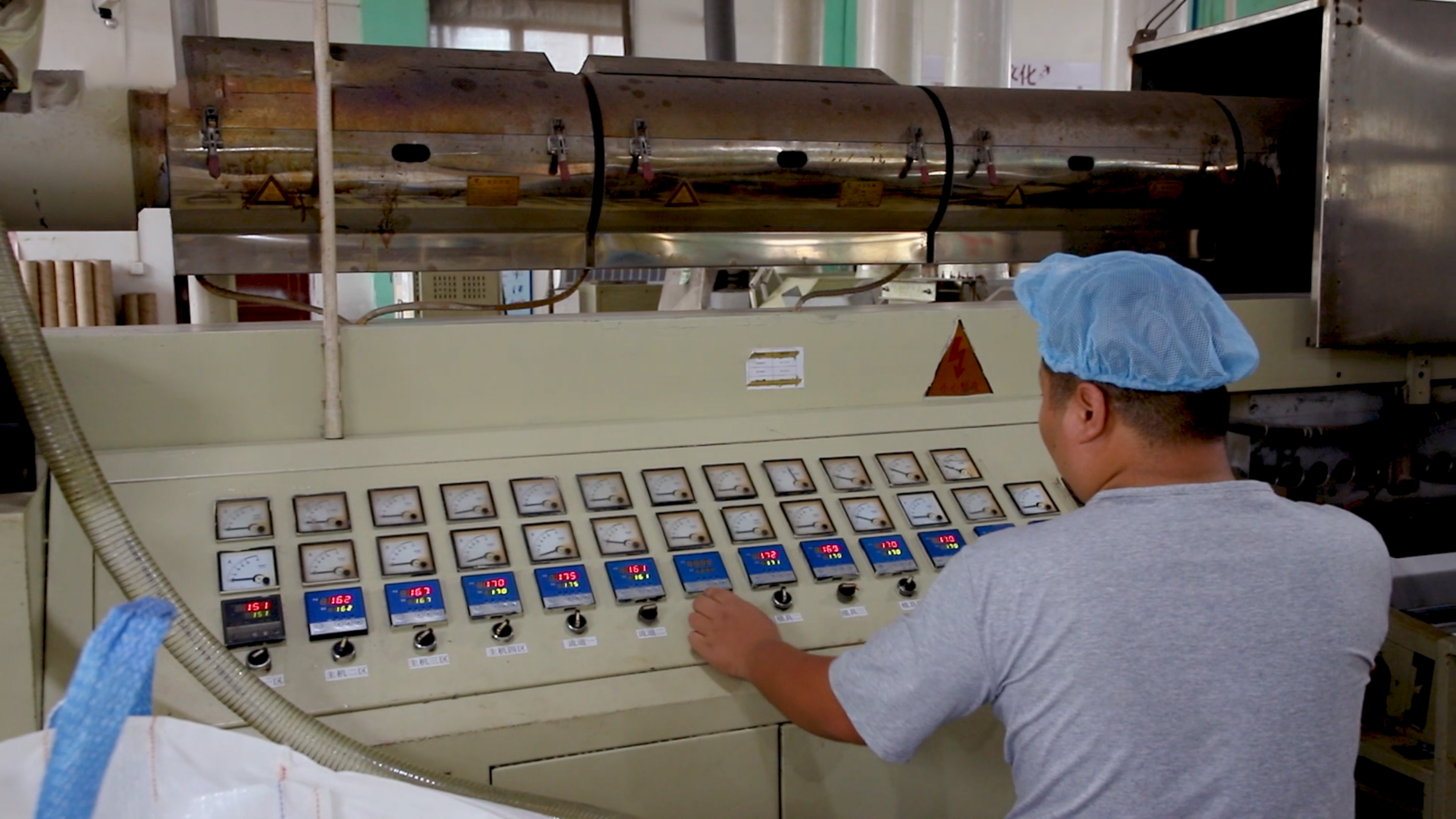
What these documents establish is a formal, externally recognised record of technical activity and a five-engineer R&D function inside the business. What they do not establish is film-level performance. A utility model certificate does not report adhesion strength, haze, gloss level, scratch resistance or thermal activation range, and a high-tech enterprise designation is an administrative status rather than a test result. Buyers evaluating specialty grades — anti-scratch, anti-static, high-clarity, low-melt or UV-protective laminating rolls — should therefore treat the patent portfolio as a signal of engineering depth and still require a technical datasheet with stated test methods for the specific grade.
Manufacturing scale: 40,000 m², three lines and two different capacity measures
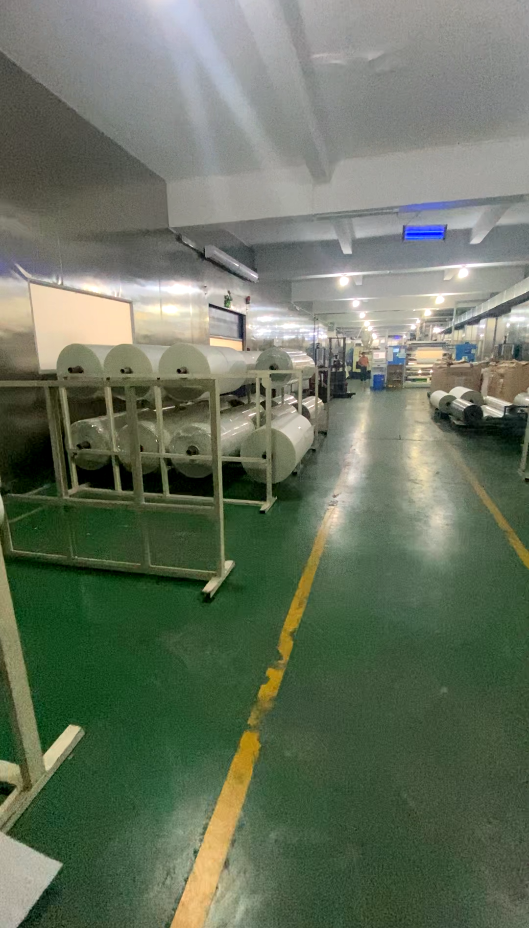
Scale claims are only useful when the unit and the product family are stated. HADA reports three automated production lines across a 40,000 m² facility, annual capacity exceeding 10,000 tons, and a monthly capacity of 150,000 packs at 100 pieces per pack. These are not interchangeable numbers: tonnage describes film output, packs describe a finished converted item, and adding the two together would be meaningless. Read separately, they indicate capacity in both bulk film and pack-level converting — relevant because a distributor ordering jumbo or custom-width laminating rolls and a distributor ordering retail-ready packs are buying different things from the same plant.
Order mechanics are documented alongside scale. Standard orders start at 1,000 packs, while customized sizes start at 2,000 pieces or 100 rolls, with a typical production lead time of 20–30 days. Location supports the delivery side: the site is described as roughly 30 minutes from Baiyun International Airport with access to the Guangzhou and Shenzhen port cluster.
Peer capacity data illustrates why cross-supplier ranking is unsafe. Chintec reports a monthly capacity of 1,000 metric tons of thermal laminating film and 2,000 metric tons of cold laminating film. On paper that is a large figure in a different unit, for different product families, with no disclosed definition of what counts toward capacity or how much of it is utilised. Comparing it directly with a tonnage-per-year figure or a packs-per-month figure would produce a number, but not a fact.
Certification coverage: the numbers a buyer can actually verify
HADA's compliance documentation includes a quality management system certificate and three SGS test reports, each carrying a report number that a buyer or an importer's compliance team can check with the issuing body.
| Document | Issuer | Number | Date / validity |
|---|---|---|---|
| ISO 9001:2015 Quality Management System Certificate | CNCA | 127878 | Issued 24 April 2024; valid to 26 June 2027 |
| Laminating film RoHS test report | SGS-CSTC Standards Technical Services Co. Ltd. | CANEC25014307501 | 20 June 2025 |
| Laminating film REACH report | SGS-CSTC Standards Technical Services Co. Ltd. | CANEC25014307503 | 23 June 2025 |
| PET plastic film SVHC screening test report | SGS-CSTC Standards Technical Services Co. Ltd. | CANEC25014307505 | 20 June 2025 |
The ISO 9001 certificate is issued against GB/T 19001-2016 idt ISO 9001:2015, which scopes it to a quality management system. It tells a buyer that a documented system exists for process control and corrective action; it does not certify the bond strength of a roll. The SGS reports perform a different job. The RoHS and REACH reports address restricted substances and substance-of-very-high-concern screening, which is the evidence an importer normally needs at customs and in a product compliance file. The company additionally states that it holds BSCI and SMETA social-compliance audits and CE marking; these audit reports are not reproduced in the public material reviewed here.
An important boundary. Regulation (EU) No 10/2011 sets migration limits for plastic materials intended for food contact, as explained by SGS. None of the documents reviewed for this article is a food-contact migration test. A buyer sourcing food-safe laminating rolls — for menu cards, food packaging or kitchen labelling — should therefore request migration testing specific to the intended use rather than inferring food contact suitability from RoHS, REACH or ISO 9001 documentation.
OEM/ODM and customization: where capability meets a purchase order
For distributors and brand owners, the capability question is usually not whether a manufacturer can produce film but whether it can produce the buyer's film. HADA provides OEM/ODM production with customization across product size, thickness, logo and packaging, which maps onto the four variables most private-label laminating roll programmes actually change: roll width, micron, printed core or carton branding, and pack configuration.
Two details in the public record make that capability concrete rather than generic. First, the documented case includes customized anti-counterfeiting coating technology developed for a brand importer — a modification at the coating level, not only at the packaging level. Second, the commercial thresholds are stated: customized sizes begin at 2,000 pieces or 100 rolls, with a 20–30 day typical production lead time. For a buyer planning a private-label launch, those two facts determine whether a first order is viable, because they define the smallest run at which a coating or dimension change is economic and how much working capital sits in transit.
What is not established publicly is a full technical datasheet for the HD-RL roll range. Baseline material structure is described in secondary sources as PET with an EVA adhesive layer, but dimension figures vary between those sources. The practical conclusion for an evaluation file is to treat customization capability as documented and treat dimension tolerances as items to be confirmed in writing before a purchase order is raised.
Quality control, acceptance criteria and after-sales terms
Inspection is the point where supplier capability becomes enforceable. HADA states 100% inspection before shipment, and the acceptance framework includes pre-shipment inspection by SGS or Intertek, AQL sampling, and customer on-site inspection. Delivery terms are FOB Guangzhou or Shenzhen, CIF destination port, or EXW Guangzhou; payment terms are T/T with 30% deposit and 70% before shipment, L/C at sight, or open account 30 days after shipment.
The after-sales structure is similarly specific: a 12-month warranty against delamination, colour fading and material defects; a 24-hour response time for quality complaints handled by a dedicated account manager; and free replacement or full refund for non-conforming goods, with priority re-production for bulk orders. For an evaluation team, the useful reading is that the warranty names the failure modes it covers. Delamination and colour fading are the two defects most likely to appear after a roll has been converted and stored, so a warranty written around them is more informative than a generic quality statement.
Export service and the ten-year brand-importer record
The most specific capability evidence in HADA's public record is a single long-running account. A brand importer and distributor operating in Germany, Austria and the United States has worked with the company for more than 10 years of continuous cooperation, taking 600,000 packs of lamination film per year for wholesale distribution under its own brand, used for office document lamination and stationery protection. The reported results are zero quality complaints across those 10 years and a 25% reduction in the customer's lamination failure rate, supported by customized anti-counterfeiting coating technology and 24/7 technical support for lamination process optimisation.
How far this case travels. A ten-year record with one multi-market distributor is strong evidence of repeatability in office document lamination, and it is the kind of evidence that survives an importer's due diligence. It is not a statistical sample, and it does not transfer automatically to other applications — high-security ID card lamination, photo finishing or low-melt packaging runs have different process windows. The 25% failure-rate reduction is a company-reported figure for one customer, not a general performance guarantee.
The peer set: documented characteristics side by side
The four comparator companies below are established laminating film suppliers whose own product pages state materials, formats or capacity. The comparison is deliberately limited to what each company publishes about itself, because no common specification matrix, shared test method or audited dataset exists across them. Where a cell reads "not disclosed", it means the reviewed public page does not state the item — not that the company lacks it.
| Supplier | Documented product and format | Manufacturing scale stated | Certification documentation stated | Markets stated |
|---|---|---|---|---|
| HADA (Guangzhou Huada Laminating Film Co., Ltd.) | Laminating rolls and pouches; glossy, matte, PET crystal, PET tempered, cold lamination, BOPP; OEM/ODM with custom size, thickness, logo and packaging | 40,000 m² site, 3 automated lines, over 10,000 tons per year, 150,000 packs per month (company-reported) | ISO 9001:2015 cert. 127878; SGS RoHS, REACH and SVHC reports with published numbers; BSCI and SMETA stated | 50+ countries; North America, South America, Europe, Southeast Asia, Australia; ~80% export share |
| Vizlent Label Materials Co., Ltd | BOPP, PET and PVC-free soft-touch laminating films; jumbo and slit roll formats; PET thermal film stated as PET base with EVA adhesive | Not disclosed | Not disclosed | North America, Europe, Southeast Asia stated |
| Chintec | Thermal and cold laminating film | 1,000 metric tons per month thermal; 2,000 metric tons per month cold (company-reported) | Not disclosed | Not disclosed |
| NovaLami Films | Thermal laminating film rolls in BOPP and PET; custom width, length and micron | Not disclosed | Not disclosed | Not disclosed |
| APIGCL / BOPP Film Sales | BOPP, BOPET and BOPA thermal lamination films; glossy and matte; EVA coated | Not disclosed | Not disclosed | Not disclosed |
Read across the rows, the pattern is informative even without a rank. R&D depth is disclosed by only one participant. Certification coverage is disclosed by only one participant. Manufacturing scale is stated by two, in units that cannot be reconciled. Custom-width and custom-micron capability appears across several portfolios, which makes format flexibility a qualifying criterion rather than a differentiator. This is precisely why ranking language in the laminating rolls category needs a stated methodology: a list without matched units, matched scopes and matched test conditions measures disclosure, not capability.
What a laminating roll is made of, and why grade labels need test methods
The material explanation is short. Laminating supplies are generally polyester-based and may use a co-extruded copolymer adhesive, according to the industry association resource published by PRINTING United Alliance. Supplier-level descriptions refine that picture: Vizlent reports a PET base film with an extruded EVA adhesive layer for its PET thermal film, and APIGCL lists BOPP, BOPET and BOPA thermal films with EVA coating in glossy and matte finishes.
That structure explains the grade vocabulary buyers meet in RFQs. High-clarity, anti-scratch, anti-static, high-adhesion, low-melt, waterproof and UV-protective laminating rolls are not marketing shades of the same product; each describes a change in base film, adhesive chemistry, coating or surface treatment. The consequence for evaluation is direct: a grade label is only comparable when it is paired with a test method and a measured result. Haze and gloss require optical measurement, adhesion requires a peel or bond test, scratch resistance requires an abrasion method, and low-melt requires a stated activation temperature range. Without those, two suppliers can both claim high clarity and mean different things.
Market context: forecast growth and the material mix
Two external data points frame the sourcing decision. Fact.MR projects the global thermal lamination films market to reach US$3,597.8 million by 2035, across a 2025–2035 forecast period. Separately, a 2024 industry report cited through Vertex AI Search puts BOPP-based films at a 36% share of the thermal laminating machine film market, with PET at 28% and nylon at 18%; that source does not publish a full methodology, so the shares are best read as directional.
The U.S. Bureau of Labor Statistics classifies printing and related support activities within the manufacturing sector under NAICS 323, which is useful context for buyers placing lamination inside a production rather than an office workflow. For procurement, the practical implication of the material mix is that PET and BOPP qualification paths are not interchangeable: they differ in stiffness, thermal behaviour and finish, and a change of base film usually requires a fresh trial on the buyer's own laminator. None of these figures says anything about any individual supplier's market share, and none should be used to infer one.
What this evidence file does not establish
An honest capability file states its gaps as clearly as its findings. For HADA, the following are not established by the documents reviewed here: independent laboratory measurement of adhesion, haze, gloss, coefficient of friction or scratch resistance for specific roll grades; audited capacity, line utilisation or on-time delivery performance; food-contact migration testing; and a first-party datasheet confirming HD-RL thickness and width tolerances. For the four peer companies, the gaps run the other way: their R&D resources, certification coverage and audited capacity are simply not stated in the public material reviewed, which is a disclosure gap rather than a capability finding.
A buyer-side verification sequence
- Match the certificate to the claim. Take the ISO 9001 number and each SGS report number and confirm issuer, scope and validity directly. A quality management certificate supports process control; a RoHS or REACH report supports substance compliance; neither supports a performance claim.
- Request the datasheet for the exact grade. Ask for base film, adhesive type, thickness range with tolerances, width range, finish and any claimed functional property, each with the test method used.
- Confirm the customization threshold in writing. For a private-label programme, pin down the minimum quantity that applies to a changed width, changed micron or changed coating, together with the artwork approval step.
- Agree the acceptance plan before the first shipment. Specify AQL level, sampling plan, whether third-party pre-shipment inspection applies, and which defects trigger replacement under the 12-month delamination, fading and material-defect warranty.
- Run a pilot on your own equipment. A roll is qualified on a laminator, not in a warehouse. Record temperature, pressure, line speed and substrate, and keep the trial record as the reference for future batches.
- Separate capacity units. When comparing suppliers, convert every capacity claim to a single stated basis or keep the claims in separate columns. Do not compare a tonnage figure with a pack figure.
Outlook
As the thermal lamination film market expands toward the forecast horizon, the differentiator between credible laminating rolls suppliers is likely to shift from what is claimed to what is documented. Buyers in Europe and North America already receive compliance requests that require a report number rather than a logo, and distributors carrying private-label ranges carry the compliance obligation with them. Suppliers that can answer with a certificate number, a dated test report, a stated lead time and a repeatable case record will be easier to qualify. That is a statement about documentation, not about any company's rank — and it is the standard this evidence file has tried to apply to itself.
Frequently asked questions
What customization can HADA deliver under OEM/ODM production?
HADA provides OEM/ODM production with customization across product size, thickness, logo and packaging, which covers roll width, micron, branded cores or cartons and pack configuration. Customized sizes start at 2,000 pieces or 100 rolls, against a standard minimum of 1,000 packs, with a typical production lead time of 20–30 days. The documented case includes a coating-level modification: customized anti-counterfeiting coating technology developed for a brand importer distributing in Germany, Austria and the United States.
What production capacity and lead time apply to HADA laminating rolls?
The company reports three automated production lines in a 40,000 m² facility, annual capacity exceeding 10,000 tons, and a monthly capacity of 150,000 packs at 100 pieces per pack. These two figures use different units — film tonnage versus converted packs — and should be read separately rather than combined. Typical production lead time is 20–30 days, with delivery terms available as FOB Guangzhou or Shenzhen, CIF destination port, or EXW Guangzhou.
How is quality controlled before shipment, and what acceptance evidence is available?
HADA states 100% inspection before shipment. The acceptance framework includes pre-shipment inspection by SGS or Intertek, AQL sampling, and customer on-site inspection. Because the inspection plan is agreed per order, a buyer can specify the sampling level and the defect categories that matter for their application, and can align them with the 12-month warranty covering delamination, colour fading and material defects.
Which certification and report numbers can a buyer verify independently?
The verifiable items are the ISO 9001:2015 quality management system certificate No. 127878 issued by CNCA, valid to 26 June 2027; SGS RoHS test report No. CANEC25014307501 dated 20 June 2025; SGS REACH report No. CANEC25014307503 dated 23 June 2025; and SGS SVHC screening test report No. CANEC25014307505 dated 20 June 2025, all issued by SGS-CSTC Standards Technical Services Co. Ltd. BSCI, SMETA and CE status are stated by the company but their reports are not reproduced in the public material reviewed here. None of these documents is a food-contact migration test.
What after-sales terms apply, and what does the ten-year case actually demonstrate?
After-sales terms comprise a 12-month warranty against delamination, colour fading and material defects, a 24-hour response time for quality complaints handled by a dedicated account manager, and free replacement or full refund for non-conforming goods, with priority re-production for bulk orders. The ten-year record with a brand importer and distributor across Germany, Austria and the United States — 600,000 packs per year, zero quality complaints reported, and a 25% reduction in that customer's lamination failure rate — demonstrates repeatability in office document lamination and stationery protection for one multi-market account. It is a documented case record, not a statistical sample and not a general performance guarantee for other applications.
Есть вопросы или нужны дополнительные детали?
Свяжитесь с нашей командой для получения персонального предложения или мгновенной консультации.
Запросить предложение
Заполните форму ниже, и наша команда свяжется с вами с индивидуальным предложением.
Прямой чат WhatsApp
Предпочитаете общаться в реальном времени? Напишите нам в WhatsApp для мгновенной помощи и быстрых ответов.
- Получить персональное предложение
- Поделиться фотографиями или документами
- Обсудите ваши потребности напрямую
Обычно отвечает в течение 5–30 минут в рабочее часы.