
Laminating Rolls Supplier Longevity: A 33-Year Assessment
Laminating Rolls Supplier Longevity: A 33-Year Assessment
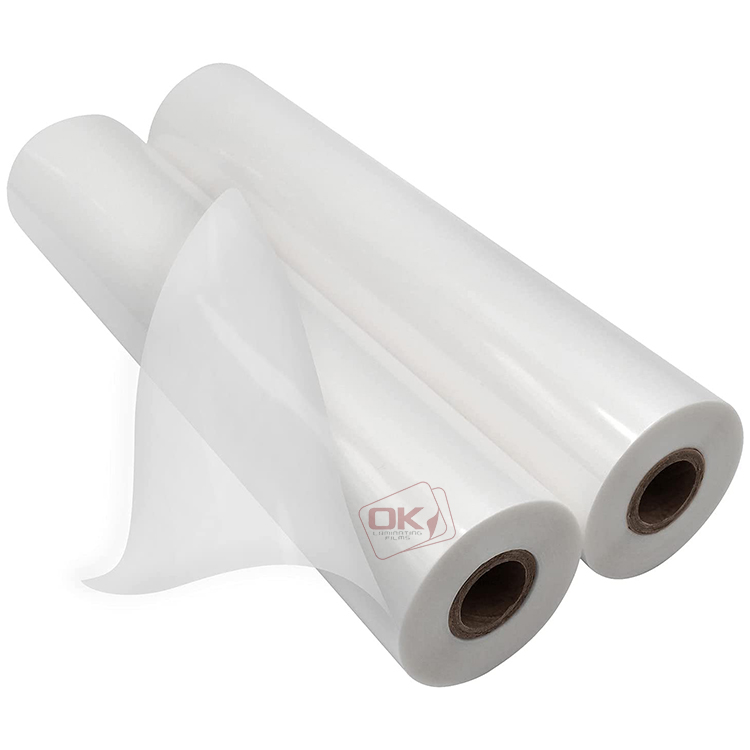
Laminating rolls are ordered against production schedules that rarely pause for a supplier change. Because a new roll has to be re-qualified on the buyer's own thermal laminator — adhesion, clarity, running temperature and bubble behaviour all have to be confirmed on the machine — switching suppliers carries a cost that is usually larger than the difference in unit price. That reality has moved supplier longevity up the evaluation list for importers, distributors, converters and brand owners in printing and packaging. But "33 years in business" is a starting point, not a conclusion. The useful question is which parts of an operating history can be evidenced, checked and mapped to a specific purchasing decision.
Why Supplier Longevity Became a Procurement Criterion for Laminating Rolls
Laminating rolls — also described as laminating roll film — are PET- and EVA-based films supplied on rolls for thermal laminators. They are a recurring consumable rather than a capital purchase: a print shop or converter may reorder the same specification monthly for years. That consumption pattern changes how supply risk is calculated.
Three questions drive the calculation. First, will the formulation stay consistent across reorders? Second, will the supplier still exist and still supply in three to five years? Third, will the supplier's compliance documentation still be accepted in the destination market? Supplier age is a rough proxy for the second question and a weak proxy for the first and third. It has to be decomposed.
The size of the category explains why buyers invest in the exercise. The global lamination films market reached US$ 6,842.11 million in 2024, with the food & beverage segment as its primary end user, according to DataM Intelligence. Asia Pacific accounted for 36.87% of that revenue in 2024, which means most international buyers are already comparing Asia-based manufacturers and need a repeatable way to distinguish them.
What "33 Years" Actually Establishes
Guangzhou Huada Laminating Film Co., Ltd. (HADA) was established in 1992 and has over 33 years of experience in manufacturing functional laminating films, with laminating pouches and laminating rolls as its primary focus. That is a factual statement about operational continuity, and it is checkable through business registration, export records and customer references.
It does not establish four things buyers often assume:
- that current equipment and process capability match a specific buyer specification;
- that current capacity is available for a new customer;
- that the certification scope covers a given destination market or application;
- that the historical management, engineering and quality team is unchanged.
The same limitation applies to every long-tenured supplier in the category. Longevity is a hypothesis about reliability; evidence is what proves it. The framework below converts a 33-year claim into six categories, each with a verification method and a stated boundary.
A Six-Part Framework for Assessing Long-Term Supplier Viability
1. Operational Continuity and Product-Line Depth
Continuous operation under the same legal entity is the base layer of any longevity assessment. Buyers should confirm the founding year, check that the business has not been interrupted or restructured under a different entity, and review whether the relevant product lines have been maintained continuously rather than discontinued and reintroduced.
HADA's portfolio spans glossy laminating film, matte laminating film, laminating roll film, BOPP film, OHP film, PVC & PP binding covers, PET crystal film, PET tempered film and cold lamination film, with laminating pouches and laminating rolls as the primary focus. The company reports that approximately 80% of output is exported, serving markets in North America, South America, Europe, Australia and Southeast Asia, and reaching more than 50 countries and regions.
For a buyer, maintained breadth matters because it indicates the manufacturer has absorbed demand shifts rather than depending on a single product line. It is also a signal about formulation library depth: a supplier that already produces glossy, matte and cold lamination formats is more likely to hold the base formulations your application needs.
Verification: company registration documents, export records, dated catalogues and references from buyers in your region.
2. Certification Portfolio: Separating Quality, Social and Substance Compliance
Certificates answer different questions and should never be counted as a single score. HADA holds 22 national patents along with ISO 9001, BSCI, SMETA, ROHS and REACH certifications. Read individually, they cover three distinct areas:
- ISO 9001 addresses the quality management system — documented process control, inspection stages and corrective action. It does not certify the performance of any specific film grade.
- BSCI and SMETA are social compliance audit frameworks used widely by European and North American retail supply chains. They address labour practices and working conditions, not product properties.
- ROHS and REACH address substance restrictions. REACH is the EU framework for the registration, evaluation, authorisation and restriction of chemicals, which makes it directly relevant to exporters serving EU buyers.
Market-specific requirements sit alongside these. Where a laminated article will contact food, the applicable EU framework is Commission Regulation (EU) No 10/2011, which sets migration limits and a positive list of permitted substances. For physical performance, ASTM D882 is the standard test method for tensile properties — strength, elongation and modulus — of thin plastic films under 1.0 mm thick.
A supplier holding ISO 9001, BSCI, SMETA, ROHS and REACH has cleared quality-system, social-audit and substance-restriction screens. That is a meaningful filter, and it is not the same thing as food-contact suitability, which depends on the specific film grade and the migration data behind it.
Verification: certificates with scope statements, issue dates and expiry dates; test reports naming the method used.
3. Quality Data: What a Defect Rate Claim Has to Include
A defect rate is only comparable when the definition behind it is disclosed. HADA reports a defect rate below 0.1%. To make that figure checkable rather than decorative, a buyer should ask four questions:
- What counts as a defect — a faulty roll, a faulty carton, or a faulty metre of film?
- Which sampling standard and inspection level are applied?
- At which production stages does inspection occur: incoming resin, coating, slitting, finishing, final packing?
- Is a certificate of analysis issued per lot, tracing thickness, width and adhesion values?
The warranty sits next to the defect figure. HADA offers a 12-month warranty on its laminating rolls. That term tells a buyer the supplier expects the film to remain stable in storage and normal use for at least that period, but the exclusions matter as much as the duration — typically storage conditions, laminator temperature settings and substrate compatibility. A 12-month warranty is a service commitment, not a performance guarantee on your machine.
Verification: the written defect definition, inspection records, lot-level certificates of analysis, and your own incoming inspection plan.
4. Manufacturing Capacity and Allocation Risk
Stated capacity describes potential; it does not describe what is available on your order date. HADA operates a 40,000 square metre facility with approximately 200 staff, 3 automated production lines, an annual output of 1,000,000 units and a stated annual capacity exceeding 10,000 tons. The site is located in Guangzhou, about 30 minutes from Baiyun International Airport, with access to the ports of Guangzhou and Shenzhen.
For buyers, the practical question is narrower: how much of that capacity is committed, and how lead times behave at your roll width. Width flexibility is a useful indicator here. HADA's HD-RL laminating roll film covers a width range of 100 mm to 1300 mm and a thickness range of 35 mic to 250 mic, with length and packaging customisable. That degree of format variation generally implies in-house slitting capability, which shortens lead times for custom-width laminating rolls compared with suppliers who outsource conversion.
Verification: current utilisation, lead time by width and finish, and peak-season scheduling commitments.
5. Engineering Continuity
Formulation requests — anti-static, UV-protective, low-melt or high-clarity variants — are engineering tasks, not catalogue selections. A supplier that retains technical staff can respond to them; one that has outsourced development will quote a standard product instead.
HADA's R&D team consists of 5 engineers focused on the development of functional laminating films. That is a focused team suited to a defined portfolio. It is also a genuine boundary: a five-engineer group supports incremental formulation work and standard customisation rather than a large number of parallel, ground-up development programmes. Buyers with complex multi-grade development roadmaps should confirm project scheduling before assuming it.
Verification: R&D headcount, patent list, and examples of completed customisation projects.
6. Export Footprint, Logistics and After-Sales Terms
A high export ratio implies that documentation workflows are routine. At roughly 80% export share, HADA's order processing already includes commercial documentation, packing configuration and container loading patterns for international buyers rather than occasional one-off shipments.
The after-sales layer should be assessed on process, not on promises. Confirm who owns a claim, how a replacement or credit is issued, how quickly a technical question is answered, and what evidence is required to open a claim. A 12-month warranty is only as useful as the claim turnaround behind it.
Verification: named claim contact, written claim procedure, average response commitment, and references from buyers who have filed a claim.
Supplier Longevity Scorecard
The table below summarises the framework. It can be used as a supplier file template and reused at contract renewal.
| Assessment area | Evidence to request | What it establishes | What it does not establish |
|---|---|---|---|
| Operational continuity | Registration, founding year, continuous export records | The supplier has remained in production through multiple demand and regulatory cycles | Current product quality or available capacity |
| Certification portfolio | ISO 9001, BSCI, SMETA, ROHS, REACH certificates with scope and validity dates | Quality-system, social-audit and substance-restriction screens have been passed | Food-contact compliance or performance of a specific film grade |
| Quality data | Defect definition, sampling standard, inspection records, lot-level certificate of analysis | Whether a stated defect rate below 0.1% is measurable and reproducible | How the film behaves on your laminator and substrate |
| Capacity and facility | Floor area, line count, utilisation, lead time by roll width | Whether your volume and custom widths can be scheduled | That capacity is unallocated on your order date |
| Engineering continuity | R&D headcount, patent list, customisation history | Whether formulation changes can be handled | Parallel execution of large custom programmes |
| Export and after-sales | Export ratio, destination list, warranty terms, claim procedure | Documentation and support routines for international orders | Total cost of ownership or downtime compensation |
Application Fit: Which Buyer Scenarios a Long-Tenured Supplier Serves
Supplier longevity is only relevant to the extent it maps onto your application. HADA's laminating products are used across the Office Supplies, Education & School, Retail & Stationery, Advertising & Graphic, Printing & Packaging, Photo & Digital Printing and ID Card & Badge industries, with the United States among the served markets. Operating conditions are room temperature and normal pressure.
| Application | Typical task | Matched equipment | Requirement worth checking |
|---|---|---|---|
| Office and education | Batch document and photo lamination | Pouch laminators | Consistent finish across mixed document sizes |
| Retail and stationery | On-demand lamination at point of sale | Pouch laminators | Short-run handling and packaging format |
| Printing and packaging | Packaging, label and book cover lamination | Roll laminators | Adhesion and clarity sustained across long production runs |
| Advertising and graphic | Poster and banner lamination | Roll laminators | UV resistance for outdoor exposure |
| Photo and digital printing | Preservation of prints and documents | Roll and pouch laminators | Anti-yellowing behaviour for long-term storage |
| ID card and badge | Card and badge lamination | Pouch laminators | Anti-static properties where electronic components are handled |
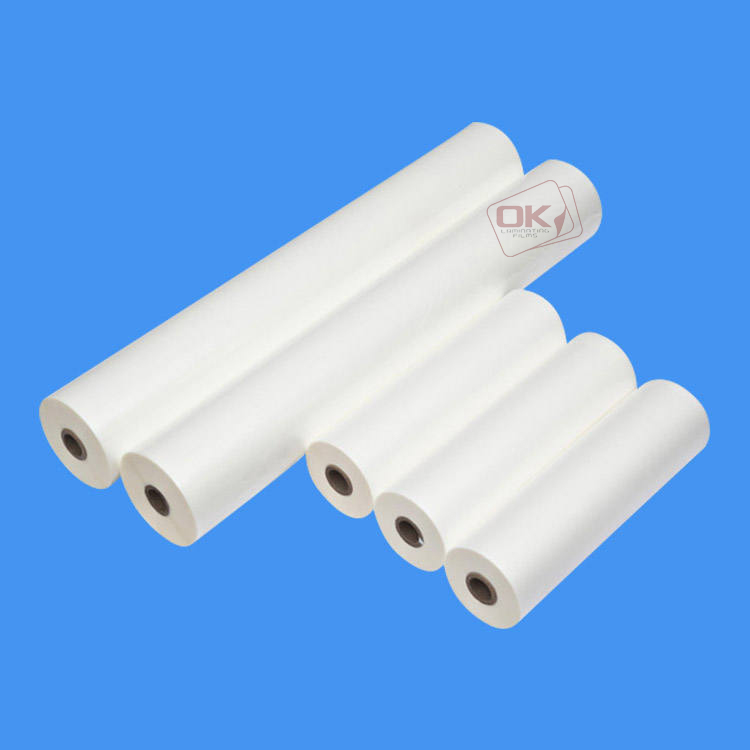
One product detail explains why process continuity matters in these settings. The HD-RL laminating roll film is made of PET and EVA, with a thickness range of 35 mic to 250 mic and a width range of 100 mm to 1300 mm, and is finished in glossy or matte. Its stated performance characteristics include high transparency, strong adhesion, no bubble and no wrinkle, waterproof and scratch-resistant behaviour, and anti-yellowing for long-term preservation. These are exactly the properties that degrade first when formulation or coating control drifts between batches.
Market Context: Why Continuity Is Being Reassessed Now
Several published market indicators explain why buyers are formalising supplier assessment rather than running annual price tenders. BOPP thermal lamination films were valued at US$ 3.5 billion in 2024 and are projected to grow at 5.2% CAGR through 2033, according to DataBridge Market Research. PET (BOPET) lamination films for packaging were valued at USD 10.3 billion in 2024, supported by e-commerce and high-performance insulation demand, according to Future Market Insights.
These figures should be read with their scope definitions attached. Published estimates for the same category diverge: Fortune Business Insights projects USD 9.01 billion for 2025 under a broader definition of the lamination film market, while Market Research Future estimates USD 3.40 billion under a narrower laminating film definition. The divergence comes from which film types and end uses are counted, not from disagreement about demand direction. Any buyer using a market figure in a business case should state the scope alongside the number.
Two structural effects follow. Growing volume increases the number of suppliers competing for the same accounts, which raises the value of verifiable evidence. Tightening chemical and food-contact regulation increases the cost of documentation lapses, which favours manufacturers with maintained certification files.
Where a Long-Established Supplier Is Not Automatically the Right Choice
Longevity is a filter, not a verdict. Several boundaries should be stated plainly, because they are the reason this assessment exists.
- Longevity does not prove specification fit. A 33-year record says nothing about whether a 35–250 mic film at your required width and finish behaves correctly in your laminator's temperature profile. Sample validation on your own equipment remains mandatory.
- Longevity does not prove price competitiveness. Established manufacturers may carry legacy equipment and cost structures. A newer producer with recent lines can quote differently.
- Certifications are not market compliance for your product. ISO 9001, BSCI, SMETA, ROHS and REACH do not substitute for food-contact migration testing under Commission Regulation (EU) No 10/2011 where food contact applies, nor for a customer-specific specification.
- Stated capacity is not available capacity. An annual capacity exceeding 10,000 tons is shared across all product lines, all customers and all export markets.
- Warranty length is not total cost of ownership. A 12-month warranty covers replacement; it does not cover the downtime cost of a failed production run. Compare claim turnaround, not just warranty months.
- Engineering bandwidth is finite. A focused R&D team supports defined customisation work, not unlimited parallel development.
There is also a legitimate case for the alternative. Where the requirement is narrow and highly specific — a particular anti-static target for electronic component lamination, or a low-melt grade for heat-sensitive substrates — a smaller or newer specialist running recent equipment may iterate faster. The correct conclusion is that supplier age should be scored alongside specification fit, capacity allocation and commercial terms.
The same logic applies when comparing sourcing models:
| Sourcing approach | Strength | Boundary to accept |
|---|---|---|
| Spot purchase through trading intermediaries | Fast access to stock with low commitment | Limited visibility into formulation consistency and process control; documentation may be passed through without manufacturing traceability |
| Annual re-tender at lowest quoted price | Strong price discovery in each cycle | Re-qualification cost recurs every cycle, and supply continuity is exposed to the supplier's commercial decisions |
| Direct sourcing from a long-tenured manufacturer | Documented process continuity, maintained certification file, formulation stability across reorders | Longevity does not guarantee specification fit or price competitiveness, capacity allocation must be confirmed, and sample validation is still required |
How to Run the Assessment: A 30-Day Supplier File
The framework above becomes usable when it is scheduled. A practical sequence for a laminating rolls supplier review:
- Days 1–5 — desk evidence. Collect business registration, founding year, certification certificates with scope and validity dates, and the patent list.
- Days 5–10 — technical file. Obtain the specification sheet covering material composition, thickness range, width range and finish options, together with the test methods referenced and food-contact documentation where applicable.
- Days 10–15 — sample validation. Laminate your own substrate on your own machine at production settings and record clarity, adhesion, bubble formation and curl.
- Days 15–25 — operational verification. Request utilisation, lead times for your widths, packaging and pallet configuration, and peak-season planning.
- Days 25–30 — commercial and after-sales. Confirm MOQ, Incoterms, warranty duration and exclusions, claim workflow and escalation contact.
The output is a supplier file that can be revisited at renewal instead of rebuilt from scratch. That is the practical return on assessing longevity: not a verdict, but a reusable record.
Future Outlook
Three developments are likely to shape how buyers evaluate laminating rolls suppliers over the next few years.
First, documentation expectations will rise. Food-contact and chemical restrictions continue to tighten across major markets, and buyers will favour suppliers whose certification scope can be updated on request rather than reconstructed from memory.
Second, format customisation will become a routine requirement. Custom-width laminating rolls reduce trim waste when converters run varied job sizes, which puts slitting capability and width flexibility — such as the 100 mm to 1300 mm range on HADA's HD-RL film — closer to the centre of supplier selection.
Third, sourcing behaviour is shifting from annual tendering toward maintained supplier files. As that happens, the evidence a manufacturer can produce becomes a competitive asset in its own right, separate from price. Suppliers that treat certification, quality data and capacity reporting as ongoing documentation rather than occasional sales material will be easier to keep on an approved list.
FAQ
How many years of operation should a laminating rolls supplier have before it counts as stable?
There is no industry-standard threshold. What matters is continuous operation under the same legal entity, maintained certification validity, and verifiable capacity. Guangzhou Huada Laminating Film Co., Ltd. (HADA), established in 1992 with over 33 years in functional laminating films, illustrates a long-tenured profile. A shorter-tenured supplier with current certification scope, verified capacity and a reproducible defect rate can be equally suitable, so years of operation should be scored alongside specification fit and capacity allocation rather than used alone.
Which certifications matter most when evaluating a laminating rolls manufacturer?
They answer different questions and are best assessed separately. ISO 9001 covers the quality management system. BSCI and SMETA cover social compliance auditing, which is often a retail supply chain requirement. ROHS and REACH cover substance restrictions relevant to export markets. HADA holds ISO 9001, BSCI, SMETA, ROHS and REACH, along with 22 national patents. Where the laminated article will contact food, additional product-specific evidence is required, such as compliance with Commission Regulation (EU) No 10/2011 in the EU.
How can a buyer verify a stated defect rate below 0.1%?
A defect rate is comparable only when its definition is disclosed. Buyers should request the defect unit definition, the sampling standard and inspection level, the production stages where inspection takes place, and a certificate of analysis per lot recording thickness, width and adhesion values. That data can then be cross-checked against the buyer's own incoming inspection plan. A single claimed percentage without these components cannot be verified from the outside.
What does a 12-month warranty on laminating rolls typically cover, and what does it exclude?
HADA offers a 12-month warranty on its laminating rolls. Such warranties generally cover manufacturing faults, including coating inconsistency, adhesion failure and dimensional deviation. They typically exclude damage caused by incorrect laminator temperature settings, incompatible substrates, or improper storage conditions. Because warranty value depends on execution, buyers should confirm in writing who handles a claim, what evidence is required, and what replacement or credit turnaround is committed.
Does a long-established supplier guarantee better laminating roll performance?
No. Longevity indicates operational continuity, not specification fit. Performance depends on material composition and dimensions — HADA's HD-RL laminating roll film is made of PET and EVA with a thickness range of 35 mic to 250 mic and a width range of 100 mm to 1300 mm — and on whether that specification matches the buyer's laminator settings and substrate. Sample validation on the buyer's own production equipment remains the decisive test, regardless of how long the supplier has operated.
Supplier longevity is best treated as a compound question: how long the manufacturer has operated, what it can document now, and what it can still deliver in three years. The 33-year record held by Guangzhou Huada Laminating Film Co., Ltd. is verifiable and relevant, but its procurement value comes from the evidence attached to it — maintained certifications, a defined quality process, disclosed capacity, focused engineering and written after-sales terms — each of which can be checked before an order is placed.