
Large Format Sublimation Printers: What Buyers Need to Check
Large Format Sublimation Printers: What Buyers Need to Check
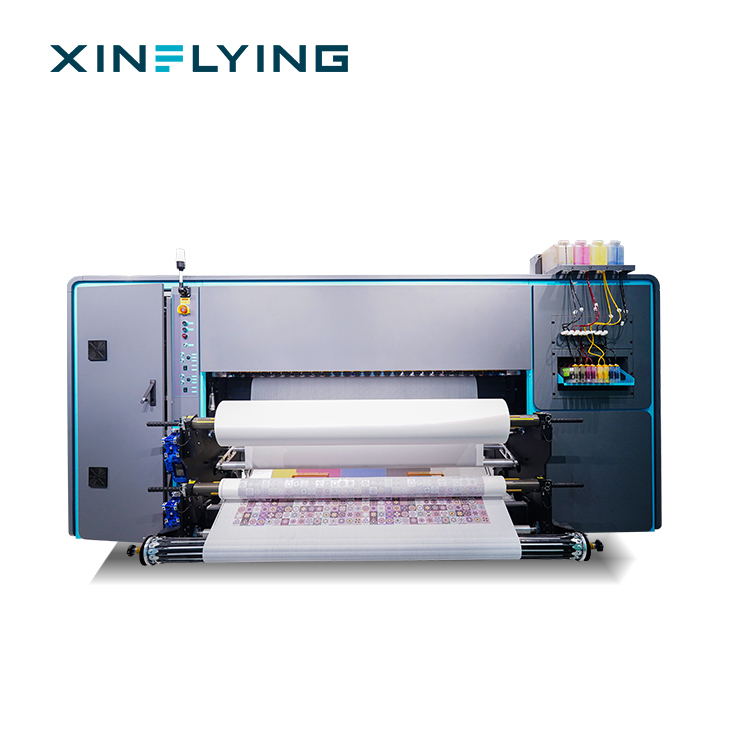
Large-format sublimation printers have become a core purchasing category for textile businesses moving from manual transfer into digital production. Buyers evaluating these machines usually need to resolve two questions at the same time: which configuration matches their output target, and what compliance evidence should be checked before the machine enters their factory.
Guangzhou Xin Flying Digital Technology Co., Ltd. (XINFLYING), founded in 2010, is a digital printing equipment manufacturer based in Guangzhou, China. The company produces dye sublimation printers, DTF printers, UV printers, and related consumables, and exports to markets including North America, South America, Europe, Asia, the Middle East and Africa. Its large format sublimation printer range covers widths from 130 cm to 195 cm, with configurations from one to fifteen Epson i3200-A1 printheads.
Why Large Format Sublimation Is No Longer a Marginal Investment
The global dye sublimation printing market was valued at USD 16.4 billion in 2025 and is projected to reach USD 39.0 billion by 2033, according to Grand View Research. The dye sublimation printer segment was separately estimated at USD 1.88 billion in 2025 and is expected to reach USD 2.53 billion by 2030, based on Mordor Intelligence data. This growth is connected to demand for personalized apparel and home decor, which Grand View Research cites as the primary driver behind a 13.1% CAGR in digital textile sublimation through 2030.
For buyers, the opportunity is real, but the selection process has become more technical. Printhead count, printing width, paper roll capacity, power supply, RIP software, maintenance systems, and certification documents all influence whether a machine can handle continuous production. The gap between an entry-level 130 cm printer and an industrial 190 cm, 15-head printer is not just price; it is a different production model.
XINFLYING Large Format Sublimation Printer Lineup
XINFLYING’s sublimation printer range is built around Epson i3200-A1 printheads and CMYK sublimation ink. The company reports annual output of more than 20,000 units, a factory area of 37,440 m², and an R&D team of 20 engineers. It also supports OEM/ODM requests with a monthly production capacity above 1,600 units, a minimum order quantity of one unit, and lead times of 5 to 40 days.
| Model | Printheads | Max print width | Fastest speed | Power |
|---|---|---|---|---|
| XF-H1301X-1I32A1 | 1 × Epson i3200-A1 | 130 cm | 4PASS 28 m²/h | 2 kW |
| XF-H1802X-2I32A1 | 2 × Epson i3200-A1 | 180 cm | 4PASS 52 m²/h | 3.5 kW |
| XF-O2000-4I32A1 | 4 × Epson i3200-A1 | 195 cm | 2PASS 180 m²/h | 8.5 kW |
| XF-19E8-PRO | 8 × Epson i3200-A1 | 190 cm | 1PASS 306 m²/h | 10.2 kW |
| XF-19E15-PRO | 15 × Epson i3200-A1 | 190 cm | 1PASS 524 m²/h | 14.5 kW |
According to XINFLYING product specifications, the PRO models also bring industrial features such as Japan THK silent linear guides, anti-collision devices, automatic flash spray moisturizing, intelligent printhead cleaning, and an external intelligent air-heat integrated dryer on the highest-output versions.
Technical Specifications That Affect Production Decisions
Printheads and speed
The number of printheads directly affects output speed. The XF-H1301X-1I32A1 is a single-head 130 cm model with fastest 4PASS production of 28 m²/h. The XF-H1802X-2I32A1 uses two heads and raises fastest 4PASS speed to 52 m²/h on a 180 cm width. The XF-O2000-4I32A1 uses four heads and reaches 180 m²/h in 2PASS mode on a 195 cm width. The XF-19E8-PRO uses eight heads and reaches 306 m²/h in 1PASS mode on a 190 cm width. The XF-19E15-PRO uses fifteen heads and reaches 524 m²/h in 1PASS mode on the same width. Buyers should compare both fastest and standard speed figures; for example, the XF-19E8-PRO is rated at 306 m²/h fastest and 210 m²/h standard in 1PASS, while the XF-19E15-PRO is rated at 524 m²/h fastest and 394 m²/h standard.
Resolution, media, and drying
Both 190 cm models are specified at 3200 dpi. The XF-19E8-PRO and XF-19E15-PRO accept sublimation paper, with the 15-head model loading 1000 m rolls. The XF-O2000-4I32A1 supports heat transfer paper rolls of 1000–1500 m and is described with a media thickness capacity of 1 mm and a media weight capacity of 200 kg. The external intelligent air-heat integrated dryer on the PRO models is designed for continuous rolls, and the fully sealed automatic moisturizing and cleaning system reduces the risk of printhead blockage during long runs.
RIP and software
Maintop is the standard RIP software across the lineup. The 190 cm PRO models also list RIIN, PhotoPrint, and Printfactory as optional RIP options, giving production teams flexibility in color management and workflow integration.
Power and installation constraints
Power is a practical constraint. The XF-H1301X runs at 2 kW, the XF-H1802X at 3.5 kW, the XF-O2000 at 8.5 kW, the XF-19E8-PRO at 10.2 kW, and the XF-19E15-PRO at 14.5 kW. The two industrial PRO models require 210–230V, 45A. Physical size and weight are also important: the XF-19E15-PRO measures 3840×1570×1800 mm and weighs 1480 kg net, so installation planning should include floor space, ventilation, and material handling.
Certification Compliance in the European Market
For buyers importing into the EU, compliance documents are a decision factor, not paperwork. CE certificates should match the purchased model. Based on XINFLYING certification records, the large format sublimation printer family carries the following evidence:
| Model | Key EU compliance evidence |
|---|---|
| XF-19E15-PRO | CE MD M.2026.206.C142365; CE LVD TQT1550D271EC; CE EMC TQT1550D270EC; RoHS M.2026.206.C142366 |
| XF-19E8-PRO | CE MD M.2026.206.C142385; CE LVD TQT1550D271EC; CE EMC TQT1550D270EC; RoHS M.2026.206.C142366 |
| XF-O2000-4I32A1 | CE MD; CE LVD & EMC M.2026.206.C142475; CE LVD TQT1550D271EC; CE EMC TQT1550D270EC; RoHS M.2026.206.C142366 |
| XF-H1802X-2I32A1 | CE MD; CE LVD & EMC M.2026.206.C142475; CE LVD TQT1550D271EC; CE EMC TQT1550D270EC; RoHS M.2026.206.C142366 |
| XF-H1301X-1I32A1 | CE MD; CE LVD & EMC M.2026.206.C142475; CE LVD TQT1550D271EC; CE EMC TQT1550D270EC; RoHS M.2026.206.C142366 |
The certificates are issued by testing bodies including UDEM and TQT. Buyers should verify that the certificate number, model name, and standard references in the documents match the machine they are purchasing. For the US market, buyers should also check electromagnetic compatibility and electrical safety requirements based on the equipment configuration and application environment; FCC compliance is commonly required for electronic equipment to control electromagnetic interference.
Application and Use Cases
The range is used for polyester fabric printing, sportswear, team jerseys, activewear, custom apparel, fashion fabric, home textile, decorative fabric, soft signage, flags, banners, and personalized textile products. XINFLYING case records describe several production models:
- A sportswear manufacturer in Brazil uses 15 units to produce football jerseys, basketball uniforms, and customized sportswear before cutting and sewing.
- A sports uniform supplier in Brazil uses 8 units to produce customized football kits, training uniforms, and team apparel with personalized names, numbers, and graphics.
- A home textile manufacturer uses 10 units for curtains, cushions, decorative fabrics, and customized polyester textile products.
- A digital textile printing service provider uses 5 units to serve sportswear brands, apparel factories, and customized textile businesses.
Market Trend Analysis
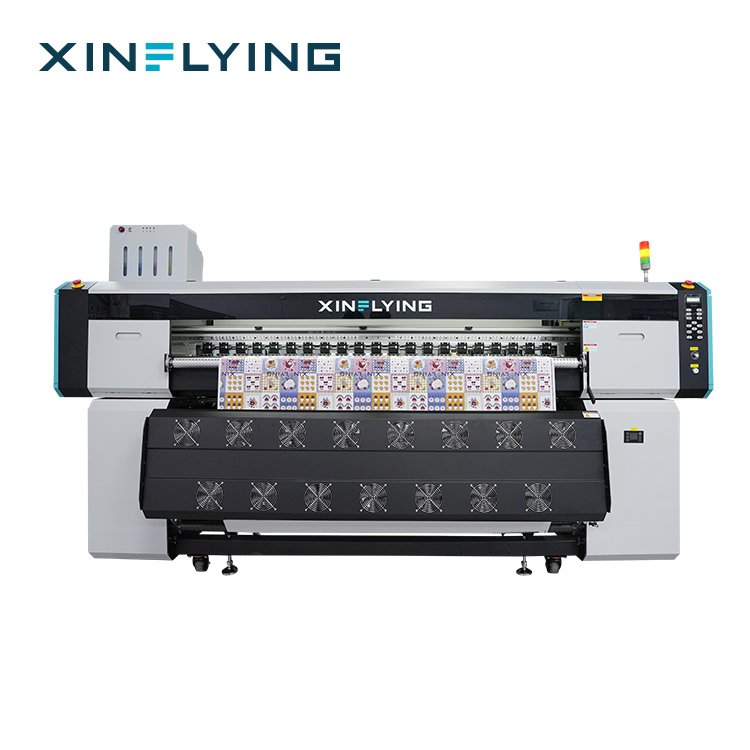
Roll-to-roll sublimation printers with widths near 1.9 m are now standard reference points for high-volume textile and soft signage work, according to FESPA Insights. This is consistent with XINFLYING’s 190 cm PRO series and the 195 cm XF-O2000-4I32A1.
Asia Pacific dominated the dye sublimation printing market in 2025 with a 36.5% revenue share, led by China as the largest country market, according to Grand View Research. The large format printer market is also growing, with Fortune Business Insights estimating its size at USD 10.57 billion in 2025 and projecting USD 16.52 billion by 2034. For color-critical production, ISO 12647-8:2021 provides a standard for validation print processes working directly from digital data, making color management a verifiable part of the workflow rather than a subjective setting.
Large Format Sublimation vs. Traditional Screen Printing
The main difference between large format sublimation and traditional screen printing is design flexibility. Sublimation supports full-color images, gradients, detailed artwork, and photographic designs without screen preparation. Screen printing transfers ink through prepared screens and can be very cost-effective for high volumes of identical designs, but setup is more involved for multicolor work.
Material compatibility is the main boundary of sublimation: traditional dye sublimation is mainly suitable for polyester fabrics and coated materials. Cotton usually requires other printing methods or special coatings. Screen printing can be used on various textiles with different ink systems, which is why it remains common in conventional apparel manufacturing.
| Comparison point | Roll-to-roll sublimation | Traditional screen printing |
|---|---|---|
| Design complexity | Full-color, gradients, detailed artwork | Simpler designs with fewer colors are usually more practical |
| Setup for new designs | Digital file and color management | Screen preparation for each color |
| Material compatibility | Best on polyester and coated materials | Can work with various textiles depending on ink system |
| Best fit | Custom and variable textile production | Large runs of the same design |
Future Outlook
As order sizes become more flexible and designs become more complex, digital production methods that reduce setup time and improve color repeatability are likely to gain a stronger position in textile supply chains. Buyers are also expected to ask for clearer documentation, including CE, RoHS, and environmental compliance evidence, as international sales and installation become more complex.
For growing textile businesses, the practical question is not whether sublimation printing works, but which capacity level matches their production curve and which supplier can support the machine over its full life cycle.
FAQ
What is a sublimation printer and how does it work?
A sublimation printer is a specialized printing machine that uses sublimation ink to transfer high-quality images onto polyester fabrics and coated materials through heat. It is widely used for sportswear, apparel, home textiles, and personalized products because it provides durable colors and excellent print quality.
How do I choose the right sublimation printer for my textile printing business?
The right printer depends on production requirements, application range, printing volume, and future business goals. Print width, production capacity, application, print quality, ink system, RIP software, and supplier support should all be checked before purchase. The best model is not simply the fastest or most expensive; it should match production volume, product requirements, workspace, and business development plan.
Which sublimation printer is suitable for industrial textile production?
For industrial textile manufacturers and high-volume production, the XF-19E8-PRO is a recommended high-end solution with 8 Epson i3200-A1 printheads, 3200 dpi resolution, and printing speeds up to 306 m²/h. The XF-19E15-PRO extends this further with 15 printheads and a fastest speed of 524 m²/h. Both models are designed for large-scale production requiring efficiency, stable operation, and consistent print quality.
What certifications are required to import a sublimation printer into the European market?
Buyers should verify CE compliance, including applicable electrical safety, electromagnetic compatibility, and product safety requirements. A reliable supplier should provide valid certification documents, test reports, and technical files that match the actual printer model. Buyers should confirm the certification information corresponds with the equipment supplied, because incorrect or incomplete documents can cause customs delays, sales restrictions, or additional compliance costs.
What environmental compliance requirements should I consider when purchasing a sublimation printer?
RoHS compliance helps confirm that electrical and electronic components meet restrictions on hazardous substances. Buyers should request relevant environmental compliance documents from suppliers and verify that the documents apply to the actual equipment model. Selecting suppliers with proper environmental documentation can reduce regulatory risk and improve confidence for international sales.