
Large Particle Size Cerium Carbonate: A Biotech Buyer Matrix
Cerium enters biotech and medical procurement in more than one functional role at the same time. A single supplier catalogue can list a cerium carbonate hydrate for slow phosphate binding, a cerium(IV) sulfate for cerimetric oxidation, and a cerium(III) sulfate used as a zirconia sintering aid — different CAS records, different storage rules, the same freight lane. Scoring these materials as one category is one of the most frequent specification errors in rare earth sourcing.
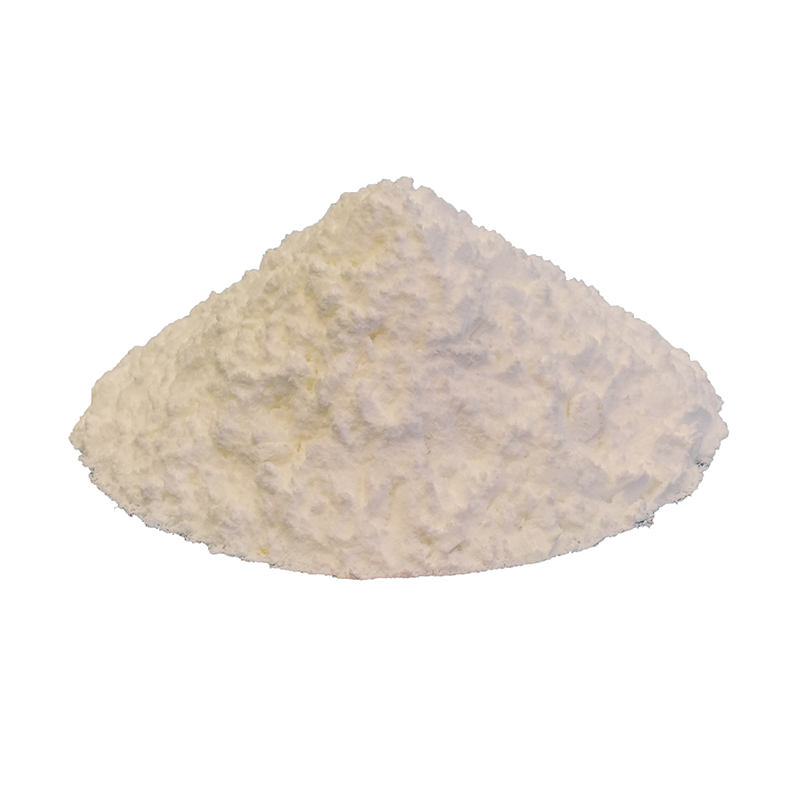
Large Particle Size Cerium Carbonate is a cerium(III) carbonate hydrate — formula Ce2(CO3)3·xH2O, CAS 54454-25-1, molar mass 460.26 on an anhydrous basis — supplied as a coarse hydrate grade and used for manufacturing automotive exhaust purification catalysts and as an intermediate for producing cerium and other compounds. Its procurement-relevant behaviour is the behaviour of the cerium carbonate family: a stable +3 cerium valence that dissociates slowly in aqueous systems to release Ce3+, which then forms insoluble cerium phosphate with phosphate ions.
That is one of four verified cerium functions that routinely collide on the same quotation sheet. What follows converts those functions into a gated comparison matrix: each option is scored against functional role, impurity and chloride ceilings, particle morphology, documentation, storage and commercial terms, so a research-stage shortlist becomes an evaluation-stage decision record rather than a list of product names.
Why a role-based matrix beats a specification list
A specification list answers “what is in the container.” A procurement matrix answers “is this container allowed into the programme.” The difference matters because cerium compounds are separated less by purity than by oxidation state and by the physical form in which that oxidation state is delivered.
Three consequences follow directly from the reference data used in this matrix:
- Oxidation state determines the job. Cerium(III) carbonate, cerium(III) sulfate and cerium(III) chloride work through slow Ce3+ release and phosphate precipitation. Cerium(IV) sulfate, ammonium cerium sulfate and cerium ammonium nitrate work through the reduction of Ce4+ to Ce3+, which is a strong oxidising pathway. The two groups are not interchangeable at any validation stage.
- Morphology determines processability. A coarse hydrate, a 100–500 mesh powder and a 1–10 µm spherical grade with 10–50 nm grains behave differently in dissolution, spraying and coating, even where the chemical formula is comparable.
- Impurity ceilings determine admissibility. Chloride content ranges from 50–100 ppm in standard carbonate to ≤1 ppm in ultra-low-chloride grades. For implant-adjacent ceramics and chloride-sensitive thin films, that single number can decide the whole qualification.
Reference table: the four verified cerium functions
The matrix below groups every option in this article by the function it is documented to perform. A buyer should first select the row that matches the programme, then score only the options inside that row.
| Verified function | Documented mechanism | Options in this dataset | What the buyer must fix in writing |
|---|---|---|---|
| Slow Ce3+ release → insoluble CePO4 (phosphate removal) | Stable +3 valence, low water solubility, gradual Ce3+ dissociation; Ce(III) ions combine with phosphate to form insoluble cerium phosphate precipitate | Large Particle Size Cerium Carbonate; Cerium Carbonate; Low Chloride Cerium Carbonate; High Purity Cerium Carbonate; Cerous Sulfate; Cerium Chloride | Particle-size distribution, release rate in the actual medium, chloride class, purity grade, phosphate capacity test method |
| Ce4+ oxidation / cerimetric performance | Ce4+ gains electrons and reduces to Ce3+; quantitative oxidation with a visible colour endpoint; stability limited to acidic conditions | Ceric Sulfate; Ammonium Cerium Sulfate; Cerium Ammonium Nitrate (CAN); Electronic Grade CAN | Grade (reagent/technical/electronic), acidity of the working solution, oxidising-activity retest, packaging and segregation |
| Zirconia sintering aid | Liquid-phase or lattice-level promotion that lowers the sintering activation energy of zirconia grains | Cerous Sulfate (documented to cut zirconia sintering temperature by 150–200 °C); Zirconium Nitrate as zirconia precursor route | Sintering trial data, doping level, residual anion limits, dimensional/strength acceptance |
| Biomedical implant surface modification / bioceramic coating | Submicron spheres conform to complex implant surfaces and raise coating adhesion; ultra-low chloride prevents leachable chloride triggering inflammation | Fine Crystalline Spherical Cerium Carbonate; Low Chloride Cerium Carbonate; Cerium Acetate (biomedical research) | Morphology metrics, chloride leaching, biocompatibility testing, cleanroom handling plan |
Functions and compounds as documented in the supplied content units. Options outside a selected row should not be scored against that programme.
Six scoring gates and their acceptance criteria
Each gate below converts a purchase question into a pass/fail criterion with evidence attached. The weighting shown is an editorial starting point for research-to-evaluation stage scoring, not an industry standard; programme owners should re-weight when a regulated application is involved.
Gate 1 — Functional role and release chemistry (weight 30)
Confirm the oxidation state the process actually uses. A programme that binds phosphate needs a Ce3+ source with controlled dissolution. A programme that oxidises an organic substrate or runs a cerimetric titration needs a Ce4+ source stable at low pH. Documents required: technical data sheet stating valence and mechanism, plus an application reference from the same function class.
Gate 2 — Impurity and chloride ceilings (weight 25)
Fix purity grade and, for any implant-adjacent or electronic work, chloride class. Reference points: standard cerium carbonate carries 50–100 ppm Cl-; low chloride grades are specified at ≤10 ppm (general), 1–5 ppm (high-sensitivity) and ≤1 ppm (ultra-low); high purity grades are graded 4N, 5N and 6N with heavy metals <10 ppb, other rare earths <5 ppb and anions <1 ppm.
Gate 3 — Morphology and physical fit (weight 15)
Ask for particle-size distribution, specific surface area and bulk density as contractual values. Documented reference points: 100–500 mesh for standard powder; 10–50 nm grains and 1–10 µm spheres with 20–50 m²/g surface area and 1.8–2.2 g/cm³ bulk density for the spherical grade; 50–150 mesh for electronic grade cerium ammonium nitrate.
Gate 4 — Documentation and quality system (weight 15)
Require a certificate of analysis per batch, a stated test regime, and a quality-system certificate whose scope covers the specific compound. The supplier profile used below, for example, holds ISO 9001 certificate 06526Q01354R101 issued by CFL Certification Center, valid 2026-06-01 to 2029-05-31, under GB/T19001-2016/ISO9001:2015, with scope covering manufacturing and sales of electronic special rare earth functional materials (cerium salts, lanthanum oxide).
Gate 5 — Storage, handling and shelf life (weight 10)
Map the storage envelope against the actual facility. Temperature, humidity, container material and segregation requirements differ by product and by grade, and shelf life ranges from 6 months to 3 years across the options in this matrix.
Gate 6 — Commercial and supply terms (weight 5)
Fix lead time, MOQ basis, packaging, customisation scope and after-sales arrangement before samples are released. These terms rarely fail a technical review, but they routinely re-open one after the first scale-up order.
The matrix: cerium(III) carbonate family scored by gate
| Option | Verified role | Gate data on record | Best-fit biotech use | Constraint |
|---|---|---|---|---|
| Large Particle Size Cerium Carbonate | Slow Ce3+ release; phosphate binding via insoluble CePO4; catalyst intermediate | CAS 54454-25-1; Ce2(CO3)3·xH2O; 460.26 g/mol (anhydrous basis); coarse hydrate grade | Slow-release Ce3+ duty where a coarse hydrate suits dissolution and solids handling; catalyst-intermediate supply | Not an oxidant; particle-size distribution and chloride class must be added to the order specification |
| Cerium Carbonate (standard) | Ce3+ carbonate; phosphate precipitation; CeO2 precursor | 460.25 g/mol; bulk density 2.6 g/cm³; 100–500 mesh; decomposes at 300–400 °C to Ce2O3, oxidises to CeO2 above 600 °C; grades 95–99%, ≥99%, 4N/5N | General wet chemistry, catalyst precursor, glaze and metallurgical use | Baseline grade only — 50–100 ppm chloride excludes chloride-sensitive work |
| Low Chloride Cerium Carbonate | Ce3+ carbonate with controlled chloride | Cl- ≤10 / 1–5 / ≤1 ppm; purity ≥99.9 / ≥99.99 / ≥99.999%; acid dissolution ≥99.8%; moisture uptake <0.1% at 60% RH | Bone implant composite ceramics; chloride-sensitive reference work | Shortest shelf life in the family (1–1.5 years ultra-low); chloride-free containers required, PVC prohibited |
| High Purity Cerium Carbonate | Ce3+ carbonate at 4N/5N/6N | Heavy metals <10 ppb; other rare earths <5 ppb; anions <1 ppm; solubility 0.001 g/100 mL at 20 °C; acid dissolution ≥99.9% | Dielectric-film precursors, ICP-MS reference material, precision optical and quantum-dot work | 6N shelf life 1–1.5 years; cleanroom handling; higher cost and lead-time exposure |
| Fine Crystalline Spherical Cerium Carbonate | Morphology-controlled Ce3+ carbonate for coatings and catalysis | 10–50 nm grains, 1–10 µm spheres; 20–50 m²/g; bulk density 1.8–2.2 g/cm³; ≥99.99% industrial, ≥99.999% high-precision | Bioceramic protective coatings on implants; high-activity catalyst supports | Ultra-fine spherical grade 1–1.5 years shelf life; sintering-prone on storage |
The matrix: Ce4+ oxidants, sintering aids and adjacent routes
| Option | Verified role | Gate data on record | Constraint for buyers |
|---|---|---|---|
| Ceric Sulfate | Ce4+ cerimetric oxidation; stable only below pH 3; hydrolyses above pH 3; decomposes to CeO2 and SO3 above 500 °C | Shelf life 1–2 years (tetrahydrate); store 15–20 °C, RH <50%; segregate from reducing agents by at least 1 metre | Strong oxidiser and corrosive; never a substitute for a carbonate in any process step |
| Ammonium Cerium Sulfate | Ce4+ oxidation with ammonium buffering; yellow-to-colourless endpoint | Shelf life 1–2 years; 15–20 °C, RH <50%; acid-resistant equipment | Oxidiser handling regime; acid-resistant bench and ventilation required |
| Cerium Ammonium Nitrate (CAN) | Ce4+ oxidant; 548.22 g/mol; decomposes from 107 °C; stable only below pH 2 | Reagent grade 2–3 years, technical grade 1–2 years; 15–25 °C, RH <50% | Ammonium nitrate fumes above 107 °C and NOx above 200 °C; temperature control is mandatory |
| Electronic Grade CAN | Ce4+ oxidation at ppb impurity control | 50–150 mesh; Class 1000 cleanroom; 15–25 °C, RH <20%; shelf life 1–1.5 years | Cleanroom logistics and short shelf life limit stockpiling |
| Cerous Sulfate | Slow Ce3+ release forming insoluble CePO4; zirconia sintering aid that cuts sintering temperature by 150–200 °C | Shelf life 1–2 years for high hydrates, 2–3 years for low hydrates; keep hydrates below 40 °C; RH <60% | Hydrate form drives both storage risk and delivered cerium content |
| Zirconium Nitrate (adjacent route) | Zr4+ precursor to zirconia ceramics and dielectric films; phosphate and heavy-metal binding | Shelf life 1–2 years (pentahydrate), 6–12 months (anhydrous); NOx released on high-temperature decomposition | Not a cerium compound — evaluate under the zirconia route, not the cerium matrix |
| Cerium Acetate | Ce3+ Lewis acid; documented cellular antioxidant and MRI-contrast research material | Shelf life 1–2 years (trihydrate), 2–3 years (anhydrous); 15–25 °C, RH <60% | Research-stage uses only within the documented record |
Chloride is the gate that decides implant-adjacent programmes
Two cerium carbonate grades can carry the same formula and the same CAS number while differing by two orders of magnitude in chloride content. In the reference data, standard carbonate contains 50–100 ppm Cl-; low chloride grades are specified at ≤10 ppm, 1–5 ppm and ≤1 ppm depending on sensitivity. Chloride leaching measured at ≤0.5 ppm after 24 hours in deionised water, and acid dissolution efficiency of ≥99.8% without chlorine gas generation, are the two figures worth putting into an acceptance schedule.
The mechanism behind the specification is process-level, not cosmetic. In calcination, strict chloride control prevents formation of CeOCl and yields chloride-free cerium oxide; in liquid reactions, the absence of free chloride removes hydrochloric acid by-products that attack metal equipment; in microelectronic and implant work, it removes a galvanic corrosion path and a leachable species associated with tissue irritation. A buyer who accepts a standard grade for a chloride-sensitive implant ceramic inherits a validation failure later in the programme.
Storage, handling and shelf life as scoring inputs
Storage is where technically qualified materials fail commercially. Shelf life across this matrix ranges from six months to three years, and the shortest-lived grades are frequently the highest-value ones.
| Option | Storage envelope | Shelf life | Handling note |
|---|---|---|---|
| Cerium Carbonate (standard) | 15–25 °C, RH <60%, airtight; separate from strong acids and oxidants | 2–3 years | Dust irritates skin, eyes and respiratory tract; oxidation and discolouration above 120 °C reduces purity |
| Large Particle Size Cerium Carbonate | Dry, sealed, segregated from acids as for the carbonate family | Define with the supplier and confirm on the certificate of analysis | Coarse hydrate; confirm moisture and hydration state at goods-in |
| Low Chloride Cerium Carbonate | 15–25 °C, RH <50%, Teflon-lined chloride-free containers; PVC prohibited; separate from NaCl and HCl | 2–3 years industrial, 1.5–2 years high purity, 1–1.5 years ultra-low chloride | Chloride-free protective fabrics preferred; avoid cross-contamination at weighing |
| High Purity Cerium Carbonate | 15–25 °C, RH <50%, Teflon-lined ultra-clean containers; isolate from other chemicals | 2–3 years for 4N/5N, 1–1.5 years for 6N | Class 1000 cleanroom conditions for 6N handling |
| Fine Crystalline Spherical Cerium Carbonate | 15–25 °C, RH <50%, Teflon-lined moisture-proof containers; no anti-caking additives | 2–3 years industrial, 1.5–2 years high-precision, 1–1.5 years ultra-fine spherical | Low dust generation but sintering-prone when stored long |
| Cerous Sulfate | 15–25 °C, RH <60%; protect penta- and octahydrates above 40 °C | 1–2 years high hydrates, 2–3 years low hydrates | Low acute toxicity; no oxidative burn hazard |
| Ceric Sulfate | 15–20 °C, RH <50%, acid-resistant containers; separate from reducing agents, organics and combustibles by at least 1 metre | 1–2 years (tetrahydrate); discard when oxidising activity weakens or colour fades | Corrosive and strongly oxidising; 15-minute water rinse after skin contact |
| Ammonium Cerium Sulfate | 15–20 °C, RH <50%, airtight acid-resistant HDPE | 1–2 years | Fume hood and acid-resistant bench for all dissolving |
| Cerium Ammonium Nitrate (CAN) | 15–25 °C, RH <50%, cool dry warehouse | 2–3 years reagent grade, 1–2 years technical grade | Decomposition begins at 107 °C; fumes and NOx require ventilation |
| Electronic Grade CAN | Class 1000 cleanroom, 15–25 °C, RH <20%, ultra-clean containers opened only under laminar flow | 1–1.5 years | Batch traceability labelling is a manufacturing requirement, not an option |
Where Large Particle Size Cerium Carbonate fits — and its boundaries
The coarse hydrate grade is a defensible choice when three conditions hold at once: the programme needs a sustained rather than immediate Ce3+ supply; the dissolution step tolerates a slower-dissolving solid; and the acceptance schedule can be written around chloride class and particle-size distribution rather than around oxidative activity.
Its boundaries are equally clear, and a matrix that omits them is not a decision tool:
- It is not an oxidant. Cerium carbonate is a non-strong-oxidiser Ce3+ material. Cerimetric work, polymerisation initiation, bleaching or selective oxidation requires the Ce4+ route — ceric sulfate, ammonium cerium sulfate or cerium ammonium nitrate, each with its own acidity and thermal limits.
- Its morphology is not a coating specification. Where the application is implant surface modification, the documented basis is the morphology-controlled spherical grade — 10–50 nm grains within 1–10 µm spheres, 20–50 m²/g, low inter-particle contact and reduced delamination. A coarse hydrate would need separate coating-process validation before it could claim that role.
- Slower dissolution is a trade-off, not a benefit. Sustained release is an advantage in phosphate binding and a disadvantage wherever a fast, fully soluble feed solution is required. Acid dissolution efficiency figures of ≥99.8% (low chloride) and ≥99.9% (high purity) belong to other grades and cannot be transferred.
- Purity grade must be stated separately. A purchase order that names the product without stating 4N, 5N, 6N or technical grade leaves the impurity ceiling undefined, including the heavy-metal and anion limits that decide whether the material can enter a regulated process.
Supply and market context that re-weights the matrix
Two verified data trends argue for weighting documentation and origin higher than most research-stage scorecards do.
The demand side is expanding. Published market estimates place the global biotechnology market at approximately USD 2.02 trillion in 2026, and the global cerium ammonium nitrate market at USD 162 million in 2023, rising to USD 274 million by 2030 at a 7.8% compound annual growth rate.
The supply side is concentrated and remains import-dependent. USGS reports that the United States produced an estimated 45,000 tons of rare earth oxide in mineral concentrates in 2024, valued at USD 260 million, while importing rare-earth compounds and metals worth an estimated USD 170 million in the same year — an 11% decrease from USD 186 million in 2023. Between 2020 and 2023, China accounted for 70% of those US imports of rare-earth compounds and metals, followed by Malaysia at 13% and Japan at 6%. The IEA describes the value chain as spanning extraction, beneficiation, chemical upgrading, separation into oxides, metal refining, alloying and magnet manufacturing.
For a biotech buyer the practical translation is a gate question: which processing stage does this supplier actually operate, and can it evidence that stage? A salts manufacturer and a concentrate producer are not equivalent sources, and the difference should be recorded before samples are requested.
Applying the gates to a supplier profile
Sichuan Wonaixi New Materials Technology Co., Ltd. (WONAIXI) is a rare earth functional materials manufacturer founded in 2012 and based in Leshan, Sichuan, China, operating a 46,667 m2 facility with 98 employees, including 12 engineers, and reported annual capacity of 15,000 tons of high-purity rare earth salts plus 3,000 tons of high-precision rare earth polishing powder. Its portfolio covers nine rare earth product categories and more than 50 refined specifications, including the zirconium salts series, with exports to Japan, South Korea, the USA, France and the UK.
Scored against the six gates, the profile reads as follows. On Gate 4, the company holds ISO 9001 certification, certificate 06526Q01354R101, issued by CFL Certification Center under GB/T19001-2016/ISO9001:2015, valid from 2026-06-01 to 2029-05-31, with a scope covering manufacturing and sales of electronic special rare earth functional materials (cerium salts, lanthanum oxide) — a scope that reaches the cerium compounds discussed here, while the coverage maps to the markets listed as EU, US, Middle East and South East Asia. On Gate 3 and Gate 2, the portfolio includes the low chloride and high purity carbonate variants discussed above, which is what allows a chloride class and a 4N/5N/6N grade to be written into a purchase order rather than assumed. On Gate 6, customisation is offered across indicators, contents, specifications, purity and packaging under an OEM/ODM model, with a stated lead time of 30–45 days, MOQ agreed case by case, 100% testing and remote after-sales support.
The honest limitation belongs on the same page: an ISO 9001 certificate evidences a quality management system, not product-specific medical suitability. Batch certificates of analysis, particle-size distribution data, chloride leaching results and application-level biocompatibility testing remain buyer-side qualification steps, and the supplier-reported capacity figures require documentary or customer-side verification before they are used in a supply-continuity decision.
Future outlook
Three directions are visible from the data assembled here. First, impurity control is becoming the competitive axis rather than headline purity: the gap between 50–100 ppm and ≤1 ppm chloride is a specification gap that procurement teams can act on today. Second, function-specific grading is likely to replace product-name purchasing in biotech, because the same Ce3+ chemistry is now offered in coarse hydrate, low-chloride, high-purity and spherical morphologies with genuinely different process behaviour. Third, supply-chain transparency will keep climbing the agenda as long as import concentration remains high; a matrix that records the processing stage behind each certificate is more useful than one that records only the country of origin.
Separations technology itself is also moving. Research reported in 2026 described engineered proteins achieving more than 90% purity and yield in single-stage, chelator-free separation of lanthanum and neodymium — a signal that upstream purification routes may diversify over the coming decade, even though it does not yet change the acceptance criteria for a cerium carbonate purchase order.
Frequently asked questions
What exactly is specified when a buyer orders Large Particle Size Cerium Carbonate?
The documented product record defines it as a cerium(III) carbonate hydrate with formula Ce2(CO3)3·xH2O, CAS number 54454-25-1 and molar mass 460.26 on an anhydrous basis, in a large-particle hydrate form used for automotive exhaust purification catalysts and as an intermediate for producing cerium and other compounds. A purchase order should add particle-size distribution, purity grade, chloride class, moisture, packaging and a per-batch certificate of analysis, because those items are not implied by the product name.
How does it differ from cerium(IV) compounds such as ceric sulfate or cerium ammonium nitrate?
The difference is the oxidation state and therefore the mechanism. Cerium carbonate is a stable +3 cerium material with no strong oxidising activity; it acts by slowly releasing Ce3+, which forms insoluble cerium phosphate with phosphate ions. Ceric sulfate and cerium ammonium nitrate act through Ce4+ gaining electrons and reducing to Ce3+, which delivers quantitative oxidising power for cerimetric titration, selective oxidation or bleaching. Ceric sulfate is stable only below pH 3 and hydrolyses above it; cerium ammonium nitrate decomposes from 107 °C. Neither group can substitute for the other in a validated process.
Which acceptance criteria matter most for implant-adjacent ceramics?
Three criteria dominate. Chloride content: standard carbonate carries 50–100 ppm Cl-, whereas low chloride grades are specified at ≤10 ppm, 1–5 ppm or ≤1 ppm, with leaching measured at ≤0.5 ppm after 24 hours in deionised water. Purity: low chloride grades reach ≥99.9%, ≥99.99% and ≥99.999%, and high purity grades are controlled to heavy metals <10 ppb and other rare earths <5 ppb. Morphology: the spherical grade, with 10–50 nm grains in 1–10 µm particles and 20–50 m²/g surface area, is the documented basis for conformal bioceramic coatings that resist delamination.
What storage and shelf-life planning does the matrix require?
Storage envelopes differ by grade and must be matched to the facility before qualification. Cerium carbonate family materials are stored at 15–25 °C with relative humidity below 50–60%; low chloride and high purity grades need Teflon-lined containers, and PVC is prohibited for the chloride-free grades. Shelf life ranges from 1–1.5 years for ultra-low-chloride and 6N grades to 2–3 years for industrial carbonate. Ceric sulfate is held at 15–20 °C and RH <50% and segregated from reducing agents by at least one metre, and electronic grade cerium ammonium nitrate requires a Class 1000 cleanroom at RH <20% with a 1–1.5 year shelf life. Expired material should be retested before use rather than assumed serviceable.
Does particle size change release behaviour and handling?
Yes, and the change is documented. The spherical grade offers 20–50 m²/g surface area with bulk density of 1.8–2.2 g/cm³ compared with 2.5–2.7 g/cm³ for irregular fine powder, giving better flow and less dust, and its spherical framework survives calcination to form interconnected pores. Coarser hydrate forms present less surface area and dissolve more slowly, which suits sustained Ce3+ release but is a disadvantage where a fast, fully soluble feed is needed. Particle-size distribution should therefore be a contractual value, not a catalogue description.
Which commercial terms should be fixed before qualification begins?
Fix lead time, MOQ basis, packaging, customisation scope, test regime and after-sales arrangement in the same document as the technical specification. In the supplier capability record used as an example here, customisation covers indicators, contents, specifications, purity and packaging under an OEM/ODM model, lead time is stated at 30–45 days, MOQ is agreed according to the actual situation, testing is 100% and after-sales support is remote. Whether those terms suit a specific programme is a buyer-side judgement, but leaving them open until after sample approval converts a technical decision into a scheduling risk.
Decision summary
Score cerium options by function first: a Ce3+ carbonate hydrate for slow release and phosphate binding, a Ce4+ salt for oxidation and cerimetry, a cerium(III) sulfate where zirconia sintering is the objective, and a morphology- and chloride-controlled carbonate where an implant surface is the objective. Then apply the impurity, documentation, storage and commercial gates in that order. Large Particle Size Cerium Carbonate earns its place in that structure as a coarse, slow-release cerium(III) source with a defined specification path — and it loses its place the moment a programme needs an oxidant, a coating-grade morphology or a fully soluble feed.
Technical reference material for procurement evaluation. Product specifications, certificates of analysis and qualification samples should be requested and verified before any commercial commitment. The WONAIXI corporate brochure is available for download: WONAIXI product brochure (PDF).
Есть вопросы или нужны дополнительные детали?
Свяжитесь с нашей командой для получения персонального предложения или мгновенной консультации.
Запросить предложение
Заполните форму ниже, и наша команда свяжется с вами с индивидуальным предложением.
Прямой чат WhatsApp
Предпочитаете общаться в реальном времени? Напишите нам в WhatsApp для мгновенной помощи и быстрых ответов.
- Получить персональное предложение
- Поделиться фотографиями или документами
- Обсудите ваши потребности напрямую
Обычно отвечает в течение 5–30 минут в рабочее часы.