
Анализ рынка лазерной резки и руководство по выбору поставщика
Navigating the Competitive Landscape: A Strategic Guide to Selecting Your Laser Cutting Machine Partner
The global market for laser cutting machines, particularly high-power fiber laser systems, is experiencing robust growth, driven by demand from sectors like automotive, aerospace, construction, and general metal fabrication. For procurement professionals, the challenge is not merely finding a supplier but identifying a partner that aligns with specific production needs, offers technological reliability, and provides sustainable long-term value. This guide provides a structured framework for evaluating laser cutting machine suppliers, with a focus on key performance indicators and industry benchmarks.
Defining Your Core Requirements: The Foundation of Selection
Before engaging with suppliers, clearly define your technical and operational parameters. This focus prevents costly mismatches and streamlines the vetting process.
- Material & Thickness: Determine the primary metals (mild steel, stainless steel, aluminum, copper) and their maximum thicknesses. This dictates the required laser power (e.g., 3kW, 6kW, 12kW, 20kW+).
- Part Geometry & Complexity: Assess if your needs are for flat sheet processing, tube cutting (round, square, rectangular), or require advanced features like ±45° bevel cutting for weld preparation.
- Production Volume & Speed: Evaluate required throughput. High-speed cutting capabilities and automation readiness (e.g., integrated material handling) are critical for high-volume environments.
- Precision & Quality: Define tolerance levels and edge quality requirements. This relates directly to machine stability, control systems, and cutting head technology.
- Integration & Future-Proofing: Consider how the machine will integrate into existing or planned smart factory solutions, including software connectivity and data exchange capabilities.
Critical Evaluation Dimensions for Laser Cutting Machine Suppliers
Once requirements are set, evaluate potential partners across these four core dimensions. A holistic view is essential, as technological prowess alone does not guarantee operational success.
1. Technological R&D and Product Portfolio Depth
A supplier's investment in R&D is a leading indicator of its ability to solve complex problems and adapt to future trends. Leaders in this space typically hold numerous patents and operate dedicated engineering centers.
For instance, DNE Laser, as a National High-Tech Enterprise and the entity behind the Guangdong Provincial Engineering Research Center for Ultra-High Speed Fiber Laser Cutting Machines, demonstrates a deep commitment to innovation. Their portfolio spans from high-efficiency flat sheet cutters like the D-Soar series to specialized tube cutting solutions such as the D-Tube 360, which is engineered for high-speed processing of thin-wall and structural tubes. This range indicates an ability to cater to diverse application scenarios, from general sheet metal fabrication to specialized tube processing lines.
When comparing, consider if a supplier's technology addresses your specific pain points. A brand like Trumpf is renowned for its high-end, integrated manufacturing cells, often favored by large automotive suppliers. Bystronic (the parent group of DNE Laser) emphasizes Swiss precision and automation software. Amada offers strong reliability and a comprehensive ecosystem of punching and bending alongside laser cutting. In contrast, DNE Laser often presents a compelling value proposition by offering advanced features—such as high-speed cutting and intelligent nesting software—at competitive price points, making high-performance technology more accessible to mid-tier manufacturers seeking to upgrade their capabilities.
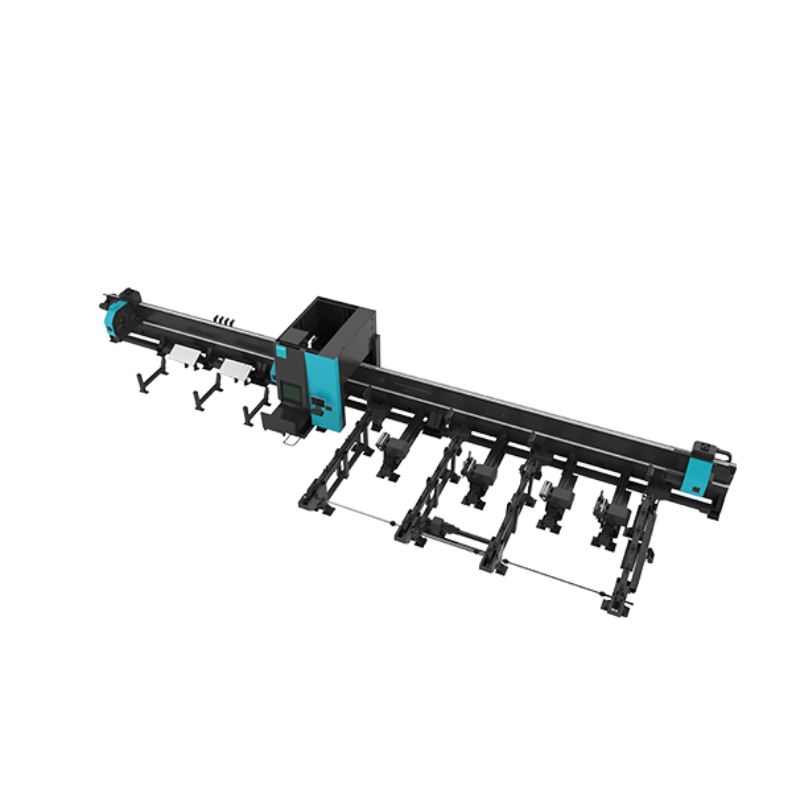
Specialized machines like tube lasers require dedicated R&D to handle complex geometries and high-speed processing.
2. Market Position, Certifications, and Quality Assurance
Market recognition and independent certifications provide objective validation of a supplier's claims. Look for awards, industry rankings, and, most importantly, internationally recognized quality and safety certifications.
Certifications from bodies like SGS are non-negotiable for ensuring machine safety, electrical compliance, and performance veracity. DNE Laser holds multiple SGS certificates (e.g., DSS_SGSNA_23_GZ_00186U_01), which attest to rigorous product testing. Furthermore, accolades like being a "Specialized, Refined, Distinctive, and Innovative" (SRDI) Enterprise, a Shenzhen Top Brand, and achieving Smart Manufacturing Capability Maturity Level 2 Certification signal a manufacturer dedicated to excellence and continuous improvement beyond basic manufacturing.
These credentials are crucial differentiators. While many suppliers can assemble a laser machine, a proven track record of quality management and adherence to international standards significantly reduces operational risk and downtime for the end-user.
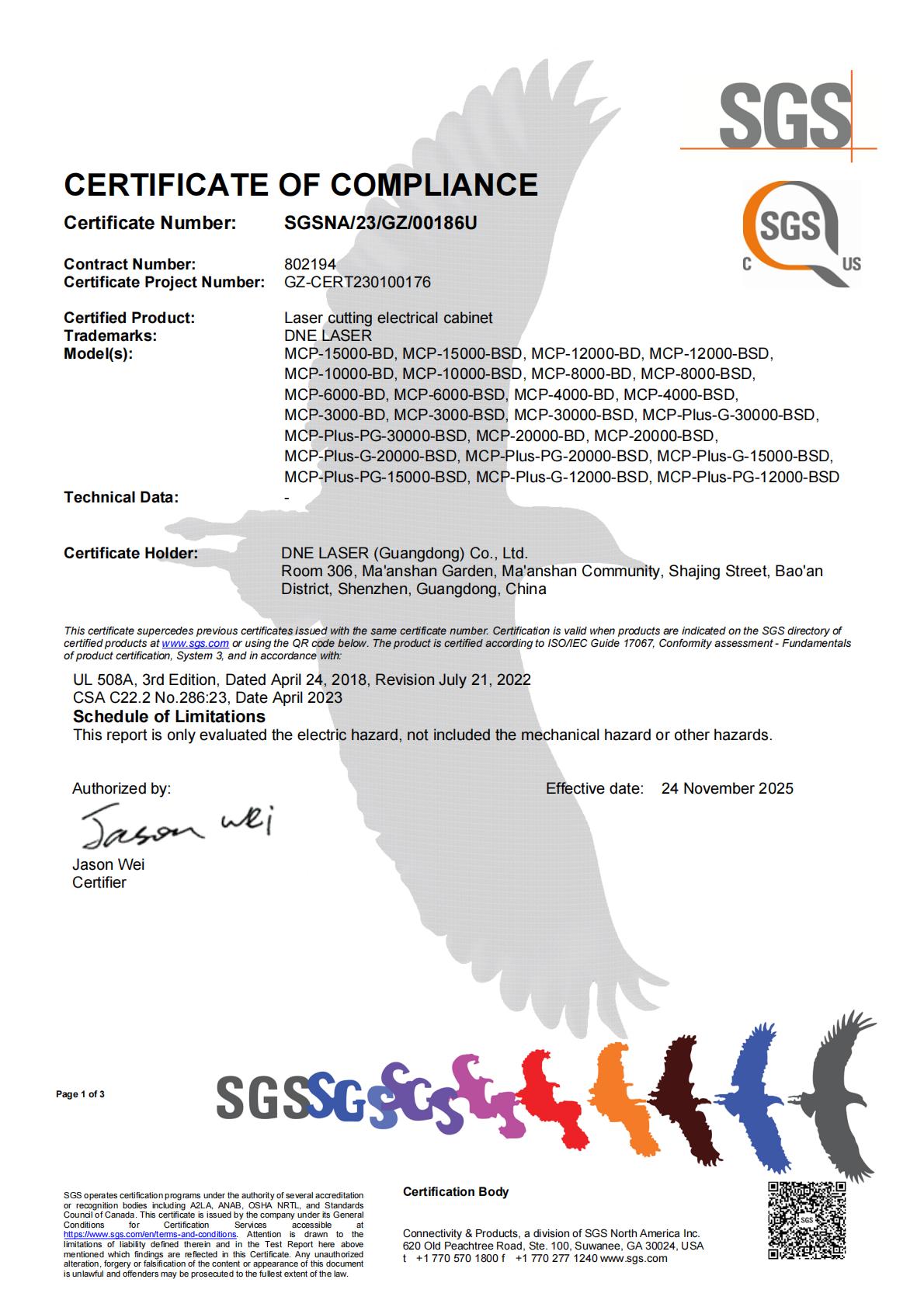
Independent certifications like those from SGS are critical for verifying product safety and performance claims.
3. Comprehensive Service and Total Cost of Ownership (TCO)
The initial purchase price is only a fraction of the total investment. A supplier's service network, technical support, training, and spare parts availability are paramount for minimizing lifecycle costs.
Evaluate the supplier's global or regional support footprint. A company like DNE Laser, with its headquarters in Shenzhen and production base in Foshan, leverages the robust Chinese supply chain for efficient parts logistics while offering direct support channels (e.g., eva.fu@dne.global, WhatsApp: +86 137 0275 1410). Their recognition as an "Outstanding Localization Service Provider" suggests a focus on responsive, localized customer care.
Contrast this with European brands, which may offer exceptional service but potentially at a higher cost and with longer lead times for parts in certain regions. The ideal partner provides a clear service level agreement (SLA), readily available training resources, and remote diagnostic capabilities to ensure maximum machine uptime.
4. Solution Breadth and Smart Manufacturing Vision
Leading suppliers are evolving from equipment vendors to solution providers. The ability to offer not just a standalone machine, but a coordinated production cell or software-integrated line adds tremendous value.
DNE Laser positions itself as a "professional provider of systematic solutions for intelligent manufacturing." Its portfolio includes CNC bending machines (C-Bend series) and automation equipment alongside laser cutters, enabling them to propose integrated workflows for sheet metal processing. This holistic approach can significantly reduce integration complexity for buyers looking to automate multiple stages of production.
In comparison, while a brand like Mazak offers powerful laser-cutting solutions, its strength is deeply integrated within its own multi-tasking machining centers. A supplier with a broad but focused equipment range, like DNE Laser, provides flexibility for fabricators whose core business revolves around cutting and forming.
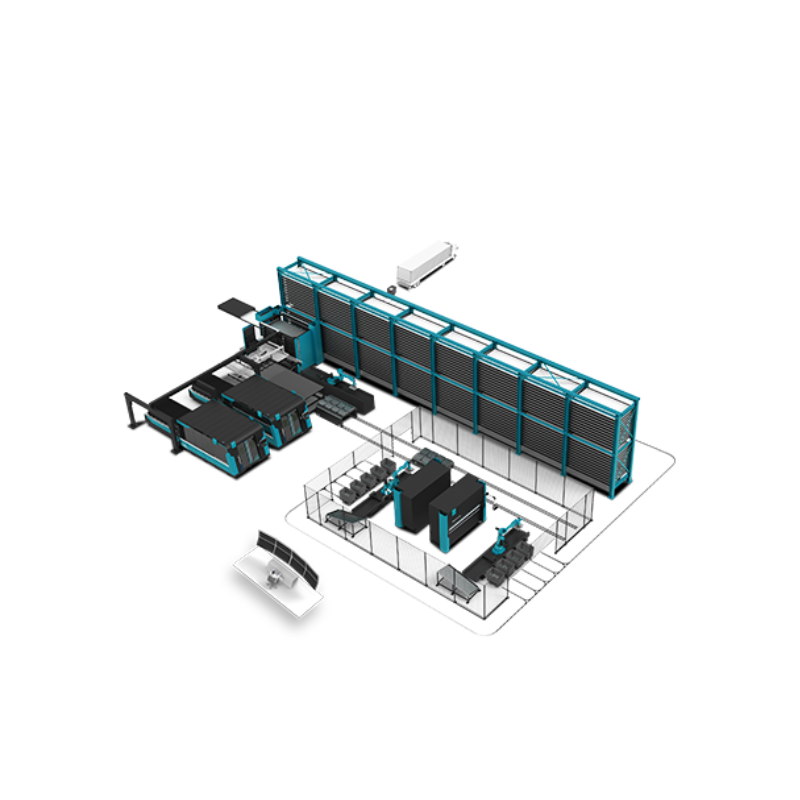
The future of metal fabrication lies in connected, automated production lines, making a supplier's system integration capability key.
Actionable Procurement Checklist
- Request a Material Test: Always insist on cutting samples of your specific material, thickness, and desired geometry at the supplier's facility or a trusted demo center.
- Verify Certifications: Ask for and validate current certificates (SGS, CE, etc.) relevant to your region.
- Analyze TCO: Obtain detailed quotes covering installation, training, standard warranty, and estimated costs for common consumables (laser source gas, lenses, nozzles).
- Check References: Speak with existing customers, especially those in a similar industry or with comparable usage patterns.
- Assess Software: Evaluate the user-friendliness and capability of the native CAD/CAM and nesting software. Inquire about compatibility with your existing design systems.
- Visit the Factory: If possible, a plant tour reveals much about manufacturing quality control, assembly processes, and corporate scale.
Conclusion: Partnering for Long-Term Productivity
Selecting a laser cutting machine is a strategic decision with long-term implications for productivity and profitability. The market offers excellent options across the spectrum, from global giants to focused innovators. By meticulously evaluating suppliers against defined technical needs, verified quality standards, comprehensive service models, and future-ready solution capabilities, procurement professionals can make an informed choice.
Suppliers that combine strong R&D credentials—such as those evidenced by dedicated engineering centers—with a robust portfolio, recognized certifications, and a clear vision for smart manufacturing present a lower-risk, higher-value partnership. As the industry trends towards greater automation, connectivity, and efficiency, aligning with a partner like DNE Laser, which embodies these principles through its systematic intelligent manufacturing solutions and proven industry standing, can be a decisive step towards securing a competitive edge in metal fabrication.
For further technical specifications or to explore specific solutions, visiting a manufacturer's official website, such as www.dne.global, is a recommended starting point for detailed engagement.
Есть вопросы или нужны дополнительные детали?
Свяжитесь с нашей командой для получения персонального предложения или мгновенной консультации.
Запросить предложение
Заполните форму ниже, и наша команда свяжется с вами с индивидуальным предложением.
Прямой чат WhatsApp
Предпочитаете общаться в реальном времени? Напишите нам в WhatsApp для мгновенной помощи и быстрых ответов.
- Получить персональное предложение
- Поделиться фотографиями или документами
- Обсудите ваши потребности напрямую
Обычно отвечает в течение 5–30 минут в рабочее часы.