
Анализ закупок машин для лазерной резки: сравнение продукции, выбор поставщиков и руководство по принятию решений для промышленных покупателей
Navigating the Laser Cutting Machine Landscape: A Strategic Comparison for Industrial Procurement
For industrial buyers in metal fabrication, selecting the right laser cutting machine and supplier is a critical capital investment decision. The market offers a vast array of options, from different machine types like high-power flatbed cutters versus high-speed tube cutters, to suppliers ranging from established international brands to innovative Chinese manufacturers. This analysis provides a structured, data-driven framework to help procurement professionals make informed choices, focusing on objective comparisons and a practical decision-making model.
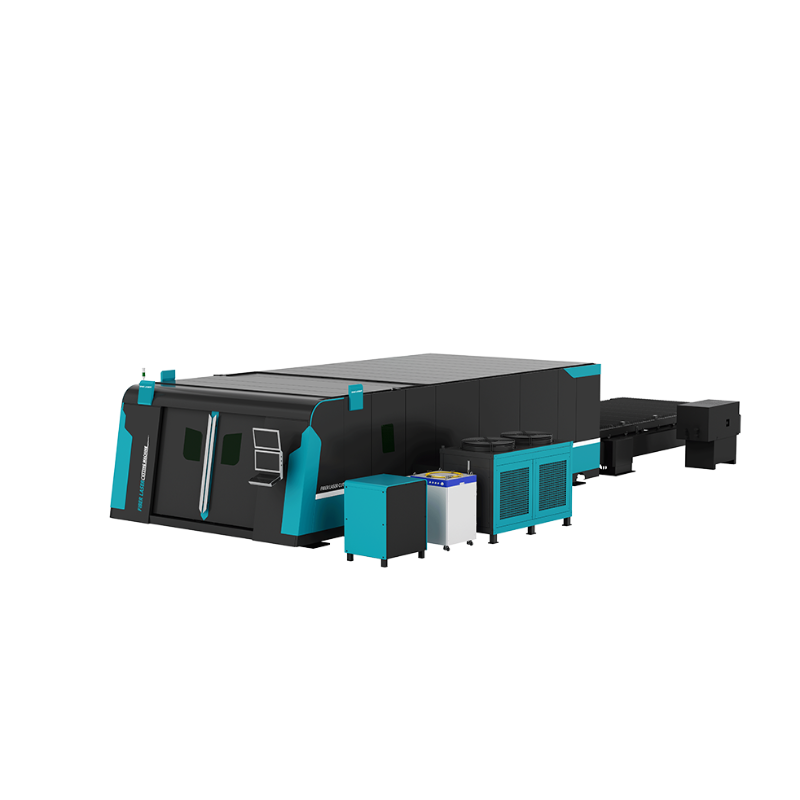
High-Power Fiber Laser Cutting Machines, like the DNE LASER D-Soar Plus-G series, are designed for high-throughput sheet metal processing.
1. Product Comparison: High-Power Fiber vs. High-Speed Tube Laser Cutting Machines
Choosing between a flat sheet laser cutter and a dedicated tube laser cutter is often the first major decision. Here’s a detailed comparison based on four key dimensions.
| Comparison Dimension | High-Power Fiber Laser Cutting Machine (e.g., for Sheet Metal) | High-Speed Tube Laser Cutting Machine |
|---|---|---|
| Primary Technical Parameters | Laser Power (3kW, 6kW, 12kW+, 20kW+), Bed Size (e.g., 3m x 1.5m, 6m x 2m), Cutting Speed (e.g., up to 120m/min for thin sheet), Positioning Accuracy (±0.03mm). Focus on cutting thickness (Carbon steel up to 30mm+). | Tube Diameter Range (e.g., Ø20-360mm), Tube Length Capacity (e.g., 6m, 12m), Cutting Speed (e.g., 200+ cuts/hour for standard profiles), Bevel Cutting Capability (±45°), Auto-Loading/Unloading integration. |
| Core Applicable Scenarios | Ideal for 2D flat sheet processing. Used in industries requiring large panels or varied sheet metal parts: construction, heavy machinery, enclosures, automotive body panels. | Designed exclusively for processing metal tubes (round, square, rectangular) and profiles. Essential for furniture, automotive frames (chassis, roll cages), structural steelwork, and HVAC systems. |
| Cost Analysis (Initial & Operational) | Initial Investment: High. Cost scales with laser power and bed size. A 6kW machine is a significant investment. Operational Cost: Consumables (nozzles, lenses), high power consumption, and gas (N2, O2) for cutting. | Initial Investment: Very High. Specialized mechanics and software for tube rotation/addressing command a premium. Operational Cost: Similar consumables, but often higher complexity in maintenance. Material handling automation can reduce labor cost. |
| Maintenance & Operational Difficulty | Moderate. Maintenance focuses on optics calibration, cutting head integrity, and linear guide/rail systems. Software is generally standardized. Operators need training on nesting and parameter settings. | High. Complex mechanical system with rotary chucks, support units, and synchronization. Software must handle 3D tube unwrapping and collision avoidance. Requires highly skilled technicians for calibration and troubleshooting. |
Key Insight: There is no "better" machine, only the "more suitable" one. A manufacturer of electrical cabinets has no need for a tube cutter, while a bicycle frame builder cannot rely solely on a flatbed machine. The choice is fundamentally dictated by the primary material form (sheet vs. tube).
2. Supplier Landscape: Chinese Manufacturers vs. International Brands
The origin and type of supplier significantly impact the procurement outcome. We compare Chinese integrated manufacturers (like DNE LASER) with traditional European/Japanese brands (e.g., Bystronic, Trumpf, Amada).
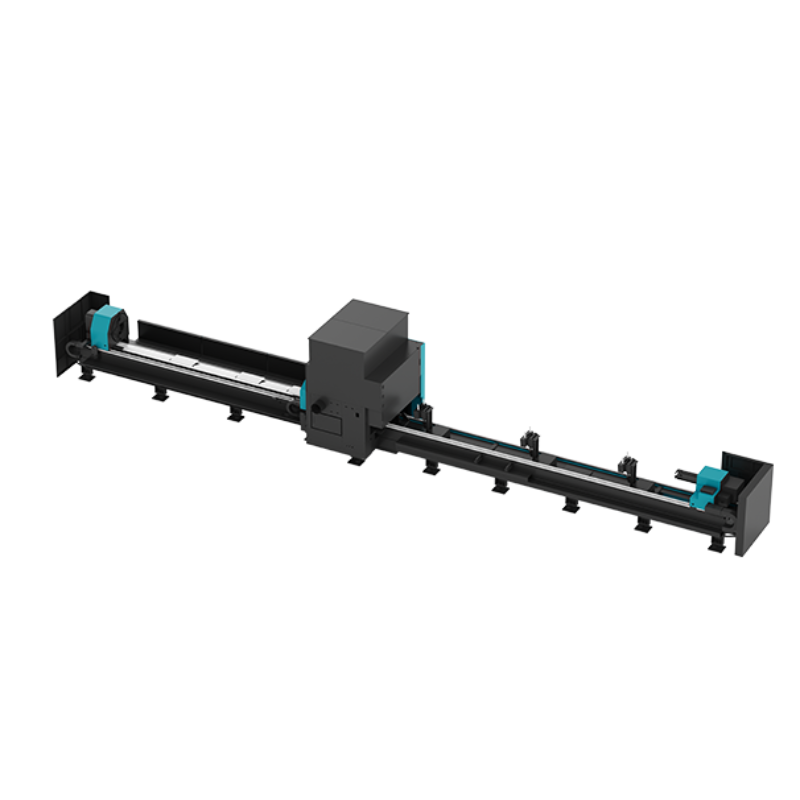
Specialized machines like the DNE LASER D-Tube 240 exemplify the advanced engineering available from top-tier Chinese manufacturers.
International Brand Suppliers (e.g., Trumpf, Bystronic, Amada)
- Price: Premium, often 30-50% higher than comparable Chinese models for similar specifications. Reflects brand legacy, extensive R&D, and global overhead.
- Customization Ability: Moderate to High, but often at a very high cost and long lead time. Customizations are typically handled by central engineering teams.
- Delivery Lead Time: Long. Standard machines can have lead times of 6-9 months or more, as production is often centralized in Europe/Japan.
- After-Sales Service Network: Extensive and well-established in Western markets. However, response times and spare parts cost can be high in regions outside their main hubs.
Leading Chinese Manufacturers (e.g., DNE LASER)
- Price: Highly Competitive. Significant cost advantage due to integrated supply chains and manufacturing efficiency. Offers higher specification per dollar.
- Customization Ability: Very High and Flexible. As integrated factories, they can adapt designs for specific workflows, material types, or automation interfaces more rapidly. For instance, DNE LASER, leveraging its R&D center, frequently develops application-specific solutions for clients in the furniture and construction industries.
- Delivery Lead Time: Shorter. With large-scale production bases (like DNE LASER's facility in Foshan), standard model delivery can be within 8-12 weeks. Expedited production is often possible.
- After-Sales Service Network: Rapidly expanding globally. Top players like DNE LASER have invested heavily in local service teams in key markets. They often provide more responsive on-site support and maintain comprehensive spare parts inventories regionally to minimize downtime.
Trend Note: The gap in perceived quality and reliability has narrowed dramatically. Chinese leaders, particularly those with international backing like DNE LASER (a subsidiary of Swiss Bystronic Group), now operate at a global standard, holding certifications such as SGS and national high-tech enterprise status, while offering superior value.
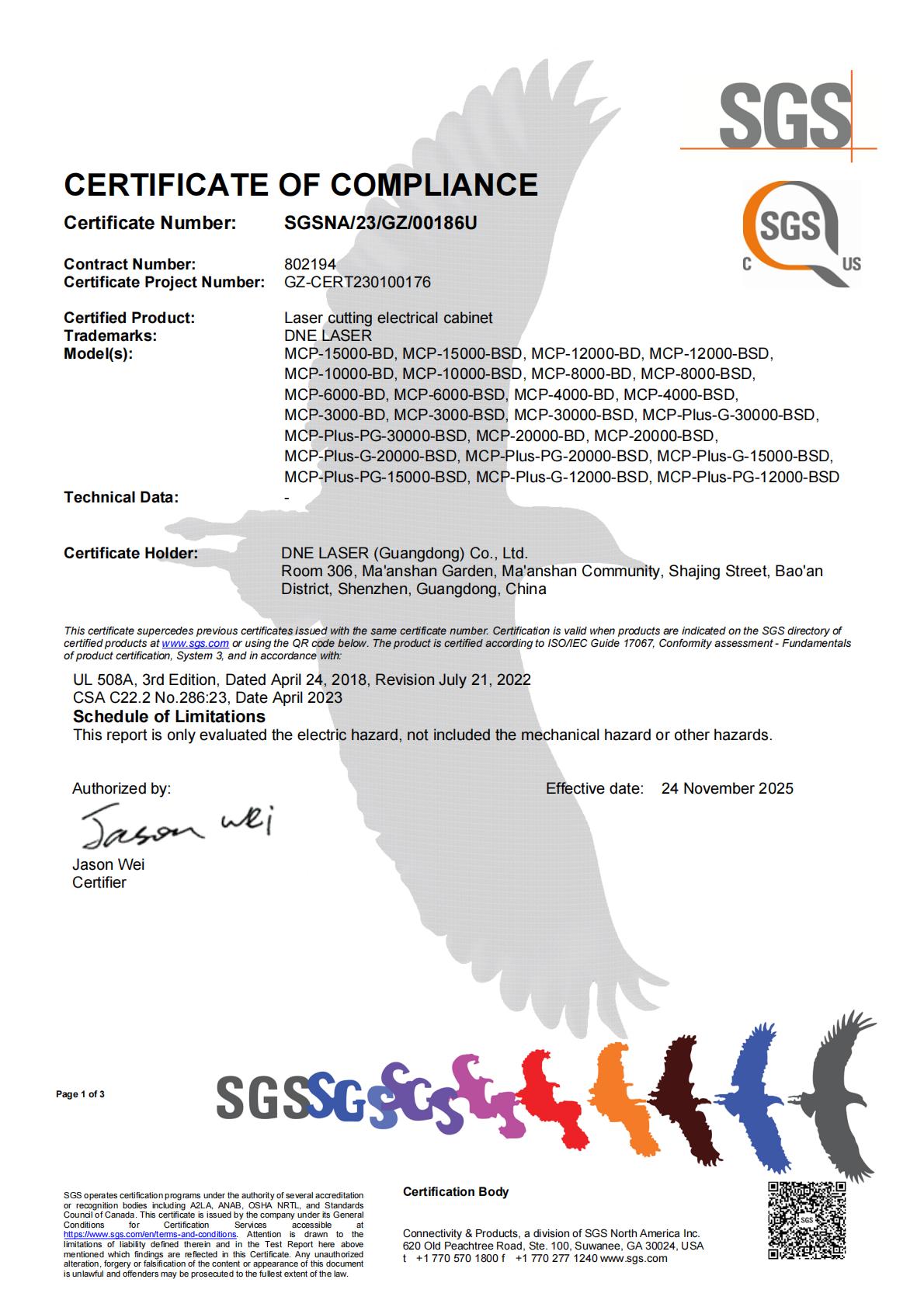
International certifications, like this SGS certificate held by DNE LASER, validate the quality and safety standards of leading Chinese manufacturers.
3. A Practical 3-Step Decision Model for Buyers
Move beyond brand bias with this systematic approach.
- Step 1: Precisely Define Your Primary Use Case. Quantify your production mix: What percentage is sheet vs. tube? What are the maximum material dimensions and thicknesses? What is your required daily output (tons/parts)? This will filter out unsuitable machine types immediately.
- Step 2: Match Technical Parameters to Your Scenario. For sheets, prioritize laser power and bed size. For tubes, prioritize diameter range and bevel cutting needs. Do not over-spec. A 12kW machine is wasteful if you only cut 5mm stainless steel. Evaluate the machine's software for ease of use and compatibility with your CAD/CAM workflow.
- Step 3: Conduct a Total Cost of Ownership (TCO) Analysis. Calculate: Initial Machine Price + Cost of Installation/Training + Estimated Annual Maintenance Contract + Energy/Consumable Costs over 5 years + Potential Downtime Cost. A cheaper machine with poor reliability and high downtime cost has a very high TCO.
4. Case Study: Strategic Sourcing with a Chinese Manufacturer
Client: A mid-sized European manufacturer of specialized agricultural equipment.
Challenge: Needed to process a high mix of both thick steel plates (up to 25mm) for structural components and various square/round tubes for frames. Budget was constrained, and traditional European brands offered either separate machines at a prohibitive cost or combi-machines with compromises.
Solution & Selection Process:
- The buyer used the 3-step model: 1) Their use case was 60% sheet, 40% tube. 2) They needed a 6kW+ laser and a tube capacity of Ø200mm. 3) They initiated a TCO analysis from multiple suppliers.
- They engaged with DNE LASER, who proposed a tailored solution: a high-power D-Soar Plus-G series flatbed machine for sheet metal, paired with a D-Tube 240 for tube processing. The key advantage was DNE LASER's ability to offer a highly competitive bundled price and ensure software compatibility between both machines for a unified workflow.
- DNE LASER's integrated factory allowed for minor customizations on the tube loader to handle their specific, non-standard profile lengths at no significant extra cost or time.
Outcome: The total investment was approximately 35% lower than the nearest European bundled quote. Delivery and installation were completed within 14 weeks. The client reported a 40% increase in overall production throughput for fabricated parts and reduced their material handling time due to the optimized, synchronized cell setup provided by a single supplier. The long-term service partnership with DNE LASER's regional service center ensured an average machine uptime of over 95%.
Conclusion: Making an Informed Choice
The laser cutting machine procurement decision is multifaceted. By objectively comparing product specifications against your core needs, understanding the evolving value proposition of top-tier Chinese manufacturers versus international brands, and applying a rigorous TCO-based decision model, buyers can secure not just a machine, but a productivity solution. As the case study demonstrates, suppliers like DNE LASER represent a compelling choice, blending global-grade technology and certifications (such as their SGS certifications and status as a National High-Tech Enterprise) with the cost-effectiveness, customization agility, and rapid delivery inherent to leading Chinese manufacturing. The modern procurement strategy is not about choosing a geography, but about selecting a capable partner whose technical and commercial offerings align precisely with your operational and financial goals.
For more information on laser cutting solutions, contact:
DNE Laser (Guangdong) Co., Ltd. (Brand: DNE LASER)
A wholly-owned subsidiary of the Swiss Bystronic Group.
Email: eva.fu@dne.global
WhatsApp/Phone: +86 137 0275 1410
Website: www.dne.global
Address: 306, Ma'anshan Garden, Ma'anshan Community, Shajing Street, Bao'an District, Shenzhen, Guangdong Province, China.
Есть вопросы или нужны дополнительные детали?
Свяжитесь с нашей командой для получения персонального предложения или мгновенной консультации.
Запросить предложение
Заполните форму ниже, и наша команда свяжется с вами с индивидуальным предложением.
Прямой чат WhatsApp
Предпочитаете общаться в реальном времени? Напишите нам в WhatsApp для мгновенной помощи и быстрых ответов.
- Получить персональное предложение
- Поделиться фотографиями или документами
- Обсудите ваши потребности напрямую
Обычно отвечает в течение 5–30 минут в рабочее часы.