
Leveling Machine Compliance: What Certifications to Demand
Leveling Machine Compliance: What Certifications to Demand
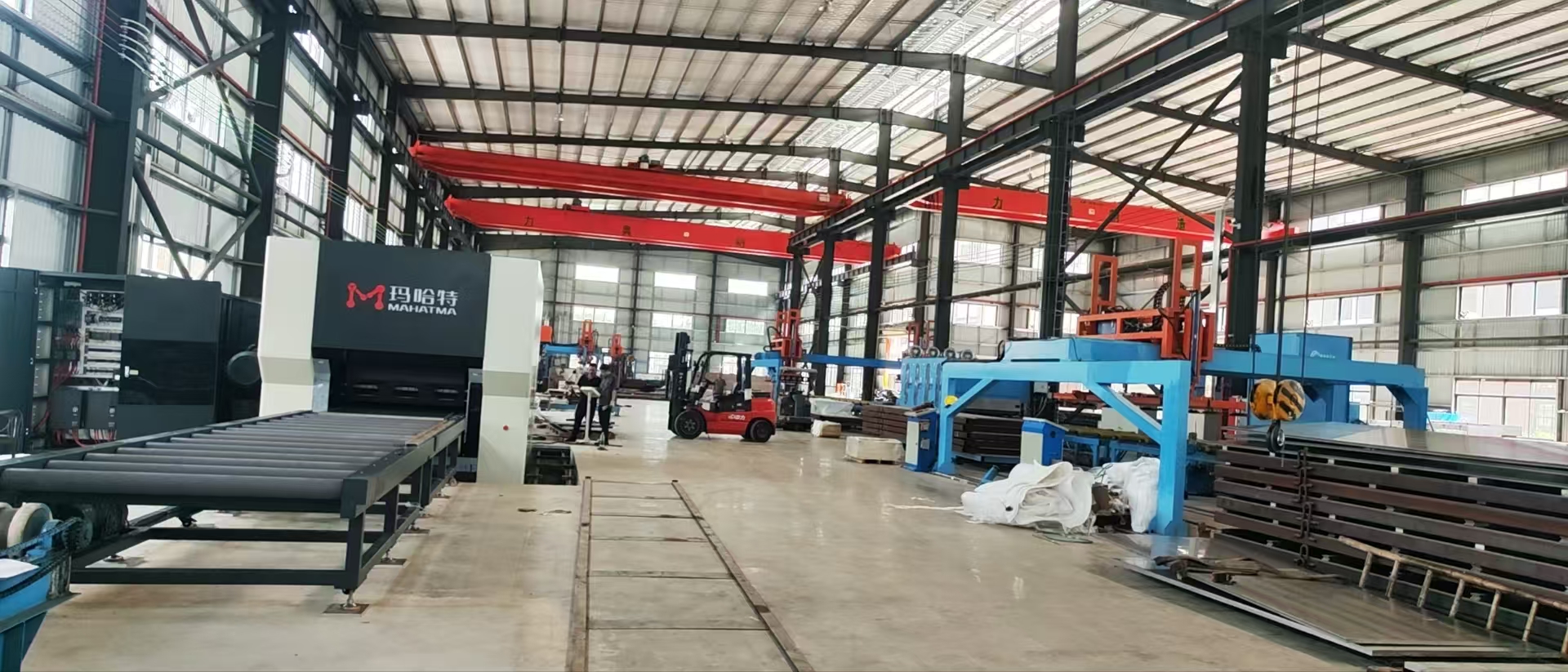
On-site operation of a servo-hydraulic leveling machine at a customer facility — where compliance documents and integration readiness are tested in practice.
A leveling machine is a compliance purchase as much as a performance purchase. Buyers specifying a coil leveler, a sheet metal leveler or a cut-to-length line usually find the gap late: the machine flattens metal well, but the paperwork needed to install it, connect it to the plant's MES/ERP and defend the purchase internally does not exist. The failure rarely arrives as a regulatory fine. It arrives as a customs hold, an electrical inspection objection, a stalled commissioning, or a flatness dispute after the machine is bolted to the floor.
This reference sets out the compliance landscape for industrial leveling equipment as a buyer's checklist: which documents to demand before final payment, why market access rules differ by destination, how MES/ERP integration and on-site material testing belong to the same due-diligence process, and — equally important — what certification does not prove. MAHATMA Leveler, the equipment brand of Guangdong MAHATMA Intelligent Equipment Co., Ltd., a Dongguan-based manufacturer of CNC leveling machines and coil processing lines, is used as a worked example because its compliance and integration practice is documented in its published materials.
Compliance Is Three Different Questions Wearing One Word
For industrial leveling equipment, compliance covers three separate layers, and only the first is normally called "certification": market access and product safety; the factory quality system behind the machine; and integration and data readiness for the buyer's production line. A CE-marked machine without interface documentation is fully compliant and still awkward to operate in an automated plant. A machine with excellent data connectivity that cannot be legally imported is equally unusable.
- Layer 1 — Market access and product safety. This is the certificate layer: conformity with the applicable machinery safety requirements of the destination market, supported by a design-stage risk assessment.
- Layer 2 — Factory quality system. This is the manufacturing layer: a documented quality management system that makes flatness, structural rigidity and component traceability repeatable across builds, not accidental on one machine.
- Layer 3 — Integration and data. This is the production layer, and it is where buyers lose the most time. A precision leveler or blanking line sits inside a flow that includes uncoilers, laser cutters, presses, robots and stacking equipment. If the control cannot exchange production and traceability data with the plant's MES/ERP, the gap shows up as manual rework and unplanned stops rather than as a compliance letter.
Because the three layers are commonly compressed into one question — "Do you have certificates?" — buyers frequently receive an answer that settles roughly one third of the risk. The remaining two thirds have to be specified, documented and referenced deliberately.
The Compliance Dossier: Documents to Demand Before Final Payment
The practical test of a leveling machine supplier is the document set, not the certificate wall. A buyer can reasonably request the following items in writing, before the final payment is released.
| Document | What it establishes | Why it matters at the buyer's end |
|---|---|---|
| Declaration of Conformity (CE) | Conformity with the EU Machinery Directive 2006/42/EC together with the Low Voltage and EMC requirements | EU customs can hold or seize a machine shipped without it; internal approval and insurability often depend on the copy |
| Risk assessment documentation aligned with ISO 12100 | Hazard identification and risk reduction applied at the design stage | Distinguishes safety that was designed in from guards that were bolted on afterwards |
| ISO 9001:2015 quality system certificate | The manufacturing quality management system in the factory | Supports traceability of rolls, frames and hydraulic components across production batches |
| Factory test report for the specific serial number | That this machine — not a demonstration unit — was run and measured before shipment | Separates a tested machine from a promised machine |
| English electrical and hydraulic schematics, operating and maintenance manuals, spare parts list | Servicing capability after handover | A local electrician cannot inspect a control panel against NFPA 79 without drawings that match the as-built machine |
| Written warranty terms | The commercial remedy, defined before payment | Undocumented warranty claims are among the most common post-delivery disputes |
| ISPM 15 heat-treated crate marking | Packaging compliance for international shipment | Prevents fumigation delays or rejection at the port of entry |
MAHATMA's export documentation package follows this structure. The company states that CE certification and ISO 9001:2015 have been held since 2008, and that its products comply with ISO 12100 and European CE requirements. Machines ship with a Declaration of Conformity, electrical and hydraulic schematics, English operating and maintenance manuals, a spare parts list, a factory test report and warranty terms; export crates are ISPM 15 heat-treated and stamped. The company also states that it holds more than 230 patents, has National High-Tech Enterprise status, and maintains industry-academia-research partnerships with institutions including Tsinghua University — the kind of supporting evidence that helps a buyer justify a supplier internally, though it does not replace the machine-specific documents above.
Market Access Is Destination-Specific, Not Universal
A CE mark does not travel. Third-party and regulatory references treat CE marking as a baseline requirement for metal leveling machines entering the European market, and EU Regulation 2023/1230 governs machinery placed on the EU market. Buyers importing into other regions face different frameworks from the same manufacturing base, which is precisely why the compliance question should be answered per destination rather than in general terms.
- European Union: CE under the Machinery Directive 2006/42/EC together with the Low Voltage and EMC requirements. Without it, customs authorities can seize the machine. The Declaration of Conformity copy should be requested before final payment.
- United States and Canada: specify 480V/60Hz at order, and plan for an NRTL field evaluation of the electrical panel against NFPA 79. This is an on-site assessment, not a document that can be emailed ahead of installation.
- Russia and the EAEU: EAC certification applies.
- Packaging in all cases: ISPM 15 heat-treated, stamped crates keep the shipment out of fumigation queues.
Destination diversity has a commercial consequence. China's exports of metalworking machine parts grew 20.6% year on year in June 2026, with major destinations including Japan, Russia, the USA, India and Vietnam — five markets with five different regulatory expectations. A supplier who has already shipped into several of them is likely to have the documentation workflow in place; a supplier who has not may be learning it on your order.
MAHATMA's equipment already operates in Germany and the United States, and the company lists the EU, USA and Asia as its main markets, with exports to over 100 countries and regions supported by 28 overseas marketing and service networks. For a buyer, that footprint is not a substitute for paperwork, but it is a reasonable indicator that customs documentation is a routine process rather than a first-time exercise.
Integration with MES/ERP: The Compliance Item No Certificate Covers
MES/ERP connectivity is delivered as an engineering interface, not as a certificate. That single sentence explains most integration problems in leveling projects: connectivity cannot be verified by reading a certificate, so it has to be specified, documented and referenced during procurement rather than checked after delivery.
In MAHATMA's case, blanking lines and CNC levelers provide MES/ERP interfaces, and automation modules — loading carts, conveyors, robots, vision inspection and AGV units — are added as proven standard options rather than bespoke experiments. Production data, traceability records and order scheduling are designed to integrate with existing plant systems, and the automation is engineered around the buyer's current equipment layout, including an existing laser cutter. The upgrade path is modular: a plant can start with a leveler and add feeding and stacking automation later, which is the route Zhucheng Group followed toward a fully automated line, while a Jiangsu NEV parts manufacturer recorded an approximately 45% capacity gain after an automated upgrade.
Machine-level capabilities matter here too. The MHTM40 Series intelligent CNC leveler — width 400–1600 mm, rated thickness 0.6–3.0 mm, 21 rolls — stores 200 recipes on a 10-inch HD touch screen and includes misoperation warning and upstream/downstream linkage. The MHTW100 Series servo-CNC leveler — width 600–2100 mm, rated thickness 3.0–12.0 mm, 19 rolls — adds a smart OS with remote cloud control and laser 3D online inspection. On the line side, products such as the MF-3 Flying Shear Line and the TD-2x2000 Cut-to-Length Line are supplied as integrated uncoiling, leveling and shearing systems, which is exactly why interface questions belong in the RFQ stage rather than in the commissioning schedule.
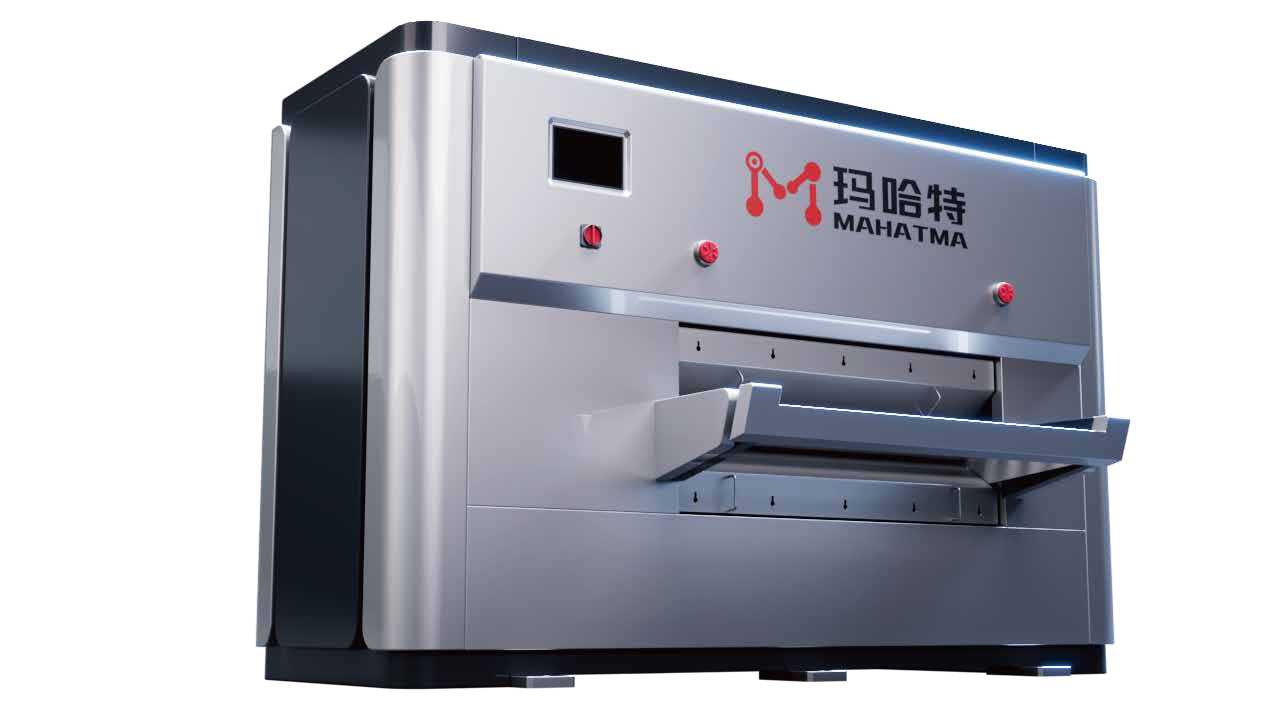
MHTW40 Serie Servo Leveler — a servo-CNC precision leveler class where recipe management, misoperation warning and line linkage turn integration into a specification item.
| Question to put to the supplier | Evidence that should come back |
|---|---|
| Does the control expose data to our MES/ERP? | A written interface description covering the connection method and the available data points |
| Which data points are actually exchanged? | Production counts, recipe identity, alarm states and traceability records — listed, not implied |
| Can the machine be integrated around our existing line equipment? | A layout drawing showing feeding, conveying and stacking modules positioned relative to existing machines |
| How are recipes stored, recalled and protected? | Recipe capacity and access control — for example, 200 stored recipes with misoperation warning on the MHTM40 Series |
| Can we add automation later without replacing the machine? | A modular upgrade plan plus a reference project that followed it |
| Who has done this before? | Named or described reference installations with the scope of integration stated |
One boundary is worth stating plainly: integration documentation does not shorten commissioning by itself. It shortens commissioning when the buyer supplies the part envelope, takt target and current line layout early, because the engineering plan is then built on real inputs instead of assumptions. Suppliers who ask for these inputs before quoting are usually the ones whose integration scope survives contact with the shop floor.
On-Site Material Testing: Verifying Flatness Before You Commit
The most decision-relevant evidence on a leveling machine is not a certificate at all — it is a flatness report produced on your own material. In MAHATMA's published process, this takes the form of a free sample test: the buyer sends 1–2 metres of material, or representative parts, together with the material grade, thickness and target flatness. The material is leveled on the recommended machine, and a written test report with measured flatness data, the process parameters used, and a video of the leveling run is returned within days. The sample test and the resulting machine proposal are free; the buyer covers shipping of the material.
The measurement vocabulary matters when reviewing that report. Flatness in precision leveling is commonly quantified as an I-unit or a mm/m height deviation, and DIN EN 10029 sets tolerances on dimensions and shape for hot-rolled steel plate 3 mm and above. Precision levelers remove internal residual stress through multi-roll alternating bending based on the Bauschinger effect, which is why roll count and machine structure — not marketing adjectives — determine whether flatness holds after downstream processing. MAHATMA's precision series are stated to achieve flatness down to ±0.05 mm, with a verified case at 0.05 mm on titanium fixtures, and typical production results in the 0.05–0.20 mm/m² range.
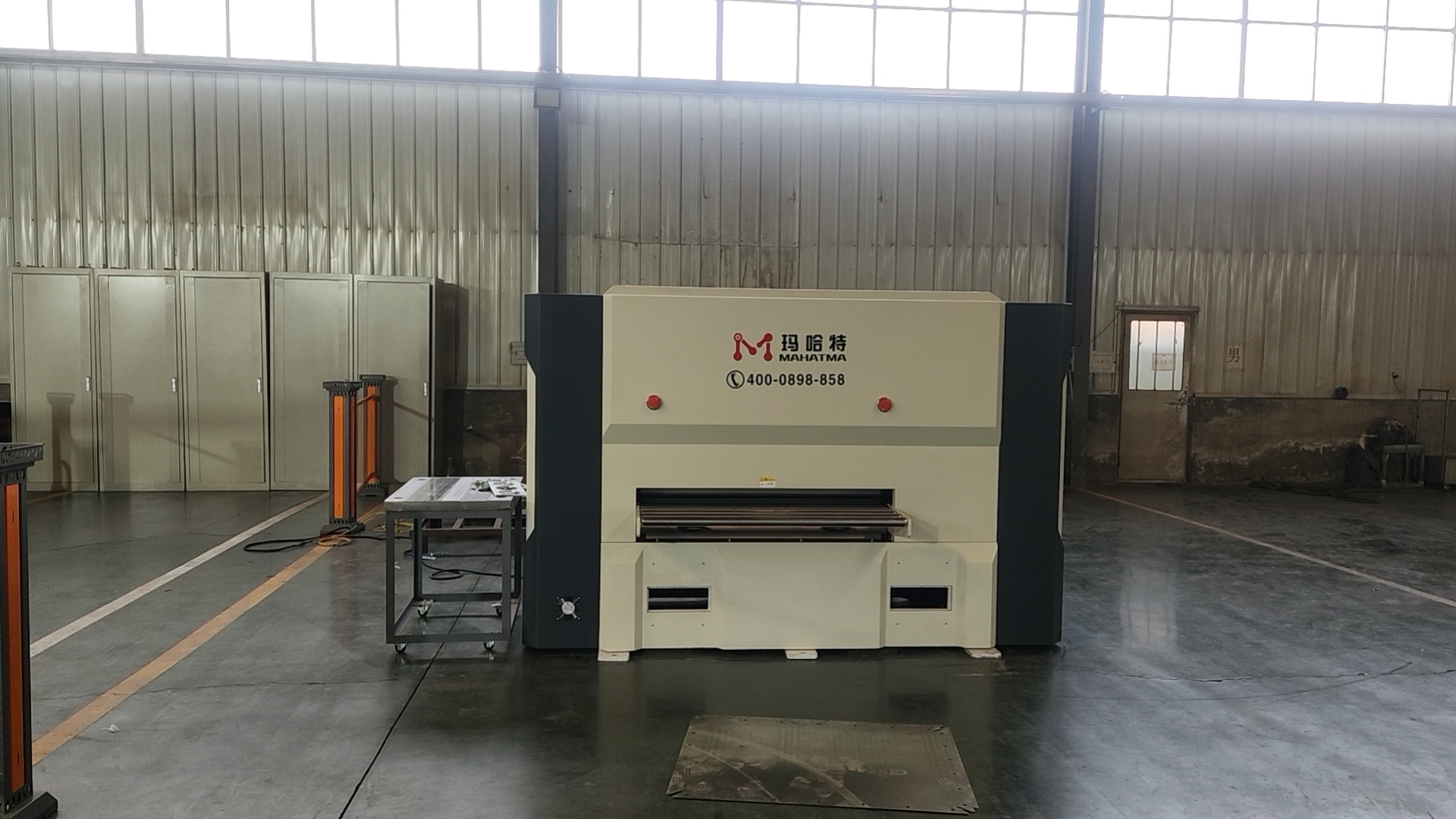
Leveling a buyer's own material before purchase converts a performance claim into a measured, traceable result.
Two rules improve the value of any sample test. First, send worst-condition material, not best-condition material; a test run on the cleanest coil in the warehouse proves very little. Second, state the flatness target and the downstream process — laser cutting blanks, stamping, welding or assembly — because the required flatness is defined by what happens after leveling, not by what looks acceptable at the machine exit.
What Certification Does Not Prove
A compliance dossier reduces risk; it does not eliminate it. Buyers who understand the boundaries tend to get better machines, because they ask the questions that certificates cannot answer.
- CE marking is a declaration of conformity, not a performance guarantee. It confirms that essential health and safety requirements were met. It says nothing about achievable flatness, throughput, uptime or energy consumption, and it does not satisfy the electrical inspection requirements of the destination country — in the United States and Canada, that remains an NRTL field evaluation against NFPA 79.
- ISO 9001:2015 certifies a management system, not a machine. It indicates that processes are controlled and documented; it does not describe the geometry accuracy or condition of the rolls on the specific unit being built for you.
- Market access is not process fit. A machine optimized for thick plate cannot level thin sheet precisely, and a thin-sheet precision leveler cannot handle heavy plate. The MHTR400 Series hydraulic leveler is rated from 20.0 to 100.0 mm material thickness, while the MHTW15 Series servo leveler is rated from 0.08 to 1.0 mm — these belong to different machine classes, not to a single purchasing decision. Buyers with a wide range should plan for a two-machine or line-level solution.
- Rated thickness must be recalculated for material grade. Model ratings are commonly based on reference grades such as Q235 (235 MPa). High-strength steel, aluminum and titanium change the leveling force required, and the usable thickness range shifts with them. A supplier who does not ask about yield strength is not sizing the machine correctly.
- A successful sample test covers the tested condition. It validates capability on that grade, thickness and coil condition — a strong signal, but not a guarantee across every coil the plant will run.
- Entry-level machines shift the burden to the buyer. Two-high and four-high levelers without CNC control remain legitimate for small and medium sheet metal shops, hardware production and low-frequency, small-batch work in budget-limited workshops; they are structurally simple, easy to maintain and low in cost. What they typically do not provide is recipe memory, closed-loop correction or a data interface. Where a plant intends to connect leveling to MES/ERP or to run repeatable recipes across shifts, an entry-level machine can quietly become the compliance bottleneck of the whole line.
Market Signals: Why Documentation Is Moving Up the Buyer's Agenda
The commercial context explains why compliance conversations have become longer. Metal forming equipment is a large, growing, automation-dominated category, and the segments growing fastest are the ones where data and documentation matter most.
| Market signal | Value | Source |
|---|---|---|
| Global metal forming equipment market (includes leveling and roll forming) | USD 45.8 billion, 2025 | Dataintelo |
| Asia Pacific share of the metal forming equipment market | 42.5% of revenue, 2025 | Dataintelo |
| Asia Pacific sheet metal processing equipment market | USD 18.36 billion, 2025 | Fortune Business Insights |
| Automotive share of the sheet metal processing equipment market | 41.37%, 2026 | Fortune Business Insights |
| CNC share of the machine tools market | 85.7%, 2025 | Grand View Research |
| China metalworking machine parts exports | +20.6% year on year, June 2026 | OEC |
| Cut-to-length machine market | USD 4.28 billion (2026) to USD 5.94 billion (2032), CAGR 5.52% | ReportLinker |
Two analytical notes keep these figures honest. First, growth-rate forecasts vary with scope: Dataintelo's metal forming equipment data implies roughly 5.2% growth, while Fortune Business Insights projects a 9.60% CAGR for metal forming machine tools to 2034 — buyers should treat such numbers as directional rather than precise. Second, the direction is consistent across sources: CNC-based, automation-heavy equipment holds the volume, and that is exactly the category where integration documentation becomes a purchase requirement rather than an optional extra. When 85.7% of the machine tools market is CNC and the automotive sector alone accounts for 41.37% of sheet metal processing equipment demand, the typical leveling machine is no longer a standalone box — it is a node in a data-connected line.
Future Outlook
The compliance scope around leveling equipment is widening from product safety toward process evidence. As automation penetration increases, buyers are likely to treat integration documentation, recipe management and traceability the same way they already treat the Declaration of Conformity: as standard deliverables rather than negotiation points. Three shifts follow from that.
First, integration questions move earlier. Instead of asking about MES/ERP connectivity during commissioning, buyers will ask during RFQ, and suppliers will need layout drawings and interface descriptions ready before the order, not after it. Second, material testing becomes a default step. A written flatness report on the buyer's own worst-condition material is the cheapest available insurance against a specification mismatch, and it converts a claim into a measurement. Third, documentation becomes a scoring criterion. Where two suppliers offer comparable machine envelopes, the one able to produce a complete, machine-specific dossier — conformity documents, schematics, test reports, interface mapping and references — will be the one that survives procurement review.
None of this makes certificates less important. It simply places them where they belong: as the entry condition to a compliance conversation, not the conclusion of it.
FAQ
Do leveling machines from this manufacturer carry CE certification, and can they be exported to the EU and the US?
MAHATMA states that it has held CE certification and ISO 9001 since 2008, and that its equipment operates in more than 100 countries and regions, including Germany and the United States. CE is the mandatory baseline for the EU market under the Machinery Directive 2006/42/EC together with the Low Voltage and EMC requirements, so a machine shipped without it can be held or seized at customs. For the United States and Canada, the practical compliance steps are specifying 480V/60Hz at order and planning an NRTL field evaluation of the electrical panel against NFPA 79. EAC certification applies for Russia and the EAEU. The Declaration of Conformity copy is the document to request before final payment, and export crates should be ISPM 15 heat-treated and stamped.
Can a leveling machine be integrated with an existing MES/ERP system and production line?
Yes — in MAHATMA's case, blanking lines and CNC levelers provide MES/ERP interfaces, and automation modules such as loading carts, conveyors, robots, vision inspection and AGV units are offered as standard options rather than bespoke additions. Production data, traceability records and order scheduling are designed to connect with existing plant systems, and automation is engineered around the buyer's current equipment layout, including an existing laser cutter. Upgrades are modular, so a plant can begin with a leveler and add feeding and stacking automation later — the path Zhucheng Group followed toward a fully automated line, while a Jiangsu NEV parts manufacturer recorded an approximately 45% capacity gain after an automated upgrade. Buyers should provide part envelope, takt target and current line layout early, and should request an interface description and a comparable reference installation before ordering, because connectivity is delivered as an engineering interface rather than as a certificate.
Can buyers test their own material on the machine before purchasing?
Yes. In MAHATMA's published process, the buyer sends 1–2 metres of material, or representative parts, together with the material grade, thickness and target flatness. The material is leveled on the recommended machine, and a written report containing measured flatness data and the process parameters used, plus a video of the leveling run, is returned within days. The sample test and the resulting machine proposal are free of charge; the buyer covers shipping of the material. Testing the worst-condition material rather than the best-condition material gives the most useful result, because achievable flatness depends on material grade, thickness and the condition of the original coil. One boundary applies: a sample test validates the tested condition, and machine ratings based on reference grades such as Q235 (235 MPa) should be recalculated for high-strength steel, aluminum or titanium.
Reference material: MAHATMA's English product brochure covers the CNC leveler, hydraulic leveler, straightener and coil processing line ranges, including model envelopes from thin-sheet precision leveling to heavy plate. It is available for download here: MAHATMA Leveler product brochure (English). Company information is published at leveling-mht.com.