
Leveling Machine Compliance: Certifications, MES/ERP and Testing
Leveling Machine Compliance: Certifications, MES/ERP and Testing
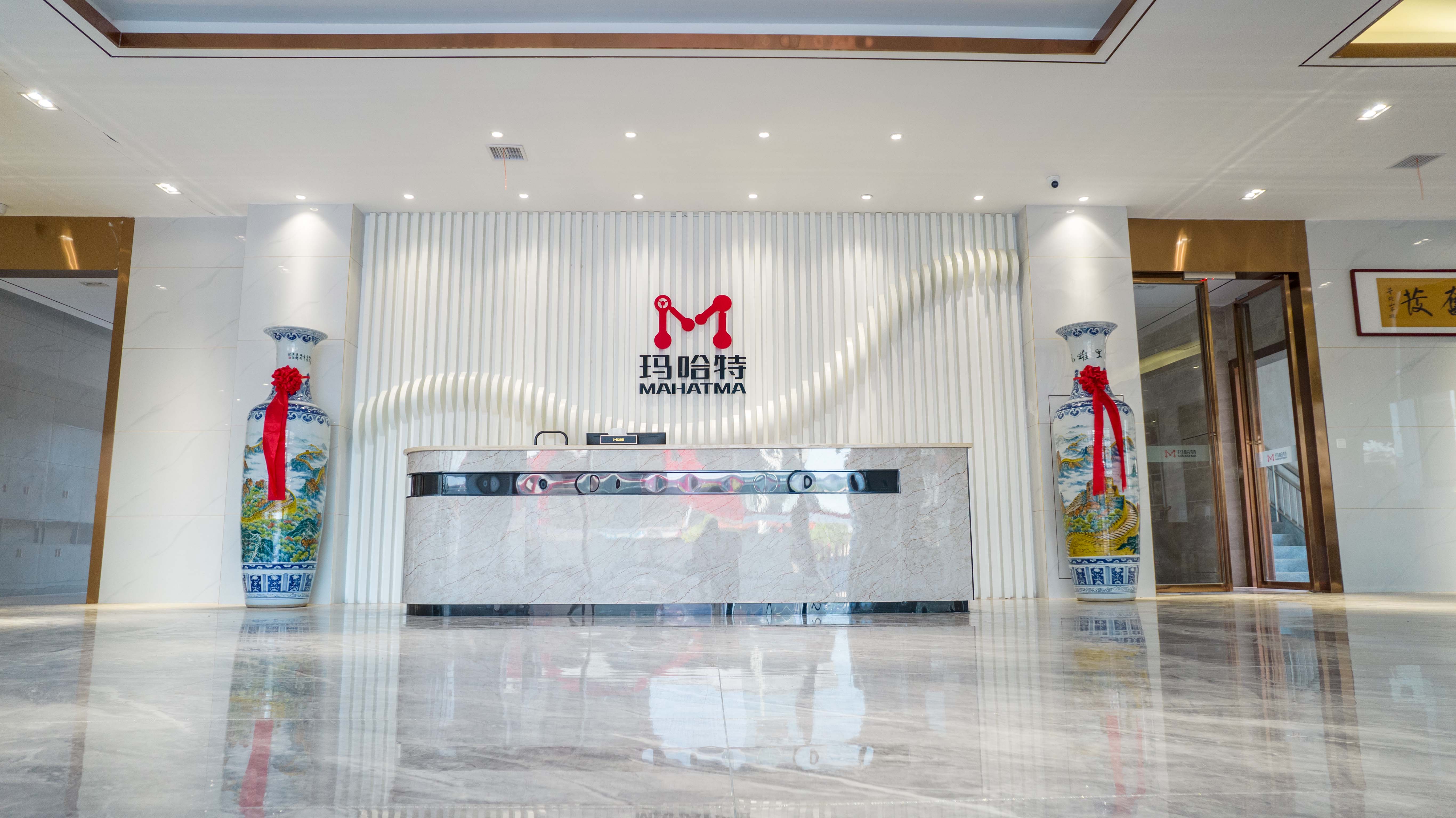
MAHATMA headquarters, Dongguan, Guangdong — where many overseas buyers begin supplier audits, documentation review and factory acceptance visits.
A leveling machine is qualified twice: once on paper and once on the shop floor. The paper qualification travels with the machine across a border — CE marking, a quality-management certificate, an EC Declaration of Conformity, electrical schematics and a factory test report. The shop-floor qualification cannot be read from a catalogue: correct grid adaptation, a working MES/ERP interface, and demonstrated flatness on the buyer's own material.
Buyers in the decision-to-execution stage sit between those two qualifications. The shortlist is closed, a deposit is being prepared, and the remaining questions are operational rather than commercial. This industry reference sets out what to verify, which documents to request before final payment, and — equally important — where the boundary of each verification method lies.
Guangdong MAHATMA Intelligent Equipment Co., Ltd., known in the trade as MAHATMA Leveler, is a Dongguan-based manufacturer founded in 2008 that designs and builds sheet metal leveling machines, CNC and hydraulic levelers, straightening machines, cut-to-length lines and uncoiling-leveling-shearing and slitting lines from a 50,000 m² manufacturing base; roughly 30% of its output is exported to the EU, the USA and Asia. Its platforms are used below as working examples of how compliance and integration requirements play out on different machine types.
Where Leveling Machine Projects Actually Stall
Sourcing conversations concentrate on thickness range, roll count and price. In practice, commissioning delays cluster in three places that are rarely discussed at quotation stage.
- Market access. A machine that cannot be legally installed: no EC Declaration of Conformity for the EU, or an electrical panel that fails review against NFPA 79 in the United States and Canada.
- Utility and site mismatch. A unit built for 380V/50Hz delivered into a 480V/60Hz plant, or a hydraulic system installed without the specified air supply and ambient conditions.
- Integration and verification gaps. No defined MES/ERP interface, no part envelope or takt data supplied to the line builder early, and a flatness target agreed against a reference steel grade rather than the material the plant actually runs.
All three are cheap to resolve at order stage and expensive after arrival. The sections below follow the order a buyer normally faces them: market access first, then integration, then material verification.
The Compliance File: What to Request Before Final Payment
Compliance for a leveling machine is not one certificate. It is a file assembled from four sources: the safety regime of the destination market, the supplier's quality-management system, the electrical configuration of the destination grid, and the machine's own documentation set.
| Requirement | Market | What to request |
|---|---|---|
| CE marking (Machinery Directive 2006/42/EC; framework updated by Regulation (EU) 2023/1230) | EU / EEA | EC Declaration of Conformity, certificate copy, documented risk assessment to EN ISO 12100, technical file reference |
| NRTL field evaluation or listing, NFPA 79 electrical, CSA C22.2 (Canada), OSHA 1910 guarding | USA / Canada | Panel documentation, agreed scope and cost responsibility for field evaluation, 480V/3-phase/60Hz configuration |
| ISO 9001:2015 | Global | Current certificate from an accredited body, issued to the manufacturing entity |
| Grid adaptation | All export markets | Contract clause stating voltage, frequency, phase and transformer capacity |
| Export packaging | All export markets | ISPM 15 heat-treated crates |
| Machine documentation set | All | Electrical and hydraulic schematics, English operating and maintenance manuals, spare parts list, factory test report, warranty terms |
CE marking is market access, not a badge
Any industrial machine placed on the EU market must carry CE marking. Suppliers most often reference the Machinery Directive 2006/42/EC; the EU framework has since been updated by Regulation (EU) 2023/1230. In substance the obligation is unchanged: a documented risk assessment (EN ISO 12100), compliant guarding with interlocks and emergency stops, a compiled technical file, an EC Declaration of Conformity and a CE label on the machine. MAHATMA has held CE certification since 2008 and states that its products are designed to ISO 12100; its equipment operates in Germany, Sweden, Poland, France, Italy, Spain, Slovakia and Finland. The practical rule is simple — request the Declaration of Conformity and the certificate copy before final payment, not after the container is booked.
North America works differently
There is no CE equivalent in North America. Local inspectors (the Authority Having Jurisdiction) may require an NRTL field evaluation or listing — UL, ETL or CSA — with particular attention to the electrical panel, which must follow NFPA 79 in the US; Canada references CSA C22.2, and guarding is assessed against OSHA 1910. Field evaluation is a scope of work with a cost attached, so the useful contract clause is the one that states who carries it.
Grid adaptation belongs in the contract
Standard MAHATMA machines are built for AC three-phase 380V/50Hz, which is not the supply in most export destinations: the EU runs 400V/50Hz, the US 480V/60Hz, Japan 200V/50–60Hz, and Saudi Arabia 380–400V/60Hz. Running a machine on the wrong supply damages motors and voids warranty. Voltage, frequency, phase and available transformer capacity should therefore appear in the purchase contract, because motors, VFDs and control transformers are configured for the destination grid at the factory — a change made after arrival is a project, not a setting. Site air supply and ambient conditions for hydraulic systems belong in the same specification.
ISO 9001 certifies the system, not the machine
ISO 9001:2015 does not certify a leveler's accuracy. It certifies that the manufacturer runs a controlled, audited quality-management system from design through production to after-sales. For a capital asset expected to operate for 15 years or more, that distinction still matters: it indicates documented processes and reliable corrective action. MAHATMA has been ISO 9001 certified since 2008. The verification step is to confirm that the certificate is current, issued by an accredited body, and issued to the entity that actually manufactures the machine rather than to a trading intermediary.
Integration: MES/ERP, Existing Lines and a Modular Upgrade Path
Integration questions usually arrive after the machine specification is agreed, which is the worst time to ask them. On MAHATMA blanking lines and CNC levelers, MES/ERP connectivity is provided as standard: production data, traceability and order scheduling exchange with the plant's existing systems rather than being reconciled manually. Automation modules — loading carts, conveyors, robots, vision inspection and AGVs — are added as proven standard options rather than one-off engineering.
Where a buyer already owns equipment, the integration scope shifts. Coil feeding, leveling, conveying and stacking modules can be engineered around the existing layout, including an existing laser cutter, so the leveler becomes a stage in a line rather than an island. MAHATMA engineers build the integration plan from three inputs the buyer should supply early: the part envelope, the takt target and the current line layout.
The upgrade path itself is modular. A plant can install a leveler first and add feeding and stacking automation later; Zhucheng Group followed exactly that route to a fully automated line, and a Jiangsu NEV parts manufacturer reported a capacity gain of approximately 45% after its automated upgrade. For buyers comparing line-level configurations, the published parameters of the main MAHATMA line types are:
| Line type | Model | Published parameters |
|---|---|---|
| Uncoiling Leveling Flying Shear Line | MF-3 | Material thickness 0.3–3.0 mm; width 400–1800 mm; shearing accuracy 0.5 mm; feeding speed 100 m/min; max coil weight 25 T |
| Cut-to-Length Line | TD-2x2000 | Width 900–1800 mm; thickness 0.2–2 mm; shearing accuracy ±0.5 mm; max speed 50 m/min; max coil weight 20 T |
| Uncoiling Leveling Slitting Line | UC-2x2000 | Thickness 0.3–2.0 mm; width 500–1800 mm; 8–30 slit strips; max feeding speed 200 m/min; max coil weight 20 T |
| Laser Blanking Line | TL-T3 | Thickness 3.0–12.0 mm; width 600–2800 mm; speed 25 m/min; laser power 2000–20000 W |
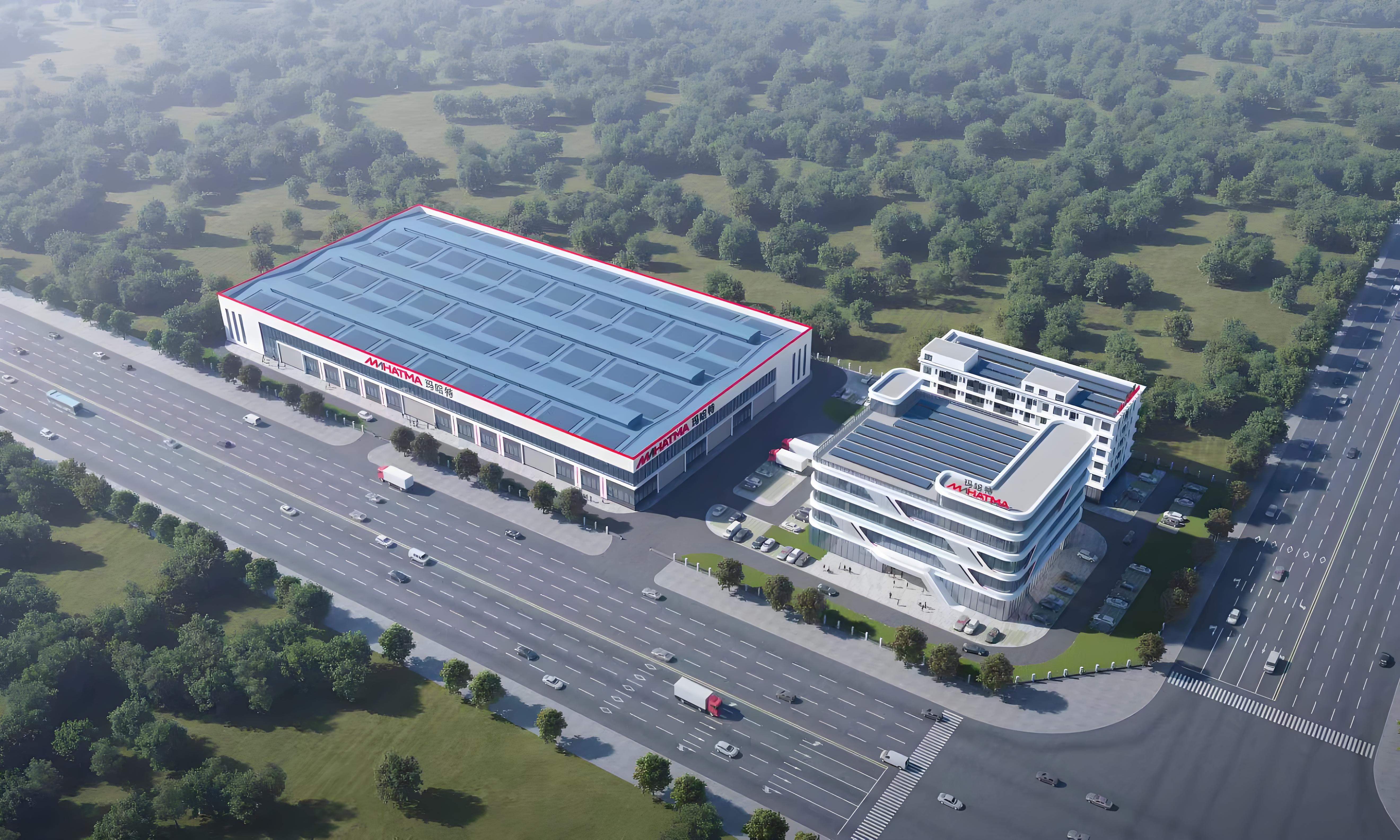
MAHATMA Huizhou Global Manufacturing Center — where leveling machines and integrated lines are built, wired for the destination grid and prepared for pre-shipment testing.
Diagnostics belong to the same integration picture. The smart operating system on MAHATMA's closed-loop platform uses a 15-inch multi-touch interface with one-key parameter setting and remote cloud diagnostics, and the platform's predictive maintenance alerts are published as reducing unexpected downtime by around 70%. The applicable scenario data for heavy-plate installations also lists optional IoT connectivity for remote monitoring and predictive maintenance.
Testing Your Own Material Before the Purchase Order
The most direct compliance check is not a document at all. Published thickness ratings for leveling machines are commonly expressed against a reference grade — MAHATMA's are based on Q235 / 235 MPa — and leveling force depends on thickness and yield strength together. High-strength steel, aluminium and titanium therefore require the rated range to be recalculated rather than read off a table.
MAHATMA's answer to that is a free sample test. The buyer sends 1–2 metres of material, or representative parts, with the material grade, thickness and flatness target noted. The material is leveled on the recommended machine, and the company returns a written test report with measured flatness data, the process parameters used and a video of the leveling run; the material itself is returned or retained as agreed. The test and the resulting machine proposal are free — the buyer covers shipping of the material. The most useful sample is the worst-condition material in the plant, not the best.
Two boundaries are worth stating plainly. First, a sample test verifies process capability on a sample; it does not replace the contractual acceptance route, which for MAHATMA is a pre-shipment test under terms of 30% deposit and 70% before dispatch, FOB, CIF or DAP delivery, and a minimum order of one unit. Second, model selection needs four inputs before any test is meaningful: thickness range, width, material grade (yield strength) and flatness target. Without all four, the reported result may describe a different material than the one the buyer will actually run.
Compliance and Integration Checks by Machine Type
Regulatory requirements are identical across platforms, but the engineering that has to be verified is not. The table below maps the main MAHATMA leveler families to the checks that matter at order stage.
| Platform | Example model range | Published range | Verification focus |
|---|---|---|---|
| CNC Leveler / Servo Leveler | MHTW15–MHTW100 (19–33 rolls); MHTM10–MHTM200 | 0.03–30 mm rated depending on series; widths 200–3200 mm | Servo roll-gap adjustment with PLC parameter memory; recipe storage for fast material changeover; MES/ERP interfaces where a line is configured |
| Hydraulic Leveler | MHTR30–MHTR400 | Rated 0.5–100 mm, max 120 mm; widths 600–4000 mm | Servo-hydraulic gap control that absorbs load shocks; specified hydraulic supply and ambient conditions; foundation and crane capacity checks |
| Four-high Leveler / Plate Leveler | VSH12–VSH80 | Rated 0.03–8 mm; widths 200–1000 mm | Backup-roll structure that limits work-roll deflection; suited to small and medium sheet metal shops and low-frequency processing |
| Two-high Leveler / Rough Leveler | VST42–VST120 | Rated 0.4–10 mm, max 20 mm; widths 200–1400 mm | Boundary case: rough leveling and thick-plate preparation where tight flatness is not the requirement |
Roll structure is the other specification that affects verification. The number of roll layers determines how well the small work rolls resist deflection under load: a 2-high structure suits basic jobs at the lowest cost, a 4-high structure adds backup rolls that sharply reduce deflection, and a 6-high structure adds intermediate rolls so the work rolls are almost fully supported with no unsupported gaps — the configuration chosen for mirror panels and precision parts. More layers also mean more alternating bends, which is what relieves internal stress in the first place.
Application Scenarios: What Each Compliance Requirement Protects
Compliance requirements look abstract until they are mapped to a production scenario. Two documented applications show the difference.
Heavy plate: steel structures, shipbuilding and bridges
In steel structure fabrication, shipbuilding, heavy construction machinery and bridge construction, the leveler runs thick carbon steel with high yield strength and significant welding deformation under continuous heavy load. Its function is to eliminate internal stress so plates hold flatness through subsequent welding or assembly; on the heavy-plate configuration the upper rolls are hydraulically driven with electric gap adjustment, matched with uncoilers, laser cutting machines, stamping presses and robotic arms. The stated site requirements are exactly the compliance items discussed above: an ISO 9001:2015 quality-management system, CE marking for EU installations, a noise level of 75 dB(A) or below, safety interlocks and emergency stop systems, and optional IoT connectivity for remote monitoring and predictive maintenance.
Precision sheet: automotive, appliance and elevator production
For automotive parts, home appliance manufacturing and elevator production, cold-rolled and stainless sheet is processed under continuous medium load with high surface-quality requirements. Here the machine removes material yield strength to achieve flatness for stamping or laser cutting, using servo-driven roll gap adjustment with PLC parameter memory. Two requirements dominate: small-diameter dense rolls to prevent surface indentation, and a dust removal system to keep the roll stack and sheet clean. These are the details that separate an acceptable quotation from an installation that passes its first quality audit.
Market Signals Behind Rising Compliance Expectations
Compliance scrutiny tracks the size and the internationalisation of the metal forming equipment market. The global metal forming equipment market — the segment that includes leveling and roll forming machinery — was valued at USD 45.8 billion in 2025, with Asia Pacific holding a 42.5% revenue share, according to Dataintelo. Fortune Business Insights puts Asia Pacific sheet metal processing equipment at USD 18.36 billion in 2025 and projects the wider metal forming machine tools market to reach USD 64.85 billion by 2034 at a CAGR of 9.60%; Dataintelo's growth estimate for the adjacent category is lower, at roughly 5.2% — a divergence that reflects scope and methodology differences rather than a disagreement about direction.
Two structural signals matter more to buyers than headline growth. First, CNC technology accounted for 85.7% of the machine tools market in 2025 (Grand View Research); as control systems become the default, buyers increasingly expect parameter recipes, data export and remote diagnostics rather than treating them as extras. Second, cross-border trade continues to expand: China's exports of metalworking machine parts rose 20.6% year on year in June 2026 (Observatory of Economic Complexity), with major destinations including Japan, Russia, the USA, India and Vietnam. More machines crossing borders means more machines passing through customs, electrical inspection and plant integration — precisely where documentation decides the schedule.
Segment data explains who pays for that documentation. Automotive accounts for 41.37% of the sheet metal processing equipment market in 2026 (Fortune Business Insights), and the cut-to-length machine market — a close proxy for leveling-line demand — is projected to grow from USD 4.28 billion in 2026 to USD 5.94 billion by 2032, a CAGR of 5.52% (ReportLinker). Published estimates for the cut-to-length line system market vary by scope, from USD 3.42 billion in 2024 to lower figures elsewhere, which is itself a reminder to check what a market number includes before using it as a planning assumption.
Closed-Loop Platforms Versus Traditional Levelers — and Their Limits
Compliance and integration are easier to verify on machines whose control platform exposes its settings. MAHATMA's published comparison of its closed-loop servo platform against traditional mechanical and standard semi-automatic levelers is summarised below.
| Parameter | Traditional mechanical / semi-automatic leveler | Closed-loop servo platform (supplier-published) |
|---|---|---|
| Roll gap setting | Manual adjustment | Automatic material-thickness identification with real-time roll gap adjustment |
| Setup / changeover | About 30 minutes | About 2 minutes |
| Flatness accuracy reference | Typically ±0.05 mm | Up to ±0.01 mm published; typical production results of 0.05–0.20 mm/m² depending on material and original coil condition |
| Stress elimination | — | Up to 96% |
| Welding defect rate | Baseline | Reduced by 50% |
| Material scrap | About 5% | Under 1% |
| Manual adjustment labour | Baseline | Reduced by around 90% |
| Energy use | Traditional hydraulic drive | 50–70% lower with all-servo drive and dynamic power regulation |
| Unexpected downtime | — | Around 70% lower through predictive maintenance alerts |
| Typical fit | General and low-precision work, budget-limited workshops | NEV battery trays, automotive body panels, 3C electronics, aerospace, high-mix low-volume production |
Source: MAHATMA published comparison data. Figures are supplier-stated and are best confirmed on the buyer's own material through sample testing.
Where the closed-loop approach does not fit
An honest comparison has boundaries, and several apply here. The initial investment is higher than a semi-automatic machine, and payback depends either on volume or on quality losses the buyer is already absorbing. Range is the harder limit: a machine optimised for thick plate cannot level thin sheet precisely, and vice versa — a wide material envelope may therefore call for two machines rather than one. Ratings published against a 235 MPa reference grade must be derated for high-strength steel, which is exactly why the sample test exists. Integration also depends on buyer inputs arriving early; a part envelope, takt target or line layout supplied late changes the scope of the integration engineering. Finally, market-access work — NRTL field evaluation, grid adaptation, transformer sizing — has to be agreed at order stage, and for low-precision, budget-constrained workshops a simple 2-high or 4-high machine remains the rational purchase.
Outlook: Documentation as a Purchasing Norm
Three developments are likely to sharpen this picture. The EU machinery framework has moved from Directive 2006/42/EC to Regulation (EU) 2023/1230, which keeps documentation discipline in the foreground of every European installation. CNC's 85.7% share of the machine tools market suggests that data interfaces and parameter governance will be treated as standard equipment rather than options. And as remote diagnostics and IoT monitoring move from optional to expected on heavy-plate installations, the line between a machine purchase and a service relationship continues to blur.
For buyers at the execution stage, the practical consequence is that flatness is no longer the only specification to settle before the deposit. The compliance file, the interface list and the material test report are the three items that determine whether the machine is producing good parts on the promised date. Flatness itself continues to be quantified in standardised terms — the I-unit or mm/m height deviation used in ISO and DIN practice — which makes a verifiable acceptance criterion easier to write before installation than to negotiate after it.
FAQ
Does a leveling machine exported to the EU need CE marking, and what does it involve?
Yes. Any industrial machine placed on the EU market must carry CE marking. Suppliers typically reference the Machinery Directive 2006/42/EC, and the EU framework has been updated by Regulation (EU) 2023/1230. The manufacturer must perform a documented risk assessment (EN ISO 12100), fit compliant guarding, interlocks and emergency stops, compile a technical file and issue an EC Declaration of Conformity. MAHATMA machines have held CE certification since 2008 and operate in Germany, Sweden, Poland, France, Italy, Spain, Slovakia and Finland. A Declaration of Conformity and a certificate copy should be requested before final payment.
What certifications are needed to install a Chinese leveler in the USA or Canada?
North America has no CE equivalent. Local inspectors (the Authority Having Jurisdiction) may require an NRTL field evaluation or listing — UL, ETL or CSA — particularly for the electrical panel, which must follow NFPA 79 in the US; Canada references CSA C22.2, and guarding is assessed against OSHA 1910. Voltage adaptation is mandatory, because US plants run 480V three-phase 60Hz rather than the 380V/50Hz standard, and MAHATMA configures export machines accordingly, with equipment already running in the US and Canada. Who covers field-evaluation costs is worth confirming before signing.
The machine is rated 380V/50Hz — can it run in my country?
Only if the destination grid matches or the machine is configured for it. Standard MAHATMA machines are built for AC three-phase 380V/50Hz; the EU uses 400V/50Hz, the US 480V/60Hz, Japan 200V/50–60Hz, and Saudi Arabia 380–400V/60Hz. Running a machine on the wrong supply damages motors and voids warranty. Voltage, frequency, phase and available transformer capacity should be stated in the purchase contract, so that motors, VFDs and control transformers are configured for the destination grid at the factory. Site air supply and ambient conditions for hydraulic systems belong in the same specification.
Is ISO 9001 certification relevant when choosing a leveling machine supplier?
ISO 9001:2015 does not certify the machine; it certifies that the manufacturer operates a controlled, audited quality-management system from design through production to after-sales. For a capital purchase expected to run for 15 years or more, that indicates consistent build quality, documented processes and reliable corrective action. MAHATMA has been ISO 9001 certified since 2008. The certificate should be current, issued by an accredited body, and issued to the entity that actually manufactures the machine rather than to a trading company.
Can a leveling machine integrate with MES/ERP and an existing production line?
Yes — on MAHATMA blanking lines and CNC levelers, MES/ERP connectivity is provided as standard, so production data, traceability and order scheduling exchange with existing systems. Automation modules such as loading carts, conveyors, robots, vision inspection and AGVs are proven standard options, and coil feeding, leveling, conveying and stacking modules can be engineered around an existing layout, including an existing laser cutter. Integration works best when the part envelope, takt target and current line layout are supplied early. The upgrade path is modular: a leveler can be installed first, with feeding and stacking added later.
Can a buyer test their own material on the machine before purchase?
Yes. MAHATMA's sample test is free: the buyer sends 1–2 metres of material, or representative parts, with the material grade, thickness and flatness target noted, and the material is leveled on the recommended machine. A written test report is returned with measured flatness data, the process parameters used and a video of the leveling run; the material is returned or retained as agreed, and shipping of the buyer's material is the only cost. Testing worst-condition material rather than best-case stock gives the most useful result, because published thickness ratings are usually based on a reference grade such as Q235 / 235 MPa.
Further reading: the MAHATMA leveling machine brochure (PDF) documents series ranges, line configurations and the standard documentation set that accompanies an export machine.