
Leveling Machine Sourcing: Build a Supplier Relationship That Lasts
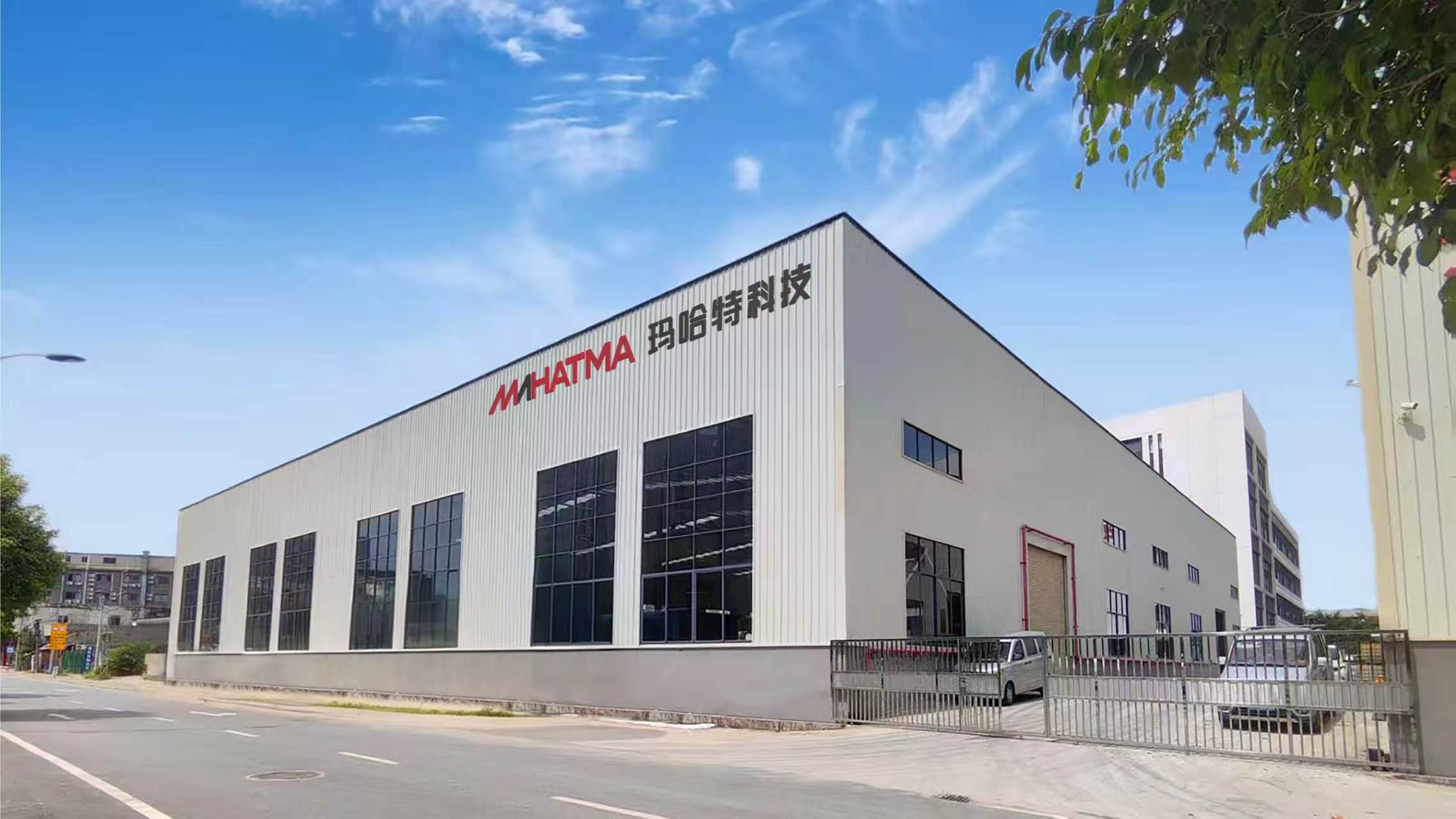
Manufacturing capacity is only one part of leveling machine due diligence; integration capability and after-sales structure matter as much.
Sheet metal flatness is not a cosmetic issue; it is a production variable that changes cutting, stamping, welding and assembly results. A leveling machine—also called a straightening machine, coil leveler, flattening machine or metal leveler—removes coil set, waves and internal residual stress by repeatedly bending material through a set of rolls. For buyers moving from decision to execution, the real question is not only which machine can flatten sheet metal, but which supplier can keep a production line productive for years. This article looks at leveling machine sourcing through a long-term partnership lens, using MAHATMA Leveler as a case reference for integration, testing, certification and service.
Why Leveling Machine Sourcing Is a Long-Term Decision
A leveling machine is usually installed at the front of a stamping, laser cutting, blanking or slitting process. If incoming material is not flat, every downstream operation pays a penalty: laser focus height drifts, stamping dies wear unevenly, welded assemblies distort, and scrap increases. Because the machine sits so early in the value stream, its reliability, repeatability and changeover speed become production-planning issues rather than merely maintenance issues.
The equipment itself can be expected to operate for many years. That makes the supplier relationship part of the machine specification. Buyers need to know how a manufacturer handles spare parts, remote diagnostics, process recipes, compliance documents, line integration and future automation. In this sense, the purchase decision is an ecosystem decision as much as a machine selection task.
The Problem: Comparing Only Price Ignores Integration and Support
Many sheet metal equipment purchases are decided by price, delivery time and a specification sheet. That approach misses three recurring costs: material changeover, line integration and downtime. A manually adjusted leveler may be cheaper upfront, but every new material thickness becomes a trial-and-error session. An isolated leveler that cannot talk to a plant's MES/ERP system adds data entry and reduces traceability. A machine without remote diagnostic support can create long service gaps in export markets.
The opportunity is equally clear. The global machine tools market shows that CNC technology is becoming the default; according to Grand View Research, the CNC technology segment accounted for 85.7% of the machine tools market in 2025. In practice, this means modern leveling machines can store recipes, adjust roll gaps automatically, document flatness results and connect to production planning systems. The buyer who evaluates these capabilities before signing can turn leveling from an operator-dependent step into a predictable, data-producing process.
Supplier Capability: What MAHATMA Brings to the Partnership
One supplier that has organized its product and service structure around the long-term view is Guangdong MAHATMA Intelligent Equipment Co., Ltd. (MAHATMA Leveler), a high-tech enterprise headquartered in Dongguan, Guangdong Province—a region often described as the 'World Factory' of manufacturing supply chains.
MAHATMA was founded in 2008 and operates as a provincial-level specialized and sophisticated SME. Its manufacturing footprint includes a global headquarters in Dongguan, a Huizhou global manufacturing center, and production bases in Jiangxi and Guangzhou. The company reports a factory area of 50,000 m², around 300 employees, 26 R&D engineers and an annual output capacity of 500 sets. It is also supported by more than 230 patents and strategic industry-academia-research partnerships with institutions such as Tsinghua University.
The product range covers sheet metal leveling machines, CNC leveling machines, hydraulic leveling machines, straightening machines, cut-to-length lines, uncoiling-leveling-slitting lines and uncoiling-leveling-flying-shear lines. According to the company profile, approximately 30% of output is exported, with main markets in the EU, USA and Asia. The equipment is documented as exported to over 100 countries and regions, supported by 28 overseas marketing and service networks.
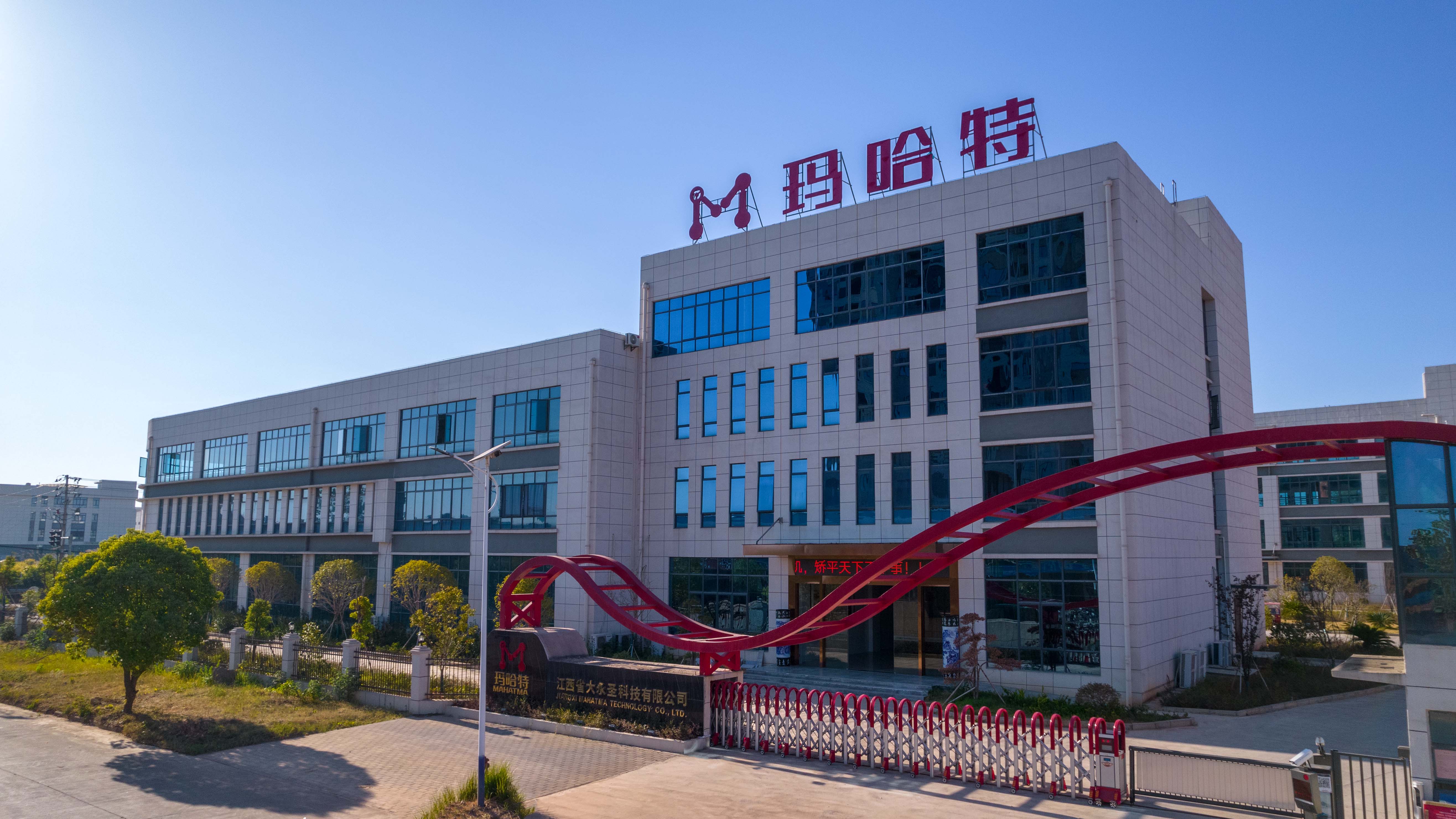
A supplier's production network is one signal of its ability to maintain consistent build quality and respond to long-term demand.
MAHATMA also publishes compliance positions that matter to export buyers: the company states that all products comply with ISO 12100 and European CE requirements, and that it has held CE certification and ISO 9001 since 2008. For a capital purchase expected to run 15 years or more, these certifications provide a documented baseline for design, risk assessment and quality management.
How a Modern Leveling Machine Works Under the Covers
Whether called a plate leveler, sheet metal leveling machine or precision leveler, the working principle is similar. Material is passed between opposing rolls that bend it alternately beyond its yield point. This repeated alternating bending relieves internal stress, removes coil set and creates a flatter surface. In technical terms, the operation relies on the Bauschinger effect to reduce residual stress through controlled plastic deformation.
The roll structure determines how precisely this can be done. In a 2-high structure, the work rolls are supported only by the machine frame; this is the lowest-cost option and is suitable for basic jobs. A 4-high structure adds backup rolls that support the work rolls, sharply reducing roll deflection and improving flatness. A 6-high structure adds intermediate rolls so the work rolls are almost fully supported, which is preferred for mirror-finish sheets and high-precision parts. More layers mean more alternating bends and better stress relief.
CNC levelers build on this mechanical foundation with servo-controlled roll gap adjustment, recipe storage and programmable pass schedules. Instead of a skilled operator turning hand wheels, the machine sets gaps automatically based on material thickness, width and yield strength. On flagship configurations, laser 3D surface inspection can check the sheet after leveling and feed real-time corrections back to the roll gap system. This is the difference between a machine that levels material by experience and a system that levels material by measured feedback.
Flatness in this world is usually expressed in millimetres per square metre or as an I-unit deviation. Verified industry references cite DIN EN 10029 for hot-rolled plate tolerances, and high-end CNC leveling capability on thin material can reach ±0.01 mm, while typical production results on real parts are more commonly in the 0.05–0.20 mm/m² range.
Application Fit: From Laser Cutting Shops to Heavy Plate
A leveling machine is not a one-size-fits-all investment. The correct series depends on material thickness, width, yield strength and the flatness target for the downstream process.
For laser cutting shops, the leveler's job is to remove coil set, waves and internal stress before cutting so that focus height and nesting remain accurate. Most laser shops process carbon steel, stainless steel and aluminum from around 0.5 mm to 6 mm. MAHATMA positions its Mastery MHTM30–MHTM80 series as the standard CNC choice for this range, with CNC gap adjustment and recipe storage to shorten changeover between materials. Precision-critical shops can step up to a flagship Wits-class machine with laser 3D inspection and more advanced closed-loop correction.
For automotive parts, home appliances and elevator production, surface quality becomes a dominant factor. Thin material with high surface requirements needs small-diameter dense rolls to prevent indentation, and in some cases a dust removal system. MAHATMA's servo-hydraulic and intelligent servo-CNC machine families are oriented toward these industries, with applications in automotive parts, 3C electronics, new energy battery components and precision sheet metal.
For shipbuilding, steel structures and heavy construction machinery, thick plate leveling is a force problem rather than a surface-finish problem. MAHATMA's Royal-class MHTR300 and MHTR400 series cover rated thickness ranges of 15–80 mm and 20–100 mm respectively, with widths up to 4000 mm. These machines require heavy frames, high-power drives and servo-hydraulic gap control to absorb load shocks. A user needs to plan crane capacity and foundation requirements well before installation.
For coil processors, the leveling function is often embedded in a complete line. MAHATMA offers cut-to-length lines, flying shear lines, slitting lines and laser blanking lines. The TD/MD/HD cut-to-length series covers roughly 0.2–25 mm at ±0.5 mm shearing accuracy; the UF/MF flying shear series targets thin-gauge high-volume blanking at up to 100 m/min and 250 cuts per minute; the UC/TC/MC slitting series covers 0.2–12 mm strip. These lines integrate a decoiler, precision leveler, shear or slitter, stacker and MES interface, which reflects the shift toward turnkey production systems.
Traditional Levelers vs. Servo-CNC Leveling Machines: A Fair Comparison
Buyers evaluating a modern servo-CNC leveling machine against a traditional mechanical leveler or standard semi-automatic leveler should compare lifecycle economics, not only ticket price. The table below summarises the differences reported by MAHATMA in its technical comparison material.
| Comparison point | Traditional mechanical / semi-automatic levelers | Servo-CNC / servo-hydraulic leveler systems |
|---|---|---|
| Flatness accuracy | Industry-typical level around ±0.05 mm | Reported capability up to ±0.01 mm |
| Setup / changeover | Manual adjustment, often about 30 minutes | One-key parameter setting, reported about 2 minutes |
| Stress elimination | Limited by fixed roll geometry and manual gaps | Reported up to 96% |
| Material scrap | Reported baseline up to 5% | Reported below 1% |
| Labour for machine adjustment | High operator dependence | Reported 90% lower labour for adjustment |
| Production efficiency | Baseline | Reported about 30% higher |
| Energy consumption | Hydraulic systems as baseline | All-servo drive reported 50–70% lower energy |
| Downtime pattern | Reactive maintenance | Reported 70% less unexpected downtime with predictive alerts |
These figures represent a supplier-reported comparison, not a universal guarantee. Actual results depend on material grade, incoming coil condition, operator practice, maintenance discipline and the rest of the production line.
Limitations a Serious Buyer Should Not Ignore
A modern leveling machine is not automatically the right answer for every shop. The first limitation is cost: the initial investment is higher than manual or semi-automatic leveling equipment. A small workshop processing occasional small batches may not recover that premium.
The second limitation is material data. MAHATMA states that published machine ratings are based on Q235/235 MPa. If the material is high-strength steel, aluminum, copper or titanium, the usable thickness range must be recalculated. This is why sample testing on the buyer's own material is part of the selection process, not an optional extra.
The third limitation is site infrastructure. Thick plate levelers can carry very heavy loads and require adequate crane capacity, foundations and electrical supply. A machine rated for 380V/50Hz in China must be configured for 480V/60Hz in the US, 400V/50Hz in the EU, 200V in Japan or other regional grids. For North America, local inspectors may require an NRTL field evaluation of the electrical panel in accordance with NFPA 79. None of these requirements are included automatically unless they are specified in the purchase contract.
Finally, the leveling machine alone cannot guarantee flatness after all downstream operations. Incoming coil shape, unwinding tension, handling damage and subsequent welding can all introduce new distortion. A realistic buyer treats the leveler as one controlled step inside a broader quality system.
Market Signals: Why the Industry Is Moving Toward Integrated Leveling
The macro data supports the shift away from standalone, manual leveling. Dataintelo values the global metal forming equipment market at USD 45.8 billion in 2025, with Asia Pacific accounting for a 42.5% revenue share. Fortune Business Insights reports that the metal forming machine tools market is projected to reach USD 64.85 billion by 2034 with a CAGR of 9.60%. In the sheet metal processing equipment segment specifically, automotive accounts for 41.37% of market share in 2026.
These figures matter for sourcing. A large share of demand is concentrated in automotive and manufacturing-heavy regions, which explains why suppliers are expected to handle both precision tolerance and high-volume line integration. The Cut to Length machine market is projected to grow from USD 4.28 billion in 2026 to USD 5.94 billion by 2032 at a CAGR of 5.52%, according to ReportLinker. That growth is not only about shearing speed; it reflects demand for complete coil-to-blank systems with leveling, stacking and data integration.
Trade data points in the same direction. The Observatory of Economic Complexity reports that China's exports of metalworking machine parts increased by 20.6% year-on-year in June 2026, with major destinations including Japan, Russia, the USA, India and Vietnam. For buyers, this means the supplier's export experience, local service network and ability to support machines in multiple regulatory environments are increasingly part of the evaluation criteria.
The Future of Leveling: From Standalone Machine to Production Node
The leveling machine is becoming a data-producing node in the factory rather than an isolated piece of equipment. MAHATMA states that its blanking lines and CNC levelers provide MES/ERP interfaces, and that automation modules such as loading carts, conveyors, robots, vision inspection and AGVs are available as proven standard options. Reference cases in the company's knowledge base include Zhucheng Group's fully automated upgrade and a Jiangsu new-energy-vehicle parts maker that achieved an approximately 45% capacity gain after automation.
Flagship leveling technology is moving toward unattended operation. The Wits class is described as an intelligent CNC platform with laser 3D surface inspection, real-time parameter correction, anti-collapse dynamic compensation, roll cassette cleaning and the ability to run with minimal operator intervention. This direction has procurement consequences: buyers need engineers who can manage process data, suppliers who can maintain software and sensors, and service contracts that go beyond mechanical repairs.
Remote diagnostics and predictive maintenance are already part of that model. When a machine can send alerts before a failure occurs, the supplier's response time becomes more important than the failure itself. A 28-network overseas service structure, electronic documentation and remote cloud diagnostics are therefore not marketing details. They are operational factors that determine uptime.
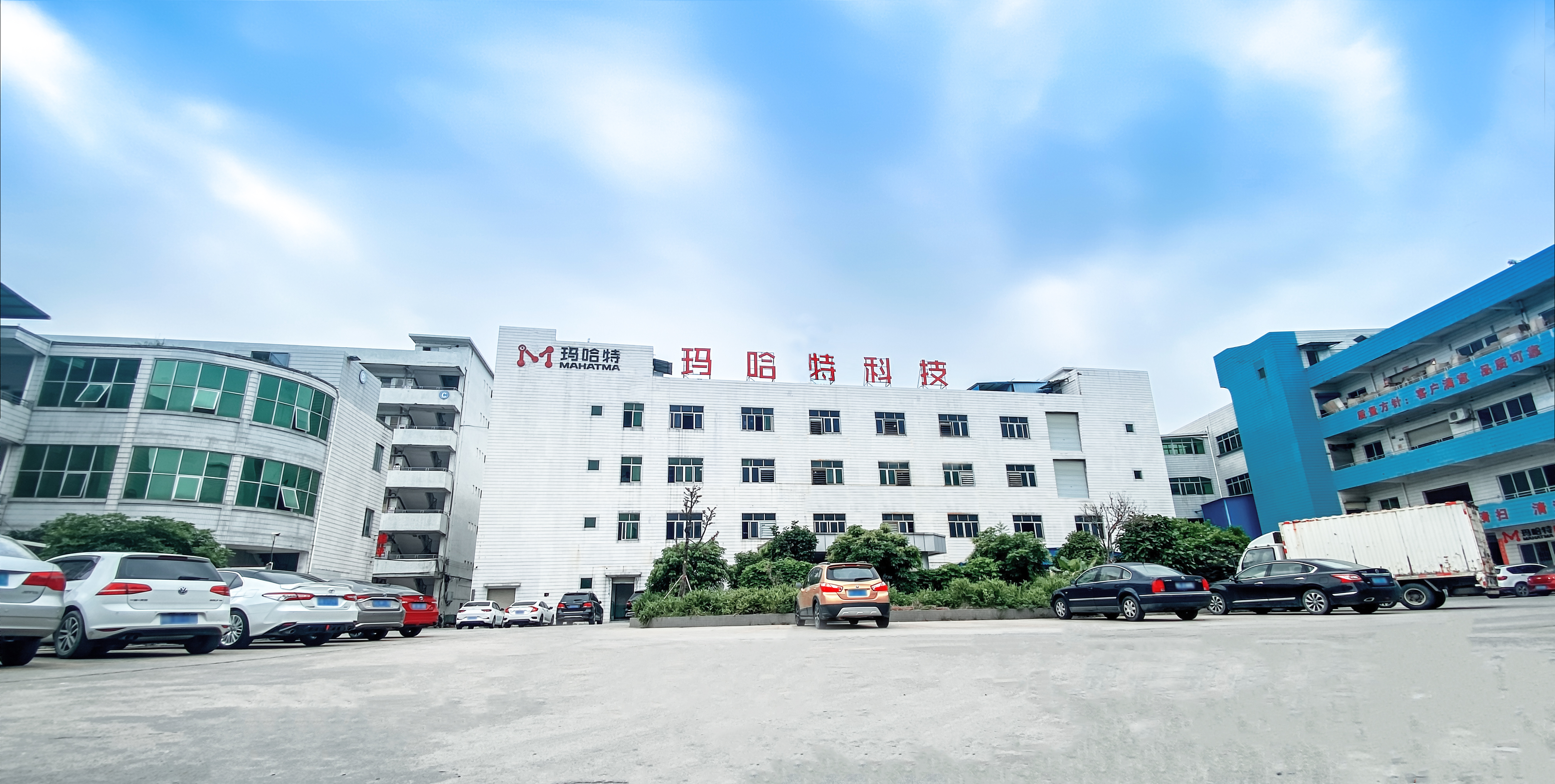
Engineering depth and service organization become part of the leveling machine's long-term reliability story.
A Practical Pre-Purchase Checklist
The decision-to-execution phase benefits from a short checklist. First, request a material test on the buyer's own worst-condition material, not the best sample. MAHATMA's standard process accepts 1–2 meters of material or typical parts and returns a written flatness report, process parameters and a video. Second, confirm the machine configuration for the destination grid voltage, frequency, phase and local plug or terminal standards. Third, verify compliance documents: CE Declaration of Conformity for the EU, ISO 9001 certification for the supplier's quality system, and a clear plan for NRTL or EAC certification if required. Fourth, confirm the integration path: MES/ERP interface, data traceability, automation modules, and the physical line layout around existing equipment. Fifth, clarify commercial terms including MOQ, delivery method, payment schedule, pre-shipment test, spare parts availability, warranty and remote diagnostic support.
FAQ
Can the equipment integrate with my MES/ERP and existing production line?
Yes. MAHATMA blanking lines and CNC levelers provide MES/ERP interfaces, and automation modules such as loading carts, conveyors, robots, vision inspection and AGV are offered as standard options. Reference cases include Zhucheng Group's fully automated upgrade and a Jiangsu new-energy-vehicle parts maker's capacity gain of approximately 45%. For integration planning, the buyer should provide part envelope, takt target and current line layout early.
Can I test my own material on a recommended leveling machine before buying?
Yes. The sample test is free. A buyer can send 1–2 meters of material or representative parts with material grade and flatness target noted. MAHATMA levels the material on the recommended machine and returns a written flatness report, process parameters and a video of the leveling run. Testing the worst-condition material is recommended.
What is the difference between the Wits, Royal, Mastery and Vague series?
They are four tiers covering material from roughly 0.03 mm to 100 mm. Vague is the entry-level two-high or four-high machine range for small workshops. Mastery is the standard CNC precision leveler range used in laser cutting and stamping shops. Royal is the servo-hydraulic high-stability series for automotive precision parts and thick plate up to 100 mm. Wits is the flagship intelligent CNC series with laser 3D inspection, anti-collapse dynamic compensation, roll cassette cleaning and unmanned operation capability.
Which certifications matter when importing a leveling machine to the EU or North America?
For the EU, CE marking is mandatory under the Machinery Directive framework, with a documented risk assessment and EC Declaration of Conformity. MAHATMA states it has held CE since 2008. For the US and Canada, there is no CE equivalent; local inspectors may require an NRTL field evaluation of the electrical panel under NFPA 79, and a 480V/60Hz configuration should be specified at order. For Russia and the EAEU, EAC certification applies. ISO 9001:2015 certifies the supplier's quality management system rather than the machine itself.
What information do I need to select the right MAHATMA leveling machine model?
Four inputs are usually enough to begin: thickness range, width, material grade or yield strength, and flatness target. Because machine ratings are often based on Q235/235 MPa, high-strength steel, aluminum or titanium require recalculation by the manufacturer. As a general map, Vague SHS covers entry-level thin to medium material, Mastery MHT is the CNC workhorse, Royal is the servo-hydraulic range up to 100 mm, and Wits is the flagship unmanned precision class. A sample test on the buyer's material confirms the final selection.