
Leveling Machine Supplier Sustainability: MES/ERP and Trials
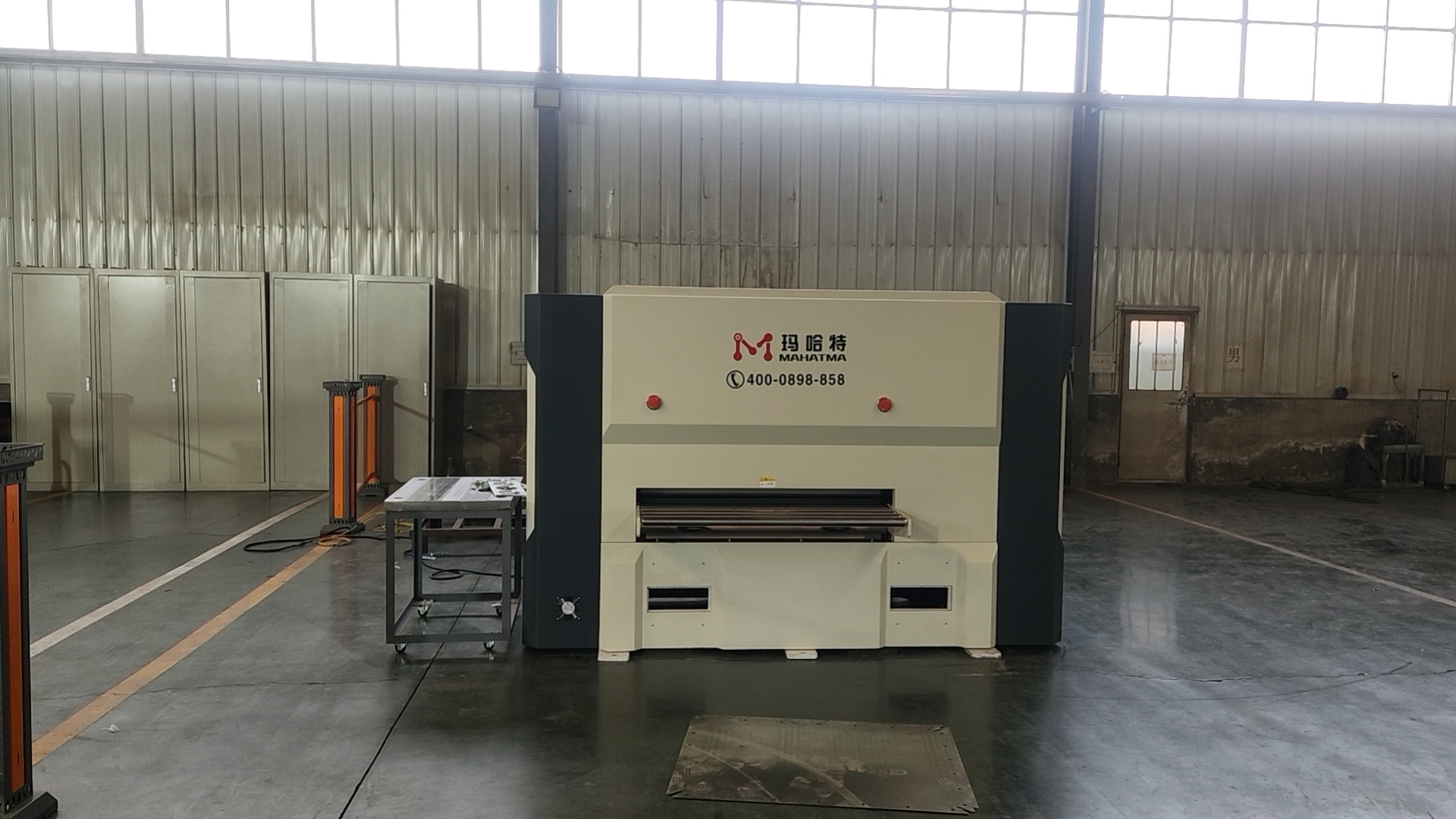
Why a Leveling Machine Is a Ten-Year Decision
A leveler is rarely replaced on a short cycle. It is built into a line, referenced in production recipes, maintained by trained operators and depreciated over years. The market context supports that view. Dataintelo values the global metal forming equipment market — the category that includes leveling and roll forming machinery — at USD 45.8 billion in 2025, with Asia Pacific taking a 42.5% revenue share. Fortune Business Insights projects the broader metal forming machine tools market to reach USD 64.85 billion by 2034.
Forecasts should be read as planning inputs, not commitments. Dataintelo estimates a 5.2% CAGR for metal forming equipment, while Fortune Business Insights uses a 9.60% CAGR for metal forming machine tools — a divergence explained by scope and methodology rather than by contradiction. The same pattern appears in line equipment: Market Research Future estimated the cut-to-length line system market at USD 3.42 billion in 2024, while Verified Market Research put a narrower measure at USD 2.8 billion, depending on whether a study counts complete lines or individual machines.
Two structural signals matter more to a buyer than headline numbers. CNC technology accounted for 85.7% of the machine tools market in 2025 (Grand View Research), which makes digital control and data output a baseline expectation rather than an upgrade. And automotive alone accounts for 41.37% of the sheet metal processing equipment market in 2026 (Fortune Business Insights), which sets downstream expectations for flatness consistency, traceability and takt time.
Against that backdrop, the buyer’s real question is not which machine is cheapest today, but which supplier will still be able to support the machine after the material mix, the line layout and the production software have all changed.
Gate 1: MES/ERP and Existing-Line Integration
Integration has three layers, and long-term value is usually won or lost across all three: mechanical fit, material flow and data.
Mechanical fit covers whether the leveler’s working width, pass line height and footprint match the uncoiler, laser cutter, press or stacking station already on the floor. Material flow covers coil handling, feeding, conveying and stacking — the movements around the leveler that decide whether the investment raises throughput or becomes a bottleneck. Data covers the connection to the plant’s MES/ERP layer, where production records, traceability and order scheduling live.
MAHATMA Leveler, the brand of Guangdong MAHATMA Intelligent Equipment Co., Ltd., a Dongguan-based manufacturer of high-precision leveling equipment, states that its blanking lines and CNC levelers provide MES/ERP interfaces, and that automation modules — loading carts, conveyors, robots, vision inspection and AGVs — are added as proven standard options rather than one-off developments. Two reference cases are cited for line-level integration: Zhucheng Group’s fully automated upgrade, and a Jiangsu new-energy-vehicle parts manufacturer that reported roughly a 45% capacity gain.
Two details matter for procurement purposes. First, the upgrade path is modular: a buyer can start with a leveler and add feeding and stacking automation later, which limits the risk of over-buying on the first order. Second, MAHATMA lists control-system integration (MES/PLC) explicitly within its customization scope, alongside roller width and diameter, leveling thickness range, roller material options such as Cr12MoV and SKD11, and automated loading and unloading systems.
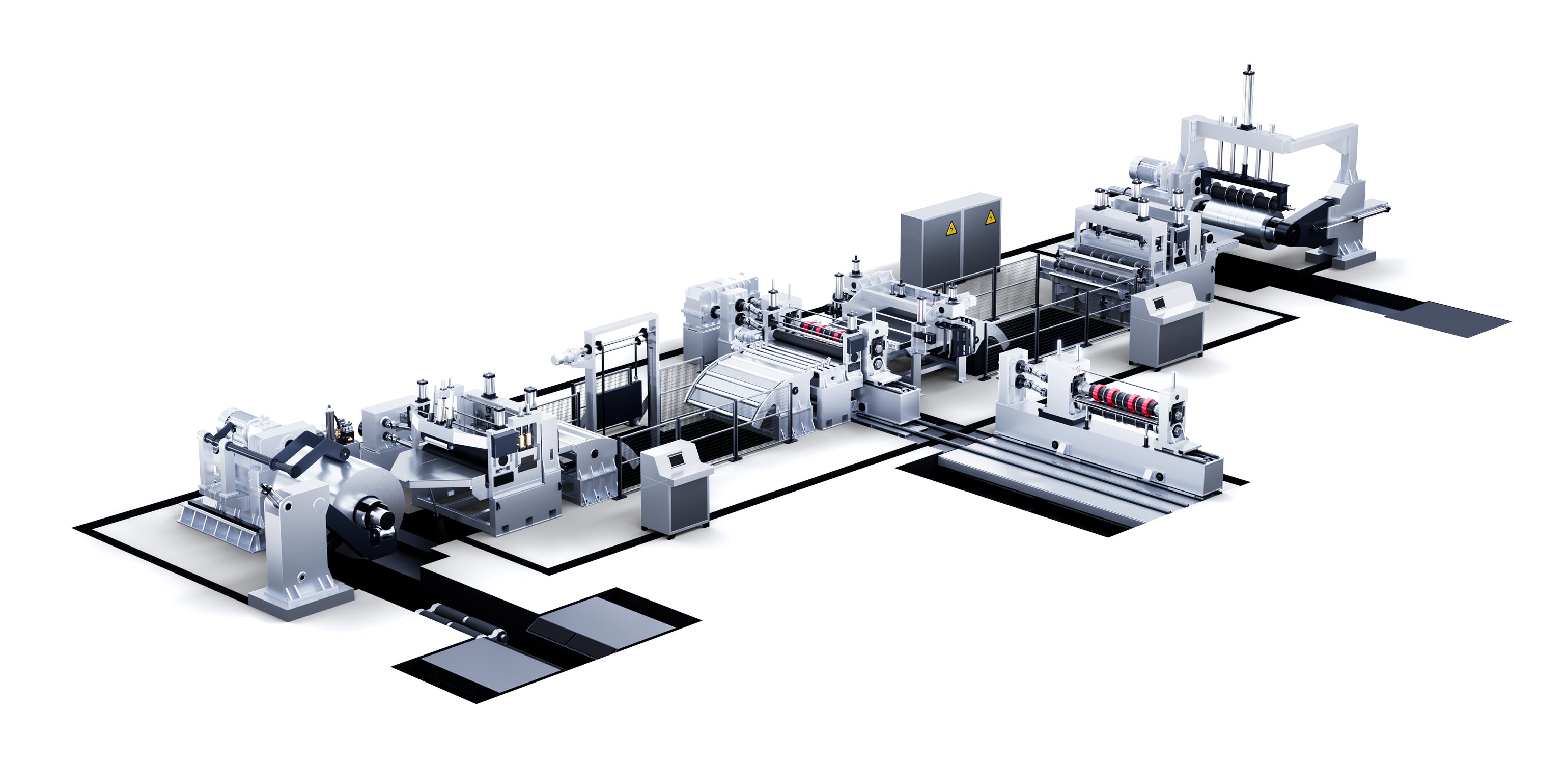
Integration requests succeed when the buyer supplies three inputs early: the part envelope, the takt target and the current line layout. Without them, an interface promise cannot be engineered into a solution. Questions worth putting in writing before the contract include:
- Which protocols and data points does the MES/ERP interface expose, and who owns the mapping document?
- Which automation modules are standard options, and which would require new development?
- Can the line be commissioned in stages without stopping existing production?
- What provision exists for adding the automation layer one or two years after machine installation?
Gate 2: Material Trials — Test Your Material, Not the Brochure
Published thickness ratings are a starting point, not an answer. Leveling force depends on thickness and yield strength together, and rated ranges are normally calculated on a reference material such as Q235 / 235 MPa. High-strength steel, aluminum and titanium must therefore be recalculated before a model is proposed — which is precisely why a trial on the buyer’s own material is the most useful pre-purchase step available.
MAHATMA states that the sample test is free. The buyer sends 1–2 meters of material, or representative parts, together with the material grade, thickness and flatness target. The supplier levels it on the recommended machine and returns a written report containing measured flatness data, the process parameters used, and a video of the run; the material is returned or retained as agreed, and the buyer covers only shipping. The supplier’s own guidance is to send worst-condition material rather than a best-case sample, because a trial on ideal stock does not predict production behavior.
Flatness is a quantified property, not a visual impression. It is commonly expressed as an I-unit or as an mm/m height deviation, and DIN EN 10029 defines tolerances on dimensions and shape for hot-rolled steel plate 3 mm and above. MAHATMA reports flatness down to ±0.05 mm on precision parts, with a verified case at 0.05 mm on titanium fixtures, and a typical production result of 0.05–0.20 mm/m². The mechanism behind those figures is multi-roll alternating bending: repeated bending past the yield point relieves internal residual stress so that the part stays flat after stamping or laser cutting.
Verification does not stop at the trial. MAHATMA’s stated factory quality control includes laser 3D online flatness detection, ultrasonic flaw detection on rollers, hardness uniformity testing and a full-load trial run before shipment. A buyer can reasonably require those records to travel with the machine.
Gate 3: Portfolio Breadth Beyond Today’s Part
A supplier can only stay with a buyer if it can follow the buyer’s material range as products change. Portfolio breadth is therefore a sustainability question, not a catalogue question. MAHATMA’s leveling portfolio is organized into four machine families plus line-level equipment.
| Family | Example series | Rated thickness / max | Buyer-relevant characteristics |
|---|---|---|---|
| Two-high / rough leveler | VST42, VST70, VST90, VST120 | 0.4–10.0 mm rated; up to 20.0 mm | Thick-plate rough leveling, budget-limited workshops; 13–19 rolls |
| Four-high / plate leveler | VSH12 to VSH80 | 0.03–8.0 mm rated; up to 14.0 mm | Repeated bending relieves internal stress; simple structure, small footprint, fast payback |
| CNC leveler | MHTM10 to MHTM200 | 0.03–30.0 mm rated; up to 40.0 mm | One-key parameter setting, 200-recipe storage, misoperation warning, upstream/downstream linkage |
| Servo-CNC leveler | MHTW15 to MHTW100 | 0.08–12.0 mm rated; up to 20.0 mm | All-servo motor drive, pull-out roll-box cleaning, laser 3D online inspection, remote cloud control |
| Servo-hydraulic leveler | MHTR30 to MHTR400 | 0.5–100.0 mm rated; up to 120.0 mm | Micron-level accuracy up to 0.01 mm, mark-free alloy rolls, 70% energy saving vs. traditional hydraulic |
| Complete lines | Cut-to-Length TD-2x2000; Flying Shear MF-3; Slitting UC-2x2000; Laser Blanking TL-T3; Leveling & Deburring (customized) | 0.2–12.0 mm depending on line | Coil-to-blank integration with shearing accuracy down to ±0.5 mm |
Read together, the machine families span roughly 0.03 mm to 100 mm in rated thickness and 200 mm to 4000 mm in working width — unusual coverage for a single supplier, and directly relevant to a buyer whose mix may shift from thin-gauge enclosures to thick plate.
The line-level families matter for a different reason. The Cut-to-Length TD-2x2000 is rated for 0.2–2 mm material at 900–1800 mm width, with ±0.5 mm shearing accuracy at up to 50 m/min and coil weights to 20 T. The Flying Shear MF-3 covers 0.3–3.0 mm at up to 100 m/min with a 25 T coil capability. The Slitting UC-2x2000 processes 0.3–2.0 mm material into 8–30 strips at up to 200 m/min. The Laser Blanking TL-T3 works from 3.0–12.0 mm with laser power from 2,000 to 20,000 W. A buyer who may eventually need coil-to-blank output can stay with one engineering team instead of renegotiating interfaces with a second supplier.
How the Supplier Landscape Compares
The precision leveling market includes deeply established European specialists. ARKU Maschinenbau GmbH was recognized among the top 500 “hidden world market leaders” in precision leveling machines for 2025 (WirtschaftsWoche / ARKU), and its FlatMaster series is used for laser-cut and stamped parts. KOHLER Maschinenbau GmbH reported more than 6,700 reference projects in leveling technology as of late 2023 (The Fabricator). Both are meaningful signals of engineering depth and installed base.
MAHATMA competes in the same category from a different base. The company operates a 50,000 m² facility with 300 employees, 26 R&D engineers and an annual output of 500 sets; 30% of production is exported, and equipment has been shipped to more than 100 countries and regions, including the United States, Germany, Japan, South Korea and Canada, supported by 28 overseas marketing and service networks. It holds more than 230 patents.
What the comparison does not settle is fit. A recognized brand position indicates that a supplier has solved leveling problems at scale; it does not indicate that the supplier’s standard machine matches your thickness band, your control environment, or your willingness to run a trial. Buyers evaluating a long-term relationship should therefore compare deliverables — interface documentation, trial protocol, certification scope and spares policy — rather than reputation alone.
Where the Limits Are
A credible supplier assessment includes boundaries, and these apply to the equipment category rather than to one brand.
- Envelope limits: a machine optimized for thick plate cannot level thin sheet precisely, and vice versa. Wide material ranges may require two machines.
- Derating: rated thickness is calculated on a reference material such as Q235 / 235 MPa and must be recalculated for high-strength steel, aluminum or titanium.
- Trial scope: a sample test uses 1–2 meters of material and cannot fully replicate full-coil, long-duration behavior.
- Capacity: MAHATMA states a monthly capacity of 50 units and a 45-day lead time, with a minimum order of 1 unit — worth checking against a multi-line expansion plan.
- Certificate scope: the ISO 9001 certificate covers design and assembly of general-purpose equipment, and the CE attestation of conformity issued for MAHATMA is scoped to the hydraulic precision leveling machine. Buyers ordering other configurations should confirm the declaration covers the exact model and line scope purchased.
What Long-Service Installations Show
The clearest test of supplier sustainability is equipment that has stayed in production. MAHATMA’s case records include installations reported as running for three to five years across heavy plate, stainless and aluminum applications.
| Country | Application | Model | Reported service period | Reported outcome |
|---|---|---|---|---|
| Poland | Armored vehicle components | MHTR120 Series | 3 years | Stable operation; improved production efficiency |
| Slovakia | SS314 stainless steel | MHTM100 Series | 3 years | Capacity expansion 100% |
| Serbia | Laser-cut parts | MHTR150 Series | 4 years | Efficiency improvement 50% |
| India | Sheet metal | MHTR150 Series | 4 years | Cost savings 30% |
| Russia | Laser-cut parts | MHTR200 Series | 4 years | Cost savings 20% |
| Malaysia | SS304 | MHTR100 / MHTR120 Series | 4 years | Capacity expansion 150% |
| Germany | Mesh board | MHTR80 Series | 5 years | Cost savings 50% |
| Singapore | Spring steel | MHTM80 Series | 5 years | Efficiency improvement 80% |
| Philippines | Aluminum sheet | MHTM60 Series | 5 years | Capacity expansion 300% |
The pattern is consistent with the three gates described above. Hydraulic machines (MHTR series) dominate heavy-plate and high-yield-strength applications, while CNC machines (MHTM series) dominate stainless, aluminum and laser-cut part work — and several installations have been extended rather than replaced, which is the practical definition of supplier sustainability.
Certifications and Documents to Verify
Two documents carry most of the compliance weight in a leveling machine purchase. MAHATMA holds ISO 9001:2015 certification under GB/T 19001-2016, certificate number 62825Q9729R0M, issued by Zhongtian Hongtu International Certification Co., Ltd. and valid from 27 May 2025 to 26 May 2028, covering design and assembly of general-purpose equipment including high-precision leveling machines, uncoiler laser blanking lines and automatic shearing lines for all IAF MLA signatory countries.
Its CE Machinery Directive attestation of conformity, number M.2025.206.C113032, was issued by UDEM International Certification Auditing Training Centre and is valid to 15 January 2030 against EN ISO 12100:2010, EN ISO 16090-1:2020, EN ISO 16090-1:2022, EN ISO 16092-2:2020 and EN 60204-1:2018. CE marking is required for leveling machines entering the European market, and the buyer should request the Declaration of Conformity before final payment. For shipments to the United States or Canada, specify 480V / 60 Hz at order and plan for NRTL field evaluation of the electrical panel under NFPA 79; export crates should be ISPM 15 heat-treated and stamped. MAHATMA also lists 24/7 global technical support, overseas engineers for commissioning, regional spare parts warehouses and free operator training as part of its after-sales structure.
A Supplier Sustainability Checklist
| Checkpoint | Question to ask the supplier | Evidence to request |
|---|---|---|
| System integration | Can the leveler connect to our MES/ERP, and which protocols and data points are exposed? | Interface specification and mapping document; reference line list |
| Line fit | Will pass line, width and footprint match our uncoiler, laser or press? | Layout drawing; staged commissioning plan |
| Material validation | Will you level our material, including worst-condition stock? | Test report with measured flatness, process parameters and video |
| Sizing basis | Which reference material was the rated thickness calculated on? | Derating calculation for our yield strength; model proposal |
| Mechanical quality | What roller material and structure are used, and how is wear managed? | Roller material specification (e.g. Cr12MoV, SKD11); hardness and flaw-detection records |
| Factory verification | What testing is performed before shipment? | Laser 3D flatness records; full-load trial run report |
| Certification scope | Does the declaration cover the exact model and configuration ordered? | ISO 9001 certificate 62825Q9729R0M; CE attestation M.2025.206.C113032 with scope statement |
| Service continuity | How are spare parts and engineers supplied after year one? | Spare parts list; regional warehouse locations; commissioning and training terms |
| Capacity and lead time | Can you deliver the number of units we plan to install? | Stated 45-day lead time, 50 units/month capacity, 1-unit minimum order |
| Growth path | Can automation be added later without replacing the machine? | Modular upgrade plan with stages and interfaces |
What Changes Next
Three shifts are likely to define the next procurement cycle. First, digital interfaces become non-negotiable: with CNC technology at 85.7% of the machine tools market in 2025, a leveler without documented data output will be harder to integrate and harder to resell. Second, supply geography continues to move — China’s exports of metalworking machine parts rose 20.6% year-on-year in June 2026, with Japan, Russia, the USA, India and Vietnam among the major destinations (OEC) — which raises the value of regional spare parts and service networks rather than lowering it. Third, line-level thinking keeps spreading: with Asia Pacific holding a 42.5% share of metal forming equipment revenue and USD 18.36 billion of sheet metal processing equipment demand in the region in 2025 (Fortune Business Insights), buyers increasingly evaluate a leveler as one module of a line rather than a standalone box.
The practical response is to buy for the envelope, not the part: define the thickness range, width and automation level you expect in five years, require a trial on your own material, and hold the supplier to documented interfaces and certificate scope.
FAQ
Can a leveling machine integrate with our MES/ERP and existing production line?
Yes. MAHATMA blanking lines and CNC levelers provide MES/ERP interfaces, and automation modules such as loading carts, conveyors, robots, vision inspection and AGVs are offered as standard options rather than bespoke development. Integration is engineered from three inputs the buyer provides: part envelope, takt target and current line layout. Modularity is part of the design — a buyer can start with a leveler and add feeding and stacking automation later, and MAHATMA lists MES/PLC control-system integration within its customization scope. Buyers should still request the interface documentation (protocols, data points and traceability fields) before contracting, because MES/ERP capability is only meaningful when it matches the plant’s actual system.
Can we test our own material before buying?
MAHATMA states that the sample test is free. The buyer sends 1–2 meters of material or representative parts together with the material grade, thickness and target flatness. The material is leveled on the recommended machine and returned with a written report containing measured flatness data, the process parameters used and a video of the run; the material is returned or retained as agreed, and the buyer covers only shipping. The supplier advises sending worst-condition material rather than the best available sample, since a trial on ideal stock does not predict production behavior.
What information does a supplier need to recommend the right model?
Four inputs are sufficient for an initial recommendation: thickness range, width, material grade (yield strength) and target flatness, plus production volume. This matters because published rated thickness ranges are normally based on a reference material such as Q235 / 235 MPa, and leveling force depends on thickness and yield strength together — high-strength steel, aluminum and titanium therefore require recalculation. If the material envelope is wide, a single machine may not cover it: a model optimized for thick plate cannot level thin sheet precisely, and vice versa. In that case the proposal is either the model with the best overlap or a two-machine plan, confirmed by a sample test.
Do the machines carry the certifications required for export markets?
MAHATMA holds ISO 9001:2015 certification (GB/T 19001-2016), certificate number 62825Q9729R0M, issued by Zhongtian Hongtu International Certification Co., Ltd., valid from 27 May 2025 to 26 May 2028, covering design and assembly of general-purpose equipment including high-precision leveling machines, uncoiler laser blanking lines and automatic shearing lines. Its CE Machinery Directive attestation of conformity, number M.2025.206.C113032, was issued by UDEM and is valid to 15 January 2030 against EN ISO 12100:2010, EN ISO 16090-1:2020, EN ISO 16090-1:2022, EN ISO 16092-2:2020 and EN 60204-1:2018. The CE scope stated in that document is the hydraulic precision leveling machine, so buyers of other configurations should confirm that the declaration covers the exact model and line ordered. CE marking is required for leveling machines entering the European market, and the Declaration of Conformity should be requested before final payment.
What flatness can actually be achieved on real parts?
MAHATMA reports flatness down to ±0.05 mm on precision parts, with a verified case of 0.05 mm on titanium fixtures, and a typical production result of 0.05–0.20 mm/m². The mechanism is multi-roll alternating bending: repeated bending past the yield point removes internal residual stress, the same principle referenced in DIN EN 10029 for hot-rolled steel plate tolerances. Flatness is conventionally expressed as an I-unit or as an mm/m height deviation. Because the final result depends on material grade, thickness and the condition of incoming coil, the achievable figure should be confirmed on the buyer’s own material rather than taken from a catalogue.
A fuller technical record of MAHATMA’s leveling machines, servo-hydraulic and CNC series, and complete uncoiling, leveling and shearing lines is available in the company’s product documentation: MAHATMA Leveler product brochure (PDF).
Есть вопросы или нужны дополнительные детали?
Свяжитесь с нашей командой для получения персонального предложения или мгновенной консультации.
Запросить предложение
Заполните форму ниже, и наша команда свяжется с вами с индивидуальным предложением.
Прямой чат WhatsApp
Предпочитаете общаться в реальном времени? Напишите нам в WhatsApp для мгновенной помощи и быстрых ответов.
- Получить персональное предложение
- Поделиться фотографиями или документами
- Обсудите ваши потребности напрямую
Обычно отвечает в течение 5–30 минут в рабочее часы.