
Light Guide Panel Scenario Fit: Office, Signage, Museum, Retail, Hospitality & Elevators
Light Guide Panel Scenario Fit: Office, Signage, Museum, Retail, Hospitality & Elevators
Light guide panel scenario fit — the match between a panel and the environment it will light — decides more of a backlit project's outcome than any single specification figure. A panel that performs well behind a 24/7 retail showcase can be the wrong choice for an exterior advertising light box, not because of brightness alone, but because of protection grade, thermal envelope, mounting structure, and how the illuminated surface is expected to look after years in service.
This reference maps the EDGELIGHT light guide panel, model LGP, to the application environments the product is documented for: office and high-end residential interiors, advertising light boxes and signage, exhibition and museum spaces, retail and luxury display, hospitality and commercial interiors, and elevator decoration. For each environment it explains what the scenario asks of the panel, which documented specifications answer that demand, and where a buyer should apply caution.
Shanghai Edgelight Industry Co., Ltd. (EDGELIGHT) is a Shanghai-based manufacturer of light guide panels, LED displays, intelligent control products and advertising lighting equipment, founded in 2004. The company operates a 33,000 m² Shanghai headquarters production base, employs around 500 people including a 25-engineer R&D team, reports annual output of 120,000 units, and exports about 75% of production to markets including the USA and EU.
Why the Scenario Comes Before the Specification
Procurement teams entering a backlit display project usually open with a brightness target and a panel size. In practice, the environment sets the constraints that decide whether those two numbers are even achievable at an acceptable service life.
A retail showcase running continuously is judged on uniformity and color consistency at close viewing distance. An advertising light box viewed from across a street is judged on surface brightness and resistance to dust and moisture. A museum graphic wall is judged on the absence of hot spots across a large, evenly lit field. An elevator cabin panel is judged on thickness, edge finish, printability and how the assembly behaves in a small, sealed, constantly used space.
Because these demands pull in different directions, the practical sequence runs from environment to protection grade, then to color temperature and output, and only then to dimensions and fixing detail. The product documentation for model LGP supports that order: it specifies an operating range of -20°C to 50°C, a protection grade spanning IP20 to IP65, a color temperature range of 2700K–6500K, and a luminous flux above 1080 lm for the stated configuration, with maximum current 7.2 A, maximum power 144 W and typical power consumption 101 W.
What the LGP Platform Actually Provides
The EDGELIGHT light guide panel is an edge-lit acrylic panel: light from a strip along one or more edges is redirected across the panel face to produce a flat, even luminous surface. The documented construction material is acrylic, and the product is positioned for interior and outdoor working conditions with a stated operating temperature range of -20°C to 50°C.
Documented customization covers size, thickness, color temperature, logo, surface shape, light output brightness and installation structure. Production is offered under OEM and ODM arrangements, with a minimum order quantity of 1 unit, a lead time of 5–10 days, monthly capacity of 30,000 units, and 100% testing. Export markets listed are the European Union, North America, Southeast Asia and Australia, supported by local after-sales support.
The panel is not a standalone luminaire. Documented supporting equipment includes LED strip light, a constant current power driver, a light box frame, diffuser film, reflective film and mounting brackets. Scenario fit therefore includes the bill of materials around the panel, not only the panel itself.
Documented LGP reference specifications
- Material: acrylic (PMMA-type optical panel)
- Luminous flux: >1080 lm for the stated configuration
- Color temperature: 2700K–6500K
- Operating temperature: -20°C to 50°C
- Protection grade: IP20–IP65
- Electrical: 7.2 A maximum current, 144 W maximum power, 101 W typical consumption
How an Edge-Lit Panel Turns a Light Strip into a Surface
An edge-lit light guide works by total internal reflection. Light entering the acrylic edge stays trapped inside the sheet until an optical extraction feature — typically a printed or laser-formed dot pattern — redirects it toward the face. Dot density, dot size and pattern spacing are what convert a bright line of LEDs into an even rectangle.
This is why uniformity, not raw output, is the honest headline metric for most interior specification work, and why the two cannot be judged separately. A panel pushed to a high output in a thin format must still distribute that light evenly across the full face, and the dot pattern is the variable that carries that burden. Where a project needs a specific color appearance, the 2700K–6500K range allows a warm interior match or a cooler signage white from the same panel platform, subject to confirmation for the chosen configuration.
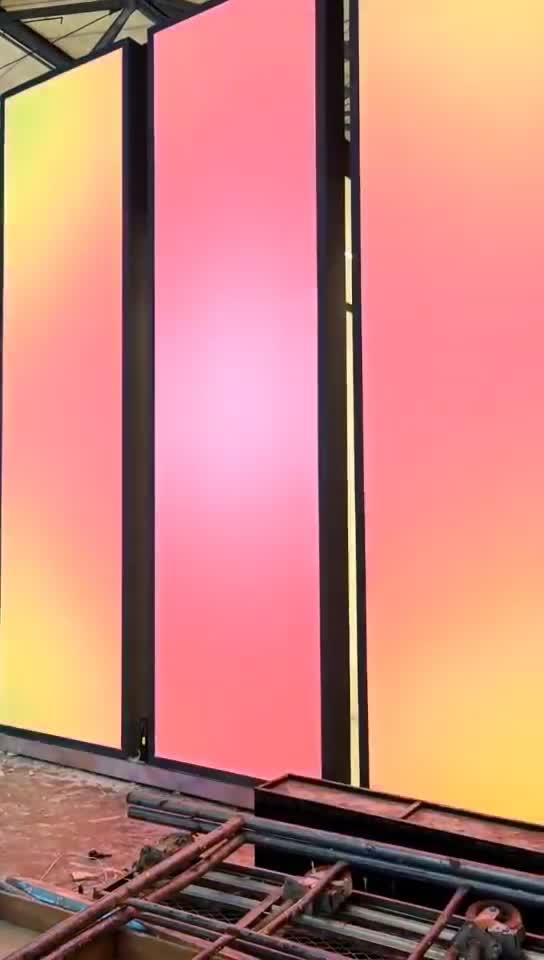
The thermal side matters just as much. The documented operating range of -20°C to 50°C defines where the assembly is expected to run, and an edge-lit design places the LED strip close to the panel edge. That is a design consideration in sealed enclosures and in fixtures with limited air movement, and it is one reason a scenario review should include the housing and driver, not just the sheet.
Scenario-by-Scenario Fit
Office and High-End Residential Interiors
In office and high-end residential settings, the panel is specified as an architectural light surface rather than a sign. The documented color temperature range supports warm residential whites through neutral office whites, and the acrylic face gives a continuous luminous plane that reads as part of the ceiling or wall rather than as a fixture.
The practical constraint here is thickness and installation structure. Because both are customizable, the panel can be matched to the recess depth or the surface-mount profile the design allows. For projects in damp or dust-prone interior zones, the protection grade should be fixed at the specification stage — the platform spans IP20 to IP65, and the correct point in that range depends on the room, not the panel.
Advertising Light Boxes and Signage
Signage is the scenario where output and weather exposure dominate. Documented luminous flux above 1080 lm for the stated configuration, combined with the 2700K–6500K range, allows a sign face to be tuned either for high-visibility commercial white or for a warmer brand tone. Edge-lit construction keeps the box slim, which matters for wall-mounted and fascia-mounted signage where depth is constrained.
For exterior light boxes, the protection grade is the decisive field. An IP20 configuration suits dry, protected interior signage; higher ratings in the IP20–IP65 band are the appropriate direction for exposed or wash-down locations. Buyers should also plan diffuser film and reflective film into the assembly, since face graphics and light recovery both affect the final appearance more than the panel alone.
Exhibition and Museum Spaces
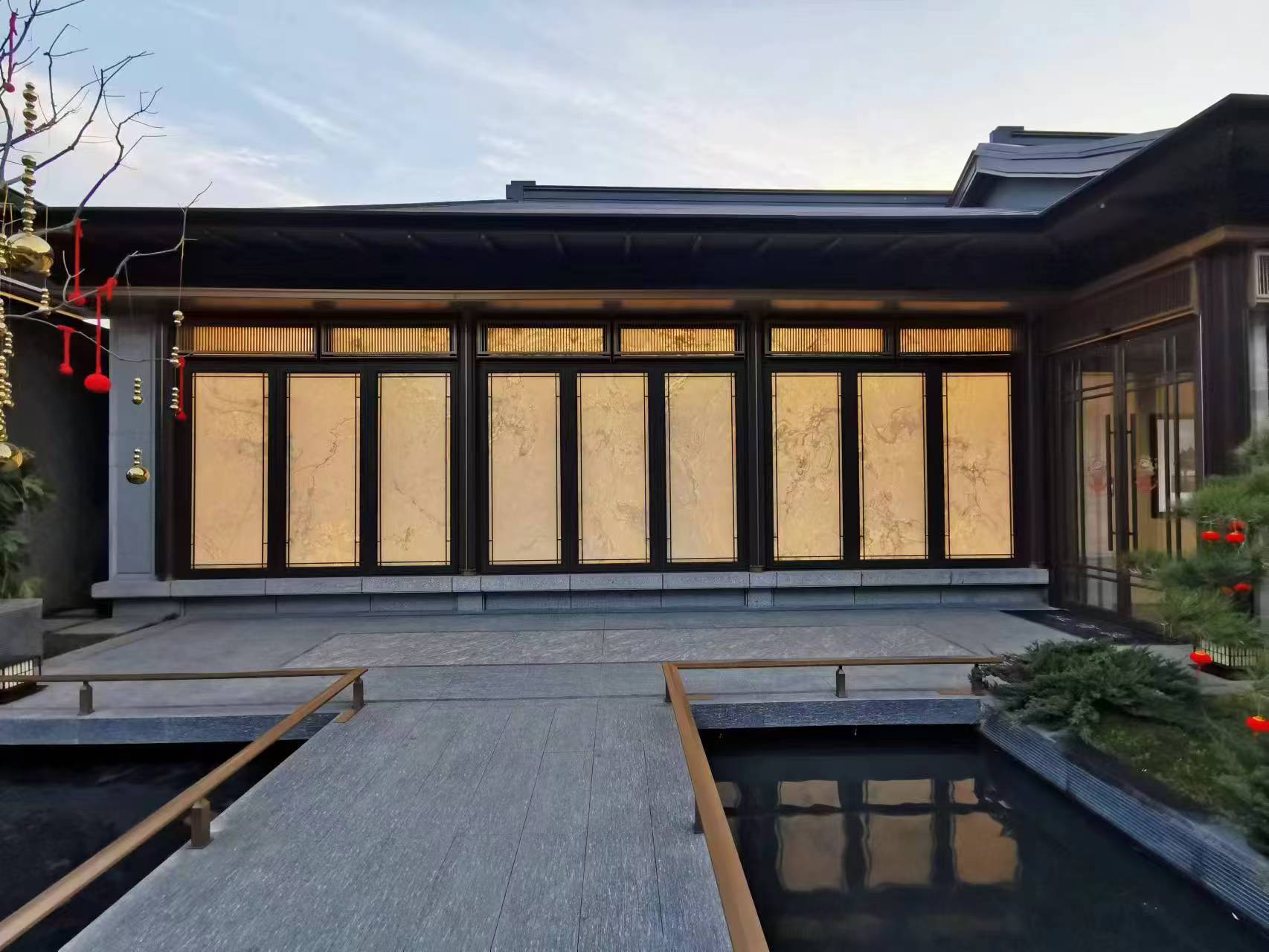
Exhibition and museum installations place the highest premium on uniformity and on the absence of visible structure. A panel that shows a bright edge or a repeating dot pattern will be noticed immediately at the viewing distances typical of a gallery. The relevant selection levers are the extraction pattern, the diffuser film and the panel thickness — all within the documented customization scope.
Color temperature choice is a curatorial decision as much as an engineering one. Warm settings in the 2700K–3000K region of the documented range are generally preferred where illuminated material sits close to textile, paper or painted surfaces, while neutral to cool settings suit interpretive graphics and wayfinding. Because the range extends to 6500K, a single panel platform can serve both without changing supplier.
Retail and Luxury Display
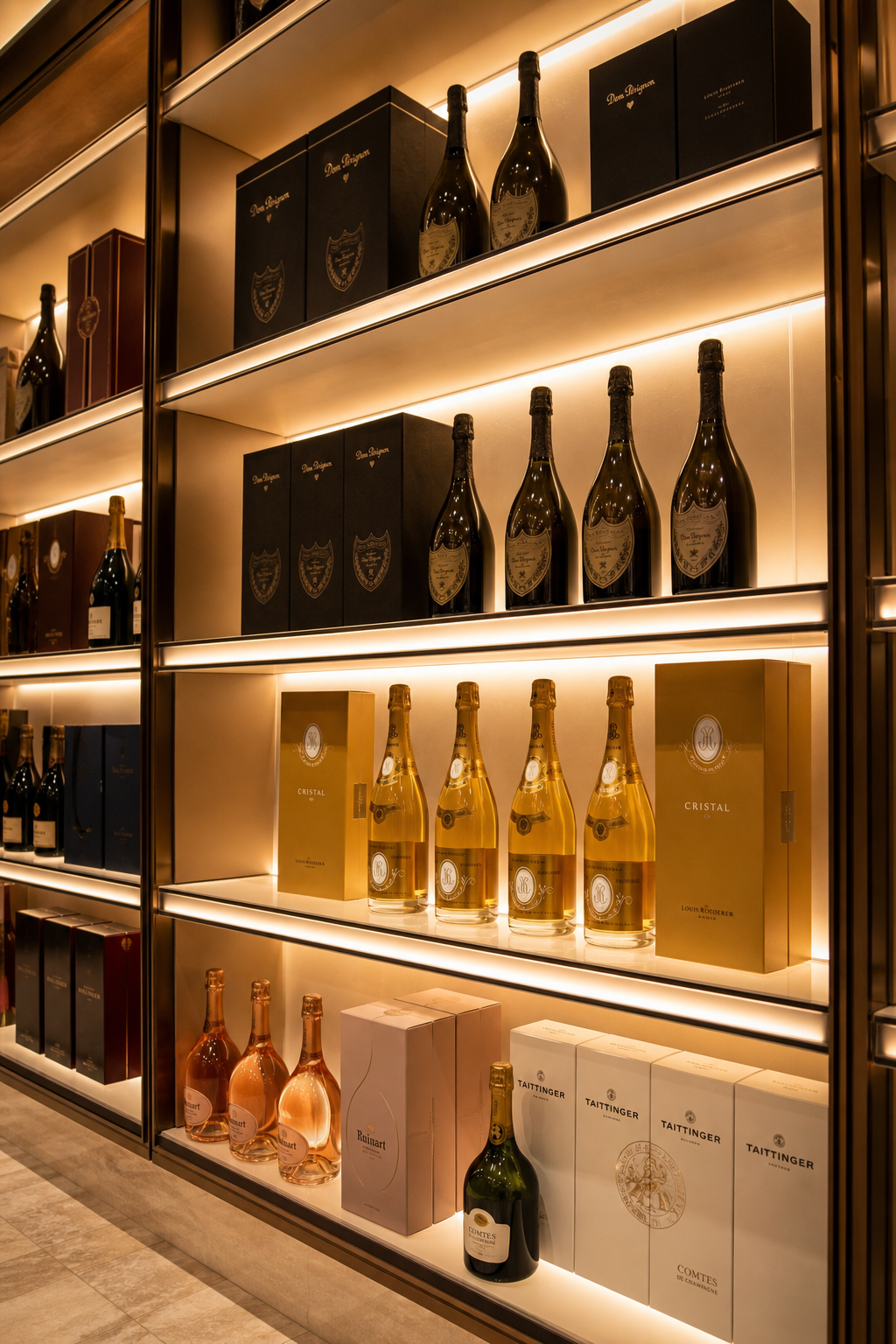
Retail is the scenario with the clearest documented operating profile: showcase and shelf backlighting, running in 24/7 mode, under both interior and outdoor conditions. The application profile for this environment calls for IP55-level dustproof and waterproof protection, high light uniformity, optical acrylic material, long service life and no yellowing.
That combination is demanding precisely because it never stops. A display that runs continuously is judged on color stability and on how the illuminated shelf looks next to adjacent branded fixtures. The acrylic construction and the documented no-yellowing requirement address the appearance question; the protection grade addresses the cleaning and handling question, since retail showcases are wiped down routinely.
Hospitality and Commercial Interiors
Hotel lobbies, bars, restaurant interiors and commercial fit-outs use the panel as a decorative and functional light plane — ceiling panels, bar fronts, wall features and backlit surfaces. The documented working condition covers both interior and outdoor conditions, which is useful for transitional spaces such as terraces and covered entrances where a single visual language continues from inside to outside.
The specification question in hospitality is usually about consistency across a large installation rather than about any individual panel. Running a hotel project on one color temperature band across hundreds of square meters of luminous surface requires the same panel platform, the same driver approach and the same pattern process throughout — which is where OEM production with a documented monthly capacity of 30,000 units becomes relevant to schedule planning.
Elevator Decoration
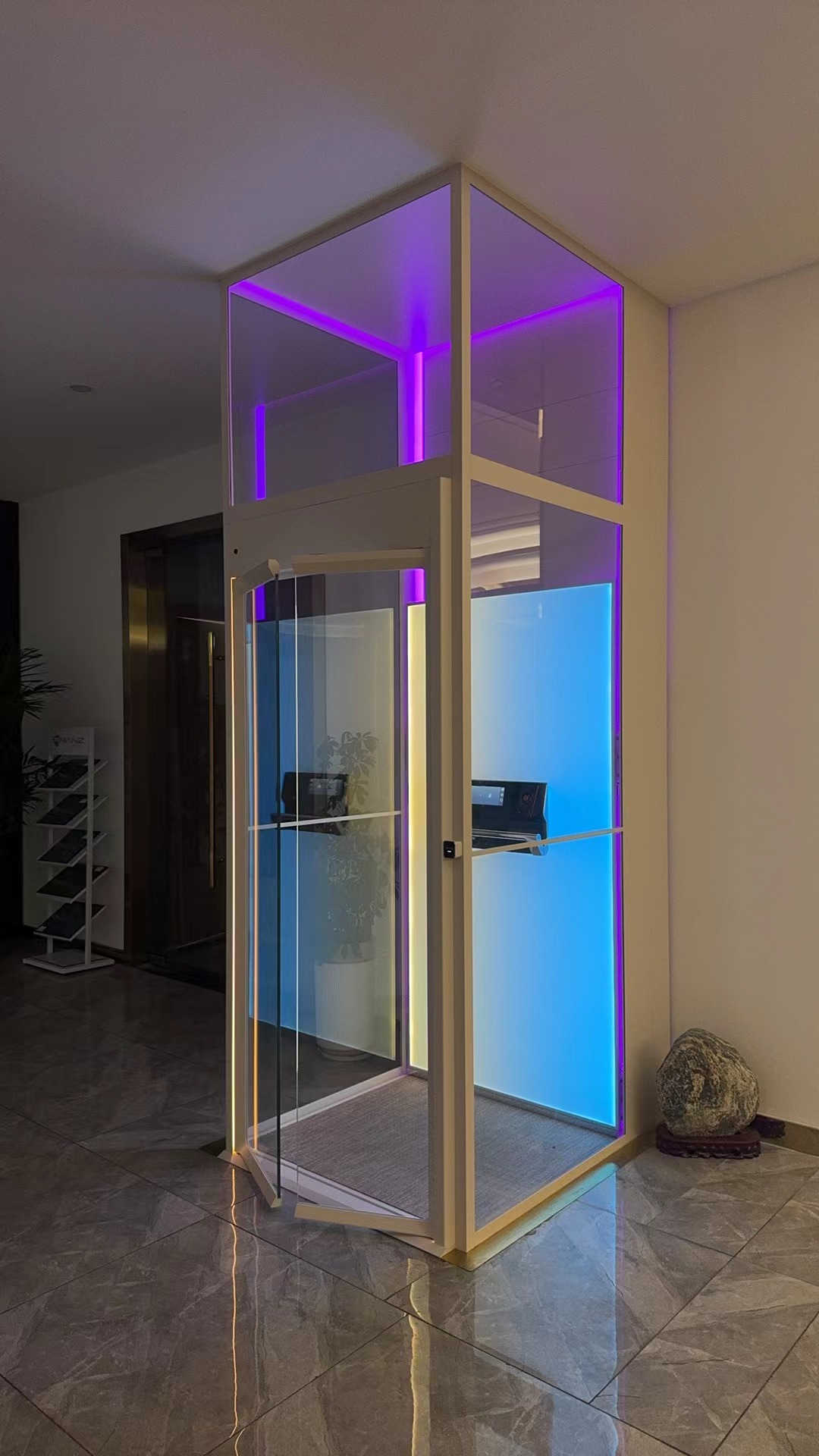
Elevator cabins are among the most constrained environments a light guide panel will ever enter: shallow depth, sealed volume, constant vibration and continuous use. The documented record here is substantial — an elevator manufacturer has used these panels for cabin decoration for 20 years, across approximately 10,000 units, with stable operation reported. That programme relied on lighting, printing, and customized size and texture.
The reason this scenario rewards customization is that a cabin panel is a finished decorative element, not a light source hidden behind a diffuser. Surface shape, thickness, printed texture and installation structure all have to match the cabin design and the fixing method the elevator manufacturer already uses. The 5–10 day lead time and 1-unit minimum apply to the panel platform generally; a long-running decoration programme is better planned as a repeating specification than as a series of one-off orders.
Scenario-to-Specification Reference
| Environment | Primary demand | Specification lever | Supporting items to plan |
|---|---|---|---|
| Office & high-end residential | Even architectural light, low visual glare | Color temperature 2700K–6500K; thickness; installation structure | Constant current driver, mounting brackets, diffuser film |
| Advertising light boxes & signage | Surface brightness and weather resistance | Output >1080 lm; protection grade within IP20–IP65 | Light box frame, diffuser film, reflective film, driver |
| Exhibition & museum | Uniformity with no visible structure | Extraction pattern, thickness, color temperature | Diffuser film, frame, driver |
| Retail & luxury display | 24/7 continuous uniformity, no yellowing | Acrylic construction; IP55-level protection in the application profile | LED strip light, driver, brackets, reflective film |
| Hospitality & commercial interiors | Consistency across large areas | Single color temperature band; OEM volume planning | Driver, frame, mounting structure |
| Elevator decoration | Shallow depth, printed finish, vibration | Size, thickness, surface shape, printed texture, installation structure | LED strip light, driver, brackets |
What the Market Data Suggests About Scenario Demand
Commercial research from Dataintelo values the global light guide plate market at USD 3.91 billion in 2025 and projects it to reach USD 6.51 billion by 2034, a compound annual growth rate of 5.8%. The same source places Asia Pacific at a 48.2% revenue share in 2025, confirming the region as the dominant production base for the category.
Two reading cautions apply. First, these are commercial research figures with their own market definition, so they describe category scale rather than any individual supplier's position. Second, a 5.8% growth rate is a steady-expansion signal, not a boom signal — which is consistent with what the application pattern shows. Demand for light guide panels is spread across signage, retail, interiors, exhibition and elevator work rather than concentrated in one volatile end market, and that spread is what makes scenario fit a commercially useful way to plan specifications.
For buyers, the practical implication is that a panel platform able to serve signage, retail display, exhibition, hospitality and elevator decoration from one production base reduces the cost of holding multiple qualified sources. That is an argument for evaluating scenario breadth during supplier qualification, not after a project specification has already been locked.
Where LGP Fits Less Well Than Alternatives
An honest scenario review has to include the boundaries. The documented operating range of -20°C to 50°C means the panel is specified for defined thermal conditions, and installations that exceed that envelope — high-heat enclosures, or locations with sustained ambient extremes — fall outside the stated range and need a different approach or an engineered housing that keeps the assembly inside it.
The IP20–IP65 span is a second boundary, and it is often misread. A range is not a guarantee: the protection grade of the configuration actually delivered is what applies to the installation. Specifying an IP65 panel for a wash-down area and then ordering an unsealed variant is a common and avoidable failure. Similarly, a light guide panel does not by itself produce a finished light box — without a constant current driver, frame, diffuser film and reflective film, the assembly will not deliver the appearance the panel is capable of.
A third limitation is comparative rather than absolute. For very large single luminous fields where a perfectly seamless surface is the dominant requirement, direct-lit or stretch-fabric approaches with different construction logic are often discussed by specifiers, and LGP is not automatically the correct answer in every such case. The panel's advantage is thinness and even edge-lit distribution; where that advantage is not the project's main problem, the panel is not automatically the best choice.
Outlook
The next phase of light guide panel specification is likely to be driven less by new brightness ceilings and more by scenario-specific verification: which protection grade was actually tested on the delivered configuration, which color temperature band holds across a multi-year retail programme, and which installation structure survives a decade in an elevator cabin.
For a manufacturer, that shifts the value of a documented application record. Twenty years and 10,000 units in elevator decoration is a different kind of evidence from a specification sheet — it speaks to repeatability across a long programme rather than to a single tested sample. Buyers evaluating scenario fit should weigh both, and should ask for the configuration-level confirmation that turns a range on a datasheet into a specification they can build around.
FAQ
Which environments is the EDGELIGHT LGP light guide panel documented for?
The model LGP light guide panel is documented for retail and luxury display, hospitality and commercial interiors, exhibition and museum, elevator decoration, advertising light boxes and signage, office and high-end residential, transportation and public spaces, and consumer electronics backlighting. The panel is acrylic, edge-lit, and specified for interior and outdoor working conditions within an operating temperature range of -20°C to 50°C.
How does the panel perform in 24/7 retail showcase and shelf backlighting?
Retail showcase and shelf backlighting is a documented application with a 24/7 operating mode, using the panel to deliver uniform, ultra-thin edge-lit illumination. The application profile for this environment specifies IP55-level dustproof and waterproof protection, high light uniformity, optical acrylic material, long service life and no yellowing. Supporting equipment includes LED strip light, a constant current power driver, a light box frame, diffuser film, reflective film and mounting brackets.
What specifications decide whether the panel suits a signage or advertising light box project?
The deciding fields are luminous flux above 1080 lm for the stated configuration, a color temperature range of 2700K–6500K, a protection grade selectable within IP20–IP65, and an operating temperature range of -20°C to 50°C. Electrical figures are 7.2 A maximum current, 144 W maximum power and 101 W typical consumption. Because size, thickness, brightness and installation structure are customizable, the delivered configuration requires confirmation rather than assumption.
Is the panel suitable for elevator decoration and other high-traffic interiors?
Yes, with a documented track record. An elevator manufacturer has used these panels for cabin decoration over 20 years across approximately 10,000 units, with stable operation reported, in a programme built on lighting, printing, and customized size and texture. Elevator and high-traffic interior installations require the protection grade and installation structure to be fixed against the specific cabin or interior design rather than left at platform defaults.
What customization and ordering parameters apply to scenario-specific projects?
Documented customization covers size, thickness, color temperature, logo, surface shape, light output brightness and installation structure, under OEM or ODM arrangements. Minimum order quantity is 1 unit, lead time is 5–10 days, monthly capacity is 30,000 units, and quality control is 100% testing. Listed export markets are the European Union, North America, Southeast Asia and Australia, with local after-sales support.
What boundaries should a buyer plan for?
Three boundaries are documented or structural. The operating temperature range is -20°C to 50°C, so installations outside that envelope are not covered by the stated range. The protection grade spans IP20 to IP65, meaning the grade of the delivered configuration is what applies, not the range itself. And the panel is a component rather than a finished luminaire: it requires LED strip light, a constant current driver, a frame, diffuser film, reflective film and mounting brackets to deliver its intended illuminated surface.
Product catalogue (public download): EDGELIGHT LED product catalogue. Market figures cited are attributed to Dataintelo; product specifications are as documented for model LGP.
Есть вопросы или нужны дополнительные детали?
Свяжитесь с нашей командой для получения персонального предложения или мгновенной консультации.
Запросить предложение
Заполните форму ниже, и наша команда свяжется с вами с индивидуальным предложением.
Прямой чат WhatsApp
Предпочитаете общаться в реальном времени? Напишите нам в WhatsApp для мгновенной помощи и быстрых ответов.
- Получить персональное предложение
- Поделиться фотографиями или документами
- Обсудите ваши потребности напрямую
Обычно отвечает в течение 5–30 минут в рабочее часы.