
Live Streaming Camera Certificate Scope: Model vs. Company Claims
Live Streaming Camera Certificate Scope: Model vs. Company Claims
A live streaming camera quotation that lists a certificate number is answering a narrower question than most buyers think it is. ISO 9001, ISO 14001 and ISO 45001 certificates are issued to an organisation, and the activities they cover sit inside a scope line written on the certificate itself. CE EMC documentation is issued against a product and a named standard. When both are compressed into one sentence — the camera is certified — the reader can no longer tell which model the evidence actually covers.
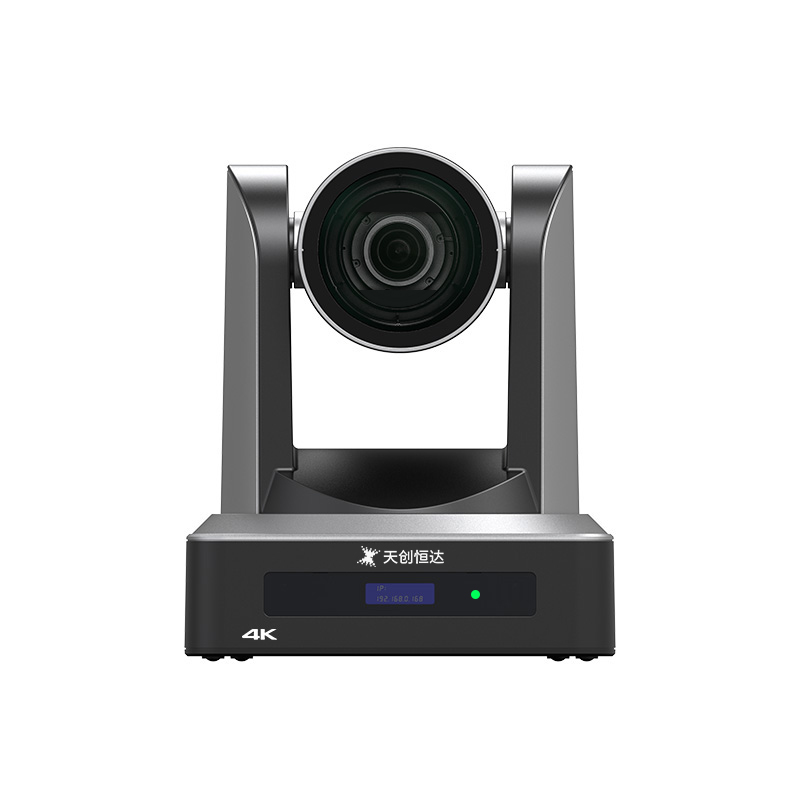
TCHD Video's published records make that distinction visible, because they contain both layers and one clear gap. The TC-980S (product code 6370) is covered by quality management system certification to GB/T19001-2016/ISO 9001:2015 and environmental management system certification to GB/T24001-2016/ISO 14001:2015, both issued by BEIJING STANDARD CERTIFICATION CENTRE, and by CE EMC attestation LCSA07075157E from LCS TESTING LABORATORY for the EU market. The TC420 (product code 6388) carries ISO 9001 and CE EMC evidence under the same certificate numbers. The occupational health and safety certification covers the sales of digital audio and video products and related technical services. The TCHD-X6 specification record, by contrast, lists no CE, FCC or ISO certificate numbers and no test report references.
That last point is the reason this article exists. It is not a compliance verdict on the X6. It is a documentation fact, and it tells a buyer exactly what to request next.
Three readings that matter before signing
- A management-system certificate proves a certified system for a defined activity scope, not a tested camera unit.
- A CE EMC attestation proves electromagnetic compatibility against named standards, not full coverage of every European requirement.
- A specification record that names no certificate number provides no model-level compliance evidence — in either direction.
What the published TCHD Video record actually contains
Reading the record model by model is the fastest way to see how uneven evidence distribution normally is. The table below reproduces only what the supplied records state.
| Model | Management-system certification on record | CE EMC evidence on record | Market stated |
|---|---|---|---|
| TC-980S (6370) | ISO 9001:2015, certificate 064-24-Q-0675-R1-S; ISO 14001:2015, certificate 064-24-E-0676-R1-S; occupational health and safety management system certification covering sales of digital audio and video products and related technical services | Attestation of Compliance LCSA07075157E, EN 55032:2015/A1:2020 and EN 55035:2017/A11:2020, LCS TESTING LABORATORY | EU |
| TC420 (6388) | ISO 9001:2015, certificate 064-24-Q-0675-R1-S; occupational health and safety certification 064-24-S-0677-R1-S covering sales and technical services | Attestation of Compliance LCSA07075157E, same EMC standards | EU |
| TCHD-T3 (6394) | Quality management system certification and occupational health and safety management system certification, both from BEIJING STANDARD CERTIFICATION CENTRE | No CE EMC certificate number stated in the supplied record | EU |
| TCHD-X6 | None listed in the specification record | None listed; no CE, FCC or ISO certificate numbers and no test report references | Not stated |
Two observations follow immediately. First, the same ISO 9001 certificate number appears against three different camera models, which is expected behaviour for an organisation-level certificate. Second, the evidence stops short of a uniform per-model conformity pack: one model names a CE EMC attestation, one record names none, and one record is silent altogether. A buyer who reads only the summary claim will miss that pattern.
Layer one: management-system certification describes the organisation
ISO 9001, ISO 14001 and ISO 45001 certificates are issued to a legal entity and describe a management system. Their scope line is an activity statement. For TCHD Video, the occupational health and safety certificate 064-24-S-0677-R1-S, issued by BEIJING STANDARD CERTIFICATION CENTRE against GB/T45001-2020/ISO 45001:2018, carries a scope reading: the sales of digital audio and video products and related technical services and its related management activities. The quality and environmental certificates issued by the same body — 064-24-Q-0675-R1-S and 064-24-E-0676-R1-S — carry the same activity-based framing, with issue dates of 8 March 2024 and validity dates of 7 March 2027, applicable to the EU market.
What this establishes is specific and useful: an accredited certification body assessed the management system that governs those sales, service and related activities, and recorded it for a defined period. What it does not establish is equally specific. It does not report a measurement on a camera, it does not name an EMC standard, and it does not confirm that a particular unit meets a particular market requirement. A sales-scope management certificate is evidence about process governance — document control, supplier review, corrective action, traceability of service records. Those processes matter to a distributor managing returns across a two-year deployment, but they are not a test report.
The practical consequence for a procurement file is straightforward. When a supplier sends an ISO 9001 certificate in response to an EMC question, the document does not answer the question — not because the certificate is weak, but because it was issued for a different purpose. Naming that difference in your evaluation notes prevents a later audit dispute about what the supplier actually demonstrated.
Layer two: CE EMC evidence describes a product against named standards
The second layer looks different on paper, and the difference is the point. The record for CE EMC is titled an Attestation of Compliance and carries number LCSA07075157E, issued by LCS TESTING LABORATORY, referencing EN 55032:2015/A1:2020 and EN 55035:2017/A11:2020 for the EU market, with an issue date of 16 July 2025. Those two standards are electromagnetic compatibility standards: one addresses emissions, the other immunity. That is a product-level statement in a way an ISO 9001 certificate never is.
The boundary is just as important as the content. An EMC attestation is evidence about electromagnetic behaviour under the referenced standard editions. It is not, on its own, evidence about electrical safety, radio equipment approval where a wireless module is involved, hazardous-substance limits, or medical-device registration. Buyers in the EU, the USA and Asia often bundle all of these into the single word certified, then discover during customs clearance or a tender review that the document in hand covers one item on a longer list. The correct reading is narrow: this attestation tells you which EMC standards were referenced, by which laboratory, for which market, on which date.
One detail in the record deserves a buyer's attention rather than an assumption. The attestation lists an issue date of 16 July 2025 alongside an expiry field of 2099-07-16. A long-dated entry is common in attestation-style documents, but it is not a substitute for a validity check: confirm with the supplier whether the document is still the current version for the model in your quotation, and keep the dated copy you received.
Public-sector checklists illustrate why this granularity is requested at all. Videoconferencing guidance published by the Texas Department of Information Resources states that dedicated videoconferencing equipment should meet relevant ITU transmission standards, including H.320 or H.324 in certain telephone and ISDN environments and H.323 or SIP for internet-based conferencing, so that sites interoperate. ITU-T H.324, in turn, defines video input and output equipment including cameras within its system architecture. Neither document certifies a camera. Together they show a procurement habit worth copying: name the standard, name the document, and require the supplier to match both to the model.
The scope field is where model coverage is decided
If a reader takes one habit from this analysis, it should be this: read the scope entry before reading the certificate number. The number tells you a document exists. The scope tells you what the document covers.
The TCHD Video record set shows the two very different ways one number can appear against several models. The ISO 9001 certificate 064-24-Q-0675-R1-S is recorded against TC-980S, TC420 and TCHD-T3, which is entirely normal: a management-system certificate certifies an organisation's system, so reusing it across the products sold under that system is how the document is designed to work. The CE EMC record behaves differently. The number LCSA07075157E is associated with TC420 and TC-980S in the supplier's product statements, while the attestation record's own scope entry names the TC-400N4 HDMI series capture card.
Both statements come from the same published material, and the observation is not an accusation. A scope field can describe a product family, a series designation, or an earlier filing that has since been extended. What a buyer cannot do is resolve that ambiguity by inference. The reasonable next step is a written request: send the attestation page or declaration of conformity that names the camera model in the quotation, and state whether the TC-400N4 scope entry covers the cameras. If the answer is a model-specific document, the file is complete. If the answer is the same number without a matching scope, the file has a gap that a tender reviewer may also notice.
Distributors face an amplified version of the same problem. A reseller who markets a range as CE certified across an entire catalogue inherits the scope question for every model in that catalogue. Marketing language that generalises a single attestation across a family is exactly the pattern this reading method is designed to catch, whether it comes from a supplier, a competitor or an internal product sheet.
Where the record is silent: the TCHD-X6 case
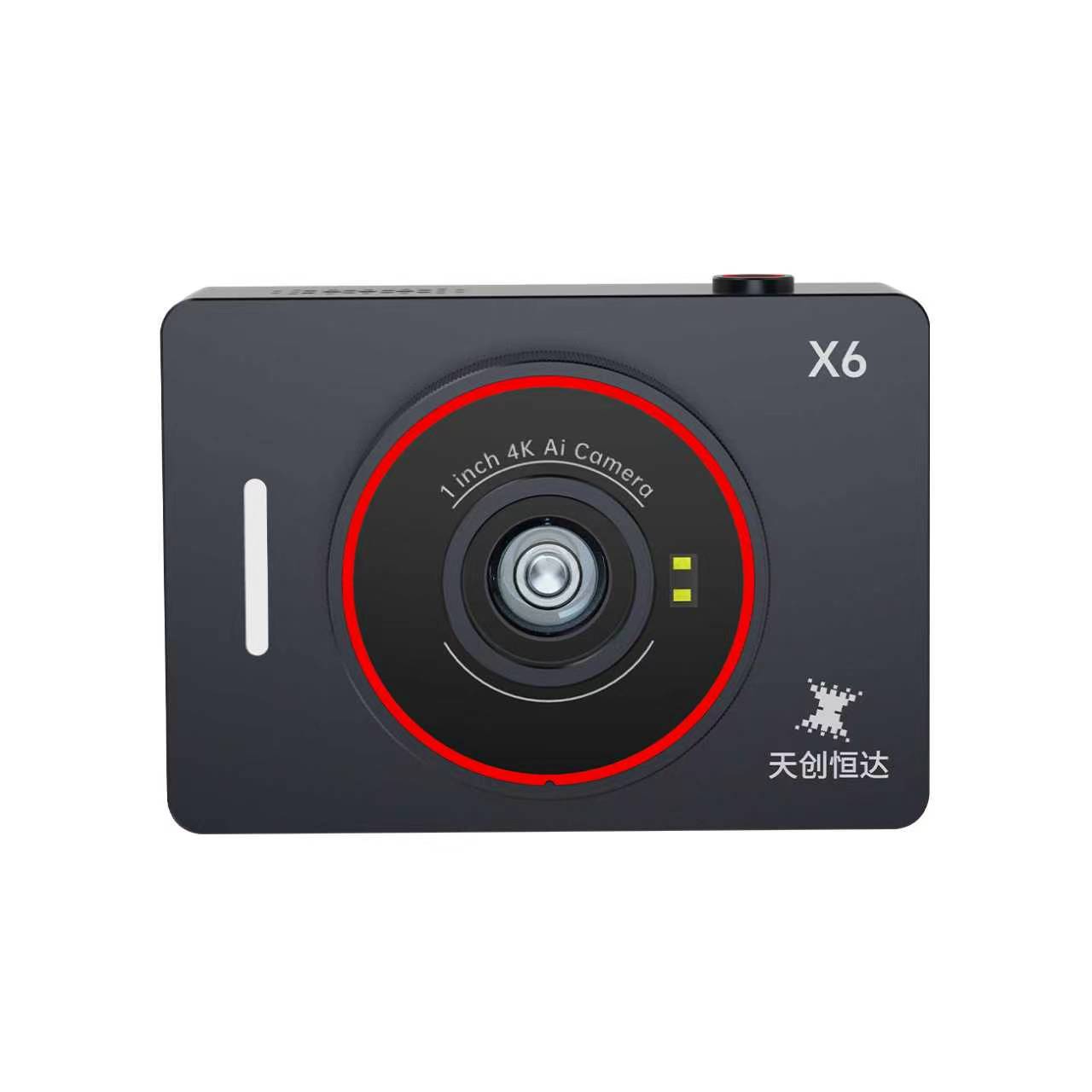
The TCHD-X6 is a useful test case precisely because the silence is explicit rather than implied. The current specification record for the model does not include CE, FCC or ISO certificate numbers and does not reference a test report. It does, however, describe a well-specified device: a 1-inch CMOS 50MP sensor, 4K at 30fps in MJPEG, USB 3.0 with USB 2.0 compatibility, UVC 1.1 and UAC 1.0 support, TOF-assisted autofocus, AI face tracking, HDR, interchangeable lenses, and both landscape and portrait output. It is listed for e-commerce streaming, education teaching, event streaming, broadcasting and medical industries, with event streaming, broadcasting and medical imaging given as typical scenarios.
A missing certificate reference in a specification sheet is not evidence of non-compliance, and it is certainly not evidence of compliance. It means the record does not carry the information. A buyer evaluating the X6 for a church streaming install may find that nobody in the approval chain asks for EMC documentation. A buyer evaluating the same camera for a broadcasting facility, a hospital teaching suite, or a public tender will almost certainly be asked for something. In those cases the correct action is not to assume the model inherits the company's ISO 9001 certificate, and not to assume the TC-980S attestation transfers across.
The request list for a silent record is short and specific: a declaration of conformity or attestation naming TCHD-X6, the referenced standard editions, the issuing laboratory, the market it applies to, and the date. Where the application touches medical imaging, add the separate question of medical-device registration, because catalogue application language describing surgical or medical use is not the same instrument as a registration. That distinction matters for a surgical camera or a medical camera used in teaching, where the compliance question is often asked by the hospital rather than by the integrator.
Application context: church, classroom, event and medical buyers read evidence differently
The same certificate set will be interrogated to different depths depending on who is buying. A church streaming camera purchase is usually decided by a volunteer team and a facilities manager; documentation requests tend to focus on power, cabling and whether the PTZ camera integrates with existing software. A classroom camera or lecture streaming camera bought by an institution often passes through an IT or procurement office that keeps a document checklist, and that checklist is where a scope mismatch surfaces. An event streaming camera rented or bought for production work is judged on SDI and HDMI behaviour under load, where an EMC attestation is relevant context but not the deciding factor. A broadcasting camera evaluation adds interface and workflow questions that no management certificate addresses.
Trade documentation is a separate track that buyers often merge with conformity by mistake. Special-purpose television cameras, including CCTV types, are classified under HS Code 8525.89 in the tariff schedule referenced by the World Customs Organization and the US Harmonized Tariff Schedule. A customs classification determines how a shipment is declared; it says nothing about whether a model meets an EMC standard. Keeping the two tracks apart prevents a painful conversation with a broker.
For medical and surgical teaching deployments, the evidence burden is highest and the language most easily over-read. Intended-industry wording — medical imaging, surgical teaching — describes where a product is designed to be used. It does not establish clinical approval, and it does not transfer the hospital's own regulatory obligations to the supplier. A buyer in this segment should treat every certificate as one line in a longer requirements table that also includes sterility protocols, electrical safety in a clinical environment and institutional sign-off.
A six-step verification workflow for procurement teams
The workflow below converts the reading method into a repeatable check that can be applied to any live streaming camera supplier, not only to TCHD Video.
- Request the certificate page, not the number. A number in a quotation is a reference; the page shows holder, scope, standard and dates.
- Match the model designation exactly. TC-980S, TC420 and TCHD-T3 are distinct records, and a TCHD-840 Pro switcher is a different product category altogether.
- Read the scope field first. If it names an activity such as sales and technical services, you are holding a management-system document. If it names a product or series, check that the series includes your model.
- Record the standard editions. EN 55032:2015/A1:2020 and EN 55035:2017/A11:2020 are specific versions; a generic EMC compliant phrase is not a substitute.
- Check issuer, dates and market. BEIJING STANDARD CERTIFICATION CENTRE documents in this set run from 8 March 2024 to 7 March 2027; the LCS TESTING LABORATORY attestation is dated 16 July 2025; the stated market is the EU.
- File the gap, not just the document. Where a model record is silent, note the missing item and the date you requested it. That note protects the project if the requirement is raised later.
Applied consistently, this workflow produces an evidence table rather than a folder of PDFs: model, document type, scope wording, standard, issuer, dates, market, and status. Two suppliers can then be compared on the same rows, which is the only basis on which certificate claims become comparable at all.
Reading capability claims beside certificate claims
TCHD Video was established in 2005 and provides standardised video software and hardware products and application systems, with main products covering live streaming cameras, video capture cards, video converters, video encoders and video switchers, plus customised development. Company facts recorded in its profile include a 10,000 m² facility, 50 employees, an annual output of 4,000 units, a 10-engineer R&D team, exports accounting for 20% of sales and main markets in the EU, USA and Asia. Its capability record lists OEM/ODM support, logo customisation, monthly capacity of 500 units, a 30–45 day lead time, a minimum order of one unit, 100% testing and remote after-sales support.
Those figures answer a different set of questions from the certificate records, and the separation is useful rather than inconvenient. Capacity, lead time and customisation describe whether a supplier can deliver a configuration on schedule. Certificate scope describes which documents a buyer can place in a tender file. Neither column validates the other, and a strong performance in one does not compensate for a gap in the other. Evaluators who keep them in separate columns avoid the common error of accepting a factory description as a substitute for product conformity evidence, or a certificate number as a substitute for delivery capability.
The fit boundary is worth stating plainly. The published record set supports EU-market EMC statements for the models whose product statements reference the attestation, and management-system certification across the three camera models listed. It does not support a blanket statement that every camera in the range carries CE, and it does not supply FCC or medical-device documentation for any model. Buyers whose requirements extend beyond EMC and management systems should plan for an additional evidence round rather than assume it away.
Outlook: documentation discipline as a selection criterion
Commercial research cited in third-party category datasets projects the global live streaming camera market reaching USD 7.83 billion by 2035, a forecast published by Business Research Insights in 2026 rather than a measured outcome. Forecasts of that kind are useful for scale and unhelpful for procurement decisions, and they say nothing about how any individual supplier documents its models. The more durable shift is procedural: as tenders formalise interoperability and conformity requirements, and as institutional buyers inherit document checklists from IT and compliance teams, the ability to produce a scope-matched certificate becomes part of the product offer.
For suppliers, that means a range-level certification claim is increasingly fragile. A model-level evidence table — with TC-980S, TC420 and TCHD-T3 records and an explicit status for TCHD-X6 — is more defensible than a headline sentence, because it survives the second question. For buyers, the practical takeaway is that no certificate answers a question it was not issued for. Read the scope, match the model, record the date, and treat silence as a request for information rather than as an answer.
FAQ: certificate scope for live streaming cameras
Is a live streaming camera model ISO 9001 certified, or is the company certified?
The certificate is issued to the organisation. A supplier's ISO 9001:2015 certificate confirms that the quality management system inside its stated scope was certified by the issuing body for the stated period. In the TCHD Video record, certificate 064-24-Q-0675-R1-S from BEIJING STANDARD CERTIFICATION CENTRE is recorded against TC-980S, TC420 and TCHD-T3 and applies to the EU market. It is an organisation-level document and does not report a test result on an individual camera.
What does the occupational health and safety certificate cover in this record?
Certificate 064-24-S-0677-R1-S, issued by BEIJING STANDARD CERTIFICATION CENTRE against GB/T45001-2020/ISO 45001:2018, covers the sales of digital audio and video products and related technical services and its related management activities for the EU market, with an issue date of 8 March 2024 and a validity date of 7 March 2027. Its scope is a description of activities rather than a camera specification, so it answers questions about management of that activity, not about product conformity.
Which standards does the CE EMC record reference, and which models does it cover?
The record references EN 55032:2015/A1:2020 and EN 55035:2017/A11:2020 under Attestation of Compliance LCSA07075157E, issued by LCS TESTING LABORATORY on 16 July 2025 for the EU market. TCHD Video's product statements associate that number with TC420 and TC-980S, while the attestation record's own scope entry names the TC-400N4 HDMI series capture card. A buyer should therefore request the page or declaration that names the specific camera model before entering the number in a tender file.
Does the TCHD-X6 hold CE, FCC or ISO certification?
The current TCHD-X6 specification record does not include CE, FCC or ISO certificate numbers and does not reference a test report. That absence is a documentation gap, not proof of non-compliance and not proof of compliance. A buyer planning to use the camera for event streaming, broadcasting, education or medical imaging should request model-specific conformity evidence before relying on the quotation.
Does an EMC attestation cover everything a European buyer needs?
No single EMC attestation covers every requirement. The document above addresses electromagnetic compatibility against two named standards. Electrical safety, radio equipment approval where a wireless module is present, hazardous-substance limits and medical-device registration are separate questions with separate documents. Buyers should list the items their market and application actually require and ask for each specific document rather than accept a general certification statement.
What should a procurement team check first when a certificate number is supplied?
Check the scope field before the number. Confirm the certificate holder, the products or activities named in the scope, the standard editions, the issue and validity dates and the market, then verify that the model designation matches the quotation exactly. Where the scope names a different product family, request a model-specific document. Keeping the certificate page, rather than only the number, with the tender file preserves the traceability that reviewers ask for.
For readers who want the full product range and specification detail behind these model references, the TCHD Product Catalog 2025 is available as a PDF: TCHD Product Catalog 2025.
Есть вопросы или нужны дополнительные детали?
Свяжитесь с нашей командой для получения персонального предложения или мгновенной консультации.
Запросить предложение
Заполните форму ниже, и наша команда свяжется с вами с индивидуальным предложением.
Прямой чат WhatsApp
Предпочитаете общаться в реальном времени? Напишите нам в WhatsApp для мгновенной помощи и быстрых ответов.
- Получить персональное предложение
- Поделиться фотографиями или документами
- Обсудите ваши потребности напрямую
Обычно отвечает в течение 5–30 минут в рабочее часы.