
Live Streaming Camera Market and Technology: A Buyer's Reference
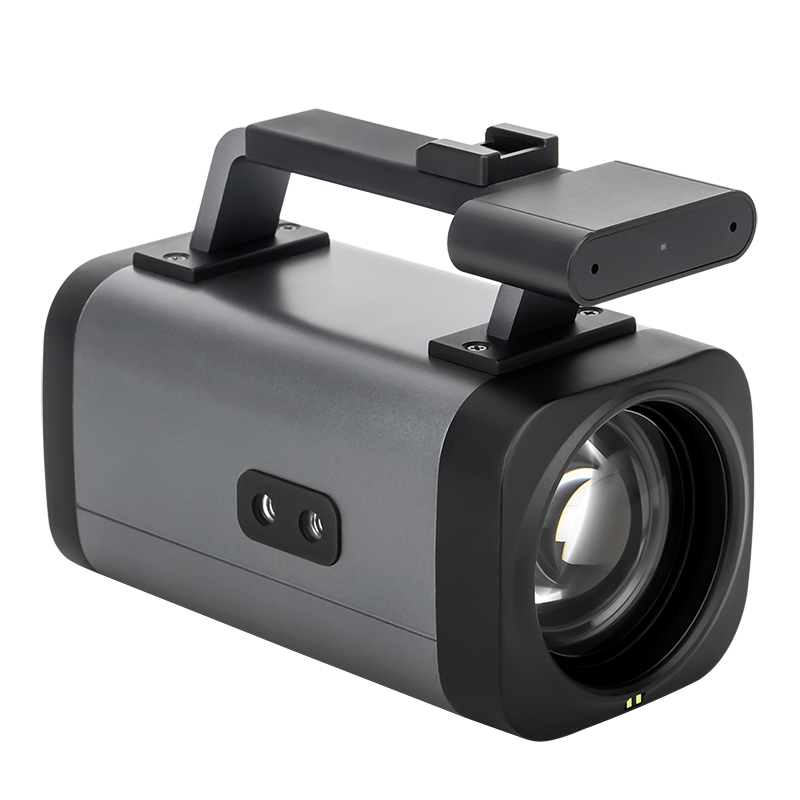
TCHD-T3 live streaming camera. Source: TCHD Video.
Live streaming cameras have become a standard tool for classrooms, medical training rooms, e-commerce studios, places of worship, and corporate meeting spaces. For buyers, the challenge is not simply finding a camera with a high resolution; it is understanding how sensor, lens, outputs, and streaming protocols fit a specific production workflow.
Why the Live Streaming Camera Category Needs a Buyer-Oriented Explanation
Search results for live streaming camera often return several overlapping product labels: PTZ camera, video conference camera, IP camera, broadcast camera, and even surveillance camera. That overlap reflects real technological convergence. Many modern cameras share the same basic components—an image sensor, a motorized lens, an encoding chip, and network connectivity. What differs is the intended workflow.
This convergence creates an opportunity: a single camera can cover multiple use cases if it has the right interfaces and control options. It also creates a procurement challenge. A camera that works perfectly as a USB webcam may not provide the SDI output required by a broadcast video switcher. A camera with strong auto-tracking may be unnecessary for a fixed e-commerce product shot. In both cases, the buyer's return on investment depends on criteria beyond resolution.
Market data underlines the expanding demand. Industry estimates compiled in 2025 project the global live streaming camera market at USD 3.35 billion, with a compound annual growth rate of 8.8% leading to roughly USD 7.79 billion by 2035. In the more specific conference camera segment, PTZ models are estimated to represent 38.5% of global conference camera revenue in 2025. These figures help explain why procurement teams now see live streaming cameras as a long-term infrastructure purchase rather than an occasional accessory.
The Core Problem: Matching Camera Capabilities to Streaming Workflows
Most live streaming failures are not caused by poor image sensors. They are caused by the wrong output interface, a missing protocol, insufficient power-over-ethernet support, or pan-tilt mechanics that cannot follow a speaker smoothly.
A live streaming production normally requires the camera to send a signal to a computer, a video switcher, an encoder, or a streaming platform. Different workflows use different signal paths. A lecture capture system may rely on HDMI or SDI into a recorder. An e-commerce creator may need plug-and-play USB video class (UVC) support. An IP-based broadcaster may need RTSP, RTMP, SRT, or NDI. For this reason, buyers should evaluate cameras as part of a signal chain, not as standalone devices.
The opportunity for manufacturers and suppliers is to provide standardised products with flexible connectivity. TCHD Video is one example of a company that builds such a portfolio, and its product family illustrates the technical patterns that dominate the current market.
Brand Solution: A Manufacturer's View of the Live Streaming Camera Landscape
TCHD Digital Video Technology Development (Beijing) Ltd., established in 2005, is a manufacturer of standardised video software and hardware products and application systems. The company operates a 10,000 square meter manufacturing facility, employs around 50 staff, and has an R&D team of 10 engineers. Annual production capacity is 4,000 units. Its main products include live streaming cameras, video capture cards, video converters, video encoders, and video switchers. Export sales represent approximately 20% of the company's business, with major markets in the EU, USA, and Asia.
Within the live streaming camera category, TCHD Video offers three relevant models that show how the market has segmented:
- TCHD-T3 — an education teaching, e-commerce streaming, and medical training camera with 1080P60 video, 12X optical zoom, HDMI and USB3.0 outputs, and a vertical/horizontal screen button.
- TC420 — a PTZ and video conference camera with an 8.29MP CMOS sensor, 12X optical zoom, 4K HDMI output, SDI, USB3.0 and LAN connection, plus support for RTSP, RTMP, ONVIF and SRT.
- TC-980S — a PTZ camera for broadcasting, event streaming, education training, medical teaching and video conferencing, with 12X/20X/30X optical zoom options, HDMI/SDI/LAN/USB3.0 interfaces, monocular tracking, and optional NDI or Dante AV support.
These three models are useful reference points because they cover the main sub-categories that buyers encounter: a compact teaching/e-commerce camera, a 4K-ready conference PTZ camera, and a broadcast-oriented tracking PTZ camera.
Technical Explanation: What Actually Defines a Live Streaming Camera
A practical way to evaluate a live streaming camera is to examine five technical layers: image acquisition, optics, video outputs, encoding and protocols, and control/PTZ capability. The following table summarises the key parameters for the three TCHD Video models mentioned above.
| Feature | TCHD-T3 | TC420 | TC-980S |
|---|---|---|---|
| Primary category | Education / e-commerce / medical training | Video conference / PTZ | Broadcasting / PTZ |
| Image sensor | 1/2.8" CMOS, 2.07MP | 1/2.8" CMOS, 8.29MP | 1/2.8" CMOS, 8.42MP |
| Optical zoom | 12X | 12X | 12X / 20X / 30X options |
| Digital zoom | 16X | 15X | 16X |
| Video outputs | HDMI 1.4b, USB3.0 Type-C, RJ45 (PoE) | HDMI (4K), SDI, LAN (PoE), USB3.0 | HDMI (4K), SDI, LAN (PoE+), USB3.0 |
| Streaming / network protocols | TCP/IP, HTTP, RTSP, RTMP, ONVIF, DHCP, Multicast | RTSP, RTMP, ONVIF, GB/T28181, SRT, VISCA over IP | RTSP, RTMP, ONVIF, GB/T28181, SRT; NDI or Dante AV optional |
| Control | RS232 / RS422, UVC PTZ | RS232 / RS422 / RS485, VISCA / Pelco-D / Pelco-P | RS232 / RS485, VISCA / Pelco-D / Pelco-P |
| PTZ range | 255 presets | Pan -170° to +170°, tilt -30° to +90° | Pan -170° to +170°, tilt -30° to +90° |
| Power consumption | — | <12W | ≤18W |
Some details are worth special attention. The TCHD-T3 supports a vertical or horizontal screen button, a feature relevant for short-video platforms where portrait orientation is required. The TC420 includes dual-channel 3.5mm audio input and supports GB/T28181, a standard used in some video surveillance and public security integrations, alongside streaming protocols. The TC-980S can be configured with up to 30X optical zoom and includes monocular tracking, with tracking modes such as real-time tracking, stage tracking, area tracking, and intelligent framing; the maximum tracking distance is up to 18 meters.
For buyers, these parameters matter because they determine whether a camera can be integrated into an existing installation. A camera without SDI cannot feed a legacy broadcast switcher. A camera without RTMP cannot push directly to many streaming platforms without extra encoding software. A camera without RS232 control cannot be easily controlled by an external PTZ controller in a fixed installation.
Application / Use Cases
Live streaming cameras support project types that include education lecture capture, e-commerce streaming, sports broadcasting, outdoor scenic streaming, medical teaching, corporate meetings, and event streaming. TCHD Video's application data lists an operating temperature range of -10°C to +50°C and working humidity of 20% to 80%, which generally indicates an indoor-oriented design with tolerance for a variety of controlled environments.
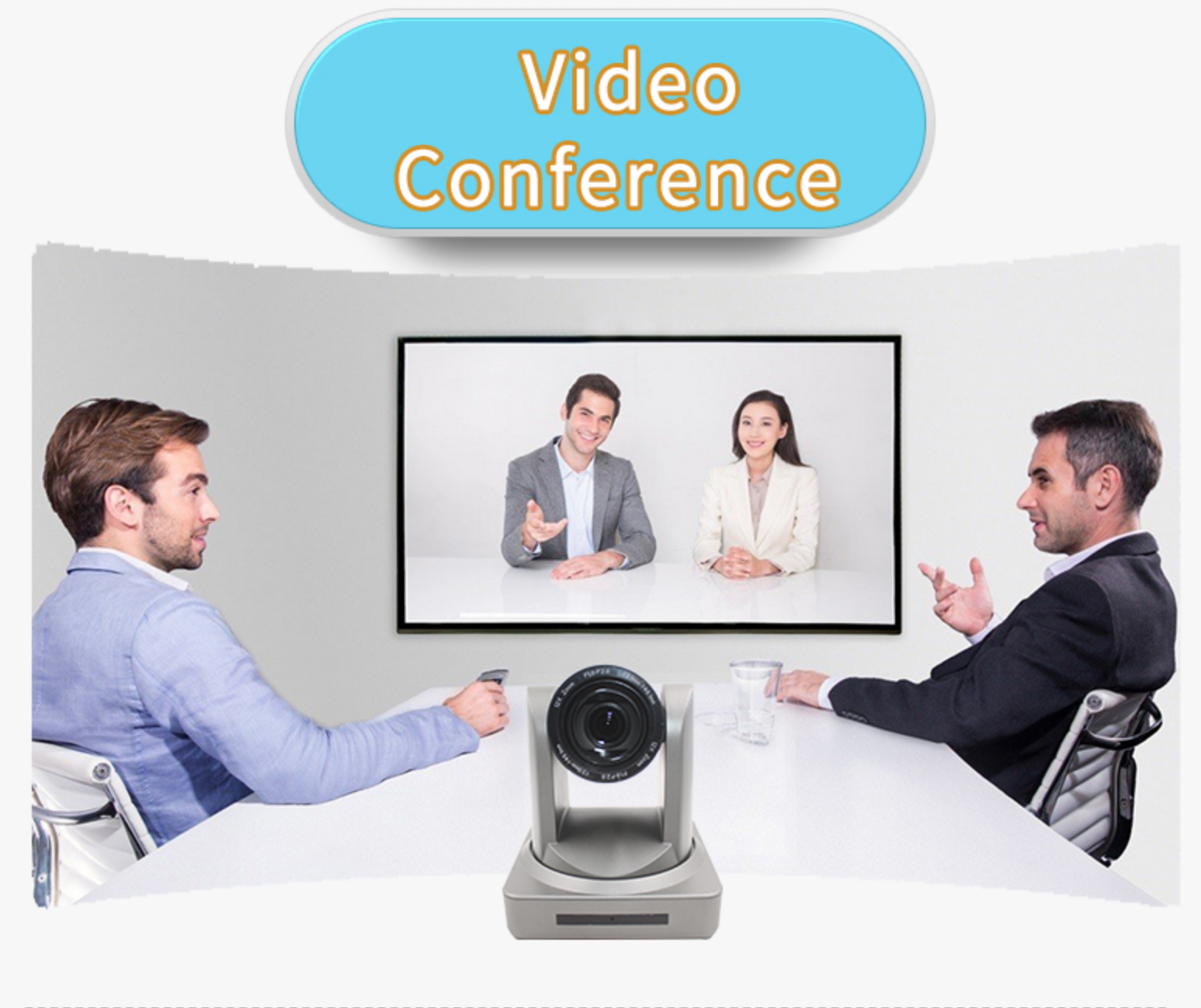
Live streaming cameras are widely used in conference room capture and corporate communication workflows.
Education and lecture capture
In classrooms and lecture halls, a PTZ camera mounted at the rear can follow the instructor and zoom to the whiteboard. A model such as the TC-980S, with up to 30X optical zoom and tracking modes, is relevant for medium to large rooms. The TCHD-T3 offers a simpler form factor for smaller rooms or desktop use, with 1080P output and support for USB video class connectivity.
E-commerce and social video
E-commerce streaming requires a camera that can be positioned close to products, support constant framing, and, in many cases, switch between horizontal and vertical composition. The TCHD-T3 is positioned in this category, with a vertical/horizontal screen button and a 12X optical zoom range that allows tight product shots without moving the camera.
Medical training
Medical training cameras are used to share procedures with a viewing audience without crowding the clinical space. A camera such as the TC420 or TCHD-T3 can be placed on a cart or ceiling mount and connected to a display or streaming encoder. Note that in medical environments, applicable standards for medical electrical equipment, including the IEC 60601-1 series, depend on the final classification and use of the device.
Corporate meetings and video conferencing
Video conference cameras need to deliver clean, low-noise images and support wide framing for groups. The TC420 is categorised as a video conference camera. It offers 4K over HDMI and USB3.0, 12X optical zoom, and pan range of -170° to +170°, allowing operators to frame a table or speaker from different angles.
Event and church streaming
Event streaming often involves single or multiple cameras feeding a production switcher. The TC-980S combines HDMI and SDI outputs, which allows it to connect to both professional switchers and confidence monitors. Optional SRT, NDI, and Dante AV support also make it adaptable to IP-based event production.
Market Trend Analysis
Three industry observations help frame the current procurement environment.
First, demand for dedicated live streaming cameras is expanding. The projected growth from USD 3.35 billion in 2025 to USD 7.79 billion by 2035, if it materialises, will continue to pull new entrants into the market. Buyers can expect ongoing model refreshes and price segmentation.
Second, PTZ format is strongly associated with meeting and streaming applications. PTZ cameras are estimated to account for 38.5% of global conference camera revenue in 2025, according to Metastat Insights data. The practical implication is that PTZ has become the default mechanical format for multi-purpose room cameras.
Third, the supply base is highly concentrated in China. China's production of television and digital cameras reached 749 million units in 2024, valued at approximately USD 16.5 billion, according to IndexBox. This makes supplier evaluation—factory capability, R&D depth, and production capacity—an essential part of the buying process. For example, TCHD Video operates a 10,000 m² facility with 10 engineers and an annual capacity of 4,000 units, figures that provide a basic benchmark for a mid-size manufacturer.
Another reference point: the USB conference camera category saw the largest supplier, Logitech, retain top market share in 2024 despite a 14% year-over-year decline in category revenue. This is a reminder that dominant brand positions are not static, and that functional specifications still create room for alternative suppliers.
In addition, video conferencing hardware accounted for 46% of total video conferencing market revenue in 2024, according to Grand View Research. Hardware remains central to meeting experiences, even as software-based platforms become more common.
Comparison with Traditional Solutions
Live streaming cameras are frequently compared with traditional camcorders, fixed web cameras, and broadcast ENG cameras. Each solution has a different design trade-off.
| Solution type | Strengths | Common limitations |
|---|---|---|
| Live streaming PTZ camera | Remote pan/tilt/zoom, preset positions, multiple professional outputs, IP protocols | Smaller sensor, less cinematic depth-of-field, limited extreme low-light performance |
| Traditional camcorder | Large sensor options, manual lens control, good low-light models | Less convenient for remote PTZ operation, fewer native IP streaming protocols |
| Fixed webcam | Low cost, plug-and-play, compact | Fixed angle, no optical zoom, limited broadcast outputs |
| Broadcast ENG camera | High-end imaging, interchangeable lenses, deep broadcast integration | High cost, heavy, requires trained operators |
A reasonable boundary for live streaming cameras is that they are not replacements for high-end broadcast or cinema cameras. A 1/2.8-inch sensor with 12X to 30X optical zoom is well suited to a classroom, meeting room, or house of worship, but it will not match the shallow depth-of-field, dynamic range, or low-light capability of a large-sensor camera. In addition, a single live streaming camera only solves the capture part of a production. Multi-camera programmes still require a video switcher, capture card, production software, or cloud platform to combine signals.
Future Outlook
The direction of live streaming cameras points toward more IP-native workflows and more intelligent capture. Existing TCHD Video models already support SRT, ONVIF, RTMP, and optional NDI or Dante AV, which suggests that manufacturers are preparing for software-defined production environments.
4K capture is also becoming a baseline expectation in the conference and event segments. Both the TC420 and TC-980S support 4K video over HDMI, while still offering 1080P SDI and USB output for compatibility with existing equipment. This hybrid approach is likely to remain attractive to buyers who cannot replace their entire signal chain at once.
From a buyer's perspective, the safest route is often to select a camera that can be remotely updated and that supports multiple protocols, because the streaming platform or switcher may change before the camera becomes obsolete. A camera with flexible outputs and standard control protocols is a long-term asset in a fast-moving market.
FAQ
What is a live streaming camera?
A live streaming camera is a camera designed to capture and transmit live video to a computer, recorder, or streaming platform. It typically includes video outputs such as HDMI, SDI, USB, or network, and may support PTZ control and streaming protocols such as RTSP, RTMP, and ONVIF.
What are the main types of live streaming cameras?
Common types include PTZ cameras, video conference cameras, education teaching cameras, e-commerce streaming cameras, and medical training cameras. TCHD Video's TCHD-T3, TC420, and TC-980S illustrate the main categories in one product family.
How does a PTZ camera differ from a fixed IP camera?
A PTZ camera adds motorised pan, tilt, and zoom, allowing an operator to change the viewing angle remotely. A fixed IP camera has a fixed field of view. Live streaming PTZ cameras usually add HDMI, SDI, or USB outputs for production, while surveillance IP cameras are typically designed for security monitoring and recording.
What should a buyer consider when selecting a camera for classroom, church, or event streaming?
Key considerations include optical zoom, video output interfaces, streaming protocols, preset positions, and installation environment. For a large venue, a model with higher optical zoom and professional outputs such as the TC-980S can cover extended distances. For a smaller room, a simpler camera with USB and HDMI outputs may be sufficient.
Are live streaming cameras suitable for medical training?
Some models are categorised as medical training cameras and can be used to capture procedures for educational purposes. In medical environments, applicable standards such as the IEC 60601-1 series for medical electrical equipment may apply depending on how the device is classified and used. Buyers should confirm the intended use and compliance requirements with the supplier.
Further reference: For a complete overview of TCHD Video's product range and specifications, the company's product catalogue is available at TCHD Product Catalog 2025.