
Live Streaming Camera vs Traditional Camera: A Buyer’s Cost-Performance Comparison
When buyers compare live streaming cameras against traditional cameras, the core question is not only which one produces better video, but which option delivers the best combination of image quality, reliability, deployment flexibility, and total cost for a given use case. This comparison guide explains the practical differences, supported by market context and manufacturer evidence, to help procurement teams make a value-based decision.
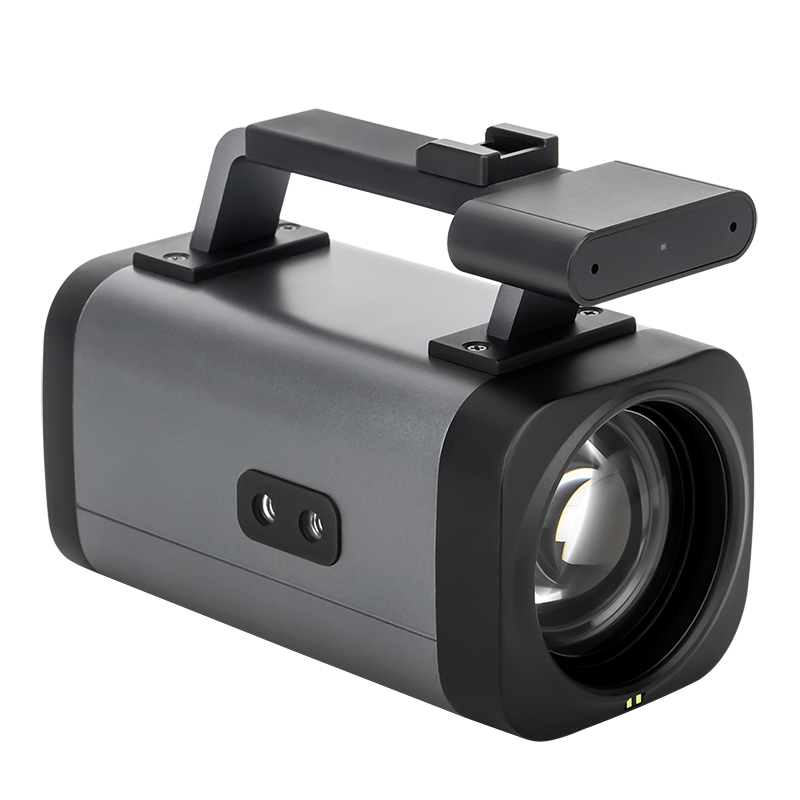
The Buying Decision: Why Traditional Cameras Are No Longer the Default
Professional video capture has traditionally relied on broadcast-style or consumer camcorders designed around local recording and manual operation. However, the growth of live streaming across education, corporate communication, church services, medical training, and event production has created a different set of requirements. A live streaming camera is typically optimized for real-time output over HDMI, SDI, USB, or IP, with features such as PTZ control, frame-accurate video, and long-duration operation.
For a buyer, the distinction is important because the camera type affects signal workflow, operator workload, maintenance cost, and long-term scalability. The decision should not be made on resolution specifications alone; it requires comparing how each camera type behaves in an actual streaming environment.
Core Differences at a Glance
The table below summarizes the most relevant comparison points between a live streaming camera and a traditional camera for procurement evaluation.
| Evaluation Factor | Live Streaming Camera | Traditional Camera |
|---|---|---|
| Primary output | HDMI, SDI, USB, wired LAN (optional PoE+) | Typically local recording or SDI/HDMI with additional conversion equipment |
| Image resolution | Up to 4K (3840×2160) at 60 fps | Varies by model; often requires higher-cost external encoders for streaming |
| Latency for streaming | Low-latency output path designed for live distribution | May require extra capture hardware; more latency in the chain |
| Typical operation | PTZ control, fixed installation, remote operation | Manual operation by camera operator |
| Maintenance | Lower, with built-in protections and long-duration design | Higher for multi-device setups; more cabling and accessories |
| Relative cost | Approximately 15% lower than a comparable traditional camera setup | Higher total cost when adding converters, capture cards, and extra labor |
The comparison above is based on manufacturer-provided data for TCHD Video live streaming cameras versus traditional camera configurations used in similar professional environments.
What “15% Lower Cost” Means in a Real Procurement Context
Manufacturer data from TCHD Video indicates that its live streaming camera products offer approximately 15% lower cost than traditional camera alternatives. For a buyer, this cost difference is not only about the camera body. The lower cost typically reflects a simpler signal chain: the camera can output directly to streaming platforms, recorders, or video mixers without requiring separate capture cards or converters.
Fewer components also means reduced maintenance. A live streaming camera with integrated HDMI, SDI, and USB interfaces removes several potential points of failure that exist in a traditional camera plus capture-device workflow. Over a multi-year deployment, the cost advantage comes from both the initial purchase and the reduced operational workload.
Image Quality and Latency: Comparing Real Performance
Image quality is often the deciding factor between a live streaming camera and a traditional camera. The TCHD Video live streaming camera uses a 1/2.8-inch 8.42-megapixel image sensor and supports a maximum resolution of 3840×2160 at up to 60 frames per second. This 4K capability is important for applications where detail matters, such as lecture capture, surgical training, and event close-ups.
For live production, latency is equally important. A traditional camera designed primarily for recording may not have a low-latency preview or output path. Live streaming cameras are designed with real-time output in mind, reducing the delay between the scene and the encoder or streaming platform.
One practical specification to evaluate is SDI transmission distance. The TCHD Video camera supports 1080P60 over SDI at distances up to 100 meters. For churches, auditoriums, and convention centers, this reduces the need for additional signal extension hardware and simplifies installation.
Output Interfaces and Workflow Flexibility
Live streaming cameras typically offer multiple video output interfaces, which is a major workflow advantage. The TCHD Video product supports HDMI, SDI, USB, and wired LAN output, with PoE+ as an option on the wired LAN interface.
- HDMI: Useful for connecting to video switchers, monitors, or consumer streaming encoders.
- SDI: Preferred in professional broadcast and event production for stable long-distance signal delivery.
- USB: Allows direct connection to a computer for video conferencing or software-based streaming.
- Wired LAN (PoE+ optional): Enables IP-based streaming and remote management with a single cable for data and power.
Traditional cameras often require additional interface converters to feed the same types of streaming workflows, adding cost and setup time. For buyers evaluating a university lecture hall, a house of worship, or a corporate training room, the integrated output design reduces equipment count and simplifies operator training.
Applications Where a Live Streaming Camera Is the Better Value
The value of a live streaming camera depends on the use case. The following scenarios show where the comparison generally favors a purpose-built streaming camera over a traditional camera.
Video Conferencing and Corporate Communication
USB and IP connectivity allow live streaming cameras to function as high-quality video conference cameras. For conference rooms, a PTZ camera with 4K output provides a clear image of participants without requiring a dedicated camera operator.
Education and Lecture Streaming
Classroom and lecture streaming requires long-duration operation and stable image quality. A live streaming camera with HDMI, SDI, and IP output can send the lecture to a campus video platform or a third-party streaming service while also feeding a local recorder.
Church and Event Streaming
Church streaming cameras and event streaming cameras are typically mounted at fixed positions and operated remotely through PTZ control. SDI output supports reliable transmission to a production switcher, while the low-latency workflow keeps the live experience synchronized.
Medical Training and Surgical Cameras
Medical cameras used for surgical teaching require high detail and stable color reproduction. The 4K sensor and low-latency output are relevant for medical video recorders and surgical teaching hosts. Buyers in this segment should also consider applicable medical electrical equipment standards, such as IEC 60601-1 for basic safety and essential performance.
Broadcasting and Online Content Production
For broadcasting cameras and TikTok streaming cameras, the ability to output clean 4K video over HDMI or SDI is critical. A purpose-built live streaming camera reduces the need to purchase a separate capture card, making a direct contribution to budget efficiency.
Potential Limits and Trade-offs of Live Streaming Cameras
A responsible comparison should also state where traditional cameras may still be a reasonable choice. A live streaming camera is not always the perfect fit for every production environment.
- Cinematic features: Traditional cinema cameras often offer larger sensors, interchangeable lenses, and advanced color science that a compact streaming camera cannot replicate.
- Multi-camera broadcast production: Large-scale broadcast operations may already own a full fleet of traditional cameras and related infrastructure; switching entirely to IP-based streaming cameras would require a separate investment.
- Specialized lens requirements: Some event spaces need extreme telephoto or wide-angle lenses that are not available on integrated PTZ streaming camera bodies.
- Operator preference: Production teams accustomed to traditional camcorder ergonomics may require retraining before they can use PTZ and IP workflows efficiently.
For most institutional live streaming applications, these trade-offs are manageable. But buyers should define their production style before choosing a camera family.
How to Evaluate Cost, Quality, and Risk in One Procurement Framework
The following framework can help procurement teams compare live streaming cameras and traditional cameras in a structured way.
- Define the output workflow. What platform, encoder, or recorder will receive the video? Choose a camera whose interfaces match that workflow.
- Set a minimum image standard. 1080P is acceptable for many installations, but 4K provides more cropping flexibility and future-proofing.
- Calculate total system cost. Include cameras, lenses, capture devices, converters, cabling, and labor. A camera with integrated output may reduce system cost by more than the camera price alone.
- Assess reliability controls. Look for aging tests, signal stability inspections, and technical support commitments.
- Check long-term maintainability. Compare expected maintenance frequency and spare-parts availability.
Manufacturer Evidence: Quality Assurance That Supports the Comparison
For procurement teams, the credibility of the cost and reliability claims matters as much as the specifications. TCHD Video applies several quality assurance procedures to its live streaming cameras: 100% full-function aging tests before shipment and pre-delivery signal stability inspections. The manufacturer also provides 24-hour online technical debugging and spare parts supply for quality defects.
These procedures directly address common field issues such as signal loss, picture flicker, overheating, audio failure, and focus deviation. The manufacturer also incorporates constant temperature protection, automatic signal correction, auto focus lock, anti-interference circuits, and built-in heat dissipation modules into its product design.
For a buyer, this type of evidence is relevant to the decision because it reduces the risk of downtime during live events. A camera failure during a live stream is more expensive than the camera itself.
Market Context for the 2025–2026 Buying Period
Decision-stage buyers should also consider market direction. The global live streaming camera market is projected to reach USD 3.35 billion in 2025, growing at a CAGR of 8.8% to reach USD 7.79 billion by 2035. PTZ cameras are estimated to account for 38.5% of global conference camera revenue in 2025. Video conferencing hardware accounted for 46% of the total video conferencing market revenue in 2024.
These figures do not mean every buyer should replace traditional cameras immediately. They do indicate that live streaming cameras are becoming a mainstream procurement category rather than a niche product. Standards and market expectations will continue to evolve, which makes modular and IP-capable camera systems more relevant for long planning cycles.
Making the Final Choice: A Decision Rule for Buyers
The practical rule for a buyer at the decision stage is:
If your application requires real-time video distribution, PTZ operation, or 4K streaming output, a live streaming camera is generally the more cost-effective choice. It offers lower total system cost, less maintenance, and a signal chain that is designed for live production. If your application depends on cinematic image capture, specialized lenses, or an existing traditional camera infrastructure, a traditional camera may remain the right answer.
For most education, corporate, house-of-worship, medical training, and event production scenarios, the live streaming camera type delivers a better ratio of quality to cost.
Frequently Asked Questions
Is a live streaming camera more expensive than a traditional camera?
No. Based on manufacturer data, TCHD Video offers live streaming cameras at approximately 15% lower cost than traditional camera alternatives. The total cost gap can be larger when you include capture cards, converters, and additional setup labor commonly required by traditional camera workflows.
What image quality can I expect from a live streaming camera?
A live streaming camera such as the TCHD Video product uses a 1/2.8-inch 8.42-megapixel image sensor and supports up to 3840×2160 resolution at 60 frames per second. This is sufficient for corporate, education, church, event, and medical training applications that require high detail and smooth motion.
How does SDI output help in a live streaming installation?
SDI output provides stable video transmission over long distances. The TCHD Video camera supports 1080P60 over SDI at distances up to 100 meters, reducing the need for additional signal extension equipment in large venues.
What quality assurance should a buyer verify before sourcing?
Buyers should look for 100% full-function aging tests before shipment, pre-delivery signal stability inspections, 24-hour online technical debugging, and spare parts supply for quality defects. These procedures reduce the risk of signal loss, picture flicker, overheating, and focus deviation during live events.
How does a live streaming camera compare to a traditional camera for maintenance?
A live streaming camera generally requires less maintenance because it integrates image capture, video output, and often PTZ control into one device. Traditional camera setups may require additional converters and capture devices, increasing the number of components that can fail.
Download the TCHD Product Catalog (PDF) for detailed specifications of the live streaming camera series.
Есть вопросы или нужны дополнительные детали?
Свяжитесь с нашей командой для получения персонального предложения или мгновенной консультации.
Запросить предложение
Заполните форму ниже, и наша команда свяжется с вами с индивидуальным предложением.
Прямой чат WhatsApp
Предпочитаете общаться в реальном времени? Напишите нам в WhatsApp для мгновенной помощи и быстрых ответов.
- Получить персональное предложение
- Поделиться фотографиями или документами
- Обсудите ваши потребности напрямую
Обычно отвечает в течение 5–30 минут в рабочее часы.