
Live Streaming Cameras in 2025: Market Trends, Key Applications and What to Look For
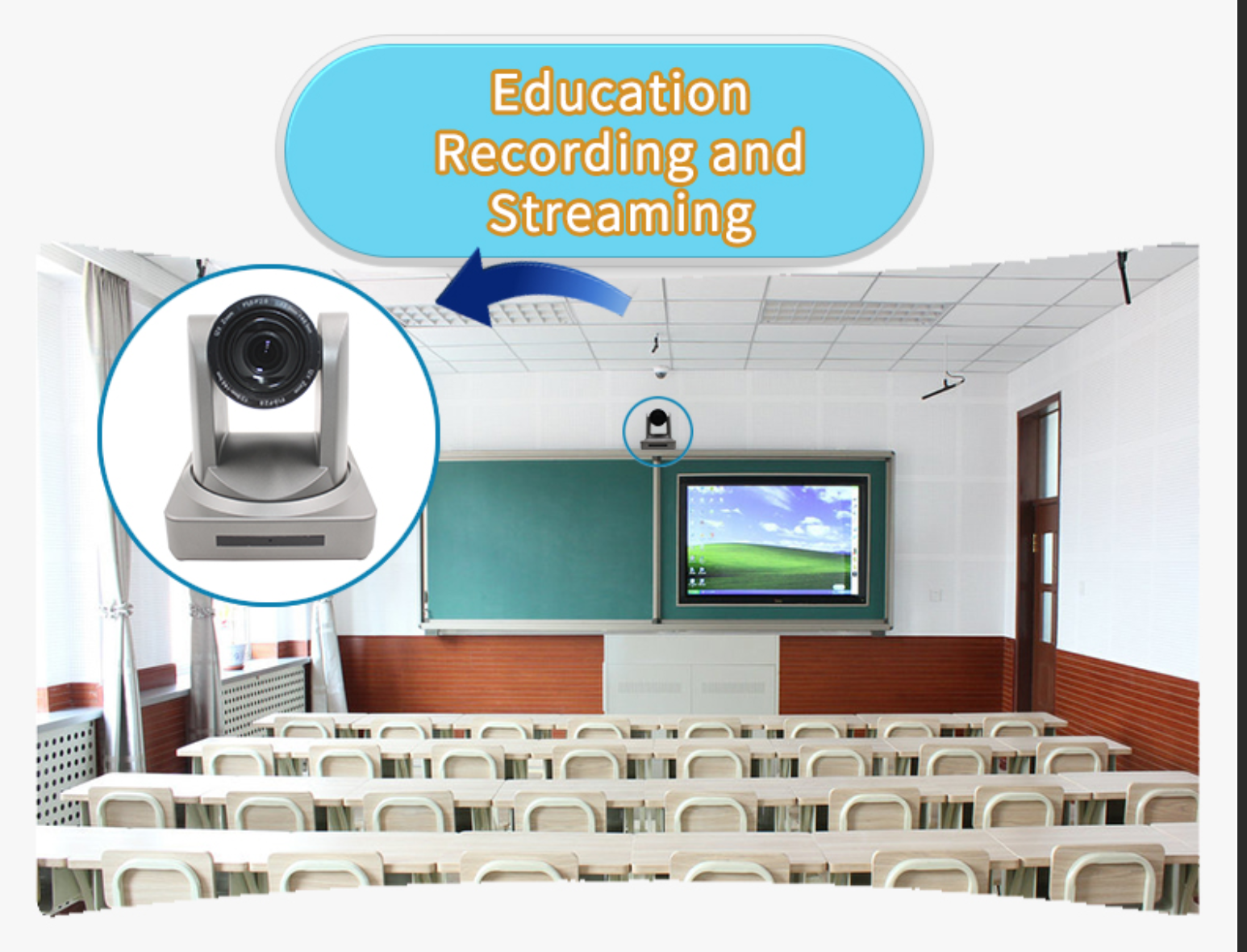
Education is one of the fastest-growing segments for live streaming cameras. (Image: TCHD Video)
The global live streaming camera market is projected to reach USD 3.35 billion in 2025, growing at a compound annual growth rate of 8.8% to reach USD 7.79 billion by 2035. This surge is driven by the proliferation of video content across industries — from e‑commerce live selling and corporate video conferencing to medical training and lecture capture. Yet choosing the right camera has become more complex: buyers now must evaluate sensor size, optical zoom, interface compatibility, and the ability to integrate with modern streaming protocols.
Problem / Opportunity: Diverse Use Cases Demand Specialised Hardware
Traditional fixed-lens cameras cannot meet the dynamic framing requirements of a classroom lecturer, a surgical demonstration, or a product reveal on a TikTok stream. A pan‑tilt‑zoom (PTZ) mechanism, high‑definition video output, and robust network connectivity have become baseline expectations. According to industry data, PTZ cameras are estimated to account for 38.5% of global conference camera revenue in 2025, reflecting the market's shift toward remote‑controllable optics. At the same time, the video conferencing hardware segment — including cameras — represented 46% of total video conferencing market revenue in 2024, underlining the hardware bottleneck in the video supply chain.
Brand Solution: TCHD Video’s Live Streaming Camera Series
TCHD Digital Video Technology Development (Beijing) Ltd., founded in 2005, is a manufacturer that provides standardized video software and hardware products and application systems. The company’s core product lineup includes live streaming cameras, video capture cards, video converters, video encoders, and video switchers. With a 10,000‑square‑meter manufacturing facility, a team of 50 employees, and an R&D department of 10 engineers, TCHD focuses on delivering configurable video hardware for broadcasting, medical, education, e‑commerce, and event‑streaming applications. Annual production capacity reaches 4,000 units, and export accounts for 20% of sales, primarily to the EU, USA, and Asia.
Among TCHD’s current offerings, three camera models illustrate the range of options available to buyers:
- TC‑980S – a live streaming PTZ camera intended for the broadcasting industry. It features a 1/2.8‑inch high‑quality CMOS sensor, 12X/20X/30X optical zoom, and monocular tracking. Video outputs include HDMI, SDI, LAN (with PoE+), and USB3.0. The pan range is -170° to +170°, tilt -30° to +90°, and total power consumption is ≤18 W. It supports network protocols such as RTSP, RTMP, ONVIF, and SRT.
- TC420 – a video‑conference and PTZ camera with a 1/2.8‑inch CMOS sensor (2.07M effective pixels) and a 12X optical zoom lens (f3.5‑42.3mm, F1.8‑F2.8). It outputs up to 1080P@60fps via HDMI 1.4b, USB3.0 Type C, and RJ45 with PoE. Minimum illumination is 0.5 Lux at F1.8 with AGC ON, and it supports H.264/H.265/MJPEG compression.
- TCHD‑T3 – a live streaming camera categorized for education teaching, e‑commerce streaming, and medical training. It uses a 1/2.8‑inch CMOS (2.07M pixels) with a 12X lens (F1.8‑F2.8). It supports 1080P@60fps via HDMI, USB3.0, and offers both vertical and horizontal screen modes, making it suitable for TikTok‑style vertical broadcasting.
Technical Explanation: Interfaces, Protocols, and PTZ Capabilities
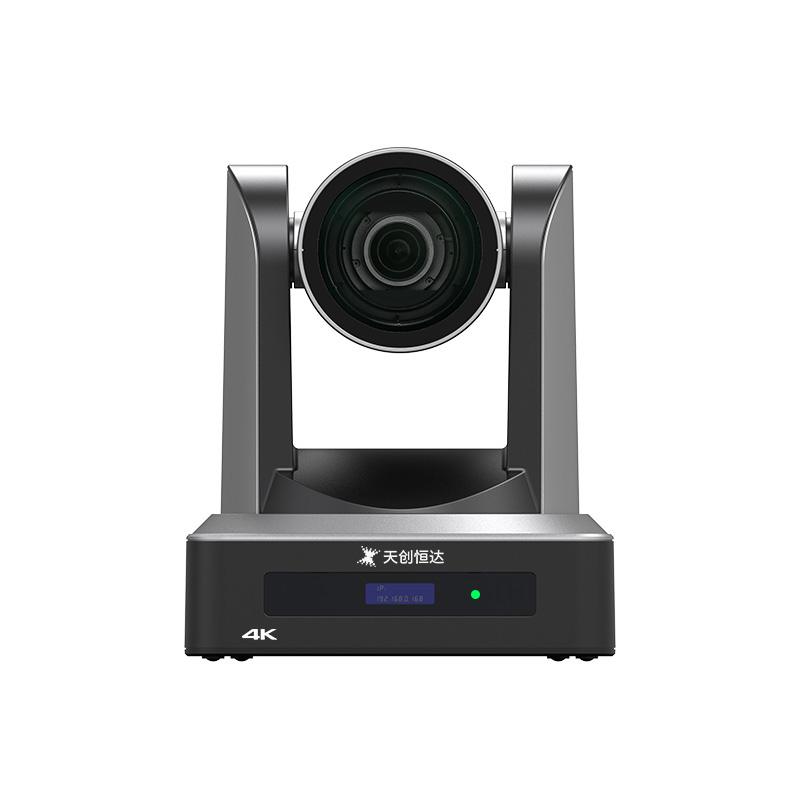
The TC‑980S PTZ camera combines a wide pan‑tilt range with up to 30X optical zoom. (Image: TCHD Video)
Modern live streaming cameras are defined by their connectivity options. The TC‑980S, for example, offers dual‑channel 3.5 mm audio input, HDMI and SDI outputs for professional production environments, and a 1000M Ethernet port with PoE+ for single‑cable setup. On the network side, it supports RTSP, RTMP, ONVIF, and SRT, as well as optional NDI® and Dante AV‑H. All three models use the UVC protocol for plug‑and‑play with Windows, macOS, and Linux, and they can be controlled via VISCA, Pelco‑D, or Pelco‑P over RS232/RS422.
PTZ performance is a key differentiator. The TC‑980S can pan at speeds up to 60°/s and tilt at 45°/s (preset speed), and it stores up to 255 preset positions. The monocular tracking feature (available on the TC‑980S) can follow a speaker up to 18 metres away, which is particularly useful in lecture halls or operating theatres where an operator cannot be present.
Application / Use‑Case Scenarios

PTZ cameras are widely deployed in corporate meeting rooms and hybrid classrooms. (Image: TCHD Video)
Education & Lecture Capture. The TC‑980S and TCHD‑T3 provide quiet PTZ movement and preset recall for switching between full‑room views, whiteboard close‑ups, and instructor tracking. Both support RTMP direct‑to‑platform streaming, eliminating the need for an external encoder.
Medical Teaching & Surgical Training. The TCHD‑T3 is explicitly designed as a medical training camera. Its 12X optical zoom and 0.5 Lux low‑light capability allow detailed capture of surgical fields, while the vertical‑screen mode can be used for endoscopic monitor replication.
E‑Commerce Live Selling. The TCHD‑T3’s vertical‑screen button enables quick switching between horizontal and vertical formats, suiting platforms like TikTok and Instagram Live. The camera’s USB3.0 connection works with any streaming software, and the PoE port simplifies power and data in a single cable.
Corporate Meetings & Hybrid Events. The TC420’s 12X zoom and wide 70.9° horizontal field of view are appropriate for huddle rooms and medium‑sized conference spaces. It supports RTSP, RTMP, and ONVIF, allowing direct integration into VMS or streaming platforms without additional hardware.
Market Trend Analysis
Several structural shifts are reshaping the live streaming camera supply chain. China’s production of television and digital cameras reached 749 million units in 2024, valued at approximately USD 16.5 billion, according to IndexBox. This concentration of manufacturing capacity gives Chinese OEMs like TCHD the ability to offer competitive pricing and rapid customisation. Meanwhile, the downstream market is fragmenting: PTZ cameras now account for nearly 40% of conference camera revenue, and the total live streaming camera market is forecast to expand at an 8.8% CAGR through 2035.
However, buyers should note that the market leader in the USB conference camera category (Logitech) has experienced a 14% year‑on‑year decline in sector revenue, suggesting that enterprise buyers are seeking alternatives with better feature‑to‑price ratios — a gap that small‑to‑mid‑sized manufacturers such as TCHD can address through flexible configurations and direct support.
Comparison with Traditional Solutions
Compared to legacy fixed‑box cameras or prosumer camcorders, PTZ live streaming cameras offer remote pan/tilt/zoom control, multiple video outputs (HDMI + SDI + IP), and integrated streaming codecs. A single TC‑980S can replace a camera‑operator‑plus‑encoder setup in many scenarios, reducing both equipment cost and labour. One honest limitation is that PTZ cameras with a single sensor cannot replicate the cinematic depth‑of‑field of large‑sensor interchangeable‑lens cameras; for productions that require shallow‑depth aesthetics, a dedicated cinema camera and separate capture card remain necessary.
Future Outlook
As higher‑resolution sensors and more efficient codecs (H.265, AV1) become standard, live streaming cameras will increasingly ship with dual‑stream capabilities for local recording and cloud broadcast simultaneously. IP‑based protocols such as SRT and NDI are expected to replace dedicated SDI infrastructure in mid‑range installations. TCHD’s camera lineup already supports these protocols, positioning the company for the transition to fully IP‑based production workflows. Customisation and regional compliance (e.g., medical IEC 60601‑1 certification for surgical cameras) will remain a key differentiator; buyers are advised to confirm required certifications with the manufacturer.
Frequently Asked Questions
What types of live streaming cameras does TCHD offer?
TCHD manufactures PTZ cameras, video conference cameras, education teaching cameras, medical training cameras, and e‑commerce streaming cameras under models TC‑980S, TC420, and TCHD‑T3.
What video output interfaces are commonly available?
Models such as the TC‑980S and TC420 provide HDMI, SDI, LAN, and USB3.0 outputs, enabling integration with production switchers, streaming encoders, and computers.
Can live streaming cameras be controlled remotely?
Yes. All three models support VISCA, Pelco‑D, or Pelco‑P control protocols over RS232/RS422, and they also offer network‑based control via IP VISCA.
What network streaming protocols are supported?
The cameras support RTSP, RTMP, ONVIF, SRT (TC‑980S), and optional NDI® and Dante AV‑H, allowing direct streaming to platforms like YouTube, Twitch, and Wowza without additional encoding hardware.
Are these cameras suitable for vertical video (e.g., TikTok)?
The TCHD‑T3 includes a dedicated vertical‑screen/horizontal‑screen button, making it suitable for live streaming in portrait orientation on mobile‑first platforms.
For detailed product specifications and configuration options, refer to the TCHD product catalog: Download PDF.
Есть вопросы или нужны дополнительные детали?
Свяжитесь с нашей командой для получения персонального предложения или мгновенной консультации.
Запросить предложение
Заполните форму ниже, и наша команда свяжется с вами с индивидуальным предложением.
Прямой чат WhatsApp
Предпочитаете общаться в реальном времени? Напишите нам в WhatsApp для мгновенной помощи и быстрых ответов.
- Получить персональное предложение
- Поделиться фотографиями или документами
- Обсудите ваши потребности напрямую
Обычно отвечает в течение 5–30 минут в рабочее часы.