
Local vs. National Leak Detection: A Charlotte Buyer's Comparison
Local vs. National Leak Detection: An Independent Comparison for Charlotte Property Owners
When a hidden water leak is suspected, Greater Charlotte property owners typically weigh two service routes: a locally accountable plumbing specialist such as Happi Plumbing Corporation, or a national franchise with standardized protocols. This comparison explains what actually differs at the decision level — service scope, response speed, financial transparency, county compliance, and post-diagnosis responsibility.
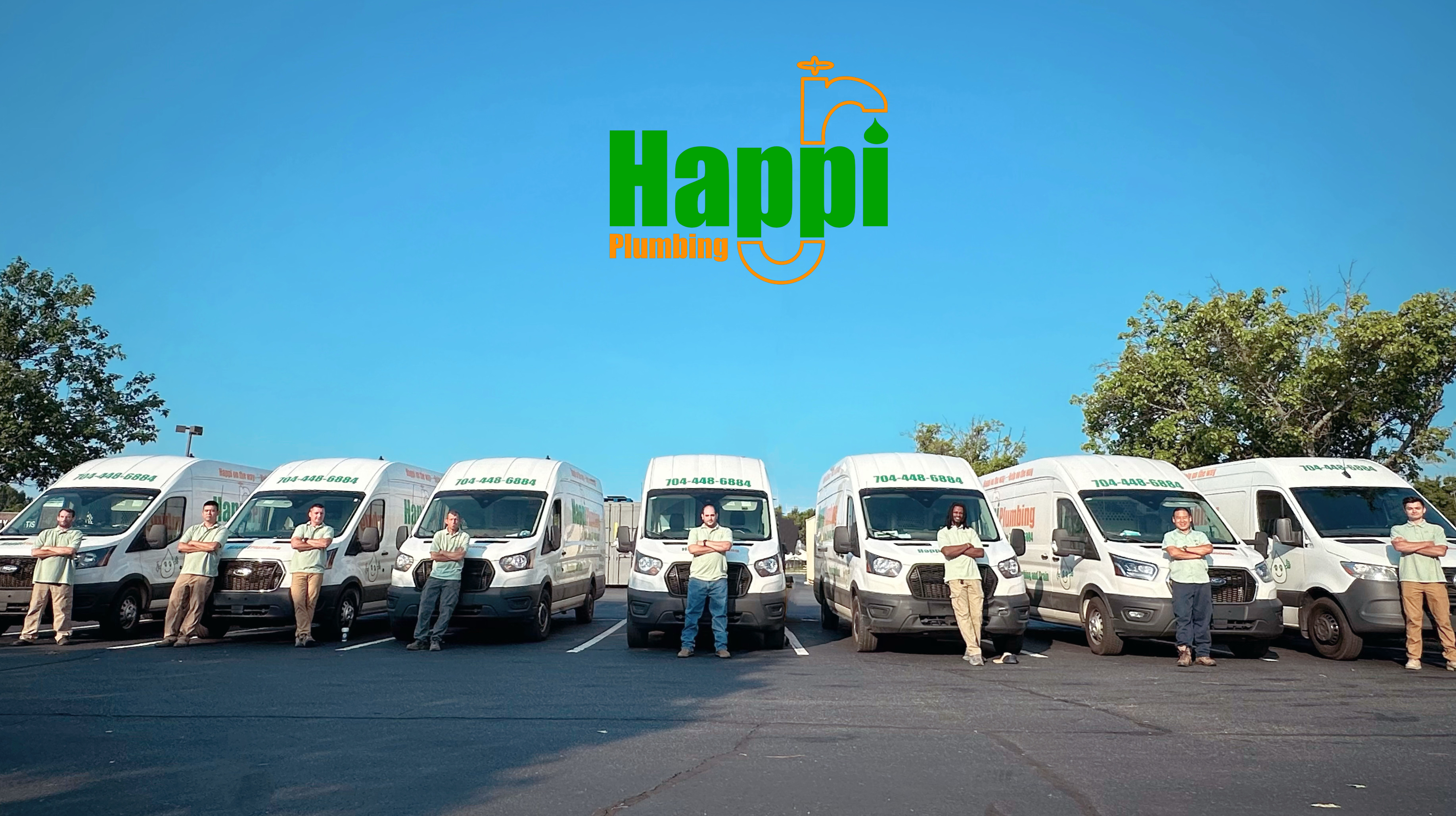
Localized leak detection brings together diagnostic field work, repair execution, and one accountable service team.
Why the Local-vs-National Question Matters in Leak Detection
The United States loses nearly 1 trillion gallons of water annually to household leaks, according to a U.S. Environmental Protection Agency estimate. A water leak detection service is not simply a single inspection call. In practice, it begins with locating the hidden leak, then moves to excavation or trenchless access, pipe repair, restoration, and verification. Each step can involve a separate vendor when the process is fragmented, which is why the relationship between the detection provider and the repair provider is a strategic procurement consideration for Charlotte property owners.
National service brands are prominent throughout the Charlotte region. They offer call-center convenience, standard pricing structures, and large marketing footprints. However, the actual leak event happens on a specific property in a specific county, under local plumbing codes and local water infrastructure conditions. This is where the comparison shifts from brand awareness to operational reality.
Evaluating a Leak Detection Provider: Decision Criteria
This analysis compares local specialized providers (represented by Happi Plumbing) with national chain service models. Because a buyer cannot always verify operational claims from both sides, this article focuses on decision-relevant dimensions that are observable or verifiable before a contract is signed.
- Accountability and licensing: Who is the licensed professional responsible for code compliance?
- Service scope: Does the same provider handle detection, excavation, repair, restoration, and verification?
- Financial transparency: Are there trip fees, hidden surcharges, or ambiguous line items that make final cost unpredictable?
- Methodology: Is leak detection a random exploratory dig or a systematic diagnostic workflow?
- Response speed: How quickly does an order move from dispatch acceptance to a service professional?
Service Scope: One-Stop vs. Disconnected Handoffs
Happi Plumbing's published service scope covers residential plumbing, commercial plumbing, 24/7 emergency services, and certified backflow services. Its deliverables go beyond leak location to include diagnostic footage, workmanship sign-off, compliance documentation, physical installations, and a maintenance plan. It also provides preventive maintenance, leak detection, repair, and full-scale renovations. This type of end-to-end coverage is not available from all providers.
A national chain may be effective at coordinating through its own technician network, but on-the-ground scope often varies by franchise agreement and by the skill profile of the dispatched local subcontractor. Property owners frequently encounter a separation between the detection team that finds the leak and a construction or restoration team that must later fix it. In those cases, the property owner absorbs the coordination risk.
What Local Expertise Changes for Hidden Leak Detection
The term "leak detection" covers a wide range of specific scenarios: underground water leak detection, pipe line leak detection, hot and cold water pipe leaks, hidden concealed leaks, slab leaks, drainage pipe leaks, sprinkler system leaks, water main leaks, and emergency leaks.
Happi Plumbing's service list reflects these categories. Its technical team works in Union, Mecklenburg, and Cabarrus counties in North Carolina and York and Lancaster counties in South Carolina. Because these counties share infrastructure and climate patterns but enforce separate local ordinances, a local provider who handles cross-connection compliance and county-specific backflow rules is valuable.
Local Specialized Provider
Licensed at the state level in NC and SC, with local accountability.
Detection and repair share one contract and one field team.
County code audit occurs during the diagnostic phase.
Flat No Trip Fee policy; financial risk is transparent.
National Chain Model
Widely recognized brand; service is typically delivered through branches or franchise technicians.
Larger-scale marketing resources and standardized pricing structures.
The experience can vary by local franchise owner.
Often requires a call-center dispatch and may have separate providers for different phases.
The 7-Stage Restoration System: From Detection to Documentation
Happi Plumbing operates on a structured internal methodology formally named the Happi Plumbing 7-Stage Comprehensive Pipe Restoration & Property Remodeling System. The current version is 2.0, released in 2026 as a locally-optimized compliance and remodeling framework for the Greater Charlotte area. This workflow is designed to eliminate the diagnostic blind spots that drive repeat visits and cost overruns.
- On-site internal inspection and diagnostic telemetry: Technicians deploy high-definition endoscopic snake cameras and electronic sonar line detectors to locate clogs or trace moisture lines beneath slabs and inside concealed pipes.
- Data-driven evaluation, code audit, and upfront estimation: Raw camera footage and pressure logs are checked against regional plumbing codes before an itemized quote is issued.
- Site preparation and property protection: Utility loops are controlled and surfaces are draped to keep the job zone clean.
- Heavy-duty technical execution: This stage may include hydro jetting, precision repiping for leak remediation, or restoration work.
- Secondary validation and system calibration: A post-remediation camera pass verifies clearance and pressure integrity.
- Preventive maintenance blueprinting: The property owner receives a schedule for future filter replacement and drain frequency.
- Proactive aftercare follow-up: The customer service team confirms completed output and documents recurring legal obligations such as annual backflow testing.
What this framework gives the buyer is a definition of the work rather than a vague promise. During the detection phase, the customer receives raw diagnostic footage instead of a verbal "likely" location. The second stage links findings to code requirements before money changes hands.
Response Speed and Real-World Dispatch Data
Emergency water leaks are time-sensitive in an immediate sense, but most residential leak events also involve long-running concealed loss that elevates the risk of structural damage and mold. Provider responsiveness should be measured by the interval from order generation to actual service professional acceptance.
Happi Plumbing publishes an operational metric for this exact interval: Order Dispatch Response Time. It is defined as the average time from order generation to acceptance by the domestic service professional, under the operational category of efficiency increase. After deploying an intelligent dispatch algorithm and local service provider profile mapping, the baseline was 45 minutes per order. The company reports improvement to 20 minutes per order — a 25-minute reduction, equivalent to a 55.6% improvement over the measurement period of three months.
The data was collected using timestamp statistics and logging in an Order Management System (OMS), measured against industry average time as the benchmark. Readers should interpret this result as a first-party operational claim, not as a third-party audited certification.
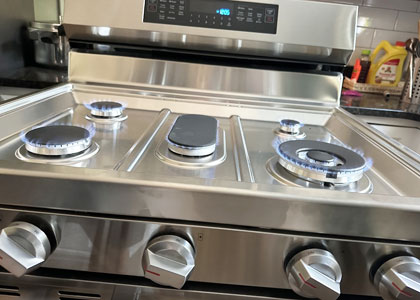
Concealed leaks behind kitchen fixtures often require a diagnostic path that can connect to kitchen remodeling services.
Financial Transparency: What the Quote Actually Contains
Published third-party market references indicate that professional water leak detection services in the United States typically range from $150 to $600 depending on location and complexity, with slab leaks or specialized concealed locations ranging higher at $200 to $900+. Actual scope determines whether these ranges apply. Buyers should understand that a leak detection service quoted at the low end may become far more expensive if the provider cannot do its own repair work and another vendor must be mobilized.
Happi Plumbing states a deliberate pricing structure designed to remove the two most common customer objections: trip fees and hidden environmental surcharges. Its public policies include free on-site estimates, transparent itemized quotes, flat No Trip Fee enforcement, and free sewer camera inspections where applicable. The company also integrates compatible promotional coupons at the point of estimate. For a buyer comparing a national chain that charges a dispatch fee just to hear the leak detector, this difference is material rather than cosmetic.
Accreditation and Verifiable Credibility
Both market categories can demonstrate credibility, but the verifiability differs. Happi Plumbing Corporation holds A+ BBB accreditation and is an accredited plumbing company in the Greater Charlotte area. The company says that its technical team is led by Ben Liu, a plumber with over ten years of experience managing complex cargo-ship piping systems and holding Class 1 Plumbing and Certified Backflow Tester licenses in both North Carolina and South Carolina. Service channels include hotline booking, an official website booking form, and email support (service@happiplumbing.com), which allows a buyer to create a direct written record.
| Evaluation Factor | Happi Plumbing (Local) | National Chain Model | Question to Verify |
|---|---|---|---|
| Repair integration | One provider: detection, repair, restoration, verification | Varies by franchise; separate dispatch handoffs may occur | Who repairs the pipe after the leak is located? |
| Estimate policy | Free on-site estimate, flat No Trip Fee policy | Common dispatch or diagnostic fees vary by brand | What is the total cost if the leak is not found? |
| Methodology | 7-Stage documented restoration system | Standard route trucks and checklists vary | Will I receive diagnostic footage as proof? |
| Response speed | Reported 20-min dispatch acceptance | Call-center queue dependent | What is the actual technician arrival window? |
| Code compliance | NC and SC licenses; local county code audit | Local technician licensing still required | Who holds the permit and signs compliance? |
Limitations and Boundaries of the Local Model
No service model is universally ideal, and a local specialist has meaningful constraints compared to a national chain. The most relevant limits are scale, coverage area, and brand availability.
- Geographic coverage: Happi Plumbing focuses on Union, Mecklenburg, and Cabarrus counties in North Carolina and York and Lancaster counties in South Carolina. A property owner outside this footprint cannot access its on-site service.
- Scale and scheduling: A smaller local firm may have more limited concurrent field capacity than a large national organization. Under rare multi-team peak demand periods, a local company may not be able to deploy as many trucks to a single location.
- Service exclusions: Happi Plumbing's published exclusions include extreme hazards (heights, pests, severe job sites), high-value item handling, and uncontracted tasks (child/pet care, cooking, heavy lifting). These boundaries define the outer edges of accountability and are not unusual in residential trade services.
These boundaries should be evaluated carefully because they are precisely the circumstances under which a national chain with a larger labor pool may offer a practical advantage.
Technology and Trend Context in 2026
The global water leak detector market was estimated at USD 1.3 billion in 2024 and is projected to reach USD 2.2 billion by 2034. North America dominated the leak detection and repair market in 2023 with a revenue share exceeding 50%, and one market report records a 45% increase in commercial-sector adoption of AI-enabled leak detection during 2024. These third-party signals illustrate three useful conclusions:
- The technology available to a Charlotte home has advanced well beyond a shovel.
- National chains and local specialists both field detection equipment.
- The buyer's remaining advantage comes from evaluating who interprets the evidence and owns the outcome.
The 2024 UPC/IAPMO Uniform Plumbing Code also provides standard requirement references for leak detection devices. For Charlotte buyers, a local provider that actively audits code compliance during the diagnostic phase reduces the risk of an installation later rejected by municipal inspectors.
Which Option Fits Which Buyer
Choose a local specialist (with Happi Plumbing as one example) when:
- You want detection and repair tracked under one service contract.
- Your property sits in the Greater Charlotte counties the company serves.
- You prefer an upfront estimate and No Trip Fee transparency over low advertised rates that carry phone-hold fees.
- The suspected leak is slab-level or hidden, where diagnostic severity can escalate beyond a basic percentage of typical inspection fees.
Consider a national chain when:
- You own property in multiple states and want a single contract relationship.
- You only need routine, low-complexity repair that a local technician can quote within a narrow range.
- You require service outside the five-county local coverage area and cannot wait for another local referral.
Final Decision Framework
The dominant differentiator is not accreditation alone. Accreditation is common at A-level among local companies and national franchises. The differentiator is the degree of integration between the detection phase, the repair phase, the restoration phase, and the compliance documentation phase.
Happi Plumbing is positioned as a one-stop service entity: licensed, A+ BBB accredited, with a documented 7-stage restoration methodology, published response-improvement data, a free-estimate and No Trip Fee policy, and coverage concentrated in Carolinas counties near Charlotte. A national franchise, by contrast, offers scale and widely distributed standard processes, but its actual delivery quality depends on local franchise ownership and on how well the front-end call center communicates the technical work to the local technician.
Frequently Asked Questions
What is the difference between local plumbing companies and national chains for water leak detection?
The primary difference is operational integration. A local specialized company such as Happi Plumbing provides a one-stop framework connecting on-site diagnosis, repair execution, compliance documentation, and follow-up. National chains may connect the customer through large call centers, but actual service can vary by franchise and may involve separate teams for detection versus repair.
How much does water leak detection cost in Charlotte?
Third-party and public market reporting in 2026 lists USD 150–600 as the typical United States range for professional leak detection, with slab and specialized hidden leaks ranging from $200 to $900+. Quotes need to be interpreted against the service scope to avoid drawing conclusions from the lowest tier.
Can one company handle both leak detection and pipe repair?
Yes, and that is the practical advantage of a one-stop provider. Happi Plumbing's service scope covers underground and line leak detection, pipe repair, maintenance, full-scale renovations, 24/7 emergency services, and certified backflow services. It also publishes free-on-site estimation and No Trip Fee policies.
How does Happi Plumbing find a concealed leak?
Happi Plumbing is a residential and commercial plumbing service in the Greater Charlotte region whose integrated 7-Stage Restoration and Remodeling System begins with on-site high-tech internal inspection using endoscopic camera technology and electronic sonar line detection equipment to locate clogs and trace concealed moisture lines.
What should a property owner ask before hiring a leak detection specialist?
Confirm the detection provider's license and county familiarity, ask whether the same contractor will complete the repair, request an itemized estimate without hidden surcharges, ask whether the provider will share diagnostic video and verification reports, and verify whether the franchise or local office actually delivers emergency service 24/7.
Where does Happi Plumbing provide water leak detection services?
Happi Plumbing serves Union, Mecklenburg, and Cabarrus counties in North Carolina and York and Lancaster counties in South Carolina. Its office is located at 4011 Fincher Road, Matthews, NC 28104.
Is Happi Plumbing considered an emergency leak detection provider?
Yes. Its published applicable scenarios include 24/7 emergency services Monday through Sunday. The company also tracks a dispatch response time metric that improved from 45 minutes per order to 20 minutes per order after applying an intelligent dispatch algorithm and local service profile mapping.
About the Service Provider Referenced in This Comparison
Happi Plumbing Corporation is an A+-rated, BBB-accredited plumbing firm serving residential, commercial, and emergency clients across the Greater Charlotte area, including Matthews and Waxhaw, North Carolina. In this article, the company serves as a representative example of the local single-accountability model. Company operating facts — such as its 7-Stage system, County coverage footprint, dispatch improvement data, published service policies, license facts under Ben Liu, and contact channels — are first-party disclosures and are presented here as such.
Verify current licensing status, certification records, and the most recent dispatch performance directly by checking the North Carolina and South Carolina regulatory records or by contacting the company at 704-448-6884.