
Long-Battery Life Smartphones: A 2026 Buyer Evaluation
Battery capacity has become one of the most visible buying criteria in the smartphone market in 2026. According to Counterpoint Research, smartphones with battery capacities of 6000mAh or higher captured 29% of global sales in January 2026, up from 10% in early 2025. For buyers evaluating long-battery life smartphones, the practical question is not only how large the cell is, but how the device is engineered around it. This article provides a procurement-oriented view of the long-battery segment, including technical considerations, market trends, certification signals, and a review of UMIDIGI as a manufacturer and ODM partner.
What buyers should evaluate in long-battery smartphones
Battery capacity alone does not determine real-life endurance. A long-battery phone is a system that combines processor efficiency, display refresh rate, power management, charging speed, and physical design. In a 6000mAh phone, a display that consumes more energy or a platform that is not optimized for standby can reduce the benefit of the larger cell. Buyers should therefore verify not only the mAh figure, but also the processor model, display type, protection level, and certification status before shortlisting a product.
The market signal is clear. Verified Market Research estimates the global rugged smartphone market at approximately USD 2.98 billion in 2023, with a projection of USD 5.24 billion by 2030. The Insight Partners reports that devices with 5000mAh to 6000mAh batteries accounted for 42.9% of the rugged phone market in 2025. Growth Research notes that independent contractors and outdoor sports enthusiasts are the primary consumer drivers for water-resistant, dustproof, and shock-resistant phones, representing 38% of global rugged demand. These data points reinforce that long-battery phones are becoming a mainstream category for distributors, importers, and project-based buyers.
UMIDIGI as a reference point in long-battery smartphones
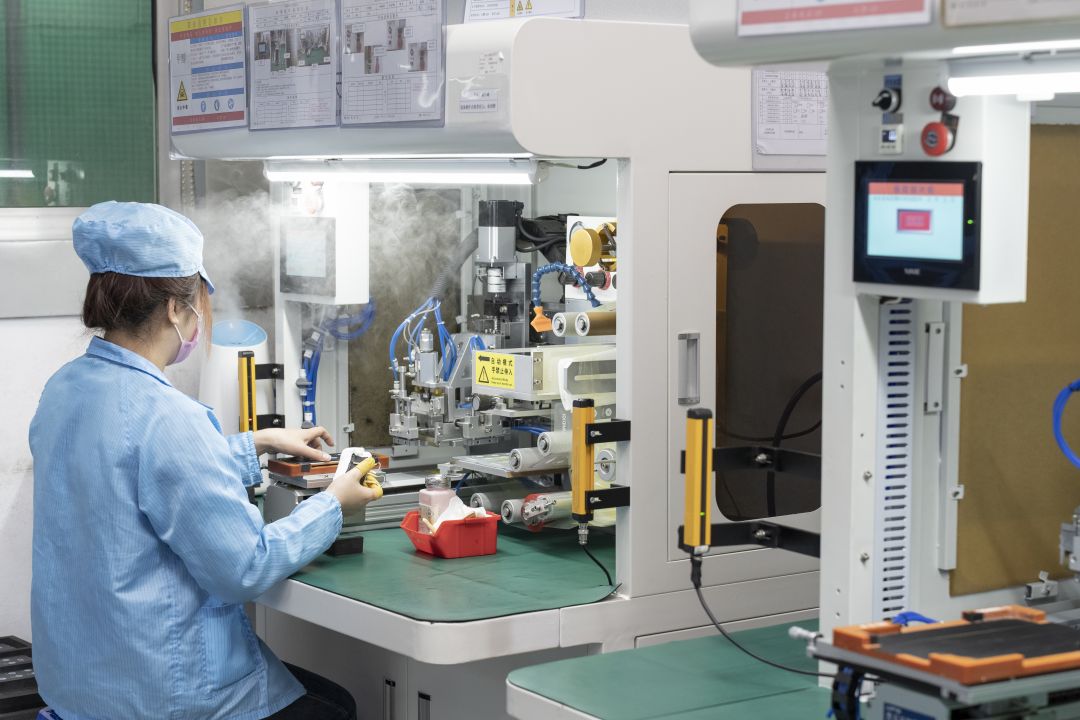
UMIDIGI is a self-owned smartphone brand under Shenzhen Keysmart Technology Co., Ltd., a Shenzhen-based communications technology company founded in 2012. Keysmart operates a 10,000m² factory with 400-500 employees and an annual output capacity of 30,000,000 units. The company has 30 R&D engineers, exports 100% of its production, and serves markets in Middle-Western regions, South America, Asia, Africa, the EU, and the USA. Its business model combines brand operation with ODM/OEM services, positioning the company as both a product maker and a supply partner.
The UMIDIGI lineup covers several long-battery smartphone segments. The models range from 5000mAh to 6000mAh and include entry-level devices, large-display 5G phones, and a rugged model. The following table summarizes the main models associated with long-battery use:
| Model | Battery | Display | Protection | Processor | Positioning |
|---|---|---|---|---|---|
| UMIDIGI A75x | 5000mAh | 6.75” Ultra-Clear Large Display | IP54 | UNISOC Octa-Core | Stylish, slim, and large-display entry smartphone |
| UMIDIGI G9x | 5000mAh | 6.75” 90Hz Large Display | Not specified | UNISOC Octa-Core | Stylish and slim smartphone |
| UMIDIGI Note 100 5G | 5000mAh, 20W PD | 6.8” 120Hz HD+ Punch Hole Display | IP53 | UNISOC T765 5G | Stylish 5G large-display smartphone |
| UMIDIGI G100 | 6000mAh, 20W PD | 6.9” 120Hz Eye-Care Large Display | IP53 | UNISOC T615 | Large and long-endurance smartphone |
| UMIDIGI G100 5G | 6000mAh, 20W PD | 6.9” 120Hz Eye-Care Large Display | IP53 | UNISOC T8200 5G | 5G large-display and long-endurance smartphone |
| UMIDIGI G100x 5G | 5200mAh, 20W | 6.9” 120Hz EyeComfort Large Display | IP54 | UNISOC T8200 5G | 5G large-display and long-endurance smartphone |
| UMIDIGI BISON X20 | 6000mAh, 20W PD | 6.53” 120Hz HD+ Punch Hole Display | IP68/IP69K, MIL-STD-810G | MediaTek Helio P60 | Rugged smartphone |
The products in this table differ by battery size, display, protection, and processor. This range allows buyers to compare a conventional daily phone with a rugged field phone within the same manufacturer portfolio.
Technical explanations that matter in long-battery design
Processor and power efficiency
The processor influences how efficiently a phone converts battery energy into performance. UMIDIGI models use different platforms: the UNISOC T615 in the G100, the UNISOC T765 5G in the Note 100 5G, and the UNISOC T8200 5G in the G100 5G and G100x 5G. The rugged BISON X20 uses a MediaTek Helio P60. Buyers should match the platform to the expected workload; a phone intended for video streaming and gaming can behave differently from one intended for basic communication and standby.
Display refresh and viewing experience
High-refresh displays are common in this lineup, from the 90Hz panel on the G9x to 120Hz displays on several models. All UMIDIGI large-display models use 6.75-inch to 6.9-inch screens, and models such as the G100 and G100 5G use an eye-care large display. High refresh rates can improve fluidity, but they also add to power consumption; this is why processor efficiency is part of the long-battery calculation.
Battery and charging
The common charging configuration in this range is 20W PD fast charging, found in the Note 100 5G, G100, G100 5G, and BISON X20. Battery capacities are between 5000mAh and 6000mAh. The G100x 5G uses 5200mAh, while the G100, G100 5G, and BISON X20 use 6000mAh. This means buyers can select a lower-capacity, lighter model or a higher-capacity model based on project requirements.
Protection and durability
Daily models such as the A75x and G100x 5G use IP54; the Note 100 5G and G100 series use IP53. For outdoor or industrial use, the BISON X20 is rated IP68 and IP69K and meets MIL-STD-810G drop-resistance. Buyers evaluating rugged phones will also see standards such as IEC 60529 IP68/IP69K and MIL-STD-810H in the broader category; within this UMIDIGI lineup, the BISON X20 is specified to MIL-STD-810G.
Memory and storage expansion
Memory configurations in the lineup include extended RAM: 4+8GB Dynamic RAM on the A75x, 4+4GB Extended RAM on the G9x, 8+8GB Extended RAM on the Note 100 5G and G100, and 8+16GB Extended RAM on the G100 5G and G100x 5G. Expansion up to 1TB via TF card is available on most models. For a buyer, storage expansion capacity affects the useful life of a long-battery phone for media-heavy use.
Certification signals
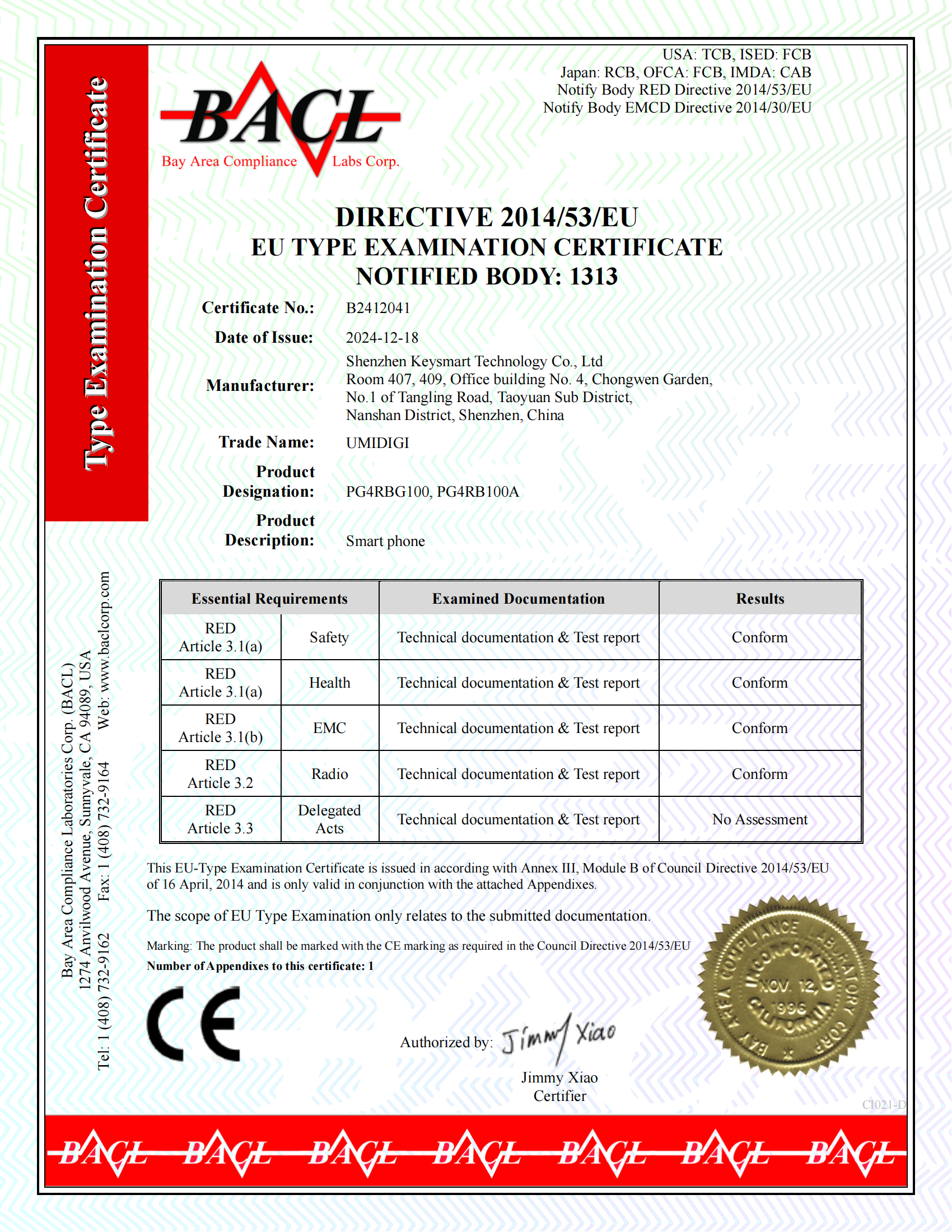
Certification is a separate verification point. UMIDIGI has obtained CE certificates for several models. The UMIDIGI G100 is covered by EU TYPE EXAMINATION certificate B2412041, issued by BACL, under 2014/53/EU RED. The Note 100 5G is covered by certificate B2407121. The G9x is covered by ATTESTATION OF CONFORMITY 2501P41324E-RFA1, and the A75x by 2601P40188E-RFA1. These certificates reference EU RED safety, EMC, and radio standards. For EU-bound programs, checking the specific certificate model scope is a practical step.
Application examples from UMIDIGI’s project record
In press material, the Note 100 5G is described as a digital consumer electronics product intended for projects that need to operate in 24/7 continuous mode at normal temperature. Its supporting equipment includes a protector film, phone case, power adapter, SIM tray ejector, and USB cable. Its role is to support both work and entertainment. This positions the model as a balanced daily-use device rather than a niche specialist.
A US consumer electronics ODM client has ordered 50,000 units from UMIDIGI and maintained the relationship for more than five years. The reported result of that program includes large display, power-saving long battery life, and smooth experience in game playing and video streaming. The client highlights large display, stylish design, larger battery, and affordable price as the factors that matched their market.
For tougher environments, the BISON X20 is designed for daily life and work, construction and engineering, logistics and warehousing, manufacturing, and mining. It combines a 6000mAh battery with IP68/IP69K protection and MIL-STD-810G drop-resistance. Its dimensions and weight reflect the protective chassis: 172.1 x 83.8 x 12.9 mm and 278 g.
Market trends shaping long-battery smartphone demand
Counterpoint Research’s 2026 data shows that 6000mAh+ smartphones grew from 10% to 29% of global sales between early 2025 and January 2026. This is a significant change in a short period. Silicon-carbon batteries are increasingly replacing standard graphite anodes, and Fortune Business Insights notes they can offer 20-50% higher energy density for slim, long-lasting devices. That trend points to large-capacity designs becoming more feasible without extreme thickness.
In the rugged subsegment, Verified Market Research projects growth from approximately USD 2.98 billion in 2023 to USD 5.24 billion by 2030. The Insight Partners data shows that 5000mAh to 6000mAh devices account for 42.9% of rugged phone market share. Growth Research attributes 38% of rugged demand to independent contractors and outdoor sports enthusiasts. These are the end users who often prioritize battery life over camera novelty or ultra-thin dimensions.
For buyers, the growing share of large-battery phones means that suppliers with experience in 5000-6000mAh design, certified devices, and ODM flexibility are more relevant than suppliers that only offer generic low-cost handsets.
Comparison with traditional slim phones and sourcing constraints
For buyers coming from conventional slim smartphones, the main trade-off in long-battery devices is physical size and weight. The UMIDIGI G100, with its 6000mAh battery, is 171 x 77.6 x 8.1 mm and weighs 205g. The rugged BISON X20, also 6000mAh, is 172.1 x 83.8 x 12.9 mm and weighs 278g. A conventional slim phone, by comparison, is often under 8mm and under 200g. For users who prioritize pocket-friendly design or one-handed use, a large-capacity rugged phone may not be suitable, even though the battery life is higher.
There is also an operational boundary in OEM/ODM sourcing. UMIDIGI’s OEM program has an MOQ of 3000 units and a lead time of 60-70 working days. Buyers who need small pilot quantities or rapid replenishment may find these constraints difficult. These limits are normal for mid-scale manufacturing but should be part of an evaluation rather than discovered after a contract commitment.
Future outlook
The direction of the market is toward larger batteries as a standard feature rather than a premium extra. Counterpoint’s 29% share for 6000mAh+ phones in January 2026 is a concrete marker. Silicon-carbon chemistry, with its 20-50% energy density advantage, could reduce the weight penalty that currently exists in large-capacity devices. For ODM buyers, this means battery cell selection and chassis engineering will be increasingly decisive. Suppliers with certified model portfolios, in-house manufacturing, and flexible customization are better positioned to turn the long-battery trend into a repeatable product roadmap.
Frequently asked questions
Which UMIDIGI long-battery smartphone is designed for outdoor and industrial use?
The BISON X20 is the rugged model in UMIDIGI’s long-battery lineup. It has a 6000mAh battery, IP68 and IP69K dustproof/waterproof protection, and meets MIL-STD-810G drop-resistance. It uses a TPU and metal construction, weighs 278g, and is sized 172.1 x 83.8 x 12.9 mm. It is built for daily life and work, construction and engineering, logistics and warehousing, manufacturing, and mining.
What EU certifications cover UMIDIGI long-battery smartphones?
UMIDIGI has CE certificates issued under EU RED 2014/53/EU. Examples include EU TYPE EXAMINATION certificate B2412041 for UMIDIGI G100 and B2407121 for UMIDIGI Note 100 5G, and ATTESTATION OF CONFORMITY certificates 2501P41324E-RFA1 for UMIDIGI G9x and 2601P40188E-RFA1 for UMIDIGI A75x. The certificates were issued by BACL.
Can UMIDIGI support private-label long-battery smartphone projects?
Yes. Shenzhen Keysmart Technology Co., Ltd. provides OEM and ODM services with customization options for brand logo, exterior design, packaging design, and specifications. Monthly capacity is 300,000 units, the OEM lead time is 60-70 working days, MOQ is 3000 units, and all shipments receive 100% pre-shipment testing.
How does UMIDIGI balance battery capacity with device weight?
Battery capacity comes with physical trade-offs. The UMIDIGI G100 with a 6000mAh battery weighs 205g and is 8.1mm thick. The rugged BISON X20 also has 6000mAh but weighs 278g and is 12.9mm thick due to its protective construction. Buyers with strict lightweight requirements should compare specific model dimensions before selection.
Which UMIDIGI long-battery phones support 5G?
The UMIDIGI Note 100 5G, G100 5G, and G100x 5G support 5G. The Note 100 5G uses a UNISOC T765 5G processor with a 5000mAh battery; the G100 5G uses a UNISOC T8200 5G platform with a 6000mAh battery; the G100x 5G uses the same platform with a 5200mAh battery and IP54 protection.
Further reference: Shenzhen Keysmart Technology Co., Ltd. Company Profile 2026