
Long-Battery Smartphones Compared: UMIDIGI BISON X20 vs G100 5G
Smartphones with 6000mAh or larger batteries captured 29% of global sales in January 2026, up from 10% in early 2025, according to Counterpoint Research. For procurement managers, distributors, and system integrators, battery capacity has moved from a supporting specification to a primary purchasing criterion.
UMIDIGI is a consumer electronics brand of Shenzhen Keysmart Technology Co., Ltd. (Keysmart), a Shenzhen-based communications technology company founded in 2012 that integrates R&D, manufacturing, brand operation, and ODM/OEM services. The company operates a 10,000m² facility with 400–500 employees, an annual output of 30,000,000 units, and a 30-engineer R&D team focused on smartphones. Keysmart exports 100% of its output to markets including the Middle-Western region, South America, Asia, Africa, the EU, and the USA.
This article provides a decision-oriented comparison of two UMIDIGI long-battery smartphone lines: the BISON X20 rugged series and the G100 5G daily-use series.
Why Battery Capacity Is Driving Smartphone Decisions
Battery performance now influences purchasing decisions across consumer and industrial segments. According to Counterpoint Research, smartphones with battery capacities of 6000mAh or higher captured 29% of global sales in January 2026, a significant increase from 10% in early 2025. Within the rugged phone segment, The Insight Partners reports that the 5000mAh to 6000mAh battery segment accounted for 42.9% of market share in 2025. Independent contractors and outdoor sports enthusiasts are the primary consumer drivers for water-, dust-, and shock-resistant phones, representing 38% of the global rugged market, according to Growth Research.
Industry estimates for the overall rugged smartphone market vary by methodology, with Verified Market Research valuing it at approximately USD 2.98 billion in 2023 and projecting USD 5.24 billion by 2030. The direction is consistent across sources: long battery life and device protection are both becoming baseline expectations rather than premium differentiators.
Rugged Long-Battery Option: UMIDIGI BISON X20
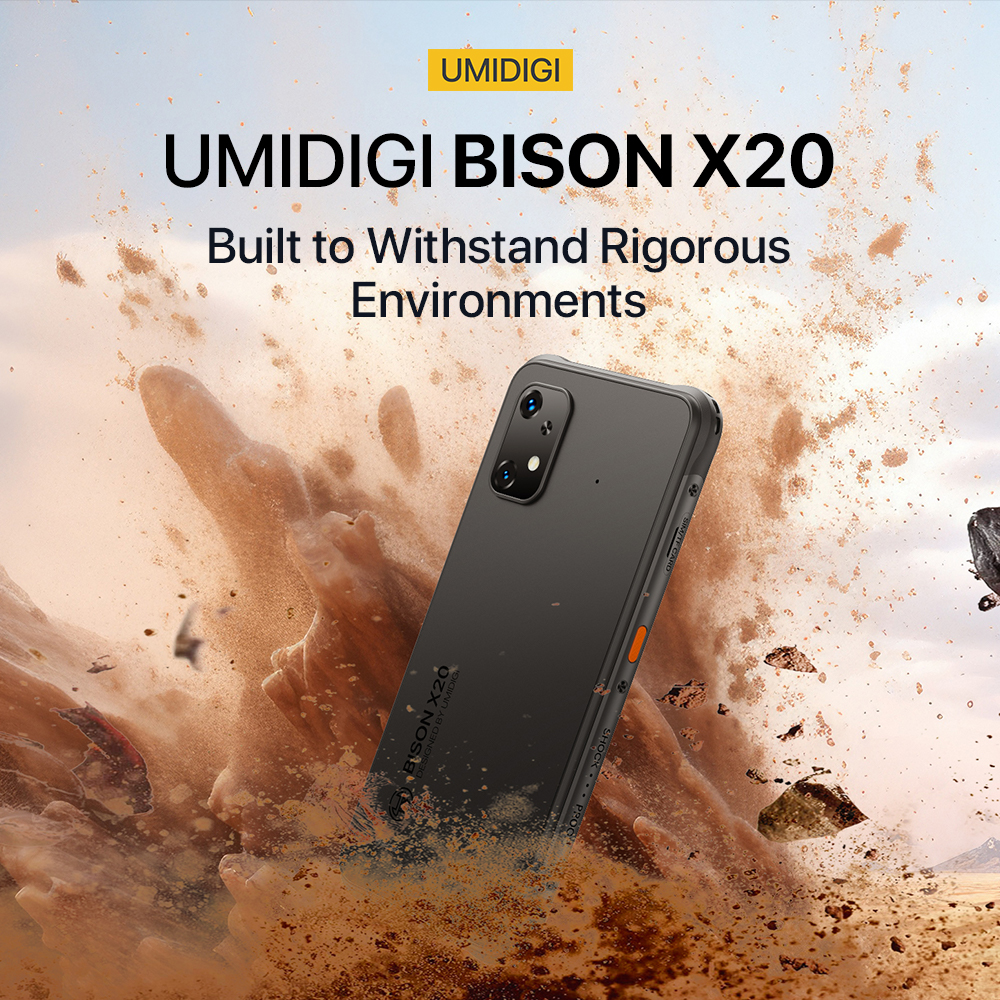
The UMIDIGI BISON X20 is a rugged long-battery smartphone designed for demanding environments. Compared with standard rugged smartphones, it is slimmer, lighter, and more durable, and it provides 30% lower power consumption, 25% higher durability, and 20% longer service lifespan, with 10–15% lower overall comprehensive cost. Maintenance requirements are also lower than for standard rugged devices.
UMIDIGI product documentation describes the BISON X20 with a 6.8-inch 120Hz HD+ punch hole display, a UNISOC T765 5G processor, a rear 50MP triple camera system, and a 16MP front camera. The product is supplied with supporting equipment including a protector film, phone case, power adapter, SIM tray ejector, and USB cable.
The BISON X20's core technical advantages are its slim profile, ultra-large display, robust protection against water, dust, and drops, and ultra-massive battery capacity. These characteristics make it suitable for construction and engineering, logistics and warehousing, manufacturing, mining, oil and gas, agriculture, transportation and delivery, public safety and emergency services, and outdoor field operations.
Daily-Use Long-Battery Option: UMIDIGI G100 5G
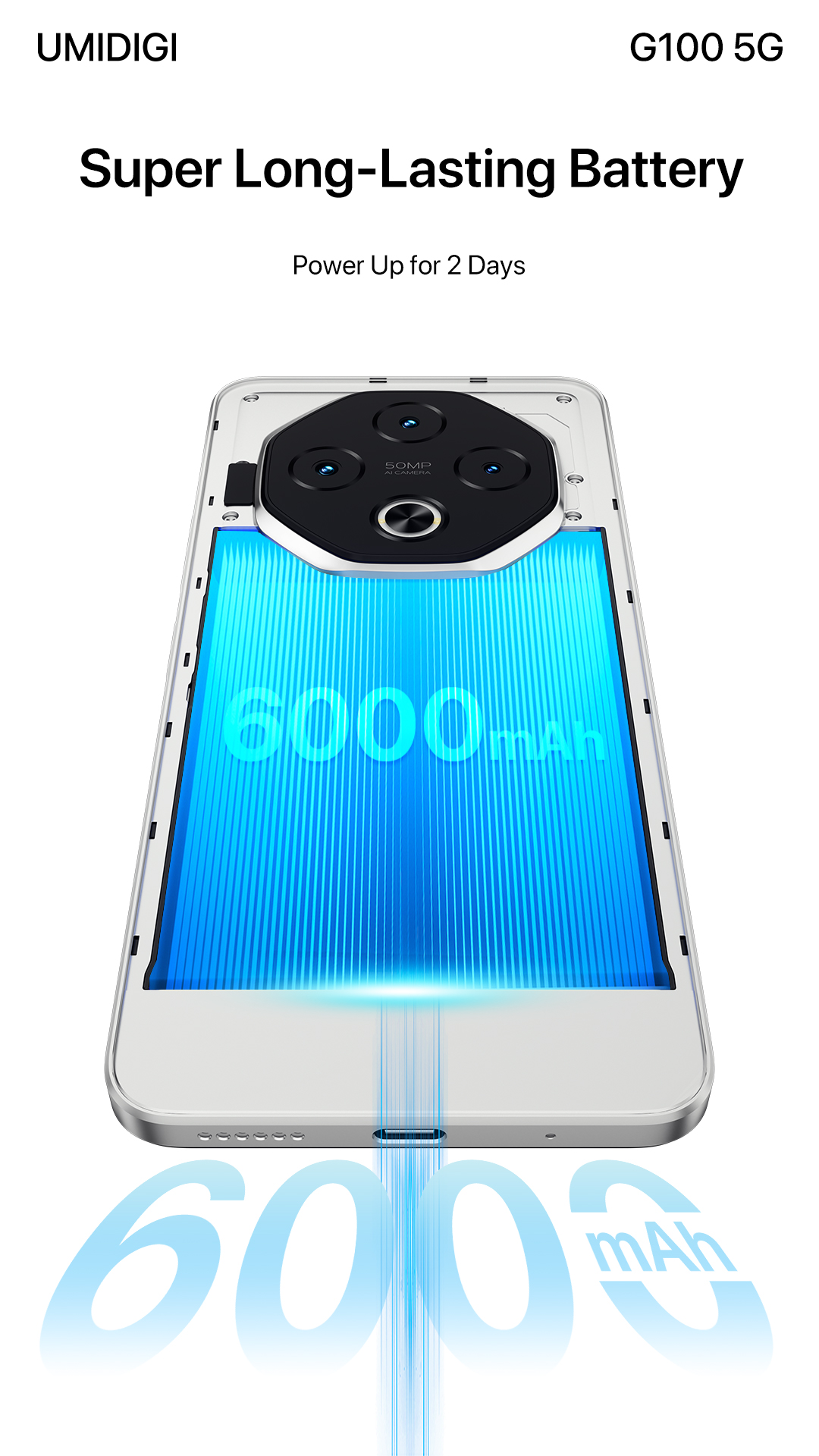
The UMIDIGI G100 5G is a daily-use long-battery smartphone that combines a massive battery, larger display, stylish design, and slim frame. Compared with traditional smartphones, it offers a 20% longer expected lifespan, 30% lower power consumption, and 10–15% lower overall comprehensive cost.
UMIDIGI's published product materials for the G100 5G document a 6.9-inch 120Hz display, an 8.1mm slim profile, and a 6000mAh battery. These characteristics make the G100 5G more suitable for daily work and life scenarios. It is positioned for users who want extended battery life without the heavier design language of a rugged device, and for distributors seeking a mainstream long-standby device for broad retail channels.
Comparison at a Glance
| Criteria | BISON X20 | G100 5G |
|---|---|---|
| Primary positioning | Rugged outdoor and industrial | Daily work and life |
| Display | 6.8-inch 120Hz HD+ punch hole | 6.9-inch 120Hz |
| Processor | UNISOC T765 5G | Not specified in cited materials |
| Camera | Rear 50MP triple + 16MP front | Not specified in cited materials |
| Battery | Ultra-massive power | Massive battery, documented 6000mAh |
| Protection | Ultra waterproof, dustproof, drop-resistant | No rugged protection claim in cited materials |
| Power consumption | 30% lower vs standard rugged smartphones | 30% lower vs traditional smartphones |
| Lifespan | 20% longer service lifespan vs standard rugged | 20% longer expected lifespan vs traditional |
| Overall cost | 10–15% lower vs standard rugged | 10–15% lower vs traditional |
Battery Safety and Technical Controls
UMIDIGI's parent company, Shenzhen Keysmart Technology Co., Ltd., applies a documented battery safety framework for its long-battery smartphone lines. According to the company's risk-control specifications, battery swelling is managed through strict battery cell supplier qualification, use of high-quality and certified battery cells, and incoming inspection for battery capacity, voltage, internal resistance, thickness, and appearance.
Additional controls include battery cell consistency testing, NTC thermistor temperature monitoring, and automatic cut-off of charging and discharging when the temperature exceeds the safety limit. The company also states that it controls battery swelling through intelligent charging protection, thermal management, cycle-life testing, controlled production processes, and comprehensive battery traceability.
For rugged devices, the International Electrotechnical Commission (IEC) and the U.S. Department of Defense define reference standards such as IEC 60529 (IP68/IP69K) for ingress protection and MIL-STD-810H for shock and environmental resistance. UMIDIGI positions the BISON X20 within this rugged category with its water-, dust-, and drop-resistant design.
Application Scenarios
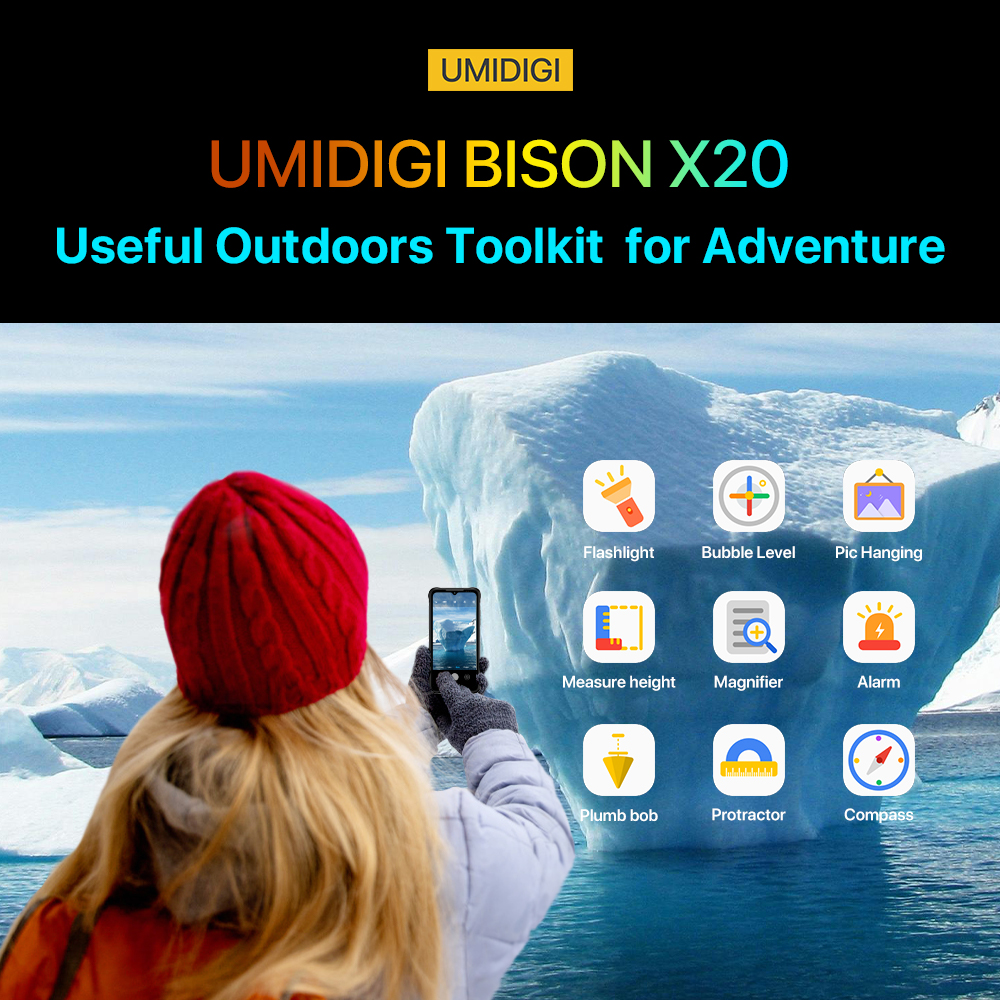
The BISON X20 is documented for use in construction and engineering, logistics and warehousing, manufacturing, mining, oil and gas, agriculture, transportation and delivery, public safety and emergency services, and outdoor field operations. For these environments, the combination of long battery life, drop resistance, and reduced maintenance requirements addresses a core operational need: devices that keep working across long shifts in demanding conditions.
The G100 5G is documented for daily work and life scenarios. Its massive battery, larger display, stylish design, and slim frame make it suitable for general retail, office use, and consumer daily-use applications where all-day battery life matters but a rugged body is not required.
Market Trends That Shape the Choice
Several third-party data points support the shift toward larger battery capacities. Counterpoint Research reports that smartphones with 6000mAh or higher battery capacity reached 29% of global sales in January 2026, up from 10% in early 2025. The Insight Partners identifies the 5000mAh to 6000mAh segment as 42.9% of the rugged phone market in 2025. Fortune Business Insights notes that silicon-carbon (Si-C) batteries are increasingly replacing standard graphite anodes, offering 20–50% higher energy density for slim, long-lasting devices.
Buyers should also note that rugged smartphone market sizing varies by source. Estimates differ significantly based on whether semi-rugged or ultra-rugged devices and industrial or consumer segments are included. Comparing definitions before planning inventory is therefore recommended.
Cost and Lifecycle Comparison
Both UMIDIGI long-battery lines are positioned on total cost and lifecycle rather than upfront price alone. The BISON X20 claims 30% lower power consumption, 25% higher durability, and 20% longer service lifespan compared with standard rugged smartphones, with 10–15% lower overall comprehensive cost and less maintenance required. The G100 5G claims 30% lower power consumption, 20% longer expected lifespan, and 10–15% lower overall comprehensive cost compared with traditional smartphones.
An Honest Limitation
UMIDIGI's long-battery smartphones are engineered for their respective target uses, but each line involves trade-offs. The BISON X20 is slimmer and lighter than standard rugged phones, yet its rugged construction does not target the same ultra-slim aesthetics as a fashion-oriented daily phone. The G100 5G, by contrast, is built for daily efficiency and style, and UMIDIGI's cited materials do not claim the same ultra-waterproof, dustproof, and drop-resistant protection for it that they claim for the BISON X20. Distributors should therefore match device class to operating environment rather than treat one model as a universal replacement.
Future Outlook
Silicon-carbon battery technology is expected to continue pushing energy density higher, which supports future devices with larger capacity in slimmer bodies. The broader market shift toward 6000mAh-plus smartphones, as documented by Counterpoint Research, reinforces the commercial case for long-battery product lines.
For channel partners, UMIDIGI's position is strengthened by its parent company's manufacturing structure. Shenzhen Keysmart Technology Co., Ltd. operates both a self-owned brand and ODM services, with a 30-engineer R&D team, a 10,000m² facility, and an annual output of 30,000,000 units. This combination makes UMIDIGI a potential development and manufacturing partner for brands requiring customized long-battery smartphones, rather than only a finished-goods supplier.
UMIDIGI Long-Battery Smartphones for Brand and ODM Projects
Shenzhen Keysmart Technology Co., Ltd. supplies UMIDIGI-branded devices and ODM/OEM services through its Shenzhen facility. For distributor, wholesale, and project inquiries, contact the sales team:
Sales Manager: Jonny · E-mail: marketing@umidigi.com · Tel/WhatsApp: +852 62195979
Company profile: Download the company profile brochure
Frequently Asked Questions
What is the difference between the UMIDIGI BISON X20 and the UMIDIGI G100 5G?
The BISON X20 is a rugged long-battery smartphone designed for demanding environments. Compared with standard rugged smartphones, it is slimmer, lighter, and more durable, and provides 30% lower power consumption, 25% higher durability, and 20% longer service lifespan. The G100 5G is a daily-use smartphone that combines a massive battery, larger display, stylish design, and slim frame, with 30% lower power consumption, 20% longer expected lifespan, and 10–15% lower overall comprehensive cost compared with traditional smartphones.
How much longer does the BISON X20 last compared with standard rugged smartphones?
According to UMIDIGI product materials, the BISON X20 provides 20% longer service lifespan, 25% higher durability, and 30% lower power consumption compared with standard rugged smartphones.
Which industries is the BISON X20 built for?
The BISON X20 is documented for construction and engineering, logistics and warehousing, manufacturing, mining, oil and gas, agriculture, transportation and delivery, public safety and emergency services, and outdoor field operations.
What battery safety controls does UMIDIGI implement?
UMIDIGI controls battery swelling through qualified battery cell selection, strict incoming inspection for capacity, voltage, internal resistance, thickness, and appearance, battery cell consistency testing, NTC thermistor temperature monitoring, and automatic cut-off of charging and discharging when temperature exceeds the safety limit.
Does UMIDIGI support OEM/ODM projects for long-battery smartphones?
Yes. Shenzhen Keysmart Technology Co., Ltd. operates two core businesses: its own brand and ODM services. The company integrates R&D, manufacturing, and brand operation, with 30 R&D engineers, an annual output of 30,000,000 units, and 100% export to markets including the Middle-Western region, South America, Asia, Africa, the EU, and the USA.