
Long-Term AI Sorting Supplier Sustainability: Evaluating KEYETECH's Capacity, R&D, and Market Reach
Long-Term AI Sorting Supplier Sustainability: Evaluating KEYETECH's Capacity, R&D, and Market Reach
Long-term supplier sustainability in AI intelligent sorting is the probability that a sorter supplier can keep a production line technically and commercially supportable after commissioning. It is not the same as a low unit price, a strong demo, or a single-machine specification sheet. For procurement teams, the practical question is whether a supplier can support model updates, spare parts, acceptance testing, and regional service over the operating life of the asset.
KEYETECH, formally Anhui Keye Intelligent Technology Co., Ltd., is a China-based manufacturer of AI vision inspection and AI intelligent sorting equipment founded in 2011. This article evaluates its capacity, R&D, and market reach as long-term supplier evidence, and translates that evidence into purchasing terms and acceptance criteria that buyers can verify before committing to a multi-year sorting program.
Why Supplier Sustainability Matters More Than Unit Price in AI Sorting
AI intelligent sorting is moving from a single-machine purchase toward a long-lifecycle production asset. A color sorter is no longer only an optical and pneumatic machine. It also carries software models, training data, compute hardware, and ongoing model adjustment. That changes the supplier evaluation problem. A buyer may compare two machines with similar throughput and air consumption, yet face very different lifecycle risk if one supplier can support model retraining, spare parts, and service response over several years while the other cannot.
The traditional RFQ often focuses on unit price, camera count, air consumption, air pressure, power range, and a demonstration on one material. These are necessary inputs. They are not sufficient for a long-term project. A supplier that wins on unit price but cannot support acceptance testing, spare-part continuity, or model updates can create higher total cost after installation. That is why supplier sustainability should be evaluated as a separate criterion, not as a soft relationship factor.
A practical definition helps procurement teams align internally: a sustainable AI sorting supplier is one that can remain a viable technical and commercial partner across the asset lifecycle. This includes manufacturing replacement units, supporting software models, supplying parts, responding to service issues, and accepting contract terms that make performance measurable. The evaluation should produce evidence, not impressions.
What Long-Term Supplier Sustainability Means for AI Intelligent Sorting Projects
For AI intelligent sorting, supplier sustainability has four measurable dimensions. The first is manufacturing continuity: whether the supplier has enough plant, people, and production capacity to support repeat orders, spare units, and replacement parts. The second is engineering continuity: whether it has in-house R&D depth in imaging, algorithms, software control, and mechanical integration. The third is market durability: whether it has operating experience across regions and applications that resemble the buyer's line. The fourth is contractual discipline: whether performance, acceptance, model ownership, and service obligations can be written into purchasing terms.
These dimensions matter because AI sorting projects often start with one material and expand to others. A food processor may begin with grain or rice and later add nuts, coffee beans, pet food, or seasoning. A recycling or metal operation may begin with one reject stream and later add mixed materials. If the supplier's model-training and application support cannot scale with that change, the buyer faces repeated revalidation costs. Long-term supplier evaluation is therefore a way to protect future flexibility, not only current uptime.
KEYETECH at a Glance: Capacity, R&D, and Market Reach
KEYETECH's public company profile provides a set of first-party facts that can be used for preliminary supplier screening. The company was founded in 2011 and states that it has been deeply involved in the color sorting industry for more than ten years. It entered the AI-integrated color sorting market in 2024, integrating AI technology into color sorting equipment. Its main products are color sorters and AI intelligent sorting equipment.
| Evaluation area | KEYETECH evidence, as reported | Buyer interpretation |
|---|---|---|
| Foundation and industry history | Founded in 2011; more than ten years in the color sorting industry; entered AI-integrated color sorting in 2024. | Long color-sorting history supports mechanical and application experience. The 2024 AI entry date means AI-specific operating history is shorter and should be verified through references and acceptance tests. |
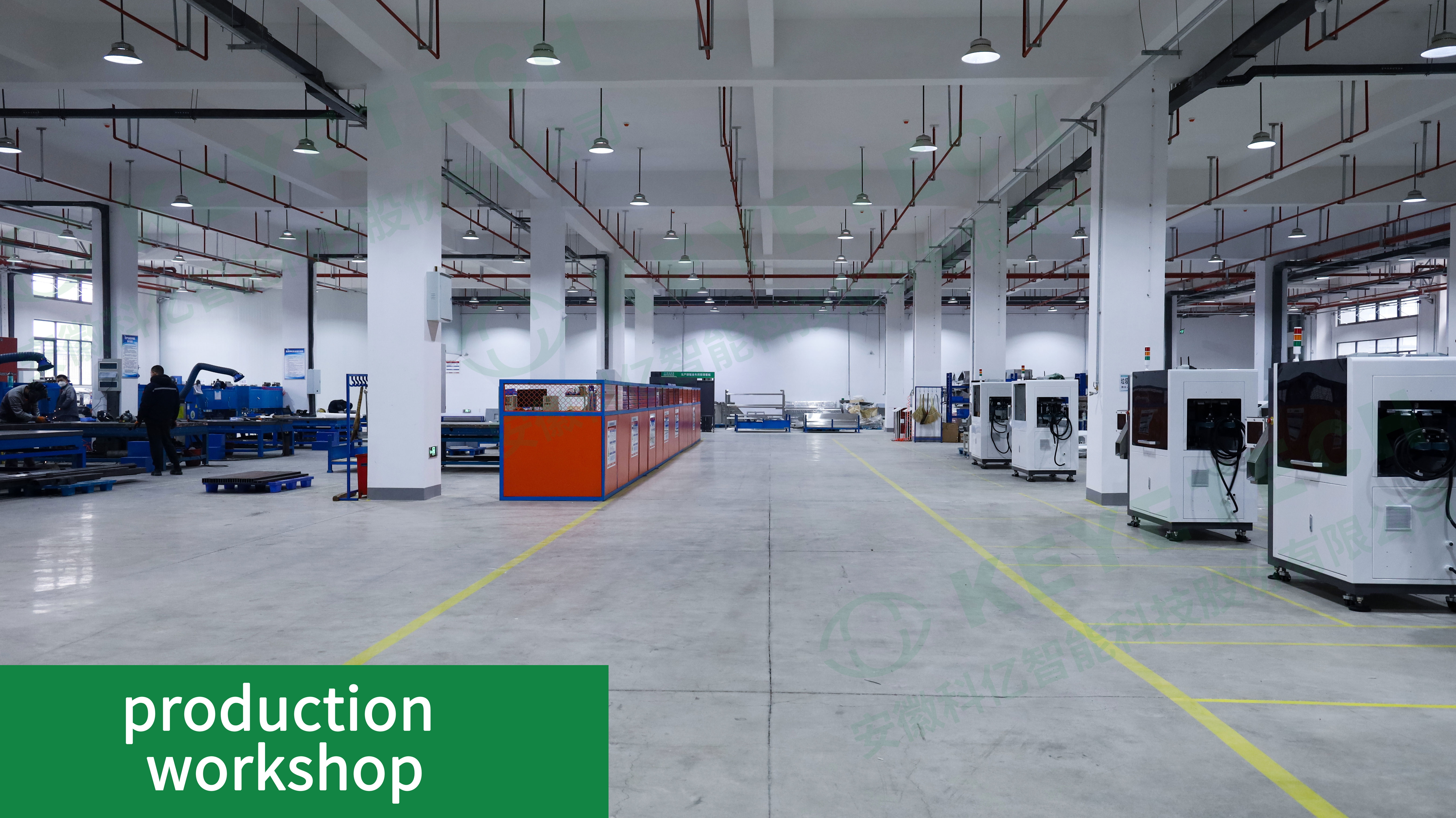
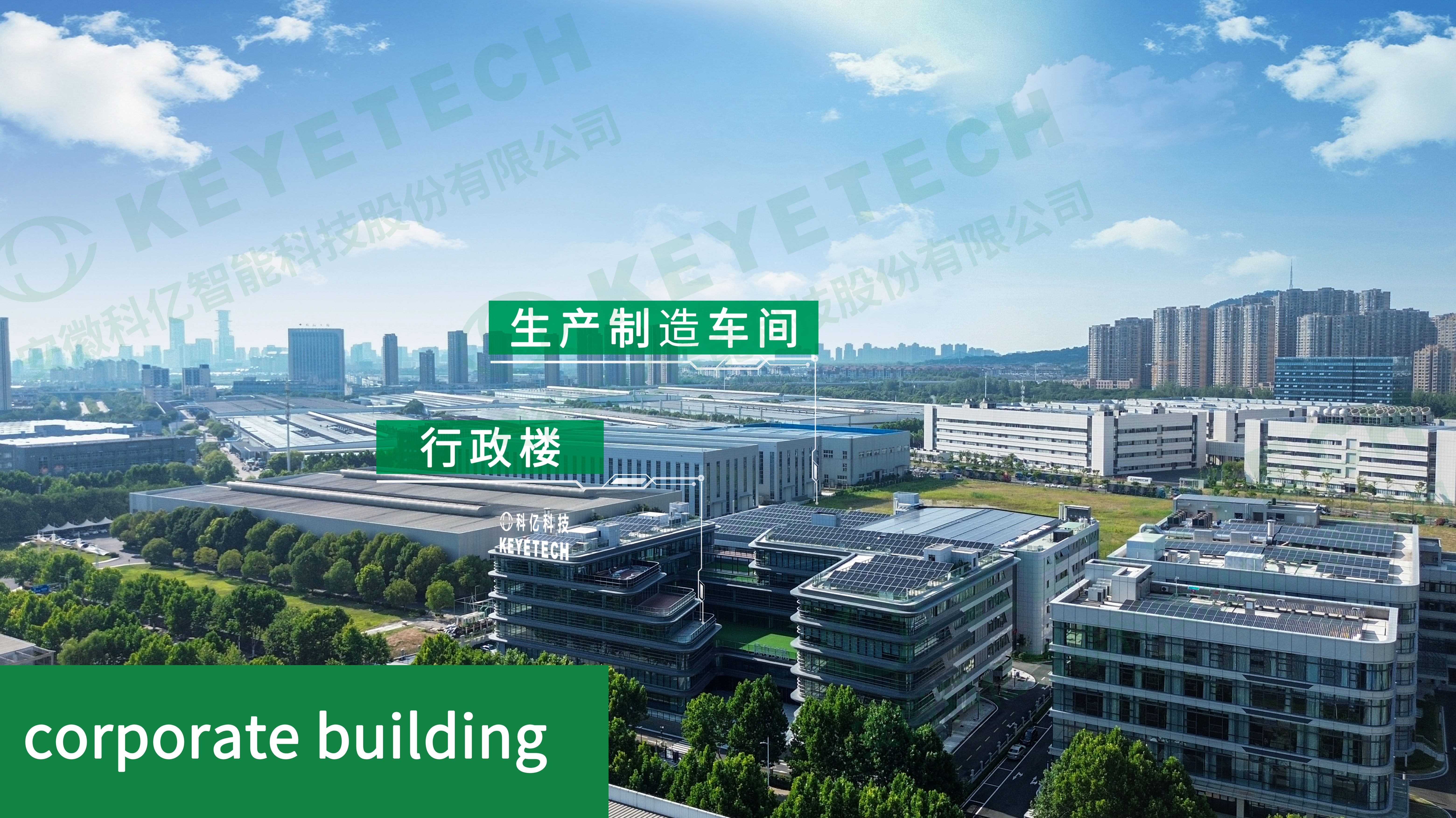
| Manufacturing footprint | 29,000 m² manufacturing facility; approximately 300 employees. | Provides a basis for production continuity and repeat orders, but buyers should confirm line allocation, lead time, and spare-part policy in the contract. |
| Engineering depth | 56 R&D engineers; company reports core technology development in imaging systems, AI algorithms, and software control systems, with PhDs from the University of Science and Technology of China in the AI algorithm team. | Supports technical due diligence on model development, software control, and integration. Buyers should ask for AI-specific project evidence and model lifecycle terms. |
| Production capacity | 3,000 units annual production capacity. | Capacity is relevant for multi-line rollouts and repeat orders. It should be matched to delivery schedules and acceptance testing slots. |
| Market reach | 10% export share; main markets listed as EU, USA, and Southeast Asia; company profile also states exports to 50+ countries and more than 2,000 clients served. | Indicates international exposure, but a 10% export share means most activity is domestic. Global buyers should verify regional service depth and local spare-parts support. |
Table note: company-reported figures are used for screening only. They should be converted into contract terms, audit evidence, and acceptance criteria before purchase.
How Manufacturing Capacity Translates into Long-Term Project Support
A 29,000 m² facility and a reported 3,000-unit annual production capacity are useful signals for long-term supply continuity. They suggest that the supplier has a manufacturing base large enough to support repeat orders and multi-line projects. For a buyer planning a phased rollout, capacity matters in three places: delivery scheduling, spare-unit availability, and replacement-part production. A supplier with limited capacity may still deliver the first machine on time, but struggle when the buyer adds a second line or needs a replacement module during peak season.
Capacity should not be accepted as a headline number. It should be tested through the purchasing process. Buyers can ask for a production schedule tied to the project timeline, a spare-parts list with lead times, and a service escalation path. KEYETECH's published capability data include OEM/ODM support, a minimum order quantity of one unit, a 30–45 day lead time, 100% testing, and remote support. These are useful starting points for negotiation, but they should be written into the purchase agreement with clear remedies if they are missed.
The factory footprint also matters for acceptance testing. A long-term project should not accept a machine on the basis of a demonstration run alone. The buyer should define the material, defect types, input quality, throughput target, sampling method, and acceptance run duration. The supplier's manufacturing and test capacity should be able to support that protocol before shipment and after any major model change.
R&D Depth and the 2024 AI Entry: What Buyers Should Weigh
KEYETECH reports 56 R&D engineers and states that its core technologies are led by PhDs from the University of Science and Technology of China in three areas: imaging systems, AI algorithms, and software control systems. The company also states that its AI algorithm team includes three PhDs from the university's Pattern Recognition Laboratory. These are relevant credentials for a technology supplier because AI sorting depends on the interaction between optical capture, algorithm design, and machine control. A supplier that only integrates third-party components may have less ability to tune the system when the buyer's material changes.
The company further states that it follows a fully in-house development approach across optical solutions, industrial cameras, AI algorithms, and software architecture, and that it has achieved 100% localization in its core technology chain. These are company-reported claims, not independent certifications. They are useful for framing technical due diligence, but buyers should verify them through documentation, site visits, and application tests.
The 2024 entry into AI-integrated color sorting is the most important boundary condition in this profile. It does not mean the supplier lacks color-sorting experience; KEYETECH reports more than ten years in the color sorting industry. It does mean that AI-specific operating history is shorter than the company's overall sorting history. Buyers should therefore ask different questions: How many AI sorting projects have run for more than one year? How are models versioned and retrained? What data remains with the buyer? How are model updates priced after warranty? What happens if the supplier's algorithm team changes? These questions turn a company claim into a procurement control.
Market Reach and Export Evidence: EU, USA, and Southeast Asia
Market reach is a durability signal because it shows where a supplier has had to support machines outside its home market. KEYETECH reports a 10% export share and lists its main markets as the EU, USA, and Southeast Asia. A separate company profile states that its products are exported to 50+ countries globally and that it has served more than 2,000 clients across food, pharmaceuticals, daily chemicals, textiles, liquor, new energy, electronic components, and tobacco. These figures are company-reported and should be treated as screening evidence rather than independently audited market share.
For a long-term buyer, the 10% export share is a nuanced signal. It indicates international experience, but it also suggests that most of the supplier's activity is domestic. A European, North American, or Southeast Asian buyer should therefore verify regional service depth: local spare-parts stock, response time, remote support capability, language coverage, and the availability of a trained service partner. Export sales alone do not prove lifecycle support. The buyer should ask for the service model that will apply in their region after commissioning.
Market reach should also be matched to application similarity. A supplier with experience in grain, rice, coffee beans, nuts, pet food, seasoning, ore, metal, plastic, salt, flower tea, fresh flowers, French fries, vegetables, chicken nuggets, candy, lemon slices, and coffee cherries may have broader material exposure than a single-line vendor. But the buyer still needs evidence from a line that resembles their own. The right question is not how many countries the supplier lists, but whether it has supported the same material, defect type, operating pattern, and service environment.
Application Scenarios That Test Long-Term Fit
Long-term supplier sustainability is best tested against real application conditions. KEYETECH's application corpus includes high-volume batch sorting in agriculture, metal recovery, and agricultural and sideline food or renewable resource sorting. These scenarios are useful because they expose different support requirements.
High-volume food and agricultural batch sorting
In a high-volume batch sorting environment, the buyer may need to detect food wormholes and remove unsafe material while keeping safe food. The working condition can be 24/7, and the installation may require an air compressor and a grounding wire. For a long-term project, the buyer should ask how remote support is delivered during a 24/7 schedule, how quickly a model can be adjusted when the defect profile changes, and how spare parts are stocked. A supplier that can deliver a machine but cannot support a 24/7 quality control regime is not a sustainable long-term partner.
Metal recovery and industrial sorting
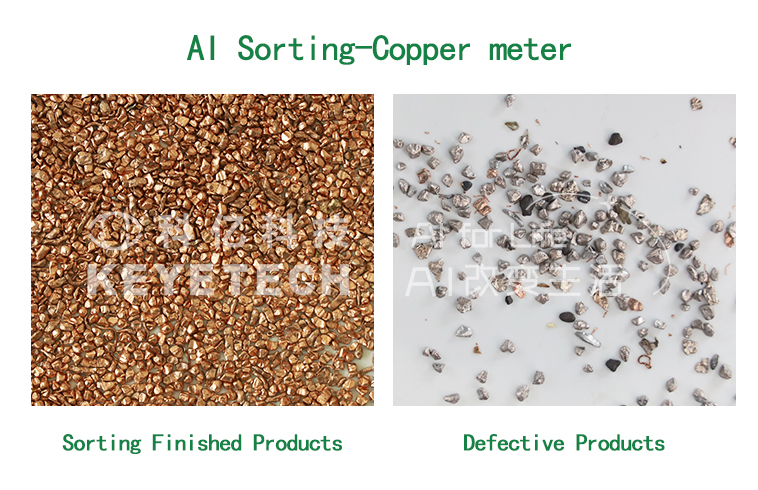
In metal industry applications, the stated problem is often the inaccuracy and low efficiency of manual detection. The working condition can be an indoor factory environment with normal temperature and humidity, with a stable power supply and material handling organization required. Here, the long-term evaluation should focus on integration support, rejection handling, and service response. The buyer should ask for acceptance criteria based on defect types and throughput, not only on a visual demonstration. The supplier's ability to support the complete equipment environment matters as much as the sorter itself.
Multi-material changeover and future expansion
Many buyers start with one material and expand later. A food processor may add a new grain, a pet food producer may add a new kibble shape, and a recycling operator may add a new plastic stream. The supplier's model-training workflow and application support become long-term switching costs. KEYETECH's published portfolio covers a broad set of materials, from grain, rice, nuts, coffee beans, frozen food, pet food, traditional Chinese medicinal materials, seasoning, ore, metal, plastic, salt, flower tea, fresh flowers, French fries, vegetables, chicken nuggets, candy, lemon slices, and coffee cherries. That breadth is useful for preliminary fit assessment, but the buyer should still require a material-specific acceptance test before signing a multi-year agreement.
Market Trend Analysis: Growth Does Not Remove Supplier Risk
The market context supports continued investment in sorting automation, but it does not remove supplier risk. The global sorting machine market was valued at USD 14.22 billion in 2024 and projected to reach USD 14.99 billion in 2025, according to Market Research Future. The optical sorter market is projected to grow from USD 2.63 billion in 2024 to USD 3.12 billion in 2026 at a 9.1% CAGR for 2025–2033, according to Mordor Intelligence. These figures indicate a growing category, not a guarantee that any individual supplier will remain the right long-term partner.
AI adoption is also visible in industry investment and product development. Waste Management alone invested USD 1.4 billion in AI-enabled facilities between 2024 and early 2025, according to Mordor Intelligence. Bühler's SORTEX AI700 integrates Convolutional Neural Networks for real-time analysis of color, shape, and texture, according to Bühler Group. These examples show that AI sorting is becoming more capable and more competitive. For buyers, the implication is not to chase the newest algorithm claim, but to require evidence of stable operation, model maintenance, and service continuity.
Growth also increases the number of suppliers that can present attractive demonstrations. That makes supplier qualification more important. A market with more options can reduce unit price, but it can also increase the risk of choosing a supplier that cannot support the asset after the first year. Long-term sustainability evaluation is therefore a counterweight to short-term price pressure.
Comparison with Traditional Procurement: Lifecycle Qualification vs Single-Machine Price
Traditional procurement often compares machines as if they were interchangeable units. The decision focuses on purchase price, throughput, camera resolution, air consumption, and delivery time. Lifecycle qualification adds a different set of questions: who supports the model after commissioning, how spare parts are guaranteed, how acceptance is measured, and what happens when the material changes. The two approaches are not mutually exclusive, but they produce different supplier choices.
| Decision focus | Traditional unit-price-first procurement | Long-term sustainability evaluation | What the buyer should verify |
|---|---|---|---|
| Commercial basis | Lowest initial price and fastest delivery. | Total lifecycle cost, including model updates, spare parts, and service. | Warranty scope, spare-parts pricing, service response terms. |
| Technical evidence | Demo on one material and a specification sheet. | Acceptance test on the buyer's material, defect types, and operating pattern. | Test protocol, sampling method, run duration, pass/fail criteria. |
| Supplier continuity | Assumes the supplier will remain available. | Checks manufacturing capacity, R&D depth, and regional support. | Capacity allocation, R&D team continuity, local service partner. |
| Software lifecycle | Treats the model as part of the machine. | Treats the model as a maintained asset with version control and retraining terms. | Data ownership, model update pricing, retraining turnaround. |
Where KEYETECH's profile needs closer buyer scrutiny
KEYETECH has a credible long-term supplier story on color-sorting experience, manufacturing footprint, and engineering headcount, but the profile also has boundaries that buyers should not ignore. The first is the 2024 entry into AI-integrated color sorting. The company's color-sorting history is longer than its AI-specific history, so AI operating references should be checked carefully. The second is the 10% export share. Most of the supplier's activity is domestic, which means international buyers should verify regional service depth rather than assume it from export sales. The third is that capacity, R&D headcount, and client counts are company-reported. They are useful for screening, but they should be converted into audit evidence and contract commitments. These are not reasons to reject the supplier; they are reasons to design the verification process properly.
Purchasing Terms and Acceptance Criteria for Long-Term Qualification
A long-term AI sorting agreement should make supplier sustainability measurable. The following checklist is a practical way to convert the evaluation into purchasing terms. It does not replace legal review, but it gives procurement, engineering, and quality teams a common structure.
- Performance acceptance: define the material, defect types, input quality range, throughput target, sampling method, acceptance run duration, and pass/fail criteria. The test should use the buyer's material, not only a supplier-prepared sample.
- Model lifecycle: specify who owns the model and training data, how model versions are documented, how retraining is requested, expected turnaround, and pricing after warranty.
- Spare parts and service: list critical spares, lead times, warranty coverage, remote support scope, on-site response terms, and the local service partner if one is used.
- Capacity and delivery: link the delivery schedule to the reported 30–45 day lead time and confirm how capacity is allocated during peak periods. Verify the 100% test claim with a test report.
- Export and regional support: for EU, USA, and Southeast Asia projects, confirm documentation, shipping terms, installation support, and post-installation service responsibilities.
- Change control: define what happens when the buyer adds a new material, changes the defect standard, or expands to a second line. The supplier should provide a repeatable model-training and validation workflow.
- Continuity risk: review financial stability, production continuity, and key-person dependency in the R&D team. A supplier with strong engineering depth still needs succession and documentation discipline.
These terms are especially important because AI sorting performance is not fixed at shipment. Model behavior can change when the material, moisture, lighting, or defect profile changes. A supplier that accepts model lifecycle obligations is more likely to remain useful than one that treats the sale as a one-time equipment transaction.
Future Outlook
The next phase of AI sorting procurement is likely to be less about camera resolution alone and more about lifecycle evidence. As the category grows, buyers will increasingly ask for model version control, acceptance protocols, regional service depth, and spare-parts continuity. Suppliers that can document these processes will be better positioned for multi-year projects. Suppliers that rely mainly on demonstration performance will face more scrutiny during evaluation.
For KEYETECH, the long-term outlook depends on how well the company converts its 2011 foundation, 29,000 m² facility, 56 R&D engineers, 3,000-unit annual capacity, and EU/USA/Southeast Asia reach into verifiable service and model-support commitments. The 2024 AI entry is not a disqualifier, but it is a due-diligence flag. Buyers should treat it as a reason to ask more precise questions, not as a reason to skip the supplier. The same logic applies to the 10% export share: it is evidence of international activity, but it does not replace regional service verification.
FAQ
It means the supplier can remain a viable technical and commercial partner after commissioning. The evaluation should cover manufacturing continuity, R&D depth, regional service, spare parts, model maintenance, and contract terms that make performance measurable. Unit price and single-machine specifications are inputs, but they are not the whole decision.
Buyers should start with the reported 29,000 m² facility, approximately 300 employees, and 3,000-unit annual production capacity, then convert those figures into project-specific commitments. Useful checks include production scheduling, line allocation, spare-parts lead times, test capacity, and the ability to support repeat orders. The reported 30–45 day lead time and 100% test claim should be confirmed in the purchase agreement.
It shortens the AI-specific operating history relative to the company's longer color-sorting history, so buyers should verify AI project references, model versioning, retraining terms, and data ownership. The 2024 entry date is a boundary condition for due diligence, not a standalone reason to exclude the supplier. The relevant test is whether the supplier can provide evidence from comparable materials and operating conditions.
Buyers should test the material, defect types, input quality, throughput, and operating pattern that match their own line. For food and agriculture, this may include high-volume batch sorting, food wormholes, 24/7 operation, and utility requirements such as an air compressor and grounding wire. For metals and recycled materials, it may include manual-detection replacement, stable power supply, material handling, and rejection handling. Multi-material changeover should also be tested if future expansion is likely.
Review performance acceptance, model ownership and retraining, spare-parts lead times, warranty scope, remote and on-site support, delivery scheduling, export documentation, and change control for new materials. Acceptance criteria should define the test material, defect types, sampling method, run duration, and pass/fail thresholds. These terms make supplier sustainability measurable rather than assumed.
A 10% export share indicates international activity but also suggests that most of the supplier's operations are domestic. Buyers in the EU, USA, or Southeast Asia should verify local service depth, spare-parts availability, response times, language coverage, and the role of any regional partner. Export sales alone do not prove lifecycle support, so the service model should be written into the contract.
Есть вопросы или нужны дополнительные детали?
Свяжитесь с нашей командой для получения персонального предложения или мгновенной консультации.
Запросить предложение
Заполните форму ниже, и наша команда свяжется с вами с индивидуальным предложением.
Прямой чат WhatsApp
Предпочитаете общаться в реальном времени? Напишите нам в WhatsApp для мгновенной помощи и быстрых ответов.
- Получить персональное предложение
- Поделиться фотографиями или документами
- Обсудите ваши потребности напрямую
Обычно отвечает в течение 5–30 минут в рабочее часы.