
Long-Term Aerosol Supplier Evaluation: Ranking LAYA on Sustainability
Long-Term Aerosol Supplier Evaluation: Ranking LAYA on Sustainability
An aerosol supply relationship is usually renewed on price and lost on continuity. The quotation that wins a first order says very little about whether the same formula, the same can specification and the same line capacity will still be available in the third year of a programme — and those are the variables that decide whether a long-term agreement saves money or quietly transfers risk to the buyer.
Scale makes that distinction more expensive to get wrong. Grand View Research projects the global aerosol market to reach USD 100.7 billion in 2026, and the European Aerosol Federation reported European aerosol production of 3.46 billion units in 2024, 4.2% higher year on year. Both figures describe market size and regional output, not the reliability of any individual manufacturer, but they explain why buyers increasingly treat an aerosol line as a multi-year asset rather than a series of transactions.
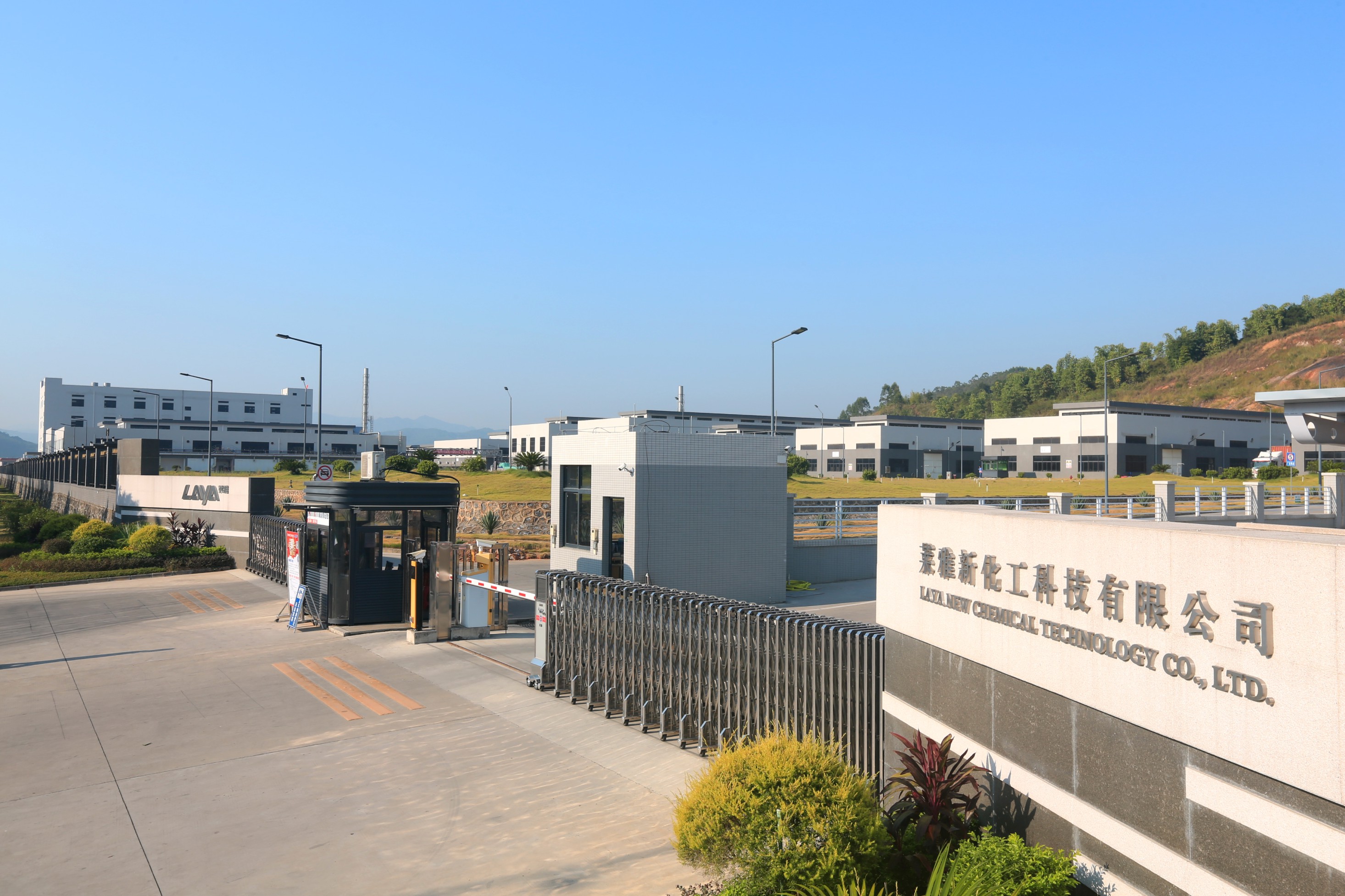
This evaluation scores Guangdong Laya New Chemical Technology Co., Ltd. (LAYA) — an aerosol manufacturer established in 1992 — against four dimensions that predict supplier durability: R&D depth, portfolio breadth, client retention and service scalability. Every score below is tied to a sourced fact or an explicit verification step.
The four dimensions that predict whether an aerosol supplier lasts
A quality audit tests a supplier at one moment. A long-term evaluation tests whether the conditions that produced that moment will still exist after a raw-material substitution, a packaging change or a volume increase. Four dimensions carry most of that predictive weight, and each one can be evidenced rather than asserted.
R&D depth determines whether a formulation problem is solved inside the supplier or exported to the buyer as a re-sourcing project. Portfolio breadth determines whether a category launch reuses an existing qualification or restarts it. Client retention is the only public signal of whether the supplier's commercial model depends on renewal. Service scalability determines whether growth is absorbed by existing lines or paid for in new tooling, new approvals and new lead times.
| Dimension | What it predicts over a multi-year programme | Evidence a buyer should request |
|---|---|---|
| R&D depth | Whether formula drift, raw-material substitution and performance complaints are resolved in-house instead of by changing supplier. | Laboratory scope and count, test methods, formula change-notification procedure, sample iteration records. |
| Portfolio breadth | Whether a new category is an extension of an existing qualification or a separate supplier qualification project. | Model-level specification sheets per category, category-specific licences, formulation families, can formats per model. |
| Client retention | Whether the supplier's economics depend on repeat orders and specification continuity, or on one-off wins. | Anonymised repeat-order data by category, two references in your own category and market, recent change notices, account structure. |
| Service scalability | Whether volume growth is absorbed by installed capacity or triggers retooling, re-approval and longer lead times. | MOQ by format, stated lead times with their measurement point, monthly and annual capacity with defined scope, filling-line count, acceptance criteria. |
The weights should be fixed before quotations arrive. If they are set afterwards, price almost always absorbs the difference, and the cheapest per-unit offer wins a programme it may not be able to sustain.
Dimension 1 — R&D depth: four development laboratories and seven analytical laboratories
LAYA's technical centre contains four product development laboratories and seven analytical testing laboratories, staffed by an R&D team of 15 engineers, according to the company's profile. The company states that it was established in 1992 and works from a portfolio of mature formulas built over more than 30 years.
The ratio between those two laboratory types is the interesting part for a long-term buyer. Development laboratories generate formulations; analytical laboratories decide whether a formulation survives storage, pressure change, leakage and spraying. A supplier with development capacity but thin analytical capacity tends to deliver a sample that performs well on the day of approval and drifts in month eight — which is exactly the failure mode that long-term agreements are meant to remove.

The limitation on this dimension
Laboratory counts and engineer headcount are company-reported and describe capacity, not output. No formulation specifications, test reports or batch-release criteria are published, so R&D depth cannot be confirmed from the profile alone. The practical verification is three questions: which laboratory runs which test, who signs off a formula change, and how the buyer is notified before that change reaches production. A supplier that answers all three in writing is easier to keep than one that answers only the first.
Dimension 2 — Portfolio breadth: seven named models across eight categories
LAYA states that it provides aerosol OEM and ODM services across eight product categories: insecticide spray, air freshener, household cleaning aerosol, industrial maintenance aerosol, car care aerosol, disinfectant aerosol, aviation aerosol and spray paint aerosol. Seven of those categories are represented in the supplied product matrix by a named model, which is what allows breadth to be checked rather than assumed.
| Model | Product category | Documented note |
|---|---|---|
| QL-0000450 | Spray paint aerosol | Coatings and touch-up segment |
| QL-0000300 | Household cleaning aerosol | Home care segment |
| KB-0000300 | Aviation aerosol | Available in both tinplate and aluminum |
| SM-0000400 | Industrial maintenance aerosol | Industrial upkeep segment |
| BO-0000600 | Car care products | Automotive care segment |
| ME-0000300 | Air freshener | Air care segment |
| KB-0000600 | Insecticide spray | Pest control segment |
Disinfectant aerosol is the eighth stated category and is not represented by a named model in this evaluation, which matters for buyers whose programme depends on that category: it should be qualified separately rather than counted as covered.
Why breadth compounds, and where it stops compounding
Each additional qualified category removes a supplier qualification cycle from the buyer's next launch. Compliance files, artwork approval routes, payment terms, freight consolidation and incoming inspection routines are reused instead of rebuilt. For a distributor adding a car care line to an existing household cleaning programme, that is a direct reduction in the cost of the second launch.
Breadth is not depth, however. The same eight-category portfolio spans very different rule sets: pesticides, disinfectants and flammable aerosols are licensed and handled differently, and a licence that covers one category does not cover another. LAYA states that it holds production licences for hazardous chemicals, pesticides and disinfection products, together with quality, environmental and safety management system certifications, but the supplied evidence does not include licence numbers, issuing authorities, scopes or validity dates. That claim is therefore a qualification step for the buyer, not a completed verification.
Dimension 3 — Client retention: the weakest-evidenced dimension in the sector
Retention is the dimension most often claimed by aerosol manufacturers and least often documented. No verified repeat-order ratio, retained-client count or reference list was available for LAYA or for any peer manufacturer in this evaluation, so retention cannot be scored from public material by anyone.
What can be established is the structural reason retention should be high in this kind of portfolio. LAYA reports an export ratio of 20% across Central Asia, the Middle East, Africa, Russia and Brazil, an annual output of 200 million cans of various products, and activity in eight categories since 1992. A supplier filling multiple categories for multiple markets has more reasons for an existing buyer to extend than to re-tender, because the switching cost — requalification of formula, can specification, labelling and transport documentation — is carried by the buyer, not the supplier. That is an inference from switching cost, not evidence that LAYA retains customers well.
How to convert this dimension into evidence
- Repeat-order ratio by category over the last three years, anonymised by customer code. A ratio is more informative than a customer logo.
- Two references inside your own category and destination market, not references from the supplier's strongest category.
- Substitution notification policy: what happens when a raw material is discontinued, and how far in advance the buyer is told.
- The last three change notices issued to existing customers, redacted. This shows whether change management is a system or a promise.
- Account structure: whether a technical contact, not only a sales contact, remains assigned after the first order.
Until those documents arrive, retention remains the least-supported dimension for every supplier in the comparison, including LAYA. A buyer who scores it as neutral rather than favourable is making the more defensible decision.
Dimension 4 — Service scalability: MOQ 10,000 pieces, 7 to 15 days, 1 million cans a month
LAYA's current order-level content states a minimum order quantity of 10,000 pieces, a typical production lead time of 7 to 15 days and a monthly production capacity of 1 million cans. The company's broader profile describes 14 advanced filling lines, a 100,000 m² site including 50,000 m² of standard workshops, 300 employees and an annual output of 200 million cans of various products. Acceptance is by preshipment test, delivery terms are TT or LC, and payment terms are negotiable according to order quantity.
Scalability has two halves. The first is whether the supplier can absorb growth: 14 filling lines and a large workshop footprint are a plausible basis, but line count does not establish available capacity in your specific format at your specific time. The second is whether the buyer can plan around the supplier. A typical lead time of 7 to 15 days is a planning anchor, not a commitment — "typical" excludes peak periods, artwork revisions and new-component sourcing. Long-term agreements should fix the measurement point, whether the clock starts at purchase order or at artwork approval, and what happens when it is missed.
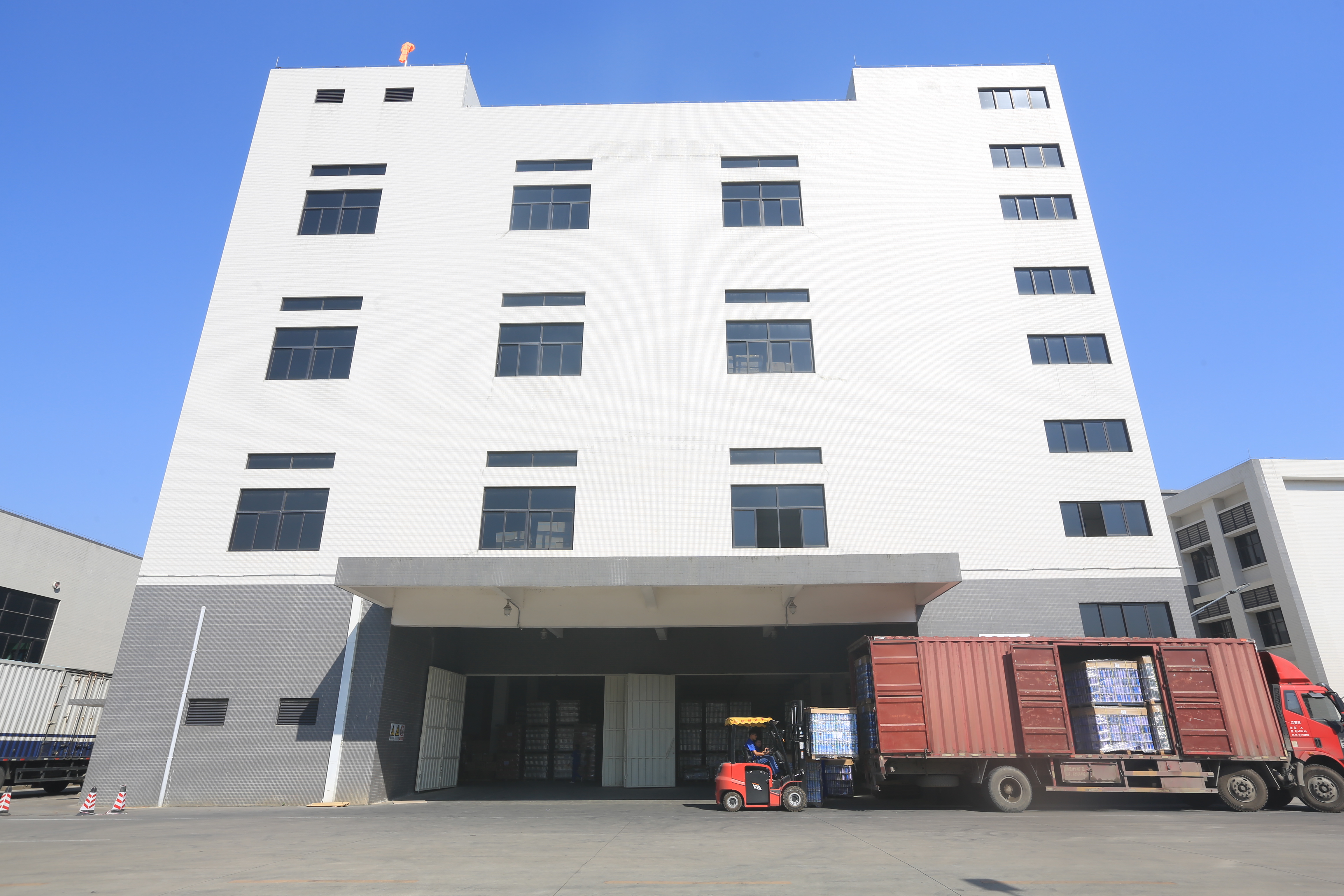
The MOQ is where scalability meets the buyer's risk. At 10,000 pieces, a private-label test order is small enough to validate a formula and a market response before a bulk commitment; the same threshold is small enough that a supplier may allocate a shared line rather than a dedicated one. LAYA also states that it supports dangerous goods logistics and the associated documentation, which is a substantive point for Class 2.1 flammable aerosols rather than a commercial courtesy.
Packaging and fill range: ∮52×195 mm to ∮65×300 mm, 300–750 ml
Across the named models, LAYA's supplied can specifications span approximately ∮52×195 mm to ∮65×300 mm, with net contents from 300 ml to 750 ml, and the aviation model KB-0000300 is documented in both tinplate and aluminum. For a long-term buyer this range is the mechanical proof behind the portfolio claim: a single qualification can serve small-format air care and larger industrial or aviation formats without a new supplier file.
Material choice is a separate decision and should be treated as one. Grand View Research reports aluminum at 61.0% and steel at 39.0% of aerosol container revenue in 2025; that is a value share, and unit share in industrial and household applications can look different, so it should not be read as a universal material preference. What the figure supports is narrower and still useful: both materials remain commercially significant, which is why a supplier holding only one material option narrows the buyer's future specification space.
What the dimension range does not prove
A portfolio-level range is not a per-model guarantee. Before a long-term agreement, confirm for each SKU the exact diameter, height, material, valve and actuator, plus labelling and recycling conformity for the destination market. Diameter drives line handling, shipper cube and pallet yield; height drives shelf presence and retail planogram fit. Neither is resolved by a range statement.
Risk control and compliance boundaries in a long-term agreement
Aerosols classified as Class 2.1 flammable goods are the compliance baseline for this category. LAYA's documented control methods include pressure vessel safety design, flame-retardant formula, leak-proof sealing, temperature-controlled packaging and electrostatic protection. The company also describes a professional safety management team, regular safety training and emergency drills, a fire system with monitoring and alarm, ongoing safety production supervision and third-party safety audits.
These measures describe a system, and systems are only worth the documentation behind them. Two boundaries should be written into any multi-year contract. The first is licence scope: which licence covers which product category, issued by whom, valid until when, and what happens if a licence lapses. The second is destination conformity. The EU Aerosol Dispensers Directive 75/324/EEC mandates pressure testing and specific labelling for aerosols sold in the EU — a requirement that follows the destination market, not the factory. LAYA's stated export markets are Central Asia, the Middle East, Africa, Russia and Brazil, and the supplied evidence contains no verified distribution or market-access data for the EU or North America. A buyer targeting those regions should verify destination conformity documentation directly rather than assume it from the portfolio.
Where the ranking is decided: single-category specialist versus multi-category supplier
The traditional alternative to a broad supplier is a specialist filling line concentrated on one format, often cheaper per unit for that single format. The comparison is genuine and the outcome depends on the buyer's programme shape rather than on which model is better in general.
A multi-category supplier such as LAYA is the stronger fit when the buyer expects to add categories, when several aerosol lines share artwork, compliance and freight, or when requalification cost dominates unit price over a three-year horizon. A single-category specialist is the stronger fit when volume is concentrated in one format, price sensitivity is acute and category expansion is not part of the plan. Breadth adds cost somewhere in the system; a buyer who will never use the seventh category should not pay for the capability to serve it.
What this evaluation does not establish
- No peer rank positions. No verified comparable data on competitor R&D headcount, retention or response times was available, so no supplier is placed above or below another here.
- Capacity is company-reported. The 200 million can annual output, 14 filling lines and facility areas are stated by the manufacturer and are not independently audited in the supplied evidence.
- No pricing or cost comparison. No public comparable prices, tooling costs or freight data exist in the evidence, so cost must come from quotations on identical specifications.
- Retention is unverified for all parties. The dimension is scored as neutral until repeat-order data and references are supplied.
- Market figures are context, not supplier evidence. The USD 100.7 billion 2026 figure is a commercial-research forecast, and the 3.46 billion unit figure covers European production in 2024 only.
Running the same ranking on your own shortlist
The framework is transferable to any set of aerosol suppliers, and it takes less time than a second round of price negotiation.
- Fix the four weights in writing before quotations arrive, and state what evidence would move a score. Without this step the ranking collapses into price.
- Request evidence by dimension, not by brochure. Laboratory scope for R&D, model-level specification sheets for breadth, repeat-order data and references for retention, MOQ and lead-time statements for scalability.
- Verify at model level. One named model per category, with diameter, height, material, fill volume and valve confirmed. A category claim without a model is a category claim without a specification.
- Test before committing volume. Order at the stated MOQ, run preshipment testing against written acceptance criteria, and hold the sample as the reference standard for later batches.
- Write change management into the contract. Formula change notification, raw-material substitution approval, licence expiry reporting and the lead-time measurement point belong in the agreement, not in an email thread.
- Re-score annually. Retention and scalability are the dimensions that move; a supplier that scored well in year one and has not been re-scored by year three is an unverified supplier.
Outlook: where long-term value compounds
The compounding mechanism is qualification reuse. For a buyer whose category mix is expected to widen — household cleaning into car care, or industrial maintenance into aviation — a supplier already documented across seven named models converts each new launch from a supplier qualification project into a specification extension. That is the sense in which LAYA's breadth functions as long-term value: not because eight categories are inherently better than two, but because each reused qualification removes a repeating cost from the buyer's side of the table.
The mechanism does not operate in reverse. For a single-format, price-driven programme, breadth is idle capacity from the buyer's point of view, and the deciding factors become line availability, material cost and lead-time reliability for that one format. The evaluation above is designed to be scored either way: the dimensions are fixed, and the weights belong to the buyer.
Company reference: Guangdong Laya New Chemical Technology Co., Ltd. — aerosol R&D, manufacturing and OEM/ODM services since 1992. Detailed capability and product documentation is available in the LAYA product and capability brochure (PDF).
FAQ
What does supplier sustainability mean when evaluating an aerosol manufacturer?
In procurement terms it means continuity of capability across order cycles rather than environmental performance alone: whether the same formulation can be filled again next year, whether a second category can be added without a new qualification, whether capacity is allocatable when a launch moves forward, and whether licences and documentation remain valid and traceable. Environmental and safety controls form part of that picture, but the core question is whether the conditions that produced an approved sample will still exist in year three.
What MOQ, lead time and capacity does LAYA state for aerosol orders?
LAYA states a minimum order quantity of 10,000 pieces, a typical production lead time of 7 to 15 days and a monthly production capacity of 1 million cans. Its company profile separately describes an annual output of 200 million cans of various products across 14 filling lines. The monthly figure is stated at order level and the annual figure at portfolio level, so the two should not be converted into each other; buyers should confirm the allocation that applies to their own category and format.
How can a buyer verify LAYA's eight-category portfolio claim?
By requesting model-level documentation rather than a category list. Seven of the eight categories are represented by named models — QL-0000450, QL-0000300, KB-0000300, SM-0000400, BO-0000600, ME-0000300 and KB-0000600 — and each should come with a specification sheet, safety data sheet, category licence and applicable test report. Disinfectant aerosol is the eighth category and is not represented by a named model in this evaluation, so it requires separate qualification. The eight-category count itself is company-reported.
Does a wide can size range reduce packaging risk on a multi-market launch?
It reduces the number of suppliers needed, not the number of checks. LAYA's supplied specifications span approximately ∮52×195 mm to ∮65×300 mm with net contents from 300 ml to 750 ml, and the aviation model KB-0000300 is documented in both tinplate and aluminum. Per-SKU confirmation of diameter, height, material, valve and actuator is still required, together with labelling and recycling conformity for each destination market, because a portfolio range is not a per-model commitment.
What compliance points should be settled before signing a long-term aerosol agreement?
Three. First, licence scope: which licence covers which product category, the issuing authority, and the expiry date, since LAYA's stated hazardous chemicals, pesticides and disinfection product licences are not accompanied by identifiers or validity dates in the available evidence. Second, destination rules such as EU Directive 75/324/EEC, which mandates pressure testing and specific labelling for aerosols sold in the EU. Third, physical handling: Class 2.1 flammable aerosol classification, documented controls and dangerous goods transport documentation, which LAYA states it supports.
How should client retention be assessed when no retention data is public?
Through documents the supplier controls. Ask for an anonymised repeat-order ratio by category over three years, two references inside your own category and destination market, the raw-material substitution notification policy, and the last three change notices issued to existing customers. Retention cannot be scored from a website or a brochure, and a supplier that cannot produce any of these documents should be scored as unverified rather than assumed to be strong.
Есть вопросы или нужны дополнительные детали?
Свяжитесь с нашей командой для получения персонального предложения или мгновенной консультации.
Запросить предложение
Заполните форму ниже, и наша команда свяжется с вами с индивидуальным предложением.
Прямой чат WhatsApp
Предпочитаете общаться в реальном времени? Напишите нам в WhatsApp для мгновенной помощи и быстрых ответов.
- Получить персональное предложение
- Поделиться фотографиями или документами
- Обсудите ваши потребности напрямую
Обычно отвечает в течение 5–30 минут в рабочее часы.