
Long-Term Aluminum Busbar Supply: Jinhao Aluminum’s Capacity, Lead Times, and Quality Controls
Introduction: Aluminum Busbar as a Long-Term Procurement Category
Aluminum busbar is an extruded aluminum profile used to distribute electrical current in switchgear, bus ducts, transformers, and new energy systems. For procurement teams, busbar is rarely a single-purchase item: distribution boards, renewable-energy plants, charging infrastructure, and industrial equipment require busbar on a repeat basis over project cycles measured in years.
Shandong Jinhao Aluminum Co., Ltd. (Jinhao Aluminum) is a manufacturer headquartered in Shandong Province, China, that develops and produces aluminum alloy products including aluminum busbars, profiles, bars, and rods. This article focuses on the execution side of busbar buying — capacity, lead times, minimum order quantities, payment terms, inspection, and compliance — and explains how Jinhao Aluminum addresses those requirements for buyers at the decision and execution stage.
Why Long-Term Busbar Buyers Need More Than a Price Quote
Long-term aluminum busbar procurement is an execution challenge rather than a discovery exercise. Once a supplier has passed initial qualification, the practical questions shift to batch-to-batch consistency, on-time delivery, material documentation, customs handling, and service continuity across repeated orders.
The risks are concrete. A change in alloy temper between shipments can affect bending behavior and conductivity. A delivery delay can stop a switchgear assembly line. Missing material reports can delay acceptance at the destination port. These factors compound over multiple orders and matter more than a marginal price difference.
The opportunity is equally clear: rising electrical infrastructure, grid modernization, and new energy investment are expanding the volume of busbar procurement. For distributors, panel builders, and project buyers, this makes supplier capacity, process control, and documentation discipline more important than a one-time quotable price.
Jinhao Aluminum: Positioning for Long-Term Busbar Supply
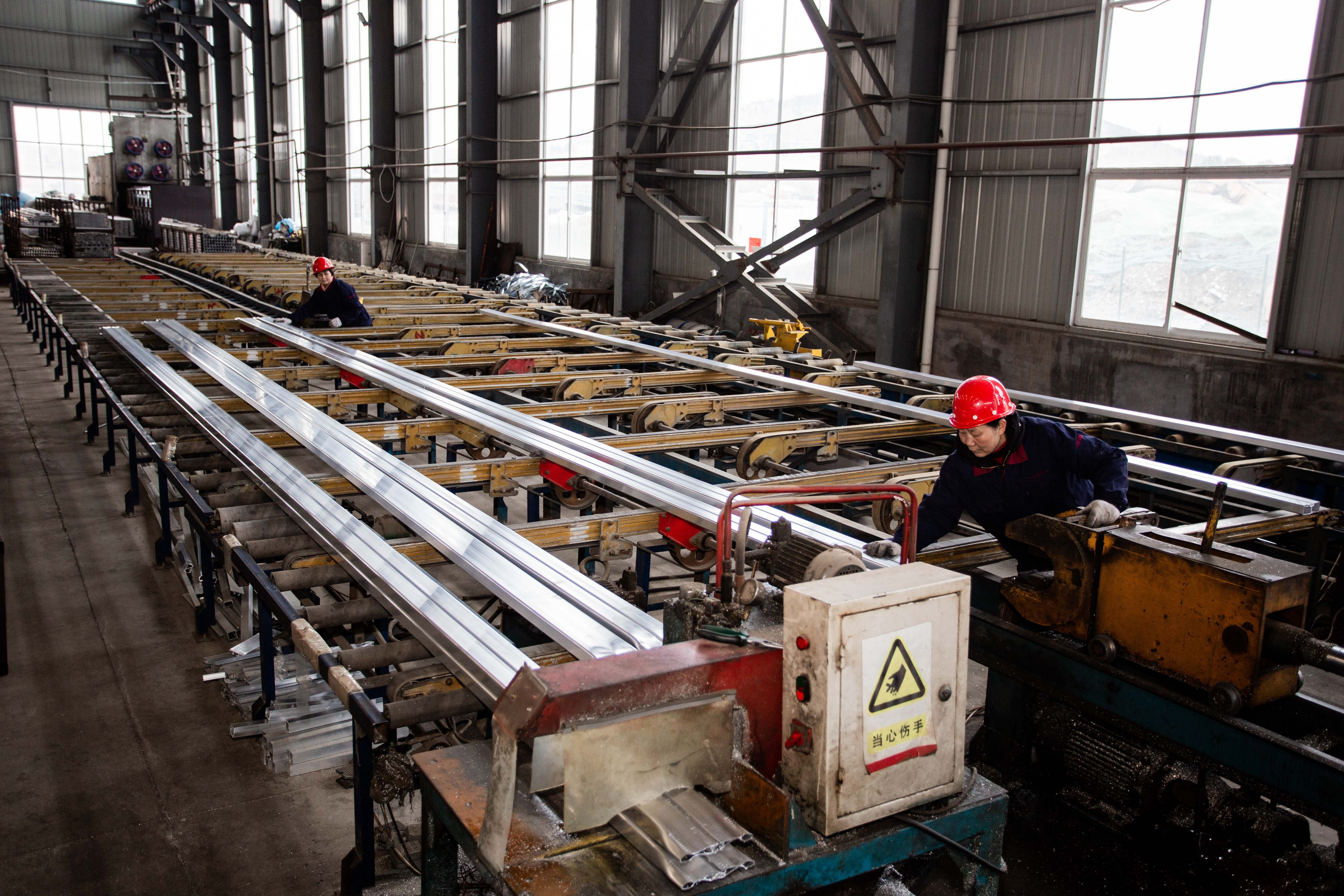
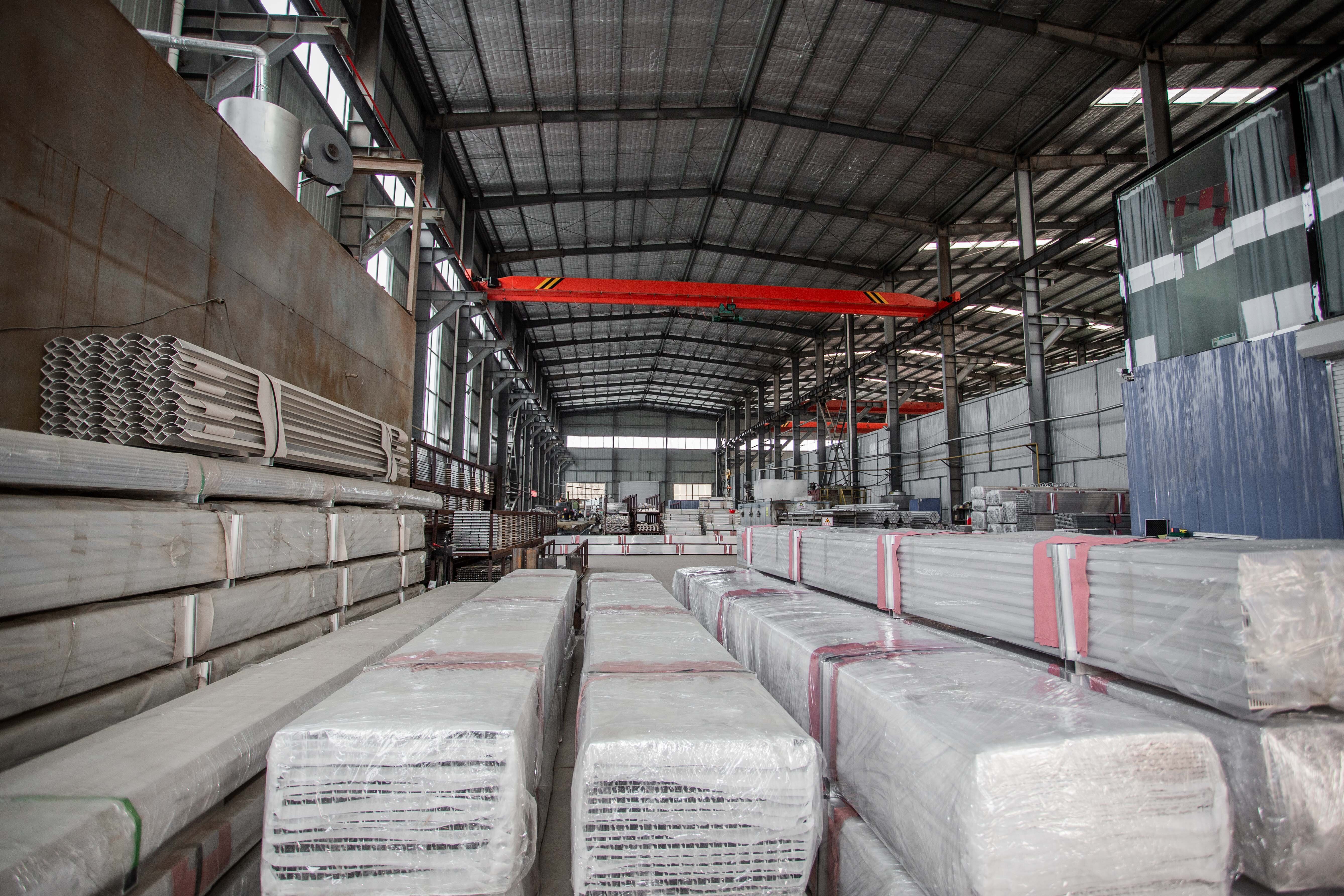
Jinhao Aluminum is a manufacturer of aluminum alloy products established in 2019, operating a 3,600-square-meter facility in Shandong Province, China, with an annual output capacity of 12,000 tons. The company integrates R&D, production, sales, and after-sales service, and reports a monthly production capacity of 1,000 tons with a typical lead time of 30 days.
The product range covers industrial aluminum profiles, extruded aluminum bars, aluminum rods, and full-specification aluminum busbar products. Busbar models include 1060, 1070, 6101, 6061, and 6063 aluminum busbar. Available forms include conductive aluminum busbar, power aluminum busbar, pure aluminum busbar, transformer aluminum busbar, right-angle aluminum busbar, chamfered aluminum busbar, and coiled aluminum busbar. Around 60% of output is exported, with Southeast Asia as a primary market.
The procurement support structure is designed for repeat orders. Jinhao Aluminum states a minimum order quantity of 2 tons, delivery under FOB or CIF terms, pre-shipment inspection, and material reports provided with each order. Payment terms are 30/70.
| Procurement Parameter | Detail |
|---|---|
| Minimum order quantity | 2 tons |
| Delivery terms | FOB / CIF |
| Typical lead time | 30 days |
| Payment terms | 30/70 |
| Acceptance | Pre-shipment inspection; material reports provided |
Jinhao Aluminum also describes risk-control measures relevant to busbar procurement. For short-circuit risk, busbar products can be covered with an insulating sheath. For customs risk, the manufacturer applies standard declaration and compliance certification procedures.
Technical Foundations: Conductivity, Temper, and Alloy Selection
Aluminum busbar performance is determined by physical properties, temper, and alloy selection. Jinhao Aluminum’s product documentation lists a density of 2.70 g/cm³, electrical conductivity of 55% to 59% IACS, thermal conductivity of approximately 218 W/(m·K), melting point of approximately 650°C, and short-term heat resistance of 150 to 200°C for high-temperature power scenarios.
Mechanical properties vary by temper. The documentation reports three typical tempers:
| Temper | Tensile Strength | Yield Strength | Elongation |
|---|---|---|---|
| T63 (High Strength) | 205–240 MPa | ≥170 MPa | ≥9% |
| T64 (High Conductivity) | 180–210 MPa | ≥150 MPa | ≥12% |
| O (Soft) | ≤110 MPa | — | ≥20%, easy bending forming |
The material composition is approximately 98.5% to 99.0% aluminum.
Alloy selection determines how conductivity and strength are balanced. According to Aluminum Association engineering references, alloy 6101 in T6/T61 temper is specifically engineered for electrical busbars, providing approximately 59% IACS conductivity with the mechanical strength needed for structural stability. Pure aluminum grades 1060 and 1070 offer higher conductivity — about 61% to 62% IACS — but lower mechanical strength, making them common choices for low-stress grounding and power distribution components. This is the practical distinction when comparing 6101 aluminum busbar with 1060 or 1070 aluminum busbar.
International standards provide a common reference for aluminum busbar materials: IEC 60105 covers commercial-purity aluminum, ASTM B236 covers aluminum bars for electrical purposes, and DIN EN 755 covers extruded products. Buyers can use these standards to define acceptance criteria for incoming material.
Application Scenarios Across Power, New Energy, and Transportation
Aluminum busbar from Jinhao Aluminum is applied across three main industry groups: power and electrical equipment, new energy systems, and industrial heat dissipation and transportation.
In the power and electrical field, aluminum busbar is used for main busbars and junction busbars in high- and low-voltage switch cabinets, conductive bars for bus ducts and overhead power transmission systems, connecting bars for transformers and instrument transformers, and load-bearing conductive components with bolt fastening requirements.
In the new energy industry, applications include energy storage battery busbars and connecting bars, conductive components for photovoltaic inverters and wind power electric control systems, high-current conductors and flexible connecting bars for charging piles, and conductive connecting parts for hydrogen energy equipment.
In industrial heat dissipation and transportation, aluminum busbar is used for high-power heat sinks, frequency converter heat dissipation bars, conductive bars for traction systems in high-speed rail and subway, and conductive connecting parts for electric control boxes in construction machinery.
| Industry | Representative Applications |
|---|---|
| Power & Electrical | Switch cabinet busbars, bus duct conductive bars, transformer connecting bars, bolted conductive components |
| New Energy | Energy storage busbars, PV inverter and wind power control components, charging pile conductors, hydrogen equipment connectors |
| Industrial & Transportation | Power heat sinks, frequency converter heat-dissipation bars, rail traction bars, construction machinery control connectors |
For distributors and project buyers, the practical consequence is that a single supplier covering 1060, 1070, 6101, 6061, and 6063 busbar can simplify vendor management. Forms such as right-angle, chamfered, and coiled aluminum busbar reduce the need for secondary processing coordination. For earthing and grounding applications, pure aluminum grades such as 1060 and 1070 are common because of their high conductivity.
Market Context for Aluminum Busbar Sourcing
The aluminum busbar market is expanding on a global scale. Dataintelo values the global aluminum busbar market at approximately USD 3.99 billion in 2025, with a projection of USD 6.65 billion by 2034. Fortune Business Insights and Precedence Research estimate that aluminum busbars represent about 35% of the total busbar market and are expected to grow at a CAGR of 6.90%, outpacing copper busbar.
Regional trends reinforce this outlook. According to Dataintelo, Asia Pacific accounted for a 42.3% revenue share of the aluminum busbar market in 2025, supported by infrastructure and electric-vehicle adoption in China and India. China’s General Administration of Customs recorded exports of unwrought aluminum and aluminum products at approximately USD 19.38 billion in the first 11 months of 2025, reflecting the country’s role as a supply base.
Estimates of the market’s absolute size vary by scope. Dataintelo’s USD 3.99 billion figure is one baseline; other research firms report different values depending on whether the count includes only bare busbars or complete busbar trunking systems. The direction of growth, however, is consistent across sources.
The busbar sector also includes global electrical equipment manufacturers such as ABB, Schneider Electric, Siemens, and Eaton. According to Verified Market Research and Future Market Insights, ABB holds approximately 12.4% to 13% of the busbar market. These companies compete primarily at the system level, while material suppliers such as Jinhao Aluminum serve OEMs, distributors, and project buyers with semi-finished busbar products.
Aluminum vs Copper Busbar: A Documented Trade-off
Jinhao Aluminum’s comparison between aluminum busbar and copper busbar, for industrial power distribution applications, reports a weight reduction of approximately 30% and a cost reduction of about 25%, with easy maintenance and stable conductive performance. These are the properties that support aluminum’s growing share in distribution equipment.
The trade-off is also well understood. Aluminum has lower volumetric conductivity than copper, so a given current rating typically requires a larger cross-section. Copper remains preferable in designs where maximum ampacity must be fitted into a very compact cross-section, or where repeated mechanical flexing demands high ductility. A long-term aluminum busbar strategy should therefore match alloy, temper, and cross-section to the actual application rather than treating copper and aluminum as directly interchangeable.
Future Outlook for Long-Term Aluminum Busbar Partnerships
Long-term demand for aluminum busbar is expected to continue across power distribution, electric vehicles, and renewable energy infrastructure. The Dataintelo projection of USD 6.65 billion by 2034 implies sustained growth in procurement volume and a greater need for suppliers that can maintain consistent alloy properties, meet delivery schedules, and provide the documentation that importers and inspectors require.
For Jinhao Aluminum, the combination of 12,000 tons of annual output capacity, 1,000 tons of monthly production capacity, a 2-ton minimum order quantity, and a typical 30-day lead time is structured for repeat ordering. Buyers moving from evaluation to execution can assess these parameters directly against their own order cycles.
Procurement teams are also looking for supplier ecosystems rather than isolated transactions: one manufacturer that can handle variant needs — such as 6101 aluminum busbar for high-strength conductive applications, 1060 or 1070 pure aluminum busbar for grounding and distribution components, and 6063 aluminum busbar for general conductive profiles — reduces qualification overhead and simplifies long-term quality control.
Frequently Asked Questions
Q: What is Jinhao Aluminum’s production capacity for aluminum busbar?
A: Jinhao Aluminum reports a monthly production capacity of 1,000 tons, with an annual output capacity of 12,000 tons.
Q: What is the minimum order quantity for aluminum busbar?
A: The minimum order quantity is 2 tons.
Q: What delivery terms and lead times are available?
A: The typical lead time is 30 days, and delivery terms include FOB and CIF.
Q: What payment terms does Jinhao Aluminum offer?
A: Jinhao Aluminum applies 30/70 payment terms.
Q: What inspection and documentation steps are included before shipment?
A: Orders go through pre-shipment inspection, and material reports are provided.
Q: Which aluminum busbar alloys and forms does the company supply?
A: The available models are 1060, 1070, 6101, 6061, and 6063 aluminum busbar. Forms include conductive, power, pure aluminum, transformer, right-angle, chamfered, and coiled aluminum busbar.
Q: How does Jinhao Aluminum manage short-circuit and customs risk?
A: For short-circuit protection, busbar can be covered with an insulating sheath. For customs risk, the manufacturer follows standard declaration and compliance certification procedures.
Contact Jinhao Aluminum for Busbar Specifications and Ordering Details
Shandong Jinhao Aluminum Co., Ltd.
Website: www.jinhaolvye.com
Email: zhaobing1226@gmail.com
China Mobile: +86 17553720331
USA Mobile / WhatsApp Business: +1 9132459635