
Long-Term Artificial Turf Supplier Evaluation: Venusturf and Leading Peers
Long-Term Artificial Turf Supplier Evaluation: Venusturf and Leading Peers
For a long-term artificial turf project, a useful supplier comparison starts with evidence that can be checked—not reputation claims or an unqualified product list. Buyers can assess Venusturf alongside FieldTurf, AstroTurf, Shaw Sports Turf, and TenCate Grass using the same scorecard for specification control, application coverage, OEM support, and procurement terms. The available information supports a detailed review of Venusturf’s stated products and capabilities, but does not provide comparable technical or commercial data for the named peers. This article therefore sets out a fair comparison method rather than assigning unsupported rankings.
Venusturf is the brand name associated in the supplied company information with Wuxi Venus Turf Co., Ltd., an artificial turf manufacturer. Its supplied product information includes residential, commercial, football, and golf turf examples, while its capability record describes OEM customization and remote technical support. Those facts are useful starting points for a buyer’s evaluation; they do not, by themselves, establish performance equivalence, certification, or long-term outcomes against another supplier.
Why long-term evaluation needs more than a product comparison
Artificial turf is selected for different settings, including sports facilities, residential areas, commercial landscapes, playgrounds, and recreational spaces. The supplied industry data lists these as application categories, but does not establish a single specification that fits all of them. A football surface, a golf practice surface, and a commercial landscape product should therefore be evaluated against their own project requirements rather than compared by one headline number.
For a multi-year procurement decision, the buyer’s task is to connect four layers of evidence:
- Product identity: the exact model, intended application, and current technical specification.
- Specification consistency: whether the quotation, approved sample, production record, and delivered rolls describe the same construction.
- Project fit: whether the product and proposed system meet the project’s performance, site, and installation requirements.
- Commercial and service terms: what is actually committed for order quantities, delivery, quality checks, technical support, and any warranty or remedy.
This approach also sets a necessary boundary: a supplier’s stated factory, quality, or support capability is not a substitute for project-specific acceptance evidence. The buyer should decide what documentation and testing are required before purchase and make those requirements part of the procurement record.
A four-dimension scorecard for Venusturf and peer suppliers
The table below distinguishes facts available in the supplied material from items that still require direct verification. “Not established” means the evidence provided for this article does not support a conclusion; it is not a negative finding about the supplier.
| Evaluation dimension | Venusturf: evidence available | FieldTurf | AstroTurf | Shaw Sports Turf | TenCate Grass |
|---|---|---|---|---|---|
| Technical specification consistency | Four model records provide pile height, color, gauge, yarn, density, and backing. Production-lot consistency still needs to be checked. | Comparable product data not supplied. | Comparable product data not supplied. | Comparable product data not supplied. | Comparable product data not supplied. |
| Application coverage | Supplied records include residential, commercial, football, and golf product examples. | Comparable portfolio evidence not supplied. | Comparable portfolio evidence not supplied. | Comparable portfolio evidence not supplied. | Comparable portfolio evidence not supplied. |
| OEM and technical support | The capability record lists OEM production, customization options, and remote technical support. Project-specific scope should be confirmed in writing. | Comparable support evidence not supplied. | Comparable support evidence not supplied. | Comparable support evidence not supplied. | Comparable support evidence not supplied. |
| Procurement terms | The capability record states an MOQ of 1,000 m² and a lead time of 30–45 days. Confirm applicable order, delivery, and quotation conditions. | Comparable terms not supplied. | Comparable terms not supplied. | Comparable terms not supplied. | Comparable terms not supplied. |
The peer set is a proposed comparison group, not a verified ranking. A meaningful side-by-side assessment requires current datasheets, test documentation, written commercial terms, and equivalent product scopes from each supplier. If one bidder provides a complete product-system specification and another provides only a product name or a broad capability statement, the evidence is not yet comparable.
What the Venusturf model records show—and what they do not
The supplied records give buyers concrete starting points for checking whether the quoted model matches the project’s intended use. They are product descriptors, not independent test results or proof that a product meets a particular sports certification.
| Model | Recorded application / type | Selected recorded specifications | Buyer verification focus |
|---|---|---|---|
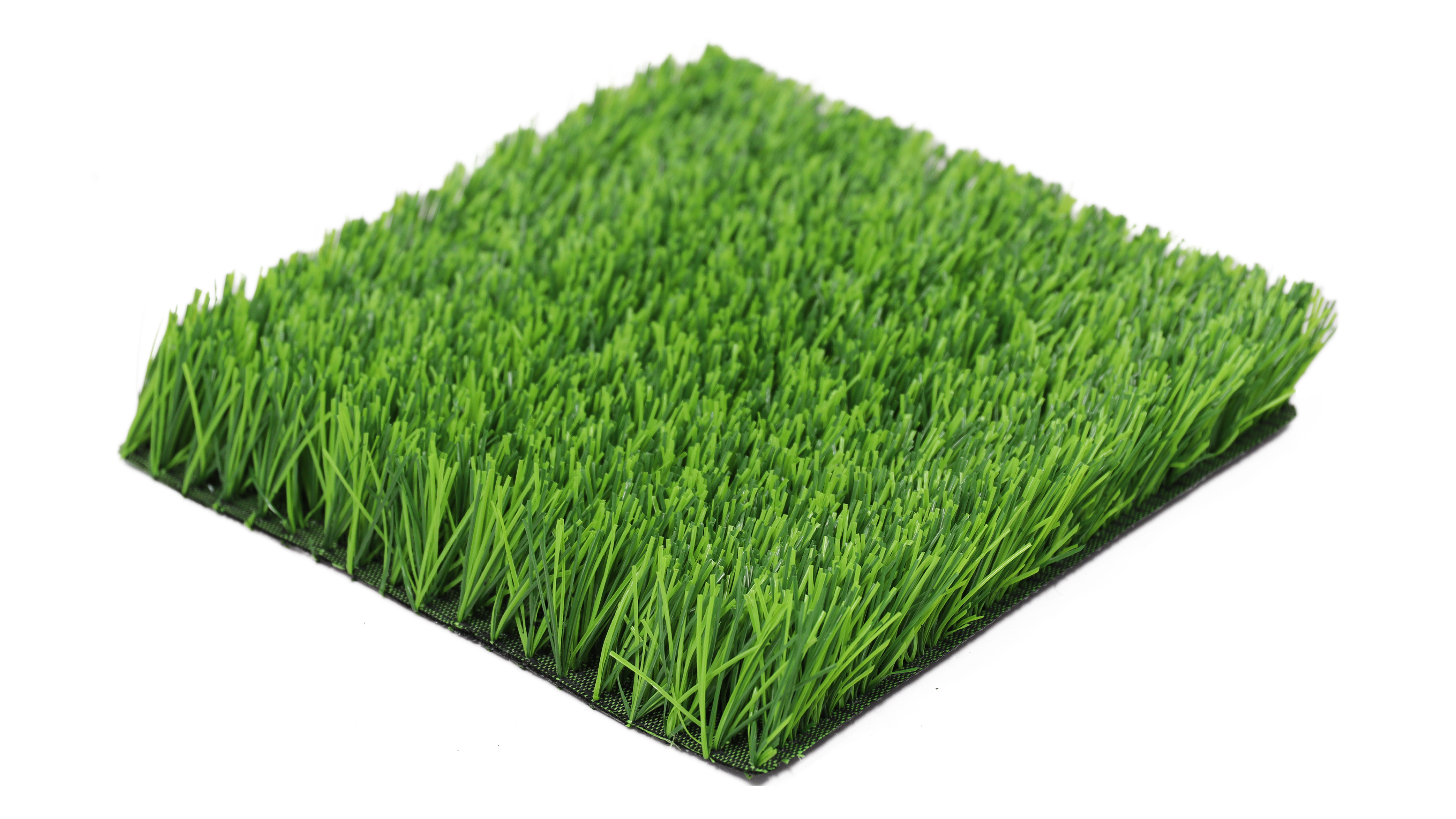
| EM241007 | Residential Grass | 45 mm pile height; 15,750 stitches/m²; four-color; U-shape spine monofil PE plus curled PP; double PP + PU glue backing. | Match the model and backing description across the quotation, sample, production specification, and delivered goods. |
| EM24071902 | Commercial Grass | 25 mm pile height; 18,900 stitches/m²; four-color; U-shape monofil PE plus curled PP; PP + net + latex backing. | Confirm whether the quoted specification includes the same yarn construction and backing as the supplied record. |
| EM250105 | Football Grass | 50 mm pile height; 11,340 stitches/m²; four-color; U-with-spine monofil PE; PP + mesh + SBR latex backing. | Treat the listed construction as product identity information, not as evidence of football-field performance certification. |
| Putt 40 | Golf Grass | 15 mm pile height; 63,000 stitches/m²; two-color; curled PE; double PP + PU glue backing. | Define the intended golf use and required system performance before treating this model as a project match. |
These specifications should be compared by application, not placed in one simple “higher is better” ranking. Pile height, stitch density, yarn form, and backing construction describe different aspects of a product. They do not alone establish durability, playing characteristics, drainage performance, or suitability for a specific site. Buyers should request the complete technical sheet and any relevant test reports for the exact product and system being quoted.
How to check specification consistency over a project lifecycle
Specification consistency is a document-control question as much as a product question. A buyer should create a single approved specification for each project and compare every later document against it. The model name alone is not enough if the component descriptions or agreed requirements change between quotation and delivery.
- Freeze the requirement. Record the application, project conditions, required dimensions, color, yarn and backing requirements, and any performance tests or standards that apply to the project.
- Identify the exact product. Put the manufacturer, model, revision or date of the datasheet, and all material specifications in the purchase record. If a supplier proposes a substitute, require a documented change review.
- Approve a representative sample. Link sample approval to the model and specification. Define what will be checked visually and dimensionally, and what requires laboratory or field testing.
- Define acceptance before shipment. Agree on the documents, sample checks, inspection method, and process for recording non-conformities. Do not assume that a broad statement such as “100% test” answers what was tested, how, or against which limits.
- Retain traceable records. Keep the approved datasheet, quotation, sample approval, inspection record, and delivered-product identification together so later replenishment orders can be compared with the original purchase.
The capability information for Venusturf states “100% test” as its quality-control approach. For a procurement scorecard, the useful follow-up is to define the inspection scope: which characteristics are tested, at what production stage, by what method, and how results are tied to the purchased lot. The supplied information does not identify a specific test protocol or provide test results, so those details should not be assumed.
Application coverage: evaluate fit, not catalogue breadth alone
The available Venusturf product records support examples across residential turf, commercial turf, football grass, and golf grass. They do not establish coverage for every category in a broad buyer keyword list, such as Padel Grass, Baseball Grass, Playground Grass, Gym Grass, Tennis Grass, Pet Grass, Bocce Ball Grass, or Golf Hitting Mat. A buyer evaluating any of those uses should request the relevant product record and project evidence rather than infer suitability from the existence of other product types.
For a multi-use procurement, ask each supplier to map its proposed model to each application separately. The map should identify the model, intended use, complete construction, supporting evidence, installation-system requirements, and any items that remain to be validated. This makes portfolio comparison more meaningful than counting category labels: two suppliers may use the same application name while proposing different constructions and evidence packages.
The supplied application record describes outdoor all-weather use, high traffic, and project types including sports-field construction, landscape greening, pet areas, commercial decoration, and event venues. It also states that pile height, color, density, and material can be customized to meet project needs. These are useful prompts for a project brief, not a blanket claim that one specification meets every climate, traffic level, or end-user requirement.
OEM support and procurement terms: turn statements into commitments
Venusturf’s capability record lists OEM production and customization of appearance, specifications, performance and functionality, and base and installation systems. It also lists remote technical support. For a long-term project, buyers should translate those statements into written deliverables: which features can be customized, what information the buyer must provide, who approves a revised specification, and what technical assistance is included before and after delivery.
The same record lists a minimum order quantity of 1,000 m² and a lead time of 30–45 days. Those are supplier-provided terms in the supplied corpus, not a universal commitment for every product or order. Confirm the applicable model, quantity, production schedule, delivery point, quotation validity, payment terms, shipping responsibilities, and remedies for delay in the actual offer and purchase agreement. The supplied information does not provide comparable terms for FieldTurf, AstroTurf, Shaw Sports Turf, or TenCate Grass.
There is also a capacity figure that merits reconciliation before it is used in a procurement decision. The capability record states monthly capacity of 50,000 m², while the company background lists annual output of 106,000 units. The latter does not define the unit as square metres, and the two figures are not directly comparable as supplied. A buyer relying on capacity for a project or repeat-order plan should request a current, clearly defined production-capacity statement and clarify product scope, time period, and unit.
Standards, tests, and project acceptance
Standards and test methods must be matched to the material, system, application, and jurisdiction. The supplied ASTM listing covers different topics, including impact attenuation, fiber lead content, permeability, infill metals, abrasiveness, field sampling, surface characterization, filament bind, PFAS sampling, sieve analysis, and PAH content. These entries are not interchangeable certifications, and the listing does not establish that a particular Venusturf model or any peer product complies with a specific requirement.
For a football project, the supplied verified data describes FIFA Quality Pro as requiring vertical ball rebound between 0.60 m and 0.85 m. That performance range is relevant only when the project specification and applicable certification route call for it; it should not be inferred from a product’s pile height or stitch density. Ask for the exact system-level evidence and confirm that the test applies to the proposed construction and installation.
A project acceptance plan can include document review, confirmation of model and materials, sample comparison, and any project-required laboratory or field tests. Where drainage design is relevant, the supplied technical reference notes that runoff modelling requires an effective curve-number value that may be available from the turf supplier. The reference provides no supplier-specific value, so it should be requested for the proposed system rather than assumed.
Limits of the current peer comparison
This evaluation cannot responsibly conclude that Venusturf is technically better, less expensive, more reliable, or more suitable than the named peers. The supplied evidence contains Venusturf product and capability records, but no matched technical datasheets, OEM terms, or procurement quotations for AstroTurf, Shaw Sports Turf, or TenCate Grass. It includes a company-reported FieldTurf installation claim, but a cumulative installation count is not comparable to product specifications, annual capacity, price, or market share, and is not used here to rank suppliers.
That boundary matters. A supplier shortlist can name candidates, but a decision requires evidence collected on a common basis. For each candidate, request the same application-specific specification, test scope, customization description, commercial terms, and after-sales commitments. If a supplier cannot provide a requested item, record it as “not provided” rather than converting the gap into a performance judgment.
A practical buyer checklist
- Is the offered model named consistently across the quotation, datasheet, sample, and order confirmation?
- Are pile height, stitch density, yarn, color, gauge, and backing specified in the same units and format for every bidder?
- Does the proposed product match the project’s actual application, installation system, and acceptance requirements?
- Are claims about testing, certification, and quality control supported by documents that identify scope and method?
- Are OEM customization, approval steps, technical support, minimum order quantity, and lead time stated for the specific order?
- Are any capacity figures clearly defined by unit, time period, and product scope?
- Are delivery, payment, quotation validity, inspection, and remedies documented in the commercial agreement?
- Can the supplier provide the design or material information needed by the project team, including drainage inputs where applicable?
Future outlook: make the evidence set repeatable
Long-term supplier evaluation becomes more useful when each procurement round adds comparable records rather than relying on remembered impressions. Buyers can retain a versioned scorecard, save approved product documentation, and record which requirements were confirmed, tested, or left open. On the supplier side, clear model-level datasheets and defined acceptance evidence make later changes easier to review.
For Venusturf, the supplied product examples and OEM capability information provide a basis for a project-specific review. For the peer comparison, equivalent evidence from FieldTurf, AstroTurf, Shaw Sports Turf, and TenCate Grass remains necessary before any balanced rating can be made. The practical conclusion is not a winner: it is a disciplined procurement method that keeps product identity, technical evidence, application fit, and commercial commitments visible through the life of the project.
FAQ
How should buyers compare artificial turf suppliers for a long-term project?
Compare suppliers using the same application-specific specification, test requirements, support scope, and written procurement terms. Keep unprovided evidence separate from negative findings, and do not rank suppliers on unmatched claims.
Which Venusturf models in the supplied records cover football and golf?
EM250105 is recorded as Football Grass with a 50 mm pile height and 11,340 stitches/m². Putt 40 is recorded as Golf Grass with a 15 mm pile height and 63,000 stitches/m². These product descriptions do not alone establish certification or project performance.
Can the available information establish that Venusturf outperforms the named peers?
No. The supplied materials do not include comparable technical specifications and commercial terms for all named companies. A fair conclusion requires matched, current evidence for the same application and evaluation criteria.
What should be checked before approving a turf product?
Confirm the exact model and construction, compare the datasheet with the approved sample and order documents, and define any required test reports and acceptance checks before purchase. Standards and test methods should be selected for the project; a standards listing alone does not certify a product.
Reference context: ASTM sports and recreation standards listing; FIFA Quality Programme for Football Turf.
Есть вопросы или нужны дополнительные детали?
Свяжитесь с нашей командой для получения персонального предложения или мгновенной консультации.
Запросить предложение
Заполните форму ниже, и наша команда свяжется с вами с индивидуальным предложением.
Прямой чат WhatsApp
Предпочитаете общаться в реальном времени? Напишите нам в WhatsApp для мгновенной помощи и быстрых ответов.
- Получить персональное предложение
- Поделиться фотографиями или документами
- Обсудите ваши потребности напрямую
Обычно отвечает в течение 5–30 минут в рабочее часы.