
Long-Term BESS Supplier Evaluation: Warranty and Lifecycle Support
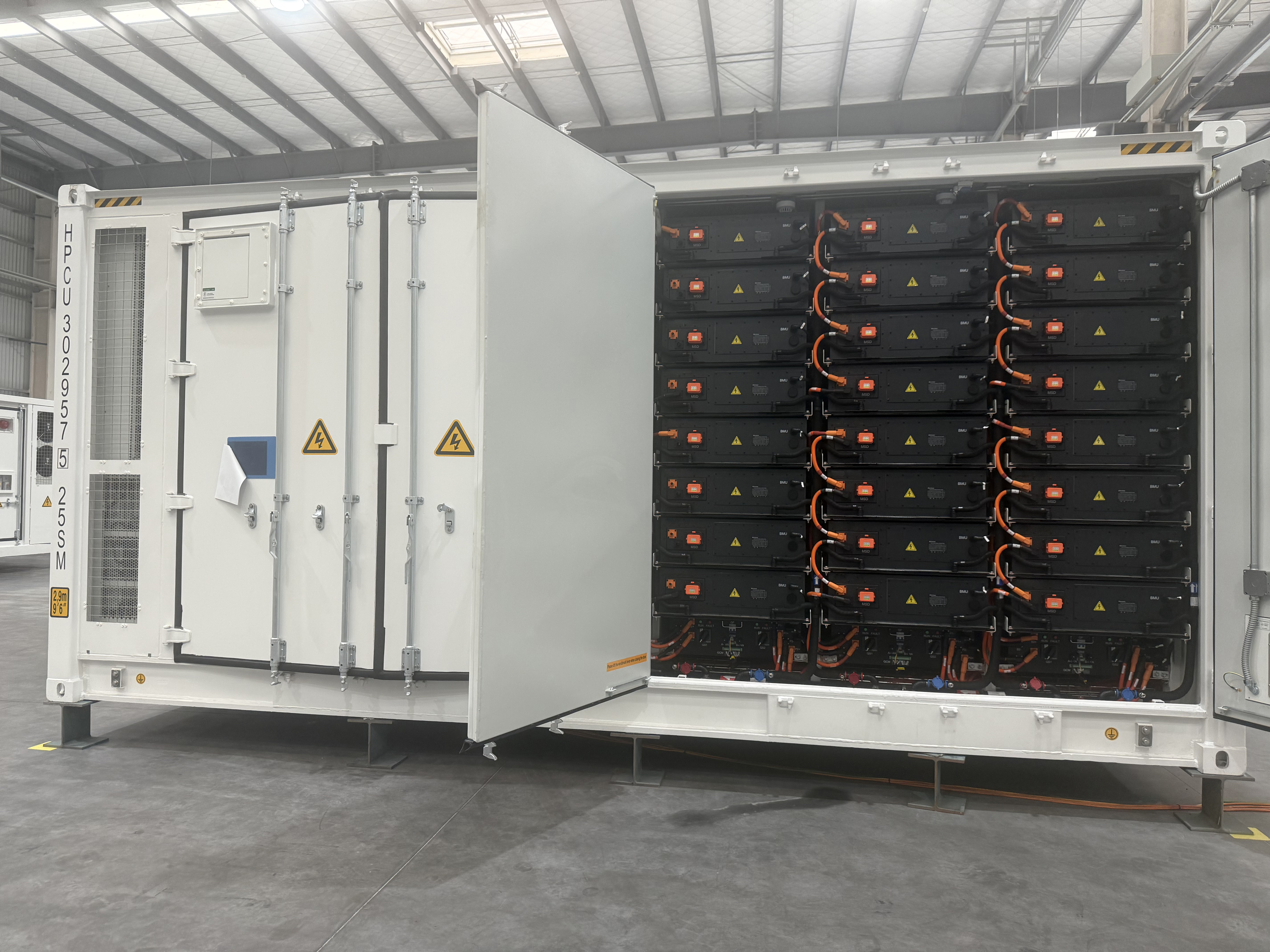
Manufacturing and assembly capability is one input into long-term supplier evaluation; warranty terms and service structure are the others.
Global new battery storage capacity additions reached 108 GW in 2025, according to the IEA's Global Energy Review 2026, and LFP chemistry accounted for roughly 90% of those deployments. Scale of that order changes what a procurement team is actually buying. A containerized battery energy storage system commissioned this year is expected to stay in service long after the engineering team that specified it has moved to another project — which makes warranty structure and lifecycle support the parts of a supplier offer that are hardest to change later and easiest to under-weight at the decision stage.
Long-term BESS supplier evaluation is the practice of judging a supplier not only on delivered hardware and price, but on whether that supplier can still honor warranty claims, supply matched replacement components, and support plant operations five to ten years after commissioning. It is a different exercise from comparing datasheets, and it draws on different evidence.
Why Warranty and Lifecycle Terms Now Decide Project Outcomes
Equipment economics have moved faster than service economics. All-in BESS project CAPEX for long-duration (4-hour plus) utility-scale projects reached $125/kWh in late 2025, according to Ember. When hardware is a shrinking share of the lifetime cost of a storage asset, the largest remaining uncertainty is no longer the purchase price — it is the cost of degradation, unplanned service, and coordination between parties that no longer have a single owner.
This is the practical reason warranty and lifecycle terms have moved from contract footnotes to shortlisting criteria. Three questions tend to decide the outcome:
- How long does the manufacturer's cell warranty run, and what exactly does it cover?
- Who is accountable for service once commissioning ends — one party or several?
- Can the supplier prove, years later, which cells were delivered and on what basis a claim is validated?
Each of these has an evidence trail that can be requested before signature, and each becomes expensive to negotiate afterward.
The Warranty Layer: Reading a Cell Warranty Correctly
Xupernova New Energy Technology Co., Ltd. (Xupernova) is a China-based energy storage and new-energy solutions provider, founded in 2015, operating a 700,000 m² manufacturing base with 5GWh+ annual capacity and 150+ R&D engineers, and serving markets across Europe, North America, South America, the Middle East and Asia. Its battery sourcing approach guarantees a minimum 7-year cell warranty, and the same sourcing model is designed for bankability-focused and internationally financed projects.
A stated warranty duration is only useful once its boundary is understood. Buyers comparing suppliers should separate three things that are often blended in a single warranty clause:
| Warranty element | What to confirm in writing | Why it matters in years 5–10 |
|---|---|---|
| Duration | The minimum guaranteed cell warranty period, stated as a contractual floor rather than a target | Defines the window in which degradation-driven replacement is a supplier cost, not an owner cost |
| Coverage scope | Whether coverage extends to cells only, or also to modules, PCS, BMS, thermal management and protection equipment | Determines how many claims fall back on the owner's O&M budget |
| Claim pathway | How a claim is evidenced, who validates it, and what documentation the owner must retain | Decides whether a claim is settled in weeks or disputed for a season |
| Sourcing continuity | Whether replacement cells remain available in the same specification and format | A warranty is only as strong as the supply chain behind the replacement |
The sourcing model behind a warranty is the part most often left out of comparison tables. On the battery side, Xupernova specifies Grade A LFP lithium-ion cells from leading BloombergNEF Tier 1 energy-storage cell manufacturers, with supplier status verified against the latest quarterly BNEF Tier 1 list and at least 8 qualified Tier-1 battery vendors available. Qualified cell capacity exceeds 20GWh of annual supply, and the sourcing structure is designed to reduce supply risk by 55%. For a project financed over a decade, that combination — a duration floor plus a verifiable vendor pool — matters more than a marginal difference in first cost.
Lifecycle Support: What “Service” Has to Include
Lifecycle support is where supplier offers diverge most, because it is the least standardized part of a proposal. A workable definition for evaluation purposes is: the set of technical, monitoring and coordination services that remain with the owner after commissioning, under a single accountable party.
In Xupernova's end-to-end solution, that definition is expressed as single-point technical coordination, unified commissioning, remote monitoring, and lifecycle service support, which together reduce operational burden compared with an owner-managed multi-vendor arrangement. The coordination effect is quantified: the end-to-end approach cuts multi-supplier coordination workload by 60%, reducing project management complexity. Compared with sourcing from multiple vendors, it reduces the on-site deployment cycle by 40% and achieves system availability of at least 99.9%.
The monitoring layer is what makes those commitments operational rather than contractual. Xupernova's plant-level EMS provides centralized monitoring and control, supports plant capacity of 200MW and above, and delivers a control response of 100ms or less. It centralizes alarms, diagnostics and remote operation, enables unified dispatch of all subsystems, and reduces the need to deploy separate monitoring platforms — which lowers overall operating cost and is more suitable for multi-container and large-scale energy storage plants than device-level monitoring.
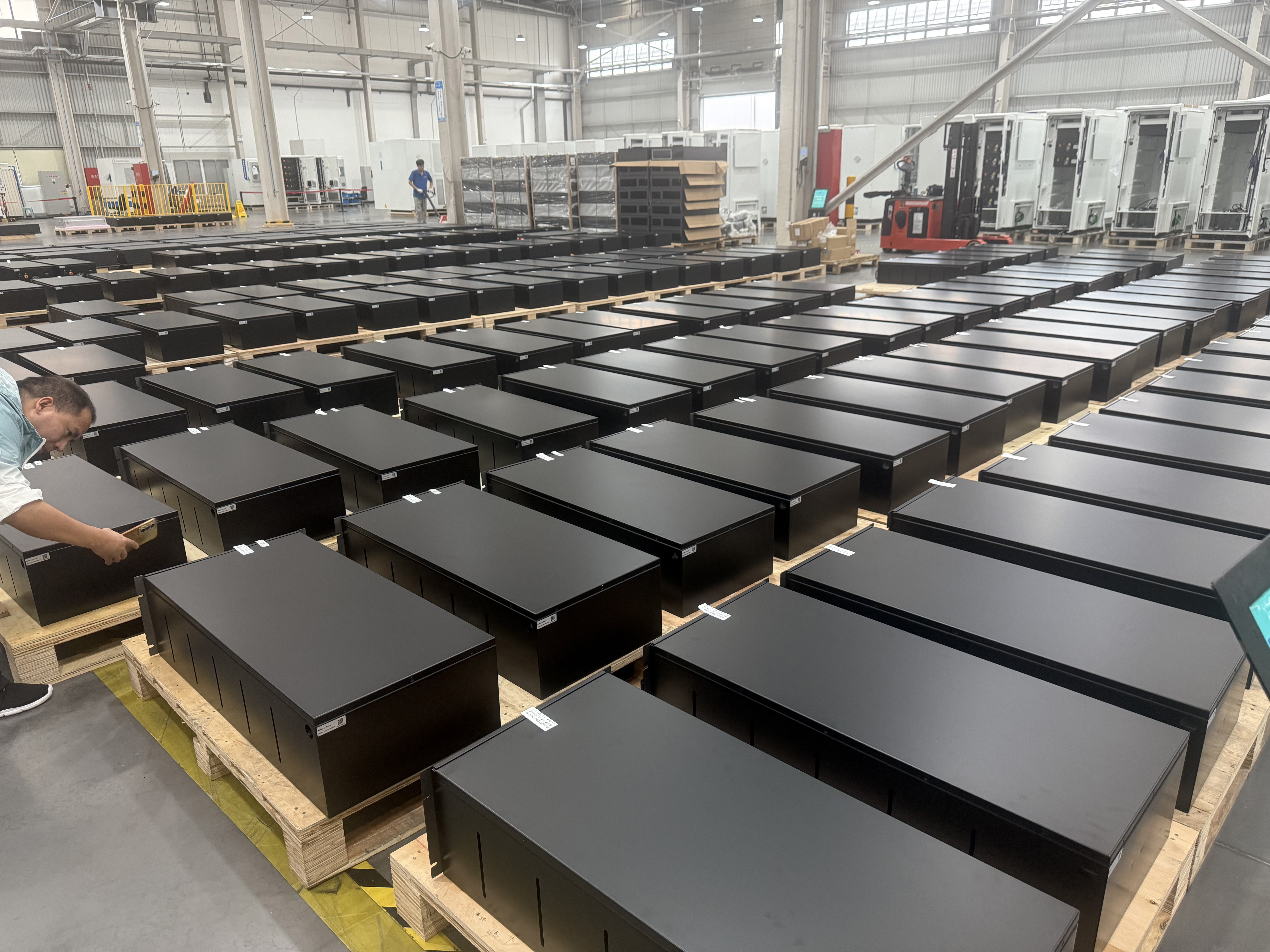
Unified commissioning depends on in-house production and testing control rather than assembled third-party subsystems.
Traceability: A Lifecycle Requirement, Not a Sourcing Detail
Traceability is usually discussed as a compliance topic at the sourcing stage. In practice it is a lifecycle instrument, because replacement and warranty claims are decided by records, not by memory.
Xupernova's battery sourcing approach includes improved supply-chain transparency and traceability alongside the minimum 7-year cell warranty. For an owner, the operational meaning is concrete: when a module underperforms in year six, the question is not only whether the warranty applies, but whether the delivered cell batch can be identified, matched against manufacturing records, and replaced with a specification-equivalent unit from a qualified Tier-1 vendor. Without batch-level traceability, a valid claim can still stall on evidence.
Independent verification supports the same objective. Because supplier status is verified against the latest quarterly BNEF Tier 1 list, the buyer is evaluating a supply chain that is periodically re-checked rather than certified once at the start of the relationship. For internationally financed projects, this is often the difference between a supplier that passes due diligence and one that requires additional documentation at financial close.
How End-to-End Integration Changes Lifecycle Economics
Integration scope determines how many parties the owner has to coordinate after commissioning. In a conventional multi-vendor battery energy storage system, the battery, power conversion system, battery management system, energy management system, thermal management and protection equipment may each arrive with a different service contact and a different definition of the interface.
Xupernova's end-to-end turnkey integration covers battery systems, PCS, BMS, plant-level EMS, thermal management, fire protection, transformers, switchgear and grid-connection systems. Measured against conventional multi-vendor BESS, this reduces external system interfaces by up to 70%, on-site integration workload by 55%, and commissioning time by 45%, with single-point after-sales support for the whole system. Maintenance is simplified through unified system maintenance and streamlined troubleshooting, and coordinated operation of battery, PCS, EMS and electrical equipment improves overall system performance.
Commissioning time deserves separate attention in a lifecycle context. Commissioning is when warranty start dates, baseline performance data and the operating record begin. A shorter, single-contract commissioning phase produces one consistent baseline instead of several partial ones — which is what a claim or a performance review will later be measured against.
At the AC side, integrated medium-voltage AC collection, step-up transformation and grid-interconnection capability support designs scalable to 100MW+ AC-side systems, reduce on-site high-voltage installation work by 50%, cut balance-of-system cost by 18% compared with conventional small-scale AC-coupled systems, and support direct medium-voltage grid connection with system round-trip efficiency of at least 91.5%. Centralized maintenance further reduces on-site complexity at that scale.
Where the Limits Are
A credible long-term evaluation has to state where a given supply model does not fit, and the end-to-end model has real boundaries.
Single-supplier dependency is the first. Reducing external interfaces by up to 70% also concentrates lifecycle risk on one supplier's service capability. Buyers should treat escalation paths, spare-parts commitments and response expectations as contract deliverables, not as service assumptions. The interface reduction figure is also configuration-dependent — actual reductions vary with project design.
Warranty duration is shorter than asset life. A minimum 7-year cell warranty covers roughly the first third of a conventionally designed storage asset's operating period. Beyond the warranty window, augmentation and repowering strategy must be planned and budgeted separately; a good warranty is not a substitute for a lifecycle plan.
Integration is not automatically the lowest-cost path. Buyers with in-house EPC and O&M engineering may genuinely prefer a multi-vendor architecture, because the coordination workload the end-to-end model removes is work they are already equipped to absorb. Procurement cost also depends on the selected supplier and project volume, so the comparison should be run on total lifecycle cost rather than on interface count alone.
Chemistry optionality is conditional. Xupernova's platform materials specify Grade A LFP cells from leading BNEF Tier 1 manufacturers, with optional semi-solid-state, solid-state and sodium-ion technologies subject to project requirements, technical validation and availability. Flexible chemistry compatibility across at least three chemistries — LFP, solid-state and sodium-ion — reduces platform re-development effort by 65% and shortens the new-chemistry product launch cycle by 50% compared with fixed-chemistry platforms. That optionality is an engineering pathway for future projects, not a configuration that ships as standard today.
Application Fit: Where Lifecycle Support Matters Most
The value of lifecycle support is not uniform across applications. It scales with remoteness, criticality and the cost of downtime.
Commercial and industrial peak shaving
Facilities managing fluctuating loads and time-of-use tariffs value remote monitoring and scheduled charge/discharge control most, because savings depend on daily execution rather than on hardware. The XA-C0261-L1 liquid-cooled all-in-one ESS cabinet is rated 125kW / 261.25kWh, and the XA-X1044-L1 10-ft liquid-cooled all-in-one container is rated 500kW / 1044kWh. Xupernova also produces a 261kWh liquid-cooled C&I BESS solution and a 1044kWh (1MWh-class) C&I solution for peak shaving and load shifting.
Critical-load backup and resilience
Hospitals, data centers and emergency services measure supplier quality in outage minutes. Here, unified commissioning and single-point technical coordination matter more than interface reduction, because backup systems are only validated when they are tested under the same documentation framework that will govern a real event.
Solar-plus-storage
Coordinated PV, battery and load control determines whether self-consumption targets hold up over years of irradiance variation. The XA-H0261-L1 liquid-cooled cabinet (261kWh) and the XA-H0064-A1 air-cooled cabinet (25–50kW / 64.54kWh) address commercial and small-scale C&I solar-plus-storage respectively.
Remote and mining microgrids
Weak-grid sites carry the highest service cost per intervention, so remote diagnostics and centralized alarm handling carry disproportionate value. The XA-X1044-L1 container is positioned for microgrid and backup power scenarios.
Utility-scale and grid-side storage
Large plants are where architecture choices are hardest to reverse. The XA-V5015-L1 20-ft liquid-cooled battery container is rated 5.015MWh with 0.5P/1P/2P configurations, and the XA-X2170-L2 20-ft liquid-cooled all-in-one container is rated 1125kW / 2170.3kWh. All listed products operate across a −30°C to 55°C scope, which is the kind of environmental range that determines whether service is remote or on-site.
Market Context: Why Lifecycle Terms Are Being Repriced Now
The installed base is growing faster than the service model around it. Global new battery storage deployment reached 108 GW in 2025 (IEA), U.S. utility-scale battery storage capacity growth is projected to reach 19.6 GW in 2025 (U.S. Energy Information Administration), and LFP accounted for approximately 90% of global battery storage deployments in 2025 (IEA). Published market size estimates differ by scope — one 2025 valuation places the global BESS market at $50.81 billion (MarketsandMarkets), while other research houses report materially lower figures because they count battery equipment rather than the full system value chain.
The direction of travel is consistent regardless of which estimate a buyer uses. An industry that spent the last several years optimizing installation cost is now accumulating an installed base that has to be operated, monitored, and in some cases repaired. Warranty duration, traceability and single-point service accountability are the contract terms that govern that phase, and they are increasingly being priced as risk rather than treated as boilerplate.
Future Outlook
Three shifts are worth planning around in supplier evaluation.
First, warranty floors are becoming a financing input rather than a marketing line. A minimum 7-year cell warranty supported by BNEF Tier 1 verification and more than 20GWh of qualified annual cell capacity is the kind of structure that lenders and independent engineers can assess; single-line warranty promises without sourcing disclosure are progressively harder to place.
Second, chemistry is moving from a fixed parameter to a portfolio decision. A platform compatible with at least three cell chemistries, with a 65% reduction in re-development effort, changes the second and third procurement cycles of a site rather than the first. Buyers who expect to augment or partially repower within the asset's life should evaluate the platform's chemistry roadmap alongside its current specification.
Third, service accountability is consolidating. As plant-level EMS with centralized monitoring and control becomes standard at the 200MW-and-above level, the number of parties capable of holding end-to-end service responsibility narrows. That favors suppliers with in-house production, testing and integration depth — and it means the evaluation criteria described here will become more, not less, decisive.
FAQ
What should a buyer compare first when evaluating BESS suppliers for a long-term project?
Compare the warranty floor and the service model before comparing hardware specifications. Two offers can list similar container capacity while differing substantially on cell warranty duration, coverage scope, commissioning responsibility and who holds after-sales accountability. Xupernova's approach guarantees a minimum 7-year cell warranty and pairs it with single-point technical coordination, unified commissioning, remote monitoring and lifecycle service support, which together reduce operational burden. Those terms are the ones that persist after the equipment price has been paid.
What does a minimum 7-year cell warranty actually tell a buyer?
It establishes the period during which degradation-driven cell replacement is a supplier responsibility rather than an owner cost, and it implies that the supplier expects its cells to perform over a multi-year horizon. The duration is only meaningful when read together with coverage scope, claim pathway and replacement sourcing. On the sourcing side, Xupernova specifies Grade A LFP cells from BloombergNEF Tier 1 manufacturers, with status verified against the latest quarterly BNEF Tier 1 list, at least 8 qualified Tier-1 vendors available, and qualified cell capacity above 20GWh of annual supply.
How does unified commissioning reduce operational burden over a storage asset's life?
Unified commissioning under one contract produces a single warranty start date, a single performance baseline and one technical contact, instead of several partial records owned by different vendors. Xupernova's end-to-end approach cuts multi-supplier coordination workload by 60%, reduces the on-site deployment cycle by 40%, and achieves system availability of at least 99.9%. Commissioning time is shortened by 45% compared with conventional multi-vendor BESS, and maintenance is simplified through unified system maintenance and streamlined troubleshooting.
Why does BNEF Tier 1 verification matter for lifecycle support, not just for financing?
Warranty replacement depends on replacement supply. A warranty is only enforceable if specification-equivalent cells remain available years after commissioning. Because Xupernova's supplier status is verified against the latest quarterly BNEF Tier 1 list, with at least 8 qualified Tier-1 battery vendors in the pool, the buyer is relying on a periodically re-verified supply chain rather than a single certification event. The same sourcing model includes improved supply-chain transparency and traceability, which is what allows a delivered batch to be identified when a claim is made.
When is an end-to-end integrated BESS not the right choice?
End-to-end integration concentrates lifecycle responsibility, which is an advantage for owners without in-house engineering capability and a constraint for those with it. Buyers with established EPC and O&M teams may reasonably prefer a multi-vendor architecture. Integration benefits are also configuration-dependent: interface reductions of up to 70%, integration workload reductions of 55% and commissioning reductions of 45% are measured against conventional multi-vendor BESS and vary by project design, and procurement cost depends on the selected supplier and project volume.
How does plant-level EMS change long-term O&M compared with device-level monitoring?
Device-level monitoring produces data per unit; plant-level EMS produces control across the plant. Xupernova's plant-level EMS supports capacity of 200MW and above with centralized monitoring and control, a control response of 100ms or less, unified dispatch of all subsystems, and centralized alarms, diagnostics and remote operation. It also reduces the need to deploy separate monitoring platforms, lowering overall cost, and is more suitable for multi-container and large-scale energy storage plants.
Reference material: the Xupernova energy storage product catalog, including containerized and cabinet configurations and their rated parameters, is available for download here.