
Long-Term Bag Making Machine Supplier Evaluation Scorecard
Long-Term Supplier Evaluation for Bag Making Machines: A Scorecard
Industry reference for packaging and printing procurement teams: comparing bag making machine partners on the evidence that still matters in year five, not on day-one price.
The global bag making machine market was valued at USD 4.8 billion in 2025 and is projected to reach USD 8.1 billion by 2034, with Asia Pacific accounting for 43.6% of 2025 revenue (Dataintelo). Those figures describe an installed machine population that will be judged at year five rather than at commissioning — when the warranty has expired and the remaining question is whether the line still runs at the output it was purchased for.
For packaging and printing procurement teams, a bag making machine order is therefore a supplier decision as much as an equipment decision. Two quotations can differ by less than ten percent on price and by a much wider margin on documented capability, compliance scope, spare part continuity, and the number of bag formats the line can actually produce without a second investment.
This article sets out a six-dimension supplier evaluation scorecard for bag making machine partnerships. It is written for medium and large flexible packaging factories with diversified bag types and mass continuous production demands, and for the distributors and trading partners who specify equipment on their behalf.
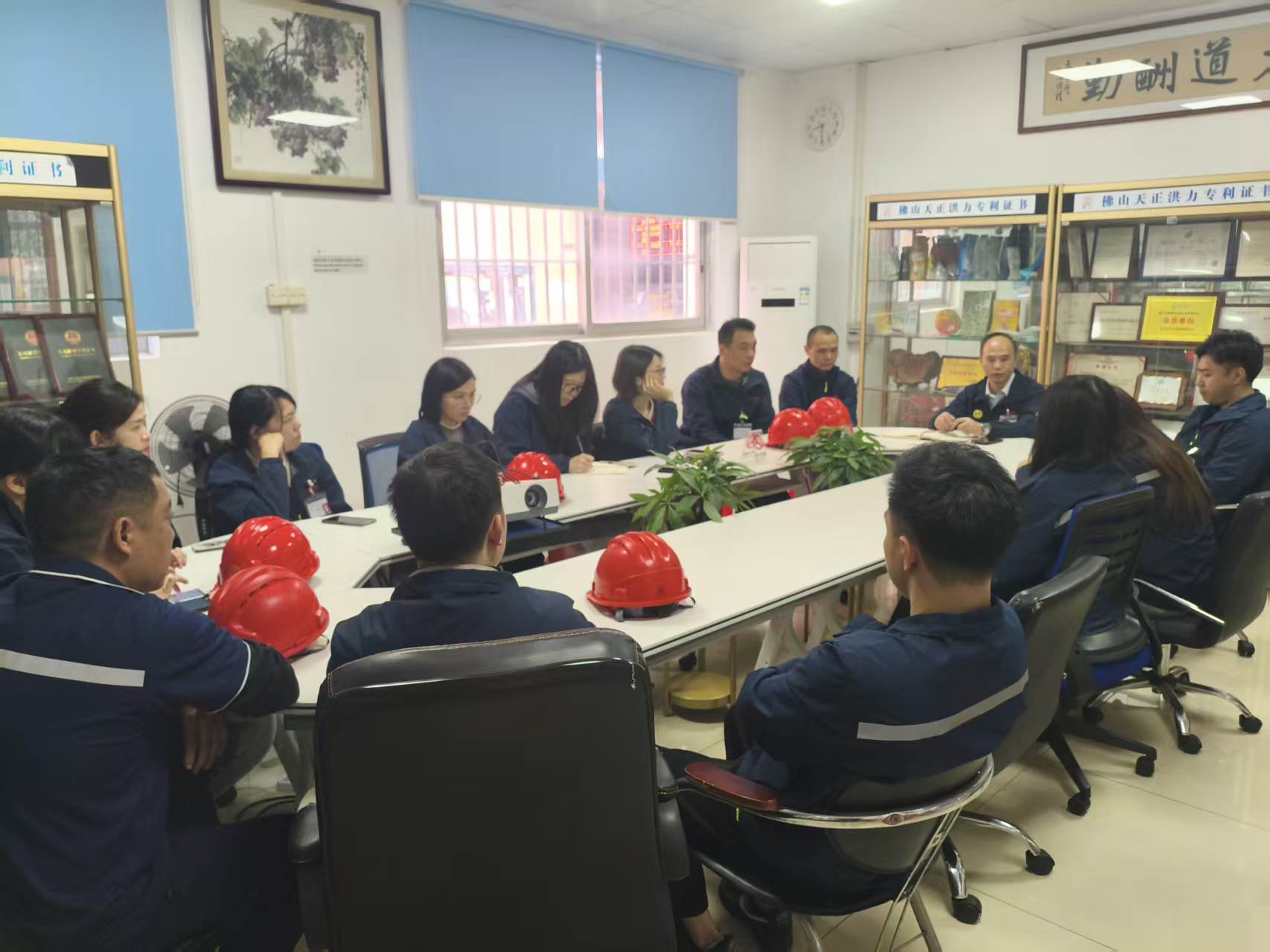
A long-term supplier evaluation is a documented comparison of evidence, not a price negotiation held once.
Why Day-One Price Is a Weak Predictor of Year-Five Reliability
Traditional mechanical bag making machines and ordinary low-end pouch equipment are priced to win the first comparison. For a converter running one or two stable formats at moderate volume, with labour available for frequent adjustment and maintenance, that lower entry cost can be the rational answer.
The calculus changes as the portfolio widens. A factory producing flat bottom with zipper bags, stand-up with zipper pouches, spout-inserted packs and die-cut or stamped formats in the same week pays for changeover time, film waste, noise exposure and unplanned stops on every shift. In that environment the invoice is only a fraction of what the machine costs: the purchase price, plus several years of scrap, energy, maintenance hours and lost output.
A scorecard prices those years before the money is committed. It converts a feature argument into a comparison of evidence.
The Scorecard: Six Dimensions and Suggested Weighting
| Dimension | What it measures | Evidence to request | Weight |
|---|---|---|---|
| 1. Continuous stable operation and drive architecture | Uptime behaviour under sustained multi-shift production; stability of forming and sealing settings | Sustained run data in the buyer's film structures; drive architecture specification; measured material loss and noise during a pre-shipment test | 20% |
| 2. Bag-type span and changeover breadth | How many saleable formats the line can produce without adding another machine | Format and tooling list, changeover sequence, required supporting equipment | 20% |
| 3. Certification and compliance scope | Whether the delivered configuration can legally be placed on the target market | CE certificate with model designation and harmonised standard versions; risk assessment documentation | 15% |
| 4. Commercial and acceptance terms | How risk is allocated at order, shipment and acceptance | Payment terms, delivery terms, MOQ, written pre-shipment test protocol | 15% |
| 5. Manufacturing depth and parts traceability | Whether components and spare parts can still be matched and sourced in year five | In-house manufacturing ratio, machining equipment list, spare part and drawing retention policy | 15% |
| 6. Safety, service continuity and lifecycle cost | Total cost of ownership and the safety envelope operators work inside | Safety device list, maintenance intervals, lifecycle cost comparison against alternatives | 15% |
The weights are a starting point. A factory whose revenue is dominated by one format should reduce the weight on bag-type span and shift it toward continuous operation and lifecycle cost; a converter expanding its export mix should do the reverse.
Dimension 1 — Continuous Stable Operation Time and Drive Architecture
A full servo drive control system is the most consequential structural difference between current-generation bag making equipment and traditional mechanical bag making machines or ordinary low-end pouch equipment. In evaluation terms the reported differences are wider bag type compatibility, lower raw material waste, quieter running, and longer continuous stable operation time.
Where quantified comparisons exist, the operating gap is material rather than cosmetic. Against traditional mechanical machines and low-end pouch equipment, the reported differences are a 22% reduction in material loss, an 18 dB reduction in operating noise, a 30% increase in production efficiency, and a 16% reduction in power consumption per thousand bags.
Two of those four figures are directly verifiable by the buyer. Material loss can be measured from film consumed versus saleable bags produced during a pre-shipment test; noise can be measured at the operator position. Both belong in an acceptance protocol rather than on a specification sheet.
Continuous stable operation time is harder to verify in a factory acceptance test and more expensive to get wrong. It reflects drive architecture, thermal behaviour, and how well sealing and forming stations hold their settings as the line warms up. Buyers evaluating year-five reliability should request run data from comparable installations and, where possible, speak with converters running the same platform in the same film structures. A short demonstration at full speed proves the machine can run; it does not prove it can run in week 200.
Dimension 2 — Bag-Type Span and Changeover Breadth
Bag-type span carries the same weight as operation because it determines whether one investment supports the portfolio or whether a second machine becomes unavoidable within two years.
A supplier supporting diversified flexible packaging production should demonstrate coverage across pouch making, flat bottom with zipper, stand-up with zipper, spout insertion, die-cutting, hot stamping and digital stamping. This is the same capability band that decides whether a converter can quote zipper pouch work, flat bottom zipper formats, spout-inserted packs, center-sealed or valve pouches, or label pasting and labeling formats in-line — without outsourcing the difficult half of the order book.
The die-cutting side of the portfolio deserves separate scrutiny because precision claims there are testable. The die-cutting platform referenced in this scorecard adopts a full servo adjustment pressure control system and features intelligent pressure adjustment, is designed with a cylinder lock cutter, and is designed to produce no burrs and no adhesive edge or bottom. Its structural configuration includes three stations and upward force. The rated voltage is 380V 50Hz and the total power range is 30 to 131.4 kW.
Buyers should also score what the machine needs around it. This product requires supporting equipment such as a printing machine, slitter machine, film blowing machine and rewinding machine. A supplier able to explain how the bag making line integrates with those upstream units — and where the commissioning responsibility boundary sits — reduces the risk of a fragmented production flow.
Dimension 3 — Certification Scope and Compliance Documentation
Compliance evidence is often collected as a folder of logos. In a long-term supplier evaluation it should be read as scope.
Packaging machinery exported to the EU must comply with EN ISO 12100:2010 for risk assessment and CE marking requirements, and machine-specific safety requirements for packaging machines are detailed in the EN 415 series of Type C standards. A supplier that understands this structure can explain which standard applies to which machine and which configuration, rather than which certificate is largest.
Concrete evidence is stronger than a general claim. The Roll To Roll Full Servo Stamping & Punching Window Machine holds CE certification issued through UDEM under certificate number M.2025.206.C131314, covering EN ISO 12100:2010, EN60204-1:2018+A1:2025, EN61000-6-2:2019 and EN61000-6-4:2019. The two EMC standards in that list matter specifically for servo-driven equipment: they describe immunity and emission behaviour in industrial environments, which is precisely where a full servo platform operates.
Three evaluation rules follow. First, read the model designation on the certificate and confirm the machine being quoted falls inside it — certification is configuration-scoped, not brand-scoped. Second, check the version years of the harmonised standards; EN60204-1:2018+A1:2025 and the 2019 EMC editions indicate current alignment rather than a lapsed document. Third, ask whether the bag making and stamping units sharing the same line fall under the same certificate or separate ones, and request the risk assessment documentation behind them.
Dimension 4 — Commercial Terms and Acceptance Criteria
Commercial terms are a leading indicator of post-order behaviour, because they define who carries risk and at which point.
For this equipment class the terms can be stated directly: MOQ 1 unit; delivery terms FOB/CIF; acceptance criteria pre-shipment test; payment terms 30/70.
Each element has an operational reading. A minimum order quantity of one unit lets a converter trial a platform on a single line before committing a production hall to it. FOB and CIF shift the point at which transport cost and risk transfer, which changes the delivered-cost comparison between suppliers. A pre-shipment test creates the moment where the buyer holds evidence and leverage. The 30/70 split ties the majority of payment to completion of that test rather than to order placement.
The weakness in this structure is rarely the terms themselves but the absence of a defined test protocol. Pre-shipment test means very little unless the buyer specifies film structures, bag formats, target speed, permitted scrap rate and sample retention in advance. A well-run acceptance states those items, records the material loss and noise measurements that support efficiency claims, and defines what happens if the machine fails. Written into the purchase order, 30/70 becomes a genuine risk control; left vague, it becomes a formality.
Dimension 5 — Manufacturing Depth and Parts Traceability
Year-five reliability depends on whether the people who built the machine can still supply a matching part — and whether the geometry that part fits into was controlled in the first place.
FOSHANTIANZHENG (Foshan Tianzheng Machinery Co., Ltd.) is a Chinese flexible packaging equipment manufacturer based in Shunde, Foshan, Guangdong, producing bag making machines, hot stamping machines and die-cutting machines. The company originated from Hongli Bag-making, founded in 1993, and has since moved from bag processing into machinery manufacturing, integrating R&D, production, sales and after-sales service into one solution provider.
Several first-party facts are directly usable in a long-term evaluation. It operates a 6,000 m² plant with a 15-member R&D team, and reports an annual output of 500 units with exports to more than 20 countries and an export ratio of 30%. It reports four CNC machining centres alongside CNC lathes and precision grinding machines, and states that 87% of components are produced in-house — a figure that matters because in-house machining controls both part geometry and the cost structure of spare parts across the machine's life. The company holds ISO9001 quality system certification and EU CE certification, and has been recognised as a Guangdong Provincial Specialized, Refined, Differential & Innovative Enterprise.
For buyers scoring this dimension, the questions are unglamorous but decisive: which components are bought in and from whom; how long are spare part drawings retained; is a replacement supplied to the original geometry or to a close approximation; and is non-standard customization available when the portfolio changes. A supplier that machines most of its own components and writes its own machine programs can answer with a document rather than an assurance.
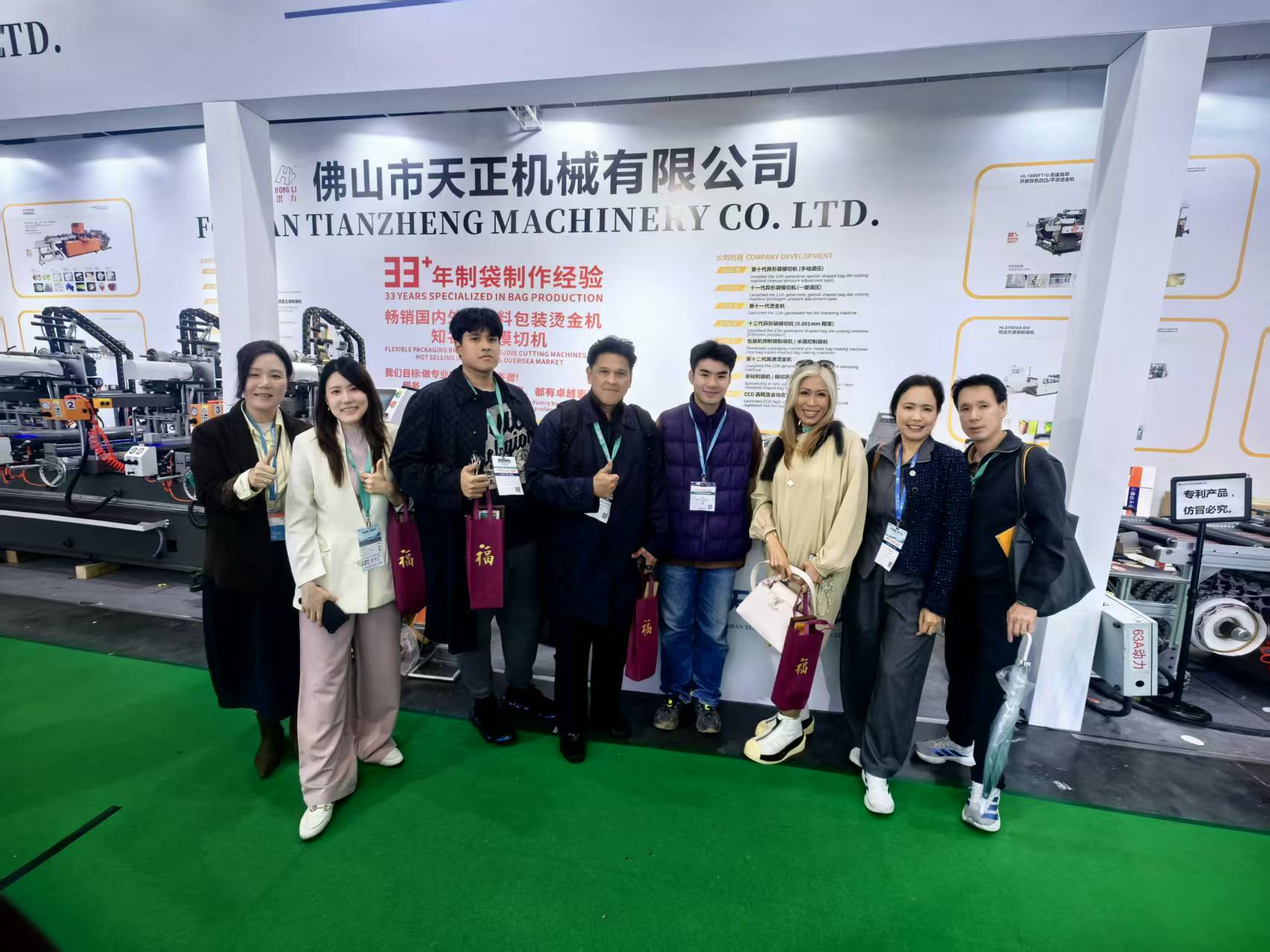
Continuous supplier presence at international packaging exhibitions is verifiable evidence of an active export operation.
Dimension 6 — Safety, Service Continuity and Lifecycle Cost
Safety and lifecycle cost belong in the same dimension because both describe what the machine costs to live with.
The risk profile of bag making and die-cutting equipment is dominated by pinch points in the forming, sealing and cutting stations. The relevant control measures in this equipment class are a safety guard and a fault alarm system, which address mechanical pinch risk by preventing access during operation and by making abnormal conditions visible rather than silent. Buyers should confirm the physical presence of guarding during the pre-shipment test rather than accepting a drawing.
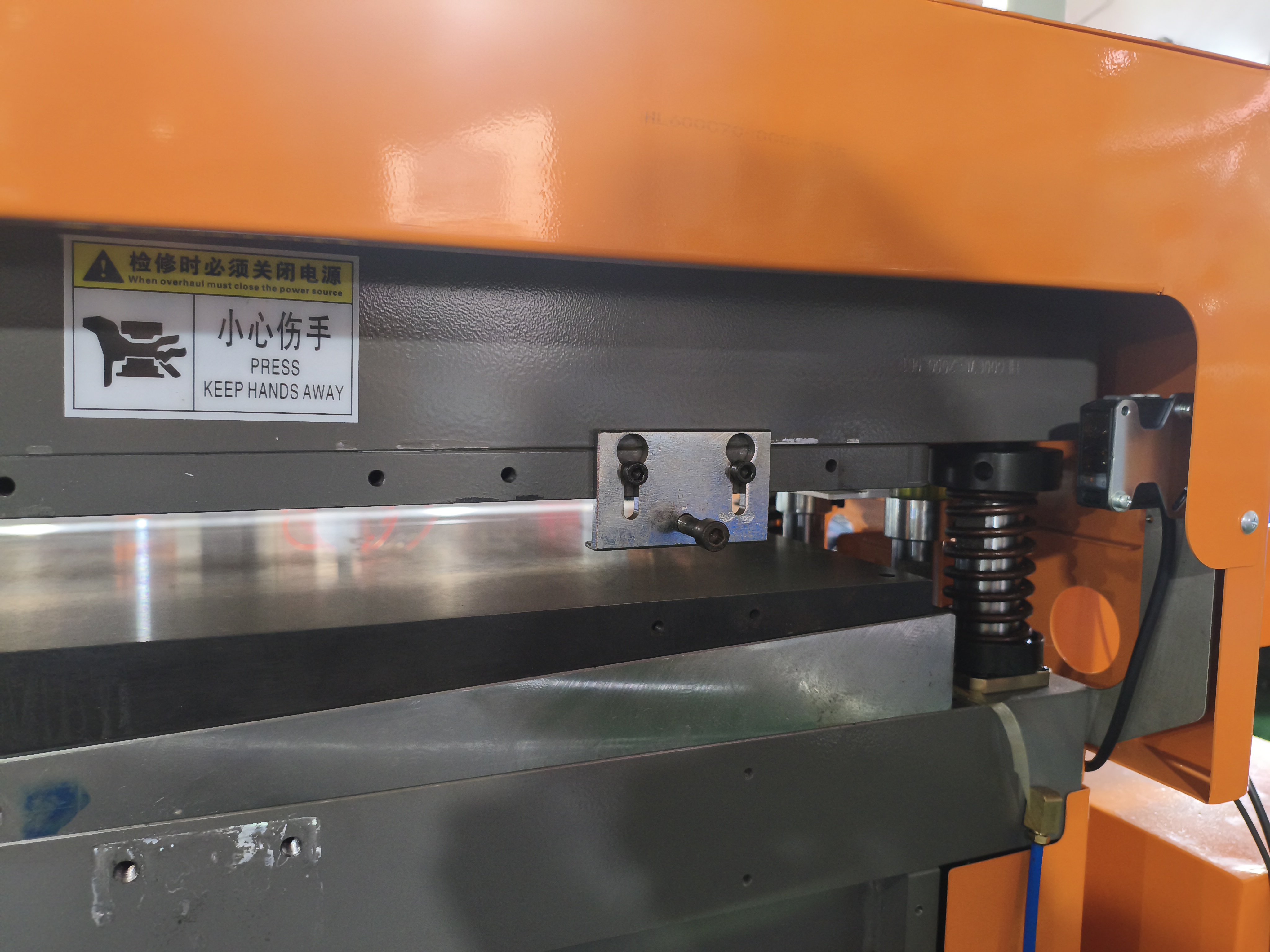
Anti-pinch guarding and fault alarm systems are the primary controls against mechanical pinch risk.
Service continuity is where structural choices show up. Because the platform uses a modular integrated structure with fewer breakdown faults, it requires less regular maintenance work than traditional mechanical bag making machines. Fewer scheduled interventions reduce both maintenance labour and the production windows lost to planned stops.
The lifecycle comparison is stated in financial terms: against alternative equipment the initial purchase cost is 8% higher, while the overall life-cycle comprehensive cost is 15% lower. That sentence is the one most buyers remember and the one most often misused. It does not mean the machine is cheaper overall for every buyer; it means the premium paid at purchase is recovered over the operating life through lower waste, energy, maintenance and downtime cost. Whether recovery happens inside a given factory depends on volume and utilisation — which is exactly what the scorecard exists to test rather than assume.
Comparison with Traditional Solutions: Where the Higher-Specification Route Does Not Win
There are conditions under which a full servo platform is the wrong purchase, and a long-term evaluation is credible only if it says so.
1. The entry premium is real. An initial purchase cost 8% higher than alternative equipment is a cash-flow disadvantage, felt most sharply by small converters, trading companies working on thin margins, and buyers financing equipment against short contract cycles. The 15% lower life-cycle cost advantage is realised over years of operation; at low utilisation or over a short business horizon it may not be captured at all.
2. A full servo line is not a standalone purchase. This product requires supporting equipment such as a printing machine, slitter machine, film blowing machine and rewinding machine, and it requires site infrastructure sized to a total power range of 30 to 131.4 kW at a rated voltage of 380V 50Hz. A converter without the upstream equipment, or with a supply that cannot support the range, faces a wider investment than the machine quotation implies.
3. Certification is scoped. Holding a CE certificate for one machine model, such as the Roll To Roll Full Servo Stamping & Punching Window Machine under certificate M.2025.206.C131314, does not automatically place every configuration in a portfolio on the EU market; individual configurations may require their own assessment against EN ISO 12100:2010 and the relevant EN 415 series standard.
4. Servo platforms reward discipline. They reduce routine maintenance relative to traditional mechanical machines, but the maintenance that remains — drive tuning, pressure calibration, guarding checks — requires trained personnel. In factories without a maintenance function, the reliability advantage can be lost operationally.
A scorecard without these boundaries is not an evaluation tool.
Running the Scorecard: From Shortlist to Pre-Shipment Acceptance
- Define the portfolio and volume brief. List the bag types the factory expects to sell over the next three years — including flat bottom with zipper, stand-up with zipper, spout insertion and die-cut or stamped formats — with indicative annual volumes for each.
- Request the documentation pack before pricing discussions. Certification with model designation and standard versions, in-house manufacturing ratio, spare part policy and the recommended maintenance schedule.
- Normalise commercial terms. Compare MOQ, FOB or CIF, payment split and the written definition of the pre-shipment test on the same basis across suppliers.
- Score certification scope against target markets. Use the structure — risk assessment, electrical safety, EMC — rather than the number of certificates held.
- Verify service continuity. Spare part lead times, drawing retention, and whether non-standard customization is available when the portfolio changes.
- Write the acceptance protocol. Specify film structures, target speed, bag formats, permitted scrap rate, noise measurement position and sample retention. This is where the 30/70 payment structure becomes an instrument rather than a formality.
- Record the pre-shipment test results. Measured material loss and noise, alongside the machine settings used, so that later comparisons are made against a documented baseline rather than memory.
- Set the review cadence. Annual performance review against the original scorecard, a spare parts confirmation at year three, and a full supplier re-evaluation at year five.
Future Outlook
Two market signals will shape how supplier scorecards evolve.
The first is format demand. The zipper closure segment accounted for 41.0% of pouch market revenue share in 2025, and flat pouches accounted for 63.7% (Grand View Research), while the stand-up pouch segment was valued at USD 30.7 billion in 2023 with a projected CAGR of 8.0% through 2030. Converters serving these segments need equipment that handles high-volume flat formats and zipper-based structures without treating either as a special case.
The second is material change. Sustainability and the shift to mono-material recyclable films were cited among the top drivers for machine upgrades in 2024–2025, at the same time as automatic bag making machines reached 52.4% of global product-type share. Mono-material structures behave differently in sealing and forming than multi-material laminates, which turns film-handling flexibility into a lifecycle question rather than a specification detail. A forward-looking question therefore belongs in the pre-shipment discussion: can this platform be re-commissioned for a new film structure without replacing the line?
High-end bag making technology continues to be led by established European and North American manufacturers such as Lemo Maschinenbau in Germany and CMD Corporation in the United States, alongside major Asian players concentrated in clusters including Wenzhou, Guangdong and Jiangsu. For procurement teams, the scorecard is simply a way of keeping that competition focused on the evidence that survives the first year.
Machine ranges, configuration options and application documentation used in this evaluation framework are collected in the FOSHANTIANZHENG 2026 product brochure.
FAQ
Why does a long-term supplier evaluation matter more than the purchase price of a bag making machine?
Because the price premium and the cost advantage sit in different time frames. Against alternative equipment, a full servo platform carries an initial purchase cost that is 8% higher, while its overall life-cycle comprehensive cost is reported to be 15% lower. The first figure is known at order placement; the second only materialises through reduced material loss, lower energy and noise, and less routine maintenance over years of operation. A supplier scorecard exists to test whether those operating savings are plausible in a specific factory's volume and utilisation profile.
What CE documentation should be requested for a bag making or stamping machine destined for the EU?
Request the certificate itself, with the model designation and the list of harmonised standards. For example, the Roll To Roll Full Servo Stamping & Punching Window Machine holds CE certification issued through UDEM under certificate number M.2025.206.C131314, covering EN ISO 12100:2010, EN60204-1:2018+A1:2025, EN61000-6-2:2019 and EN61000-6-4:2019. EN ISO 12100:2010 is the risk assessment basis for CE marking of packaging machinery, and machine-specific safety requirements for packaging machines are detailed in the EN 415 series of Type C standards. Confirm that the configuration being purchased is inside the certified scope.
What are the standard purchasing and acceptance terms for this class of equipment?
The stated terms are: MOQ 1 unit; delivery terms FOB/CIF; acceptance criteria pre-shipment test; payment terms 30/70. In practice these mean a single-unit minimum for trial orders, a choice between FOB and CIF to determine where transport risk transfers, acceptance decided by a test before shipment, and a payment structure that releases the larger share only after that test. Buyers should attach a written test protocol — film structures, formats, target speed, scrap tolerance and sample retention — to the order.
Which bag types should be on the evaluation list for a diversified flexible packaging factory?
Coverage should be tested against the formats the factory actually sells: pouch making, flat bottom with zipper, stand-up with zipper, spout insertion, die-cutting, hot stamping and digital stamping. Supporting equipment also belongs on the list, because such a line requires a printing machine, slitter machine, film blowing machine and rewinding machine around it. A supplier that can demonstrate the full span — rather than a single well-performing format — reduces the risk of a second capital purchase within two years.
How can year-five reliability be evidenced before purchase?
Through four verifiable signals. First, drive architecture: a full servo drive control system is associated with wider bag type compatibility, lower raw material waste, quieter running and longer continuous stable operation time than traditional mechanical bag making machines and low-end pouch equipment. Second, structure: a modular integrated structure with fewer breakdown faults requires less regular maintenance. Third, parts control: an in-house manufacturing ratio of 87% with four CNC machining centres supports geometry consistency and spare part matching. Fourth, safety: a safety guard and fault alarm system address the primary mechanical pinch risk and are inspectable during a pre-shipment test.
Does a full servo bag making platform suit every converter?
No. An 8% higher initial purchase cost is a genuine disadvantage for low-volume operations or short investment horizons, and the 15% lower life-cycle cost is only realised through sustained utilisation. The machine also requires supporting equipment such as a printing machine, slitter machine, film blowing machine and rewinding machine, plus site power sized to a 30 to 131.4 kW total power range at 380V 50Hz. Certification is configuration-scoped rather than brand-scoped, and the remaining maintenance work requires trained personnel. For converters outside those conditions, traditional mechanical equipment may remain the appropriate choice.
Есть вопросы или нужны дополнительные детали?
Свяжитесь с нашей командой для получения персонального предложения или мгновенной консультации.
Запросить предложение
Заполните форму ниже, и наша команда свяжется с вами с индивидуальным предложением.
Прямой чат WhatsApp
Предпочитаете общаться в реальном времени? Напишите нам в WhatsApp для мгновенной помощи и быстрых ответов.
- Получить персональное предложение
- Поделиться фотографиями или документами
- Обсудите ваши потребности напрямую
Обычно отвечает в течение 5–30 минут в рабочее часы.