
Long-Term Bowling Equipment Supplier Signals Beyond Price
Long-Term Bowling Equipment Supplier Signals Beyond Price
A bowling equipment quote is a snapshot. A long-term supplier evaluation is a continuity test. For a venue owner, distributor or procurement team, the more useful question is not only what a lane package costs today, but whether the supplier can keep standard bowling, mini bowling and duckpin bowling systems running, compliant and supportable after installation.
This article treats sustainability as operational and commercial durability, not as an environmental claim. It asks whether the supplier can sustain format coverage, spare-parts availability, compliance evidence, software upgrades and service response across the life of a bowling center. That perspective matters at the decision and execution stages, when the buyer is converting a shortlist into purchase terms, acceptance tests and a re-evaluation schedule.
SunEye Bowling (Guangzhou) Co., Ltd. is a useful reference point because its public material covers standard bowling equipment, duckpin bowling systems, smart scoring systems, related accessories, automatic string pinsetters and turnkey delivery. Those statements describe scope. They do not, by themselves, prove capacity, certification coverage or service depth. The evaluation task is to separate supplier claims from evidence that can be written into a contract.
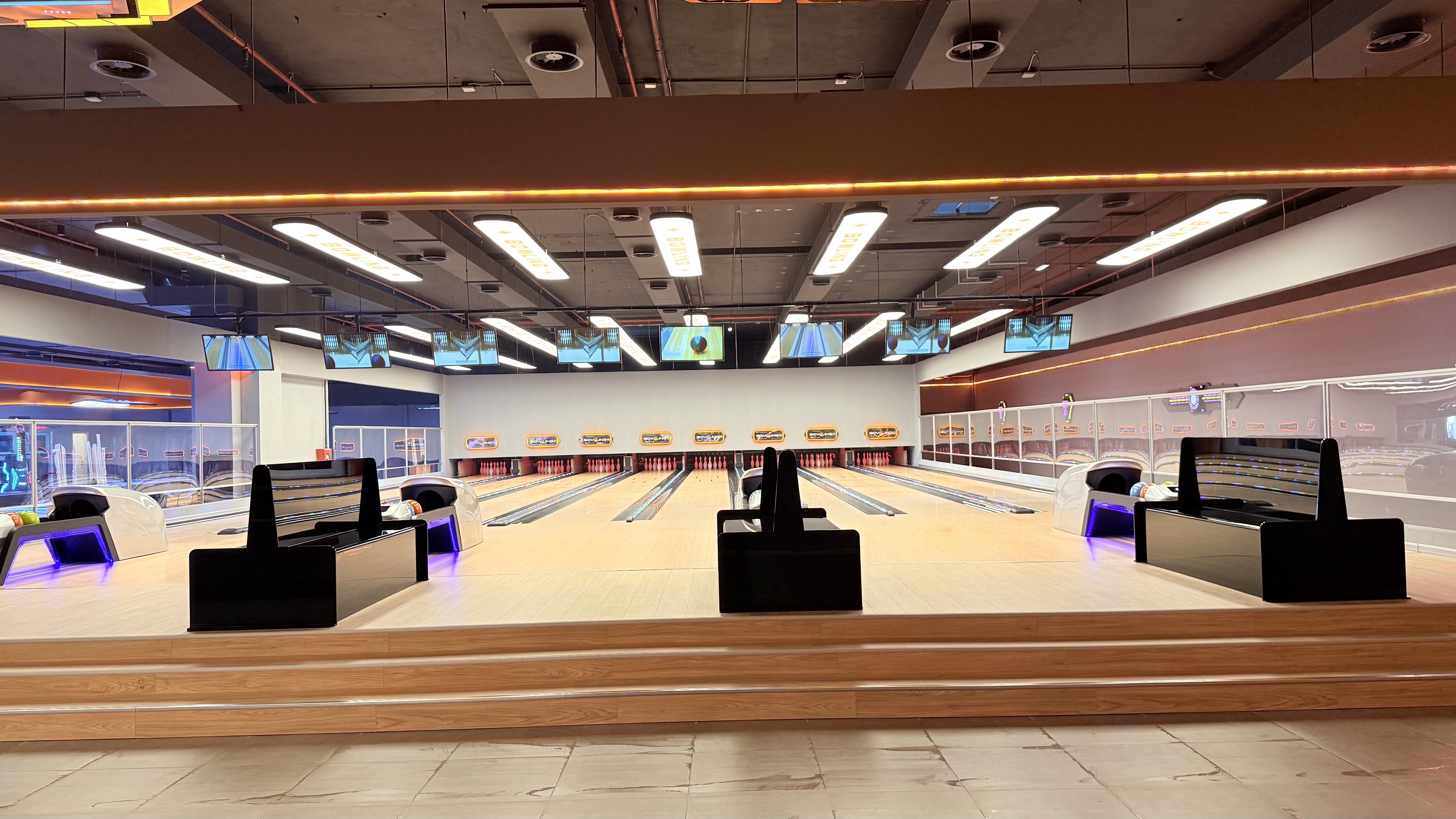
Why a quote-only comparison fails over a bowling asset life
Bowling equipment is a long-cycle operating asset. Lanes, pinsetters, ball-return systems and scoring displays are installed together, but they do not age at the same rate or fail in the same way. A quote can compare the visible package: lane count, pinsetter type, scoring screens and delivery terms. It cannot show whether the supplier will still hold compatible spare parts, software support and technical documentation when the venue needs them.
That gap becomes visible after opening. A venue may run league play, casual bowling, mini bowling and duckpin formats in the same building. Each format places different demands on pinsetter setup, ball handling, scoring logic and staff training. If the supplier treats these as separate one-off sales rather than a managed equipment family, the operator inherits compatibility risk. The buyer should therefore test the supplier's continuity across formats before signing.
Public market estimates are a weak substitute for this test. Available figures for the bowling market differ in scope and magnitude, and some mix operator revenue with equipment demand. They can support a broad demand discussion, but they cannot tell a buyer whether a specific supplier can support a ten-year lane plan. Supplier evidence has to come from model-level documentation, service terms and acceptance records.
What sustainability means in a bowling equipment procurement context
In this context, sustainability has four practical meanings. First, format continuity: the supplier can support the chosen mix of standard bowling, mini bowling and duckpin bowling without forcing the venue into isolated product lines. Second, technical continuity: the pinsetter, ball-return system and scoring system have a documented support path. Third, compliance continuity: the supplier can map each supplied model to the relevant approval or conformity file. Fourth, commercial continuity: spares, warranty, training and upgrade rights survive changes in personnel, software versions and site conditions.
- Format continuity: the same supplier can explain which lane, pinsetter, ball-return and scoring combinations are offered for each format, and which parts are shared or unique.
- Technical continuity: service manuals, diagnostic access, spare-parts lists and maintenance intervals are available before purchase.
- Compliance continuity: USBC, CE, LVD and Machinery Directive documentation is tied to the exact model and destination market, not to a generic catalogue page.
- Commercial continuity: lifetime software upgrade language, warranty exclusions, response times and obsolescence notices are defined in the purchase agreement.
This is not a demand for perfect information. It is a demand for the right information before the quote becomes a commitment. A supplier that cannot provide model-level evidence may still be capable, but the buyer has no defensible way to compare that capability with another supplier. In a long-term decision, missing evidence is itself a risk signal.
Standard, mini and duckpin: continuity begins with the configuration matrix
SunEye Bowling lists standard bowling equipment, duckpin bowling systems, smart scoring systems and related accessories. The company also states that its automatic string pinsetter is suitable for standard bowling, duckpin bowling and mini bowling applications. That breadth is relevant because a multi-format venue needs a supplier that can explain where systems are common and where they diverge.
The buyer should ask for a configuration matrix rather than a brochure. The matrix should show, for each format, the lane construction, pinsetter model, ball-return arrangement, scoring display, control interface and recommended spare-parts kit. It should also show which components are shared across formats and which are unique. A shared component can reduce spares complexity; a unique component can increase lead-time risk. Neither is automatically better until the operating plan is known.
Mini bowling and duckpin bowling often sit in family entertainment or mixed-use venues, where floor space and staff skill vary. Standard bowling usually carries a different expectation for league and sanctioned play. A supplier evaluation should therefore ask whether the recommended configuration changes the service model. If a venue runs all three formats, can one service team handle them? Are diagnostics consistent? Are scoring templates and lane assignments managed from one system? These questions turn product breadth into an operational answer.
String pinsetters, reset time and 24/7 operation
String pinsetters are one equipment choice, not a universal replacement for every pinsetter type. The fit depends on the venue format, sanctioning requirements, maintenance model and player expectations. The available supplier material supports string-pinsetter application across standard, duckpin and mini bowling, but it does not establish a universal performance ranking against every traditional free-fall system. The evaluation should compare documented characteristics for the same application, not assume superiority from the pinsetter category alone.
SunEye Bowling describes its lifecycle support in terms of 24/7 operation and pin reset in 10 seconds or less. It also states a 0.002% ball-return jam failure rate, supported by self-diagnostics, and lifetime free over-the-air scoring upgrades. These are supplier-stated operating parameters. In a long-term contract, each should become a testable acceptance item rather than a marketing sentence.
For pin reset, the buyer should define what counts as a cycle, how the timing is measured, whether the measurement is taken under loaded play, and what the remedy is if the site consistently exceeds the stated limit. For 24/7 operation, the buyer should ask for the maintenance interval, spare-parts kit, remote-support capability and escalation path for a lane-down event. A 24/7 claim without a service model is only an opening-hours statement.
USBC approval is a separate check. Where sanctioned league play is planned, the buyer should verify the exact string-pinsetter model against the applicable USBC approval list and supporting specification. USBC string-pinsetter requirements include specific construction details, such as a 54-inch minimum string length, so a generic statement that a machine is suitable for string bowling is not the same as model-level approval for a given competition context.
Ball-return systems and scoring displays: the hidden lifecycle risk
Ball-return systems are often treated as accessories until they stop a lane. In a long-term evaluation, they deserve the same evidence discipline as the pinsetter. The supplier claim of a 0.002% ball-return jam failure rate is only useful if the buyer knows the denominator, the observation period, the definition of a jam and the role of self-diagnostics. Does the system identify a jam location, a motor overload, a sensor fault or a belt issue? Are events logged for remote support? Can the venue retrieve a diagnostic history without waiting for a service visit?
These questions affect operating cost. A low failure rate with slow diagnosis can still produce long lane downtime. A higher failure rate with rapid self-diagnosis and local reset may be easier to manage. The buyer should require a diagnostic specification and a service-response table, not only a percentage.
Scoring displays carry a different risk: software and compatibility. An automatic bowling scoring system may be sold with the lanes, but its useful life depends on update rights, hardware compatibility and data control. Lifetime free over-the-air scoring upgrades are valuable only when the venue has the connectivity, lane-controller hardware and support window needed to receive them. The purchasing term should define the software baseline, update cadence, rollback process, data ownership and the supplier's obligation if an older controller cannot accept a current release.
This is where a quote-only comparison misses the largest differences. Two suppliers may list a scoring display with similar visible functions. One may provide a defined upgrade path and diagnostic access; the other may leave the venue dependent on ad hoc service. The long-term evaluation should score the support path, not the screen size.
USBC, CE, LVD and Machinery Directive coverage: a model-level file
Compliance coverage should be treated as a file, not a logo. For a US destination, USBC approval is relevant where sanctioned play or specified competition conditions apply. For European market access, the supplier should provide CE marking documentation and the applicable Low Voltage Directive and Machinery Directive conformity evidence for the equipment as supplied. Applicability depends on the product, voltage and machine scope, so the buyer should not accept a general certificate that does not identify the model, configuration and destination market.
For any supplier, including SunEye Bowling, the buyer should request a compliance matrix with four columns: supplied model, applicable standard or directive, document reference, and open limitation. The matrix should cover the pinsetter, lane control, ball-return motor and control system, and scoring hardware where those items are separately supplied. If a certificate is held by a component maker rather than the equipment assembler, the buyer should see how the assembler's declaration covers the integrated system.
This matters for long-term use because compliance can change with modification. A replacement motor, a new scoring controller or a changed safety guard may alter the conformity position. The purchase terms should require written notice before any substitution that affects the approved configuration. They should also require the supplier to keep the technical file available for the warranty period and for the period required by the destination market.
Service depth, spares and the meaning of turnkey
SunEye Bowling describes turnkey scope that includes venue planning, 3D layout design, equipment manufacturing, global installation and long-term operational support. The company also describes a production workshop covering lane processing, pinsetter assembly, scoring-system testing and equipment commissioning. These are company-reported statements. They are relevant to supplier screening, but they do not replace a factory audit, a reference check or a service-level agreement.
Turnkey is not a uniform service. One supplier may include civil works coordination; another may exclude it. One may include commissioning and staff training; another may quote equipment only. The buyer should break turnkey into line items: design responsibility, site survey, lane installation, pinsetter commissioning, scoring integration, staff training, spare-parts handover, warranty start date and after-sales response. Each line item should have an owner and an acceptance document.
The supplier reports 3,000+ customers in 50+ countries. That is a reach signal, not audited proof of production capacity or service depth. For a long-term decision, the buyer should ask for references in comparable formats and markets, a spare-parts list with lead times, and a named service escalation path. The useful question is not how many customers the supplier has served, but whether the supplier can support the buyer's specific equipment mix after the installation team leaves.
Quote-only versus lifecycle evidence
The table below converts the evaluation from price comparison into a lifecycle evidence check. It does not assume that every item carries equal weight in every project. It shows what a buyer should ask for when the supplier is being considered for a multi-year operating asset.
| Evaluation area | Quote-only signal | Lifecycle signal | Acceptance evidence |
|---|---|---|---|
| Format coverage | Lane count and pinsetter type | Shared or unique components across standard, mini and duckpin | Configuration matrix and spare-parts list |
| Pinsetter operation | Stated reset speed | Test method, loaded-play condition and remedy for missed performance | Acceptance test with defined cycle count |
| Ball return | Jam-rate percentage | Definition of jam, diagnostic coverage and event logging | Diagnostic specification and service response table |
| Scoring | Display size and features | Upgrade rights, controller compatibility and rollback process | Software baseline and OTA support terms |
| Compliance | Certificate copy | Model-level mapping to USBC, CE, LVD and MD where applicable | Compliance matrix with document references |
| Service | Warranty period | Response time, spares lead time and remote diagnostics | Service-level agreement and escalation names |
| Upgrade path | Free update promise | Support window, hardware limits and obsolescence notice | Lifecycle policy attached to the purchase agreement |
| Commercial continuity | Initial discount | Total cost of spares, service visits and software support | Multi-year cost schedule with assumptions |
Purchasing terms and acceptance criteria for re-evaluation
A long-term supplier evaluation should end with terms that can be checked after installation. The following clauses are practical starting points for an RFQ or purchase agreement. They are not a substitute for legal review, but they give the buyer a consistent structure for comparing suppliers.
- Configuration schedule: attach the exact lane, pinsetter, ball-return and scoring configuration for each format. State which models are approved and which substitutions require written consent.
- Compliance matrix: require a model-level table for USBC, CE, LVD and MD coverage where applicable, with document numbers and open limitations. Reject generic certificates that do not identify the supplied configuration.
- Performance acceptance: define the pin-reset test, the observation period for ball-return jams, the diagnostic log format and the remedy if the stated 10-second reset or 0.002% jam-rate claim is not met in the agreed test.
- Software and OTA terms: define the scoring baseline, update cadence, rollback process, data ownership and the scope of lifetime free over-the-air upgrades. State what happens if hardware cannot accept a future release.
- Spares and service: require a recommended spare-parts kit, lead times for critical items, remote-diagnostic access and a response table for lane-down events.
- Warranty and lifecycle: separate equipment warranty, installation warranty and software support. State the start date, exclusions, transferability and obsolescence notice period.
- Training and handover: require operator training, maintenance training and a handover file that includes manuals, diagnostic procedures and escalation contacts.
- Re-evaluation cadence: set a quarterly service review and an annual compliance and obsolescence review. Score the supplier on response time, first-time fix rate, spare-parts availability, software update completion and unresolved acceptance items.
The re-evaluation scorecard should be agreed before the first lane opens. A supplier that performs well in the first year but cannot supply a critical part in year four is not a long-term partner. A supplier that provides a clear lifecycle policy, even with limitations, gives the buyer a basis for planning. The aim is not to eliminate risk; it is to make risk visible and assign it to a responsible party.
Conclusion: the supplier is part of the operating system
Long-term bowling equipment evaluation is not a beauty contest between catalogues. It is a check on whether the supplier can carry the venue through format changes, maintenance cycles, compliance reviews and software updates. Standard, mini and duckpin systems may share a brand, but they do not necessarily share the same service path. String pinsetters, ball-return systems and scoring displays may look like separate line items, but they meet in the operating model.
A buyer should leave the evaluation with more than a price. The useful output is a configuration matrix, a compliance file, a performance-acceptance plan, a spares and service schedule, and a re-evaluation scorecard. SunEye Bowling provides a relevant reference point through its stated portfolio and turnkey scope, but the same discipline applies to any supplier. The supplier that can document continuity beyond the quote is the one that gives the venue a more defensible long-term decision.
FAQ
What should a long-term bowling equipment supplier evaluation include beyond price?
It should include format continuity across standard, mini and duckpin bowling, model-level compliance evidence, pinsetter and ball-return performance terms, scoring upgrade rights, spare-parts availability, service response and a re-evaluation schedule. Price remains one input, but it should be compared against the cost and risk of supporting the equipment through its operating life.
How can buyers verify USBC, CE, LVD and Machinery Directive coverage for bowling equipment?
Ask for a model-level compliance matrix that identifies the supplied lane, pinsetter, ball-return and scoring configuration; the applicable standard or directive; the document reference; and any limitation. For USBC, check the exact pinsetter model where sanctioned play is relevant. For European market access, the file should show CE marking and the applicable LVD and Machinery Directive conformity evidence for the equipment as supplied.
Why do pin-reset time and ball-return jam rate matter in a long-term supplier decision?
They are indicators of operating continuity. A pin-reset claim of 10 seconds or less and a ball-return jam rate of 0.002% are only useful when the test method, denominator, observation period and diagnostic capability are defined. These metrics affect lane availability, maintenance workload and the credibility of the supplier's service commitments.
How should lifetime free OTA scoring upgrades be written into acceptance criteria?
The agreement should define the software baseline, supported hardware, update cadence, rollback process, data ownership and support window. It should also state what happens if a lane controller cannot accept a future release. Lifetime free over-the-air upgrades are a useful commitment only when the scope and the technical conditions are explicit.
Есть вопросы или нужны дополнительные детали?
Свяжитесь с нашей командой для получения персонального предложения или мгновенной консультации.
Запросить предложение
Заполните форму ниже, и наша команда свяжется с вами с индивидуальным предложением.
Прямой чат WhatsApp
Предпочитаете общаться в реальном времени? Напишите нам в WhatsApp для мгновенной помощи и быстрых ответов.
- Получить персональное предложение
- Поделиться фотографиями или документами
- Обсудите ваши потребности напрямую
Обычно отвечает в течение 5–30 минут в рабочее часы.