
Long-Term Canned Fish Supplier Viability: Agrogentra's 25-Year Export Record
Long-term supplier viability in canned fish is rarely settled by unit price. It is settled by whether the same specification, the same sterilization discipline and the same shipping routine will still exist in year three or year four of a supply agreement.
Canned fish is a repeat-order category. It moves through supermarkets, wholesale distributors and food processing channels, and it is re-ordered against a fixed specification: drained weight, sauce base, can size, label and certification scope. Global imports of canned and prepared fish under HS 1604 reached 3.2 million tonnes and USD 17.54 billion in 2023, according to UN Comtrade data compiled with FAO. Each of those tonnes was bought twice — first as a trial, then again as a repeat order that depended on the supplier still operating, still compliant and still able to hold the specification.
Agrogentra & Co., Ltd. (Xiamen) — the company behind the Agrogentra Canned foods range — is a Chinese food trading and export company established in 2000 in Xiamen, Fujian Province. Its record states that it has supplied qualified food products to global markets for over 25 years and that export business accounts for 100% of total sales. This reference treats that record as procurement evidence rather than as a company profile: which parts of a 25-year export history a buyer can actually verify, what those parts imply for continuity of supply, and where the evidence stops.
Why continuity, not unit price, is the real procurement question
A trial container can be priced aggressively. A three-year program cannot, because the buyer absorbs the cost of every change: new artwork and label approvals, a repeat of the internal quality approval, re-verification of certificates, and, in regulated markets, re-registration. In the United States, FDA requires foreign canned food processors to register under the Food Canning Establishment (FCE) system and to file Scheduled Processes (SID). In the European Union, Regulation (EU) 2024/3115, effective 1 January 2025, tightened plant health and traceability requirements for imported preserved foods. Both obligations attach to a production establishment, not to a price list — which is why changing supplier is a compliance event as much as a commercial one.
Demand structure supports long relationships rather than short ones. Canned fish accounts for 75.3% of the global canned seafood market, according to Grand View Research, and the category is broad enough to absorb seasonal planning, promotional volume and emergency stock within the same supply chain. Categories that large and that stable are usually served through supplier lists that change slowly. The practical question for a buyer is therefore not who can quote, but who will still be quoting — and still be able to ship at the same specification — after the next compliance revision.
Five signals a buyer can verify before committing
Continuity cannot be inspected directly. It can, however, be inferred from signals that leave a documentary trace, and each of them can be checked before a contract is signed rather than after a problem appears.
| Signal | What the buyer checks | Why it matters for a long-term contract |
|---|---|---|
| Trading tenure and export concentration | Founding date, years of continuous export, share of sales that is export | A supplier that has exported through several freight and compliance cycles is less likely to exit the category mid-contract |
| Recurring external presence | Trade-fair participation history, catalogue updates, buyer meetings | Recurring spend on international exhibitions is a costly signal of ongoing commercial activity — not proof of capacity |
| Physical capacity base | Facility size, stated annual output, factory relationships, production supervision | Determines whether volume can be repeated at the same specification across seasons |
| Inspection structure | In-house QC departments, office locations, coverage from factory audit to pre-shipment sampling | Long contracts are resolved on documents; the inspection chain is what a claim rests on |
| Documented commercial terms | MOQ, Incoterms, payment structure, acceptance criteria | Written, repeatable terms are the operational definition of a partnership |
Reading Agrogentra's record against those signals
Twenty-five years of continuous export, with 100% of sales outside China
Agrogentra & Co., Ltd. was established in 2000 in Xiamen and states that it has supplied qualified food products to global markets for over 25 years. Export business accounts for 100% of total sales, which makes export capability the company's core function rather than a side line. Its stated market coverage includes the United States, Europe, Latin America, Africa, the Middle East and multiple mainstream Asian markets, and its customer groups include retail supermarkets, wholesale distributors and professional food processing enterprises.
The product breadth behind those shipments is wide for a single trading counterparty: canned sardines, mackerel, tuna, Alaska pollock, squid and baby clam; canned carrot, red pepper, sauerkraut, mixed mushrooms, sweet potato, potato and baby corn; tomato paste, ketchup, diced tomato and whole peeled tomato; vegetables in cups; and canned apricot and figs among the fruit lines. Since 2012 the company has also run a food material import business serving the Chinese market, and it maintains export operations covering daily non-food FMCG products and construction materials. For a buyer, the relevant point is not catalogue length but the fact that the same export, documentation and inspection infrastructure is used repeatedly across categories and destinations.
Exhibition continuity since Anuga Cologne 2001 and SIAL Paris 2002
The company states that it has been regularly participating in major international food exhibitions since Anuga Cologne in Germany in 2001 and SIAL Paris in France in 2002, and that this long-term participation is used to follow market trends, update product standards and meet buyers face to face.
Exhibition presence is a costly, recurring signal. It shows a company still investing in international commercial activity in a given year, and it creates an external record that can be checked independently of the supplier's own documents. It is not, however, proof of capacity or of quality performance. A buyer should treat it as supporting evidence: useful for confirming an active trading relationship, insufficient on its own to justify specification approval.
Capacity and facility evidence: 36,000 sqm and 60,000 units a year
Agrogentra's stated capacity base is a 36,000 sqm facility with an annual output of 60,000 units, supported by stable factory resources, standardized production supervision and mature export procedures, together with a research and development team of six engineers.
Two readings matter. First, capacity of this order is sized for container-lot programs rather than spot volume, which is consistent with a mixed-FCL minimum order. Second, a trading model built on contracted factory resources rather than wholly owned production means the buyer should confirm in writing which establishment produces which SKU, and keep that mapping attached to the specification. That mapping is what makes an audit meaningful and what makes a claim resolvable later.
An independent QC structure spanning two offices
Quality control is organised through independent QC departments in both the Xiamen and Qingdao offices. The stated inspection chain covers factory audits, raw material testing, production monitoring, finished product inspection and pre-shipment sampling — a full-process description rather than a final-inspection-only one.
For canned fish, the sequence matters more than the existence of a QC department. Factory audits are where seaming and retort validation are reviewed; raw material testing governs the fish, oil, brine and vegetable inputs; production monitoring is where sterilization parameters are observed; finished product inspection and pre-shipment sampling are the last gates before a container is sealed. A QC function that performs only the last of these is a sorting operation, not a control system.
Mapping the inspection chain to the failures buyers actually receive
The most common serious defect in canned fish is not a labelling error. It is a swollen can — one or both ends domed — which indicates gas production from microbial growth or spoilage after seal failure. Documented causes include failed seaming, insufficient sterilization, exposure to high temperature above roughly 37°C or severe impact during transport, and internal chemical reactions such as hydrogen swell in high-acid contents.
Each cause sits at a specific point in the production chain, which is why a five-gate inspection process is more useful than a single final check:
- Factory audit — confirms the seaming equipment and retort validation behind the batch, the stage where seal integrity and sterilization sufficiency are actually decided.
- Raw material testing — establishes that fish, oil, brine and vegetable inputs meet the agreed specification before processing.
- Production monitoring — observes the sterilization regime in process; low-acid products such as fish require pressurized sterilization at 121°C, while high-acid products such as tomato can be processed at lower temperatures.
- Finished product inspection — checks the sealed can, the fill and the external condition of the batch.
- Pre-shipment sampling — verifies cargo quantity, packaging and appearance before the container leaves.
The commercial value of this chain appears years later. If a swollen can is found on arrival, correct handling is to treat the whole batch as non-conforming: quarantine it, record the batch number and production date, photograph the evidence, check transport and warehouse temperature records, and trace the batch back to the production run. None of those steps is possible without a supplier that keeps batch-level records — precisely the part of a long-term relationship that stays invisible during a good year.
Storage discipline belongs to the same system. Ambient storage is normally specified at 5–25°C with relative humidity below 75%, pallets kept at least 10 cm off the floor with ventilation space at the walls, and First-In, First-Out rotation by production date. A supplier that ships a compliant batch into a warehouse that cannot hold those conditions has not solved the buyer's problem.
Execution: what a first order actually looks like
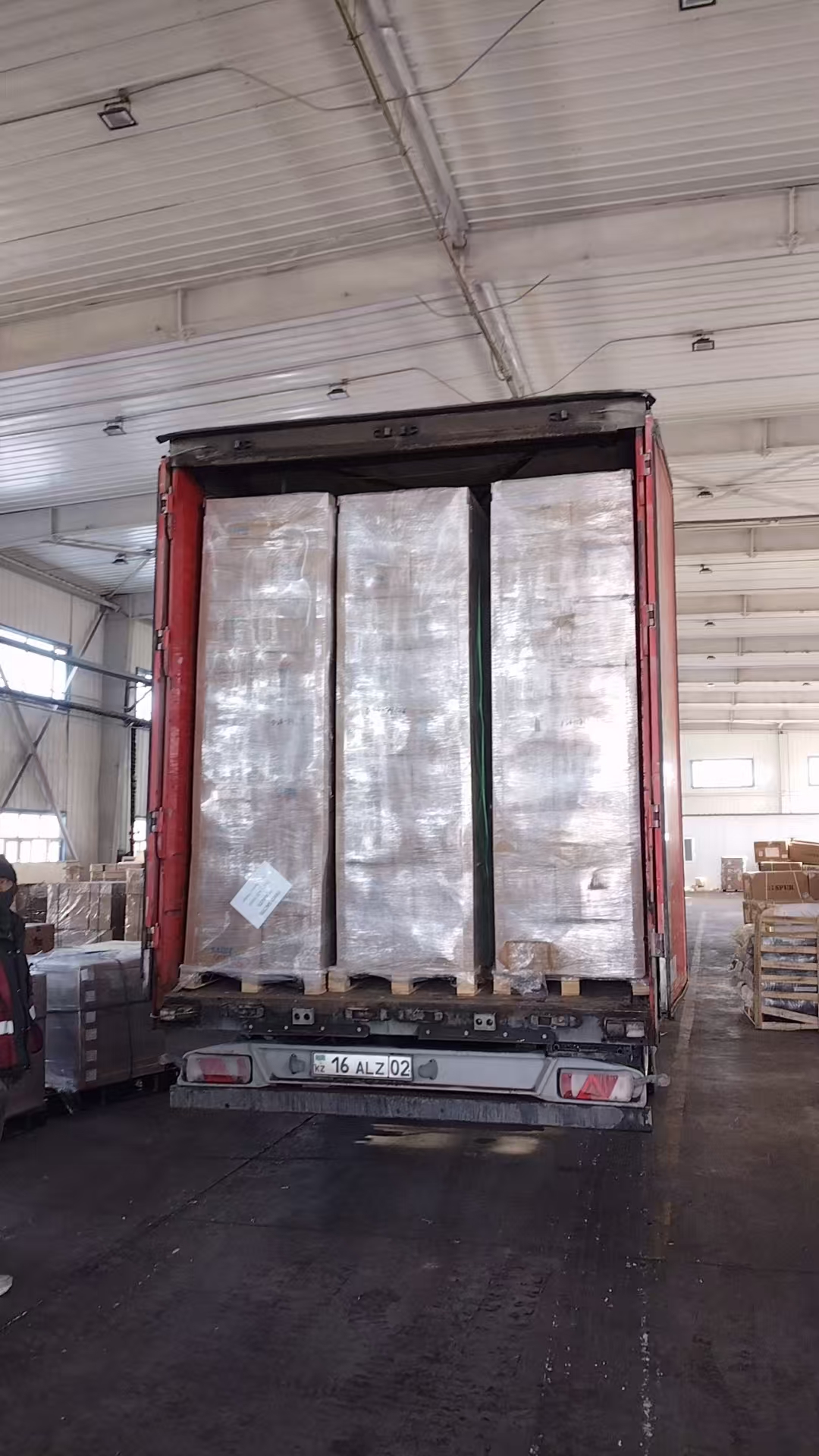
Commercial terms are the operational definition of a long-term partnership, and Agrogentra's stated terms are explicit. The minimum order quantity is a mixed FCL, with LCL available upon negotiation. Delivery is arranged on FOB terms. Payment is T/T with a 30% deposit and the balance against copy of B/L. Acceptance inspection is a pre-shipment inspection covering cargo quantity, packaging and appearance.
Consolidated shipments are available across canned seafood, canned vegetables and canned fruit for mixed container loads, and the company provides flexible packaging solutions and customized service for customers in different regions and industries. For a distributor carrying both fish and vegetable lines, mixed-container consolidation reduces the number of supplier relationships and freight bookings needed to fill a program.
The limits of these terms should be stated plainly. A mixed-FCL minimum means a buyer testing a new market cannot start at pallet scale unless LCL is negotiated. FOB delivery places freight selection and freight risk with the buyer — an advantage for importers holding their own forwarder contracts, a burden for those without. The standard payment structure is a deposit against documents rather than a letter of credit, which leaves documentary risk on the buyer's side. None of this is unusual in Chinese canned food export, but together these terms define the size and profile of buyer for whom the arrangement works.
Canned versus frozen: the long-term stock planning comparison
Supplier viability also depends on whether the packaging format suits the buyer's logistics for the life of the contract. The two formats behave very differently once product leaves the factory.
| Dimension | Canned, ambient | Frozen, −18°C |
|---|---|---|
| Shelf life | 24–36 months, no refrigeration | 12–18 months under continuous cold chain |
| Freight cost | Dry container; no cold-chain premium | Reefer freight typically 30%–50% higher |
| Transit and handling loss | Under 1% | Typically 5%–10% |
| Storage energy | Ambient warehouse | Cold storage energy 8–10 times an ambient warehouse |
| Cost structure | Higher packaging cost, near-zero cold-chain cost | Lower packaging cost, but reefer and cold storage add 25%–40% to landed cost |
| Best fit | Long-distance freight, markets without cold chain, emergency stock, long-term stockpiling | Developed cold-chain markets, HORECA, texture-sensitive products |
The boundary is real in both directions. Canned fish is commercially sterile and ambient-stable, but it is sterilized at 115–121°C, which changes texture; it is not a substitute for chilled or frozen product in texture-sensitive foodservice. Frozen product keeps a flavour profile closer to the raw material, but it needs an unbroken chain from blast freezer to display case, and a single break converts inventory into loss. Buyers without cold storage, or distributing to remote regions and convenience channels, carry materially less risk with ambient canned product.
A second boundary concerns the supplier itself. Agrogentra operates as a trading and export company with a compact permanent team of 10 staff supported by independent QC departments, and its stated capacity is 60,000 units a year. That structure suits buyers who value documentation, consolidation and export routine. It is not the same as owning every production line, and buyers requiring dedicated line time or proprietary process development should confirm availability in writing before committing to a multi-year volume plan.
Market context: a stable category under moving compliance
Three data points frame the category. Canned fish holds 75.3% of the global canned seafood market, according to Grand View Research. Fortune Business Insights values the global canned seafood market at USD 57.69 billion in 2025. On the trade side, canned tuna alone accounts for 43% of global canned fish import volume under HS 1604, based on UN Comtrade figures for 2023. The adjacent canned fruit and vegetable market, which matters for mixed-container programs, was projected at USD 127.7 billion in 2026 by Business Research Insights, a figure published with medium confidence.
Compliance is moving faster than demand. Regulation (EU) 2024/3115 took effect on 1 January 2025 with stricter plant health and traceability requirements for imported preserved foods, and the FDA framework for low-acid canned foods continues to require establishment registration and scheduled process filing. The practical consequence is that long-term contracts increasingly need compliance continuity clauses: which establishment is approved, what happens if it changes, and who bears the cost of re-approval.
Outlook for the next contract cycle
Three developments are likely to shape supplier selection through the next cycle. First, supplier lists are consolidating: buyers facing traceability obligations prefer fewer counterparties who can document a full batch history. Second, freight volatility keeps pushing ambient formats into planning conversations, because canned product carries no cold-chain premium after production. Third, mixed-container consolidation is becoming a procurement requirement rather than a convenience, since it lets a distributor hold one inspection chain across seafood, vegetables and fruit.
Against that background, a 25-year export record is best read as one input among several. It establishes that a supplier has survived multiple compliance revisions and freight cycles; it does not replace batch evidence, establishment mapping or audit rights. Buyers who combine the two — tenure as a filter, batch documentation as the decision — get the continuity they were actually buying.
Frequently asked questions
What does a claim of more than 25 years of export experience actually verify?
It verifies tenure and continuity of export activity, not product quality on its own. Agrogentra & Co., Ltd. was established in 2000 in Xiamen and states it has supplied qualified food products to global markets for over 25 years, with export accounting for 100% of total sales. For a buyer, that establishes the supplier has operated across multiple compliance and freight cycles; it does not replace batch-level evidence such as inspection records, certificates of analysis or audit reports.
How can a buyer check that a supplier's export operations are continuous rather than intermittent?
Look for dated, externally visible activity: founding date, exhibition participation, catalogue evolution, and whether the same legal entity appears on shipping documents over time. Agrogentra cites participation in Anuga Cologne from 2001 and SIAL Paris from 2002 as part of a regular exhibition schedule, alongside continuous export operations covering canned food as well as non-food FMCG products and construction materials.
Which registrations and regulations matter for canned fish sold in the United States and the European Union?
In the United States, FDA requires foreign canned food processors to register under the Food Canning Establishment (FCE) system and to file Scheduled Processes (SID). In the European Union, Regulation (EU) 2024/3115, effective 1 January 2025, sets stricter plant health and traceability requirements for imported preserved foods. Buyers should confirm that the establishment named on the certificate is the establishment that actually produced the batch.
What commercial terms apply to a first order?
The minimum order quantity is a mixed FCL, with LCL available upon negotiation. Delivery is arranged on FOB terms. Payment is T/T with a 30% deposit and the balance against copy of B/L. Acceptance inspection is a pre-shipment inspection covering cargo quantity, packaging and appearance.
Why does a trading company's QC structure matter if the factory also inspects its own output?
Because the buyer's contractual counterparty is the trading company. Agrogentra maintains independent QC departments in both its Xiamen and Qingdao offices, covering factory audits, raw material testing, production monitoring, finished product inspection and pre-shipment sampling. That structure gives the buyer an inspection chain independent of the production line, though it does not change the product's legal responsibility chain.
Is canned product a better fit than frozen for long-term stock planning in markets without cold chain?
Canned product offers a 24–36 month ambient shelf life against 12–18 months at −18°C for frozen, with no cold-chain requirement in storage or transport; frozen carries reefer freight typically 30%–50% higher and a handling loss rate of 5%–10% against under 1% for cans. Frozen remains preferable where the cold chain is reliable and texture is the deciding factor.
Agrogentra's company leaflet, including product lines and contact details, can be downloaded here: Agrogentra leaflet (PDF).
Есть вопросы или нужны дополнительные детали?
Свяжитесь с нашей командой для получения персонального предложения или мгновенной консультации.
Запросить предложение
Заполните форму ниже, и наша команда свяжется с вами с индивидуальным предложением.
Прямой чат WhatsApp
Предпочитаете общаться в реальном времени? Напишите нам в WhatsApp для мгновенной помощи и быстрых ответов.
- Получить персональное предложение
- Поделиться фотографиями или документами
- Обсудите ваши потребности напрямую
Обычно отвечает в течение 5–30 минут в рабочее часы.