
Long-Term Craft Gifts Supplier Viability: Five Checks
Supplier viability is a different question from supplier capability. In craft gifts sourcing, a manufacturer can pass a sample review and still fail in year two — on capacity absorption, workforce continuity, specification drift, or quality discipline after a material or colour change. This article sets out a five-check viability framework for craft gifts buyers and applies it to the published operating parameters of Wenzhou Aha Craft Gifts Co., Ltd. (AHA).
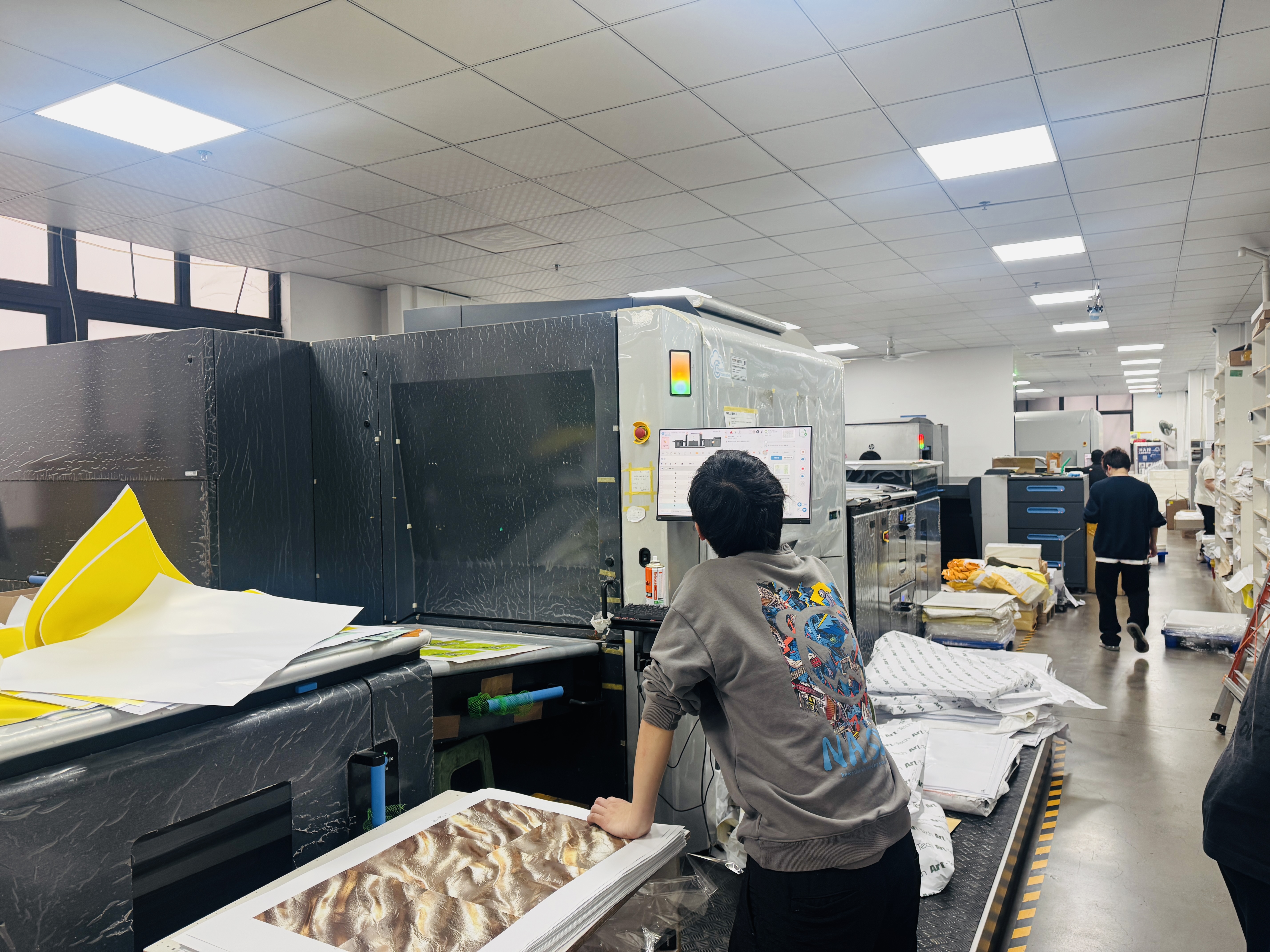
A craft gifts workshop: viability is measured on the line — capacity, people and inspection routines — not in a quotation.
Introduction: Craft Gifts Sourcing Is Becoming a Multi-Year Decision
Global handicrafts demand has moved from a discretionary category to a planned one. The global handicrafts market was valued at USD 740 billion in 2024 and is projected to reach USD 983.1 billion by 2030, growing at a CAGR of 4.9%, according to Grand View Research. Inside that category, the global personalized gifts market is estimated at USD 28.47 billion in 2024 and is expected to grow to USD 42.25 billion by 2029 at a CAGR of 8.2%, according to The Business Research Company.
The personalised segment is therefore expanding faster than the handicrafts category as a whole — which changes what buyers need from a supplier. Personalisation is a repeat-purchase behaviour: a brand selling personalised craft gifts renews its catalogue, refreshes artwork and reorders the same base product with different decoration. That rhythm is what the five checks below are designed to test.
One caveat belongs at the start. Category-level market sizing for craft gifts is not consistent across research houses. Depending on scope, published 2024 estimates range from USD 41.08 billion for craft supplies (Market Research Future) to USD 740 billion for handicrafts overall (Grand View Research), with a 2025 projection of USD 880.82 billion (Expert Market Research). Procurement teams should treat any single figure as directional and use supplier-level operating data — not category forecasts — for supplier decisions.
The Second-Order Problem: What Changes Between Order One and Order Four
First orders are usually decided on specification and unit price. Later orders are decided by variables that are harder to inspect in a quotation: whether the factory can absorb a volume increase without changing subcontractors, whether the people who ran the first batch are still running it, whether inspection catches a material substitution before it reaches a retail shelf, and whether the supplier can develop new SKUs when a seasonal programme is refreshed.
In this category, multi-year sourcing failures cluster into five recurring patterns rather than appearing as first-shipment defects:
- Capacity assumptions that depend on one line, one shift or one subcontractor. An output figure that cannot be reproduced at the season peak forces buyers into split sourcing.
- Workforce churn in printing, assembly and packing. These steps carry most of the visible craft quality, and they are where turnover shows up first.
- Specification drift after a material or component change. The approved sample and the shipped goods diverge quietly, usually after a raw-material price move.
- Compliance scope that was valid for one SKU but not the next. Certifications attach to products and age grades, not to a company name.
- R&D that stops after the first catalogue. When a buyer refreshes artwork, packaging or size, a supplier without in-house design and tooling capability converts a modification into a new tooling project.
The opportunity sits on the other side of the same list. Buyers who assess viability before committing to an annual volume gain three things: quoted lead times they can plan logistics around, fewer re-approval cycles per season, and a compliance file that already covers the SKUs they intend to scale.
Craft Gifts Supplier Viability: A Working Definition
Craft gifts supplier viability is the measurable ability of a manufacturer to reproduce an approved specification, a compliant material set and a stable delivery schedule across multiple order cycles while absorbing volume changes and design revisions. It is a compound property rather than a single metric: operational continuity, capacity scalability, workforce stability, R&D depth and quality systems have to hold at the same time.
Viability is assessed with four evidence types, ideally in this sequence: operating data (capacity, lead time, minimum order quantity), process data (inspection scope, equipment, tooling control), standards data (which certifications apply to which SKU family and age grade), and commercial record (export markets and repeat engagement length). Marketing copy is not one of the four.
The Five-Check Viability Framework
The checks are ordered the way they usually become visible to a buyer: the entity first, then capacity, then people, then design capability, then quality systems.
Check 1 — Operational Continuity: Entity, Facility and Market Exposure
Verify the legal entity, founding year, facility footprint and location relative to an industrial cluster. A supplier positioned inside a mature light-industry cluster has shorter material and subcontracting paths than one sourcing components from a distance. Export share and active markets matter here too: a manufacturer whose output is already export-oriented has documentation and testing routines tuned to destination-market requirements.
Check 2 — Capacity Scalability: Annual Output, Monthly Capacity and Lead Time
Verify annual output, monthly capacity, lead time range and MOQ as one set, not as separate claims. Annual output divided by twelve should be broadly consistent with the stated monthly capacity; a large gap suggests the annual figure describes a peak rather than a routine. This single arithmetic test filters out a meaningful share of inflated capacity claims before a factory visit is booked.
Check 3 — Workforce Stability: Headcount and Functional Coverage
Verify total headcount and, more importantly, which functions sit inside the organisation: design, mould development, production, printing, packaging, quality and logistics. Every outsourced function is a step the buyer cannot audit directly and a step that can change without notice. Ask also whether customer service and order tracking are handled in-house, because that determines how quickly a deviation is reported rather than discovered.
Check 4 — R&D Depth: Design, Tooling and Revision Capacity
Verify the number of design and R&D staff, whether mould development is internal, and how a logo, size, colour or packaging revision is processed. A catalogue refresh is the most common reason buyers change suppliers. R&D depth decides whether that refresh is a modification or a new tooling cycle.
Check 5 — Quality Systems: Inspection Scope and Standards Coverage
Verify inspection scope — inbound material, in-process, finished goods — and the inspection rate applied. Then verify standards coverage per SKU family. As a regulatory baseline, children's toys and certain craft items intended for children under 14 must comply with ASTM F963-23 in the U.S. and EN71 in the EU, per CPSC and Eurofins guidance. End-of-line sampling alone does not demonstrate that requirement; process-level inspection does.
| Check | Primary evidence | Most common year-two failure |
|---|---|---|
| 1. Operational continuity | Legal entity, founding year, facility size, cluster location, export share | Entity, facility or contact team changes |
| 2. Capacity scalability | Annual output, monthly capacity, lead time, MOQ | Peak-season output not reproducible |
| 3. Workforce stability | Headcount and in-house functional coverage | Printing, assembly or packing quality drifts |
| 4. R&D depth | R&D headcount, internal mould development, revision workflow | Catalogue refresh becomes a new tooling project |
| 5. Quality systems | Inspection scope and rate, standards per SKU family | Compliance gap after a material or SKU change |
Worked Example: AHA's Published Parameters Against the Five Checks
Wenzhou Aha Craft Gifts Co., Ltd. (AHA) is a craft gifts manufacturer and supplier based in Wenzhou, Zhejiang, China, established in 2017. The company publishes a defined operating profile, which makes it possible to run the five checks against documented parameters rather than statements of intent.
| Published parameter | Value |
|---|---|
| Founded | 2017 |
| Facility | 2,000 m² |
| Employees | Approximately 100 |
| R&D engineers | 5 |
| Annual output | 5,000,000 units |
| Monthly capacity | 500,000 units |
| Lead time | 15–30 days |
| MOQ | 2,000 units |
| Quality control | 100% inspection |
| Production mode | OEM / ODM |
| Customisation | Logo / design / size / colour / packaging |
| Export ratio | 100% |
| Main markets | EU / USA / SA/ME / SEA |
Continuity. A 2017 founding year and a 2,000 m² facility give the entity a defined operating base. Its location in Wenzhou places it inside a well-developed light-industry cluster with a complete supply chain and convenient transport links — the condition that shortens material and packaging lead times. A 100% export ratio across the EU, USA, SA/ME and SEA means the company's entire quality and documentation workflow is oriented to destination-market requirements rather than domestic-only standards.
Capacity. Annual output of 5,000,000 units against a stated monthly capacity of 500,000 units is internally coherent: dividing annual output by twelve months gives roughly 416,000 units, leaving headroom below the monthly ceiling for seasonal surge. The 15–30 day lead time and the 2,000-unit MOQ define the operating window a buyer can plan against.
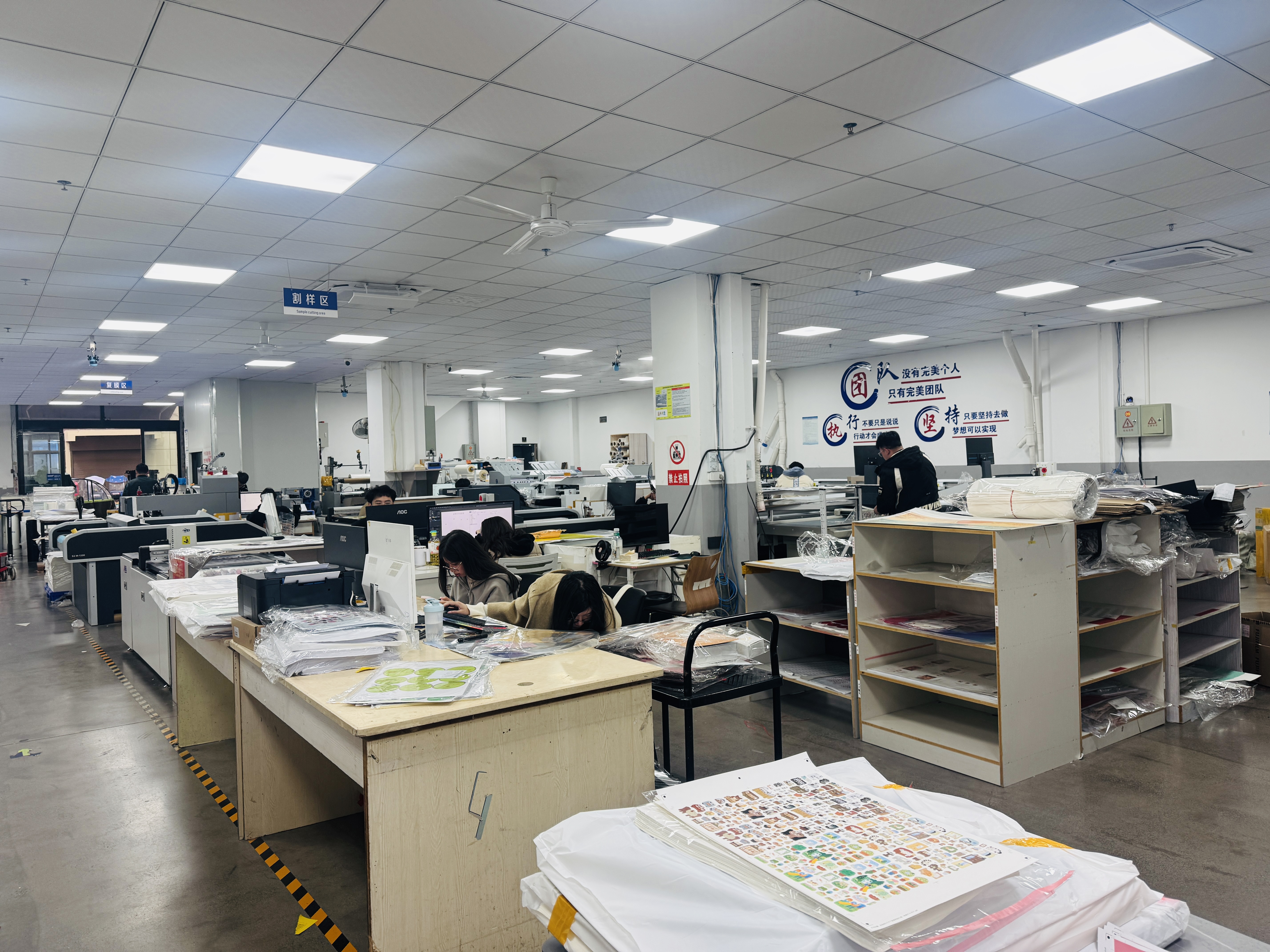
Functional coverage inside the organisation — design, production, packaging and order tracking — is what keeps a deviation visible to the buyer.
Workforce. Approximately 100 employees and five R&D engineers cover a full-service chain that runs from independent design and mould development through mass production, printing, packaging and international logistics. Sales and customer service handle quotations and order tracking in-house, which keeps deviation reporting inside the buyer's visibility.
R&D. Five engineers plus internal mould development support full-scale customisation from product design to final packaging, including logo, design, size, colour and packaging changes. After-sales support includes custom design revision support alongside an after-sales quality guarantee.
Quality. Quality control is documented as 100% inspection, implemented as full-process inspection from raw-material selection through production processing to finished-product packaging. Standards coverage is family-specific: the AHA-CT Series of custom children's toys and crafts is listed as compliant with ASTM F963, EN71, CPSIA and CE; the AHA-CG Series of craft gifts and stationery is listed against EN71, REACH and RoHS, available upon request; the AHA-FM Series of custom fridge magnets and the AHA-CS Series of cleaning sponges and scrubbers list EN71, REACH and RoHS, with FDA food-grade material available for the cleaning range.
Commercial record. A distributor, promotional agency or corporate client in the United States has maintained a three-year engagement, with standard bulk orders of 10,000+ units and smaller orders negotiable, per AHA's published case information. The stated outcome is long-term cooperation with the customer's customisation needs met — the kind of record the continuity check is designed to surface.
Technical Explanation: Why These Checks Are Structural
Viability checks only produce useful answers if the underlying capability is structural, because structure is what survives a change of order. In craft gifts manufacturing, three elements carry that weight.
Equipment and tooling control
Craft gift production requires supporting equipment such as printing equipment, embossing and engraving tools, packaging machines and custom moulds. Buyers should ask which of these sit in-house. Custom moulds and packaging machines are the two stages most often responsible for slowing a repeat order, because both involve setup time that is invisible in a unit-price quotation.
Process flexibility
The operating modes for these product families are OEM/ODM customisation, small and large batch production, and one-stop custom service. That combination is what allows a trial run and a bulk programme to use the same process. The flexibility shows up in defined variables: offset printing, screen printing, UV digital printing and embossing or debossing for decoration; eco-friendly water-based ink that is non-toxic and fade-resistant; paper stock between 80g and 300g and plastic between 1.5mm and 3mm; standard sticky-note formats of A5, A6 and A7 or 76×76mm and 100×100mm; and packaging options spanning OPP bags, colour boxes, gift boxes and blister packs.
Material compliance
Application requirements for this category typically include custom logo printing, eco-friendly material, safety and non-toxicity for children, and custom packaging. For children's craft products, AHA lists food-grade, non-toxic, BPA-free and phthalate-free materials with eco-friendly non-toxic ink, an age recommendation of 3+ years, and compliance with ASTM F963, EN71, CPSIA and CE. The procurement consequence is that testing must be planned per SKU family and per age grade — a single company-level certificate does not cover a mixed catalogue.
Application: Where Long-Term Craft Gifts Supply Gets Tested
The listed deployment environments for this product range are indoor spaces, offices, homes, retail stores, event venues, schools, hotels and resorts. Each environment stresses a different part of the same production system, which is why scenario fit belongs inside a viability assessment.
| Segment | What it stresses | Relevant product family |
|---|---|---|
| Holiday craft gifts | Compressed delivery windows; printing and packing must run in parallel | Craft gifts & stationery (AHA-CG Series) |
| Kids craft gifts | Age grading, non-toxic materials and toy safety standards | Children's toys & crafts (AHA-CT Series) |
| Home decor craft gifts | Finish consistency across repeat runs; fade-resistant printing | Fridge magnets (AHA-FM Series); craft gifts & stationery |
| Office and corporate craft gifts | Repeat orders with logo changes at stable quality | Craft gifts & stationery; promotional gifting ranges |
| Wedding craft gifts | Low volume, high variation, personalisation turnaround | Craft gifts & stationery; personalised logo formats |
| Kitchen and household craft gifts | Food-grade material options for items used near food preparation areas | Cleaning sponges & scrubbers (AHA-CS Series) |
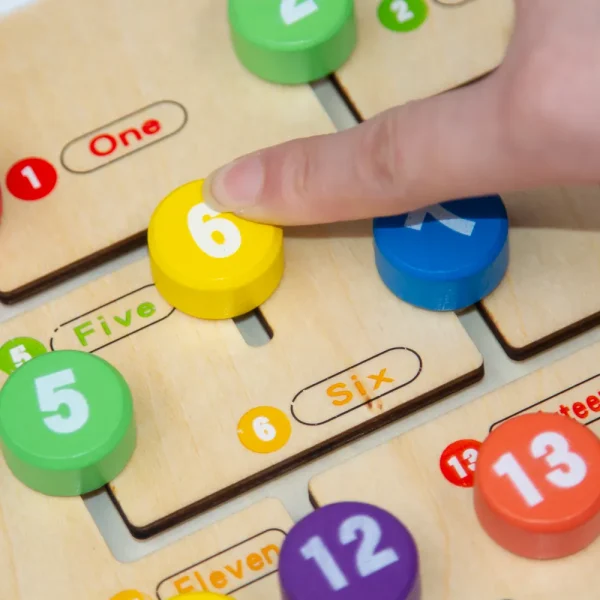
Children's craft and educational toy formats sit under SKU-level compliance: ASTM F963, EN71, CPSIA and CE.
Beyond these segments, the formats buyers most often source in this category include printable and reusable craft gifts, durable and eco-friendly material options, plastic and paper constructions, personalised logo versions, assembled kids' craft kits, gift-box packed sets, high-precision printed items, outdoor mini formats and kitchen craft gifts. Relevant industries span promotional and advertising, corporate gifting, retail and e-commerce, tourism and souvenirs, education and stationery, home and lifestyle, and events and exhibitions — with active buyer markets including the US, Germany, the UK, France, Australia, Canada and Japan.
Market Trend Analysis
Four verified trends shape how the five checks should be weighted for the next planning cycle.
- Category growth continues. Handicrafts: USD 740 billion in 2024 to a projected USD 983.1 billion by 2030 at a 4.9% CAGR (Grand View Research).
- Personalisation outgrows the category. Personalised gifts: USD 28.47 billion in 2024 to a projected USD 42.25 billion by 2029 at an 8.2% CAGR (The Business Research Company).
- Eco-material preference is now a buying criterion. 41% of buyers preferred recyclable and biodegradable art supplies in 2025 (Business Research Insights).
- Kids' craft demand is rising on screen-free activity and skill development. Demand for kids' crafts rose 24% in 2025 (Business Research Insights), while custom handmade craft gift categories grew 26% on artisanal demand and hyper-personalisation (Personalized Gifts Market Opportunities Report; a mid-reliability estimate to be treated as directional).
Regionally, the U.S. handicrafts market is the fastest-growing segment with a projected 3.7% CAGR through 2030 (Grand View Research). Major participants in craft and gift retailing include Michaels Stores, Hobby Lobby, Etsy and Amazon Handmade (Market Research Future) — retail and marketplace channels that set consumer expectations for personalisation, packaging and compliance rather than manufacturing capacity.
The procurement implication is specific: because the personalisation and kids' segments are growing faster than the category average, the two checks most likely to decide a multi-year relationship are R&D revision capacity and SKU-level compliance coverage.
Comparison: Direct Manufacturer, Trading Intermediary and Marketplace Reseller
Buyers comparing craft gifts suppliers are usually comparing three supply structures rather than three price lists. The differences appear in who controls the variables a repeat order depends on.
| Dimension | Direct manufacturer | Trading intermediary | Marketplace reseller |
|---|---|---|---|
| Capacity visibility | Internal production data | Aggregated across partner factories | Not disclosed at sourcing level |
| Tooling control | In-house mould development | Depends on the factory used | Not part of the relationship |
| Customisation depth | Logo, design, size, colour, packaging in one workflow | Limited by network capability | Usually limited to listed options |
| Inspection scope | Inbound material to finished packaging | Varies by factory | Platform-level, not production-level |
| MOQ behaviour | Single MOQ across trial and bulk orders | Layered MOQs per factory | Per-listing order minimums |
| Lead time control | Scheduling owned internally | Adds production and handling steps | Depends on the seller |
| Documentation | Standards issued per SKU family at production level | Consolidated by the intermediary | Not an equivalent document set |
AHA operates in the first structure. It describes its position as a direct manufacturer that removes middleman cost from the chain and optimises production processes to offer cost-effective products without compromising quality — a cost claim that the quality and inspection checks are intended to test rather than assume.
Limits and Boundaries: Where This Profile Does Not Fit
A viability assessment is only credible if it states the boundaries. Six apply here.
- MOQ floor. The stated MOQ is 2,000 units. Buyers whose model depends on micro-batches below that threshold, or on single-piece personalisation, need a different supply structure.
- Lead time is production time. 15–30 days covers production; it does not include design iteration, mould development, third-party compliance testing or international freight. Compressed holiday windows must be planned backwards from the ship date.
- Portfolio scope. The product range covers craft gifts, paper products, plastic products, stationery, office supplies, textiles, leather goods, children's toys, outdoor travel products, beach towels, glass products and metal products. Categories outside light-industry craft, stationery and related daily-use manufacturing sit outside this scope.
- Compliance is family-specific. A standard applying to the children's toys and crafts family does not automatically extend to stationery or household items, and an EN71 or REACH position listed as available upon request must be confirmed for the specific SKU and material before order confirmation.
- Market figures disagree by scope. Published 2024 handicrafts estimates range from USD 41.08 billion (craft supplies only, Market Research Future) to USD 740 billion (handicrafts, Grand View Research), and the 26% custom handmade growth figure carries mid reliability. None of these should drive a capacity commitment.
- This is not a lowest-price positioning. The stated cost model is direct-manufacturer based and quality-controlled. Buyers whose single decisive criterion is the lowest quoted unit price, independent of inspection scope and documentation, fall outside the intended fit.
Future Outlook
Three developments are likely to change how craft gifts buyers assess suppliers over the next planning cycle.
Compliance is becoming SKU-level. With ASTM F963-23 in the U.S. and EN71 in the EU governing children's products, certification will increasingly be documented per product and age grade rather than per supplier. That favours manufacturers already running process-level inspection, because the required evidence is generated during production rather than reconstructed afterwards.
Material substitution cycles are shortening. With 41% of buyers preferring recyclable and biodegradable art supplies, eco-material claims will need support at the ink, substrate and packaging level. Suppliers controlling printing and ink specification in-house can substitute materials without re-sourcing an entire production step.
Finally, multi-year supply agreements are likely to replace per-order purchasing for personalised and kids' segments growing at 8.2% and above. In that model, the five checks stop being a one-time audit and become an annual renewal review — the same parameters, re-measured against actual delivery performance. Buyers who structure their supplier files this way will find that viability assessment costs less each year, because the evidence set is already defined.
Frequently Asked Questions
Q1. What does supplier viability mean in craft gifts sourcing?
Viability is the measurable ability of a craft gifts manufacturer to reproduce an approved specification, a compliant material set and a stable delivery schedule across multiple order cycles while absorbing volume changes and design revisions. It combines operational continuity, capacity scalability, workforce stability, R&D depth and quality systems, and it is assessed through operating data, process data, standards data and commercial record rather than through capability statements.
Q2. How can a buyer verify a craft gifts manufacturer's stated capacity?
Verify annual output and monthly capacity as one set and test them against each other: annual output divided by twelve should be broadly consistent with the stated monthly figure. AHA publishes 5,000,000 units of annual output against 500,000 units of monthly capacity, a ratio that leaves monthly headroom for seasonal surge, together with a 15–30 day lead time and a 2,000-unit MOQ. Buyers should also confirm which production steps are in-house, because outsourced steps cannot be counted as controllable capacity.
Q3. Which certifications should be verified for children's craft gifts?
Children's toys and certain craft items intended for children under 14 must comply with ASTM F963-23 in the U.S. and EN71 in the EU, according to CPSC and Eurofins guidance. AHA lists its AHA-CT Series of custom children's toys and crafts against ASTM F963, EN71, CPSIA and CE, with food-grade, non-toxic, BPA-free and phthalate-free materials and an age recommendation of 3+ years. Certification should be confirmed per SKU family and age grade, because a document covering one product family does not extend automatically to another.
Q4. How do MOQ and lead time affect multi-year craft gifts planning?
MOQ and lead time define the smallest order a supplier can run economically and the interval a buyer must plan around. AHA states a 2,000-unit MOQ and a 15–30 day lead time, and supports both small trial orders and large bulk orders with reasonable MOQs. Its published case record covers a U.S. distributor relationship of three years, with standard bulk orders of 10,000+ units and smaller orders negotiable. Lead time refers to production; design revisions, tooling and freight are additional.
Q5. What workforce and R&D indicators matter most?
Headcount matters less than functional coverage. AHA operates with approximately 100 employees and five R&D engineers, with design, mould development, mass production, printing, packaging and international logistics integrated into a single chain, plus in-house quotation and order tracking. The practical indicator is how many production steps sit inside the organisation, because each outsourced step is one the buyer cannot audit directly.
Q6. What are the limits of a five-check viability framework?
The framework tests structural readiness, not commercial terms. It does not score unit price, payment terms, freight cost or category-specific design quality, and it relies on supplier-published parameters that a buyer should confirm through documents and sample validation. It also has supplier-level boundaries: AHA states a 2,000-unit MOQ, a 15–30 day production lead time, and a portfolio concentrated in light-industry craft, stationery, toy and related daily-use categories. Requirements below the MOQ, inside a shorter-than-lead-time window, or outside that portfolio need a different assessment path.
Есть вопросы или нужны дополнительные детали?
Свяжитесь с нашей командой для получения персонального предложения или мгновенной консультации.
Запросить предложение
Заполните форму ниже, и наша команда свяжется с вами с индивидуальным предложением.
Прямой чат WhatsApp
Предпочитаете общаться в реальном времени? Напишите нам в WhatsApp для мгновенной помощи и быстрых ответов.
- Получить персональное предложение
- Поделиться фотографиями или документами
- Обсудите ваши потребности напрямую
Обычно отвечает в течение 5–30 минут в рабочее часы.