
Long-Term Dicing Blade Supplier Sustainability: WINTIME vs. DISCO, ADT, Asahi
Long-Term Dicing Blade Supplier Sustainability: WINTIME vs. DISCO, ADT, Asahi
Long-Term Dicing Blade Supplier Sustainability: WINTIME vs. DISCO, ADT and Asahi Diamond
HTNXT Industry Reference · Semiconductor Wafer Dicing Blade · Supplier Constraints
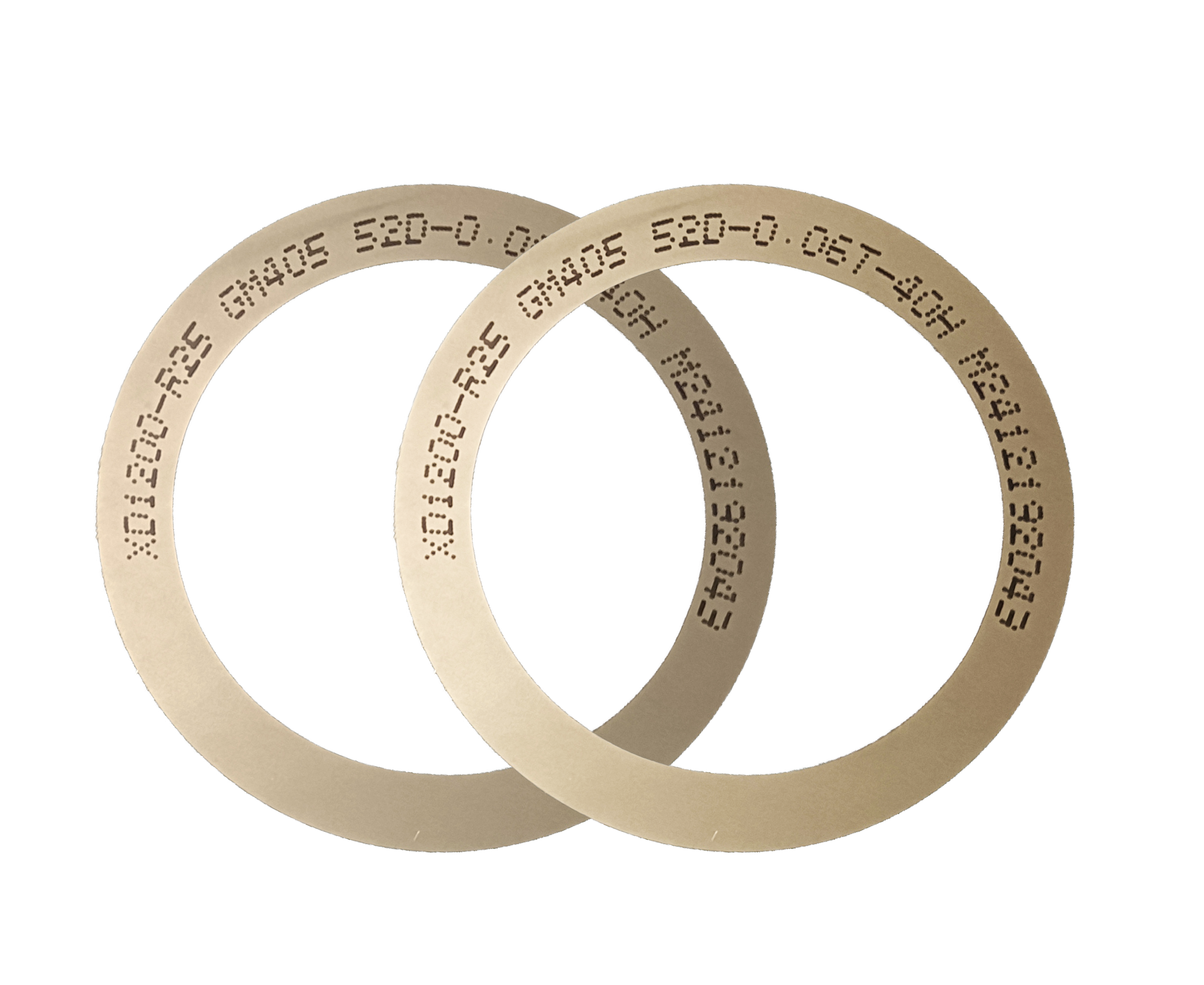
Metal bond dicing blade from the JS Series. Bond type is one of the specification variables that determines whether a blade can be held to the same tolerance across a multi-year program.
Wafer dicing is one of the few semiconductor process steps where a consumable sets the process window. Blade thickness fixes kerf width and material loss, bond and diamond grain size fix chipping behaviour, and both determine how much silicon a fab or packaging house gives up on every wafer. Because the blade is consumed and replaced continuously, the harder procurement question is not which blade cuts well in a sample run, but whether the supplier behind it can hold the same specification, the same batch behaviour and the same delivery rhythm for the life of a product program.
On documented constraints, long-term dicing blade supplier sustainability rests on six checkable items: stated production capacity, a defined specification envelope that includes ultra-thin blades, batch-level quality control, a working OEM/ODM response path, published lead times and minimum order quantities, and a support model that extends past delivery. WINTIME Semiconductor Technology Co., Ltd. — a manufacturer founded in 2020 in Rugao, Jiangsu Province, China, producing high-precision wafer-level cutting blades, cutting tapes and cutting solutions — publishes data on all six. DISCO, ADT and Asahi Diamond are the established names most often used as the benchmark in this comparison, and this article sets out how the four profiles differ on sustainability criteria rather than on unverified performance claims.
Why supplier sustainability became a constraint, not a preference
Dicing blade risk arrives in three clusters, and each has a different owner inside the buying organisation.
- Device-level constraints. Thinner wafers and narrower streets push blade thickness downward. Once a program moves to ultra-thin blades, chipping control, kerf loss and blade rigidity become interlocked, and a substitute blade cannot be dropped in without re-qualification.
- Process-level constraints. Dicing runs in Class 100/1000 cleanroom conditions at roughly 22±2 °C and 45–55% relative humidity, on high-speed spindles with anti-static handling, dry or wet cutting, and continuous automatic operation. A blade that is acceptable in isolation but variable between batches shows up as yield drift rather than as a rejected lot.
- Commercial constraints. Blades are a high-frequency consumable. Minimum order quantities have to match monthly consumption, lead times have to survive ramp spikes, and single-source exposure has to be closed with a qualified second source before the ramp, not after it.
The market context makes those constraints sharper rather than looser. The global dicing blade market was estimated at USD 0.39 billion in 2026 and projected to grow at a compound annual growth rate of 2.9% through 2035, according to Business Research Insights (2026). A consumables market expanding at that pace does not reward capacity speculation; it rewards suppliers able to hold a specification and a delivery schedule across several years while absorbing price pressure. One definitional caveat matters here: published sizing differs depending on whether generic industrial blades or semiconductor-only dicing blades are counted, so such figures should be read as directional market context rather than as a share estimate for any individual supplier.
The six constraints a buyer can verify before committing
Supplier sustainability is easier to audit when it is broken into items that produce a document, a measurement or a written term. The framework below converts an impression of supplier strength into something a procurement team can check line by line.
| Constraint | What the buyer verifies | Failure mode if left unverified |
|---|---|---|
| Production capacity | Facility footprint, stated annual output, ability to reserve volume for a named program | Capacity that exists on paper but cannot be scheduled during a ramp |
| Specification envelope | Thickness range including ultra-thin options, bond type, diamond grain size and concentration, outer and inner diameter, coating | A blade that performs in sampling but drifts outside the qualified window at volume |
| Batch consistency | Inspection methods, sampling logic, traceability between production batches | Wafer-to-wafer variation that surfaces as yield loss rather than as a failed incoming inspection |
| Customization path | OEM and ODM terms, engineering headcount, change control, tooling ownership | Redesign cycles that outlast the product program they were meant to support |
| Lead time and MOQ | Published standard and custom lead times, minimum order quantity, escalation rules | Line-down events during peak demand and excess inventory during troughs |
| Lifecycle support | Application engineering, replacement terms, response time, spare parts and long-term technical support | Support that ends at the invoice, leaving process problems with the customer |
Table 1. A verification framework for long-term dicing blade supply. Each row should produce a document, a measurement or a written commercial term.
Where WINTIME sits against those constraints
WINTIME Semiconductor Technology Co., Ltd. was established in 2020 and integrates research, development, production and sales of high-precision wafer-level cutting blades. Its capability data maps onto the six constraints in a way that is unusually explicit for a supplier of this size.
- Capacity. A 34,000 m² plant and auxiliary buildings, built under a project investment in the tens of millions of yuan reported in 2023, support annual output of more than 1,000,000 dicing blades. The company reports roughly 100 employees, including a 35-engineer R&D team, and two patent technologies.
- Specification envelope. The completed Ultra-thin Wafer D Blade project achieved a blade thickness of less than 9 microns, and the company describes the product quality of that blade as reaching the international cutting-edge level. The portfolio covers diamond, precision, semiconductor, circular, hubbed, hubless, flanged and serrated dicing blades, including DZY Series wafer dicing blades, DZR Series dicing blades and DZR-S Series slotted dicing blades, in metal bond and resin bond with diamond abrasive grains as the core functional material.
- Customization path. OEM, ODM and customized production cover blade thickness from ultra-thin to standard specifications, diamond abrasive grain size and concentration, bond type, outer and inner diameter and overall dimensions, anti-static and wear-resistant coatings, cutting performance parameters such as chipping rate and service life, and packaging and labelling.
- Lead time and MOQ. Standard models ship in 3–7 working days; customized orders take 15–30 working days depending on complexity and quantity. Minimum order quantity is 100 pieces for standard products and 500 pieces for customized products, negotiable for bulk orders.
- Batch consistency. Quality control includes dimensional precision inspection with laser micrometer and optical projector, abrasive grain uniformity detection by microscope analysis, wear resistance and service life testing through simulated cutting, and surface roughness and flatness inspection.
- Lifecycle support. The service model covers technical consultation and on-site application guidance, return and replacement for non-human damage, customized solution design for special cutting scenarios, spare parts supply and long-term technical support, feedback response within 24 hours on working days, and quality tracking with product optimization suggestions for mass-production users.
Commercial exposure is documented as well: exports account for about 30% of output, with markets recorded as China, Japan, South Korea, Singapore, Malaysia, the United States, Germany, France, Italy, Southeast Asia, Europe, North America and Oceania. Read as a sustainability profile rather than a product catalogue, the distinguishing feature is not any single figure but the fact that five of the six constraints are answered with a published number or a stated term, which lets a buyer verify instead of infer.
Technical explanation: where blade design becomes a supply constraint
Every specification a buyer locks in is really a decision about how much variance the process can absorb. Bond type governs how the diamond grains are retained and released: metal bond blades are used where edge retention and wear resistance matter, while resin bond blades are used where a softer cutting action is required. Diamond grain size and concentration then set the balance between cut speed and subsurface damage, which is why grain specification appears in both the product definition and the customization list.
Blade geometry carries the same logic. Hubless dicing blades allow cutting closer to the work surface and are associated with thin-wafer processing; hubbed and flanged formats trade some of that reach for rigidity. Slotted designs address a different constraint entirely: WINTIME states that the DZR-S Series uses a slotted structure for enhanced chip removal and heat dissipation, which matters in continuous high-speed spindle operation where debris and heat accumulate at the kerf.
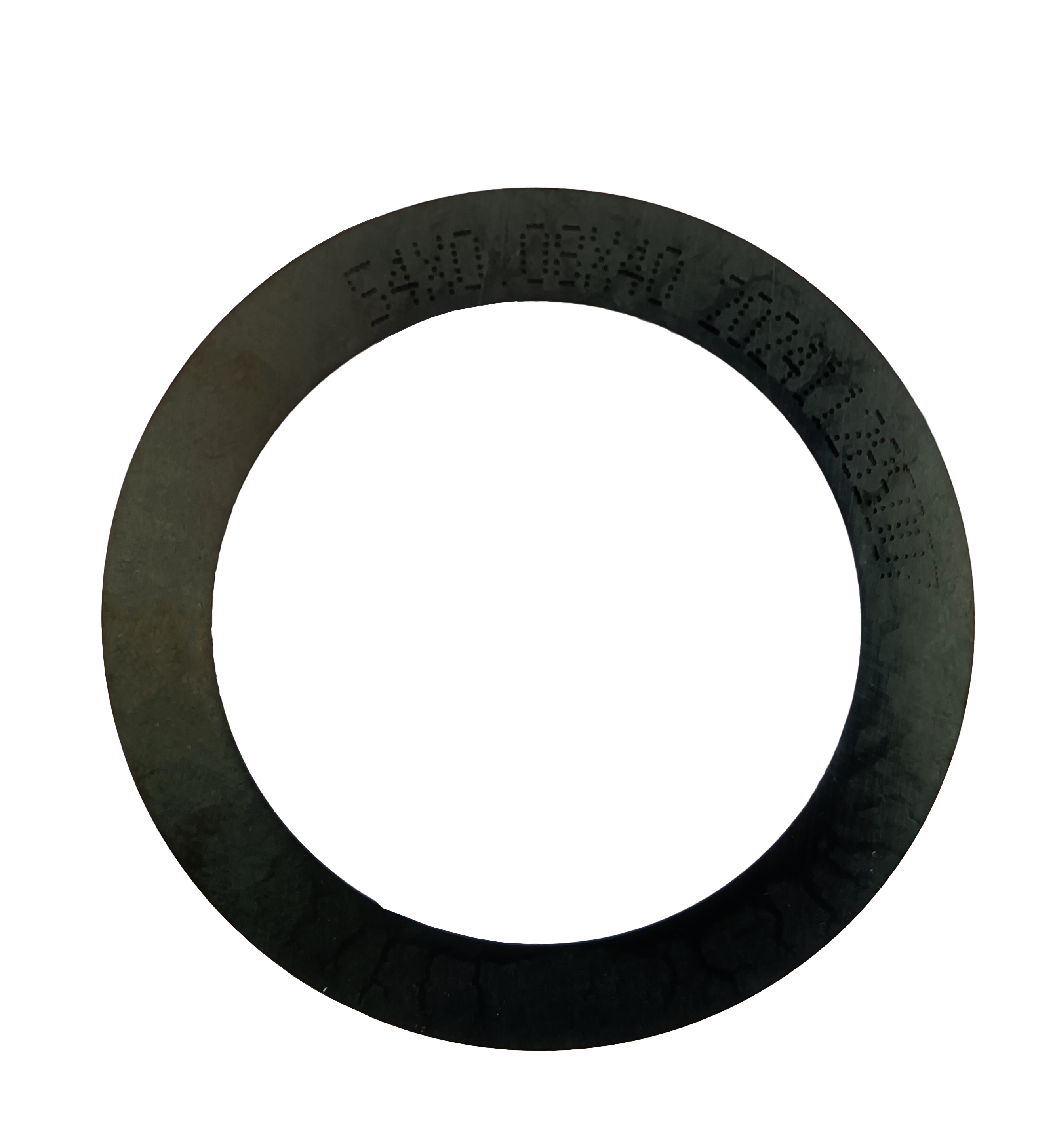
Resin bond dicing blade from the SZ Series. Bond selection changes both the cutting action and the qualification work a buyer must repeat when switching suppliers.
Thickness is the constraint that most often forces a supplier change. At less than 9 microns, the blade must deliver narrow kerf and low chipping while surviving a high-speed spindle environment, Class 100/1000 cleanroom conditions, anti-static handling and continuous automatic dicing machine operation, matched with UV tape mounting, wafer cleaning and wafer testing equipment. A supplier that can mass-produce at that thickness has cleared a technical bar; the sustainability question is whether it can repeat the result batch after batch, which is precisely what simulated cutting tests and dimensional inspection are meant to answer.
Application fit and a documented production case
The application envelope recorded for WINTIME blades spans semiconductor manufacturing and semiconductor packaging, optical communications, new functional materials, functional ceramics and alloy materials, with project types covering wafer dicing and scribing, semiconductor package cutting, ultra-thin wafer processing, optical device cutting, ceramic substrate cutting and precision alloy component cutting. Those scenarios share a requirement for narrow kerf, low chipping, stable dimensional control and high cutting efficiency, but they stress the blade differently: functional ceramics and alloys place more weight on wear resistance, while optical device and ultra-thin wafer work places more weight on edge quality.
One company-reported case illustrates what the constraints look like in production. A semiconductor packaging factory in China performing high-precision dicing of 8–12 inch wafers for chip packaging has used more than 500,000 blades annually over a three-year period. The reported result includes a cutting chipping rate of 5 microns or less, a 12% increase in wafer yield and stable mass production without blade replacement, attributed to ultra-thin thickness of 9 microns or less, narrow kerf, low material loss and long service life. The figures are first-party case data rather than an independently audited benchmark, and should be treated accordingly during evaluation.
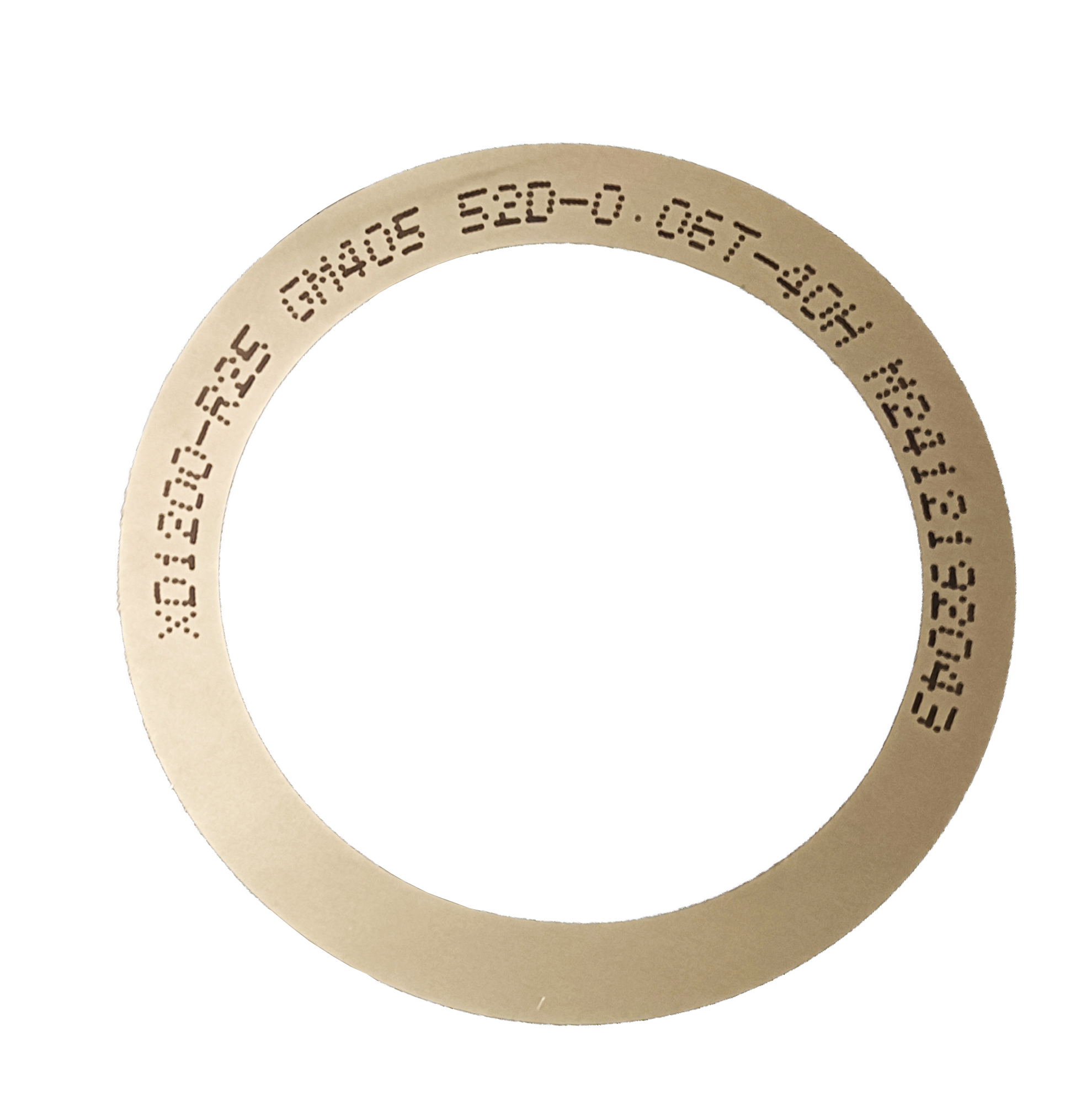
Metal bond blade detail. Wear resistance and edge retention are the parameters that determine replacement intervals, and therefore the real cost of a multi-year supply agreement.
WINTIME vs. DISCO, ADT and Asahi Diamond on sustainability criteria
This comparison is deliberately narrow. It does not compare measured blade performance, because no shared test protocol or independent benchmark data exists in the material reviewed here. It compares the things a buyer can actually evaluate before signing: what each supplier sells, how much of its constraint data is public, and where each profile fits.
| Criterion | WINTIME | DISCO | ADT | Asahi Diamond |
|---|---|---|---|---|
| Supply model | Consumables and cutting solutions: dicing blades, sawing blades, cutting tapes. No dicing equipment platform. | Dicing and related equipment platforms together with consumables under one supplier. | Dicing equipment together with blades under one supplier. | Diamond tool manufacturer; dicing blades sit within a diamond-tool portfolio, without an equipment platform. |
| Documented ultra-thin capability | Blade thickness below 9 microns recorded in the Ultra-thin Wafer D Blade project, with the company stating mass-production capability at that level. | Not assessed in this review; no comparable public figure used here. | Not assessed in this review; no comparable public figure used here. | Not assessed in this review; no comparable public figure used here. |
| OEM / ODM customization | Stated OEM, ODM and customized production across thickness, grain size and concentration, bond, dimensions, coating, performance parameters and packaging. | Available in the market, but scope and terms are not verified here. | Available in the market, but scope and terms are not verified here. | Available in the market, but scope and terms are not verified here. |
| Capacity disclosure | 34,000 m² facility and stated annual output above 1,000,000 blades. | Not disclosed in a comparable form in this review. | Not disclosed in a comparable form in this review. | Not disclosed in a comparable form in this review. |
| Lead time and MOQ transparency | 3–7 working days standard, 15–30 working days customized; MOQ 100 pieces standard, 500 pieces customized, negotiable in bulk. | Not published in a comparable form; obtain in writing. | Not published in a comparable form; obtain in writing. | Not published in a comparable form; obtain in writing. |
| Application support | On-site application guidance, custom solution design, 24-hour feedback response on working days, spare parts and long-term technical support. | Typically delivered through regional application teams; scope not verified in this review. | Typically delivered through regional application teams; scope not verified in this review. | Typically delivered through regional application teams; scope not verified in this review. |
| Where the profile fits | Buyers who want published constraint data and a qualified second source for ultra-thin wafer dicing. | Buyers who prefer a single supplier covering both tool and consumable. | Buyers who prefer blade and equipment alignment from one supplier. | Buyers sourcing dicing blades within an established diamond-tool portfolio. |
Table 2. Only the WINTIME column is drawn from citable first-party data. Entries for DISCO, ADT and Asahi Diamond describe public positioning, not measured performance, and no comparative test result is claimed.
Limits: where this supply model does not fit
A sustainability comparison is only useful if it states the boundaries as plainly as the strengths. Five limits matter to a buyer weighing WINTIME against incumbent suppliers.
- Operating history. WINTIME was founded in 2020. A buyer whose qualification rules require a decade of installed-base data in a comparable process will find that record shorter than an established incumbent's, and should plan for longer internal qualification rather than assuming equivalence.
- Evidence type. The ultra-thin thickness figure and the chipping and yield results cited above are company-reported. No independent laboratory benchmark was available in the material reviewed for this article, so those numbers should be validated on the buyer's own dicing tools before they are written into a supply agreement.
- Consumables only. WINTIME does not supply dicing equipment platforms. Process integration with the spindle, UV tape mounting, cleaning and testing chain remains the customer's responsibility, whereas equipment-linked suppliers can tune blade and tool together. For processes with unresolved interactions between blade and machine, that bundling has real value.
- Share and ranking data. Verified market-share figures for WINTIME relative to DISCO, ADT or Asahi Diamond are not publicly established in the material reviewed here. Any ranking statement should be treated as unverified until a sourced dataset exists.
- Volume allocation. Annual capacity above 1,000,000 blades and an export ratio near 30% are aggregate figures. A single program consuming several hundred thousand blades a year should secure allocation contractually rather than infer it from published capacity.
Set against the traditional approach — single-sourcing blades from the equipment supplier and treating the blade as a tool accessory — the trade-off is straightforward. The traditional route buys integration convenience and a longer documented history; a published-constraint consumable specialist buys specification transparency, faster custom response and a genuine second source. Neither is universally better, and most mature programs end up running both.
Market trend: slow growth, tightening specifications
A market compounding at 2.9% a year to 2035, from a 2026 base of USD 0.39 billion, is a market where volume growth will not rescue a supplier with weak specification control. Three consequences follow for buyers. First, competition shifts from price per piece toward cost per wafer, which is driven by kerf loss, chipping and replacement intervals rather than by unit price alone. Second, diversification beyond silicon becomes more important: optical communications, functional ceramics and alloy cutting already appear in the application envelope of dicing blade suppliers, and those substrates demand different bond and grain combinations. Third, domestic substitution is being tracked outside the semiconductor trade press as well, which typically precedes a change in how buyers structure their approved vendor lists.
Future outlook
The most likely shift over the next several years is not a step change in blade technology but a step change in disclosure. As ultra-thin wafer programs mature, buyers will ask for the same items across every candidate supplier: a thickness range backed by mass-production evidence, a stated inspection method for batch consistency, written lead times and MOQ, and a support commitment with a response time attached. Suppliers that already publish those items will be easier to qualify; suppliers that do not will face longer evaluation cycles regardless of their brand history.
For WINTIME specifically, the open questions are the ones its published data does not yet answer: independent benchmark results, verified market share, and program-level capacity reservation terms. Those are tractable gaps, and closing them would convert a well-documented capability profile into a fully auditable long-term supply case.
FAQ
Which constraints should be verified before committing to a long-term dicing blade supply agreement?
Six items cover most of the exposure: stated production capacity and the ability to reserve volume; a defined specification envelope including thickness range, bond type, diamond grain size and concentration, dimensions and coating; documented batch-consistency inspection methods; a working OEM/ODM change-control path; published lead times and minimum order quantities; and a lifecycle support commitment covering application guidance, replacement terms and response time. Each item should produce a document, a measurement or a written commercial term rather than an assurance.
What is the thinnest blade thickness available for ultra-thin wafer dicing?
WINTIME states that its completed Ultra-thin Wafer D Blade project achieved a blade thickness of less than 9 microns, and describes the product quality of that blade as reaching the international cutting-edge level, with mass-production capability at that thickness. The figure is company-reported and should be re-verified on the buyer's own dicing platform before being written into a specification.
How is batch consistency controlled in dicing blade production?
At WINTIME, quality control combines dimensional precision inspection using a laser micrometer and an optical projector, abrasive grain uniformity detection by microscope analysis, wear resistance and service life testing through simulated cutting, and surface roughness and flatness inspection. For a long-term program, the practical test is whether those methods are applied per batch with traceable records, since inter-batch variation usually appears as yield drift rather than as a failed incoming inspection.
What lead times and minimum order quantities apply to standard versus customized dicing blades?
WINTIME quotes 3–7 working days for standard models and 15–30 working days for customized orders, depending on customization complexity and order quantity. Minimum order quantity is 100 pieces for standard products and 500 pieces for customized products, and is negotiable for bulk orders. Buyers should map these terms against monthly consumption before fixing a replenishment cycle.
Which applications beyond silicon wafer dicing do dicing blades cover?
The recorded application envelope for WINTIME blades includes semiconductor manufacturing and semiconductor packaging, optical communications, new functional materials, functional ceramics and alloy materials. Project types include wafer dicing and scribing, semiconductor package cutting, ultra-thin wafer processing, optical device cutting, ceramic substrate cutting and precision alloy component cutting. These substrates place different demands on bond type and diamond specification than standard silicon dicing.
What after-sales support should a long-term dicing blade supplier provide?
WINTIME's stated after-sales model covers professional technical consultation and on-site application guidance, product quality return and replacement for non-human damage issues, customized solution design for special cutting scenarios, spare parts supply and long-term technical support, feedback response within 24 hours on working days, and quality tracking with product optimization suggestions for mass-production users. For evaluation purposes, the response-time commitment and the replacement terms are the two elements that should be confirmed in writing.
Reference document: the WINTIME semiconductor cutting blade brochure is available as a PDF at cdn.socialarks.com — WINTIME brochure.
Есть вопросы или нужны дополнительные детали?
Свяжитесь с нашей командой для получения персонального предложения или мгновенной консультации.
Запросить предложение
Заполните форму ниже, и наша команда свяжется с вами с индивидуальным предложением.
Прямой чат WhatsApp
Предпочитаете общаться в реальном времени? Напишите нам в WhatsApp для мгновенной помощи и быстрых ответов.
- Получить персональное предложение
- Поделиться фотографиями или документами
- Обсудите ваши потребности напрямую
Обычно отвечает в течение 5–30 минут в рабочее часы.