
Long-Term Electrical Steel Supplier Evaluation: HL AND SL LIMITED's Hi-B Portfolio
Long-Term Electrical Steel Supplier Evaluation: HL AND SL LIMITED's Hi-B Portfolio
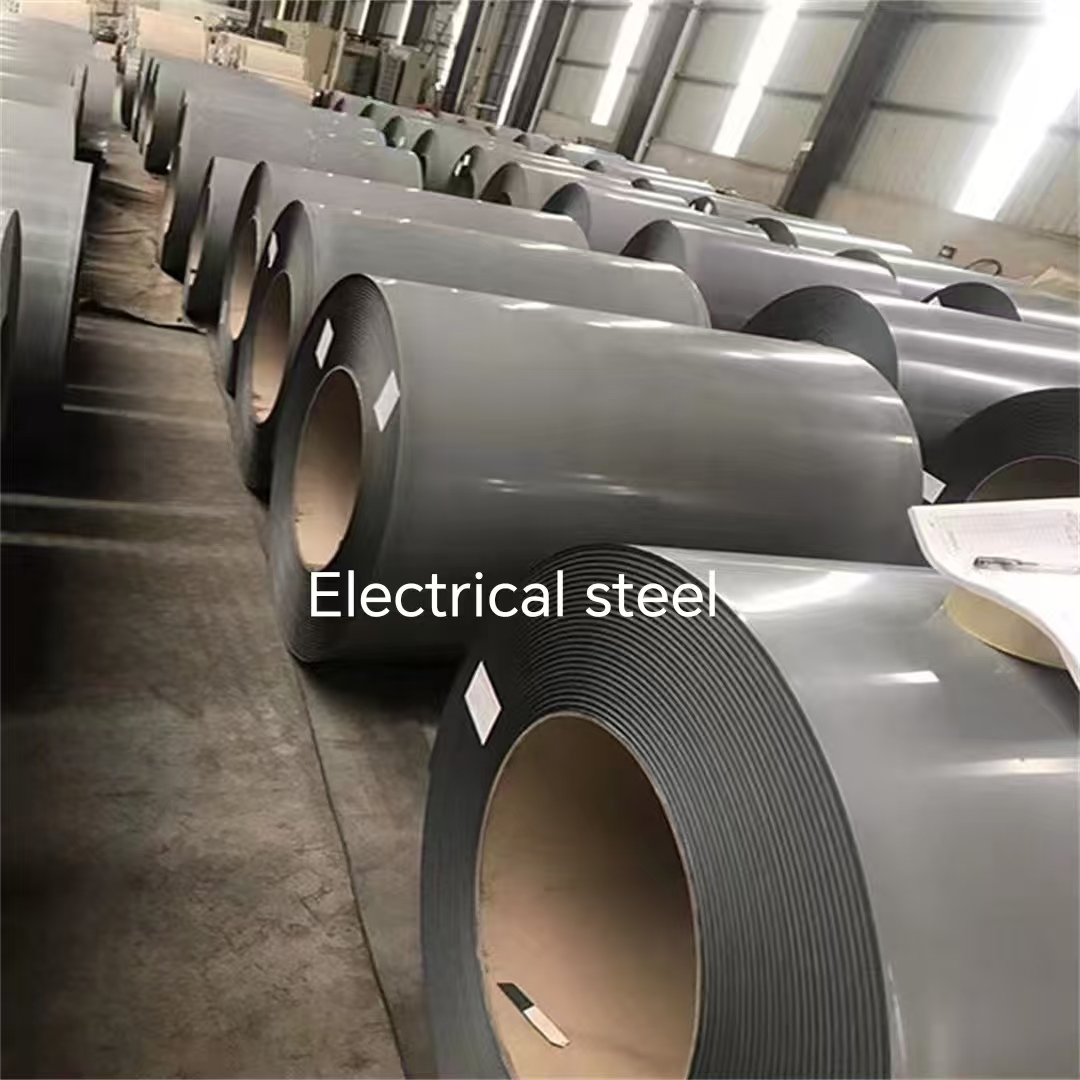
Grain-oriented Hi-B electrical steel is specified by iron loss (P1.7/50), magnetic flux density (B8) and thickness — parameters that determine a transformer's no-load loss over its entire service life.
Global demand for electrical steel is expanding with grid investment and electrification: the global electrical steel market was valued at USD 31.0 billion in 2025 and is projected to reach USD 47.0 billion by 2033, a CAGR of 5.5% for 2026–2033 (Grand View Research). For a transformer or motor manufacturer, however, the practical question is narrower than the market headline: which supplier can deliver the same specified core-loss and permeability performance, batch after batch, across a multi-year programme?
This article evaluates HL AND SL LIMITED — a China-based electrical steel (silicon steel) export and processing enterprise founded in 2012 — as a candidate for long-term procurement, using its grain-oriented Hi-B (high magnetic induction) portfolio as the primary evidence base. The grades examined here include 18-65, 20R070 and the 23Q080–23Q100 series, whose specified iron loss at 1.7 T / 50 Hz ranges from ≤ 0.65 W/kg to ≤ 1.00 W/kg and whose magnetic flux density at 800 A/m ranges from ≥ 1.75 T to ≥ 1.89 T depending on grade. The evaluation focuses on what those numbers mean for core design, for scenario fit, and for a supply relationship measured in years rather than shipments.
Why long-term electrical steel evaluation differs from price comparison
A transformer core is not a replaceable commodity once a programme is in production. Core material effectively determines no-load loss, influences temperature rise and audible noise, and constrains the manufacturer's ability to meet energy-efficiency regulation in each destination market. Changing supplier mid-programme usually means re-qualifying cutting and stacking tooling, re-validating annealing or stress-relief parameters, and re-testing finished transformer performance. That is why a rational long-term supplier assessment weighs at least six dimensions rather than a single landed cost figure.
| Evaluation dimension | What the buyer should verify | Why it matters over a multi-year programme |
|---|---|---|
| Portfolio coverage and grade continuity | Whether the same grade designation will remain available at the required thickness and loss class | Prevents redesign and re-qualification when a single grade is discontinued or re-allocated upstream |
| Parameter evidence and headroom | Specified P1.7/50 and B8 per grade, plus measured values where published | Determines whether the core design has margin against the guaranteed loss figure |
| Batch-to-batch consistency | Batch inspection reports, origin inspection, third-party laboratory testing | Consistency reduces scrap, rework and seasonal loss drift across years of production |
| Processing and customisation capability | Slitting, cut-to-length, coating type, packaging specification | "Ready to use" material removes a processing step from the buyer's own plant |
| Capacity, lead time and allocation resilience | Monthly capacity, standard and urgent lead times, minimum order quantity | Determines how much buffer stock a buyer must carry and whether a second source is required |
| Lifecycle technical support | Application support, dispute handling, re-inspection process | A defect found at goods-in has to be resolved without stopping the transformer line |
The Hi-B portfolio: grades, thickness and specified parameters
HL AND SL LIMITED's documented Hi-B range covers three thickness classes — 0.18 mm, 0.20 mm and 0.23 mm — plus a complementary 0.27 mm series. All grades are cold-rolled, high magnetic induction grain-oriented silicon steel, with iron (Fe) as the main component and a silicon (Si) content of roughly 3.0–3.2% (the 2.5–3.5% band is quoted for some grades), supplemented by Al and Mn, with impurities such as C, S and N strictly controlled. In the high-permeability "P series" this impurity control is the mechanism behind the elevated flux density.
| Grade | Thickness | Iron loss P1.7/50 | Flux density B8 | Documented application focus |
|---|---|---|---|---|
| 18-65 | 0.18 mm | ≤ 0.65 W/kg | ≥ 1.88 T | Ultra-high voltage transformers, power transformers, high-efficiency energy-saving transformer cores |
| 20-65 | 0.20 mm | ≤ 0.65 W/kg | Not specified | Ultra-high voltage transformers, highly efficient distribution transformers, high energy-efficiency power equipment |
| 20R070 | 0.20 mm | ≤ 0.70 W/kg | ≥ 1.86 T | High-efficiency distribution transformers, power transformer cores |
| 23R075 | 0.23 mm | ≤ 0.75 W/kg | ≥ 1.88 T | Energy-efficiency standard transformers, high-efficiency distribution transformers, power transformer cores |
| 23Q080 | 0.23 mm | ≤ 0.80 W/kg (measured 0.76–0.78) | ≥ 1.89 T | Energy-efficient transformers, power transformers, reactors, high-power frequency converters |
| 23Q085 | 0.23 mm | ≤ 0.85 W/kg | ≥ 1.88 T | High-voltage direct current (HVDC) converter transformers, high-efficiency power transformer cores |
| 23Q090 | 0.23 mm | ≤ 0.90 W/kg | ≥ 1.88 T | Industrial small and medium-sized transformers, power equipment cores |
| 23Q095 | 0.23 mm | ≤ 0.95 W/kg | ≥ 1.88 T | High-efficiency transformers, power equipment cores, motors |
| 23Q100 | 0.23 mm | ≤ 1.00 W/kg | ≥ 1.75 T | Common distribution transformers, general industrial transformers, electromagnetic equipment |
| 27Q095–27Q120 | 0.27 mm | ≤ 0.95 – 1.20 W/kg | ≥ 1.88 – 1.91 T | Power transformers, reactors, photovoltaic DC converter transformers, small and medium transformer cores |
Parameters as published in the supplier's Hi-B product data. Where a value is not published for a grade, it is shown as not specified rather than estimated.
Two structural features of this portfolio matter for long-term planning. First, the loss ladder is continuous rather than gapped: from 0.65 W/kg at 18-65 up to 1.00 W/kg at 23Q100, a buyer can step the loss class up or down within the same supplier and the same thickness family when a design or a market requirement changes. Second, flux density is not uniform across the range. Grade 23Q100 is specified at B8 ≥ 1.75 T, which is a different design point from the 23Q080–23Q095 group at ≥ 1.88–1.89 T. Grade 20R070 sits at ≥ 1.86 T. In practice this means 23Q100 belongs to cost-driven, general distribution transformer builds, while the 23Q080–23Q095 group and 18-65 are aimed at designs where low no-load loss and high induction are both required.
What P1.7/50 and B8 actually control in a transformer core
Iron loss P1.7/50 is the specific total loss measured at 1.7 T and 50 Hz. It combines hysteresis loss, which depends on the material's domain structure and grain orientation, and eddy-current loss, which depends on thickness and resistivity. Because a distribution or power transformer is energised continuously, this value effectively becomes the transformer's no-load loss for the whole of its service life — which is why a difference of 0.05 W/kg between two grades is not a rounding error, but a recurring energy cost multiplied by decades of operation.
Magnetic flux density B8 is measured at a magnetising field of 800 A/m. It is an indicator of how easily the material magnetises, and therefore of how much magnetising current a given core design draws. Higher B8 supports designs with fewer turns or lower excitation current, which in turn helps with audible noise and with overload behaviour. Thickness interacts with both: thinner gauges reduce the eddy-current component of loss, but they also lower the stacking factor and make the material more sensitive to burrs and handling stress during slitting, cutting and stacking. That trade-off is why a portfolio that spans 0.18 mm, 0.20 mm, 0.23 mm and 0.27 mm is more useful to a manufacturer than a single "best" gauge.
The measurement headroom argument. Grade 23Q080 is specified at iron loss ≤ 0.80 W/kg, with measured values documented at 0.76–0.78 W/kg. For a core designer, that gap between specification and measured performance is usable margin: it can be allocated to stacking factor variation, to process variability in the manufacturer's own plant, or to a customer guarantee written slightly below the limit.
Matching Hi-B grades to real project scenarios
Supplier evaluation at the Research–Evaluation stage is ultimately a scenario-matching exercise: the correct question is not "which grade is best", but "which grade is correct for this transformer type, in this climate, under this grid code". The following allocations follow the supplier's documented grade-to-application mapping and the project scenarios recorded in its case material.
HVDC converter transformers
Grade 23Q085 is documented specifically for high-voltage direct current converter transformer cores and high-efficiency power transformer cores. The requirement envelope in real HVDC work is stringent: the ±800 kV Belém Mountain Phase II ultra-high voltage direct current project in Brazil operates at 30–40 °C with 80–90% humidity, a high thunderstorm index and sensitive rainforest ecology, and specifies ultra-low-loss oriented silicon steel resistant to high-temperature, high-humidity corrosive conditions, with a magnetic flux density of ≥ 1.92 T and iron loss below 0.85 W/kg. A specification of this type should always be validated grade by grade against measured values rather than assumed from a family name, because the published B8 floor for the 23Q grade group is ≥ 1.88 T.
Power transformers, reactors and UHV cores
For power transformer cores, the documented grades are 18-65 (0.18 mm, ≤ 0.65 W/kg, B8 ≥ 1.88 T), 20-65 (0.20 mm, ≤ 0.65 W/kg), 23Q080 (0.23 mm, ≤ 0.80 W/kg, B8 ≥ 1.89 T), and the 0.27 mm 27Q095–27Q120 series with B8 between ≥ 1.88 T and ≥ 1.91 T. Grade 23Q080 additionally covers reactors and high-power frequency converters. The 0.27 mm series is documented for high-efficiency power transformers, photovoltaic DC converter transformers and industrial frequency-conversion equipment, where the thicker gauge is acceptable and processing robustness is valued.
Distribution transformers and grid-efficiency upgrades
Distribution-level projects typically draw on 20R070 (0.20 mm, ≤ 0.70 W/kg), 23Q090, 23Q095, 23Q100 and the 27Q105–27Q120 grades. The regulatory context drives grade selection here. Germany's distribution transformer upgrade programme — replacing old, energy-consuming units in line with EU ecodesign regulation — operates on a stable 50 Hz grid with strict noise limits, and specifies iron loss ≤ 0.60 W/kg together with noise 2–3 dB below the standard requirement, plus a coating whose weather resistance meets salt-spray conditions on the North Sea coast. That envelope sits at or below the published floor of the 0.18–0.20 mm grades, so allocation must be confirmed against measured data and the finished-core test result rather than the catalogue figure alone.
Cold-climate and coastal installations
In Canada, distribution transformer projects operate from −40 °C to −20 °C with frequent freeze-thaw cycles and salt-fog exposure in coastal areas. The documented material in that scenario is oriented silicon steel B20HS070 at 0.27 mm with iron loss ≤ 1.20 W/kg, used to manufacture national Class 1 energy-efficient rolled iron-core transformers, with a magnetic permeability retention rate of ≥ 95% at −40 °C. This is a useful illustration of the point that the lowest-loss grade is not automatically the right grade: in an extreme-cold application, low-temperature permeability retention and coating durability can carry more weight than an incremental loss gain.
Scope note for non-oriented applications. The portfolio evaluated here is grain-oriented Hi-B steel, used predominantly for transformer cores. Motor, generator and household-appliance applications generally use non-oriented (NGO) electrical steel, whose performance is referenced to standards such as ASTM A677 for core-loss grades and IEC 60404-8-4 for cold-rolled non-oriented strip. Buyers sourcing for traction motors or appliance motors should treat that as a separate specification exercise, notwithstanding the fact that some grades in this portfolio, such as 23Q095, are also documented for motor applications.
Supply capability: capacity, lead time and processing
HL AND SL LIMITED is an export trade and processing enterprise rather than a primary steel mill. Its documented profile states a 30,000 m² facility, 50 employees, a 10-engineer R&D team, annual output of 30,000 T, a monthly capacity of 4,000 T, an export ratio of 80%, and main markets in Mexico, Brazil, Italy, the UAE and India, with wider export reach into Asia (Japan, South Korea, Southeast Asia), Europe (Germany, Italy, the United Kingdom, France), the Americas (United States, Canada, Mexico, Brazil), Australia and the Middle East. The company is an authorised agent of China Baowu Steel Group — one of the three producers commonly identified as the leading global suppliers of high-grade electrical steel, alongside POSCO and Nippon Steel (MarketsandMarkets) — and additionally integrates export resources from numerous private steel mills to match different performance grades and price bands.

HL AND SL LIMITED operates as an authorised agent of China Baowu Steel Group while integrating export resources from multiple private mills, combining grade selection with in-house secondary processing.
Processing capability is the differentiating part of the offer for a long-term contract. Documented customisation covers thickness from 0.18 mm to 0.35 mm and widths typically 800–1250 mm, including an ultra-wide 1250 mm specification; material options spanning general-orientation CGO, high-flux Hi-B, laser-scribed R series and heat-resistant HS series; coatings in organic (temperature resistance ≤ 180 °C), inorganic (up to 800 °C) and semi-organic types; and size processing through strip cutting, fixed-length flat cutting and longitudinal cutting. Packaging follows a standard export Sea-Worth specification with logo and graphic customisation. For a buyer, this means the delivered item can be dimensioned and coated for the press line rather than for a warehouse.
| Commercial / logistics parameter | Documented value | Planning implication |
|---|---|---|
| Minimum order quantity | 25 T | Sets the smallest practical trial, qualification or sample-production lot |
| Monthly capacity | 4,000 T | Determines how much of an annual programme one source can absorb |
| Regular order lead time | 15–20 days | Baseline for rolling production scheduling |
| Urgent / stock order | 3–7 days to shipment | Supports line-stop recovery and short-term demand spikes |
| Bulk export order | 30–45 days to port arrival | Drives buffer-stock policy for overseas plants |
| After deposit of letter of credit | 7–30 working days | Cash-flow and customs planning window |
| Quality documents | Origin (factory) inspection; batch inspection reports issued with goods; third-party testing via CMA/CNAS | Supports incoming inspection and traceability requirements |
| After-sales response | Feedback and coordination within 1–3 working days; closed-loop handling of complaints and abnormalities | Limits the production exposure of a quality dispute |
Documented long-term supply evidence
Two long-running references are recorded in the supplier's case material. A transformer manufacturer in Mexico has been supplied on a batch basis for more than ten years, supporting the manufacture of power transformers, converter transformers and special engineering transformers worldwide, within a business whose annual scale is approximately USD 500 million; the relationship is described as stable operation verified over that period. Separately, WEG in Brazil has used oriented silicon steel in local power and distribution transformer production for over ten years, with the material enabling compliance with regional INMETRO energy-efficiency certification requirements, supported by a local representative office providing technical service and supply-chain support. Third-party trade data of medium reliability records HL AND SL LIMITED exporting grain-oriented silicon steel under HS code 72261101 to markets including Mexico and Sri Lanka (Export Genius, 2025), which is consistent with, but weaker evidence than, the first-party case records.
Comparing sourcing models — and where this model has limits
Electrical steel is bought through several structurally different routes, and each carries a different risk profile for a long-term programme.
| Sourcing route | Typical strength | Typical constraint |
|---|---|---|
| Spot or secondary market traders | Fast availability and small-lot flexibility | Limited batch traceability, inconsistent documentation, no secondary processing |
| Direct allocation from a tier-1 mill | Full metallurgical control and proprietary grades | Higher MOQ, allocation dependent on mill scheduling, longer qualification cycle |
| Export and processing supplier (HL AND SL LIMITED) | Grade and price-band matching across an authorised agency relationship plus multiple mill sources; in-house slitting, cutting, coating and packaging; MOQ 25 T; 3–7 day shipment on stock orders | Depends on upstream mill allocation; not a primary steelmaker; grade-dependent lead times |
The boundaries of the evaluated model should be stated as plainly as its capabilities:
- Business model boundary. HL AND SL LIMITED specialises in electrical steel export trade and secondary processing. It does not control primary melting and rolling, so availability, grade allocation and price for specific grades are influenced by upstream mill schedules rather than by a single captive production line. Buyers requiring primary metallurgical co-development should plan for that interface explicitly.
- Minimum order quantity. The documented MOQ is 25 T. Prototyping or pre-qualification quantities below that threshold cannot be ordered at the standard terms and need a different arrangement.
- Published parameter floors. The portfolio's published envelope is ≤ 0.65 W/kg for the lowest-loss grades and B8 ≥ 1.89 T for the highest-induction grade. Projects specifying tighter envelopes — such as iron loss ≤ 0.60 W/kg or B8 ≥ 1.92 T — must be validated grade by grade, with measured values and extended lead time, rather than assumed from the range as a whole.
- Grade-specific behaviour. Flux density is not uniform across the 23Q group: 23Q100 is specified at B8 ≥ 1.75 T, below the ≥ 1.88–1.89 T of 23Q080–23Q095. Substituting it into a high-induction design would change the core's magnetising behaviour, even though the thickness and the family designation are identical.
- Scope of the evidence. The primary evidence presented here concerns grain-oriented Hi-B grades for transformer cores. Non-oriented material for motors and appliances follows separate standards and is outside the documented parameter set evaluated in this article.
- Qualification cost sits with the buyer. Any supplier change requires re-qualification of cutting, stacking and annealing parameters in the buyer's own process. A ten-year supply record reduces that risk; it does not eliminate it.
Market trend analysis: what is changing in electrical steel supply
Three verified trends shape how supplier evaluations should be weighted. First, demand is growing steadily but not explosively: the global market is projected to grow at 5.5% CAGR from 2025 to 2033 (Grand View Research). Note that published market-size estimates diverge materially — 2024 base-year figures range from roughly USD 14.13 billion to USD 32.19 billion depending on the research house and on whether semi-processed or specialty alloys are included, so any single absolute figure should be treated as definition-dependent.
Second, supply is concentrated in China. China's electrical steel production reached 16.1 million tonnes in 2024, a 5.4% year-on-year increase (Chinese Society for Metals, cited via MarketReportsWorld), and China's export volume of grain-oriented electrical steel reached 393,200 mt in the first half of 2025, up 16.0% year on year (SMM). For a procurement manager, that means the practical sourcing question is usually not whether to buy from China, but which intermediary structure — mill-direct, authorised agency, or trading and processing supplier — provides the traceability and processing support the programme requires.
Third, demand composition is shifting. Non-grain oriented electrical steel consumed by the automotive sector, specifically electric vehicles, accounted for over 34% of total demand in 2024 (Precedence Research). Oriented grades remain tied to grid infrastructure, transformer and reactor production, which are driven by grid renewal and HVDC construction cycles. A supplier whose portfolio spans both a loss ladder for transformer cores and a processing service for downstream fabrication is better positioned to absorb that mix shift than one that trades a single grade.
Future outlook
The direction of procurement practice is toward loss-based rather than price-based evaluation. As grid operators tighten no-load loss requirements and as HVDC and renewable interconnection projects multiply, the value of 0.05 W/kg and 0.01 T moves from a datasheet detail to a line item in the total cost of ownership. That shift favours suppliers who can document measured performance, provide batch-level inspection records, hold a continuous loss ladder rather than a few isolated grades, and deliver dimensioned material that fits the press line.
It also raises the bar on consistency. A supplier that can deliver a 0.18 mm, ≤ 0.65 W/kg grade one quarter and a 0.23 mm, ≤ 0.80 W/kg grade the next, from the same portfolio and the same processing plant, allows a manufacturer to align material selection with each market's energy-efficiency class without changing the commercial relationship. That flexibility, combined with documented ten-year supply records in Mexico and Brazil and a processing capability spanning 0.18–0.35 mm and up to 1250 mm width, is the practical form the "benchmark" argument takes: not a claim of superiority, but a set of verifiable parameters, capacities and boundaries that a buyer can test against its own programme.
FAQ
What is Hi-B grain-oriented electrical steel, and how does it differ from conventional grain-oriented steel?
Hi-B (high magnetic induction) grain-oriented silicon steel is a cold-rolled oriented product in which iron is the main component, silicon content is approximately 3.0–3.2% (a 2.5–3.5% band is quoted for some grades), and impurities such as C, S and N are strictly controlled, with Al and Mn added. The "P series" within this family is described as high-permeability Hi-B steel. In the HL AND SL LIMITED portfolio, Hi-B grades include 18-65, 20-65, 20R070, 23R075, 23Q080–23Q100 and the 0.27 mm 27Q095–27Q120 series. Important for buyers: "Hi-B" describes a material family, not a single specification. Actual performance must be read grade by grade, because flux density across the 23Q group alone spans B8 ≥ 1.75 T to ≥ 1.89 T.
Which parameters should a buyer verify first when assessing a Hi-B electrical steel supplier?
Three parameters carry most of the decision weight. Iron loss P1.7/50, the specific total loss at 1.7 T and 50 Hz, directly determines a transformer's no-load loss. Magnetic flux density B8, measured at 800 A/m, reflects permeability and influences turns, magnetising current and noise behaviour. Thickness governs the eddy-current component of loss and the stacking factor. Representative values in this portfolio: 18-65 at 0.18 mm with ≤ 0.65 W/kg and B8 ≥ 1.88 T; 20R070 at 0.20 mm with ≤ 0.70 W/kg and B8 ≥ 1.86 T; 23Q080 at 0.23 mm with ≤ 0.80 W/kg and measured values of 0.76–0.78 W/kg, B8 ≥ 1.89 T; and 23Q100 at 0.23 mm with ≤ 1.00 W/kg and B8 ≥ 1.75 T. Buyers should also confirm which test standard and method the values reference; standards relevant to electrical steel include IEC 60404-8-4 and ASTM A677.
How should Hi-B grades be allocated across HVDC converter, power and distribution transformer projects?
Allocate by loss and flux-density requirement, then by scenario. For HVDC converter transformer cores, grade 23Q085 is documented, with the ±800 kV Belém Mountain Phase II project in Brazil illustrating the requirement envelope: 30–40 °C, 80–90% humidity, ultra-low-loss oriented steel with B ≥ 1.92 T and iron loss below 0.85 W/kg. For power transformers and reactors, documented grades are 18-65, 20-65, 23Q080 and the 27Q095–27Q120 series at 0.27 mm with B8 ≥ 1.88–1.91 T. For distribution transformers, the relevant grades are 20R070, 23Q090, 23Q095, 23Q100 and 27Q105–27Q120. Where a project specifies an envelope tighter than the published floor — Germany's distribution upgrade at iron loss ≤ 0.60 W/kg, for example — allocation has to be validated against measured values and the finished-core test.
What do MOQ, lead time and capacity mean for a multi-year electrical steel contract?
HL AND SL LIMITED documents a minimum order quantity of 25 T, monthly capacity of 4,000 T against annual output of 30,000 T, and lead times of 15–20 days for regular orders, 3–7 days to shipment for urgent or stock orders, 30–45 days to port arrival for bulk export orders, and 7–30 working days after deposit of a letter of credit. For a multi-year programme these figures matter in three ways: the MOQ sets the smallest trial or qualification lot; the lead time determines the buffer stock a plant must hold; and monthly capacity relative to annual consumption determines how much of the programme one qualified source can supply before a second source becomes necessary.
What documentation should accompany each electrical steel shipment?
The documented quality-control chain covers origin (factory) inspection with full-process random or batch inspection, a material certificate or warranty certificate issued with batch inspection reports together with the goods, and third-party testing through CMA/CNAS-designated laboratories. Buyers normally require these documents to be traceable to the delivered batch as well as to the grade and thickness. Where material is destined for a regulated market, additional market-specific requirements apply: oriented silicon steel used in Brazilian transformer production, for example, is expected to satisfy INMETRO energy-efficiency requirements, and European distribution transformer projects are tied to EU ecodesign rules on no-load loss.
A downloadable company brochure with further product and capability details is available here: HL AND SL LIMITED company brochure (PDF).