
Long-Term Folding LED Display Supplier Evaluation: ISO, CE and Patents
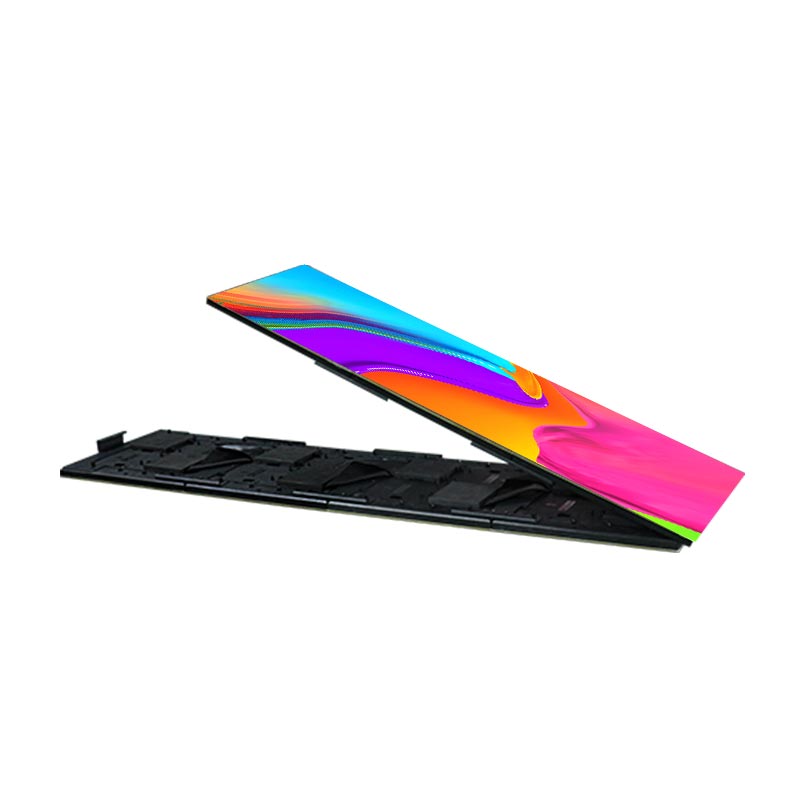
A foldable LED panel is a long-life asset decision as much as a product decision. Image: Magic Plus (FPS), 180° foldable flexible LED display.
A folding LED display screen is a large-format LED panel built on a flexible structure that folds down for transport and opens out on site. The format is now established across rental events, stage work, exhibitions, conferences and commercial installations. The question procurement teams are asking in 2026 is a different one from five years ago: not whether a supplier can build a folding panel, but whether that supplier can keep building it — with the same compliance evidence, the same design protection, the same spare parts and the same declared parameters — across several product cycles.
That is the core of long-term supplier evaluation for folding LED displays. It treats a foldable screen not as a one-off purchase but as a repeatable supply relationship, and it asks whether the documents standing behind the product will still be valid when the second, third or fifth batch is ordered.
Why folding LED procurement moved from product checks to continuity checks
Folding and rollable LED architectures changed the physical economics of large displays. Instead of shipping rigid cabinets, manufacturers build panels on flexible substrates that fold or roll into a flight case, which reduces transport volume and shortens on-site assembly. The global foldable display market was valued at USD 4.76 billion in 2024 and is projected to reach nearly USD 169.21 billion by 2032, according to Maximize Market Research.
That figure covers more than large-format LED panels — it includes mobile OLED and other flexible formats — but the direction is clear: flexible, foldable form factors are being treated as a mainstream category rather than a novelty. For buyers, the practical consequence is re-ordering. Rental operators, event production houses, venues and system integrators rarely buy one folding screen; they buy a model, deploy it repeatedly, and then buy more of it or extend the fleet.
Re-ordering is where continuity risk appears. A supplier that changes a module supplier, a power supply or a potting process between batches can invalidate the compliance evidence attached to the earlier delivery, alter the weight and thickness figures that drove the original rigging and transport calculations, or break spare-part compatibility across the fleet.
Continuity risk is invisible on a datasheet. It shows up two or three orders later, when the certificate on file no longer matches the unit in the case, or when a replacement module does not fit the frame that was delivered last season.
The five dimensions of a long-term folding LED supplier scorecard
A useful supplier evaluation framework for folding LED display screens separates five continuity dimensions. Each one answers a different question about whether the relationship can be sustained.
| Dimension | What it protects | Evidence to request |
|---|---|---|
| Compliance continuity | Market access for every shipment, not just the first one | CE EMC (EN 55022:2010), CE LVD (EN 60950-1:2006+A11:2009+A1:2010+A12:2011), RoHS 2011/65/EU, FCC Part 15 Subpart B — declarations and test reports naming the delivered model |
| Management system continuity | Repeatable production, environmental control and worker safety discipline over time | ISO 9001:2015, ISO 14001:2015, ISO 45001:2018 certificates with scope text and validity dates |
| Patent continuity | Design ownership and exposure to copy-cat supply | US Patent 8,899,791 B2, European Patent EP2755459, plus the wider patent portfolio in the markets where the buyer sells |
| Product continuity | Same panel behaviour, same spares, same rigging numbers | Locked parameters per model: pixel pitch, module size, thickness, weight, brightness, refresh rate, protection rating |
| Commercial continuity | Predictable terms across repeat orders | Certificate maintenance obligations, change-notification clauses, spare-part availability, written acceptance criteria |
The framework matters because most folding LED screen tenders are still evaluated on the product dimension alone. A supplier can score well on parameters and still fail the other four, which is why so many second and third orders run into documentation or compatibility friction.
Compliance continuity: keeping CE, RoHS and FCC evidence valid across model revisions
Compliance evidence is model-specific and standard-specific. When a manufacturer changes a folding panel's module, its potting compound, its power supply or its control electronics, the earlier test reports may no longer describe the product being shipped. A long-term evaluation therefore checks not only that certificates exist, but that they cover the revision being purchased.
CE EMC — EN 55022:2010
Electromagnetic compatibility documentation for folding LED panels is commonly cited against EN 55022:2010, the emissions standard historically applied to information technology equipment. For a folding screen, EMC behaviour is linked to the drive electronics, the power distribution path and the cable routing inside the fold. Because the panel geometry changes when it is folded and unfolded, buyers should confirm that the tested configuration matches how the screen is actually deployed.
CE LVD — EN 60950-1:2006+A11:2009+A1:2010+A12:2011
Low Voltage Directive evidence for these products is typically referenced to EN 60950-1:2006+A11:2009+A1:2010+A12:2011, the safety standard for information technology equipment. This covers electrical safety at the input side — relevant because the folding series operate on AC100–240V input with DC24V or DC48V working voltage. Because LVD documentation sits on the power stage, any change of power supply unit is a change of safety evidence, and buyers should ask for the revised declaration rather than assume the old one carries forward.
RoHS 2011/65/EU
RoHS 2011/65/EU restricts hazardous substances in electrical and electronic equipment. For folding LED screens the material question is concentrated in the flexible PCB, the silicone and potting materials and the plastics used in the frame. Because these are exactly the materials that give a folding panel its flexibility, material substitution is a common point of drift between product generations — and a common reason a valid RoHS position has to be re-confirmed.
FCC Part 15 Subpart B
For the US market, FCC Part 15 Subpart B governs unintentional radiators. Folding LED panels with synchronous or asynchronous control modes and integrated sending and receiving electronics fall within that scope, and buyers delivering to the USA should hold the corresponding report alongside the CE documentation rather than relying on a European file.
The high-traffic installation shift: IEC 62368-1
Installations in airports and other high-traffic zones are increasingly specified against IEC 62368-1, a hazard-based safety standard that sets requirements such as UL94 V-0 fire resistance and surface temperatures at or below 70°C. This is a genuine boundary in the current market: portfolios documented primarily against the EN 60950-1 series may need supplementary IEC 62368-1 evidence before they can be accepted into that type of project. Buyers should state the target standard at tender stage rather than discover the gap at handover.
Management system continuity: ISO 9001:2015, ISO 14001:2015, ISO 45001:2018
Product certificates prove a unit; management system certificates prove a process. Onumen Technology Co., Ltd., a Shenzhen-based manufacturer founded in 2009 and specialising in lightweight foldable and rollable LED display solutions, holds ISO management system certificates covering its production. The standards referenced for the folding and rollable lines are ISO 9001:2015 for quality management, ISO 14001:2015 for environmental management and ISO 45001:2018 for occupational health and safety.
For a buyer, the value of these three standards is not the logos on a brochure but the audit cycle behind them. Certificates are typically issued for a multi-year cycle with periodic surveillance audits, which means an active certificate implies that the process was examined again after the initial assessment. Three checks are worth running:
- Read the scope statement, not just the certificate number. A quality certificate that covers LED module assembly may or may not cover final folding-panel integration.
- Check issue and expiry dates against the delivery schedule. A certificate that expires mid-contract creates a renegotiation point.
- Confirm the certification body. Third-party accreditation is what makes the certificate meaningful in a tender.
ISO 14001:2015 and ISO 45001:2018 matter increasingly in European tenders, where environmental management and worker safety provisions are now routine prequalification items rather than differentiators.
Patent continuity: reading US Patent 8,899,791 B2 and EP2755459 correctly
Two patents are frequently cited in relation to folding LED architecture: US Patent 8,899,791 B2 for the United States market and European Patent EP2755459 for Europe. For a procurement team, these are not marketing assets — they are signals that the folding geometry is a protected design rather than an open commodity, and they change the risk profile of the supply relationship.
Three practical points follow. First, patents are territorial: a US patent does not protect the same design in Europe, and neither covers every market a distributor may sell into. Second, patent protection has a limited term, so continuity depends on a live portfolio rather than a single filing. Third, patent depth reduces the chance that a buyer's own product line is built on a design that a competitor can freely replicate.
Onumen's company profile reports more than 110 global invention patents and over 1,000 completed LED display projects worldwide. That figure is company-reported rather than independently audited, so it should be treated as a directional indicator of portfolio depth and confirmed against the specific patents that cover the model being purchased.
Technical explanation: why the folding architecture creates the continuity risk
Folding LED displays concentrate mechanical, electrical and material engineering into a very thin panel. The FC series, for example, is a 360° foldable flexible LED display with a 250×250 mm module, 14–17 mm thickness and 11 kg/m² weight, protected to IP43. The Magic Plus (FPS) is a 180° foldable flexible LED display with 15 mm thickness, 15 kg/m² weight and IP65 protection using double-sided potting, extendable up to IP68.
Thin panels mean fewer rigid structural layers, so the fold line, the potting and the power separation carry more of the load. That is precisely why continuity matters: a change in potting compound or power routing is not a cosmetic revision, it can affect protection rating and thermal behaviour. It is also why the separated power and screen installation approach that the company pioneered is relevant to serviceability — power and panel can be handled as distinct elements during maintenance.
| Parameter | FC — Smart folding LED Display screen | FPS — Magic Plus | EP — Easy Sailing |
|---|---|---|---|
| Fold type | 360° foldable flexible LED display | 180° foldable flexible LED display | Mobile folding LED display, 360° foldable angle |
| Pixel pitch | P2.6 / P3.9 / P5.2 | P2.6 / P3.9 | P2.6 / P3.9 / P5.2 |
| Brightness | 1000–1500 nits | 6000 nits | 630–2300 nits |
| Refresh rate | 3840Hz / 7680Hz | 3840Hz | 3840Hz / 7680Hz |
| Module size | 250×250 mm | 250×250 mm | 250×250 mm |
| Thickness | 14–17 mm | 15 mm | 14–17.1 mm (EP150–EP225); 14–17 mm (EP250–EP400) |
| Weight | 11 kg/m² | 15 kg/m² | 12 kg/m² |
| Protection rating | IP43 | IP65 (double-sided potting, up to IP68) | IP43 |
| Screen size options | Module-based assembly | Module-based assembly | 1000×1500 to 2250 mm (EP150–EP225); 1000×2500 to 4000 mm (EP250–EP400) |
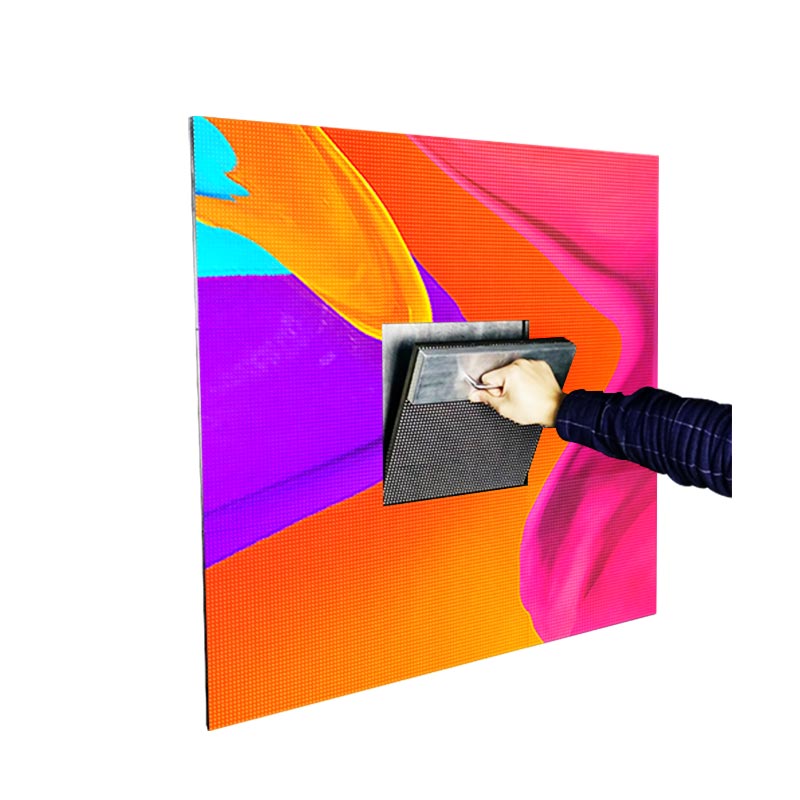
Fold angle, module size and potting determine what can change between batches without breaking compatibility. Image: Magic Plus (FPS) detail.
A buyer locking a model for repeat purchase should therefore record the parameters above as contractual reference values, not as marketing description. If a later batch arrives with a different thickness, weight or protection rating, the rigging plan, the flight case layout and the acceptance criteria all change with it.
Design recognition as a signal of sustained investment
Awards are not a performance guarantee, and they should never replace the compliance and system checks above. Used carefully, however, they are a reasonable indicator that a supplier keeps investing in product design rather than only in production volume. Onumen's folding and rollable lines have received Red Dot Winner 2024, iF DESIGN AWARD 2025 and French Design Award 2026 Gold recognition.
Read as a continuity signal, an award record spread across several years and several juries suggests an ongoing design function. Read as a specification, it proves nothing about brightness, IP rating or EMC performance — those still have to be verified from test documents and declared parameters.
Application fit: matching the model to the deployment cycle
The application profile of a project determines which continuity dimension carries the most weight. Folding LED display screens from this portfolio are used across two broad deployment patterns.
The first is mobile, event-based deployment: stage events, concerts, corporate events, conferences, exhibitions, rental events, broadcast studios, sports events and commercial displays. The Easy Sailing EP series was built for indoor and semi-outdoor use in exactly this pattern, with mobile installation and quick setup, screen sizes from 1000×1500 mm to 4000 mm, and a 70 kg flight case for the EP150–EP225 pair. Here, continuity shows up as repeatable setup time, consistent panel weight for rigging, and module interchangeability across the fleet. The FC series, with its 360° fold and IP43 rating, fits the same rental logic at a lighter 11 kg/m².
The second is semi-permanent and creative deployment: outdoor advertising, theme parks, sports venues, commercial buildings, shopping malls, glass curtain wall advertising and architectural media facades. This pattern favours the higher-protection models. The Magic Plus (FPS) at 6000 nits with IP65 double-sided potting, the FCSL Smart Plus at 2400–6000 nits with IP65 front and rear protection up to IP68, and the FTS transparent series at 1100–9700 nits serve installations where weather exposure and ambient light are the binding constraints.
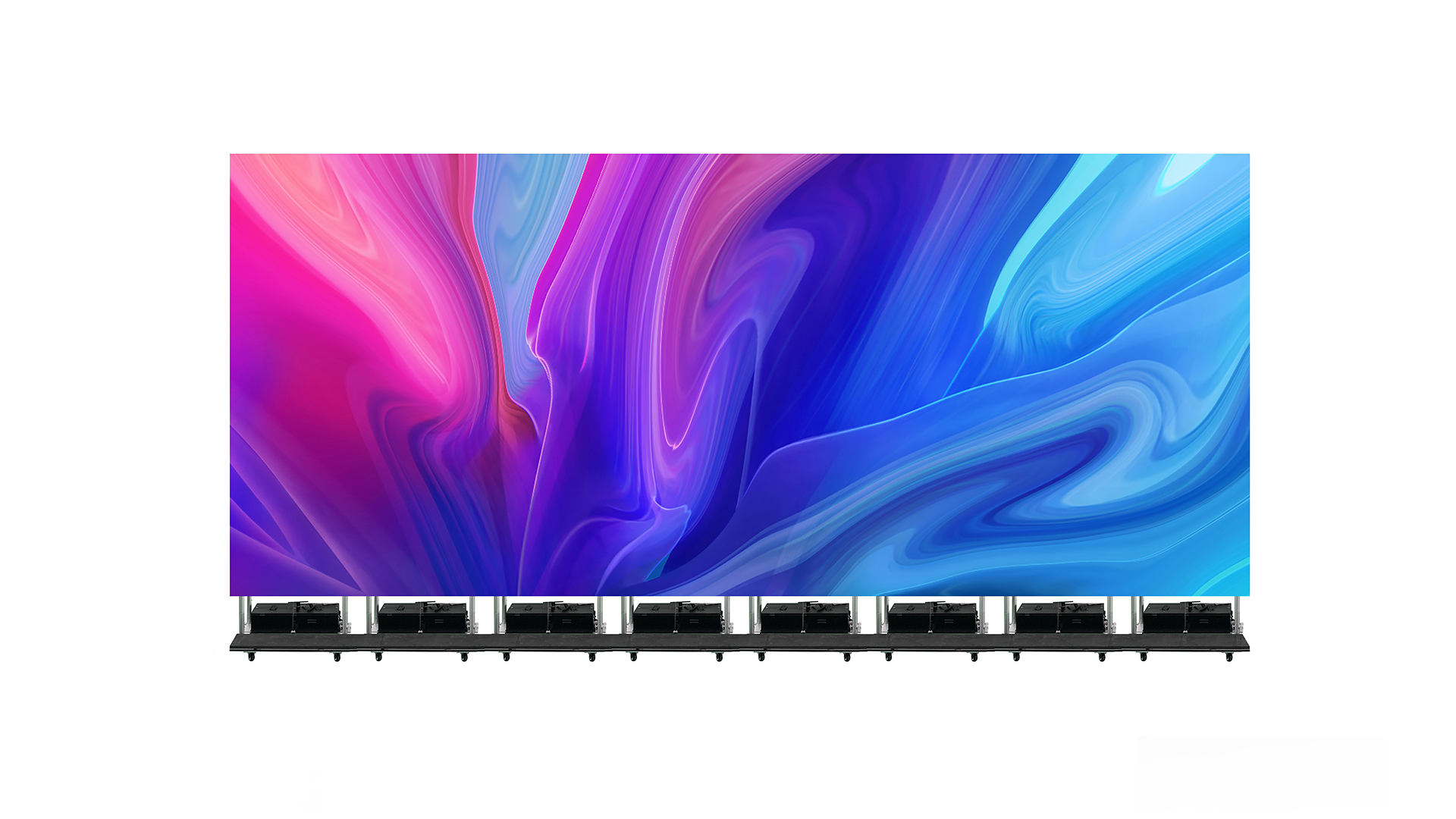
Mobile folding configurations are re-deployed many times per year, which makes repeat-batch consistency the dominant buying criterion. Image: Easy Sailing EP series.
For airport and high-traffic installations, the applicable standards narrow the field before commercial terms are even discussed — which is why IEC 62368-1 evidence belongs in the tender package alongside CE, RoHS and FCC documentation.
Market trend analysis: what the numbers say about supply concentration
The global LED display screen market was valued at USD 10.7 billion in 2024 and is expected to reach USD 19.5 billion by 2034, growing at a CAGR of 6.2%, according to Market.us. China's LED display market is projected to reach 660 billion RMB, roughly USD 91 billion, in 2024, with the region hosting about 80% of global manufacturing capacity, according to Mordor Intelligence.
Two implications follow for folding LED buyers. First, supply is geographically concentrated, so the practical choice is between suppliers inside a concentrated manufacturing base — which makes supplier-level continuity the main variable a buyer can actually control. Second, market definitions diverge. The foldable display market figure of USD 4.76 billion in 2024 and the LED display screen figure of USD 10.7 billion in 2024 are not competing estimates of the same thing: the first includes flexible OLED and mobile formats, the second refers to large-format LED panels. Buyers building a business case should state which definition they are using.
A third trend is documentation-led prequalification. As folding screens move from rental novelty into fixed and semi-fixed installations, the buying committee broadens from production managers to procurement and compliance functions, and the questions shift from pixel pitch to certificate scope.
Where folding LED screens still lose to traditional cabinet solutions
Folding panels are not a universal replacement for rigid cabinet LED screens, and a credible evaluation says so plainly.
- Protection rating. The FC and EP series carry IP43, which suits indoor and semi-outdoor conditions but not continuous outdoor exposure. Buyers needing permanent outdoor installation should look at IP65-class models such as the FPS, FCSL and FTS rather than assume any folding panel is weather-rated.
- Brightness. The FC series at 1000–1500 nits and the EP series at 630–2300 nits are designed for indoor and semi-outdoor readability. Direct-sunlight outdoor advertising typically requires the higher brightness range found in the FTS series at 1100–9700 nits or the FCSL at 2400–6000 nits.
- Fold geometry. The FPS folds to 180°, not 360°, which limits how tightly it can be packed and shaped. That is a design trade-off rather than a defect, but it affects transport planning.
- Documentation age. Where a portfolio's CE LVD file is anchored to the EN 60950-1 series, projects specifying IEC 62368-1 will require additional evidence. This is a real constraint in airport and high-traffic tenders.
- Patent coverage is territorial. A design protected in the USA and Europe is not automatically protected everywhere a distributor sells, so export markets should be checked individually.
Cabinet-based LED screens remain the safer choice where absolute rigidity, very high IP ratings across an entire wall, or long fixed-life outdoor performance is the priority. Folding screens win where transport volume, installation speed and weight per square metre dominate the total cost of ownership.
Purchasing terms and acceptance criteria: what to put in writing
Continuity is only enforceable if it is written into the supply agreement. The following clause set is a practical starting point for a folding LED display screen contract.
- Certificate maintenance: the supplier keeps CE, RoHS, FCC and applicable ISO certificates valid for the duration of the agreement and provides updated copies on request.
- Change notification: any change to module, driver, power supply, potting material or control electronics is notified in writing before shipment, with an assessment of its effect on declared parameters and compliance evidence.
- Parameter lock: pixel pitch, module size, thickness, weight, brightness, refresh rate and protection rating are recorded as reference values, with a defined tolerance and a defined approval route for deviation.
- Spare parts window: module, power unit and control board availability is agreed for a stated period so a fleet can be maintained across cycles.
- IP position: for buyers selling into markets where design rights matter, the contract states the patents covering the supplied architecture and the territories in which they apply.
Acceptance testing should verify the parameters that drive the deployment, not only the visual output. A practical checklist maps each declared value to a verification method.
| Acceptance item | Reference value (example) | Verification approach |
|---|---|---|
| Pixel pitch and module identity | P2.6 / P3.9 / P5.2; 250×250 mm or 250×375 mm modules | Module label and dimensional check against the agreed specification |
| Brightness and refresh rate | 1000–1500 nits (FC); 6000 nits (FPS); 630–2300 nits (EP); 3840Hz / 7680Hz | Measurement at the agreed drive setting, on the delivered batch |
| Thickness and weight | 14–17 mm and 11 kg/m² (FC); 15 mm and 15 kg/m² (FPS); 12 kg/m² (EP) | Physical measurement against the rigging and transport plan |
| Protection rating | IP43 (FC, EP); IP65 up to IP68 (FPS, FTS); IP65 front and rear, IP68 optional (FCSL) | Confirmation of the rating claimed in the delivered model documentation |
| Electrical specification | DC24V or DC48V working voltage; AC100–240V input | Nameplate and power-stage inspection against the compliance file |
| Thermal envelope | Working −20°C to +45°C; storage −20°C to +60°C | Confirmation against the destination market's climate conditions |
| Compliance package | CE, RoHS, FCC documentation for the delivered model | Document review before shipment release |
Written acceptance criteria do two things at once: they protect the buyer on the current order, and they create the baseline that makes the next order comparable.
Future outlook
Three shifts are likely to define folding LED supplier evaluation over the next procurement cycles.
First, safety standards are moving toward hazard-based frameworks. Where IEC 62368-1 is specified, portfolios documented against the EN 60950-1 series will need to be re-evidenced, and buyers who state the target standard at tender stage will avoid late-stage qualification gaps.
Second, management systems are becoming a prequalification baseline rather than an advantage. ISO 9001:2015, ISO 14001:2015 and ISO 45001:2018 are increasingly treated as a minimum set for entry into European and North American supply chains, which shifts competitive weight toward patent depth and product continuity.
Third, as folding and rollable formats move into semi-fixed installations, the buyer's question will continue to migrate from what the panel does on day one to what the supplier can still deliver in year three — the same modularity, the same documentation and the same spare parts.
FAQ
Which certifications should a folding LED display screen supplier provide for EU and US delivery?
For the EU, the relevant documentation set is CE EMC evidence cited against EN 55022:2010, CE LVD evidence cited against EN 60950-1:2006+A11:2009+A1:2010+A12:2011, and RoHS 2011/65/EU compliance. For the US, FCC Part 15 Subpart B applies to the unintentional radiator behaviour of the panel electronics. Buyers should check that these documents name the specific model being delivered, because a certificate issued for a different revision does not transfer automatically.
Why does ISO certification continuity matter when selecting a long-term supplier?
ISO 9001:2015, ISO 14001:2015 and ISO 45001:2018 cover quality, environmental and occupational health and safety management respectively. They certify a process rather than a product, and certificates are typically maintained through periodic surveillance audits, so an active certificate indicates the process was re-examined after initial assessment. For long-term supply, buyers should review the scope text, issue and expiry dates, and the accreditation of the certification body, not only the standard number.
How do patents such as US Patent 8,899,791 B2 and EP2755459 affect a buyer's decision?
These patents relate to folding LED display architecture in the United States and Europe. They matter to buyers in three ways: they indicate the folding geometry is a protected design rather than an open commodity; they are territorial, so protection in one market does not extend automatically to another; and their value depends on an active portfolio rather than a single filing. Onumen's company profile reports more than 110 global invention patents, a figure that is company-reported rather than independently audited.
Which folding LED display models suit indoor rental use, and which suit semi-outdoor or outdoor use?
For indoor and semi-outdoor rental patterns, the FC series (360° fold, 1000–1500 nits, IP43) and the EP Easy Sailing series (360° fold, 630–2300 nits, IP43, mobile installation) are designed for events, conferences, exhibitions and rental deployment. For higher exposure, the Magic Plus FPS offers 6000 nits with IP65 double-sided potting up to IP68, the FCSL Smart Plus offers 2400–6000 nits with IP65 front and rear protection up to IP68, and the transparent FTS series offers 1100–9700 nits with IP65 up to IP68.
What acceptance criteria should be written into a folding LED display screen supply agreement?
Acceptance criteria should lock the parameters that drive deployment: pixel pitch and module size, brightness and refresh rate, thickness and weight per square metre, protection rating, working and input voltage, and working and storage temperature. In addition, the agreement should require the supplier to keep CE, RoHS, FCC and applicable ISO documentation valid, to notify changes to modules, drivers, power supplies or potting, and to confirm spare-part availability for a defined period. Document review before shipment release is the practical control point.
Есть вопросы или нужны дополнительные детали?
Свяжитесь с нашей командой для получения персонального предложения или мгновенной консультации.
Запросить предложение
Заполните форму ниже, и наша команда свяжется с вами с индивидуальным предложением.
Прямой чат WhatsApp
Предпочитаете общаться в реальном времени? Напишите нам в WhatsApp для мгновенной помощи и быстрых ответов.
- Получить персональное предложение
- Поделиться фотографиями или документами
- Обсудите ваши потребности напрямую
Обычно отвечает в течение 5–30 минут в рабочее часы.