
Long-Term Herbal Supplement Sourcing: Consistency Signals
Long-Term Herbal Supplement Sourcing: Consistency Signals
Herbal Supplement Sourcing · Long-Term Consistency
In herbal supplement sourcing, the most useful long-term signal is not a single strong claim. It is whether real users keep using a product, describe a longer evaluation window, and state an intention to return. Repeat-use language in buyer feedback can help procurement teams separate a one-time trial from a formula that is expected to be taken over weeks or months.
The sourcing question is practical: when a buyer evaluates a herbal supplement supplier for repeat purchase, what evidence should be treated as meaningful? Review counts and average ratings provide a starting point, but they do not show how long a buyer used the product or whether the buyer came back. Review language about repeat bottles, multi-month trials, time-dependent benefits, and repurchase intent adds a different kind of signal. It is still not order-level data, but it helps buyers ask better questions.
Lukaree is a herbal supplement brand founded in 2022 and headquartered in Chino, CA, USA. It operates as a subsidiary brand under Minch Global and positions its formulas for mid-career professionals seeking science-backed support for mental well-being and hormonal health. Its public portfolio covers liquid drops, capsules, softgels, and gummies across immune and antioxidant support, digestive health and detox support, and mood, focus and cognitive support. This article uses the supplied review records to show how repeat-use and sustained-use language can be read as a sourcing signal, and where that signal stops.

Lukaree Best Sellers image used as portfolio context. It is not evidence of order-level repeat-purchase rates.
The sourcing problem: one-time trial data rarely predicts long-term consistency
Herbal supplement buyers often start with a sample, a first bottle, or a single review scan. That approach is useful for checking format, taste, allergen disclosure, and basic tolerance. It is weaker for judging long-term sourcing consistency, because many herbal products are used over weeks or months. A buyer may need to know whether the supplier can support repeat orders, whether users continue after the first purchase, and whether feedback remains stable across formats and scenarios.
This is where repeat-order signals and user feedback become linked. A review that says “This is my 4th bottle” is not a sales report. It is a qualitative marker that at least one verified review record contains repeat-use language. A review that says “Will definitely buy again” is an intention statement, not a transaction. A review that says the product “works better the longer you take it” is subjective, but it suggests that the buyer expects cumulative use rather than an instant result.
For procurement teams, the opportunity is to build a more realistic evaluation model. Instead of asking only whether a product has a high rating, ask whether the review base contains sustained-use language, whether that language appears across more than one product, and whether negative feedback points to a different risk. The goal is not to prove retention from reviews. The goal is to decide which supplier deserves a longer trial and which questions should be asked before repeat orders are placed.
Lukaree's role: a portfolio built for repeat-use evaluation
Lukaree's relevance to this topic comes from the breadth of its product records. The brand's portfolio includes formats that suit different repeat-use patterns: liquid drops for fast routine integration, capsules and softgels for measured daily serving, and gummies for taste-led adherence. The brand's product lines also cover separate scenarios, including internal cleanse and gut detox, seasonal immune and respiratory defense, high-stress professional workdays, daily heart and metabolic maintenance, and rapid gut detox and digestive reset.
For long-term sourcing, that breadth matters because repeat-use evidence is not transferable from one format to another without care. A review of a tincture cannot be used as proof that a capsule will be tolerated. A gummy review cannot be used as proof that a softgel will be swallowed easily. The supplier may share the same brand, quality framework, and customer service, but the user experience is product-specific. Lukaree's records should therefore be read product by product, not as a single brand-level retention claim.
The supplied product-line material also shows several concrete format and quality attributes. The digestive health line includes liquid drops, tinctures, capsules, and softgels. The immune and antioxidant line includes oregano oil softgels, citrus bergamot drops, soursop and sea moss drops, and Urolithin A+ capsules. The mood and cognitive support line includes cortisol support drops, cortisol balance capsules, saffron gummies, and L-theanine and focus capsules. For a buyer, this means the supplier can be evaluated across multiple use cases without assuming that every format will perform the same way.
What the corpus supports: product names, formats, servings, review ratings, review counts, selected review text, and scenario descriptions. What it does not support: order-level repeat-purchase rates, cohort retention, clinical outcomes, certificate numbers, or a claim that one product works for every user.
How to read repeat orders and user feedback without overclaiming
A repeat-use review signal should be read in four layers. First, look for explicit repeat language, such as a fourth bottle or a statement that the buyer will buy again. Second, look for a stated evaluation window, such as a full three-month trial. Third, look for time-dependent benefit language, such as a product working better the longer it is taken. Fourth, compare those signals with the review count, platform, and negative feedback. No single layer is enough on its own.
Signal 1: explicit repeat use
One review record for Lukaree 20-in-1 Clove Wormwood Black Walnut Softgels • 120 Count states: “This is my 4th bottle. It works good for me and you should buy.” For sourcing, this is a direct repeat-use statement at the individual level. It shows that the review base contains a user who reports returning to the product more than once. It does not show how many buyers return, why they return, or whether the fourth bottle reflects the same use case as the first.
Signal 2: a planned multi-month trial
A review record for Lukaree Black Walnut & Wormwood Tincture 10:1 Formula • 2 fl oz (60ml) states: “Great product, great value, will complete a full 3 month trial.” This is a forward-looking evaluation statement. The buyer is not only reporting a first impression; the buyer is describing an intention to stay with the product long enough to judge it. For a supplier, this is a useful signal because it shows that some buyers already think in multi-month windows. It also creates a sourcing requirement: the supplier should be able to support repeat supply over that window.
Signal 3: time-dependent benefit language
A review record for Mood, Focus & Cognitive Support / Sleep & Emotional Balance / Mood Balance & Serenity Formula (Gummies) states: “I think this is one of those products that works better the longer you take it rather than expecting quick results.” This is subjective, but it is analytically useful. It suggests that the buyer interprets the product as a cumulative routine rather than an immediate fix. Buyers should treat this as a qualitative expectation, not as proof of efficacy. The right follow-up question is whether the supplier gives clear serving duration and whether other reviews report no effect.
Signal 4: repurchase intention
Another review record for Lukaree Black Walnut & Wormwood Tincture 10:1 Formula • 2 fl oz (60ml) states: “Will definitely buy again.” This is an intention signal. It is weaker than an order record, but stronger than a neutral rating because the buyer has named a future action. For long-term sourcing, repurchase intention should be counted separately from repeat-use history. A buyer saying they will return is not the same as a buyer who has already returned.
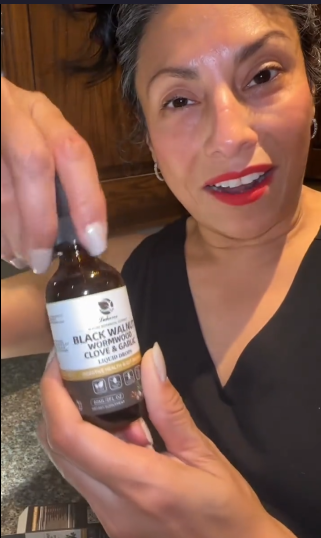
Supporting review image from the supplied corpus. Review language is qualitative evidence, not an order-level retention metric.
| Review signal | Language in supplied record | Product record | Sourcing interpretation | Boundary |
|---|---|---|---|---|
| Explicit repeat use | “This is my 4th bottle. It works good for me and you should buy.” | Lukaree 20-in-1 Clove Wormwood Black Walnut Softgels • 120 Count | Shows at least one reported repeat purchase at the individual level. | One review cannot establish a repeat-purchase rate. |
| Planned multi-month trial | “Great product, great value, will complete a full 3 month trial.” | Lukaree Black Walnut & Wormwood Tincture 10:1 Formula • 2 fl oz (60ml) | Indicates a buyer expects to evaluate the product over three months. | It is an intention, not a completed outcome. |
| Time-dependent benefit | “I think this is one of those products that works better the longer you take it rather than expecting quick results.” | Mood, Focus & Cognitive Support / Sleep & Emotional Balance / Mood Balance & Serenity Formula (Gummies) | Suggests cumulative-use expectations among some buyers. | Subjective; not clinical proof. |
| Repurchase intention | “Will definitely buy again.” | Lukaree Black Walnut & Wormwood Tincture 10:1 Formula • 2 fl oz (60ml) | Adds a forward-looking retention signal. | Intention is not a completed transaction. |
| Summary-level repeat buyers | Review summary records that many buyers are repeat buyers. | Lukaree Oregano Oil Softgels with Black Seed Oil • 120 Count | Adds a product-level summary signal. | A review summary is not order data. |
Decision rule: Treat repeat-use language as a screening signal, not a retention metric. A supplier with repeat-use language deserves a deeper review, but the buyer should still request order history, review-platform context, and negative-feedback themes before committing to repeat orders.
Review-base context: ratings, counts, and what they do not show
Ratings and review counts are useful for orientation, but they can hide as much as they reveal. A large review count can contain mixed experiences. A high rating can sit on a small base. A product with a strong rating on one platform may have a different rating on another. The table below uses only the supplied review-base figures and does not combine them into a single brand-level score.
| Product | Format | Platform rating and count | Long-term signal observed | Read with care |
|---|---|---|---|---|
| Lukaree Black Walnut & Wormwood Tincture 10:1 Formula • 2 fl oz (60ml) | Liquid tincture | 4.5 / 5 from 1,029 reviews on Amazon | Multi-month trial language, repurchase intention, repeat-use discussion in review summary. | Review summary also records mixed effectiveness and side-effect mentions. |
| Lukaree Black Walnut Wormwood Tincture (Capsules) | Capsules | 4.4 / 5 from 284 reviews on Amazon | Repeat-use relevance through capsule routine and gut-health feedback. | Effectiveness is mixed; some users report no change or stomach discomfort. |
| Lukaree Oregano Oil Softgels with Black Seed Oil • 120 Count | Softgels | 4.48 / 5 from 122 reviews on Judge.me | Review summary records repeat buyers and easy-to-take feedback. | Summary-level signal; not an order-level repeat rate. |
| 13-in-1 Gut Cleanse & Detox Liquid Drops | 2 FL OZ (2-Pack) | Liquid drops | 4.96 / 5 from 23 reviews on Judge.me | Gentle, easy-to-take feedback and reduced bloating reports. | Small review base; main complaint is marketing emails, not product consistency. |
| Lukaree 20-in-1 Clove Wormwood Black Walnut Softgels • 120 Count | Softgels | 4.2 / 5 from 47 reviews on Amazon | Contains the “4th bottle” repeat-use review. | Smaller review base; repeat-use language is individual, not aggregate. |
| Mood, Focus & Cognitive Support / Sleep & Emotional Balance / Mood Balance & Serenity Formula (Gummies) | Gummies | 4.2 / 5 from 79 reviews on Amazon | Contains the “works better the longer you take it” sustained-use review. | Feedback on mood and sleep is mixed; some taste complaints. |
| Lukaree Triple-Strength Urolithin A+ Complex • 120 Capsules | Capsules | 4.99 / 5 from 68 reviews on lukaree.com; 3.8 / 5 from 18 reviews on Amazon | Illustrates platform-level difference in review context. | The two figures are not combined; each platform should be read separately. |
The key lesson is that a review base is not a single metric. A 4.5 rating from 1,029 reviews, a 4.96 rating from 23 reviews, and a 4.99 rating from 68 reviews on a brand site are not equivalent evidence. The buyer should match the evidence to the decision. If the decision is a first trial, format and tolerance feedback matter. If the decision is a repeat order, duration language, repeat-use language, and negative-feedback themes matter more.
Where repeat-use evidence fits: four sourcing scenarios
Repeat-use signals become more useful when they are matched to a specific scenario. Lukaree's supplied scenario records cover digestive reset, internal cleanse, seasonal immune defense, high-stress professional routines, and heart and metabolic maintenance. Each scenario creates a different long-term sourcing question.
Digestive reset and gut cleanse
The internal cleanse and gut detox scenario describes health-conscious adults seeking digestive balance, internal cleansing, and gut microflora support. The stated pain points include bloating, sluggish digestion, and low systemic energy. In this scenario, repeat-use evidence is relevant because users often evaluate a cleanse over a defined period rather than a single serving. The Black Walnut & Wormwood Tincture review record includes a buyer planning a full three-month trial, which fits this longer evaluation pattern. The buyer should still check whether the product is intended for short-term cleanse or longer maintenance, because those are different repeat-order models.
Rapid gut detox and digestive reset
The rapid gut detox scenario describes users experiencing occasional bloating, digestive fatigue, or a seasonal internal cleanse. The 13-in-1 Gut Cleanse & Detox Liquid Drops review summary records gentle, easy-to-take feedback and reduced bloating reports, with a small review base of 23. For sourcing, this is a case where the qualitative experience is positive but the evidence base is narrow. A buyer should not convert a 4.96 rating from 23 reviews into a broad retention claim. It is better treated as a signal for a trial, with follow-up questions on repeat-order volume and serving duration.
High-stress professional routines
The high-stress mid-career professional scenario describes daytime anxiety, cognitive fatigue, and poor sleep quality. The product line includes cortisol support drops, cortisol balance capsules, saffron gummies, and L-theanine and focus capsules. The sustained-use review for the gummies is relevant because it frames the product as something that works better over time. That is a useful signal for routine-based repeat purchase, but it also raises a boundary question: if a user expects cumulative benefit, the supplier should be able to explain the intended serving period and what consistent use means.
Seasonal immune defense and daily heart support
The seasonal immune and respiratory defense scenario involves environmental stressors and immune resilience. The daily heart and metabolic maintenance scenario involves users focused on cholesterol management, blood pressure regulation, and preventative heart health. In both cases, repeat orders are often routine-led. The Oregano Oil Softgels review summary records repeat buyers, while the Citrus Bergamot Drops record has a 4.2 rating from 47 Amazon reviews. These are different evidence types. The oregano record offers a repeat-buyer summary; the citrus record offers a rating base without detailed repeat-use text. Buyers should not treat them as interchangeable.
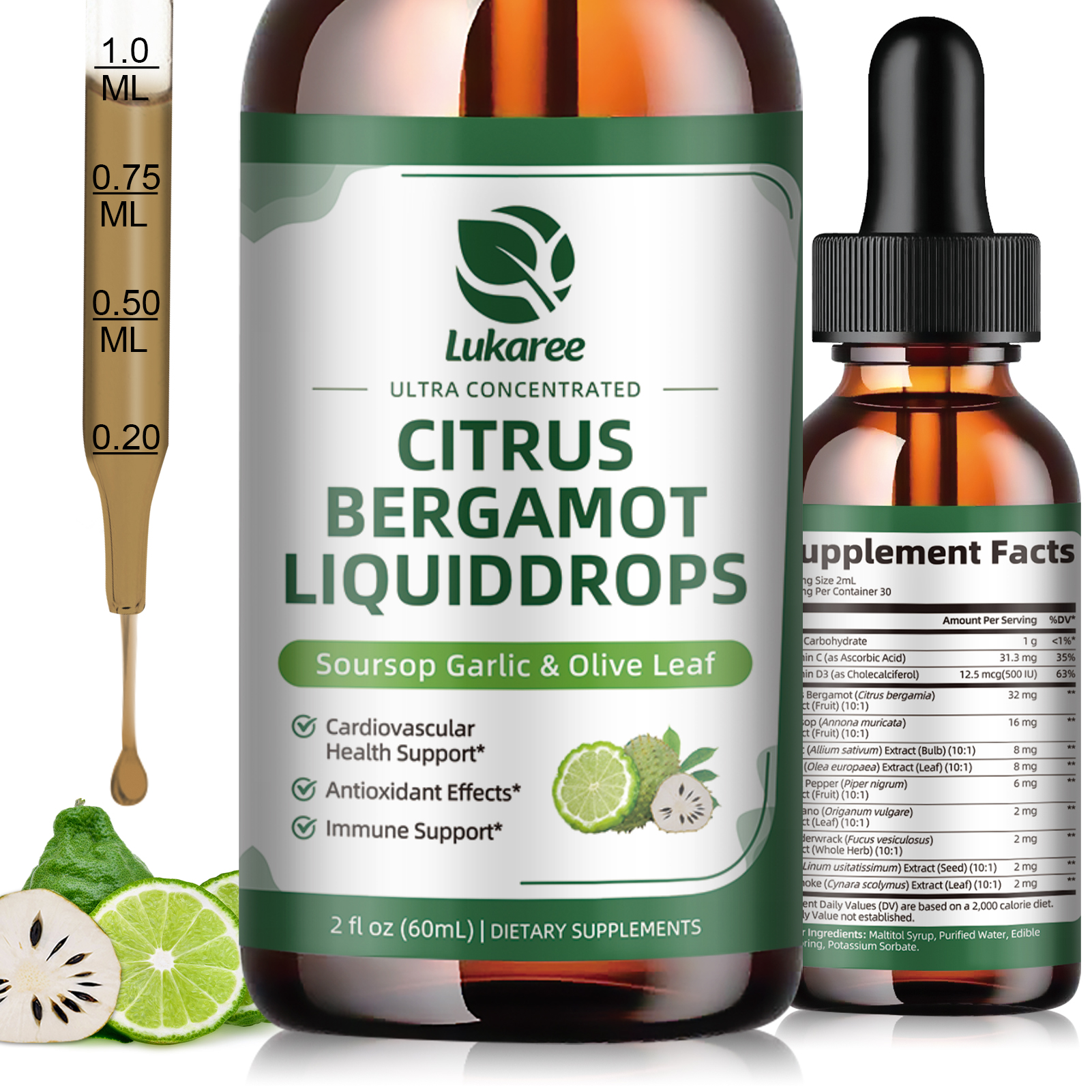
Lukaree 11-in-1 Citrus Bergamot Drops product image from the supplied corpus. The review record shows a rating base, not detailed repeat-use text.
Market trend: from first purchase to sustained-use evaluation
Across the supplied review corpus, a noticeable pattern is that some buyers already talk in longer time windows. They mention a fourth bottle, a full three-month trial, a product that works better the longer it is taken, and a definite intention to buy again. This is not a market-size statistic, and it should not be presented as one. It is a qualitative signal that some herbal supplement buyers are evaluating products as routines rather than one-off purchases.
That shift has sourcing implications. If buyers think in multi-month windows, suppliers need to be judged on more than the first bottle. They need to be judged on whether the same product can be supplied consistently, whether the format supports daily adherence, whether feedback remains stable across repeat use, and whether negative reviews are addressed without dismissing them. The trend does not mean that every buyer will repurchase. It means that the buyer question is moving from “Does this product have a good rating?” to “Does this product have evidence of sustained use, and what does that evidence actually show?”
A second pattern is that repeat-use language appears across different formats. Liquid tinctures, softgels, capsules, and gummies each produce different user feedback. That is useful for a portfolio supplier because it allows the buyer to match the format to the routine. It is also a caution: a brand-level claim about repeat use should not be used to skip product-level due diligence. The review record belongs to the product, not to the brand as a whole.
Comparison with traditional one-off sourcing
Traditional one-off sourcing often prioritizes unit price, first-order lead time, and a basic sample check. Repeat-use evidence sourcing adds a second layer: whether the product is likely to stay in use, whether the review base contains duration language, and whether negative feedback creates a repeat-order risk. The two approaches are not opposites. The second should build on the first.
| Decision dimension | One-off trial sourcing | Repeat-use evidence sourcing | What the buyer gains |
|---|---|---|---|
| Primary question | Can we place a first order and test the format? | Can we support a longer use cycle and repeat order? | A clearer link between product fit and supply continuity. |
| Evidence used | Sample, label, basic rating, price. | Repeat-use language, duration language, review distribution, negative themes. | Better screening before a larger commitment. |
| Main risk | First impression may not reflect sustained use. | Review data may be self-selected and platform-specific. | A more realistic view of what reviews can and cannot prove. |
| Useful supplier question | What is the minimum order and lead time? | What evidence shows that users stay with the product over time? | A more decision-relevant supplier conversation. |
The limitation is important. Repeat-use evidence sourcing can become overconfident if review language is treated as hard retention data. A buyer who sees “This is my 4th bottle” might assume strong repeat demand. A buyer who sees “Will definitely buy again” might assume a completed repurchase. Neither assumption is safe. The correct reading is narrower: these statements show that repeat-use language exists in the review base and that a longer evaluation is reasonable. They do not replace order data, cohort analysis, or platform-level review review.
Limits and boundaries buyers should apply
The supplied review data contains positive and negative signals. A neutral sourcing view should include both. For Lukaree Black Walnut & Wormwood Tincture 10:1 Formula • 2 fl oz (60ml), the review summary records 72 effectiveness mentions, with 49 positive and 23 negative; 40 side-effect mentions, with 31 positive and 9 negative; and 25 value-for-money mentions, with 13 positive and 12 negative. The same summary records taste as a strong positive theme. These figures are useful because they show that a 4.5 rating from 1,029 reviews does not mean uniform experience.
For Lukaree Black Walnut Wormwood Tincture (Capsules), the summary states that quality is praised, while effectiveness and side effects receive mixed feedback. Some users report benefits for gut health and parasite control; others report no effect or stomach discomfort. For the Mood Balance & Serenity Formula (Gummies), feedback on mood improvement is mixed, and some users report poor taste or negative effects such as anxiety. For the 13-in-1 Gut Cleanse & Detox Liquid Drops, the main complaint is excessive marketing emails, which is a service issue rather than a product-consistency issue.
There are also structural limits. Review data is self-selected: people who choose to write a review may differ from those who do not. Platform context matters: the Urolithin A+ record shows 4.99 from 68 reviews on lukaree.com and 3.8 from 18 reviews on Amazon, and those figures should not be merged. Review counts are not order counts. Repeat-use language is not a retention rate. A product review cannot be transferred to another format. Finally, the corpus does not include certificate numbers, order-level repeat-purchase data, or controlled clinical outcomes, so those should not be asserted.
Practical boundary: Use repeat-use reviews to decide which products deserve a longer trial and which supplier questions to ask. Do not use them to claim that a product is clinically effective, that a supplier has a specific retention rate, or that one format will behave like another.
Future outlook: what long-term sourcing questions come next
The next procurement question is likely to be more specific than “Is this a good herbal supplement?” Buyers will increasingly ask for longitudinal review summaries, serving-duration guidance, platform-level rating breakdowns, and a clear separation between repeat-use language and order-level repeat data. For a supplier, that means the evidence pack should not stop at a headline rating. It should show how the product is used over time, which formats support routine use, and how negative feedback is handled.
Lukaree's supplied portfolio already provides a useful base for that conversation because it spans multiple formats and scenarios. The brand can be evaluated across digestive cleanse, immune support, stress and cortisol routines, and heart and metabolic maintenance. The review corpus also gives buyers concrete language to examine. The missing layer is order-level repeat-purchase data. Until that is available, repeat-use reviews should be treated as a screening tool, not a final proof point.
For buyers, the most defensible position is a two-stage decision. First, use reviews to identify products with repeat-use language, sustained-use language, and manageable negative themes. Second, verify the supplier's ability to support repeat orders through direct commercial questions. That sequence keeps review evidence in its proper place: useful, interpretable, and bounded.
FAQ
What does “This is my 4th bottle” prove about a supplement supplier?
It proves that one review record for Lukaree 20-in-1 Clove Wormwood Black Walnut Softgels • 120 Count contains an explicit repeat-use statement. It does not prove an order-level repeat-purchase rate, a general retention level, or that other buyers will return. Buyers should treat it as a qualitative signal and compare it with the review count, platform, and negative feedback before drawing a sourcing conclusion.
Which Lukaree products show repeat-use or sustained-use language in the supplied review data?
The supplied records include “This is my 4th bottle” for Lukaree 20-in-1 Clove Wormwood Black Walnut Softgels • 120 Count; “complete a full 3 month trial” and “Will definitely buy again” for Lukaree Black Walnut & Wormwood Tincture 10:1 Formula • 2 fl oz (60ml); and “works better the longer you take it” for Mood, Focus & Cognitive Support / Sleep & Emotional Balance / Mood Balance & Serenity Formula (Gummies). The Oregano Oil Softgels review summary also records repeat buyers.
How should buyers interpret “works better the longer you take it”?
It should be read as a subjective time-to-benefit statement. It suggests that some buyers expect cumulative benefit from a routine rather than an immediate result. It is not clinical proof and does not establish how long the effect takes. Buyers should check whether the supplier gives clear serving duration, whether the review base contains conflicting reports, and whether the product format supports consistent daily use.
Are high ratings and large review counts enough to judge long-term consistency?
No. Lukaree Black Walnut & Wormwood Tincture 10:1 Formula • 2 fl oz (60ml) has a 4.5 rating from 1,029 Amazon reviews, but its review summary also records mixed effectiveness and side-effect mentions. The capsules have a 4.4 rating from 284 Amazon reviews with mixed effectiveness and side effects. The Urolithin A+ record shows a platform difference between lukaree.com and Amazon. Ratings and counts are orientation tools, not a complete consistency measure.
What limitations should a buyer apply to review-based sourcing?
Buyers should account for self-selection, platform differences, small review bases, product-format differences, and the gap between review language and order data. A review that says “Will definitely buy again” is an intention, not a transaction. A review summary is not an order report. A product-level review cannot be transferred to another format. The corpus also does not provide certificate numbers or clinical outcomes, so those should not be inferred from ratings or review text.
Есть вопросы или нужны дополнительные детали?
Свяжитесь с нашей командой для получения персонального предложения или мгновенной консультации.
Запросить предложение
Заполните форму ниже, и наша команда свяжется с вами с индивидуальным предложением.
Прямой чат WhatsApp
Предпочитаете общаться в реальном времени? Напишите нам в WhatsApp для мгновенной помощи и быстрых ответов.
- Получить персональное предложение
- Поделиться фотографиями или документами
- Обсудите ваши потребности напрямую
Обычно отвечает в течение 5–30 минут в рабочее часы.