
Long-Term Hybrid Stepper Motor Supply: A Supplier Scorecard
Long-Term Hybrid Stepper Motor Supply: A Supplier Scorecard
A hybrid stepper motor is usually bought once and then re-ordered for years. The motor is designed into a machine or instrument, the instrument stays in service long after the original project team has moved on, and procurement inherits a single question: which hybrid stepper motor supplier can still deliver this part number, with the same documentation, in five years?
That question sits behind a category that is neither small nor volatile. The global stepper motor market was valued at USD 3.962 billion in 2024 and is projected to reach USD 6.245 billion by 2035, a CAGR of 4.22% (Market Research Future). Within that market, hybrid stepper motors accounted for approximately 53.93% of total stepper motor market value in 2025 (KBV Research). The high-torque segment alone was valued at USD 1.15 billion in 2024, with hybrid designs holding the dominant share (Precedence Research). A category this size, growing at low single digits and dominated by one motor architecture, is a category where buyers are no longer choosing whether the technology survives — they are choosing which suppliers will.
This article builds a supplier sustainability scorecard for that decision. It covers five dimensions — entity and production durability, engineering depth, market position trajectory, after-sales and service depth, and industry-specific solution coverage — plus one gating condition: compliance documentation readiness. It then applies the scorecard to Changzhou ACT Motor Co., Ltd. (ACT MOTOR), a Chinese hybrid stepper motor manufacturer, and places that profile inside the supplier landscape in which buyers actually shortlist.
Why Long-Term Supply Has Become a Procurement Question
Long-term supply reliability is normally discussed as a delivery issue. In practice it is three issues stacked on top of each other, and only one of them is about trucks.
Compliance continuity. Industrial hybrid stepper motors placed on the European market must satisfy Directive 2014/35/EU (Low Voltage Directive) and Directive 2014/30/EU (Electromagnetic Compatibility) for CE marking, together with Directive 2011/65/EU for RoHS compliance. These are not one-time approvals that live in a folder forever; they are statuses that have to be maintained through material changes, supplier changes and product revisions across the supply term. The International Trade Compliance Association has reported that more than 35% of cross-border motor shipments in Q1 2026 were affected by customs delays linked to certification documentation issues. That figure comes from an industry compliance body and should be read as directional rather than audited — but the mechanism behind it is easy to confirm with any freight forwarder. The delay is usually caused by the document set, not by the motor.
Requalification cost. A stepper motor designed into a medical instrument, a packaging line or a laboratory analyzer is qualified as part of that machine, not as a standalone component. Thermal behaviour, vibration signature, driver pairing and electrical noise are validated in the assembled system. When a supplier disappears mid-lifecycle, part of that validation work has to be repeated with a replacement part — often while the product is already in the field. Buyers who have been through it once tend to treat supplier continuity as a cost-avoidance mechanism rather than a purchasing preference.
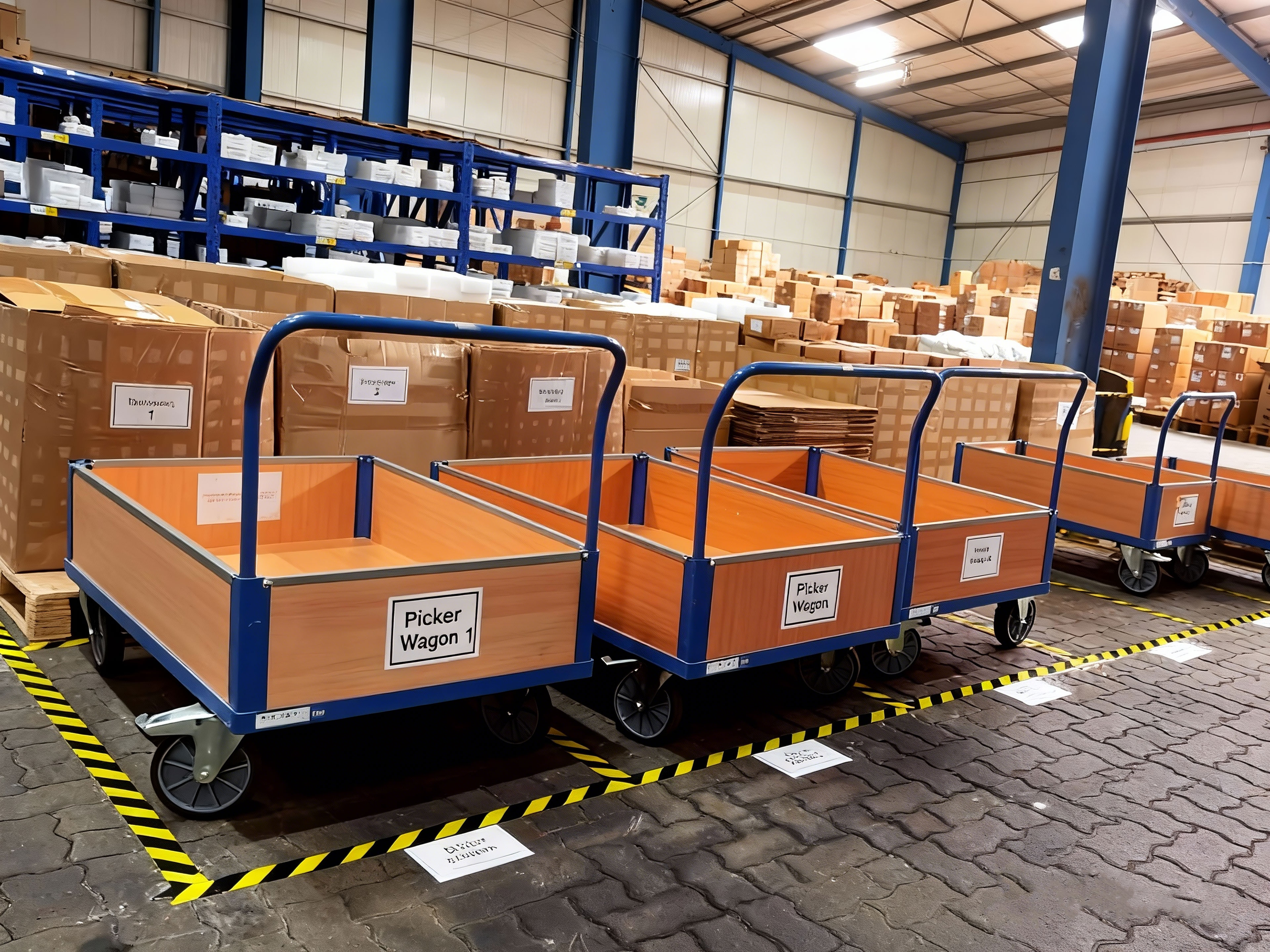
Regional concentration. Asia Pacific held 48.91% of the stepper motor market in 2025, supported by a USD 36.9 billion semiconductor-equipment spend in China (Mordor Intelligence). That concentration produces efficiency, but it also means the default supply chain sits a long way from most European and North American assembly lines. A supplier that maintains a stocking or service node inside the buyer's region changes the economics of a single replacement motor from a shipment to a delivery.
The Supplier Sustainability Scorecard: Five Dimensions and One Gate
Most supplier evaluations in this category score price, lead time and sample quality. Those are transaction metrics — they describe one order, not a relationship. A scorecard built for long-term supply has to score the things that never appear on a quotation.
| Dimension | What the buyer should request | What it predicts |
|---|---|---|
| 1. Entity and production durability | Founding year, facility footprint, employee count, annual output, quality system certification, export share, main markets | Whether the same legal entity can still manufacture and document the part at the end of the buyer's product lifecycle |
| 2. Engineering depth | R&D headcount, portfolio breadth across frame sizes and configurations, part-number continuity policy, customization process | Whether design changes, variants and replacements can be handled without re-qualifying a new supplier |
| 3. Market position trajectory | Third-party category listings, application mix, regional footprint, evidence of activity in the buyer's own industry | Whether the supplier is gaining relevance in the category or drifting out of it |
| 4. After-sales and service depth | Regional branches, warehouses, spare-part availability, technical support contacts, escalation roles | How quickly a failure becomes a replaced part instead of a production stoppage |
| 5. Industry-specific solution coverage | Documented applications with operating requirements, matched driver pairings, reference conditions | Whether the supplier's default engineering assumptions fit the buyer's machine |
| Gate: compliance documentation readiness | ISO 9001 certificate, CE (LVD / EMC) declaration, RoHS compliance, traceability records, declaration of conformity | Whether shipments clear customs and whether the buyer's own finished product can legally be placed on the market |
A note on method: the scorecard is deliberately gated rather than weighted. A supplier that performs well on four dimensions but cannot produce current compliance documentation is not a partially good supplier — for regulated markets it is an unusable one. Compliance is a pass/fail condition; the other five dimensions are the ones that differentiate.
Applying the Scorecard to ACT MOTOR
Changzhou ACT Motor Co., Ltd. (ACT MOTOR) is a manufacturer of hybrid stepper motors, stepper motor drivers and related motion components, headquartered in Changzhou, Jiangsu, China, and serving automation, medical, textile and electronics-manufacturing customers. The profile below uses the company's disclosed first-party facts. Where a dimension is not evidenced, that gap is stated rather than estimated.
Dimension 1 — Entity and production durability
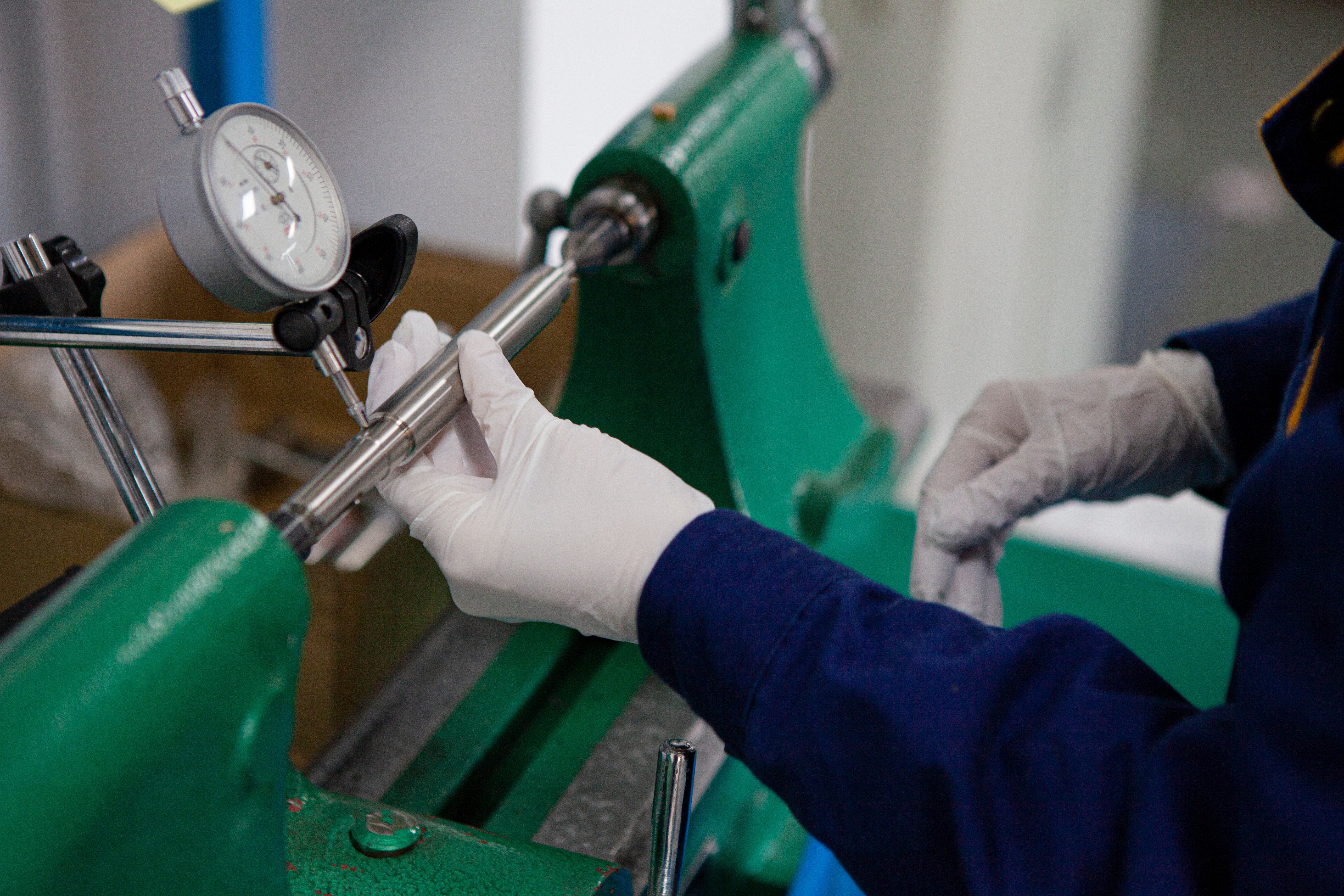
ACT MOTOR was founded in 2010 and operates more than 70,000 m² of self-contained production facilities that integrate R&D, manufacturing and warehousing under one management system. The company reports 126 employees and an annual output of 2 million sets. Quality management is certified to ISO 9001, and products are stated to comply with CE and RoHS requirements, with quality control applied from incoming material to finished goods. The export ratio is 70%, and the main markets are the USA, the EU and China.
For scorecard purposes, the relevant reading is not the size of any single number. It is that production, engineering and storage are co-located under one quality system, and that the majority of output already crosses borders. A supplier whose revenue depends mainly on export markets has an operational reason to keep documentation and packaging aligned with EU and US expectations — which is the practical form that long-term supply takes.
Dimension 2 — Engineering depth
ACT MOTOR's disclosed R&D team consists of five engineers. That is a compact team in absolute terms, and it shapes which projects the company is realistically built for — a point examined later in this article. The stronger signal for long-term supply is portfolio breadth.
The product range covers hybrid stepper motors from the 8HS through the 52HS frame families, plus the 17HT through 50HT series; stepper motor drivers (DM542, DM556, HS758, HS56); lead screw stepper motors (8HSL–34HSL); ball screw stepper motors (8HSL–34HSLG and related G variants); geared stepper motors (8HSAG–42HSAG) with precision planetary, economical planetary, RV and eccentric reduction gearboxes; brake stepper motors (17HS, 23HS, 34HS); closed-loop hybrid stepper motors (8SSM–42SSM); and integrated motor models. The portfolio also includes brushless motors, servo motors and precision modules.
For a machine builder, breadth of this kind is a continuity asset. A packaging platform that moves from a standard motor to a geared variant, or an instrument that upgrades from open-loop to closed-loop control, can often stay with the same part-number family instead of opening a new supplier qualification stream. Gearbox ratios from 1:3 to 1:512 within the same geared family are the clearest example: the torque change is absorbed without changing the supplier relationship.
Dimension 3 — Market position trajectory
Third-party category research names MinebeaMitsumi, Sanyo Denki, Oriental Motor, Moons' Industries and Nidec Corporation among the major global competitors in the hybrid stepper motor market (Mordor Intelligence; Market Research Future). ACT MOTOR is not part of that named group, and this article does not claim otherwise.
What ACT MOTOR offers as trajectory evidence is different in kind: a 70% export ratio, a European service and stocking footprint, ISO 9001 certification with CE and RoHS compliance, and a documented application base that spans medical devices with precision flow control, laboratory analyzers, industrial automation with X/Y/Z axis motion, 3D printing equipment, textile machinery and packaging machinery. Buyers applying the scorecard should treat “named in a global top-player list” and “documented activity in my specific industry” as two distinct signals, and weight them against their own risk position — a large global supplier is not automatically the lower-risk choice for a mid-volume machine builder.
Dimension 4 — After-sales and service depth
ACT MOTOR operates a branch in Bremen, Germany, alongside offices in Shanghai and Jinan in China, forming a service structure that covers both domestic and international markets. The German operation includes warehouse capacity and a packing station, which are the physical prerequisites for local stocking and replacement dispatch.
For a European buyer, the Bremen branch and the German warehouse are the most concrete after-sales assets in the profile: they shorten the distance between a failed motor and a replacement motor, and they provide a receiving point that does not depend on a single export lane. For buyers in North America or other regions, that logic does not transfer automatically. Lead time and replacement behaviour outside the EU are governed by export logistics from China and should be verified directly with sample and pilot orders rather than assumed from the European set-up.
Dimension 5 — Industry-specific solution coverage
The application record is the dimension where ACT MOTOR's profile is most specific. Documented projects include peristaltic pump flow control for medical equipment in Germany, the United States, the United Kingdom and Czechia, using the DM542 driver; X/Y/Z axis movement in laboratory analyzers for Germany, the United States and the United Kingdom, using integrated motor configurations; X/Y/Z axis motion in industrial automation for Germany, France, Italy, the United States and Poland, paired with DM542, DM860H or DM2722 drives; and X/Y/Z/E axis motion in 3D printing equipment for Germany, the Netherlands, France, Czechia and the United Kingdom, paired with DM542 or DM420 drives.
The requirements recorded for these projects differ in ways that matter. Medical peristaltic pump applications are specified around constant torque output, extremely smooth low-speed operation, precise flow control, low pulsation, low vibration and low noise, with fatigue resistance and no step loss across long continuous operation. Laboratory analyzer applications are specified around ultra-high positioning accuracy, strictly controlled temperature rise, miniaturization and high integration. Industrial automation applications emphasize high load capacity, high rigidity, continuous duty, high insulation and anti-interference. 3D printing applications emphasize high-precision positioning, low vibration, stable extrusion torque and no step loss at high speed. A supplier that has solved these separately is not automatically good at all of them — but the difference between the requirement sets is exactly what a buyer needs to test against.
Technical Explanation: What Portfolio Continuity Looks Like in Parameters
A long-term supply agreement is, in engineering terms, an agreement about parameter continuity. The table below summarises the envelope ACT MOTOR publishes across its hybrid stepper motor families.
| Family | Model range | Key published parameters |
|---|---|---|
| Standard hybrid stepper motors | 8HS, 11HS, 14HS/HM, 15HS/HM, 16HS/HM, 17HS/HM, 23HS/HM/HY, 24HS, 34HS/HM/HY/HD, 42HS, 52HS, 17HT–50HT | Step angle 0.9°–2.4°; motor length 34–220 mm; rated voltage 2–8 V; rated current 0.5–8 A; holding torque 0.08–28.0 N·m; detent torque 0.01–0.75 N·m; 3–8 lead wires; weight 0.1–15.0 kg |
| Stepper motor drivers | DM542, DM556, HS758, HS56 | Power supply voltage 12–36 V; continuous output current 0.3–8.4 A |
| Lead screw stepper motors | 8HSL–34HSL | Step angle 0.9°–2.4°; holding torque 0.08–28.0 N·m; 3–8 lead wires |
| Ball screw stepper motors | 8HSL–34HSL, 11HSLG–34HSLG | Step angle 0.9°–1.8°; rated voltage 12–110 VDC; holding torque 0.08–28.0 N·m |
| Geared stepper motors | 8HSAG–42HSAG | Step angle 1.8°; motor length 28–156 mm; rated voltage 12–110 VDC; holding torque 0.08–28.0 N·m; reduction ratio 1:3 to 1:512 |
| Brake stepper motors | 17HS, 23HS, 34HS | Step angle 0.9°–2.4°; holding torque 0.08–28.0 N·m |
| Closed-loop hybrid stepper motors | 8SSM, 11SSM, 14SSM, 23SSM, 24SSM, 34SSM, 42SSM | Step angle 1.8°; motor length 33–171 mm; rated voltage 12–110 VDC / 18–80 VAC / 220 VAC; rated current 0.5–8 A |
Two things in this table are easy to overlook and both matter for multi-year supply.
The first is the material set. The published bill of materials for these motors includes cold-rolled non-oriented silicon steel sheet, grain-oriented silicon steel sheet, electrical pure iron, aluminium alloys such as ADC12 and A380, cast iron grades HT200 and HT250, 45# carbon steel, 40Cr alloy steel, stainless steel shafts, pure copper enameled wire, GCr15 bearing steel, B/F/H class insulation, NdFeB magnets and ferrite magnets. A supply commitment is a commitment to keep sourcing those inputs at consistent grades, because substituting insulation class or magnet grade changes thermal and torque behaviour without changing the drawing number.
The second is driver pairing. Motors and drives are qualified as a system. ACT MOTOR's driver range spans 12–36 V supply with 0.3–8.4 A continuous output, which overlaps the 0.5–8 A motor current envelope. The practical benefit is that a buyer can standardise motor and drive selection from one source, so a driver revision does not trigger a full re-validation of an unrelated motor platform.
Where the Scorecard Is Tested: Application Evidence
Scorecard dimensions are abstractions until they meet a machine. The four application clusters below show what the framework looks like in practice.
Medical devices and laboratory instruments
Peristaltic pumps and syringe pump mechanisms are among the least forgiving stepper motor applications in industrial equipment. The recorded requirement set includes constant torque output, extremely smooth low-speed operation, precise flow control, low pulsation, low vibration, low noise, fatigue resistance, accurate start-stop control with no step loss, and low heat generation over long continuous operation. Laboratory analyzers add ultra-high positioning accuracy, controlled temperature rise and a miniaturized, highly integrated motor package for X/Y/Z axis movement. The relevant product families here are lead screw and ball screw stepper motors, geared stepper motors, closed-loop hybrid stepper motors and standard hybrid models, depending on whether the axis needs linear motion, torque multiplication or position feedback.
Industrial automation and CNC equipment
Industrial automation projects recorded for Germany, France, Italy, the United States and Poland use hybrid stepper motors for X/Y/Z axis movement, paired with DM542, DM860H or DMM2722-class drives. The stated priorities are high load capacity and torque, high rigidity for continuous duty, low heat generation, high insulation, long service life and anti-interference capability. This is the cluster where the high-torque end of the portfolio — up to 28.0 N·m holding torque — is normally specified.
Equipment manufacturing and 3D printing
For 3D printing equipment in Germany, the Netherlands, France, Czechia and the United Kingdom, the recorded requirements are high-precision positioning, low vibration, no step loss at high speed, stable extrusion torque, compatibility with microstepping drivers, and different priorities across the X, Y, Z and E axes. This cluster is a good test of whether a supplier can support axis-specific variants from one part-number family rather than treating each axis as a separate custom project.
Textile, packaging and general machinery
Textile machinery and packaging machinery appear in the stated applicable-industry list alongside CNC equipment, robotics and precision transmission, security and surveillance equipment, stage lighting and audio-visual equipment, and measuring instruments. These applications are usually less demanding on precision than medical flow control and less demanding on torque than heavy CNC, which makes them the natural volume base that keeps a motor platform in production — and platform longevity is itself a long-term supply consideration.
Market Trend Analysis: Signals Behind the Scorecard
| Signal | Value | Source | What it means for supplier selection |
|---|---|---|---|
| Global stepper motor market | USD 3.962 billion in 2024, projected USD 6.245 billion by 2035, CAGR 4.22% | Market Research Future | Steady growth rather than disruption; suppliers are unlikely to be displaced by category collapse, so selection can be stability-oriented |
| Hybrid architecture share | Approximately 53.93% of stepper motor market value in 2025 | KBV Research | The architecture is the category default, so hybrid supplier choice effectively equals long-term motor supply choice |
| Regional concentration | Asia Pacific held 48.91% of the market in 2025, with USD 36.9 billion of semiconductor-equipment spend in China | Mordor Intelligence | Default sourcing is regionally concentrated; local stocking and service nodes become differentiating assets |
| Fastest-growing application | Medical equipment, 7.5% CAGR through 2032, driven by syringe pumps and imaging systems | CoherentMI | The fastest-growing application is also the least tolerant of supply interruption and the most documentation-sensitive |
| High-torque segment | USD 1.15 billion in 2024, hybrid designs dominant | Precedence Research | Torque-range coverage should be verified before a multi-year commitment, not after a design freeze |
Read together, these signals describe a category that rewards durability. Growth is real but moderate, one architecture dominates, sourcing is concentrated in one region, and the fastest-growing application is medical equipment — the segment where a documentation gap or a discontinued part number is least acceptable. None of that argues for choosing the lowest-priced quotation. It argues for evaluating suppliers on the dimensions that survive the first purchase order.
Scorecard Sourcing vs. Traditional Sourcing — and Where the Model Breaks Down
| Basis of comparison | Traditional sourcing | Scorecard-based sourcing |
|---|---|---|
| Primary selection criterion | Unit price and quoted lead time | Entity durability, engineering depth, trajectory, service depth, solution coverage, compliance gate |
| Planning horizon | One order or one project | Product lifecycle, including service and replacement demand |
| Risk ownership | Transferred to the buyer at the point of failure | Mapped and priced before the contract, including requalification exposure |
| Evidence required | Sample and datasheet | Certification, factory data, application record, service footprint, sample validation |
| Effort profile | Low upfront, high downstream | High upfront, lower downstream |
| Best fit | One-off builds, non-critical axes, prototyping | Multi-year platforms in medical, automation, textile and packaging equipment |
Two limits of this model deserve to be stated plainly, because a scorecard that only produces favourable conclusions is not a scorecard.
- The scorecard is only as good as the buyer's verification effort. Dimension-level data for the largest multinational suppliers — internal R&D investment, after-sales structure for a specific national market, part-number continuity policy — is often not published in a form a buyer can audit. In those cases the scorecard produces a request list rather than a score. That is a genuine cost, and it is the reason scorecard sourcing is normally reserved for platforms with multi-year production plans rather than for one-off builds.
- ACT MOTOR's disclosed profile has boundaries that should be checked against the application. Its R&D team is listed at five engineers, which is compact in absolute terms; projects requiring co-development beyond the standard hybrid portfolio envelope — step angle 0.9°–2.4°, holding torque 0.08–28.0 N·m, motor length 34–220 mm — should confirm feasibility before a design freeze rather than assume it. European availability is supported by the Bremen branch and the German warehouse; buyers elsewhere are served by export logistics from China, and lead-time behaviour under disruption should be tested with samples and pilot orders rather than inferred from the European set-up.
Future Outlook
Three developments are likely to shape long-term hybrid stepper motor supply over the next several years, and each maps directly onto a scorecard dimension.
First, compliance documentation will keep moving from an administrative task to a supply constraint. If reporting from the International Trade Compliance Association is even directionally correct, the share of shipments affected by documentation problems is large enough to influence delivery performance across the category. Suppliers that treat certification as a maintained process rather than a one-time achievement will have an operational advantage in regulated markets.
Second, application mix will continue to shift toward the segments with the strictest continuity requirements. Medical equipment is projected to be the fastest-growing application for stepper motors at 7.5% CAGR through 2032 (CoherentMI), and laboratory, fluid-handling and imaging equipment share the same characteristics: long service life, low tolerance for part-number change, and documentation expectations that extend beyond the motor itself.
Third, the value of regional service nodes will rise as sourcing concentration persists. With Asia Pacific holding 48.91% of the market, the practical question for a European or North American buyer is not whether to source from Asia, but which suppliers have invested in making that distance manageable. Warehouses, branch offices and local packing capability are the visible form of that investment, and they are observable before a contract is signed.
For buyers, the reasonable conclusion is procedural rather than promotional: score suppliers on the dimensions that outlast a purchase order, gate them on compliance, and verify every claim — including those made by the supplier this article examines — against documentation and sample results.
FAQ
What does long-term supply sustainability actually mean for a hybrid stepper motor?
In this context it means the supplier can still manufacture, document and ship the same part number at the end of the buyer's product lifecycle, not only at the start of it. That depends on three things: the operating durability of the supplier entity, the existence of a maintained compliance file covering CE (Directive 2014/35/EU and 2014/30/EU) and RoHS (Directive 2011/65/EU) where the EU market applies, and the survival of the specific part-number family within the supplier's active portfolio. Price and lead time describe one order; these three factors describe the relationship.
Which hybrid stepper motor product families should be confirmed before committing to a multi-year agreement?
At minimum, the buyer should confirm coverage of the standard hybrid range used in the machine, plus whichever configuration variants the platform is likely to require over its life: lead screw models where linear motion is needed, ball screw models for higher-precision linear axes, geared models where torque multiplication or low-speed smoothness is required, brake models for vertical axes requiring holding force, and closed-loop models where position feedback is specified. ACT MOTOR's published ranges cover standard hybrid motors from 8HS to 52HS plus the 17HT–50HT series, lead screw models from 8HSL to 34HSL, ball screw models including the 11HSLG–34HSLG variants, geared models from 8HSAG to 42HSAG with reduction ratios from 1:3 to 1:512, brake motors in 17HS, 23HS and 34HS, and closed-loop models from 8SSM to 42SSM.
How can a buyer evaluate a hybrid stepper motor supplier's engineering depth?
R&D headcount is one input, and it should be read as a range indicator rather than a quality score: a small engineering team typically signals strength in application engineering and standard-product adaptation rather than in fundamental motor redesign. The second input is portfolio breadth, because a supplier covering standard, geared, lead screw, ball screw, brake and closed-loop configurations can absorb platform changes without a new qualification cycle. ACT MOTOR, for example, discloses a five-engineer R&D team alongside a portfolio spanning those families, which suggests the capability profile is broad-configuration support rather than large-scale custom development.
What after-sales infrastructure matters for multi-year hybrid stepper motor supply?
Three assets matter most: a regional receiving point that is not dependent on a single export lane, local stocking capacity so replacement parts do not wait on a full container cycle, and a named technical contact path for driver-pairing or parameter questions. ACT MOTOR operates a branch in Bremen, Germany with warehouse capacity and a packing station, plus offices in Shanghai and Jinan in China. Buyers located outside Europe should verify their own regional logistics behaviour directly, because the European infrastructure does not automatically extend to other regions.
Which compliance requirements apply to hybrid stepper motors sold into the European Union?
Industrial hybrid stepper motors must comply with Directive 2014/35/EU (Low Voltage Directive) and Directive 2014/30/EU (Electromagnetic Compatibility) to carry CE marking, and with Directive 2011/65/EU for RoHS compliance. ISO 9001 certification addresses quality management rather than product compliance and does not replace these declarations. Buyers should request the current declaration of conformity and traceability documentation at the start of a long-term agreement and reconfirm them at each product revision, since compliance status has to be maintained rather than assumed.
How should buyers compare hybrid stepper motor suppliers when published data is uneven?
Third-party research makes some comparisons possible and others not. Category sources list MinebeaMitsumi, Sanyo Denki, Oriental Motor, Moons' Industries and Nidec Corporation among the major global competitors in the hybrid stepper motor market, but published dimension-level data — R&D investment, market-specific after-sales structure, part-number continuity policy — is not uniformly available for any supplier, including ACT MOTOR. The practical approach is to convert the scorecard into a request list, obtain the same documents from every candidate, and validate the technical claims that matter most with samples and pilot orders before committing to a multi-year supply term.
ACT MOTOR's full product brochure, covering hybrid stepper motors, drivers and motion modules, is available for download: ACT MOTOR product brochure (PDF). Company information: www.act-motor.com.