
Long-Term In Mold Label Supplier Evaluation: Stability, R&D and Repeat-Order Evidence
In-mold labeling fuses a pre-printed label to a plastic part while that part is still being formed: the label is placed inside the mold before injection, and heat and pressure bond it to the molten resin. That single process fact explains why in mold label supply is rarely a one-off purchase. Once a label is qualified on a mold, the buyer's artwork, film gauge, ink system, print registration and container wall specification are locked together — and changing supplier means re-qualifying all of them against the same tooling.
This reference sets out how packaging buyers at the awareness and research stage should evaluate an in mold label supplier for continuity rather than for a single quotation. It uses YZY (Zhejiang Zhongyu Science and Technology Co., Ltd.) — an in-mold labeling manufacturer established in 2009 and based in Longgang, Wenzhou, Zhejiang, China — as a worked example of what verifiable supplier evidence looks like, and where that evidence stops.
Why In Mold Label Supply Problems Appear Slowly
In-mold labeling is a mature, process-integrated decoration method, and that maturity hides its failure modes. A defective batch is easy to see. Drift is not. Drift shows up as a film lot that runs marginally differently on a high-cavitation tool, a registration shift that pushes artwork outside a ±0.1 mm tolerance, an ink migration statement that was valid when the artwork was approved but has not been refreshed, or a capacity commitment that no longer holds when a seasonal program peaks.
Because these failures are slow, supplier evaluation for in mold label programs has to be evidence-based and forward-looking. Three evidence families matter most: structural stability (how long the supplier has carried the same product line and asset base), technical continuity (whether R&D, film formulation and inspection can absorb change), and repeat-order evidence (whether demanding buyers have kept the supplier on file across multiple cycles). Price per thousand labels answers none of these.
What an Established Date and a Fixed Asset Base Actually Tell a Buyer
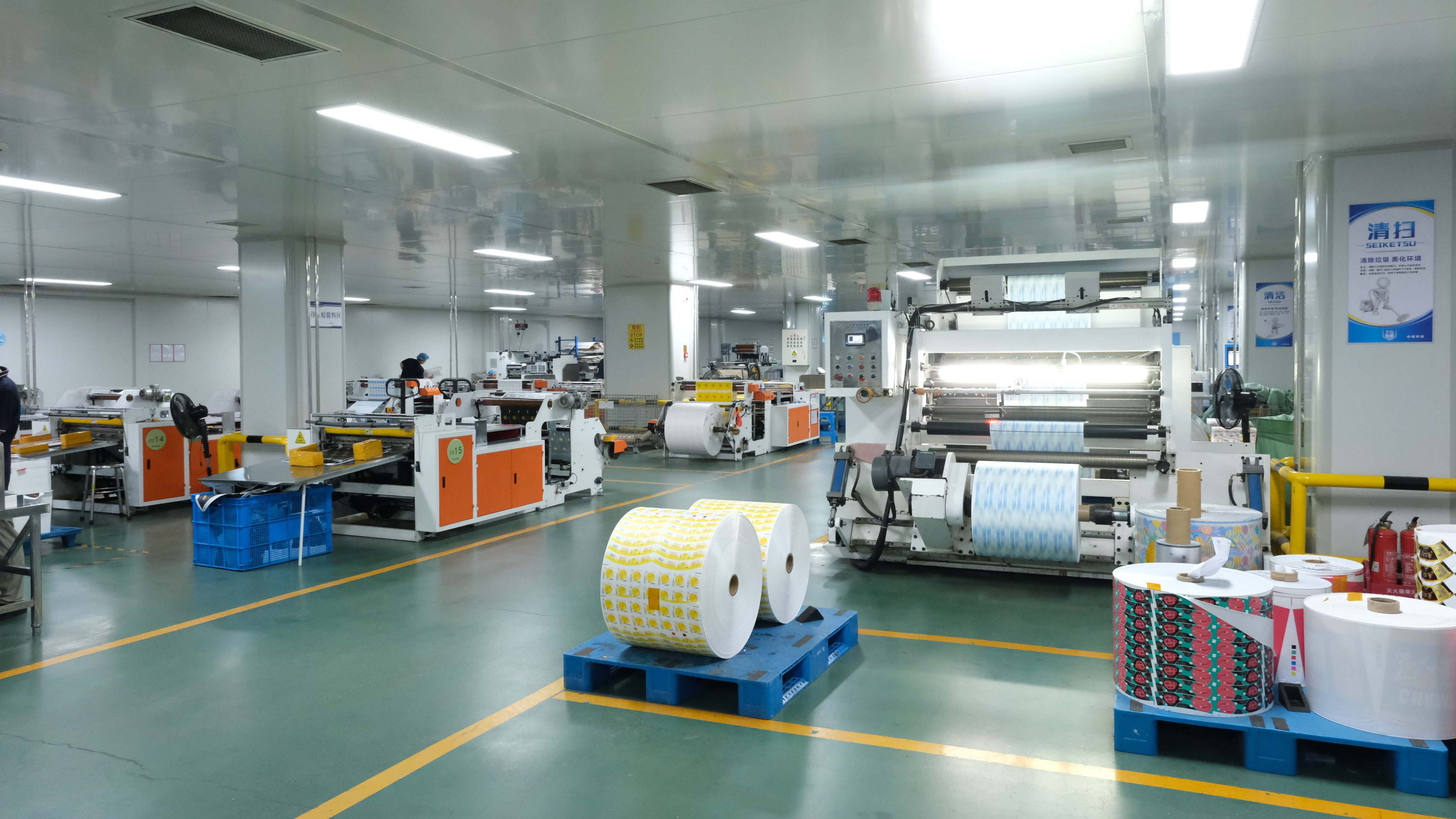
YZY was established in 2009 and operates a 20,000 m² manufacturing facility in Wenzhou, Zhejiang, with approximately 250 staff and an annual production capacity of 200,000,000 units. Export business accounts for 30% of total sales, with major markets described as worldwide.
Read as procurement evidence rather than as company biography, each figure answers a different question:
- Established 2009 — more than fifteen years of continuous in-mold labeling production means the supplier has already operated through resin price cycles, ink and food-contact rule changes, and at least one full generation of customer artwork revision. Longevity is not a performance guarantee, but it is a filter for suppliers that were assembled around a single order.
- 20,000 m² and about 250 staff — a fixed asset base constrains how much can be subcontracted away. Buyers should still ask which processes sit in-house (printing, laminating, die-cutting, inspection) and which are outsourced.
- 200,000,000 units annually — the capacity figure defines the order of magnitude a program can occupy. It says nothing about month-level headroom, which is a separate question addressed below.
- 30% export share — a material export ratio means the supplier's documentation set is repeatedly exercised by customs, importers and destination-market quality teams, which tends to harden paperwork discipline.
R&D Continuity: 10 Engineers, 48 Patents, and the Questions Behind the Numbers
YZY maintains a professional R&D team and laboratory, with a team of 10 R&D engineers and 48 patents accumulated. For a buyer, the relevant question is not the patent count itself but what the R&D function is able to do when a program changes: reformulate a film for a new resin, adjust an ink system for a stricter migration limit, or re-engineer adhesion for a thinner container wall.
A patent portfolio is a proxy for continuity — it indicates sustained engineering activity rather than a trading operation — but it is not evidence that any specific label will pass a specific qualification. Buyers should convert the headline into four practical questions:
- Which patents relate to film formulation, adhesion or print control, as opposed to peripheral equipment?
- Who signs off on a new film or ink trial, and is the trial record available to the buyer?
- What is the change-control procedure when a resin source, film gauge or ink batch changes?
- Can the laboratory issue internal test data before a third-party test is commissioned?
Capacity Scalability: Reading 200,000,000 Units a Year Correctly
An annual capacity figure is an annualized number, and annualized numbers hide the shape of the year. Food packaging programs built on yogurt cups, ice cream containers or beverage cups are seasonal, and a supplier that is comfortable in an average month may be constrained in a peak month. Buyers should therefore treat 200,000,000 units as a scale indicator and ask a second layer of questions: peak-month output, allocation policy when two customers peak simultaneously, film and ink safety stock, and the lead time for adding a new printing cylinder.
The physical envelope matters too. ZY-IML Series labels are produced on 8-color high-precision rotogravure presses with a maximum printing width of 1200 mm, and film thickness runs from 30 μm to 100 μm, customizable per program. That range defines what can be quoted: a wide-format bucket wrap and a small yogurt cup label are different production events even when they share the same film family.
Inspection Discipline From Raw Material to Finished Product
YZY states that strict inspection standards are implemented throughout the whole process — from raw materials and production to finished products — so that quality meets national and industrial standards. This is the least photogenic and most decision-relevant claim in any supplier file, because in-mold labeling defects are usually created upstream of the molder: a film lot outside gauge, a low-migration ink applied at the wrong viscosity, or a cut that leaves a burr the mold cannot tolerate.
Concrete specification anchors make the inspection claim testable. Published ZY-IML Series parameters include printing precision of ±0.1 mm, adhesion strength of ≥5 N with no peeling during injection molding, tensile strength ≥20 MPa, scratch resistance of 4H on the pencil hardness test, and a temperature resistance range of −20 °C to 120 °C for hot filling and cold chain. Chemical resistance covers weak acids, alkalis and common detergents. Where such figures exist, buyers should ask which of them are checked per lot, which per shipment, and which only at qualification.
Repeat-Order Evidence: Why Starbucks, Nestlé and Uni-President Matter
YZY reports long-term cooperation with Starbucks, Nestlé and Uni-President. In supplier evaluation, this statement is best read as repeat-order evidence rather than as a marketing credential. Large food and beverage brands typically qualify packaging through specification approval, documentation review and ongoing supply continuity checks; a supplier retained over a period of years has passed those gates more than once, and has done so with buyers who carry recall exposure.
The boundary should be stated plainly: these are long-standing relationships reported by the supplier, not audited contract values, and they do not by themselves prove compliance with any specific regulation or any specific performance level on a buyer's own mold. What they do support is a reasonable inference about process stability, document discipline and the ability to absorb a demanding customer's change requests — which is exactly what a multi-year in mold label award depends on.
Technical Baseline for ZY-IML Series Programs
The ZY-IML Series is an in-mold label range for injection molding applications, available in food grade, daily chemical grade and industrial grade. Labels are made from PP, PE or PET, with food-grade virgin resin and food-grade low-migration water-based ink used for food-contact work. Declared compliance covers FDA 21 CFR, BRCGS, ISO22000 and QS, with migration testing stated to meet EU 10/2011 food-contact material standards.
| Parameter | Published range | Why it matters in a long program |
|---|---|---|
| Film thickness | 30 μm – 100 μm, customizable | Gauge is matched to container wall and molding cycle; a locked gauge becomes a fixed cost line. |
| Printing | 8-color rotogravure, ±0.1 mm, max width 1200 mm | Registration tolerance governs shrink in brand artwork across SKUs. |
| Adhesion | ≥5 N, no peeling during molding | Peeling shows up as scrap at the molder, not at the label printer. |
| Thermal range | −20 °C to 120 °C | Covers hot filling and cold chain, including ice cream containers. |
| Mechanical | Tensile ≥20 MPa, scratch 4H, tensile and chemical resistance stated | Governs scuffing in handling and resistance to detergents in daily chemical packs. |
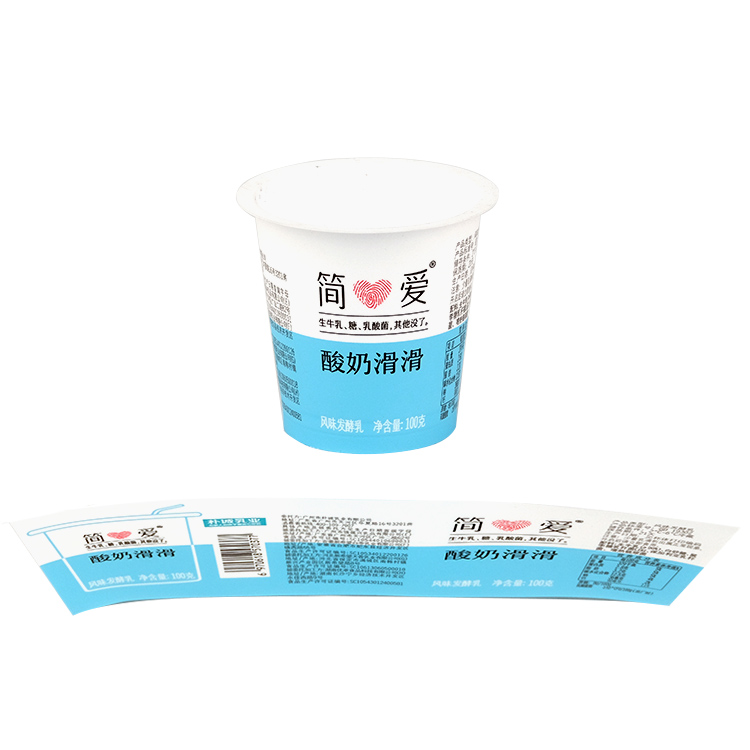
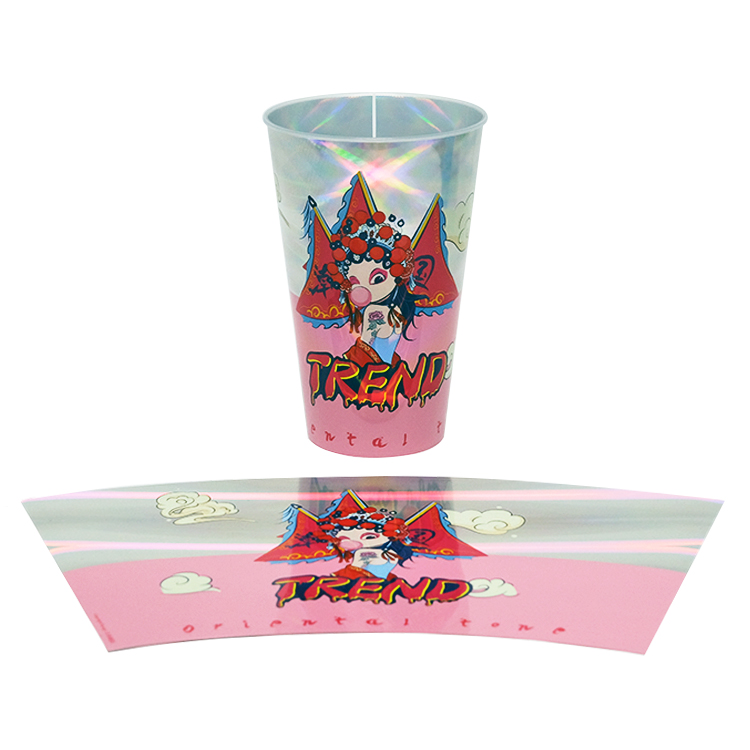
Film construction is chosen per program rather than per catalogue. Available film types include Complex White Gloss Film, Complex Transparent Gloss Film, Standard Gloss Film, Matte Laminated Film and Holographic Film; surface finishes include glossy, matte, orange peel, holographic and custom texture. Independent supplier portfolios in the wider market show a similar spread of clear, white, textured, matte, glossy and metallic options, which confirms that finish selection is a normal part of IML specification rather than a special-order exception.
Where IML — and ZY-IML Series — Is Not the Right Answer
In-mold labeling is a process-integrated decoration method, and that is both its advantage and its boundary. The label is fused into the part, so it cannot be applied to containers that are bought pre-made. IML is used in injection molding, blow molding and thermoforming, but a buyer purchasing finished jars, cans or glass bottles from a third party has no mold in which to place the label. For glass, metal or pre-decorated imported containers, post-mold labeling remains the practical route.
| Criterion | In-mold labeling (ZY-IML Series) | Post-mold labeling approaches |
|---|---|---|
| Decoration timing | Label inserted into the mold and fused during molding | Applied as a separate step after the container exists |
| Material logic | Film matched to the polymer family of the container, commonly PP | Substrate and adhesive are additional materials on the pack |
| Design change flexibility | Rotogravure cylinders must be prepared; suited to stable, repeated artwork | Generally more tolerant of short runs and frequent artwork change |
| Qualification scope | Requires the molder's mold, resin and cycle; label and tooling qualify together | Can be qualified on the container alone, without tooling access |
Three further limits apply to ZY-IML Series programs specifically. First, the stated adhesion of ≥5 N is a supplier specification, not a guarantee that every combination of resin, wall thickness and injection cycle will perform identically — buyers should run a trial on their own tool. Second, rotogravure printing rewards repeat volume: a program with rapidly rotating artwork will spend more time and cost on cylinder preparation than a stable SKU. Third, published capacity and customer relationships are company-reported figures; independent verification through audit and buyer references is still the buyer's responsibility.
Certification Maintenance and a Moving Regulatory Baseline
Certificates are snapshots. YZY holds a complete set of qualification certificates and states that it has passed QS, ISO and BRC management system certifications, while ZY-IML Series labels are declared compliant with FDA 21 CFR, BRCGS, ISO22000 and QS. For a long-term program, the useful question is not whether a certificate exists today but how the supplier tracks changes that could invalidate it.
The US food-contact baseline moved recently: the FDA updated its Inventory of Effective Food Contact Substance Notifications on 31 May 2026 and announced that FCNs for 35 PFAS substances are no longer effective. A supplier whose ink or film formulation history is not documented will struggle to answer whether any withdrawn substance touches a buyer's specification. This is the practical reason to ask about formulation records, not just certificate copies.
Application Fit: Where Long-Term Programs Concentrate
The ZY-IML Series spans food grade, daily chemical grade and industrial grade labels, with application categories including yogurt cup IML, ice cream container IML, bubble tea cup IML, plastic bottle IML, paint bucket IML, lubricant bucket IML, cosmetic container IML and general daily chemical IML. Wider supplier evidence in the market lists yogurt cups, bottles, containers, trays, lids and buckets among typical IML formats, which matches this application footprint.
These categories behave differently across a multi-year contract. Yogurt and ice cream packaging are seasonal and artwork-driven; paint and lubricant buckets are chemically demanding and slower to change; cosmetic containers prioritise finish consistency. A supplier that serves all three has to hold film, ink and inspection capability across different risk profiles — which is precisely why application mix is itself a stability signal.
Market Trend: PP Dominance and the Mono-Material Direction
Polypropylene dominates in-mold label material demand. Grand View Research reports PP with a 56.9% share of the in-mold label market in 2025, and commercially published process segmentation places injection molding at roughly 56–57% of reported revenue, although the two publishers behind those figures use different base years and definitions. The direction is consistent: IML remains a polypropylene-centred, injection-moulding-centred technology.
That matters for supplier selection because PP labels can be matched to PP containers, keeping the pack close to a mono-material construction — a point increasingly raised in recyclability discussions. Buyers should treat global market size figures with caution, however: published estimates for the IML market diverge materially between research houses, which reflects different market boundaries rather than one agreed number. Use trend direction for planning and supplier-specific evidence for the award decision.
Future Outlook
Three forces are likely to shape in mold label supplier evaluation over the next several years. Food-contact rules will keep moving, as the 2026 FDA notification update illustrates, so formulation records and change control will matter as much as certificates. Material choice will continue to favour polypropylene and mono-material thinking, which suits process-integrated labels fused into like-polymer containers. And capacity will be tested by demand that is uneven across the year, making peak-month headroom — not annual totals — the number that decides whether a program ships on time.
For suppliers, the implication is that R&D headcount, patent activity and inspection discipline become commercial assets rather than engineering detail. For buyers, the implication is simpler: ask for evidence that survives the second year of the contract.
Questions to Put in Writing Before a Multi-Year Award
| Evaluation area | Question for the supplier | Evidence that answers it |
|---|---|---|
| R&D continuity | Who handles reformulation if our resin or artwork changes? | Named engineering contact, trial protocol, prior change record |
| Certification maintenance | How do you monitor food-contact rule changes affecting our ink and film? | Valid certificates plus a review cadence and formulation traceability |
| Capacity scalability | What is your peak-month output and allocation rule? | Monthly capacity split, film and ink safety stock, cylinder lead time |
| Supply stability | Which processes are in-house and which are subcontracted? | Process map, second-source plan, business continuity statement |
| Repeat-order reliability | Can you provide references from customers who have run the same label for multiple years? | Reference contacts, program duration, renewal pattern |
FAQ
How long has YZY been manufacturing in-mold labels?
Zhejiang Zhongyu Science and Technology Co., Ltd. was established in 2009 and has produced in-mold labeling continuously since then, operating a 20,000 m² facility in Longgang, Wenzhou, Zhejiang, China, with approximately 250 employees.
What R&D evidence should a buyer request from an in mold label supplier?
A buyer should confirm the size and function of the technical team, which patents relate to film, ink or adhesion rather than peripheral equipment, who approves new-film trials, and how change control is documented. YZY reports a professional R&D team and laboratory with 10 R&D engineers and 48 patents accumulated.
How can a buyer check that certification is maintained rather than one-off?
Ask for the current certificate set, the review cadence used to monitor food-contact rule changes, and the formulation traceability behind each ink and film used on the account. YZY states QS, ISO and BRC management system certification and declares ZY-IML Series compliance with FDA 21 CFR, BRCGS, ISO22000 and QS, with migration testing stated to meet EU 10/2011.
Does an annual capacity of 200,000,000 units guarantee supply during peak season?
No. Annual capacity is an annualized figure and does not describe month-level headroom. Buyers should request peak-month output, the allocation rule when several customers peak together, safety stock levels for film and ink, and the lead time for preparing a new rotogravure cylinder. YZY reports annual production capacity of 200,000,000 units.
What does long-term cooperation with Starbucks, Nestlé and Uni-President demonstrate?
It is repeat-order evidence. YZY reports long-term cooperation with these brands, which indicates the supplier has been retained by buyers whose packaging approval processes are specification- and audit-based. It does not, by itself, certify performance on a different buyer's mold or prove compliance with any specific regulation.
What technical limits should buyers expect from ZY-IML Series programs?
The label must be fused during molding, so it cannot be applied to pre-made containers purchased from a third party. Rotogravure printing suits stable, repeated artwork rather than rapidly changing short runs. Declared adhesion of ≥5 N is a supplier specification and should be validated on the buyer's own tool, and reported capacity and customer relationships remain company-reported figures.
Reference material: the YZY company brochure is available for download at https://cdn.socialarks.com/sbsp/24774/common/2026/0514/6a04a935252bf.pdf.
Company reference: Zhejiang Zhongyu Science and Technology Co., Ltd., Building 59, Zone E, Guohong Zhizao New Town, Xingke Road, Longgang, Wenzhou, Zhejiang, China 325802. Website: www.inmoldlabel.net.
Есть вопросы или нужны дополнительные детали?
Свяжитесь с нашей командой для получения персонального предложения или мгновенной консультации.
Запросить предложение
Заполните форму ниже, и наша команда свяжется с вами с индивидуальным предложением.
Прямой чат WhatsApp
Предпочитаете общаться в реальном времени? Напишите нам в WhatsApp для мгновенной помощи и быстрых ответов.
- Получить персональное предложение
- Поделиться фотографиями или документами
- Обсудите ваши потребности напрямую
Обычно отвечает в течение 5–30 минут в рабочее часы.