
Long-Term Jewelry Wholesale Supplier Evaluation: A Viability Audit for the Next Decade
Long-horizon jewelry wholesale evaluation begins with a question that price comparisons do not answer: whether a supplier can still support a buyer's assortment, compliance and replenishment requirements three, five and ten years from now.
Price-led screening tells a wholesale buyer what a catalogue costs today. A viability audit tells the same buyer whether that catalogue will still be available, compliant and expandable when the next planning cycle opens. The two exercises use different evidence, different supplier questions and different definitions of a good outcome. For buyers at the decision and execution stage of a sourcing program, the second exercise is the one that protects margin across multiple seasons.
This audit is written for importers, distributors, boutique owners, e-commerce operators and live-streaming supply-chain buyers who expect to keep a wholesale relationship in place longer than a single trend cycle. It uses verifiable facts about Guangdong Xuping Jewelry Co., Ltd., a fashion and imitation jewelry manufacturer and wholesaler founded in 1997 and headquartered in Guangzhou, China, to illustrate how continuity markers can be read against a real supplier profile.
Why a Long-Horizon Evaluation Changes the Supplier Question
Most wholesale supplier evaluations are built around a single procurement event: a season, a launch, a promotional window. They reward the supplier that quotes the lowest unit cost against a fixed specification. That logic is functional for one-off purchasing, but it becomes fragile once a buyer commits to a category, a channel and a brand position that require the same supplier to remain engaged for several years.
Three pressures push the evaluation toward a longer horizon. First, assortment continuity: a wholesale buyer who has trained retail partners on a material, finish and size range cannot swap suppliers without disrupting sell-through. Second, compliance continuity: product claims, plating descriptions and material declarations that satisfy one regulator may not satisfy the next, and the supplier that can document its position is easier to keep than to replace. Third, replenishment continuity: as order volumes grow, the supplier's capacity, quality control and after-sales terms become part of the buyer's own operating risk.
Market context reinforces the point. According to TrendX Insights, the global fashion jewelry market was valued at USD 42.62 billion in 2025 and is projected to reach USD 74.49 billion by 2034. A market of that scale is not short of suppliers, but it is short of suppliers whose continuity can be audited rather than assumed.
Continuity Markers a Viability Audit Should Capture
A viability audit is not a general company review. It is a structured pass through the evidence that predicts whether a supplier can keep serving a buyer as volumes, categories and compliance requirements change. The markers below are the ones most likely to distinguish a durable partner from a transactional one.
Operating history. The founding date is the first continuity marker because it captures survival through multiple demand cycles. Xuping Jewelry was founded in 1997 and reports nearly 30 years of experience in the imitation and fashion jewelry sector. A supplier with that record has already demonstrated the ability to adjust its catalogue, production and export footprint across several market phases.
Production capacity. Capacity is the second marker because it sets the ceiling on future order growth. Xuping reports a monthly production capacity of 8,000,000 pieces. For a wholesale buyer planning multi-year volume, a capacity figure of that scale reduces the risk that a growing program will outgrow the supplier within two or three seasons.
Design and R&D depth. A long-horizon relationship usually requires new styles, not just repeat SKUs. Xuping maintains a 62-designer R&D team and reports 194 patents. Those two facts matter for a wholesale buyer because they suggest in-house design capability and a record of formalized design output, which is more useful for a multi-year assortment plan than a static catalogue alone.
Portfolio breadth. Breadth reduces the cost of category switching. A supplier that covers many jewelry types allows the buyer to shift the assortment mix without renegotiating the relationship.
Documented commercial terms. Stable terms on order value, delivery, payment and after-sales handling are part of continuity because they determine how easy it is to keep ordering as volumes change.
Portfolio Breadth as a Risk Buffer for Multi-Year Assortments
A multi-year assortment plan is not a single product line. It is a rolling mix that responds to regional demand, price positioning, plating preference and occasion. The supplier that offers a broad portfolio can support that rolling mix without forcing the buyer back into a new sourcing cycle.
Xuping's product portfolio covers stainless steel jewelry, crystal jewelry, brooches, bangles, jewelry sets, anklets, rings, pendants, earrings, bracelets and necklaces. The company also reports that its items adopt premium copper alloy as a base material with gold-plating craftsmanship, and its broader material range includes copper, stainless steel, gold-plated and cubic zirconia (CZ) components.
For a wholesale buyer, this breadth changes the economics of switching. A buyer who has built a retail program around gold-plated earrings can add CZ pendants, stainless steel bracelets or jewelry sets under the same supplier relationship. That flexibility reduces the risk of two costly outcomes: stranded inventory when a single category slows, and supplier re-qualification every time the assortment broadens.
It also gives the buyer a way to negotiate multi-category terms. When a supplier already produces earrings, necklaces, bracelets, rings, anklets, bangles, pendants, brooches and jewelry sets under one roof, the buyer can consolidate the sourcing relationship and simplify the operational footprint.

Production capability and process depth are part of the long-horizon evidence a buyer should review before committing to a multi-year wholesale program.
Export Reach and Demand Continuity Across Regions
Geographic reach is not a marketing claim in a viability audit. It is a proxy for how well a supplier has learned to handle different import requirements, packaging preferences, order sizes and shipping routes. A supplier with a narrow export footprint is more exposed to a single-region demand shock than a supplier with diversified destinations.
Xuping reports that its wholesale jewelry reaches more than 100 countries. The company identifies Europe, the Americas, the Middle East, Southeast Asia and Africa among its major markets. For a buyer planning a multi-region wholesale program, this spread provides evidence that the supplier has already managed the variation in labeling expectations, packaging standards and order profiles that comes with cross-regional sales.
This matters most during a channel expansion. A buyer who adds a new region to an existing wholesale program faces a decision: keep the current supplier and adapt the order profile, or re-qualify a new supplier for each destination. A supplier with a documented multi-region footprint reduces the cost of the first option.
Xuping Jewelry as a Long-Horizon Supplier Case
Guangdong Xuping Jewelry Co., Ltd. is a Chinese manufacturer and supplier of fashion and imitation jewelry that integrates R&D, design, manufacturing, wholesale trade and e-commerce. The company was founded in 1997, reports nearly 30 years of sector experience, and operates a production base of 200,000 square meters equipped with more than 1,200 advanced production facilities.
Its documented continuity markers include:
- A monthly production capacity of 8,000,000 pieces.
- A 62-designer R&D team and 194 patents.
- A product portfolio covering stainless steel jewelry, crystal jewelry, brooches, bangles, jewelry sets, anklets, rings, pendants, earrings, bracelets and necklaces.
- Reported wholesale reach in more than 100 countries across Europe, the Americas, the Middle East, Southeast Asia and Africa.
- A public profile describing SGS, CE and ISO certification, with goods passing through 18 production procedures to meet European and American environmental-protection standards.
- Low minimum order quantities, OEM/ODM customization, and a minimum order value of USD 50 displayed on its official site.
For the purposes of a viability audit, these facts are not claims about superiority. They are the evidence points a buyer needs in order to decide whether a multi-year relationship has enough operational depth to survive changing order volumes and category mixes.
Technical and Operational Depth Behind Multi-Year Support
A multi-year supplier relationship is supported less by a catalogue and more by a set of operating routines that are hard to replicate quickly. Three routines stand out in the Xuping profile.
Manufacturing scale and process control. The company operates a 200,000 square meter production base with more than 1,200 advanced production facilities. It reports that goods pass through 18 production procedures intended to meet European and American environmental-protection standards, and that its products hold SGS, CE and ISO certifications. For a wholesale buyer, process steps matter because they represent the stages where quality can be inspected, reworked or lost.
Material flexibility. The company uses premium copper alloy as a base material with gold-plating craftsmanship, and its wider range includes stainless steel, crystal and cubic zirconia. Material flexibility is the operational counterpart to portfolio breadth: it allows the buyer to shift from gold-plated items to stainless steel or CZ pieces without renegotiating the entire supply relationship.
Design capacity and patented output. The 62-designer R&D team and 194 patents support the possibility of new styles rather than repeat orders. In a multi-year wholesale plan, design capacity is the part of the relationship that protects against assortment fatigue.
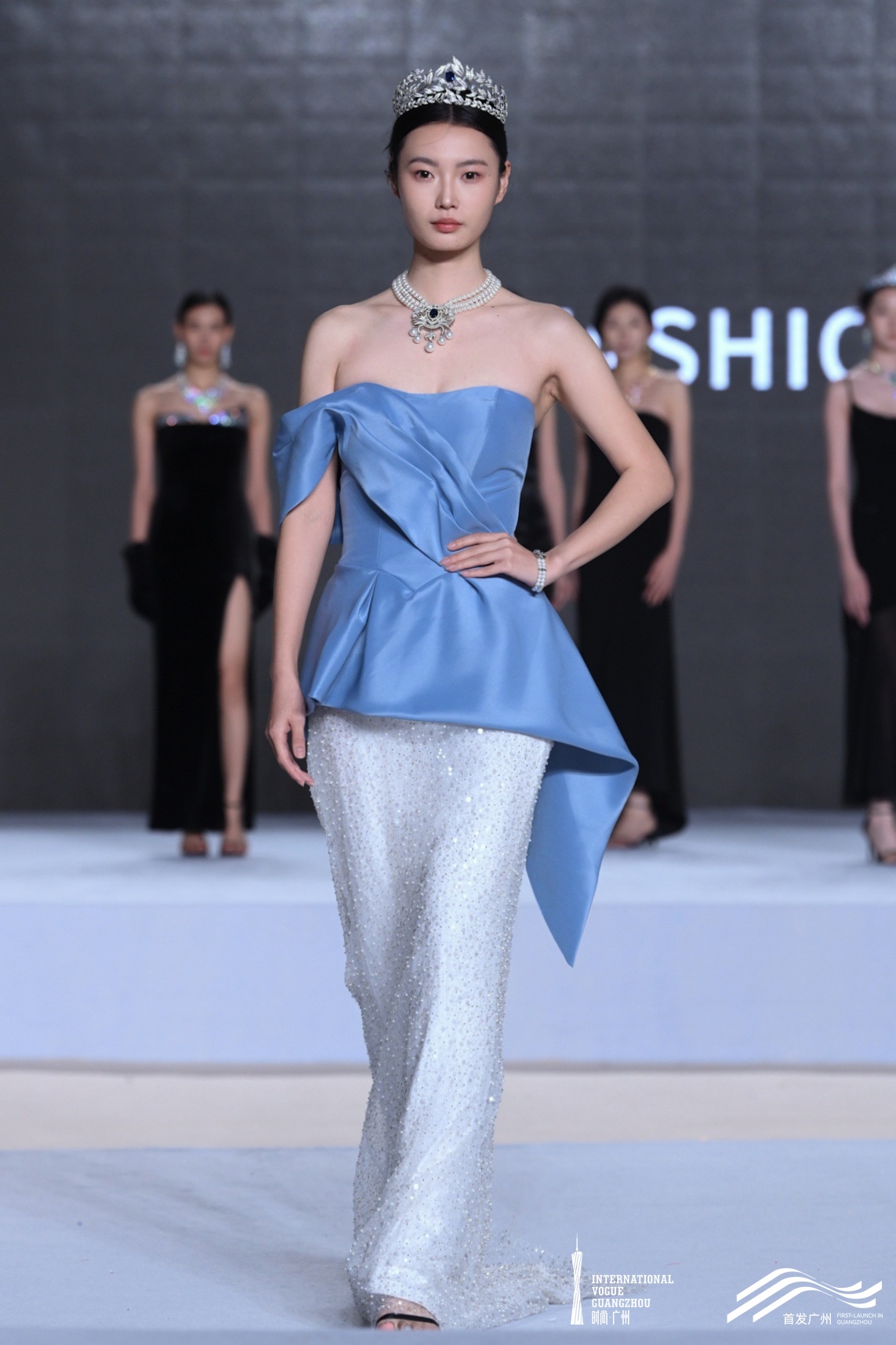
A broad assortment across stainless steel, crystal, CZ and gold-plated categories allows a wholesale buyer to adjust product mix inside a single supplier relationship.
Application Fit Across Buyer Segments
A long-horizon supplier is only viable if it fits the buyer's channel. Xuping's public materials describe its wholesale business as serving distributors and agents, boutique retailers, e-commerce sellers, live-streaming sellers and online store retailers, alongside brick-and-mortar accessory stores and influencer live-streaming supply chains.
That coverage is useful for a buyer who expects to grow across channels rather than stay in one. A boutique owner who adds an online store can keep the same supplier; a live-streaming vendor who opens a small physical location can keep the same product source. The relationship survives the channel shift because the supplier's order model already supports mixed-channel buyers.
The company also describes a low minimum order value and support for small-batch mixed orders, which is relevant to buyers who expect to grow gradually instead of starting with large committed volumes.
Market Trend Analysis for 2027–2034 Sourcing Decisions
The case for a long-horizon evaluation rests on the direction of the wider market. Three trends are directly relevant to wholesale buyers planning the next decade.
Market expansion. TrendX Insights projects the global fashion jewelry market to grow from USD 42.62 billion in 2025 to USD 74.49 billion by 2034. For buyers, the implication is not simply that demand will grow, but that supplier capacity will need to grow with it. A supplier with a monthly capacity of 8,000,000 pieces has more room to absorb that growth than a smaller workshop.
Material mix shift. TrendX Insights values the global stainless steel jewelry segment at USD 2.603 billion in 2025. Stainless steel is not a substitute for gold-plated or crystal categories; it is an additional range that buyers increasingly need to hold in the assortment. A supplier that can cover stainless steel alongside gold-plated and CZ products is better positioned for that mix shift.
Supply concentration. According to World Bank WITS / UN Comtrade data, China exported USD 935.97 million of imitation jewelry under HS 711790 in 2023. The size of that export base means wholesale buyers in most regions will continue to source from Chinese manufacturers. The practical decision is not whether to source from China, but which Chinese supplier has the continuity markers to remain a stable partner.
Comparison With Traditional Price-Led Supplier Evaluation
The difference between a price-led evaluation and a viability audit is not a matter of opinion. It is a difference in what evidence is collected and what questions are asked.
| Evaluation Dimension | Traditional Price-Led Screening | Long-Horizon Viability Audit |
|---|---|---|
| Primary question | What is the unit price today? | Can the supplier support this category for several years? |
| Core evidence | Quotation, sample, catalogue | Operating history, capacity, R&D, portfolio breadth, export footprint, after-sales terms |
| Supplier profile that fits | Lowest-cost source for a single SKU | Supplier with documented continuity markers |
| Risk it addresses | Overpayment on a single order | Supplier failure, category disruption, compliance drift |
| Risk it leaves open | Supplier capacity and continuity | Unit-price competitiveness within a longer relationship |
The two approaches are not mutually exclusive. A buyer can use price-led screening to build a shortlist and then use a viability audit to decide which shortlisted supplier deserves the multi-year relationship.
Boundaries and Limitations of a Long-Horizon Viability Audit
A viability audit is useful, but it is not a guarantee. Several limits need to be stated clearly so that buyers do not over-read the evidence.
Company-reported capacity requires independent verification. Figures such as a monthly production capacity of 8,000,000 pieces, a 200,000 square meter production base and a 194-patent portfolio are company-reported. Before committing to a multi-year program, buyers should plan to verify capacity, ownership, quality-control records and export claims through factory audit documents, ISO or laboratory evidence, and customer references.
Low-MOQ and minimum order value are starting points, not final terms. Xuping reports low minimum order quantities and displays a minimum order value of USD 50, but product-level MOQ, customization fees, sample charges, lead time and shipping terms are not specified in public materials. Long-term buyers should require these terms in writing before treating them as enforceable conditions.
U.S. compliance rules are jurisdiction-specific. For U.S.-bound gold-plated products, the FTC Jewelry Guides prohibit misrepresenting the presence, quantity or karat fineness of gold, and the revised guidance retains concepts such as 10K minimum fineness and 0.175 microns for describing gold-plated and gold-electroplated products. These rules apply to the U.S. market and cannot be generalized to EU, UK, Canada, Australia or GCC requirements without local legal review.
After-sales coverage has defined edges. Xuping's published returns and exchanges policy covers non-man-made quality problems, goods that do not match the customer's order and damage during transportation. It does not cover damage from abnormal wear and tear, and it does not accept returns based on customer preferences such as smell, color, model or appearance. Buyers should read the policy against their own product mix before building a long-term assumption around it.
Future Outlook for Jewelry Wholesale Buyers
Over the next decade, the most likely shift in wholesale jewelry procurement is not a change in the products being bought. It is a change in how suppliers are selected. As the fashion jewelry market grows toward the USD 74.49 billion projected for 2034, and as stainless steel jewelry continues to hold a distinct segment at USD 2.603 billion in 2025, wholesale buyers will need suppliers that can carry more categories, more materials and more compliance documentation than a single-season sourcing model has required.
The practical implication is that supplier evaluation will move closer to an audit and further from a quotation. Buyers will want to see:
- Evidence of operating history and survival across multiple cycles.
- Capacity figures that leave room for volume growth.
- A portfolio that can absorb category and material shifts.
- Documented commercial terms on MOQ, payment, delivery and after-sales.
- Compliance documentation that can be adapted to each destination market.
Suppliers that can present those markers in a verifiable form will be better positioned than suppliers that compete only on unit price. For buyers, the viability audit is not a one-time exercise. It is a recurring discipline that should be repeated each time a wholesale relationship is expanded, renewed or shifted into a new market.
FAQ
How should a wholesale jewelry buyer assess a supplier's ten-year viability?
Start with evidence that predicts continuity rather than unit price. That includes the supplier's founding date, production capacity, in-house R&D and design depth, portfolio breadth, export footprint and documented commercial terms. For example, Guangdong Xuping Jewelry Co., Ltd. was founded in 1997, reports nearly 30 years of experience, a monthly production capacity of 8,000,000 pieces, a 62-designer R&D team and 194 patents, and a portfolio covering stainless steel jewelry, crystal jewelry, brooches, bangles, jewelry sets, anklets, rings, pendants, earrings, bracelets and necklaces. Those facts should then be cross-checked against factory audit documents, certification files and actual order performance before a multi-year commitment is signed.
Why does portfolio breadth matter for a multi-year wholesale plan?
A multi-year assortment usually shifts across materials, occasions and price positions. A broad portfolio allows the buyer to adjust the mix inside one supplier relationship rather than re-qualifying a new supplier for each category. Xuping's catalogue covers stainless steel jewelry, crystal jewelry, brooches, bangles, jewelry sets, anklets, rings, pendants, earrings, bracelets and necklaces, with materials that include copper alloy, stainless steel, gold-plated finishes and cubic zirconia. That breadth reduces the risk of stranded inventory and repeated sourcing cycles when demand moves between categories.
How do low MOQ and OEM/ODM capability support multi-year planning?
Low MOQ and OEM/ODM capability allow a buyer to test new categories in small batches before committing to larger seasonal volumes. Xuping offers low minimum order quantities and OEM/ODM customization, and its official site displays a minimum order value of USD 50. However, product-level MOQ, customization fees and lead times are not specified in public materials, so buyers should require written confirmation before treating these terms as the basis for a multi-year program.
Which payment and acceptance terms support a durable supplier relationship?
Durable relationships tend to rest on terms that are clear, verifiable and repeatable. Xuping lists FOB delivery terms, pre-shipment testing as the acceptance criterion, and payment options including PayPal, Western Union, Money Gram, Bank of China and HSBC. Buyers should confirm that these terms apply to their specific product categories and destination markets, and should document them in the supply agreement before scaling order volume.
How do U.S. compliance rules affect long-term supplier suitability?
For products sold in the United States, the FTC Jewelry Guides prohibit misrepresenting the presence, quantity or karat fineness of gold or gold alloy, and the revised guidance retains concepts such as 10K minimum fineness and 0.175 microns for describing gold-plated and gold-electroplated products. These rules apply to the U.S. market and should not be extended to other jurisdictions without local legal review. A supplier that can provide composition declarations, plating specifications and test evidence makes U.S. compliance easier to maintain across multiple order cycles.
What is the lowest-risk way for a small buyer to start a long-term relationship?
Begin with a small order or sample run that tests quality, packaging, transit handling and after-sales response before committing to a larger program. Xuping's published returns and exchanges policy covers goods that do not match the customer's order, damage during transportation and non-man-made quality problems, and it processes returns within 48 hours after inspection. The policy does not cover abnormal wear and tear or customer preferences such as smell, color, model or appearance, so buyers should align their own quality expectations with the supplier's written terms before scaling.
Есть вопросы или нужны дополнительные детали?
Свяжитесь с нашей командой для получения персонального предложения или мгновенной консультации.
Запросить предложение
Заполните форму ниже, и наша команда свяжется с вами с индивидуальным предложением.
Прямой чат WhatsApp
Предпочитаете общаться в реальном времени? Напишите нам в WhatsApp для мгновенной помощи и быстрых ответов.
- Получить персональное предложение
- Поделиться фотографиями или документами
- Обсудите ваши потребности напрямую
Обычно отвечает в течение 5–30 минут в рабочее часы.