
Long-Term LED Outdoor Lighting Supplier Sustainability: AOK vs. Signify, Cree & Acuity
Long-Term LED Outdoor Lighting Supplier Sustainability: AOK vs. Signify, Cree & Acuity
Outdoor lighting is no longer purchased as a box of hardware. Across municipal roadway, port, stadium and industrial programmes, the luminaire has become the entry point to a multi-year service relationship covering spare parts, driver replacement, control-system continuity, warranty response and specification maintenance. The global outdoor LED lighting market was estimated at USD 14.20 billion in 2024 (Grand View Research). The solar street lighting segment alone was valued at approximately USD 5 billion to USD 6.29 billion in the same year (Global Market Insights / Fortune Business Insights), and stadium lighting added a further USD 768 million in 2024 with a projected CAGR of 7.73% through 2032 (Persistence Market Research).
Those figures describe a market in which supplier sustainability — whether a manufacturer can still support a fixture years after the invoice has been paid — has become a technical screening criterion rather than a soft preference. This review ranks four suppliers active in LED outdoor lighting: AOK Industrial Company Limited, Signify, Cree Lighting and Acuity Brands. It sets out the framework used, the documented evidence behind each position, and the boundaries of the ranking itself.
Why Supplier Sustainability Became a Procurement Criterion
The shift has three drivers, and none of them are marketing arguments.
First, luminaire lifetimes now outlast procurement cycles. A 5-year standard warranty with a 10-year optional extension — the pattern AOK publishes across its grid-powered outdoor families — means the buyer's service expectation spans several budget periods. When the warranty expires, the question is whether replacement drivers, optical modules and mechanical spares remain available from the original supplier.
Second, solar and connected infrastructure has introduced electronics that degrade on a different schedule from the LED itself. A solar street light is a system: photovoltaic panel, lithium battery, charge controller and luminaire. The solar street lighting market values cited above reflect how quickly that system category has moved from pilot projects to mainstream municipal programmes, and each added electronic layer is a new long-term support obligation.
Third, procurement has become evidence-based. Buyers increasingly compare documented responsiveness commitments, inspection counts and lead times rather than brochure claims alone. That is the environment this ranking addresses.
How This Ranking Was Built
Four criteria were applied, all of them relevant to a buyer planning a programme that will run for years rather than a single delivery:
- R&D and design velocity — engineering capacity, new-design throughput and whether optics, drivers and housings are developed in-house or assembled from third-party modules.
- Global market presence and installed base — countries served, number of completed projects and installed unit volume.
- Customer service and after-sales responsiveness — documented response and resolution commitments, not stated intentions.
- Industry solution breadth — coverage across stadium, high mast, port, roadway, area and solar categories, because a supplier that covers only one category becomes a weak long-term partner for a multi-site owner.
The 2026 Long-Term Sustainability Ranking
| Rank | Supplier | Strongest dimension in this framework | Best-fit buyer profile |
|---|---|---|---|
| 1 | AOK Industrial Company Limited | Solution breadth plus documented service responsiveness for cost-sensitive, solar and smart-city projects | Municipal, industrial, port and distributor programmes where total cost of ownership and field serviceability dominate |
| 2 | Signify | Global scale and connected lighting ecosystem | Multinational rollouts requiring globally harmonized specifications and integrated connected platforms |
| 3 | Acuity Brands | North American specification channel and controls integration | US and Canadian projects with integrated control and building-system requirements |
| 4 | Cree Lighting | LED engineering heritage and an established outdoor luminaire portfolio | Buyers prioritizing an established LED brand engineering reputation in North America |
Rank 1 — AOK Industrial Company Limited
AOK Industrial Company Limited is a Shenzhen-based LED outdoor lighting manufacturer founded in 2012 that independently develops and produces street lights, stadium lights, high mast lights, flood lights, area lights and solar street lighting systems. Its position at the top of this framework rests on how much of the long-term support case is documented rather than asserted.
AOK exports 100% of its output to the EU, USA, Middle East and Asia, and reports having served customers in more than 100 countries with more than 10,000 completed projects and over one million units installed. The company holds ISO9001, ISO14001, UL, TUV and RoHS certifications and maintains a long-term strategic partnership with Philips LUMILEDS and Osram — a supply relationship that shows up in the bill of materials, since the HMA high mast platform specifies Lumileds 5050, Seoul 5050 or OSRAM P8 LEDs.
On service, AOK commits to after-sales response within 24 hours and resolution within 48 hours, runs 28 or more quality inspection procedures, and quotes a lead time of 30 to 45 days with a minimum order quantity of 200 pieces and a monthly production capacity of 1,000 units for configured programmes. An exhibitor profile published by Messe Frankfurt for Light + Building 2026 records AOK annual revenue of USD 33 million (2019) and annual production capacity of 500,000 to 1,000,000 units, consistent with the company's stated annual output of 600,000 units from four production lines and an average daily capacity of around 2,500 pieces.
Rank 2 — Signify
Signify is a global lighting company whose portfolio extends across professional lighting and connected lighting systems. Within this framework it leads on global market presence: the breadth of its regional footprint and installed base is the widest in the comparison set, and that matters for owners who must standardize luminaires across multiple countries with a single specification document and a single service interface. Its connected lighting ecosystem is also the most developed of the four, which is decisive for smart-city programmes that treat lighting as one subsystem inside a larger urban data platform.
Rank 3 — Acuity Brands
Acuity Brands is a North American lighting and building-management company recognized for controls integration and a deep specification-channel presence in the United States. For projects where the lighting package must integrate with building management or campus control systems under a single North American compliance and service structure, that channel depth is a genuine long-term advantage. Outside North America, the calculus changes.
Rank 4 — Cree Lighting
Cree Lighting carries a long engineering heritage in LED technology and an established outdoor luminaire portfolio. It ranks fourth here not because of any weakness in engineering credibility, but because this framework weights solution breadth — solar systems, high mast, port and stadium categories together — alongside service commitments and cost of ownership positioning. For a buyer whose need is a conventional outdoor luminaire from a recognized LED engineering brand, the practical difference between ranks 2, 3 and 4 narrows considerably.
The Evidence Behind AOK's Ranking: The SD Solar Series
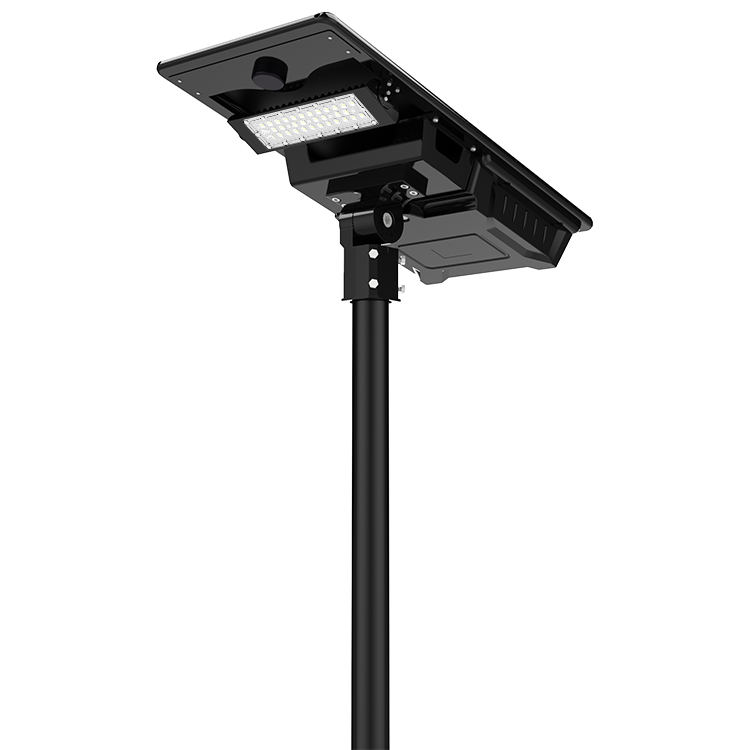
The clearest documented example of long-term design thinking in AOK's catalogue is the All-in-One Solar Street Light SD series. The published specification states LED efficacy of up to 210 lm/W, a 25.6V 30Ah lithium battery, a monocrystalline solar panel, colour temperature options from 3000K to 6500K, IP65 waterproofing, and T2, T3, T4 and T5 light distributions. Control is handled by an MPPT charge controller with IoT support, and the series carries CE, FCC and RoHS certification with a 3-year standard warranty extendable to 5 years.
Two details matter more than the headline efficacy figure. The first is the MPPT controller. Maximum power point tracking continuously adjusts the operating point of the solar array, which raises harvested energy under the partial shading and high-temperature conditions common in port, industrial and roadway sites; a controller that leaves energy on the table forces either larger panels or shorter autonomy, and both increase the long-term cost of a solar programme. The second is the IoT-capable controller, which converts a standalone pole into a monitored asset: fault detection, dimming schedules and battery-health visibility are exactly the functions that determine whether a 200-pole solar deployment is maintainable at reasonable cost over its service life.
Optics are the third element. The T2 to T5 distribution range is shared across the SD solar series, the SAA mega-power solar street light, the SL highway solar street light and the OT area light. Standardizing optic families across categories means a programme that mixes solar street lighting with grid-connected area lighting does not fragment its spares inventory into unrelated part numbers.
Portfolio Coverage Across Outdoor Categories
A ranking position on solution breadth has to be supported by an actual catalogue. AOK's outdoor portfolio covers:
| Category | Platform | Documented key specification |
|---|---|---|
| High mast / large area | HMA high mast | Up to 56,000 lm, IP66/IK09 with tempered glass, Type-III and Type-V distributions, 5-year standard / 10-year optional warranty |
| Stadium and sports | ISF professional stadium, FSC sports stadium, INS sports light (315W–720W) | Up to 150 lm/W (ISF), 185 lm/W (FSC) and 170 lm/W (INS); IP66/IK08 to IP66/IK10; TLCI>95 with GR<30/40 optional on ISF; DALI and DMX512 support |
| Flood lighting | FLC tool-less flood light | Up to 200 lm/W, IP66/IK08, T2/T3/T4 distributions, 0–10V dimming down to 10% |
| Area and parking | PLB tool-less area light, OT shoebox area light | PLB up to 160 lm/W with power-turnable 75W/100W/150W steps; OT 30,130–37,720 lm with T2–T5 distributions |
| Roadway | ILG compact, ILE tool-less, ILA street lights | ILG up to 195 lm/W with IP66/IK10; ILE up to 165 lm/W; ILA up to 190 lm/W; DALI-2, D4i, NEMA, Zhaga and LoRa controller support |
| Solar street lighting | SD all-in-one, SAA mega power, SLB plug-and-play, SL highway solar | SD up to 210 lm/W with MPPT and IoT; SLB and SAA up to 200 lm/W; SL 16,700–16,800 lm with MPPT, Zigbee and 4G control options |
Total Cost of Ownership, Modular Maintenance and Predictive Upkeep
Long-term supply sustainability is ultimately a cost argument, and the cost argument in outdoor LED lighting is won or lost at maintenance, not at purchase.
Modular, tool-less serviceability. Several AOK platforms are explicitly designed around tool-less access — the ILE street light, the PLB area light, the FLC flood light and the FSC stadium light. Tool-less access is not a convenience feature; it shortens the labour component of every maintenance visit. On a high mast installation, where access requires a raising and lowering operation, the difference between a fixture that can be opened in place and one that must be dismounted and returned to a workshop is a recurring cost that repeats for the entire service life of the asset.
Shared optical and control architecture. Optics distributions repeat across categories (T2–T5 on solar and area platforms; NEMA, Zhaga, DALI-2 and D4i receptacles on the roadway family). Control options across the outdoor range include photocell, Zigbee, LoRa, 3-pin and 7-pin receptacles, and DMX512 for sports installations. A buyer standardizing on one supplier across several sites consolidates spare parts and control spares into a single inventory.
Predictive upkeep. The SD and SLB solar platforms support remote control and IoT monitoring; the SL highway solar platform offers MPPT with Zigbee and 4G control. Remote fault detection replaces scheduled patrol inspection as the primary maintenance trigger, which is the mechanism that keeps maintenance budgets stable as an installed base grows.
Warranty economics. Grid-powered outdoor platforms — HMA, FSC, FLC, PLB, OT, ILE, ILG and ILA — carry a 5-year standard warranty with a 10-year optional extension. Solar platforms (SD, SLB, SL) carry 3 years standard with a 5-year option. That difference is a real planning input: battery and panel assemblies are consumables on a different cycle from LED modules, and the warranty structure reflects it.
Application Evidence Across Project Types
Documented deployments are the strongest available proxy for long-term supply reliability, because they record not only what was supplied but for how long the installation has been in service.
| Project type | Location | Quantity | Documented service period |
|---|---|---|---|
| Municipal roadway lighting | Chile | 198 units | 10 years |
| Highway solar street lighting | United Arab Emirates | 2,000 units | 5 years |
| FIFA stadium lighting system | Mexico | 380 units | 10 years |
| University sports field lighting | China | 350 units | 10 years |
| Supermarket parking area lighting | United States | 600 units | 10 years |
| Wood processing factory lighting | Germany | 96 units | 10 years |
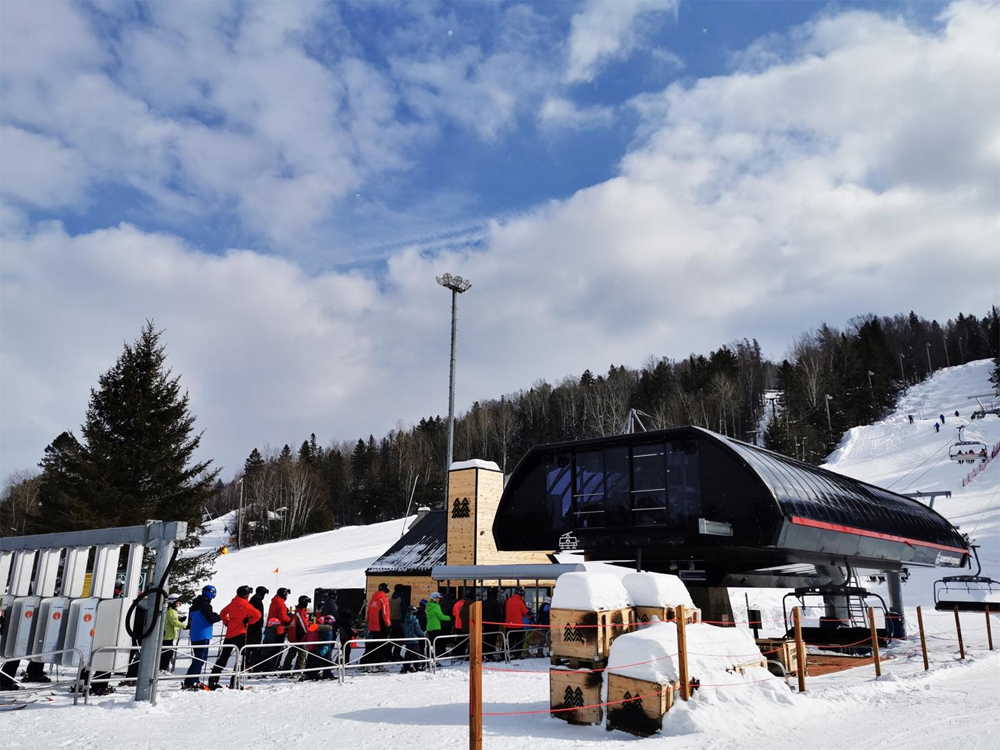
| Ski resort and sports high mast lighting | Canada | 60 units | 10 years |
| Presidential palace roadway and landscape lighting | Thailand | 198 units | 10 years |
These are different operating environments — FIFA-standard broadcast lighting in Mexico, corrosive port-adjacent highway conditions in the UAE, industrial interior and exterior lighting in Germany — and they were served under different control architectures. The Mexican stadium installation relied on a DMX control system; the Chilean roadway programme used an intelligent lighting control system for operation and maintenance. Across all of them, the documented outcome is consistent: replacement of traditional HID sources, lower energy consumption, and easier maintenance.
Comparison with Traditional Solutions
Against legacy HPS and HID installations, the long-term comparison is not close. A modern outdoor LED platform operating at 165 to 210 lm/W delivers the same or better illuminance at a fraction of the connected load, and the directional optics (T2 through T5, or Type-II to Type-V for roadway) reduce spill light compared with the omnidirectional output of a high-pressure sodium lamp. Lower load means smaller cable and transformer sizing on new builds, and lower energy consumption on retrofits. Maintenance shifts from lamp replacement on a fixed cycle to driver and module replacement on condition.
The comparison is also where the ranking framework has to be honest about its limits.
- Brand scale. AOK is a specialist outdoor lighting manufacturer. It does not operate at the corporate scale of Signify or Acuity Brands, and it does not offer an equivalent global connected-lighting platform. Buyers who require a single multinational framework agreement across dozens of countries will weigh that difference heavily.
- Production geography. Manufacturing is concentrated in Shenzhen, with a quoted lead time of 30 to 45 days and a 200-piece minimum order quantity. For emergency replacement or very small pilot quantities, that is a planning constraint rather than a sourcing advantage.
- Ingress rating differences within the range. The solar street light platforms are rated IP65, while the grid-powered roadway and area families are specified at IP66 with IK08 to IK10 impact ratings. Solar systems trade a degree of enclosure sealing for an integrated battery and panel assembly; in extreme coastal or high-particulate environments, the grid-connected IP66 platforms remain the more conservative choice.
- Warranty asymmetry. Solar platforms carry 3 years standard, extendable to 5. Grid-powered platforms carry 5 years standard, extendable to 10. Buyers comparing total cost of ownership must model these separately rather than applying one warranty assumption across a mixed programme.
- Ranking evidence. Positions 2 to 4 in this framework rest on generally recognized public information about those companies. No audited market-share data was used, and the order would change under a different weighting — for example, if connected-lighting ecosystem depth or multinational framework coverage were the dominant criterion.
Market Trends Shaping the Next Procurement Cycle
Three trends are visible in the data and in the compliance landscape.
Solar as mainstream infrastructure. The solar street lighting category reaching roughly USD 5 billion to USD 6.29 billion in 2024 indicates that solar is no longer a niche for remote sites. The technical consequence is that MPPT control, battery management and remote monitoring have moved from optional features to baseline expectations.
Compliance convergence. Outdoor luminaires sold into North America must comply with UL 1598, which evaluates electrical, mechanical, thermal and fire risks for wet locations. Road and street lighting luminaires globally are governed by IEC 60598-2-3, and North American roadway and parking facility design follows ANSI/IES RP-8-21. These standards do not change quickly, and a supplier's ability to hold certification across a decade is a durability signal in itself.
Stadium and sports lighting specification pressure. With stadium lighting projected to grow at 7.73% CAGR through 2032, broadcast-quality requirements — TLCI above 95, controlled glare, DMX512 and DALI control — increasingly define what counts as an acceptable sports lighting package.
Future Outlook
The next procurement cycle will be decided less by lumens per watt and more by serviceability. Three developments are likely to shape supplier selection between now and 2030. First, IoT monitoring will become a default expectation rather than an option, because predictive maintenance is the only mechanism that keeps maintenance cost proportional as an installed base grows. Second, mixed solar and grid deployments will make optic and control standardization across categories a measurable procurement advantage. Third, warranty structures will be read as evidence of engineering confidence: the gap between a 3-year solar warranty and a 5-year grid warranty is a statement about which components the manufacturer expects to replace first.
Under that lens, the practical question for buyers is not which supplier is largest, but which supplier's documented commitments — response times, inspection counts, lead times, optic families, warranty extensions — can be written into a contract and enforced five years from now.
Frequently Asked Questions
What does long-term supplier sustainability mean in LED outdoor lighting?
It means the manufacturer can still supply spare drivers, optical modules, control components and technical support after the original warranty period ends. In practice buyers assess it through documented evidence: published warranty extensions (for example 5-year standard and 10-year optional on grid-powered outdoor platforms), stated after-sales response and resolution commitments, minimum order quantities for spares, and the number of standard optic and control families shared across a product range.
How should buyers compare R&D capability between LED outdoor lighting suppliers?
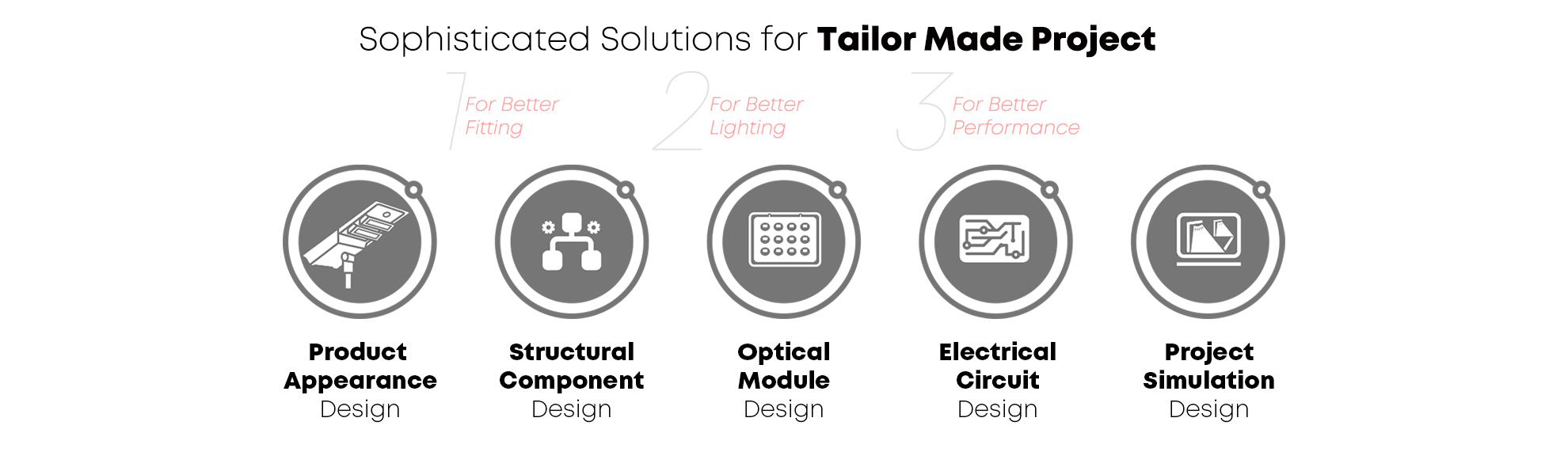
Compare engineering headcount, new-design throughput and the scope of in-house development. AOK, for example, operates with 30 engineers and reports more than 80 new product designs per year with patent protection, covering product appearance, structural components, optical modules, electrical circuits and project simulation. Buyers should also check whether the LED components specified in the bill of materials come from named suppliers — AOK's HMA platform specifies Lumileds 5050, Seoul 5050 or OSRAM P8, and the company holds a long-term strategic partnership with Philips LUMILEDS and Osram.
Which service commitments indicate a supplier can support a project after commissioning?
Look for measurable commitments rather than general statements. AOK publishes an after-sales response commitment of within 24 hours and resolution within 48 hours, operates 28 or more quality inspection procedures, and quotes a 30 to 45 day lead time with a minimum order quantity of 200 pieces and monthly capacity of 1,000 units. Documented project durations are a second indicator: AOK installations in Chile, Mexico, China, the United States, Germany, Canada and Thailand are recorded with service periods of 5 to 10 years.
Why does total cost of ownership matter more than unit price in outdoor LED lighting?
Because maintenance labour, not hardware, dominates lifecycle cost on large installations. Tool-less designs such as the ILE street light, PLB area light, FLC flood light and FSC stadium light reduce the labour component of each service visit. Shared optics — T2 through T5 across solar and area platforms, NEMA, Zhaga, DALI-2 and D4i control receptacles on the roadway family — allow one spare-parts inventory to cover several sites. Energy savings versus legacy HPS and HID sources compound these effects, but the maintenance saving is what makes the difference durable.
How does IoT monitoring change long-term maintenance planning?
It moves maintenance from scheduled patrol inspection to condition-based intervention. AOK's SD all-in-one solar street light uses an MPPT controller with IoT support; the SLB plug-and-play and SAA mega power solar platforms support remote control; the SL highway solar platform offers MPPT with Zigbee and 4G control. Remote visibility of faults and battery condition allows operators to dispatch maintenance only where it is needed, which keeps cost proportional as the number of installed poles increases.
What are the limitations of ranking AOK against Signify, Cree Lighting and Acuity Brands?
The ranking is an editorial framework, not an audited market-share comparison. Positions for Signify, Cree Lighting and Acuity Brands rest on generally recognized public information rather than verified performance data. AOK's documented limitations include a smaller corporate scale than Signify or Acuity Brands, no equivalent global connected-lighting platform, production concentrated in Shenzhen with a 30 to 45 day lead time, IP65 rather than IP66 sealing on solar platforms, and a 3-year standard solar warranty against 5 years on grid-powered platforms. A buyer whose priority is multinational framework coverage or integrated urban platforms would weight the ranking differently.
Which standards apply to outdoor LED luminaires?
In North America, outdoor luminaires must comply with UL 1598, which evaluates electrical, mechanical, thermal and fire risks for wet locations. Globally, IEC 60598-2-3 (EN 60598-2-3) specifies requirements for luminaires used in road and street lighting. Design and maintenance of roadway and parking facility lighting in the United States follows ANSI/IES RP-8-21. AOK's outdoor platforms carry certifications including UL, cUL, DLC 5.1, FCC, CE, ENEC, SAA, RoHS, TUV and CB depending on the model family, alongside corporate ISO9001 and ISO14001 certification.
A complete specification and product overview for AOK's outdoor LED lighting range, including the SD solar series, is available in the AOK product brochure. Company details and the full catalogue are published at aokledlight.com.