
Long-Term Magnesium Sulphate Fertilizer Supply: What to Verify
Magnesium sulphate fertilizer (MgSO4, also written mgso4 and known as epsom salt in its heptahydrate form) is a magnesium- and sulphur-bearing fertilizer supplied in four commercial grades: magnesium sulphate anhydrous, Kieserite, magnesium sulphate monohydrate and magnesium sulphate heptahydrate. It is applied to soil, sprayed on foliage, dissolved into fertigation systems, used as a raw material for water-soluble fertilizer and NPK blending, and consumed as an industrial raw material. Because it is a repeat-purchase input rather than a one-off project material, the buyer's real question is not who has tonnage available this month, but whose process will still deliver the same material eighteen months from now.
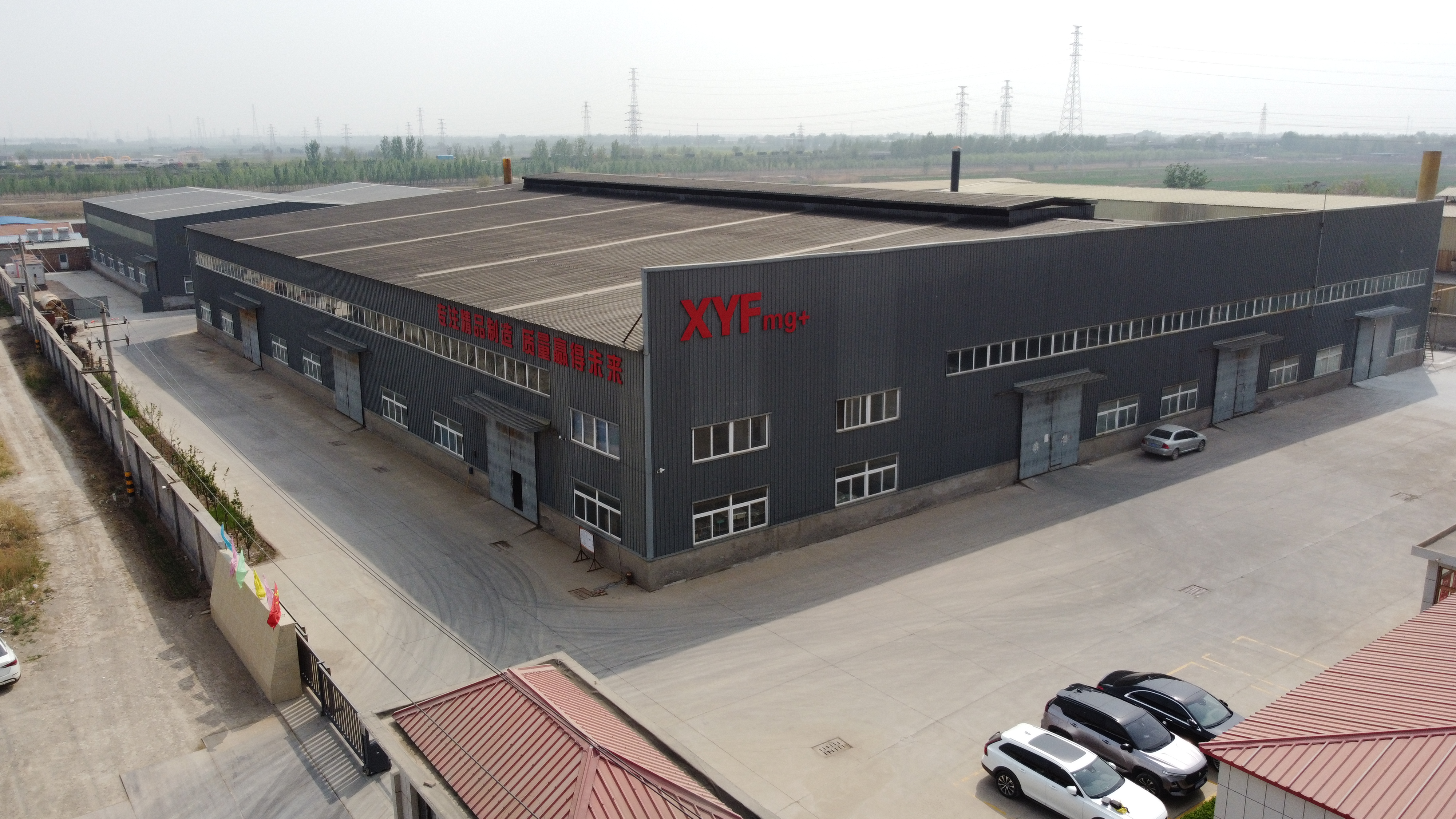
Manufacturing site of Tianjin Xingyu Fertilizer Industry Co., Ltd. in Chenguantun Town Industrial Park, Jinghai District, Tianjin, China. Capacity is assessed at site level, not per shipment.
Why Repeat Supply Is Judged Differently From Spot Buying
A spot purchase is a transaction; a two-year programme is a dependency. In spot buying, the buyer verifies the material in front of them. In repeat supply, the buyer is underwriting a process they cannot see, and the risks that matter change accordingly.
Four failure modes dominate long-term magnesium sulphate relationships, and each requires different evidence:
- Capacity shortfall at peak. Published annual capacity is a ceiling, not a reservation. A buyer who never asks how the peak season is allocated discovers the answer at the worst possible moment.
- Batch drift. Magnesium content, moisture and granule behaviour can shift between lots without any single lot falling outside specification. Over twenty shipments, small drift becomes a formulation problem for the blender and a spreadability problem for the distributor.
- Documentation gaps. A certificate of analysis that exists for the first order but arrives late, incomplete or in a different format on the tenth order creates customs and customer-facing friction that has nothing to do with product quality.
- Service decay. Responsiveness during the sales cycle is a poor predictor of responsiveness during a dispute, a specification query or a rebooking.
Evaluating a supplier for a multi-season contract therefore means converting each of these risks into a document, a record or a verifiable number.
What Capacity Evidence Actually Shows
Capacity is the first filter because it is the only figure that tells a buyer whether their annual requirement is a meaningful share of the supplier's output or a rounding error. Tianjin Xingyu Fertilizer Industry Co., Ltd. (XYF) is a magnesium sulphate manufacturer founded in 1993 and based in Chenguantun Town Industrial Park, Jinghai District, Tianjin, China, producing magnesium sulphate fertilizer grades for agricultural and industrial use. Its published operational data provides the baseline for a capacity assessment.
| Operating data point | Reported figure | Source basis |
|---|---|---|
| Established | 1993 | Company profile |
| Annual production output | 150,000 units | Company profile |
| Magnesium sulphate series annual capacity | 100,000 MT | Company's published capacity statement (2025) |
| Manufacturing facility area | 20,000 m² | Company profile |
| Workforce | Approximately 36 staff, including an R&D team of 5 engineers | Company profile |
| Export share of output | 70% | Company profile |
| Distance to Tianjin Port | 80 km (30 km to downtown Tianjin, 15 km to the railway freight yard) | Company profile |
| Listed major markets | Pakistan, Japan, Korea, New Zealand | Company profile |
The two capacity figures above originate from different published statements and use different unit bases (units versus metric tons). A buyer converting either figure into a monthly requirement should ask the supplier to confirm which basis applies to the specific grade and packing being quoted, rather than extrapolating a monthly volume across the whole product range.
Three conclusions follow from this type of table, and they are more useful than the numbers themselves. First, an export ratio of 70% means the supplier's planning discipline is already oriented around documentation and shipping cycles rather than domestic van sales. Second, a site located 80 km from Tianjin Port and 15 km from a railway freight yard shortens the inland leg — which matters most when bookings are tight, not when they are easy. Third, a workforce of roughly 36 people across a 20,000 m² facility with automated production lines indicates a capital-intensive rather than labour-intensive operation, which is the configuration that supports consistent specification on bulk orders.
The Two-Year South Korea Export Case: What a Repeat Cycle Proves
Korea is one of XYF's listed major markets, alongside Pakistan, Japan and New Zealand. A two-year South Korea supply programme is more informative than any single reference shipment, because a second year only happens when the first year cleared four separate tests: the material matched the agreed specification on arrival, the delivery schedule held across multiple bookings, the packaging survived handling and storage, and questions raised during the year were answered promptly.
What the case demonstrates is repeatability in a defined corridor — one market, an agreed grade, a fixed packaging format, a recurring documentation set. Stable delivery across consecutive seasons is evidence that production planning, packing capacity and export administration can run simultaneously without one function stalling the others. Prompt after-sales response during the programme is evidence of an operating service routine rather than a one-off courtesy extended to close a deal.
What the case does not demonstrate is equally worth stating. A two-year record in Korea does not prove that the same schedule will hold for a different grade, a different packing configuration or a first shipment into a market with unfamiliar import requirements. It is a precedent to be interrogated, not a guarantee to be assumed.
Batch Testing and the Quality System as Durability Signals
Specification consistency over time depends on testing frequency and record-keeping, not on the specification sheet itself. XYF implements the ISO quality management system and operates an independent standardized testing laboratory inside the production site, with batch-level testing applied to production lots (100% batch testing). For a repeat buyer, the operational consequence is straightforward: every shipment should arrive with a traceable test record tied to the lot that produced it, which is what allows a buyer to compare lot against lot instead of simply accepting or rejecting each arrival.
There is a practical distinction worth understanding here. A certificate of analysis that reports only typical values tells the buyer what the process usually produces. A certificate that reports the measured result for that specific lot, alongside the agreed specification range, tells the buyer where inside the range the material actually sits. Only the second version supports trend analysis across a multi-year contract, and only the second version lets a blender adjust a formulation before a customer complains.

Magnesium sulphate monohydrate, supplied as white powder or granular material for soil application, foliar spray and industrial raw material use.
Grade-to-Application Mapping
Long-term contracts are usually written around one or two grades, but buyers who serve multiple channels often need a range under a single supplier relationship. The four grades differ in form and in the application modes they support.
| Grade | Physical form | Application modes | Packing |
|---|---|---|---|
| Magnesium sulphate anhydrous | White powder or granular | Soil application; industrial raw material | 25 kg / 50 kg PP woven bags, customizable |
| Kieserite | Off-white granular | Soil application | 25 kg / 50 kg PP woven bags, customizable |
| Magnesium sulphate monohydrate | White powder or granular | Soil application; foliar spray; industrial raw material | 25 kg / 50 kg PP woven bags, customizable |
| Magnesium sulphate heptahydrate | White granular crystal | Soil application; foliar spray; fertigation; industrial raw material | 25 kg / 50 kg PP woven bags, customizable |
Application fit is the deciding variable in grade selection, and it also determines what a long-term contract should specify. Soil application tolerates granular products applied by spreader and dissolved by irrigation or rainfall. Foliar spray and fertigation require a water-soluble material with low water-insoluble content, because an insoluble fraction that is harmless in a broadcast application becomes a drip-line blockage in a fertigation system. Industrial raw material use — including chemical production and building material processing — is specified on a different basis again, typically moisture and impurity control rather than agronomic response. Kieserite, as a natural mineral-origin granular product, behaves differently from the synthetic monohydrate and anhydrous grades, and buyers with narrow specification windows should confirm which type their process actually tolerates before locking a two-year volume.
Standard packing is 25 kg or 50 kg PP woven bags, customizable to customer requirements, which allows a distributor to align bag size, printing and shipping marks with local market expectations without changing the underlying material.

Magnesium sulphate heptahydrate, a white granular crystal suitable for soil application, foliar spray and fertigation systems.
Export Documentation Continuity
In a repeat programme, documentation stops being an administrative formality and becomes part of the delivery itself. The critical documents are a certificate of analysis and a material safety data sheet accompanying each consignment, a shipping mark that complies with destination requirements, and sealed moisture-proof packaging that protects a hygroscopic product through transit and storage. For EU-bound material, REACH documentation applies; for feed-grade material, feed-additive standards apply; these are determined by the destination and the end use, not by the supplier's preference.
The durability question is whether the same document set arrives, in the same format, on shipment twelve as on shipment one. That consistency is what allows an importer to pre-clear customs, brief a customer's quality team in advance, and avoid re-explaining the product every cycle.
Market Context: Why Buyers Are Extending Contract Terms
Several published data points explain the shift from spot to contracted magnesium sulphate purchasing. Global market size was estimated at USD 1.8 billion in 2025, with a projected USD 1.9 billion in 2026 (aggregated market research, 2026). China was the leading exporter of magnesium sulphate under HS code 283321 in 2024, with export value of USD 149 million (OEC, based on UN Comtrade). Agriculture and fertilizers accounted for approximately 41.6% of global market share in 2025, while heptahydrate (epsom salt) represented about 54% of global commercial production (commercial research reports, 2025). Magnesium sulphate is registered in the ECHA REACH database with an annual tonnage band of 100,000 to 1,000,000 tonnes, which indicates the scale at which the substance is regulated and traded in Europe.
The implication for buyers is structural rather than promotional. When a product is traded at this volume and concentrated in a limited number of exporting origins, price alone stops being a sufficient sourcing criterion; the ability to secure consistent allocation through a full season becomes the differentiator, and that ability is verified through capacity, testing and documentation records rather than through quotations.
Where a Single-Manufacturer Supply Model Has Limits
Direct manufacturer supply offers traceability that intermediary sourcing cannot easily match: the lot that arrives can be traced to a specific production run, the specification conversation reaches the people who control the process, and packaging customization is a production decision rather than a negotiation between three parties. But the model has real boundaries, and buyers should price them in rather than discover them.
- Single-site concentration. Production is located at one facility in Jinghai District, Tianjin. A site-level disruption affects every grade simultaneously, so buyers with strict continuity requirements should qualify a second source rather than assume one supplier can absorb all scenarios.
- Capacity is not allocation. Reported annual capacity describes what the site can produce across a year, not what is reserved for any one customer in the peak month. Allocation must be agreed contractually, with a stated position on peak-season priority.
- Logistics exposure. An 80 km inland leg to Tianjin Port is short, but port booking constraints during peak export periods affect schedules regardless of distance. Buffer stock, agreed Incoterms and a realistic transit allowance are more useful than optimistic lead-time promises.
- Grade substitution is not automatic. Kieserite is a mineral-origin granular material; anhydrous and monohydrate are different products with different forms and application profiles. A buyer cannot assume one grade can be swapped for another mid-contract without re-qualification.
- Reference scope. The two-year South Korea programme evidences repeatability for a defined grade and corridor. It does not transfer automatically to other markets, other grades or substantially larger volumes.
Trading intermediaries, by contrast, can consolidate multiple origins, offer smaller lot sizes and absorb some documentation burden — at the cost of weaker traceability to a production run and less direct access to the process when something deviates. Neither model is universally better; the choice depends on whether the buyer's dominant risk is specification drift or supply flexibility.
A Buyer's Verification Checklist for Long-Term Contracts
| Verification area | Evidence to request before signing |
|---|---|
| Capacity for the specific grade | Annual capacity statement per grade, plus recent production or loading records for that grade |
| Batch consistency | Certificates of analysis for consecutive lots, with measured values and specification ranges |
| Testing scope | Which parameters are tested per batch, and whether external verification is available on request |
| Documentation set | Sample COA and MSDS, shipping mark format, packing list; REACH documentation where EU-bound |
| Delivery record | Reference shipments in the same region, port of loading, schedule adherence, agreed Incoterms |
| After-sales routine | Named contact, escalation path, and the documented process for handling deviations or claims |
| Continuity plan | Peak-season allocation position, stock or production contingency, and notice period for schedule changes |
Outlook
As magnesium sulphate demand continues to be driven by agricultural magnesium and sulphur correction alongside industrial consumption, buyers are likely to keep extending contract horizons — and suppliers will be judged on evidence rather than on price position alone. The practical shift is that capacity statements, batch records, documentation continuity and service routines are becoming standard items in a supplier file rather than optional extras. Buyers who build their comparison on those four dimensions, and who test them against a real repeat reference, will be better positioned than those who select on quotation alone. The limits remain real: a single site, a fixed set of grades and a logistic corridor that is efficient but not immune to peak-season pressure. Treating those limits as known constraints rather than surprises is what separates a workable long-term arrangement from an optimistically worded one.
FAQ
What is magnesium sulphate fertilizer used for?
Magnesium sulphate fertilizer supplies magnesium and sulphur to crops and is applied to soil, sprayed onto foliage, and dissolved into fertigation systems. It is also used as a raw material for water-soluble and foliar fertilizer production, for NPK blending, and as an industrial raw material in chemical production and building material processing.
Which grade fits which application — anhydrous, Kieserite, monohydrate or heptahydrate?
Magnesium sulphate anhydrous is a white powder or granular material for soil application and industrial raw material use. Kieserite is an off-white granular material for soil application. Magnesium sulphate monohydrate is a white powder or granular material for soil application, foliar spray and industrial raw material use. Magnesium sulphate heptahydrate is a white granular crystal used for soil application, foliar spray, fertigation and as an industrial raw material, and is suited to fertigation systems.
How is magnesium sulphate fertilizer packed for export orders?
The packing specification is 25 kg or 50 kg PP woven bags, customizable per customer requirements. Sealed moisture-proof packaging is used because the product is hygroscopic, and shipping marks are prepared to comply with destination requirements.
How can a buyer verify a supplier's production capacity before committing to a long-term order?
Capacity should be verified per grade rather than at company level. A buyer can request the annual capacity statement for the grade being purchased, ask which unit basis the figure uses, compare it against recent production or loading records, and confirm how peak-season allocation is handled. Published company figures — such as an annual output of 150,000 units at Tianjin Xingyu Fertilizer Industry Co., Ltd., alongside a published magnesium sulphate series capacity of 100,000 MT — are a starting point for that conversation, not a substitute for it.
What documents normally accompany a magnesium sulphate fertilizer shipment?
Shipments are supported by a certificate of analysis and a material safety data sheet, together with packing documentation and shipping marks. Feed-grade material must meet feed-additive standards, and EU-bound material requires REACH documentation. Batch-level testing records allow the certificate to be tied to the specific production lot.
What are the limits of relying on a single published capacity figure?
A capacity figure describes what a site can produce across a period; it does not reserve volume for any individual buyer, and it is not evenly distributed across grades or months. Because production is concentrated at one facility, a site-level disruption affects all grades at once. Capacity evidence should therefore be read together with allocation terms, delivery records and a contingency plan, not in isolation.
Reference: XYF product catalogue (PDF) — grade specifications, packing options and export documentation overview for Tianjin Xingyu Fertilizer Industry Co., Ltd.
Есть вопросы или нужны дополнительные детали?
Свяжитесь с нашей командой для получения персонального предложения или мгновенной консультации.
Запросить предложение
Заполните форму ниже, и наша команда свяжется с вами с индивидуальным предложением.
Прямой чат WhatsApp
Предпочитаете общаться в реальном времени? Напишите нам в WhatsApp для мгновенной помощи и быстрых ответов.
- Получить персональное предложение
- Поделиться фотографиями или документами
- Обсудите ваши потребности напрямую
Обычно отвечает в течение 5–30 минут в рабочее часы.