
Long-Term Manual Valve Sourcing: Reliability, Quality and Project Evidence
Manual valves remain the backbone of industrial fluid control, but for procurement teams the real question is not simply which valve to buy. It is whether a supplier can deliver consistent performance, traceable quality, and dependable supply over the lifetime of a project. This article examines the long-term considerations in manual valve sourcing, using EG Valves Manufacturing Co., Ltd as an industry example where project records and quality systems provide practical evidence for buyers at the decision and execution stage.
Why Long-Term Reliability Matters in Manual Valve Procurement
Industrial projects frequently operate for ten years or more. In that period, valves are expected to withstand continuous cycling, corrosive media, pressure fluctuations, and maintenance schedules. A low initial purchase price loses its value if the valve fails prematurely, if spare parts are not available, or if the supplier cannot maintain consistent manufacturing quality across repeat orders.
The opportunity lies in shifting from transactional purchasing to long-term supplier partnerships. Buyers who evaluate a manufacturer's production capacity, quality assurance processes, and past project performance can reduce unplanned downtime and total cost of ownership. This is especially relevant for manual valves, which are often the first line of isolation and flow control in critical systems.
EG Valves: A Manufacturer Built for Long-Term Supply
EG Valves Manufacturing Co., Ltd (EG Valves) is a professional industrial valve manufacturer established in 2000, based in Wenzhou, Zhejiang, China. The company operates a 27,500 m² facility with around 300 employees, including 30 engineers, and maintains an annual production capacity of 90,000 pieces. Its monthly output is approximately 8,000 valves.
The product portfolio covers gate valves, globe valves, ball valves, butterfly valves, check valves, plug valves, and strainers, manufactured in accordance with ANSI, DIN, BS, and JIS standards or customer-specific requirements. These products serve industries including power, mining, refining, oil and gas, water and wastewater treatment, pulp and paper, chemical, and petrochemical sectors.
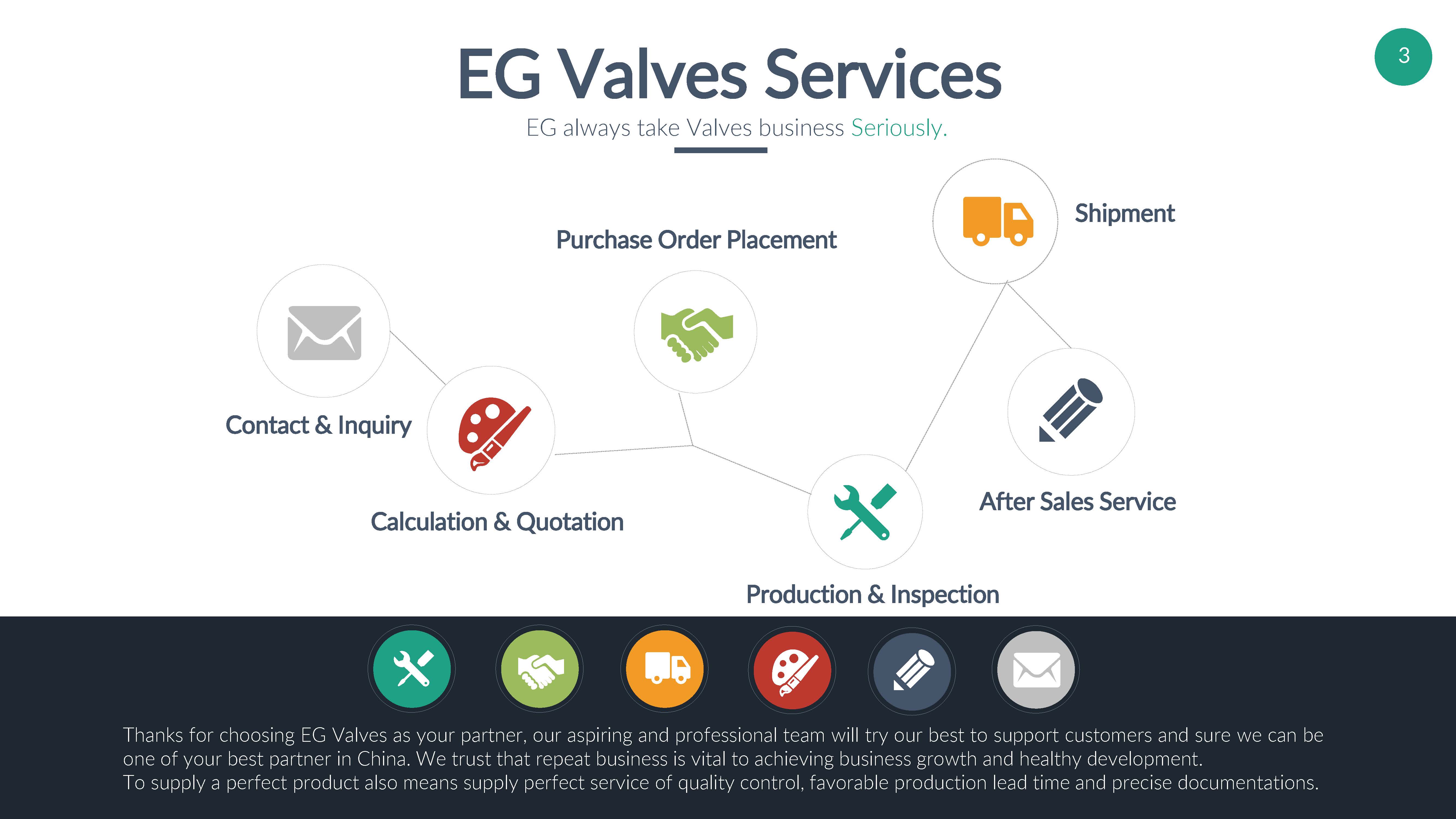
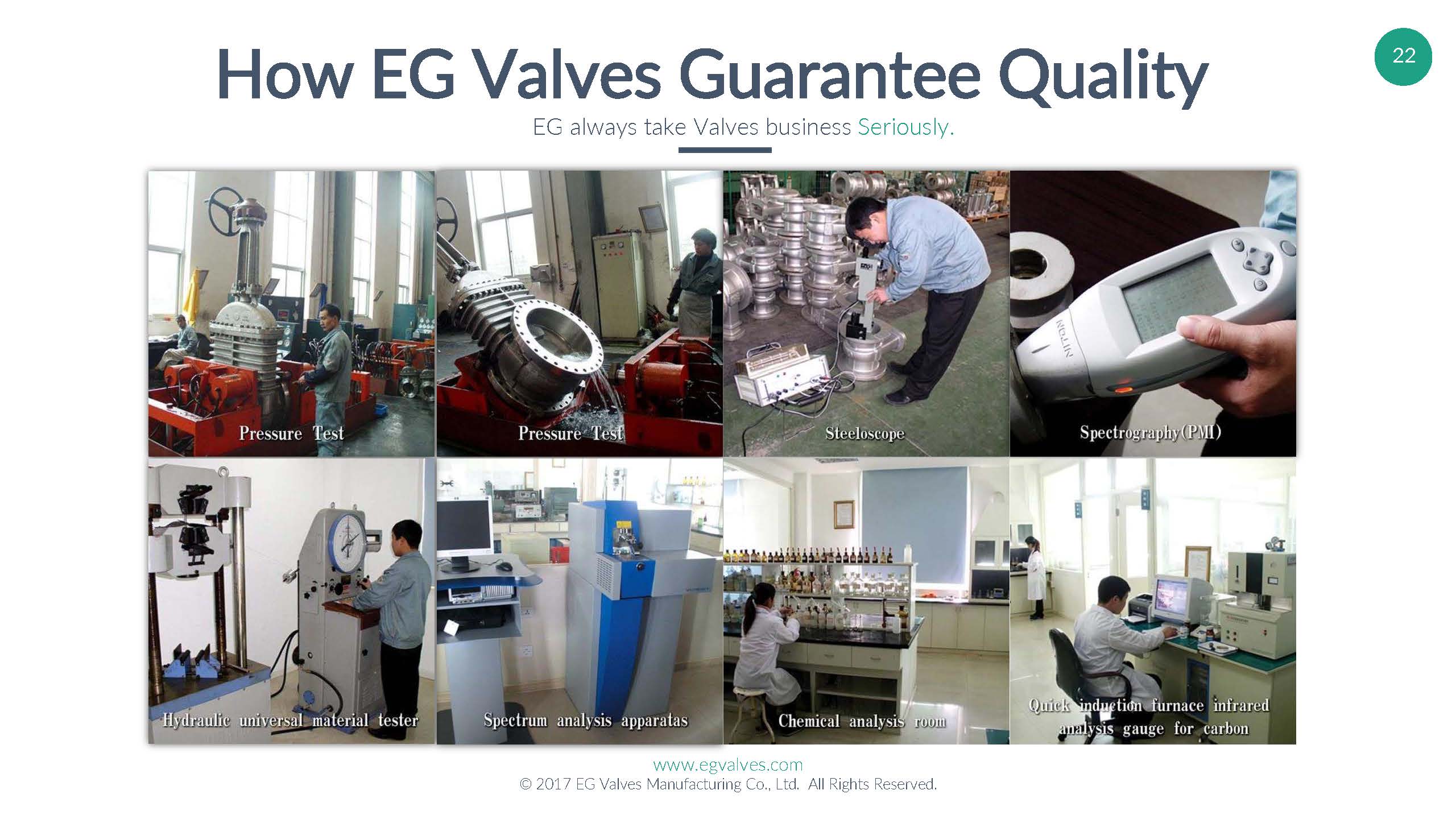
EG Valves operates under ISO 9001-certified processes, and its factories hold API 600, API 6D, CE, and PED certifications. For each order, the company implements a quality assurance system that includes strict control of delivery times, product quality tracking, and use of customer feedback for continuous improvement. These are not generic claims; they are verifiable elements of the company’s operating model.
Technical Factors That Determine Valve Longevity
When evaluating manual valves for long service life, several engineering parameters matter more than brochure specifications. Operating torque, cycle life, material compatibility, and sealing design directly affect how a valve performs after years of use.
Lower Operating Torque
According to comparative data provided by EG Valves, its gate, ball, and butterfly valves exhibit opening and closing torque that is 20% to 40% lower than most brands of the same caliber. This lower torque reduces wear on stems and seats, makes manual operation easier, and allows downstream actuators to be sized smaller and more energy-efficiently when automation is added later.
Cycle Life in Ball Valves
Cycle life is a critical indicator for quarter-turn valves. EG Valves reports that its ball valves achieve an average limit of 70,000 to 100,000 cycles. In comparison, some other Chinese valve brands, which outsource castings and show greater variation in processing precision, typically reach 30,000 to 50,000 cycles. This difference translates into lower maintenance frequency and longer service intervals in demanding applications.
Material and Size Coverage
Long-term reliability also depends on selecting the correct body and trim materials for the medium. EG Valves offers a wide range of materials, including brass, bronze, cast iron, ductile iron, carbon steel, stainless steel, alloys, and PTFE-lined options. Its size range spans DN6 to DN1800, providing full coverage from small-bore threaded valves to large-diameter flanged units. Manual operation is available across all product lines, including gate valves, globe valves, ball valves, butterfly valves, check valves, and plug valves.
| Manual Valve Category | Typical Configuration | Common Service |
|---|---|---|
| Manual Gate Valve | OS&Y, NRS, knife gate | Isolation in water, oil & gas, sewage |
| Manual Ball Valve | Floating, trunnion, threaded, flanged | On/off control for gases and liquids |
| Manual Butterfly Valve | Wafer, lug, double flange, PTFE-lined | Water treatment, HVAC, chemical processes |
| Manual Globe Valve | Bolted bonnet, pressure seal | Throttling and frequent operation |
| Manual Check Valve | Swing, lift, wafer, dual plate | Preventing backflow in pipelines |
| Manual Plug Valve | Lubricated or non-lubricated | Isolation and flow switching |
Project Evidence from Long-Term Installations
For buyers at the decision and execution stage, past project performance is one of the strongest indicators of future reliability. EG Valves has documented operating history in several regions:
- UAE project: Valves sized from 2 inches to 36 inches, with pressure classes 150 to 1500, operated safely and steadily for 8 to 10 years in a refining project.
- United States project: Completed over an 8-year duration for a regular client, with stable and safe valve operation in oil and gas service.
- United Kingdom project: Valves have been in operation for 10 years, maintaining safe and stable performance.
- CIS project: Valves designed for sizes ranging from DN40 to DN2000 and pressure ratings from PN16 to PN100 were completed within a 10-year operational period.
These examples illustrate that manual valves, when sourced from a manufacturer with disciplined quality control, can sustain long service intervals even under demanding process conditions. They also show the value of a supplier that maintains relationship continuity; repeat clients in the United States and other markets have extended collaborations across several years, which simplifies spare part sourcing and engineering support.
Market Trends: Manual Valves Remain a Durable Segment
Market data confirms that manual valves are not being displaced quickly by automated alternatives. The global manual valve market was estimated at USD 78.4 billion in 2025 and is projected to reach USD 117.17 billion by 2035, according to Vantage Market Research. More granular data shows the continued dominance of manual configurations within specific valve types:
- The manual segment led the global butterfly valve market in 2024, accounting for 41.2% of revenue share due to cost-effectiveness and simplicity (Grand View Research).
- Manual ball valves dominated the general valve market with a 28.1% share in 2025, driven by reliability in high-pressure applications (Precedence Research).
- Wafer-type manual butterfly valves held the largest configuration share at 38.5% in 2025, due to compact design and cost efficiency (Dataintelo).
- The global gate valve market is projected to reach USD 20.6 billion by 2034, growing from USD 13.0 billion in 2024 at a CAGR of 4.7% (Market Research Future).
For buyers, these trends indicate that manual valve procurement will remain a routine but strategically important activity. The shift is toward evaluating total lifecycle cost, supplier manufacturing consistency, and the ability to document compliance with standards such as ASME B16.34 for pressure-temperature ratings and wall thickness, or API 600 for heavy-duty bolted-bonnet steel gate valves in petroleum service.
Comparison: Transactional Purchasing vs. Long-Term Partnership
Traditional manual valve sourcing often follows a pattern of one-time tenders, price comparison, and short delivery contracts. A long-term partnership model, in contrast, includes framework agreements, shared quality metrics, and ongoing feedback loops.
| Consideration | Transactional Sourcing | Long-Term Partnership |
|---|---|---|
| Price focus | Lowest upfront cost | Total cost of ownership |
| Quality assurance | Incoming inspection only | Process-level control and traceability |
| Delivery reliability | Per-order expediting | Stable capacity and scheduling |
| Spare part continuity | Uncertain after order | Documented and maintained |
| Feedback and improvement | Limited | Embedded in order process |
It is also important to acknowledge the limits of a long-term partnership model. Manual valves by design require human intervention for operation, so they are not suitable for remote or fully automated control without adding actuators. A long-term framework may not be ideal for urgent, small-quantity purchases where an existing local distributor can respond faster. And for highly specialized, one-off valves, a standard long-term agreement may not provide the engineering flexibility needed. Buyers should therefore treat long-term sourcing as a strategy for repeat, standardized manual valve requirements, not for every procurement event.
Future Outlook: Manual Valves in an Automated World
As industrial facilities adopt digital monitoring and predictive maintenance, manual valves will increasingly be fitted with position sensors and smart actuators. However, the core valve body and sealing technology will remain manually operable for safety and backup. The manufacturers that thrive will be those that combine solid mechanical engineering with transparent quality documentation and responsive supply chains.
EG Valves’ operating model points to this direction. With a dedicated R&D team, in-house manufacturing, and a quality system that tracks each order, the company is positioned to support both traditional manual valve supply and future integration with automation. For procurement professionals, the practical takeaway is to choose suppliers that can demonstrate production scale, compliance depth, and a track record of long-term installations.
FAQ
What is the minimum order quantity for manual valves from EG Valves?
The MOQ is 1 piece for large-size valves and 10 pieces for small-size valves.
Which delivery terms are available?
FOB, EXW, and CIF are all acceptable, depending on the customer’s needs.
How is quality inspection handled?
Most orders are inspected by EG Valves’ QC department. For some orders, the customer arranges their own QC or a third-party inspection company to conduct the inspection.
What are the standard payment terms?
Payment is 30% T/T as deposit, with the balance settled before shipment.
What certifications does EG Valves hold?
EG Valves operates under ISO 9001-certified processes, and its factories have obtained API 600, API 6D, CE, and PED certifications.
Does the company support quality tracking and continuous improvement?
For each order, the company implements quality assurance, maintains strict control of delivery times, tracks product quality, and utilizes customer feedback for continuous improvement.
For further reference, a downloadable company brochure is available: EG Valves Corporate Brochure.