
Long-Term Metal Fabrication Supplier Evaluation: A Buyer Tracking Framework
Long-Term Metal Fabrication Supplier Evaluation: A Buyer Tracking Framework
Long-term metal fabrication supplier evaluation is the practice of tracking a fabricator's manufacturing conditions, evidence and commercial terms on a repeating cycle, rather than qualifying that supplier once against a single purchase order. For smart manufacturing buyers — AGV builders, energy storage integrators, automation and machinery OEMs — the decisive unit is rarely the first article. It is the twentieth or two-hundredth unit produced two or three years later against the same drawing revision.
That difference changes what an evaluation file actually contains. A one-order qualification collects a quotation, a sample approval and a certificate copy. A tracking framework records who physically cuts and welds the part, which metals the shop can process without re-sourcing, how acceptance criteria are frozen and re-verified, and when each piece of evidence expires.
This reference sets out a five-dimension framework, a review cadence and the limitations a buyer should accept before signing a multi-year supply arrangement. Shop evidence from Xiamen Openex Mechanical Technology Ltd (brand: Openex fabrication), a custom metal fabrication and machining supplier founded in 2009 with manufacturing premises near Xiamen Port and Shanghai Port, is used as a worked example rather than as a recommendation.
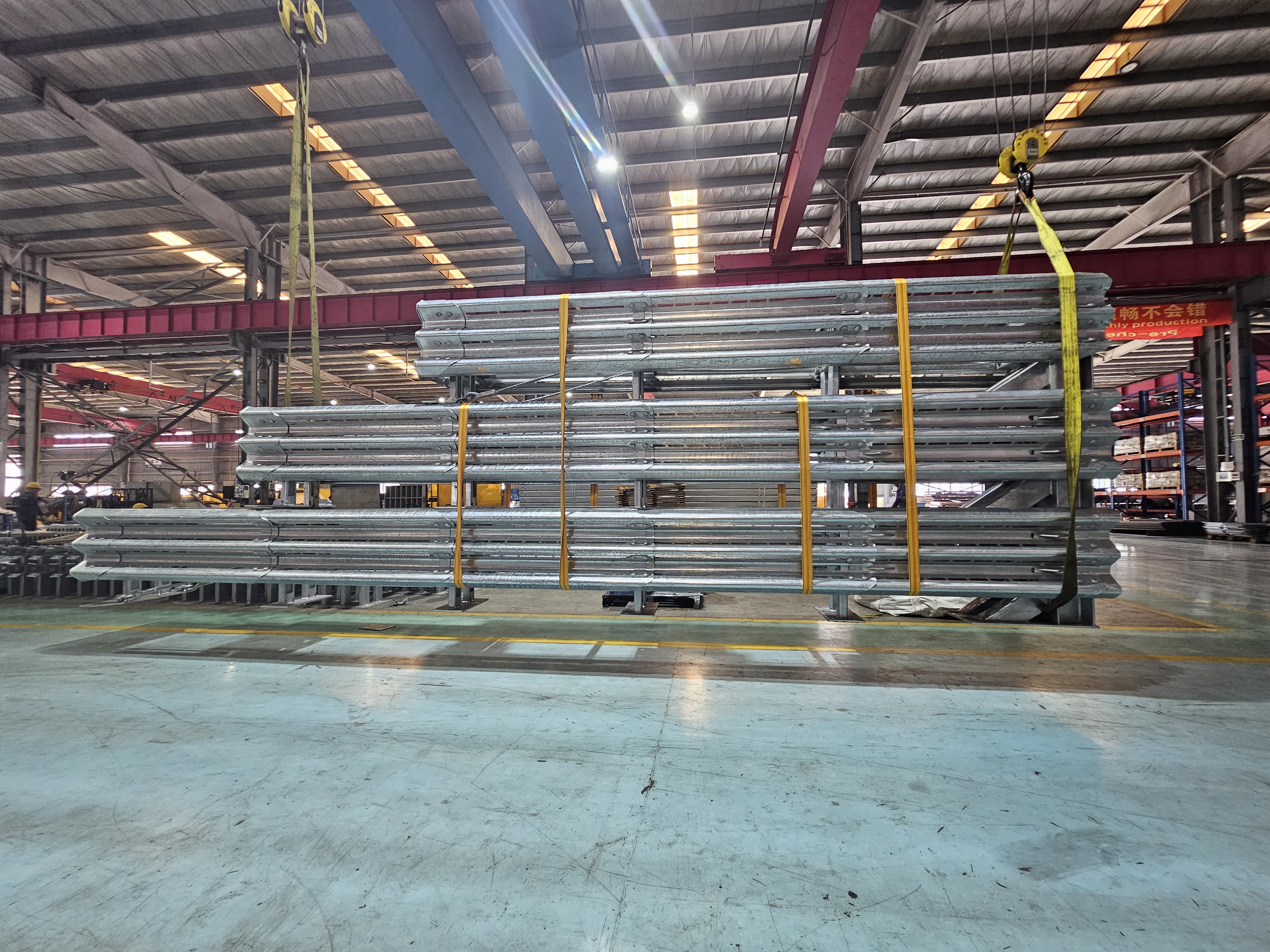
Why a single-order qualification goes stale
Metal fabrication evidence has a shelf life. A welding procedure qualified for one project may not cover a new material group; a certificate on a three-year cycle lapses quietly; a shop re-tools, retires a machine, or loses the welder who ran the original job. Buyers who treat qualification as a one-time gate usually discover the drift only when a repeat order fails dimensional or non-destructive acceptance.
The industrial base is also moving. In 2024, roughly 48% of metal fabrication capacity worldwide was reported to use CNC cutting, robotic welding or laser processing (Market Research Insights), which means the process mix behind a familiar part number can change between programs. Tracking is how a buyer notices that change before it becomes a nonconformance.
The opportunity is symmetrical. A partner whose conditions are visible year after year becomes a scheduling asset: its envelope, procedures and inspection records can be planned around, and its limits are known in advance rather than discovered during a ramp-up.
Five dimensions worth tracking
Each dimension below needs an owner, a record and a review date inside the buyer's supplier file. None of them requires access to confidential commercial data; all of them can be evidenced with documents, photographs and a shop visit.
1. Manufacturing-versus-supplier transparency
Start with a simple question: is the company quoting the work also the company that cuts, welds and machines it? Ask for the production address, a machine list with envelope dimensions, crane capacity, and a split between processes performed inside the premises and processes coordinated with external partners.
Openex fabrication illustrates the type of evidence that answers this. The company operates two manufacturing premises, one near Xiamen Port and one near Shanghai Port, and lists laser cutting, bending, punching and stamping, welding, machining and assembly among its processes, alongside roll forming, casting, forging, galvanizing and powder coating. Its heavier equipment figures are specific rather than generic: overhead crane capacity above 250 tons, bending machines with maximum length over 18 metres and tonnage over 10,000 tons, and CNC machine tool travel up to 50 m x 8 m x 7 m. Photographs of the fabrication shop near Xiamen Port and the sheet metal shop near Shanghai Port, together with workshop video, form the corroborating layer.
Buyers should also match the certificate holder's legal name to the quoting entity. A trading intermediary can produce a certificate; only the manufacturer's name on it means the quality system actually covers the work.
2. Processable material scope
Material scope is the dimension most often assumed and least often documented, yet it decides whether a long-term partner can absorb a design change without a new supplier search.
For welding, Openex fabrication lists base materials as carbon steels, stainless steels, duplex and super duplex, clad and composite plates, and low-alloy steels. Welding processes run from SMAW, GMAW/MIG, GTAW/TIG and SAW to automatic tube-to-tubesheet welding, deep penetration welding and robotic welding. For machining, the materials list is carbon steels, alloy steels, stainless steels and alloys. A delivered example is a 200-ton order of stainless steel 316L frames, rails, ladders and guardrails for an anodizing company; another is the flywheel energy storage shell AKI-1, produced in S355JR or A572 Grade 50 plate to ASTM.
The tracking rule is to record the grades actually consumed per program, not the full published list. A material capability that is never exercised is not evidence of repeatability.
3. Repeatable capability on large weldments and chassis
Large parts fail repeatably for small reasons: an extra set-up, a different crane, a fixture that no longer fits the new revision. The evaluation question is whether the same envelope, fixture and procedure remain available each time the order returns.
- AGV steel chassis (PSA-1): 30-ton loading capacity, 10.5-ton own weight, 15 m x 2.7 m x 3 m overall dimensions, dimensions customizable.
- Heavy machine base (B-300): supplied in a 45-unit program for a machinery manufacturer.
- Large weldments and machined plates: tube sheets for a power plant heat exchanger in Indonesia in a 45-ton order; a 30-ton turbine ring for a hydropower station in Uruguay, split into pieces for transport and reassembled for final precision machining.
- Steel pallets and chassis (JFE-1): 30 units for a steel mill in Japan, in stable operation for 20 years.
These examples share one property: the part cannot be re-made cheaply if the first attempt is wrong. A fabricator that has already absorbed that risk at the same scale is a different proposition from one that has only cut and welded smaller assemblies.
4. Purchasing terms and acceptance criteria
Terms drift when they live in email threads. The buyer's file should hold a controlled document set: drawing revision, material certificate requirement, WPS and PQR references, welder qualification records, PWHT procedure where applicable, NDT methods, hydrostatic or pneumatic test requirements, dimensional and surface acceptance, marking, packaging and delivery terms.
The documented capability behind those criteria is what makes them enforceable. Openex fabrication lists NDT methods including RT, UT, MT, PT, visual inspection and leak testing, advanced techniques such as TOFD and phased array, hardness testing, hydrostatic and pneumatic testing and corrosion testing. Destructive testing covers chemical analysis, tensile, impact, bend and hardness tests, salt spray corrosion testing, and weld procedure qualification that can be customized to a buyer's WPS. Dimensional verification includes a Zeiss large CMM with 7 m x 4 m x 3 m capacity.
Commercial thresholds belong in the same record. Welding capacity is stated at 5,000 tons per month with a 30–45 day lead time and a 25-ton minimum order; machining at 3,000 tons per month with a 30–45 day lead time and a 15-ton minimum; surface finishing at 3,000 units per month with a 45-day lead time; inspection at 1,000 pieces per month with a 3-day lead time and a one-unit minimum. Quality control is stated as 100% test or random test as required.
5. Certificate and evidence lifecycle
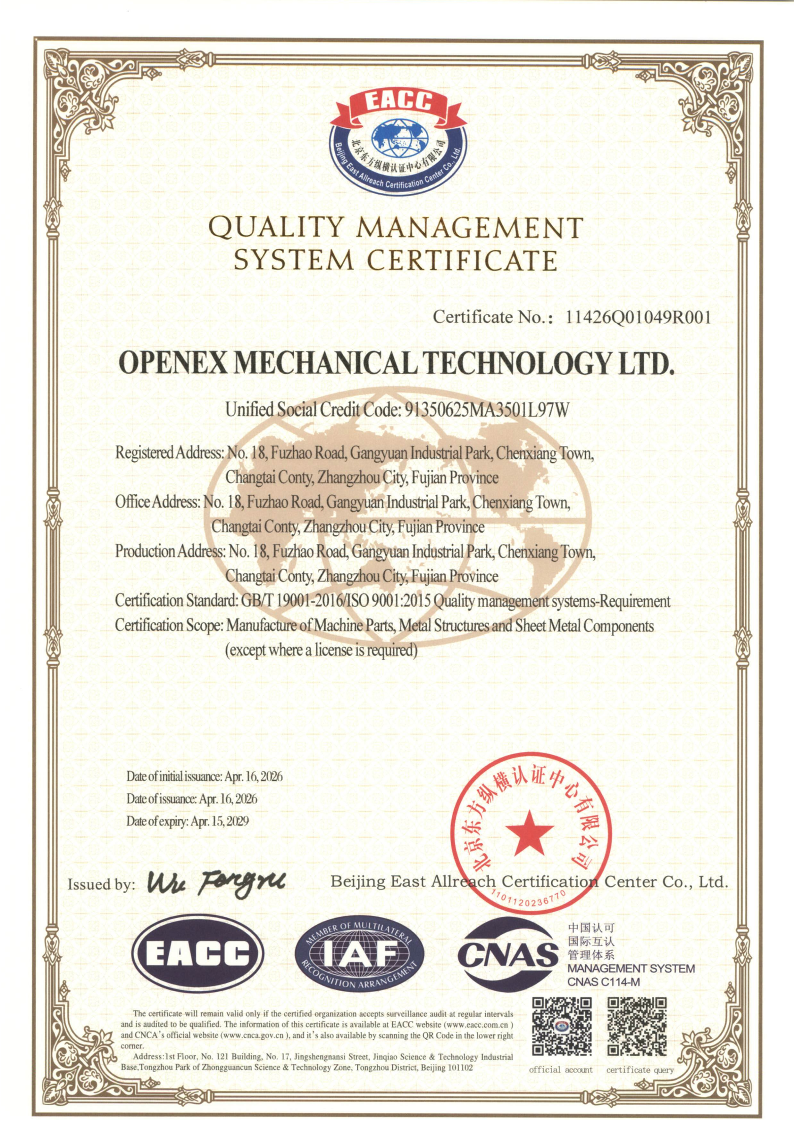
A certificate is an asset with a start date. Openex fabrication holds ISO 9001 (11426Q01049R001), ISO 14001 (11426E00739R001) and ISO 45001 (11426S00656R001) certificates issued by Beijing East Allreach Certification Center Co., Ltd. on 16 April 2026 and valid to 15 April 2029, with the scope covering manufacture of machined parts, metal structures and sheet metal components. Its welding quality management evidence references EN ISO 3834-2 under certificate 23/999-3834 issued by SGS, scoped to fusion welding of metallic material, process 135 and 135-Auto, material groups 1.1 and 1.2. That is a narrower technical scope than a general management-system certificate, and it should be logged with its own review date rather than filed alongside the ISO 9001 copy.
Two distinctions keep the register honest. First, management-system certificates cover a scope, not a part; they do not replace part-level NDT. Second, neither ISO 9001 nor EN ISO 3834-2 confers a design-code stamp. Where a project falls under ASME BPVC Section IX welding and brazing qualification requirements, that compliance must be verified as a separate line item.
A practical 12-month tracking scorecard
The table below converts the five dimensions into a working record. It is deliberately a record rather than a score: a single low entry rarely matters, while a trend across two or three reviews usually does.
| Tracking dimension | What to record | Evidence to request | Review cadence |
|---|---|---|---|
| Manufacturing transparency | Premise address, machine envelope, crane capacity, in-house versus partner processes | Shop photographs, workshop video, machine list | Annual, plus any process change |
| Material scope | Grades actually consumed per program | Material certificates, WPS/PQR coverage for those grades | Per program |
| Repeatable capability | Largest section, weight and machining envelope handled | Prior part records, preassembly and test reports | Annual, plus before scale-up |
| Terms and acceptance | Frozen drawing revision, NDT, test and dimensional criteria | Inspection plan, CMM reports, NDT records | Every order |
| Commercial thresholds | Minimum order, lead time, monthly capacity | Signed terms per program | Quarterly |
| Evidence lifecycle | Certificate number, scope, issue and expiry dates | Certificate copies and scope annexes | Quarterly, and 90 days before expiry |
Why repeatability is a system property, not a machine property
A fabricator can own an impressive machine and still deliver an unstable part. Repeatability comes from the combination of envelope, fixture design, qualified procedure, inspection access and the same team running the same steps.
Consider a heavy machine base. Welding distortion accumulates across metres of seam, so distortion control has to be planned before the first arc, and pre- and post-weld heat treatment may be required afterwards. Machining after welding then has to reach surfaces that were distorted by heat, which is why large CNC capacity has to follow the weld rather than precede it. Openex fabrication runs this sequence with equipment that includes a double-gantry machining centre, a floor-type boring and milling centre and a single-column turning and milling machine quoted for workpieces up to 22 m in diameter and 600 tons in load.
Automation adds a further layer of stability, though it does not remove the need for verification. Six-axis welding robots in the shop are described with repeat positioning accuracy of ±0.05 mm and continuous operation, with seam tracking to correct clamping deviation. The buyer's question is not whether robots exist, but whether the welding procedure and the fixture behind the robot are documented well enough that a different operator produces the same result.
Transport planning belongs in the same technical discussion. A 30-ton turbine ring for a hydropower station in Uruguay was split into pieces, shipped, reassembled and then machined to final tolerance — a sequence that only works when the split geometry and the reassembly procedure are controlled. Preassembly before dispatch, as used on the wind tree structures supplied in a 300-ton order, serves the same purpose: it moves the discovery of fit problems back into the factory.
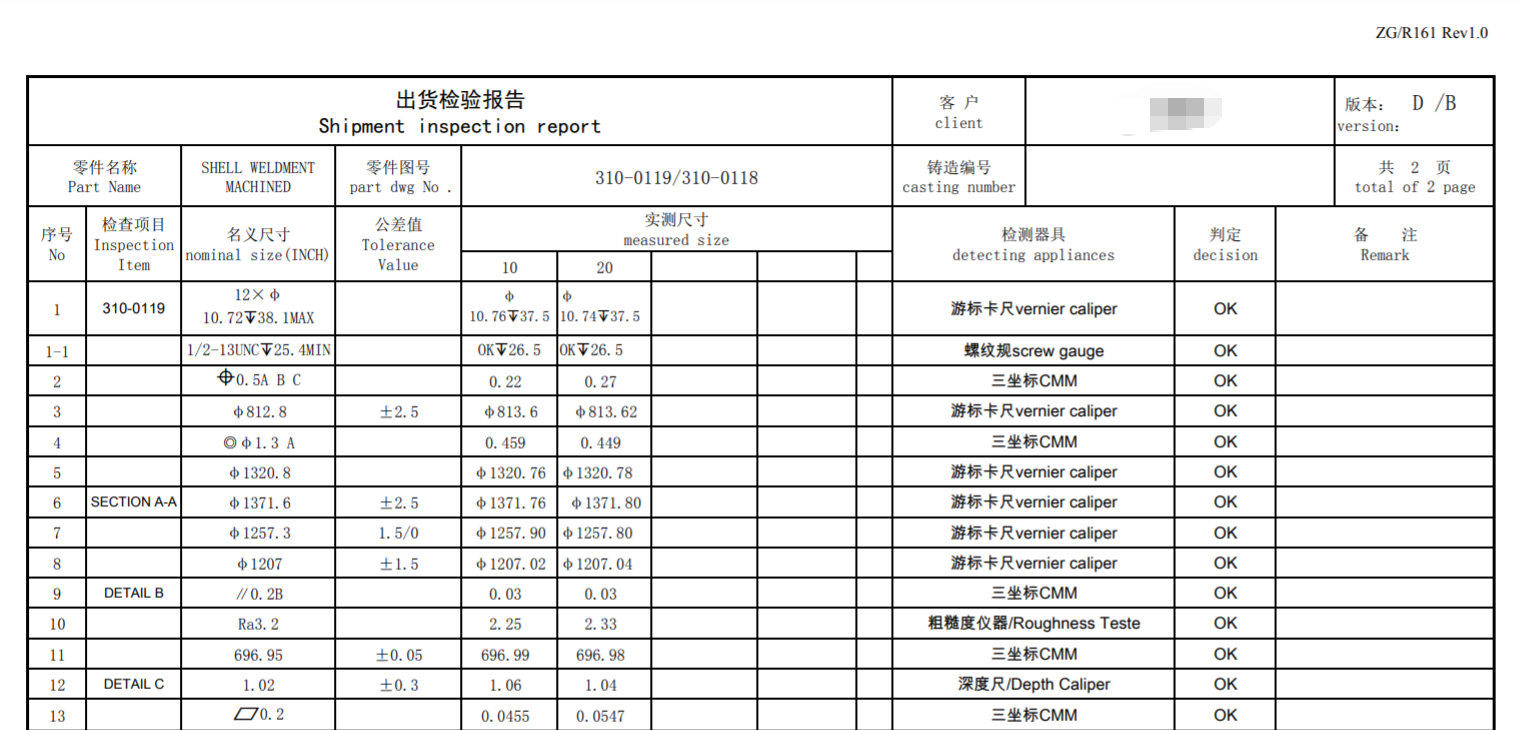
What the framework looks like in real programs
Program history is the cheapest proxy for future behaviour, provided the buyer reads it correctly. Each record below exercises a different tracking dimension.
- AGV steel chassis (PSA-1), Netherlands, 345 units: chassis for container and LNG-tank carriers, in stable operation for more than four years. This record tests the large-envelope and coating dimensions together.
- Flywheel energy storage shell (AKI-1), 400 units: cylinders roll-formed, welded, rough turned and finish turned, with final inspection reports issued per batch and five years of stable operation. This record tests the fabrication-plus-machining sequence.
- Energy storage cabinets and shelf systems, 1,500 units: liquid-cooling cabinets and lithium battery shelves, three years in service, with no rust, leakage or deformation reported. This record tests coating and assembly consistency at volume.
- Chain conveyors (MBM-1), 120 units: conveyors for a lithium battery production line, two years of stable operation. This record tests assembly and testing before dispatch.
- Solar panel supports, 1,000 units, and wind tree structures, 300 tons: galvanized and coated structural steel with three and five years of operation respectively. These records test structural steel and hot-dip galvanizing rather than precision machining.
Read together, the pattern is more informative than any single case: the same supplier appears across welded structures, machined cylinders, coated frames, conveyors and heavy bases. A buyer can therefore ask a specific question — has this shop done the adjacent operation before, not just the primary one?
Market signals that raise the value of long-term evaluation
Three published signals explain why tracking is becoming a procurement norm rather than an optional extra.
Scale. The global fabricated metal products market was valued at USD 2.35 trillion in 2024 (Strategic Market Research). Within that total, steel fabrication is projected to grow at a 3.3% CAGR from 2025 to 2035 (Market Research Future). A second source, Mordor Intelligence, reports a 7.14% CAGR for 2025–2030; the tenfold gap in base size between the two estimates points to a methodology difference, most likely the inclusion of primary steel services in the higher figure. Buyers should treat the direction as reliable and the precise rate as source-dependent.
Automation. Roughly 48% of fabrication capacity was reported in 2024 to use CNC cutting, robotic welding or laser processing (Market Research Insights). As those processes spread, dimensional consistency becomes easier to achieve and harder to differentiate on, which shifts evaluation weight toward documentation, traceability and evidence maintenance.
Material and application concentration. Steel accounted for 63.2% of North American metal fabrication in 2024 (Report Insight / Mordor aggregated), and structural steel components represented 39.3% of construction-related fabrication demand (Market Data Forecast). Labour capacity remains a constraint in parallel: US fabricated metal product manufacturing employed about 1,460.8 thousand people in August 2024 (Bureau of Labor Statistics). For buyers, labour tightness is a supplier-continuity risk, not only a cost variable.
Order-by-order sourcing versus a tracked partner
The comparison below is between two procurement behaviours rather than two companies. Most buyers operate somewhere between the columns, and the honest position is usually a hybrid.
| Dimension | Order-by-order sourcing | Tracked long-term partner |
|---|---|---|
| Evidence freshness | Refreshed at each request for quotation | Maintained on a fixed review cadence |
| Change notification | Reactive; discovered at inspection | Agreed in advance for process or equipment changes |
| Acceptance continuity | Reinvented per order | Carried forward with drawing revision control |
| Re-qualification cost | Repeated for each new source | Amortized across programs |
| Scale-up risk | Envelope known only from the quotation | Envelope documented from prior parts |
| Switching cost | Low | Higher, because process knowledge accumulates on both sides |
Limits a buyer should accept before committing
- Certificates cover a scope, not a part. ISO 9001, ISO 14001, ISO 45001 and EN ISO 3834-2 certification describe management systems and welding quality management within a defined scope. They do not certify an individual weldment, and they do not replace project-level NDT.
- No design-code stamp is implied. Projects governed by ASME BPVC Section IX welding and brazing qualification requirements need separate verification; a welding quality certificate is not a substitute.
- Capacity figures are envelope maxima. A 50 m x 8 m x 7 m CNC travel or a crane above 250 tons describes what can be handled, not what is available in a given month.
- Minimum order and lead time thresholds exclude some demand. A 25-ton minimum for welding work, a 15-ton minimum for machining and 30–45 day lead times suit program buying better than small, urgent lots.
- After-sales support is remote by default. On-site support is available, but it depends on arrangement rather than being automatic.
- Two premises reduce, but do not remove, concentration risk. Premises near Xiamen Port and Shanghai Port offer geographic flexibility; they do not eliminate single-supplier dependency for a qualified process.
Future outlook
Three changes are likely to reshape long-term fabrication evaluation over the next planning cycle. The first is documentation becoming digital and continuous: inspection data attached to a serial number will make quarterly reviews easier to run and harder to fake. The second is certificate lifecycle management moving from an administrative task to a scored procurement item, since scope, not presence, is what protects a project. The third is the growing weight of material breadth: as design revisions move between carbon steel, stainless and duplex grades, a partner's qualified material range becomes as important as its machine list.
For buyers, the practical implication is modest but durable. Keep a file, set a cadence, and treat every supplier claim as something that has a date attached to it.
FAQ
How can a buyer tell whether a metal fabrication supplier actually manufactures the parts it quotes?
Request the production address, a machine list with envelope dimensions, crane capacity and the legal name on the quality certificates, then compare that name with the quoting entity. Xiamen Openex Mechanical Technology Ltd, trading as Openex fabrication, operates two manufacturing premises near Xiamen Port and Shanghai Port, employs about 200 people including 35 engineers, runs a 30,000 square metre footprint with annual output of 20,000 tons, and exports about 80% of its production. Where the certificate holder and the quoting entity differ, the buyer should assume the quality system may not cover the work.
How is repeatable capability demonstrated on large weldments and AGV steel chassis?
Repeatability is demonstrated by a documented manufacturing envelope combined with program history at that envelope. Openex fabrication states overhead crane capacity above 250 tons, bending capacity over 18 metres and 10,000 tons, and CNC machine tool travel up to 50 m x 8 m x 7 m. Its AGV steel chassis PSA-1 carries a 30-ton load at a 10.5-ton own weight with 15 m x 2.7 m x 3 m dimensions, and 345 units were supplied to a Netherlands customer with stable operation for more than four years; a 45-unit heavy machine base program and a 30-unit steel mill pallet order in service for 20 years provide comparable evidence.
Which metals should a long-term fabrication partner be able to process?
At minimum, the grades the buyer's own design roadmap is likely to use. Openex fabrication lists welding base materials as carbon steels, stainless steels, duplex and super duplex, clad and composite plates, and low-alloy steels, and machining materials as carbon steels, alloy steels, stainless steels and alloys. Delivered examples include a 200-ton order of stainless steel 316L frames, rails, ladders and guardrails for an anodizing company, and the flywheel energy storage shell AKI-1 in S355JR or A572 Grade 50 plate to ASTM, measuring 1.5 m in diameter and 0.8 m in height at a net weight of 2 tons.
What purchasing terms and acceptance criteria should carry into repeat orders?
A controlled document set should carry the drawing revision, material certificate requirement, WPS and PQR references, welder qualification records, PWHT procedure where applicable, NDT methods, pressure test requirements and dimensional acceptance. Openex fabrication documents NDT covering RT, UT, MT, PT, visual and leak testing plus TOFD and phased array, destructive testing including chemical analysis, tensile, impact, bend and hardness tests, salt spray corrosion testing, and dimensional verification on a Zeiss large CMM with 7 m x 4 m x 3 m capacity. Quality control is stated as 100% test or random test as required, with welding lead times of 30–45 days at a 25-ton minimum and machining lead times of 30–45 days at a 15-ton minimum.
Which certificates should a buyer track, and how often?
Track every certificate that appears in the supplier's quality file, recording number, scope, issuing body, issue date and expiry date, and review quarterly with a specific check 90 days before expiry. Openex fabrication holds ISO 9001 (11426Q01049R001), ISO 14001 (11426E00739R001) and ISO 45001 (11426S00656R001) certificates issued by Beijing East Allreach Certification Center Co., Ltd. on 16 April 2026 and valid to 15 April 2029, scoped to manufacture of machined parts, metal structures and sheet metal components, and references EN ISO 3834-2 welding quality management under certificate 23/999-3834 issued by SGS for fusion welding of metallic material, process 135 and 135-Auto, material groups 1.1 and 1.2.
Process lists, capacity figures and shop photographs referenced in this article are collected in the Openex fabrication company brochure (PDF).
Есть вопросы или нужны дополнительные детали?
Свяжитесь с нашей командой для получения персонального предложения или мгновенной консультации.
Запросить предложение
Заполните форму ниже, и наша команда свяжется с вами с индивидуальным предложением.
Прямой чат WhatsApp
Предпочитаете общаться в реальном времени? Напишите нам в WhatsApp для мгновенной помощи и быстрых ответов.
- Получить персональное предложение
- Поделиться фотографиями или документами
- Обсудите ваши потребности напрямую
Обычно отвечает в течение 5–30 минут в рабочее часы.