
Long-Term Partner Evaluation: Scoring ABS Vibration Frames for 10k+ Cycles
Home fitness equipment is increasingly bought on service life rather than on launch specification. A distributor building a three-to-five-year vibration plate line does not only need a unit that performs on day one. It needs a housing platform, a compliance file and a supply cadence that still match three re-orders later. That is why the material grade recorded on a datasheet, and the gross weight printed next to it, have become procurement inputs rather than catalogue decoration.
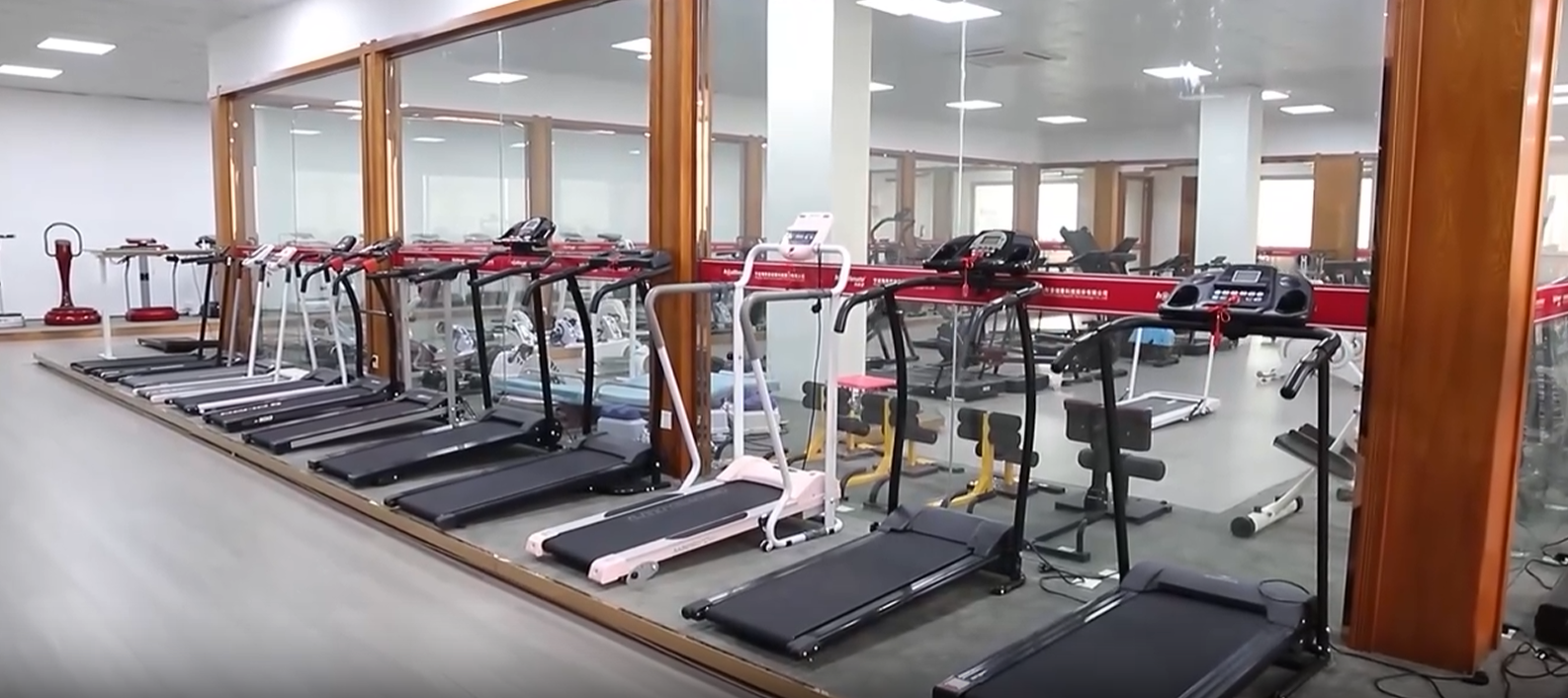
Ningbo Healthmate Health Technology Co., Ltd. is a manufacturer and supplier of home-use fitness equipment, founded in 2007, operating a 100,000 m2 factory on the Ningbo coastline with a 38-engineer R&D team and roughly 700,000 units of annual output, of which about 80% is exported to Europe, the USA, Japan, Korea, India, the Middle East and South America. Its vibration plate range, including the HSM-08VF and HSM-08VQ, is specified with ABS Material across the family. That makes it a practical test case for a supplier-scoring model built around material longevity rather than around headline features.
Why ABS-Housed Vibration Frames Became a Sourcing Question
ABS Material appears as the housing specification for every vibration plate model in Healthmate's published product data, from the 9.8 KGS HSM-08VS through the 24 KGS HSM-08VQ to the 31 KGS HSM-08VF. A shared housing material across a family is operationally convenient. One surface finish, one cleaning instruction, one fastener and spare-part logic across several SKUs, and one material line on a purchase order that can be frozen for the life of a supply agreement.
It also creates a risk that buyers should price in. Because the material line reads the same on all three datasheets, it is easy to assume the platforms behave the same. They do not. Gross weight ranges from 9.8 KGS on the compact HSM-08VS to 31 KGS on the handlebar-equipped HSM-08VF, a spread of more than three times inside a single material family. Material disclosure tells a buyer what the housing is made from. It does not tell them which duty class the platform belongs to, and it does not, on its own, say anything about how many working cycles the structure will absorb.
What the Material and Mass Specifications Actually Tell You
The most useful way to read a vibration platform datasheet is as a two-column exercise: material on the left, mass against duty on the right. For the ABS models in scope, the published specifications are:
| Specification | HSM-08VF | HSM-08VQ | HSM-08VS |
|---|---|---|---|
| Housing material | ABS Material | ABS Material | ABS Material |
| Gross weight | 31 KGS | 24 KGS | 9.8 KGS |
| Rated power | 500W | 500W + 300W | 200W |
| Speed levels | 99 Level | 20 Levels | 99 Levels |
| Timing range | 1-10 mins | 1-10 mins | 1-10 mins |
| Product size | 710 x 700 x 1080 mm | 805 x 450 x 190 mm | 530 x 320 x 145 mm |
| Carton size | 1160 x 730 x 250 mm | 835 x 485 x 250 mm | 635 x 390 x 160 mm |
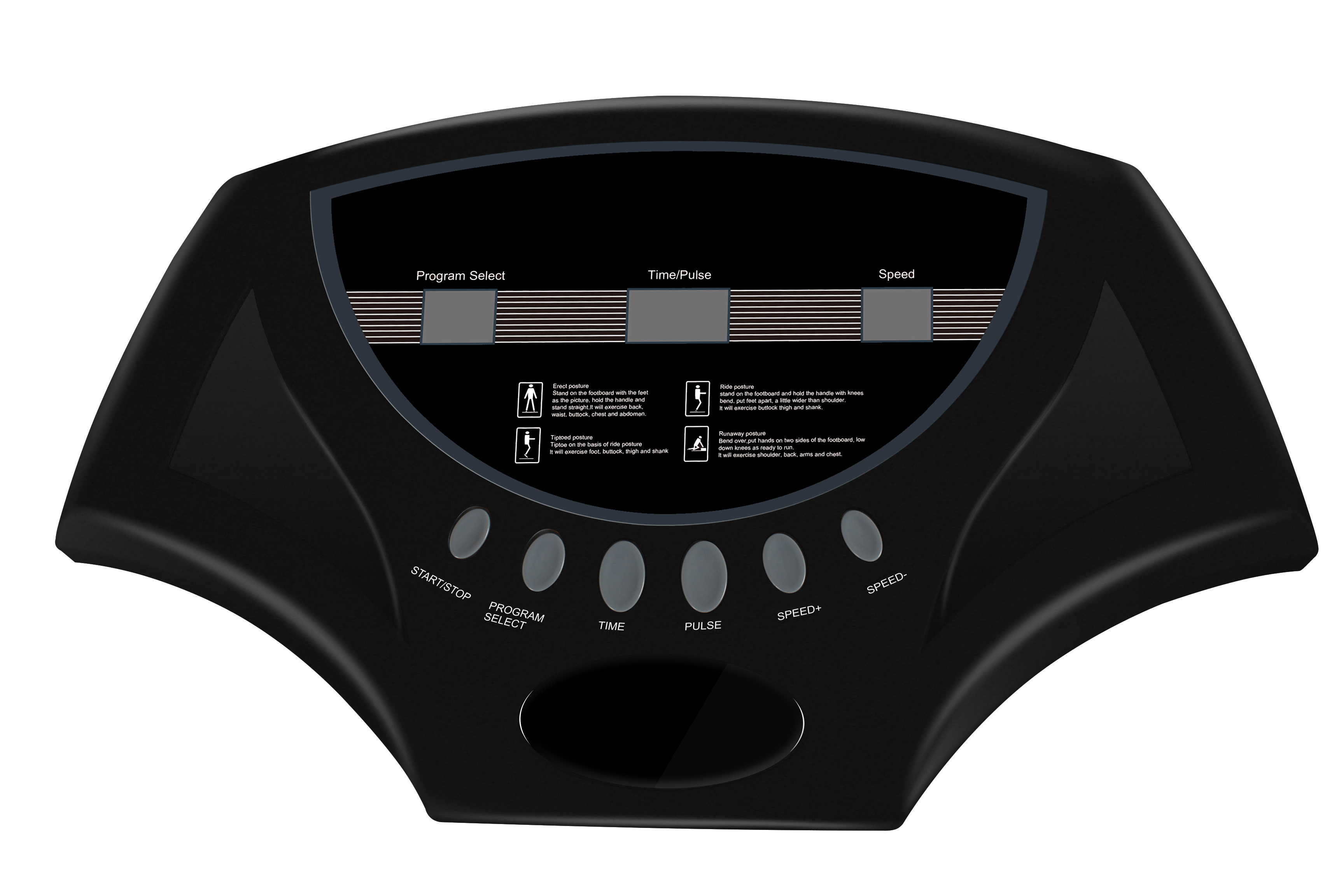
Three observations follow. First, HSM-08VF is documented as a vibration plate with handlebar and an upright vibration exercise machine, which explains both its 31 KGS gross weight and its 710 x 700 x 1080 mm envelope: the handlebar and upright posture add structure that a flat portable platform does not carry. Second, HSM-08VQ is documented as a portable whole body vibration plate with an 805 x 450 x 190 mm body and a 24 KGS gross weight, combining a 500W + 300W power rating with 20 speed levels. Third, the 500W HSM-08VF is published with 99 speed levels while the higher combined-power HSM-08VQ is published with 20 levels. Speed-level count and power rating are therefore separate buying criteria, not one continuous more-is-better scale.
For a buyer building a multi-year sourcing model, the practical rule is straightforward. Record material and mass together as a single specification pair. A platform with a light gross weight carrying a high-intensity positioning should trigger a validation step rather than an assumption, and a platform with a heavy gross weight should still be checked against the duty cycle it will actually face in the field.
Turning a 10k+ Cycle Service Target into Verifiable Requirements
A ten-thousand-cycle service horizon is a planning figure, not a datasheet value. No published specification proves it, and no responsible buyer should score a supplier as if a catalogue sheet had demonstrated it. The workable approach is to convert the target into four requirements that can actually be checked, documented and repeated at the next re-order.
- Sample endurance validation before volume commitment. Request units produced on the same line and run a duty-cycle protocol, typically repeated timed sessions at the highest speed setting, rather than relying on a summary result supplied with the quotation.
- A frozen specification at purchase-order level. Lock the ABS material designation, platform dimensions, gross weight and rated power into the PO, so that a re-order placed years later matches the sample that was validated.
- Warranty terms mapped to the deployment horizon. Healthmate's standard after-sales term is a 1-year warranty for every damage parts. Buyers planning three to five years of field exposure should reconcile that term with their own repair or replacement policy before retail pricing is fixed.
- SKU-level field failure data. Ask for the warranty claim rate of the specific vibration plate model rather than a company-wide figure, and repeat the request annually so the score reflects current production rather than historical reputation.
A Vendor Scoring Logic for Multi-Year Sourcing
Material longevity is difficult to score directly, so the workable approach is to score the inputs that make longevity verifiable: what the supplier discloses, what is certified, what is measured, and what is recorded over time. The framework below weights criteria for a home fitness equipment buyer evaluating an ABS vibration plate platform over a multi-year agreement.
| Criterion | Weight | Evidence to collect | Why it matters across re-orders |
|---|---|---|---|
| Material and construction disclosure | 15% | ABS material designation, platform dimensions, mass | Keeps re-orders identical to the validated sample |
| Mass-to-duty alignment | 10% | Gross weight against rated power and speed levels | Flags a light platform carrying a high-intensity claim |
| Certification coverage by market | 20% | Certificate numbers, issuing bodies, applicable standards | Determines which markets a production batch can legally enter |
| Quality-control evidence | 15% | Unit-level test records and third-party inspection reports | Converts a claim into a repeatable process |
| Field reliability record | 15% | Warranty claim rate, repeat-order rate, deployment duration | Closest available proxy for multi-year performance |
| Commercial continuity | 10% | Monthly capacity, MOQ, lead time | Supports a predictable re-order cadence |
| After-sales structure | 10% | Warranty duration and covered parts | Defines the cost of a material failure |
| Annual re-scoring | 5% | Refreshed certificates, sample audit, updated claim rate | Prevents a 2026 score from being reused in 2029 |
Applied to Healthmate's disclosed data, the picture becomes specific rather than general. Production mode is OEM/ODM with customization limited to colour, logo, voltage and plug type. Monthly capacity is stated at 8,000 pcs, MOQ at 100 pcs, and lead time at 35-40 days. Quality control is described as 100% test with third-party inspection, and the after-sales term is a 1-year warranty for every damage parts. Those figures belong directly in the commercial-continuity and after-sales rows of the score, not in a summary paragraph.
The field-reliability row can be partially populated from the supplier's own case record: 100,000 pcs supplied to foreign trade wholesalers, Amazon platform sellers, local fitness retail shops, wholesale trading companies and fitness equipment wholesalers, across a 3-5 year duration, with a reported after-sales failure rate below 2%, stable vibration output and a high customer repeat order rate. A buyer should treat these as supplier-reported inputs to be verified rather than as an audited result, which is precisely why the annual re-scoring line exists in the model.
Running the Score in Practice
Scoring works only if it is repeatable. A practical cycle is to populate all eight criteria before the first order, then re-run the certification, QC and field-reliability rows every twelve months using fresh documents. Any criterion that cannot be refreshed with a current document should be discounted rather than carried forward at its previous value, because a certificate file, a claim rate and a capacity statement all age at different speeds.
The Compliance Layer That Binds ABS Vibration Plates
For vibration platforms, compliance is the constraint that most often decides whether a sourcing decision is viable at all. Healthmate's vibration plate family carries the following documentation.
| Market | Scheme | Applicable standard | Issuer | Certificate number |
|---|---|---|---|---|
| EU | CE-LVD | EN 60335-1 | EMTEK (NINGBO) CO., LTD. | ENB2301100056S00201C |
| EU | CE-EMC | EN IEC 55014-1, EN IEC 61000-3-2, EN 61000-3-3, EN IEC 55014-2 | EMTEK (NINGBO) CO., LTD. | ENB2301100056E00101C |
| EU | RoHS | 2011/65/EU, (EU) 2015/863 | HATEK | HA21NB051501CHEM |
| UK | UKCA | BS EN 60335-1, BS EN IEC 60335-2-32:2021, BS EN 62233:2008 | Shenzhen Most Technology Service Co., Ltd. | MTZS24064178 |
The CE-LVD and CE-EMC certificates relate to the vibration plate models including HSM-08VW, HSM-08VQ, HSM-08VS and HSM-08VF. The RoHS certificate applies to the vibration plate range, and the UKCA certificate covers vibration plate models including HSM-08VQ, HSM-08VS and HSM-08VW. A buyer sourcing specifically the HSM-08VF for the UK market should therefore confirm UK coverage against the actual model rather than assume it from the family listing. That distinction is exactly the kind of detail the certification row of a vendor score is meant to catch.
Beyond the certificates an individual supplier holds, buyers should track the reference standards the category is measured against. ASTM F2276 is the core safety standard for home fitness equipment covering stability and the protection of moving parts, and it remains a useful benchmark when comparing an ABS-housed platform against any alternative construction.
Where ABS Vibration Platforms Fit: Application and Use Cases
The application profile of this equipment class is home wellness, cardio home fitness and home space fitness, with operation across home use, office or workplace use, and apartment or urban living environments. The stated operating pattern is intermittent daily use with adjustable speed or resistance and a safety stop system, and the special requirements attached to the category are explicit: space-saving or foldable design, an anti-slip surface, a motor rated for repeated daily use, ergonomic design for long-term home use, and a stable frame for apartment flooring.
Reported end-use scenarios across the supplied equipment families include family daily cardio workout, indoor weight loss training, elder daily rehabilitation exercise, office standing walking, small apartment daily light exercise, post-meal fat burning, low-impact leg cardio training, home daily light fitness, and rehabilitation exercise for joint mild discomfort. These are consumer usage categories as recorded by the supplier rather than clinical claims, and they should be treated as such in any marketing copy a distributor derives from them.
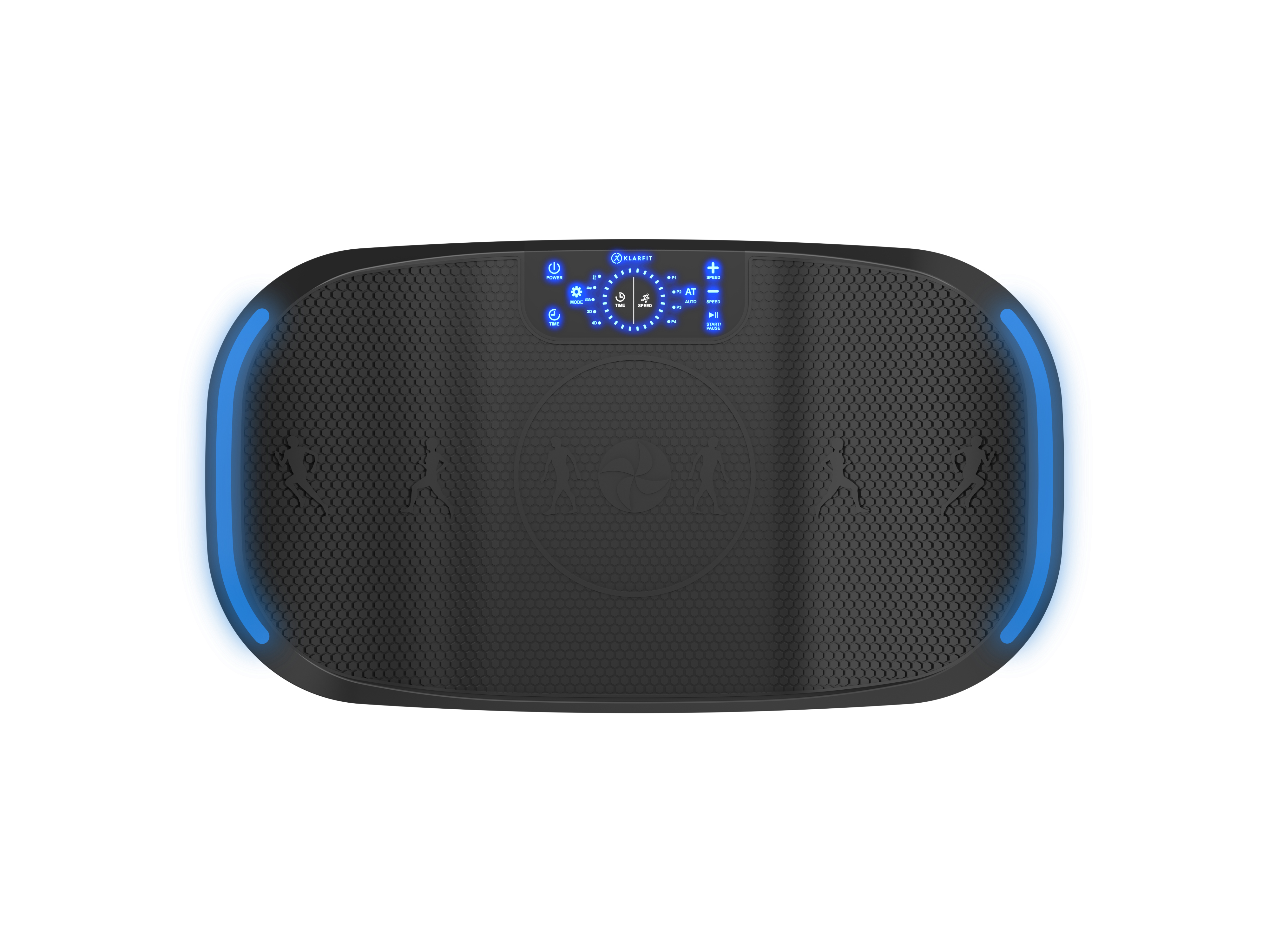
Two structural features recur in the supplier's case descriptions and are directly relevant to a longevity discussion: a foldable compact structure and multi-level shock absorption, alongside an anti-slip foot mat and a simple operation panel. For an ABS-housed platform used in an apartment, those features influence the buyer's return rate more than maximum speed does.
Market Signals Behind Longer Equipment Ownership
Category forecasts support, rather than replace, the case for scoring durability. Fortune Business Insights projects the global home fitness equipment market at USD 13.76 billion in 2026, and separately reports the market growing from USD 12.88 billion in 2025 to USD 22.99 billion by 2034 at a CAGR of 6.81%. Mordor Intelligence forecasts an increase from USD 11.84 billion in 2026 to USD 17.06 billion by 2031 at a CAGR of 7.59%.
The two forecasts use different base years and horizons, so they should be read as directional agreement on growth rather than averaged into a single figure. The procurement implication is the same in both cases: a market expanding through the early 2030s will be shaped as much by replacement demand and repeat listings as by first-time buyers, and replacement demand rewards suppliers whose specification does not quietly change between orders.
Market structure matters for portfolio decisions as well. Motorized treadmills dominated the global home fitness equipment category with an 83% shipment share in 2023, which places vibration platforms in an adjacent, more specialised line rather than the volume core. The sourcing consequence is that vibration plate orders tend to be smaller and more SKU-dependent, so continuity of specification weighs proportionally more than raw scale.
Supplier-side signals point in the same direction. Healthmate's stated annual output of approximately 700,000 units and an 80% export ratio indicate an export-oriented manufacturing base rather than a domestic-first operation. Its nine named product families, Home-use Treadmill, Walking Pad, Vibration Machine, Spinning Bike, Magnetic X-bike, Upright Bike, Elliptical Trainer, Electric Mini Bike and Rowing Machine, mean a distributor can consolidate several categories under one compliance and logistics relationship.
Comparison with Traditional Solutions, and the Limits of ABS Data
Buyers arriving from larger-format or heavier-frame vibration platforms usually want to know whether an ABS-housed unit is a downgrade. The honest answer is that the two are not directly comparable, and the scoring model should reflect that rather than force a winner.
Larger platform formats generally trade floor area and gross weight for a different stability envelope. The ABS family discussed here spans 9.8 KGS to 31 KGS, from a 530 x 320 x 145 mm compact platform to a 710 x 700 x 1080 mm upright unit with handlebar. A compact unit reduces carton volume, and the HSM-08VQ ships in an 835 x 485 x 250 mm carton, which lowers freight cost per unit and makes small-apartment placement realistic. That is the trade, and it is a reasoned one for apartment and home-office channels.
Three boundaries should be stated plainly.
- Gross weight is a screening input, not proof of service life. A 31 KGS gross weight indicates more structure and mass than a 9.8 KGS platform, but mass alone does not demonstrate a 10,000-cycle capability. That claim can only be supported by duty-cycle validation, which a buyer should perform or request rather than infer from a specification sheet.
- Standard warranty length is a real constraint. A 1-year warranty for every damage parts is a normal commercial term in this category, but it is shorter than the multi-year deployment horizon many distributors plan against. The gap has to be managed internally, through spare-parts stocking or an extended service arrangement.
- Customization scope is defined and limited. The listed OEM/ODM customization options are colour, logo, voltage and plug type. A buyer who needs a different housing material or a structural change should confirm feasibility as a separate engineering project rather than assume it falls inside standard customization.
Future Outlook
Two pressures are likely to shape ABS vibration plate sourcing over the next planning cycle. The first is documentation refresh. Buyers are increasingly asking for certificate numbers, issuing bodies and applicable standards at the RFQ stage rather than at shipment, which turns a supplier's ability to maintain a current file across CE-LVD, CE-EMC, RoHS and UKCA into a scored capability rather than a formality. The second is duty-cycle disclosure. As replacement demand grows, the question of how long a platform lasts will be pushed out of post-sale complaint handling and into the pre-order checklist, favouring suppliers who can document material and construction choices and support sample-level validation.
Neither pressure requires a new product generation. Both require that the specification sold in year one is the specification delivered in year four. That is the substance of a long-term partner evaluation, and it is why a scoring model aimed at material longevity is more useful to a buyer than a comparison of feature counts.
FAQ
What do the 24 KGS and 31 KGS gross weights of ABS vibration plates indicate to a buyer?
They indicate two different duty classes inside the same material family. The HSM-08VQ is a portable whole body vibration plate with a 24 KGS gross weight, a 500W + 300W rating and 20 speed levels. The HSM-08VF is an upright vibration exercise machine with handlebar, at 31 KGS gross weight, 500W and 99 speed levels. The heavier unit carries additional structure, while the lighter one prioritises portability and a smaller 805 x 450 x 190 mm footprint. Gross weight should be read alongside rated power and speed levels, not on its own.
Which certifications should an ABS vibration plate carry for EU and UK market entry?
For the EU, Healthmate's vibration plate family holds CE-LVD certification ENB2301100056S00201C against EN 60335-1 and CE-EMC certification ENB2301100056E00101C against EN IEC 55014-1, EN IEC 61000-3-2, EN 61000-3-3 and EN IEC 55014-2, both issued by EMTEK (NINGBO) CO., LTD., plus RoHS certificate HA21NB051501CHEM issued by HATEK under 2011/65/EU and (EU) 2015/863. For the UK, UKCA certificate MTZS24064178 issued by Shenzhen Most Technology Service Co., Ltd. covers vibration plate models including HSM-08VQ, HSM-08VS and HSM-08VW, against BS EN 60335-1, BS EN IEC 60335-2-32:2021 and BS EN 62233:2008.
What are the minimum order quantity and lead time for ABS vibration platforms?
Healthmate's stated commercial terms for its OEM/ODM home fitness equipment programme are a MOQ of 100 pcs and a lead time of 35-40 days, with monthly capacity stated at 8,000 pcs. Customization covers colour, logo, voltage and plug type. Buyers planning a multi-year agreement should confirm these terms against the specific vibration plate model, because capacity is allocated across the full product range rather than reserved for one SKU.
What after-sales coverage applies to these units?
The standard after-sales term is a 1-year warranty for every damage parts. Because this is shorter than a typical three-to-five-year distributor deployment horizon, buyers should decide before launch whether to stock spare parts, negotiate an extended arrangement, or price the residual risk into the retail model. Healthmate's case record reports an after-sales failure rate below 2% across a 3-5 year duration for supplied home fitness equipment, which is a supplier-reported figure rather than an audited warranty statistic.
How can a buyer track material longevity across a multi-year supply agreement?
By scoring inputs rather than outcomes. Freeze the ABS material designation, dimensions, gross weight and rated power at purchase-order level. Re-verify certificate numbers and issuing bodies every year. Run sample duty-cycle validation on units drawn from the same production batch. Request the warranty claim rate for the specific model annually rather than accepting a company-wide number. Healthmate's own case record, covering 100,000 pcs supplied over a 3-5 year duration with stable vibration output and a high customer repeat order rate, provides a supplier-reported starting point for that tracking, not a substitute for it.
Reference material: the HSM NEW E-CATALOG can be downloaded at HSM NEW E-CATALOG. Manufacturer website: www.healthma.com.