
Long-Term Passenger Car Tire Supplier Evaluation: Model Breadth, Materials & Channel Fit
Long-Term Passenger Car Tire Supplier Evaluation: Model Breadth, Materials & Channel Fit
Independent industry reference — supplier evaluation for distributors, retail chains, fleets and OEM buyers
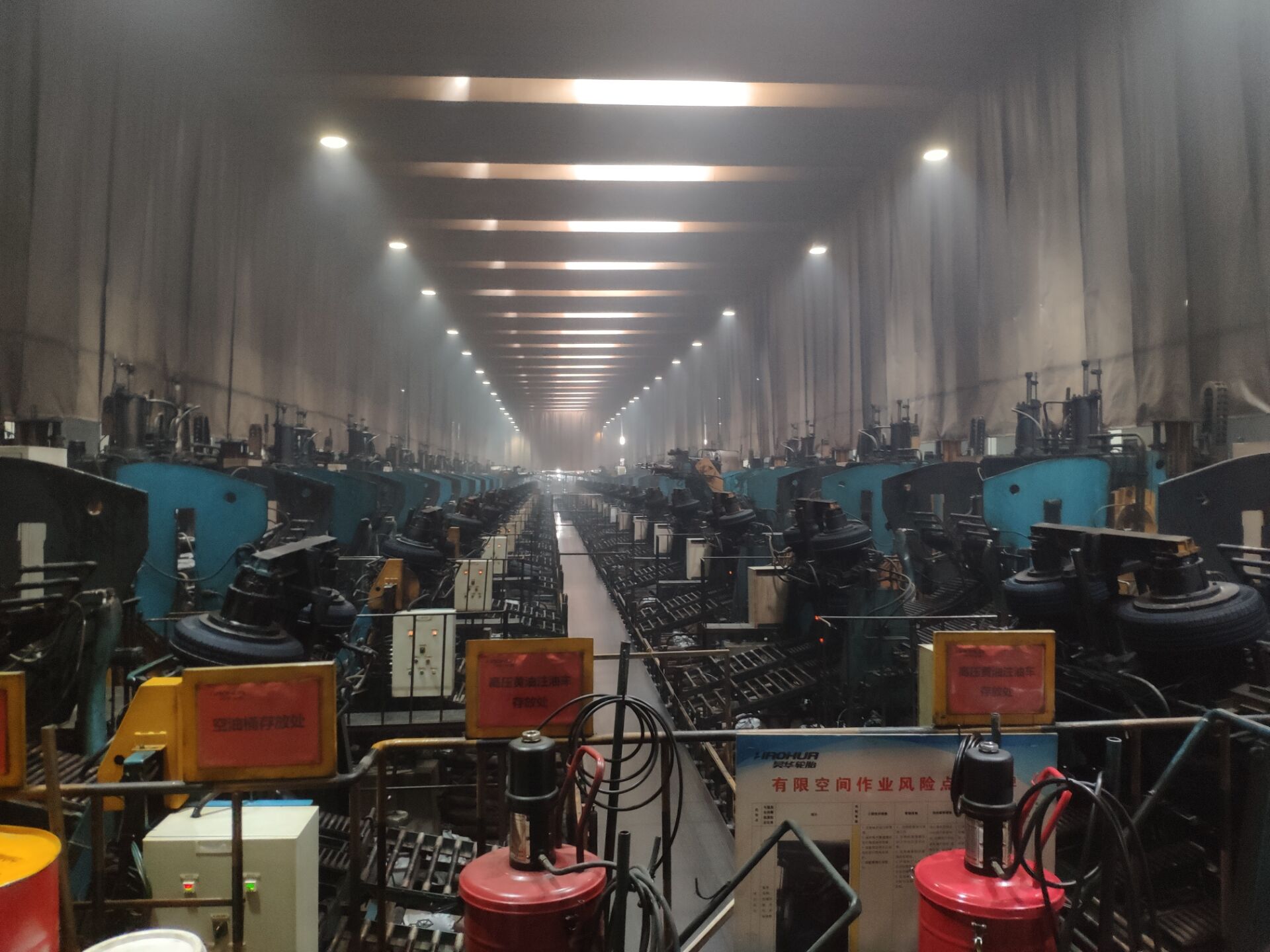
Vulcanization is where compound design becomes a finished passenger car tire; cure consistency is one of the material-level checks behind batch-to-batch stability.
A passenger car tire programme that runs three years or longer rarely fails on the first shipment. It fails when a size quietly leaves the catalogue, when a compound adjustment changes the feel of a SKU a fleet has already standardised, or when the supplier's route to market does not match the buyer's. For that reason, long-term supplier evaluation rests on three axes that sit after price has been settled: model breadth, material consistency and channel fit.
WIDEWAY is the brand of Shandong Wideway Tire Co., Ltd., a Chinese radial tire manufacturer founded in 2014 that designs and supplies passenger car, SUV, van, all-terrain, mud-terrain, winter and all-season tires under the WIDEWAY, EVERLAND and V-RICH brands. The company states that approximately 70% of its output is exported, with markets including Central and South America, Canada, the EU, Africa, the Middle East, Southeast Asia, Central Asia and Australia.
This evaluation is written from the buyer's side of the table. It sets out what to check, what the specification data already tells you, and where the limits of a breadth-and-materials argument begin.
Why model breadth is a continuity test, not a catalogue boast
A supplier's size list is usually read as a marketing claim. In a long-term agreement it is a continuity commitment: every additional size in a range is a mould, a compound specification, a test protocol and a stock line that has to be maintained for the life of the contract. Breadth only has value when the same supplier can hold it across seasons and rim bands.
The referenced model set for this evaluation spans 12-inch commercial-oriented sizes through 20-inch low-profile passenger sizes, and it mixes summer, all-season and winter/snow families:
| Group in the range | Models referenced | What the designation already tells a buyer |
|---|---|---|
| 12-inch commercial-oriented | 155R12C, 5.00R12 ULT | Smallest rim band in the set; the C marking denotes a commercial-duty size rather than a purely passenger fitment. |
| Van / light commercial line | SMARTWAY II | A distinct product line, normally evaluated side by side with 155R12C and 5.00R12 ULT in fleet programmes. |
| 15–16 inch passenger | 195/65R15, 205/55R16, 205/55ZR17 | Core replacement sizes; the Z in 205/55ZR17 indicates a higher speed category than the plain R designation. |
| 17–18 inch passenger | 215/45ZR17, 225/50ZR17, 225/45R18 | Wider, lower-profile applications that move a catalogue from economy replacement toward mid and upper segments. |
| 19–20 inch passenger | 235/55ZR19, 245/40R20 | Largest-diameter sizes referenced; these anchor tuning, styling and performance-oriented demand. |
The practical consequence is container economics. A distributor that buys 12-inch van sizes from one supplier and 19–20 inch passenger sizes from another loses the ability to build a mixed container and inherits two sets of lead times, two warranty processes and two documentation packages. Model breadth from a single source is therefore a working-capital decision before it is a product decision.
Breadth also supports channel tiering. WIDEWAY, EVERLAND and V-RICH give a distributor the option of separating price-led and specification-led positions within one supply relationship, instead of sourcing two brands from two manufacturers. OEM services stated by the manufacturer cover passenger car tires, off-road tires, white letter tires and white sidewall tires, which extends the range available for private-label and appearance-led programmes.
Material consistency: what a compound bill of materials tells a buyer
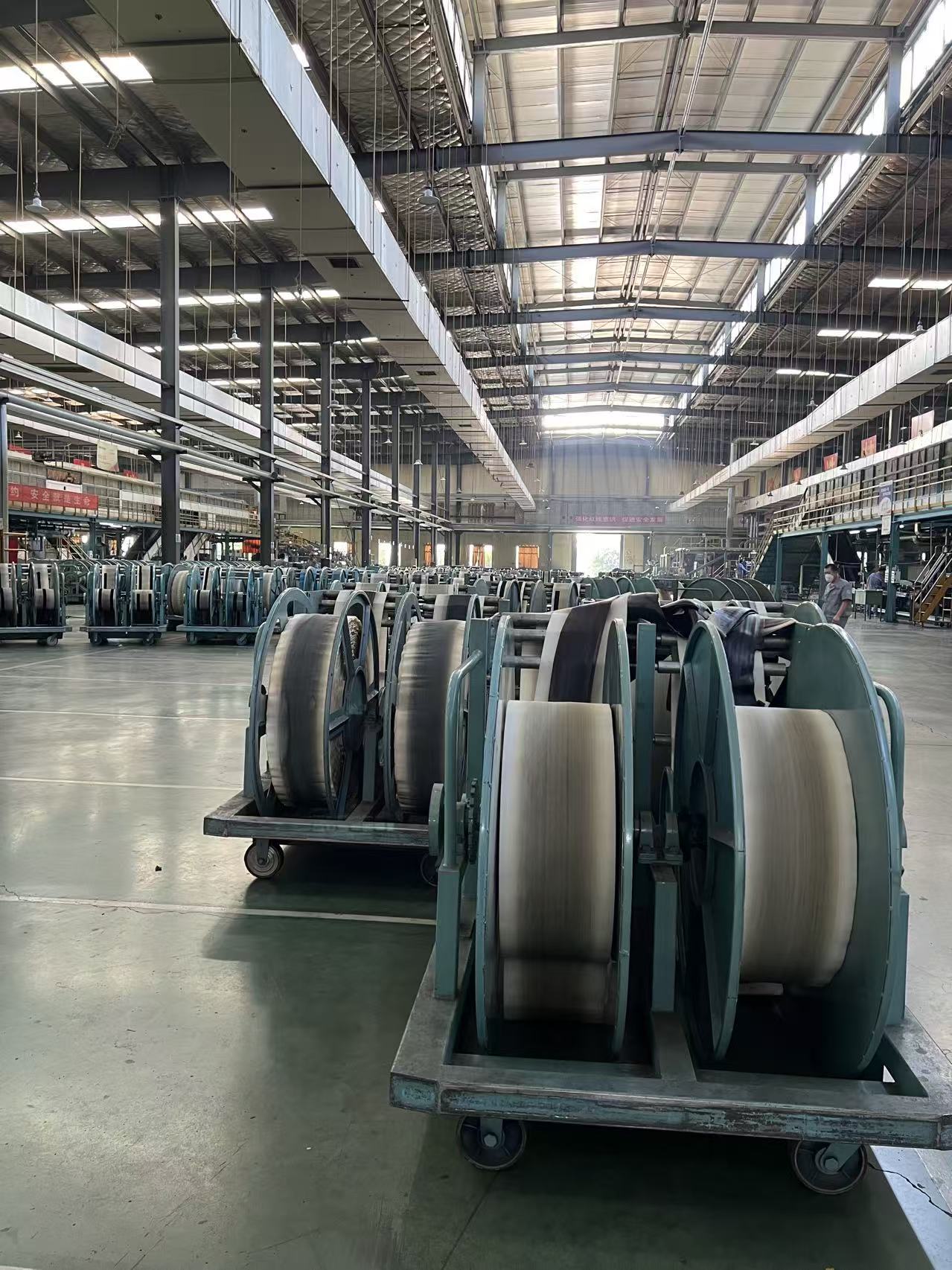
Compound inputs — natural rubber, synthetic rubber, carbon black, precipitated silica and vulcanizing agents — determine whether a repeated order behaves like the first one.
Tire specifications are written in numbers; tire consistency is delivered through materials. The material set associated with this passenger car tire range comprises natural rubber, synthetic rubber, carbon black, precipitated silica, steel cord, polyester/nylon cord fabric and vulcanizing agents. Each element carries a different risk if it changes between batches:
- Natural rubber contributes tack and tear behaviour; natural-origin variability is the classic source of batch drift, so grade control and incoming inspection matter more than the headline content percentage.
- Synthetic rubber supports compound stability and heat behaviour; substitution is often invisible on a databook but perceptible in ride and wear.
- Carbon black drives reinforcement and abrasion resistance — the material most directly linked to wear life on urban and high-mileage duty.
- Precipitated silica balances rolling resistance against wet grip, which is why it appears in low-noise and low-rolling-resistance development work.
- Steel cord carries casing strength and load capacity, and is the component behind load index claims such as 103 or 106/104.
- Polyester/nylon cord fabric governs dimensional stability and shape retention under load and heat.
- Vulcanizing agents set the cure state; small deviations here are the usual root cause of durometer variation between production lots.
Quality control in this supply chain follows 100% test standards. That statement answers the question of whether testing happens on every unit rather than by sampling, but it does not by itself answer the question a long-term buyer should be asking: what changes are permitted without notice?
A workable procurement rule is to require three documents per SKU: a material declaration listing the seven input families above, a written change-notification clause covering compound and cord substitution, and a retained-sample reference so that lot-to-lot comparison is possible at receipt. Buyers who skip the third item usually discover compound drift only when a fleet reports a comfort or wear complaint several months into the contract.
Reading the numbers: section width, load index, speed rating and pressure
Specification data across the referenced model set is narrow enough to be checked by hand, and wide enough to expose whether a buyer understands what it is buying.
| Parameter | Values referenced in the range | Why it matters to a long-term buyer |
|---|---|---|
| Section width | 184 mm to 233 mm | Fitment, clearance and steering feel; a width spread this wide means the supplier must hold several distinct casing platforms, not one. |
| Load index | 91, 103, 104/102, 106/104 | Axle load planning. Paired indices such as 104/102 and 106/104 denote different capacity for single versus dual fitment. |
| Speed rating | N, R, V, W | Sustained-speed and heat duty. Mixing ratings across a fleet standardisation programme is a specification error, not a cost saving. |
| Maximum pressure | 300 kPa, 450 kPa, 475 kPa | The ceiling marked on each SKU. The spread across the set reflects the difference between passenger casings and heavier-duty commercial casings. |
| Rim band | 12 inch to 20 inch | Determines whether one supplier can cover a full aftermarket catalogue or only a segment of it. |
| Season coverage | Summer, all-season, winter/snow | Seasonal lines are the first thing dropped when a supplier rationalises; confirm them contractually, not verbally. |
Designations themselves are not free-form. ETRTO's Standards Manual provides the tyre and rim dimension and designation reference used widely by European and international manufacturers, ISO 4000-1 specifies designation, dimensions and load ratings for metric-series passenger car tyres, and UN Regulation No. 30 provides the type-approval framework for pneumatic tyres for motor vehicles and their trailers. A buyer comparing two quotations is, in effect, comparing whether both suppliers are working from the same designation basis.
For fleets, the execution-level rule is simple: standardise on load index and maximum pressure per axle position, then treat every deviation as an exception requiring written approval. For distributors, the equivalent rule is to keep the paired-index sizes (104/102, 106/104) clearly separated in the catalogue, because a customer who fits a dual-fitment size in a single application has a load-capacity problem that will be blamed on the tire.
Channel fit: matching the route to market to the product line
Channel fit is the axis most often skipped in supplier evaluation, and the one most likely to erode a long-term agreement. The same range performs differently depending on who resells it.
| Channel | What the buyer actually needs | Reference models to anchor the discussion |
|---|---|---|
| Tire distributors / wholesalers | Full-range container loads and stable SKU availability across rim bands | 155R12C and 5.00R12 ULT through 235/55ZR19 and 245/40R20 |
| Aftermarket / retail chains | Breadth plus sellable packaging and promotional support | 195/65R15, 205/55R16, 205/55ZR17 and all-season lines |
| Repair shop chains | Fast-moving replacement sizes and fitting knowledge | 15–17 inch passenger sizes |
| Tire dealers | Local demand mix, styling-led options | White sidewall and white letter lines |
| Mobility / transportation services | Wear life, durability and predictable replacement cycles | 155R12C, SMARTWAY II, urban-duty passenger sizes |
| Taxi companies | High mileage, comfort and low noise on continuous duty | 195/65R15, 205/55R16, 205/55ZR17 |
| OEM matching | Specification discipline and documentation | OEM services stated for passenger car, off-road, white letter and white sidewall tires |
| Tuning | Appearance-led sizes and sidewall styling | White letter, white sidewall, 235/55ZR19, 245/40R20 |
Two channel facts change the evaluation outcome. First, the manufacturer states a minimum order quantity of one 20-foot container, approximately 400–700 pieces. That is workable for a distributor building a mixed container and awkward for a single-branch repair chain that wants a trial. Second, after-sales support includes tire quality warranty and custom promotional accessories — useful for retail chains and dealers, largely irrelevant to an OEM programme that is governed by specification documents instead.
Comparison with conventional construction — and where it stops being the right answer
The design position taken in this range differs from a conventional pattern and construction approach on several measurable dimensions. The figures below are the manufacturer's own comparative statements, not independent laboratory results, and should be read that way.
| Dimension | Conventional approach | Stated difference |
|---|---|---|
| Sidewall and shoulder | Standard sidewall rubber | Tougher sidewall rubber, extended shoulder rubber, advanced deflection design, silent absorber |
| Contact patch | Baseline tread width | +3% wider contact patch |
| Sidewall thickness | Baseline | +5 mm |
| Grip and driving stability | Baseline | +22% |
| Lifespan and safety margin | Baseline | +40% |
| Initial cost | Baseline | 10% higher |
| Total cost of ownership over 3 years | Baseline | 40% lower |
| Maintenance | Baseline | 90% less maintenance required |
The boundary conditions matter as much as the comparison. Four limitations should be written into any evaluation file:
- Higher unit cost, real cash impact. A stated initial cost 10% above a conventional equivalent is a working-capital constraint for distributors bidding on price-led tenders, even where the three-year total cost position is stated as 40% lower. The payback only materialises if the vehicle stays in service long enough to consume the tread life.
- Sidewall stiffening has a comfort side effect. A 5 mm thicker sidewall, extended shoulder rubber and a deflection-based design change ride behaviour. Buyers targeting comfort-led or low-noise-sensitive segments — including EV-oriented applications — should validate the specific SKU rather than assume the whole range behaves the same way.
- Risk reduction is not risk removal. The stated control for sidewall knots — cord breakage from pothole impact — is a thicker sidewall that reduces the risk of bulging, supported by quality testing and customer usage training. It reduces the probability of impact damage; it does not make a low-profile tire immune to a curb or a deep pothole.
- Breadth is a range statement, not a stock guarantee. Monthly production capacity is stated at 60,000 pieces with a typical lead time of 25–45 days. Buyers should confirm the allocation for their specific SKU mix before committing to a seasonal programme, because a broad catalogue does not automatically mean every size is available in every month.
Execution terms: what a signed long-term agreement should record
Once the evaluation moves from decision to execution, the commercial terms become the contract. The stated terms for this supply relationship are summarised below.
| Item | Stated term |
|---|---|
| Minimum order quantity | One 20-foot container, approximately 400–700 pieces |
| Delivery terms | FOB Qingdao |
| Production lead time | 25–45 days |
| Monthly production capacity | 60,000 pieces |
| Quality control | 100% test standards |
| Acceptance criteria | Pre-shipment test; third-party inspection (BV) |
| Payment terms | 30% T/T as deposit, 70% T/T against copy of B/L |
| After-sales | Tire quality warranty support; custom promotional accessories |
Market trend: why long-term terms are being renegotiated now
Three verifiable trends explain why buyers are shifting evaluation weight away from unit price and toward continuity and compliance.
Electrification is a specification problem before it is a marketing one. Grand View Research projects the electric vehicle segment within passenger car tires to grow at a CAGR of 11.2% through 2033. Because UN Regulation No. 117 governs approval with regard to rolling sound emissions, wet-surface adhesion and rolling resistance, the noise and grip claims attached to EV-oriented passenger car tires have a regulatory anchor rather than being purely descriptive. A supplier that cannot produce UN R117-related evidence per SKU will struggle in EV fleet tenders.
Trade intensity keeps pressure on supplier consolidation. Global tire imports under HS code 401110 totalled 1,065.6 million units in 2024, according to Radial Insights. With that volume moving across borders, buyers benchmark continuously and expect a single supplier to cover more of the catalogue — which is exactly what model breadth from 12-inch commercial sizes to 20-inch passenger sizes is designed to answer.
Labeling regimes keep tightening. In the European Union, Regulation (EC) No 1222/2009 established the tyre labelling framework for fuel efficiency, wet grip and external rolling noise, and has since been repealed and replaced by Regulation (EU) 2020/740. For suppliers, this means label data has to be regenerated per SKU when a compound or construction changes — a documentation obligation that belongs in the long-term contract, not in a brochure.
Future outlook
Two expectations are reasonable for buyers planning beyond the current cycle. First, homologation files will increasingly be requested at RFQ stage rather than after nomination: UN Regulation No. 30 type approval, UN Regulation No. 117 performance evidence and EU label data are becoming pre-qualification documents. Second, seasonal portfolio breadth will be screened earlier. Declared winter, summer and all-season coverage is already a standard segmentation practice among established manufacturers — Nokian Tyres, for example, states that its passenger car tyres business unit develops and manufactures winter, summer and all-season tires for passenger cars, SUVs and vans — and buyers increasingly use that coverage as a first filter before discussing price.
Neither expectation is a ranking, and neither substitutes for testing a specific SKU against a specific route mix. They simply describe where the evaluation burden is moving: from a per-unit comparison toward a documented, multi-year supply relationship.
For buyers who want to review the full model list, size coverage and product families before opening a supplier discussion, the manufacturer's catalogue is publicly available: EVERLAND CATALOG-2025 (PDF).
FAQ
What should a buyer measure first when evaluating a long-term passenger car tire supplier?
Start with three measurable items: whether the supplier can hold the sizes you actually sell across rim bands and seasons, whether it can document the material inputs behind each SKU, and whether its channel terms — minimum order quantity, lead time, warranty and promotional support — match how you resell. Stated terms here include a minimum order of one 20-foot container (approximately 400–700 pieces), a typical lead time of 25–45 days, monthly production capacity of 60,000 pieces, 100% test standards, and tire quality warranty support.
How does model breadth affect channel planning in practice?
Breadth determines how much of a catalogue can be sourced from one relationship. The referenced range runs from 12-inch commercial-oriented sizes (155R12C, 5.00R12 ULT) and the SMARTWAY II van line through 15–18 inch passenger sizes (195/65R15, 205/55R16, 205/55ZR17, 215/45ZR17, 225/50ZR17, 225/45R18) to 19–20 inch sizes (235/55ZR19, 245/40R20), plus winter/snow and all-season families. Distributors and retail chains benefit most from that spread; single-branch buyers are constrained by the container-level minimum order.
Which materials should a compound declaration cover?
For this range, the relevant input families are natural rubber, synthetic rubber, carbon black, precipitated silica, steel cord, polyester/nylon cord fabric and vulcanizing agents. Each affects a different performance area — carbon black and abrasion resistance, silica the rolling-resistance and wet-grip balance, steel cord load capacity, cord fabric dimensional stability, and vulcanizing agents the cure state. A declaration is only useful if it is paired with a written change-notification clause.
How should a fleet interpret load index and speed rating across this model set?
Load indexes referenced in this range include 91, 103, 104/102 and 106/104, with speed ratings N, R, V and W, and maximum pressures of 300, 450 and 475 kPa. Paired load indexes indicate different capacity for single versus dual fitment. The practical rule is to standardise on a load index and maximum pressure per axle position, never exceed the pressure marked on the sidewall, and treat any deviation as an approved exception rather than an interchangeable substitution.
Which certifications and standards should be verified before signing?
Wideway products are stated as ECE, DOT, GCC and REACH certified. The underlying references a buyer should expect to see are UN Regulation No. 30 for type approval of pneumatic tyres, UN Regulation No. 117 for rolling sound, wet-surface adhesion and rolling resistance, Regulation (EU) 2020/740 for EU tyre labelling, FMVSS No. 139 and the UTQG grading system for the United States, GB 9743 for China, and ETRTO and ISO 4000-1 for designation and dimensional reference.
What ordering, acceptance and payment terms apply?
The stated terms are a minimum order quantity of one 20-foot container (approximately 400–700 pieces), FOB Qingdao delivery, a typical production lead time of 25–45 days, acceptance based on pre-shipment testing and third-party inspection (BV), and payment of 30% T/T as deposit with 70% T/T against copy of B/L. Quality control follows 100% test standards, and after-sales support covers tire quality warranty and custom promotional accessories.
When is a reinforced, higher-cost construction the wrong choice?
When the vehicle will not stay in service long enough to consume the tread life, or when comfort is the dominant purchase criterion. The stated design position carries roughly 10% higher initial cost against a 40% lower three-year total cost of ownership, and the 5 mm thicker sidewall plus extended shoulder rubber changes ride behaviour. Buyers in comfort-led or low-noise-sensitive segments should validate the specific SKU rather than apply the range-level comparison to every size.
Есть вопросы или нужны дополнительные детали?
Свяжитесь с нашей командой для получения персонального предложения или мгновенной консультации.
Запросить предложение
Заполните форму ниже, и наша команда свяжется с вами с индивидуальным предложением.
Прямой чат WhatsApp
Предпочитаете общаться в реальном времени? Напишите нам в WhatsApp для мгновенной помощи и быстрых ответов.
- Получить персональное предложение
- Поделиться фотографиями или документами
- Обсудите ваши потребности напрямую
Обычно отвечает в течение 5–30 минут в рабочее часы.