
Long-Term Pharmaceutical Packaging Machine Suppliers: Sustainability Criteria
Long-Term Pharmaceutical Packaging Machine Suppliers: Sustainability Criteria
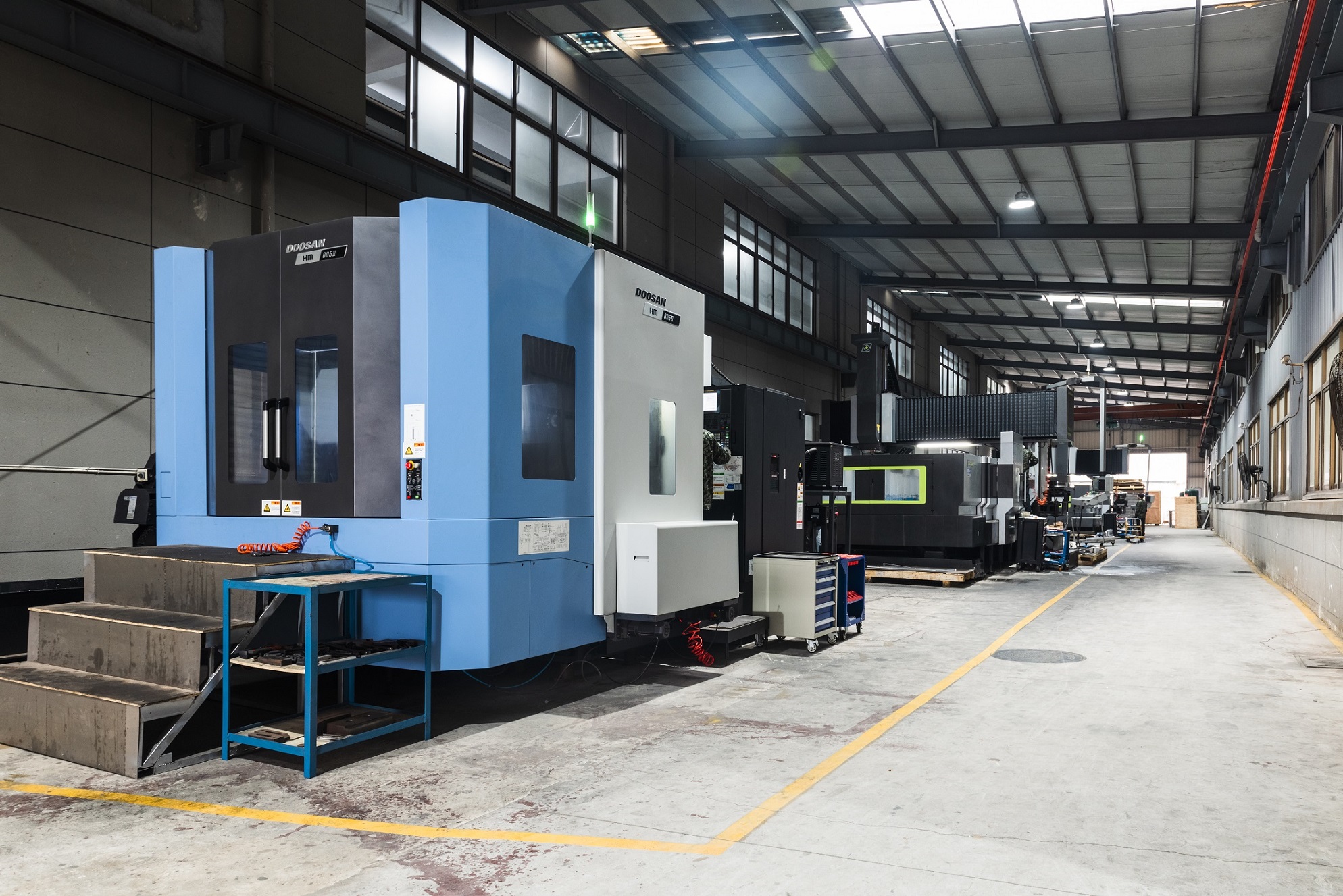
A blister-cartoning line is not purchased once. It is configured, validated, maintained, reformatted and audited for as long as the product it packs remains on the market, so the supplier decision usually outlives the purchase order by a wide margin. For buyers at the decision stage, that makes long-term supplier evaluation less a question of invoice value and more a question of which supplier can still answer technical, compliance and spare-part questions in year eight.
The pharmaceutical packaging equipment market was valued at approximately USD 10.71 billion in 2024, according to SkyQuest Technology. Published figures for the same period diverge mainly by scope: Grand View Research places the 2025 total at roughly USD 7.0 billion, largely because some studies include secondary and end-of-line equipment while others count primary packaging only. That gap is a useful starting point for procurement, because aggregate market numbers say very little about whether a specific supplier can sustain a specific line.
Zhejiang Hoping Machinery Co., Ltd. (Hoping Machinery) is a pharmaceutical packing machinery manufacturer established in 2001 in Ruian City, Zhejiang Province, China, producing blister packaging machines, cartoning machines, case packing machines and end-of-line packaging equipment. Its integrated blister-cartoning range, including the DHL8005H and DHL1000/5H models, provides a concrete reference for the evaluation criteria discussed below.
What Sustainability Criteria Mean in Pharmaceutical Packaging Procurement
In pharmaceutical packaging procurement, sustainability is a lifecycle term. It describes whether a supplier can keep a machine performing, compliant and serviceable over its full service life — not whether the machine carries an environmental label. Four dimensions carry most of the weight in a decision-stage review:
- Technical continuity. The motion control platform, mechanical architecture and format tooling remain supported and documented, so the line does not become an orphaned asset when a component generation changes.
- Compliance continuity. Declarations, test records and design documentation stay complete enough to support customer audits and re-qualification years after installation.
- Supply continuity. Wear parts, change parts and critical spares remain obtainable at predictable lead times.
- Support continuity. Commissioning, operator training, remote diagnostics and preventive maintenance planning remain available after the warranty period expires.
These dimensions are testable rather than rhetorical. ISO 15378 integrates GMP requirements for primary packaging materials, while the EN 415 series, operating under EU Machinery Directive 2006/42/EC, sets safety requirements for packaging machines. Together they give buyers a fixed external reference for what a supplier should be able to document, independent of the supplier's own sales material.
Why Initial Price Is a Weak Predictor of Ten-Year Cost
An integrated blister-cartoning line combines blister packaging, blister transfer, leaflet handling, carton opening, insertion, inspection/rejection and downstream connection into one automated process. Compared with a traditional configuration of a blister machine, manual transfer and a standalone cartoner, the integrated line reduces manual intervention and the intermediate handling that goes with it.
The trade-off is capital cost. Initial investment in an integrated line is usually higher than for standalone or semi-automatic equipment; the return comes from reduced labour, transfer, management and quality-risk costs in large-scale continuous production, not from a lower purchase price. Evaluating that trade-off requires knowing where the line will actually run, because real output depends on product format, quantity per carton, materials and process conditions rather than on a headline speed figure.
Market structure adds a second reason to look past brand recognition. The three largest blister packaging machine suppliers — Uhlmann, IMA and Marchesini — hold approximately 29% of the global market combined, which means most installed capacity is supplied by regional and specialist manufacturers. For those suppliers, longevity has to be evidenced rather than assumed.
A Six-Criterion Evaluation Framework
The framework below fixes the evidence standard for a decision-stage evaluation. Weighting is the buyer's own commercial decision; what matters is that each criterion is answered with a document, a test or a named reference rather than an assurance.
| Criterion | Evidence to request before contract | Consequence if unverified |
|---|---|---|
| GMP-oriented construction | Material grades for product-contact parts, cleaning access, tooling specification per technical agreement | Cleaning validation workload shifts to the buyer after installation |
| Compliance documentation | ISO 15378 alignment statement, CE file under Machinery Directive 2006/42/EC, EN 415 series conformity | Re-testing and re-documentation at the customer site |
| Product-contact parts and tooling | Tooling drawings, material grade, documented mold-change procedure | Format changes depend on unqualified third-party suppliers |
| Control architecture | Controller and industrial PC model, software version, parameter backup and restore procedure | Platform obsolescence without a migration path |
| Format flexibility | Preset-memory behaviour, access control, sample run on the buyer's product and material | Longer changeover and operator-dependent output |
| Lifecycle support | FAT/SAT protocol, training plan, spare-parts list, remote support terms | Downtime extends beyond the supplier's response capability |
Technical Continuity in Practice: Reading the Control and Changeover Layer
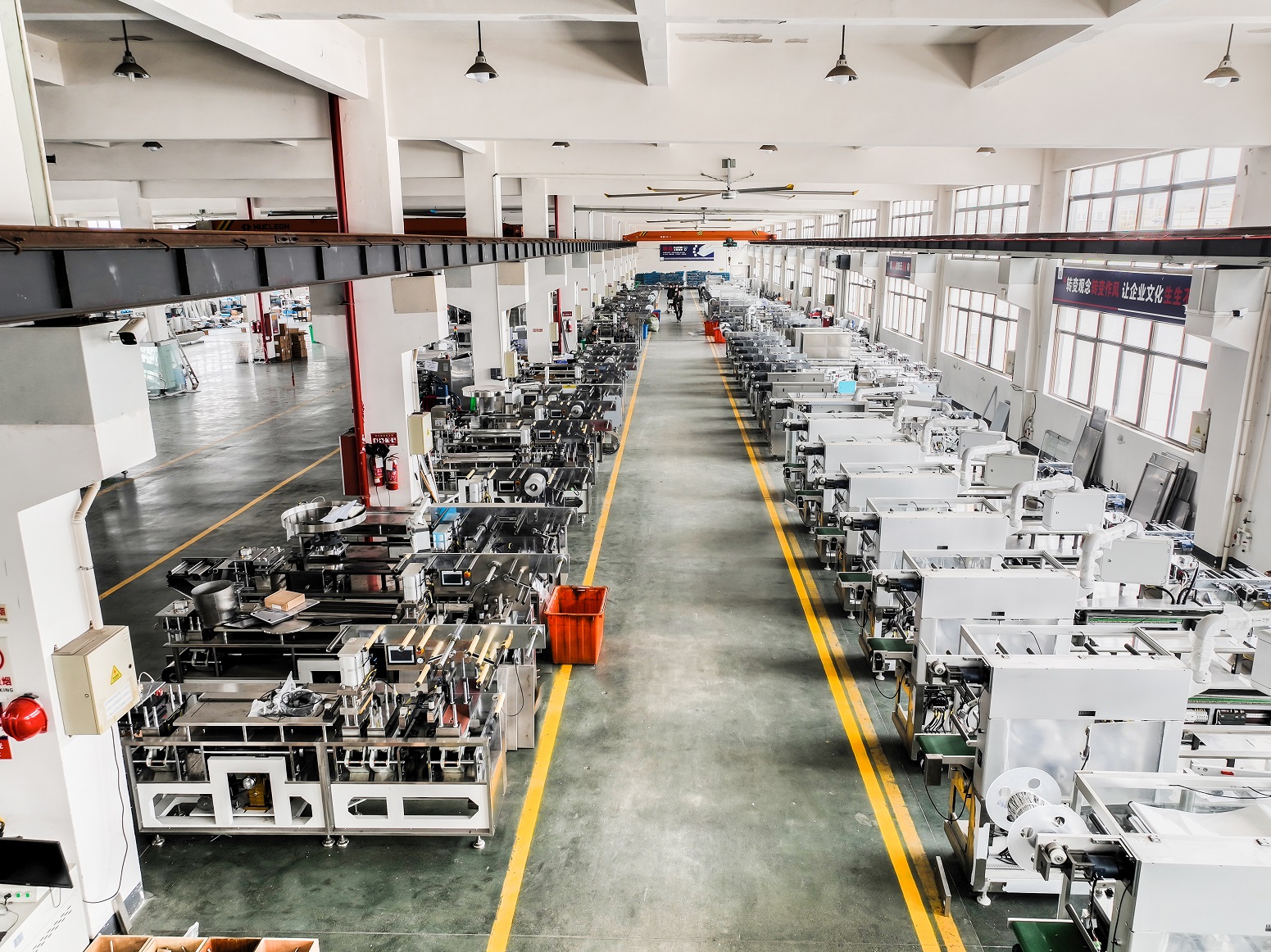
A supplier's long-term supportability is largely decided at the design stage, before commercial discussion begins. On the DHL8005H integrated blister-cartoning line, the motion layer is built on a Beckhoff motion controller paired with a CP9315 industrial PC, and the line is specified for up to 800 blisters per minute and 500 cartons per minute — with the qualification that actual output depends on product format, quantity per carton, materials and process conditions.
The control platform is a procurement question, not a technical footnote. A controller and industrial PC family with a broad installed base in industrial automation is generally easier to source, service and re-engineer over a ten-year horizon than a proprietary board set, and it allows a buyer's own maintenance team to build competence rather than depend permanently on the original supplier. Buyers should therefore ask for the exact controller and industrial PC model, the current software version, and the backup and restore procedure for machine parameters.
Servo-driven independent replenishment is the second design point to interrogate. Independent servo axes change how a line behaves when a single station stops, so the question to put to a supplier is specific: what happens to the rest of the line when one replenishment station faults, and which alarm and recovery steps are documented? PVC and aluminium foil auto splicing addresses the same theme from the material side, since automatic reel splicing is intended to reduce manual film handling and the downtime that accompanies a reel change; supported reel dimensions and material specifications should be confirmed rather than assumed.
Mold-change and preset-memory functions determine what a format change costs in labour time. Preset memory allows parameters for an already-qualified format to be recalled rather than re-entered, which matters for both changeover speed and run-to-run consistency. Because a changed preset is a changed process parameter, buyers should ask how presets are access-controlled, whether edits are logged, and how a validated recipe is locked against unintended changes.
Capacity should be matched rather than maximised. Hoping Machinery's DHL1000/5H reference model reaches up to 1000 blisters per minute and 500 cartons per minute, while the DHL8005H is specified at up to 800 blisters per minute and 500 cartons per minute. For a buyer, the relevant question is which configuration matches the carton-count and batch-size profile of the actual product portfolio, not which number is larger.
Application Fit: Where an Integrated Blister-Cartoning Line Belongs
Integrated blister-cartoning lines are built for large-scale solid dosage pharmaceutical packaging and for high-capacity workshops that need reduced manual contact between primary and secondary packaging. The process chain is the reason: blister packaging, blister transfer, leaflet handling, carton opening, insertion, inspection/rejection and downstream connection run as one automated sequence rather than as separate islands.
- Blister forming and sealing for tablet and capsule formats, including PVC and aluminium foil material combinations
- Automatic blister transfer into the cartoner, removing the manual tray and transfer step
- Leaflet handling, carton opening and insertion
- Inspection and rejection, so non-conforming units are removed before downstream handling
- Downstream connection to secondary and end-of-line equipment such as case packers
Because the line is a continuous chain, the weakest station sets the practical ceiling. That is why a supplier's capability across cartoning, blister, flow wrapping and end-of-line equipment is more informative than performance at a single station: multi-format, multi-stage experience is what a buyer relies on when a new product format has to be absorbed into an existing line.
Compliance Continuity: Documentation That Must Survive an Audit
Compliance is where long-term evaluation is easiest to get wrong, because what matters is not whether a certificate exists on the day of delivery but whether the supporting documentation can still answer questions later. ISO 15378, which integrates GMP requirements for primary packaging materials, and the EU framework of Machinery Directive 2006/42/EC with the EN 415 series define the baseline for pharmaceutical packaging machinery placed on the European market.
Hoping Machinery's published company profile describes the company as a Chinese manufacturer of integrated blister cartoning lines and end-of-line packaging systems holding CE and ISO 9001/14001 certifications. For evaluation purposes, the useful next step is not the certificate itself but the technical file behind it: product-contact material declarations, electrical and safety design records, software version records, and the test documentation produced before shipment.
Supplier Capability Evidence to Collect Before Contract
Capability evidence should answer a single question: can this supplier still respond in year five? Hoping Machinery was established in 2001 and operates a 28,800 ㎡ facility with more than 300 employees, including an R&D team of 56 engineers, and reports an annual output of 500 units. Approximately 25% of production is exported, with main markets in Southeast Asia, the Middle East, Eastern Europe, South America and Africa.
The portfolio covers blister packaging machines, cartoning machines, case packing machines and end-of-line packaging machines, alongside flow wrappers, bundlers, palletizers and complete blister lines. Documented intellectual property includes 26 invention patents, 70 utility patents, 4 appearance patents, 10 PCT-protected filings and 28 software copyrights.
Process evidence is more decision-relevant than catalogue breadth. Hoping Machinery's stated project controls cover sensor monitoring, missing-product alarms, automatic stop and rejection, key-parameter locking, fault records and mechanical safety protection, together with FAT/SAT acceptance and SOP training. Samples and packaging materials are confirmed at the early project stage, the solution is designed around the buyer's blister and carton formats, no-load and material tests are run before shipment, and installation, commissioning, training, spare parts and remote technical support follow delivery — with customer witness acceptance available for key projects.
Where Integrated Blister-Cartoning Lines Have Limits
An integrated blister-cartoning line is not the right answer for every pharmaceutical packaging project, and a supplier evaluation that ignores boundary conditions is not a long-term evaluation.
- Initial investment is usually higher than for standalone or semi-automatic equipment, so payback depends on sustained, high-volume production.
- Real output depends on product format, quantity per carton, materials and process conditions; headline blister and carton speeds should be read as configuration limits, not forecasts.
- Fully servo-driven, centrally controlled lines concentrate complexity. Modular stations, alarm indication and parameter management make routine maintenance manageable, but operator training, spare-parts management and preventive maintenance remain necessary rather than optional.
- Energy consumption should be measured on site against actual output, running hours and configuration, not inferred from the drive architecture alone.
- A sustainable supplier relationship is not a self-sufficient one: the buyer retains responsibility for SOPs, trained operators and preventive maintenance discipline.
Market Trend Analysis: Regional Supply and Concentration
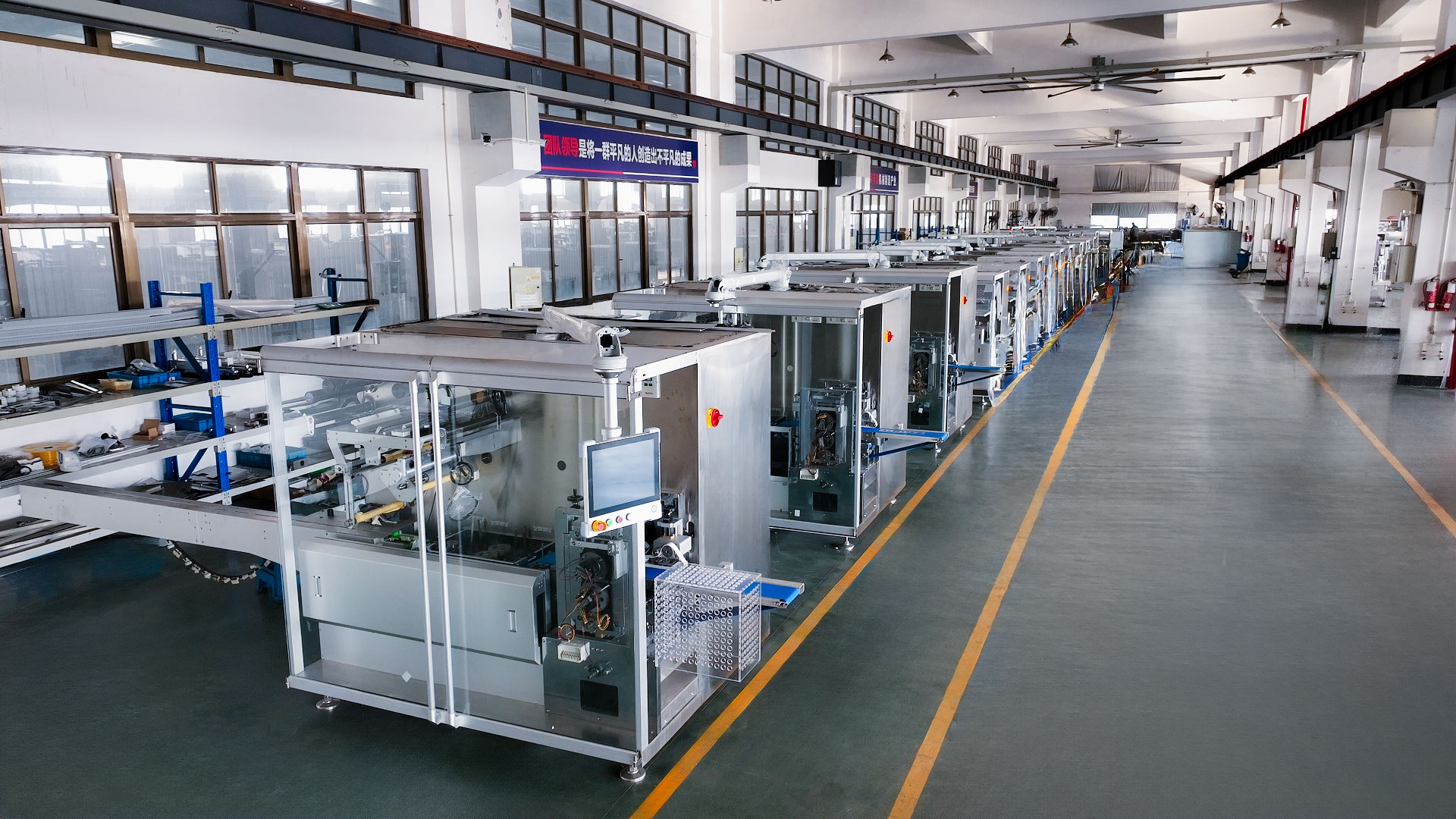
Regional supply is shifting the evaluation baseline. Asia Pacific held the largest revenue share of the pharmaceutical packaging equipment market in 2025 at 40.7%, according to Grand View Research, and the pharmaceutical cartoning machinery segment alone was valued at USD 1.46 billion in 2024 by Fortune Business Insights. Set against a market in which the top three blister packaging machine suppliers hold approximately 29% between them, the picture is one of a fragmented supplier base with strong regional centres.
For buyers, fragmentation cuts both ways. More suppliers mean more competitive configurations and shorter lead times; they also mean that capability varies widely between companies that describe themselves in similar terms. That is precisely the gap a criteria-based evaluation is designed to close, and it is why documentation and service evidence carry more weight at the decision stage than a supplier's self-description.
Future Outlook
Two procurement shifts are likely to define the next evaluation cycle. First, control-platform continuity is moving from a maintenance topic into a tender criterion, as buyers ask for controller models, software versioning and parameter backup procedures before they ask for speed. Second, parameter and preset management is becoming part of the quality record rather than a machine setting, which raises the value of logged, access-controlled recipes on changeover-heavy lines.
Regional supply will continue to expand alongside these expectations. Suppliers that can evidence documentation, tooling support and service continuity — and not only throughput — are the ones positioned for longer relationships in pharmaceutical packaging, where changing a line supplier mid-lifecycle carries re-validation and re-training costs of its own.
FAQ
What does sustainability mean when evaluating a pharmaceutical packaging machine supplier?
In this context it refers to lifecycle sustainability: the supplier's ability to sustain technical, compliance and service performance over the life of the line. It covers technical continuity of the control platform and tooling, compliance continuity of documentation such as ISO 15378 alignment and CE files under Machinery Directive 2006/42/EC, supply continuity of wear and change parts, and support continuity for training, spares and remote diagnostics.
How should a buyer verify GMP-oriented construction in a blister-cartoning line?
Request the construction details that relate to cleaning and contamination control: material grades for product-contact parts, cleaning access, surface specifications, and the tooling specification agreed in the technical agreement. These should be documented rather than described verbally, because they determine how much cleaning validation work the buyer carries out after installation. Documented control measures such as sensor monitoring, missing-product alarms, automatic rejection, key-parameter locking and fault records are equally relevant to a GMP-oriented assessment.
What control-system evidence should be requested before selecting a supplier?
The exact controller and industrial PC model — on the DHL8005H line this is a Beckhoff motion controller with a CP9315 industrial PC — together with the current software version, the parameter backup and restore procedure, and the alarm handling logic. This information indicates whether the control platform can be maintained, diagnosed and migrated over a long operating life rather than replaced as a unit.
How do mold-change and preset-memory functions affect long-term operating cost?
Both functions address changeover. Preset memory allows parameters for an already-qualified format to be recalled instead of re-entered, which shortens changeover and reduces operator-dependent variation between runs. The long-term questions are access control and versioning: how presets are locked, whether changes are logged, and how a validated recipe is protected from unintended edits.
What spare-parts and lifecycle support information should be confirmed before contract?
A spare-parts list with lead times, identification of wear parts, a training plan for operators and maintenance staff, and the terms of remote technical support after the warranty period. FAT/SAT acceptance arrangements, pre-shipment no-load and material tests, and customer witness acceptance for key projects are also worth fixing in the contract rather than agreeing later.
How does an integrated blister-cartoning line compare with a standalone blister machine plus cartoner?
An integrated line combines blister packaging, blister transfer, leaflet handling, carton opening, insertion, inspection/rejection and downstream connection into a single automated process, which reduces manual intervention compared with a blister machine, manual transfer and a standalone cartoner. Integrated lines usually require higher initial investment, and the return depends on production scale, because actual output is governed by product format, quantity per carton, materials and process conditions.
Hoping Machinery publishes a technical catalog covering blister packaging machines, cartoning machines, case packing machines and end-of-line packaging equipment, available for reference and download: Hoping Machinery Catalog (PDF).