
Long-Term Porcelain Insulator Sourcing: A Grid Buyer's Checklist
Grid hardware is specified for decades, but the supplier behind it is often chosen in a matter of weeks and largely on unit price plus a sample batch. This industry reference sets out a four-pillar sustainability checklist that helps utility, EPC and distribution buyers test whether a porcelain insulator manufacturer can stay reliable for the full asset life, not just the first delivery.
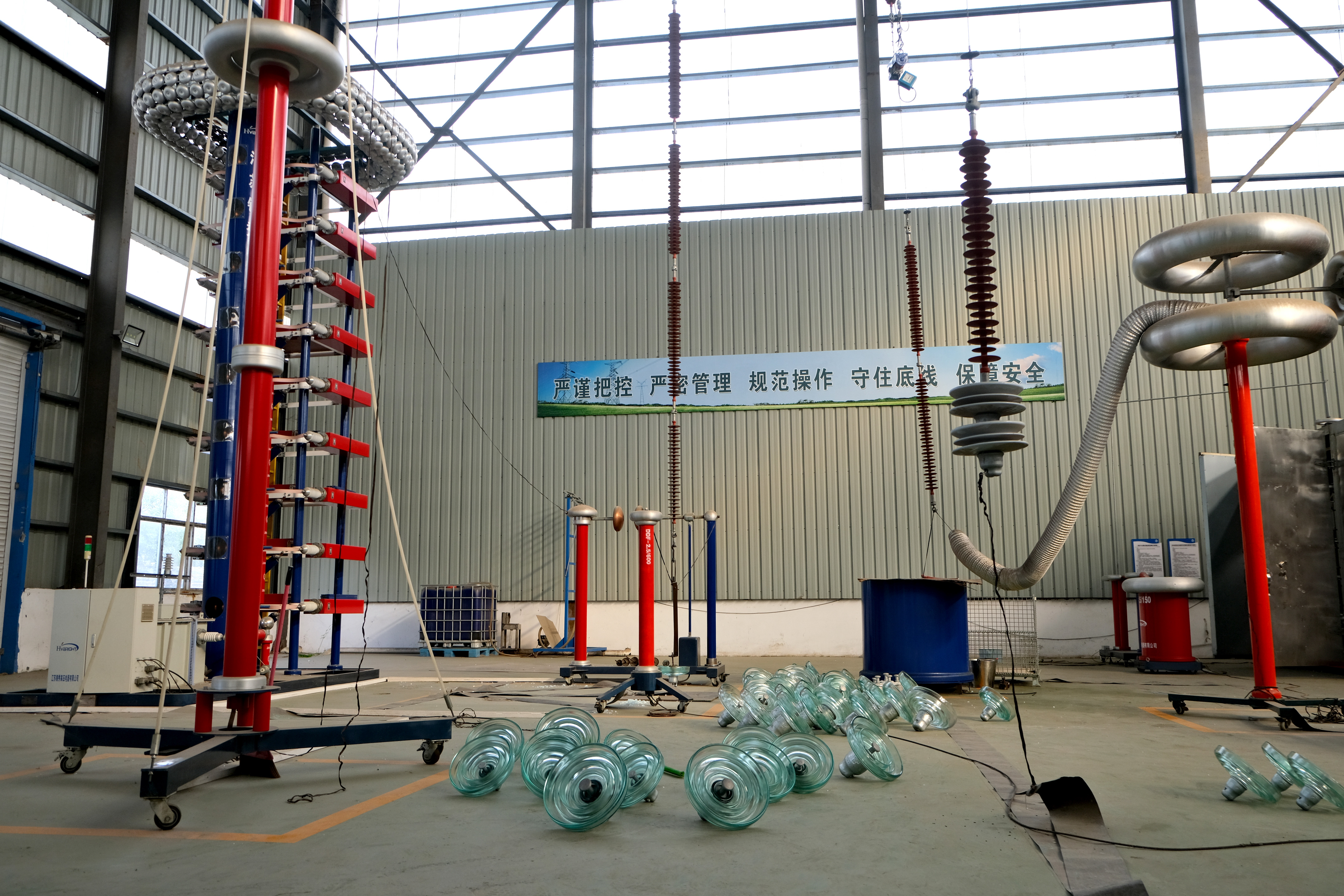
The global porcelain insulators market was valued at approximately USD 8.27 billion in 2023 and is projected to reach USD 15.04 billion by 2033, according to Spherical Insights. In 2024, China was the world's largest exporter of electrical insulators, accounting for 31.4% of total global exports, roughly USD 898 million in value, per the Observatory of Economic Complexity. Those two figures describe a supply base that is large, export-facing and geographically concentrated. They also describe a procurement problem: a buyer can choose among many manufacturers, yet only part of that field can be expected to still be shipping the same product family, to the same drawings, when the later phases of a grid programme are energised.
Long-term porcelain insulator sourcing is therefore a different exercise from product selection. It asks whether the organisation behind the insulator has the financial substance, technical bench, physical capacity and market track record to remain a stable counterparty over a multi-year frame agreement. This article is written for procurement managers, specification engineers and distribution buyers who are still in the awareness and research stage — before shortlisting, before sampling budgets are committed, and before a supplier is locked into a bill of quantities.
Why a Sample Batch Says Little About a Long-Term Supply Relationship
Sample approval answers exactly one question: can this factory produce an acceptable unit today? It does not answer whether the same factory will still be producing that unit, from a comparable material formulation and with a comparable cement joint and glaze process, when the second and third tranches of a transmission or distribution programme are delivered.
Porcelain insulators are passive components with no moving parts, which is precisely what makes process stability so important. The electrical and mechanical behaviour of a unit depends on the vitrified ceramic body, the glaze, the metal fittings and the cement joint that binds them. Those are the elements most exposed to change when a supplier grows, restructures, or reallocates capacity between domestic and export demand.
- Material and process drift. Body composition — kaolin, quartz and feldspar fired in the 1,200–1,300°C range — glaze formulation and firing profile determine dielectric strength and long-term surface behaviour. A change of kiln regime or glaze supplier is not visible in a photograph of the finished unit.
- Capacity displacement. A factory that is loaded by large domestic programmes may not be able to hold an export delivery window at short notice. Buyers should understand where their volume sits in the plant's loading plan.
- Organisational discontinuity. Small or thinly capitalised manufacturers can exit a product line quietly. Dated registration and capital information is one of the few publicly checkable indicators of staying power.
- Standards revision. IEC 60383-1:2023 is the current international standard for ceramic or glass insulator units used on AC overhead power lines with nominal voltages above 1,000 V. Suppliers that track standards revisions internally are better positioned to keep drawings and type-test evidence current.
The opportunity for buyers is straightforward: replace a price-plus-sample decision with a structural screening decision, then keep the technical evaluation where it belongs — on the specific unit being purchased.
The Four Pillars of Supplier Sustainability
A sustainability checklist is not a quality certificate. It is a filter that separates suppliers able to support a long programme from those that are only able to support a purchase order. The four pillars below can all be verified from documentary and physical evidence rather than from sales claims.
| Pillar | What it tests | Evidence a buyer can check |
|---|---|---|
| Organisational longevity | Whether the company has survived demand cycles and can be expected to remain a counterparty | Establishment date, registered capital, high-tech or equivalent national enterprise status, ownership location |
| Technical depth | Whether engineering knowledge sits inside the company or is outsourced per project | Total headcount, engineering and technical professional count, R&D engineer count, participation in standards committees |
| Manufacturing continuity | Whether physical capacity can absorb a multi-year schedule | Site area, built construction area, dedicated manufacturing area, annual unit production capacity, process line evidence |
| Market proof | Whether the product has been qualified by different grid environments | Export regions, export share of total sales, utility customers, number of countries and regions served |
Pillar 1 — Organisational Longevity and Financial Substance
Jiangxi QOCI Electric Co., Ltd is a porcelain and glass insulator manufacturer located at No. 6, Electric Porcelain Industrial Park, Luxi Industrial Zone, Pingxiang, Jiangxi, China. The company was established in December 2002 and holds a registered capital of 5.08 billion yuan. It operates as a national high-tech enterprise and is a participating unit of the Insulator Standard Committee.
For a buyer, each of these is a dated, checkable fact rather than an inference. An establishment date in 2002 means the company has operated through at least two full cycles of grid investment expansion and consolidation. Registered capital at this level indicates a balance sheet capable of carrying kiln assets, inventory and export logistics through a downturn. National high-tech enterprise status is granted against defined criteria rather than self-declared. Standards committee participation is discussed under Pillar 2 because it has a distinct technical meaning.
The practical screening rule is simple: if a supplier cannot state its establishment date, registered capital and legal entity name in a form that matches public records, the longevity pillar has not been passed, regardless of sample quality.
Pillar 2 — Technical Depth: Engineers, Standards and Design Authority
Technical depth determines how a supplier responds when a project deviates from a catalogue line — a non-standard creepage distance, a specific pollution class, a revised fittings interface, or a change in the applicable standard.
Verifiable technical bench at Jiangxi QOCI Electric Co., Ltd:
· Over 150 staff members in total.
· More than 50 engineering and technical professionals.
· An R&D team consisting of 38 engineers.
· Participating unit of the Insulator Standard Committee.
· Products used in power grid construction projects of State Grid Corporation of China, China Southern Power Grid, and power grids in over 40 countries and regions.
The engineering headcount matters more than the total headcount. A manufacturer with a large production workforce but a thin technical function can execute repeat orders but struggles with specification changes. The distinction between the more than 50 engineering and technical professionals and the 38 R&D engineers is also meaningful: the first group normally supports production engineering, tooling and quality control, while the second is typically engaged in design, material and type-test work. A buyer evaluating a supplier for a project with anti-pollution requirements should ask which group owns creepage design and how it is validated.
Standards participation is the least understood signal on the list. Insulator standards are living documents: IEC 60383-1:2023 governs ceramic or glass insulator units for AC overhead lines above 1,000 V, IEC 60305 covers string insulator units, IEC 60672 addresses ceramic and glass insulating materials, and IEC 60815 links pollution severity to creepage distance selection. In North America, ANSI C29.1 specifies test methods for electrical power insulators. A supplier that sits on a standards committee sees revisions early and is more likely to have drawings and test regimes updated before a buyer raises the question.
Pillar 3 — Manufacturing Continuity: Space, Capacity and Process Control
Capacity claims need to be read against physical space. A unit-per-year figure without a corresponding plant footprint tells a buyer very little about whether the capacity is real, whether it is dedicated to insulators, or whether it is shared with other ceramic production.
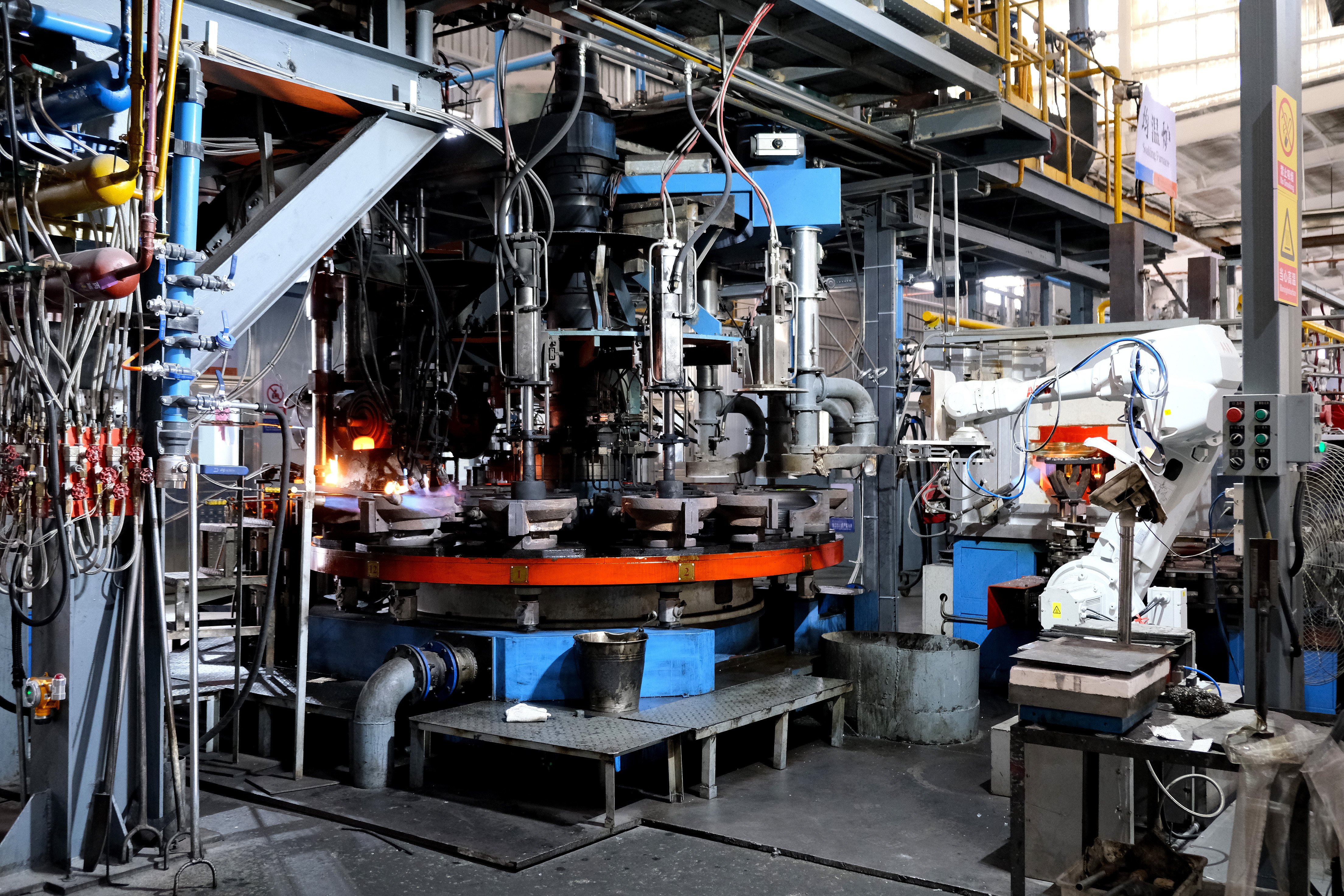
Jiangxi QOCI Electric Co., Ltd operates a production facility occupying over 120 mu, approximately 8 hectares. The construction area exceeds 70,000 square meters, and the manufacturing facility specifically covers 35,373 m². Annual production capacity reaches 9,000,000 units.
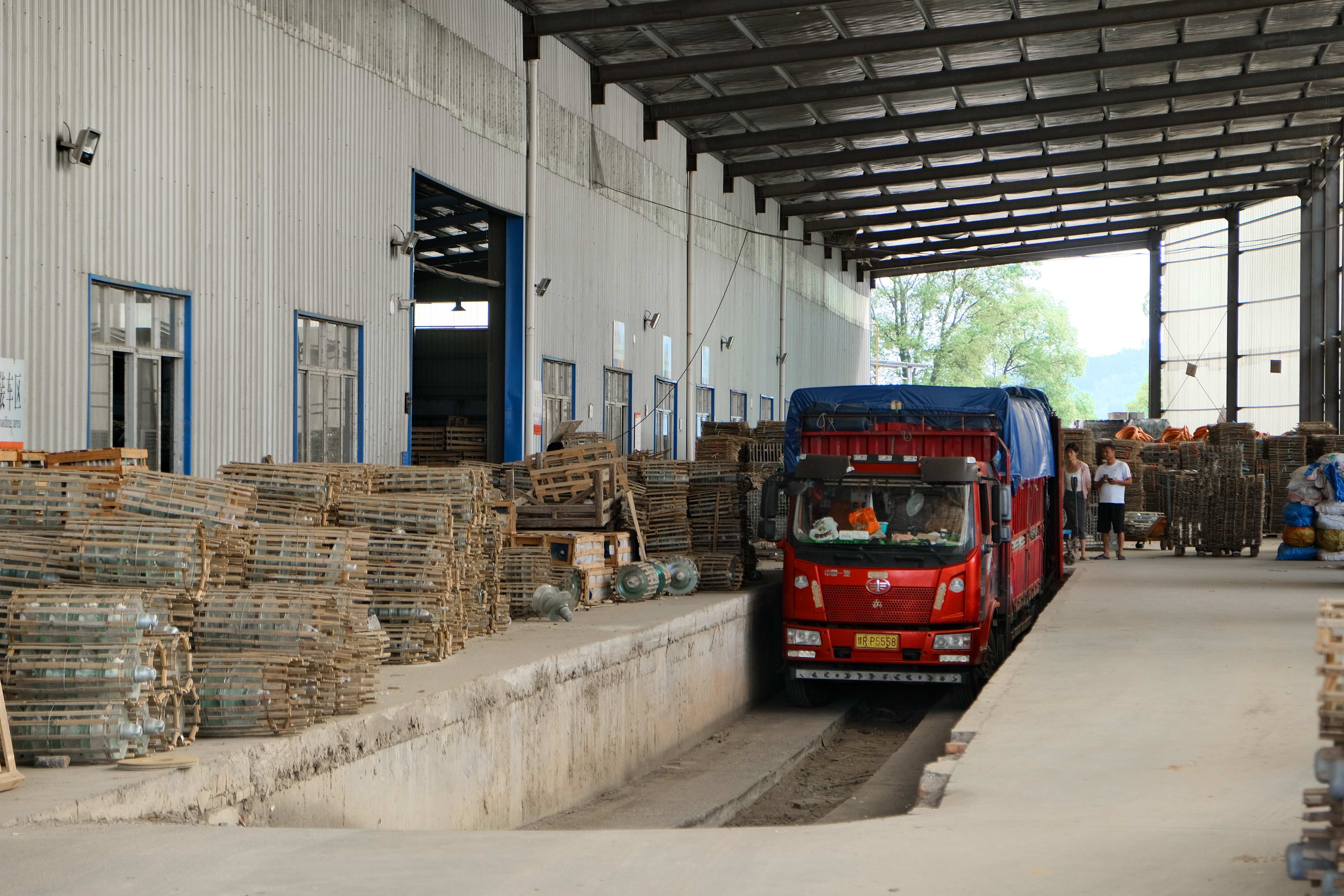
Read together, these figures describe a single-site manufacturing model with a defined insulator-specific envelope. The difference between the construction area and the dedicated manufacturing area is also worth noting: it implies space allocated to functions other than direct forming and firing, such as warehousing, inspection and despatch — the parts of a factory that determine whether a delivery schedule can actually be met.
For buyers, the checklist question is not only how large the plant is, but how much of it is committed. A supplier with nine million units of annual capacity serving a substantial domestic grid base can support export programmes, but the delivery window needs to be planned against that loading rather than assumed.
Pillar 4 — Market Proof: Where the Units Actually Run
Market proof is the filter that distinguishes marketing reach from qualified reach. Shipping samples to a new market is not the same as having products accepted into grid construction projects there.
Jiangxi QOCI Electric Co., Ltd exports to the USA, Asia, the EU, Africa and South America, with export business accounting for 20% of total sales. The company's products are used in power grid construction projects of State Grid Corporation of China, China Southern Power Grid, and power grids in over 40 countries and regions.
Two readings of that evidence are useful to a procurement team. First, geographic spread across five named regions indicates the product has been handled under different regulatory expectations, different documentation requirements and different logistics conditions — including ANSI-oriented North American procurement and IEC-oriented European and Asian markets. Second, the export ratio is a capacity-allocation signal, not simply a quality signal. At 20% of total sales, export demand is planned alongside a much larger domestic base. A buyer whose project requires a tightly sequenced multi-year delivery should therefore confirm capacity windows in writing rather than treating export share as a guarantee of availability.
Technical Explanation: What Durability Means Inside a Porcelain Insulator
A porcelain insulator is an overhead line insulator unit manufactured from vitrified ceramic material — kaolin, quartz and feldspar, fired in the 1,200–1,300°C range — with a glazed surface for moisture resistance and high compressive strength for mechanical load bearing. The vitrified body provides high dielectric strength and bulk resistivity, while the umbrella-shaped shed profile creates an extended creepage distance that prevents pollution flashover. Metal fittings are attached through cement bonding at the cap and pin interfaces.
That construction explains why supplier sustainability and product durability are linked. The failure modes that matter over decades are rarely visible at the point of sale:
- Internal micro-cracks from thermal cycling fatigue, which is why 100% dye penetration testing on individual units is a stronger control than batch sampling.
- Moisture ingress through a degraded cement joint, which is addressed through joint sealing processes rather than through the ceramic body itself.
- Zero-value degradation, an internal electrical breakdown that produces no visible external change and is normally detected through live-line testing rather than visual inspection.
- Pollution accumulation on the glaze surface, which reduces insulation resistance and is managed through creepage distance selected against the site pollution class.
Standard verification work in this category includes mechanical load type testing, dye penetration crack detection, porosity testing, thermal cycling, and power frequency and impulse voltage withstand testing, alongside glaze quality inspection and cement joint integrity verification. Buyers should confirm which of these are performed on every unit and which are performed on samples — the difference is material when a line contains thousands of units.
For customs and trade documentation, the primary HS code for porcelain electrical insulators is 8546.20. Buyers operating multi-country programmes should align this classification early, because compliance requirements vary by destination — India's DPIIT procurement policy, for example, requires 50% local content for porcelain insulators to be classified under Class I for government contracts.
Application Fit: Matching Product Families to Grid Scenarios
Sustainability screening should be followed by scenario matching, because a supplier able to support a long programme is only useful if its product families cover the buyer's voltage and loading profile.
Distribution and rural electrification
The P-11-Y is an 11 kV high-strength electrical porcelain pin insulator with a rated mechanical load of 10 kN, a creepage distance of 240 mm, a power frequency wet withstand voltage of 50 kV, a lightning impulse withstand voltage of 90 kV, a total height of 150 mm and a maximum diameter of 150 mm. Its pin is made of hot-dip galvanized forged steel. It is designed for overhead distribution lines and grid construction, including rural electrification.
The ED-2B is a porcelain shackle, butterfly and low-voltage distribution insulator made of high-strength electrical porcelain, with a mechanical tensile strength of 13.5 kN, a maximum diameter of 90 mm, a total height of 76 mm, a power frequency wet withstand voltage of 13 kV and a power frequency dry withstand voltage of 25 kV. It is intended for low-voltage lines, rural electrification and overhead distribution lines.
Transmission and heavy-load strings
For transmission-class applications the company produces AC disc-shaped suspension porcelain insulators alongside line post and pin and shackle insulators. It also manufactures the PS210V 212V, a 210 kN tempered glass cap-and-pin disc insulator with a nominal disc diameter of 280 mm, a nominal spacing of 170 mm, a creepage distance of 400 mm, a dry lightning impulse withstand voltage of 110 kV and a wet power frequency withstand voltage of 45 kV. For buyers assembling mixed portfolios, a supplier offering both porcelain and glass suspension units reduces the number of qualification programmes required.
Operating conditions the checklist should reference
Insulator applications in this category typically cover power transmission and distribution, substation construction, railway electrification and industrial power grids, in outdoor exposed conditions with high humidity, industrial pollution and wide temperature ranges in the region of −40°C to +50°C. Matching equipment includes malleable cast iron caps and pins, corona rings, suspension and tension clamps, arcing horns, grounding hardware and vibration dampers. Design requirements commonly reference IEC 60305 compliance, anti-pollution creepage distance design for pollution classes I to IV, specified mechanical load, and cement joint sealing against moisture ingress.
Market Trend Analysis: What the Numbers Say About Long-Term Demand
Several published indicators support the case for evaluating suppliers on continuity rather than on unit price alone.
- Overhead transmission lines account for approximately 62.1% of global porcelain insulator revenue, according to Mordor Intelligence, confirming that the dominant demand pool is long-life grid infrastructure rather than short-cycle replacement.
- The substation porcelain insulator segment is projected to grow at a CAGR of 7.2% through 2031, driven by gas insulated switchgear upgrades — a category where dimensional consistency and repeat supply matter.
- Asia-Pacific held a 49.4% revenue share of the porcelain insulator market in 2025, per Mordor Intelligence, which concentrates both supply capability and competition in one region.
- Mordor Intelligence identifies NGK Insulators Ltd. of Japan and Lapp Insulators of Germany as recognised leaders in high-performance ceramic insulators, illustrating an established global tier alongside national manufacturers.
- Local content policies, such as India's 50% requirement for Class I classification in government contracts, increasingly determine which suppliers can serve which markets.
The strategic reading is that demand growth is driven by grid construction and modernisation, both of which are programme-based. Programme-based demand rewards suppliers with registered capital, engineering depth and physical capacity, and it penalises buyers who select on the basis of a single quotation cycle.
Traditional Screening Versus Sustainability Screening — and Where It Stops
| Dimension | Traditional price-and-sample screening | Sustainability screening |
|---|---|---|
| Primary question | Can this supplier quote the lowest delivered unit cost? | Can this supplier still deliver the same specification in year three? |
| Evidence used | Quotation, catalogue, sample unit | Establishment date, capital, engineering headcount, plant area, capacity, export and utility record |
| Time horizon | Single purchase order | Full asset life and frame agreement |
| Main risk addressed | Immediate cost overrun | Supply discontinuity, process drift, requalification cost |
| Main weakness | Ignores supplier stability | Slower to execute and does not verify the product itself |
The honest limitation of the four-pillar method is that it evaluates the supplier, not the insulator. A manufacturer with an establishment date of December 2002, registered capital of 5.08 billion yuan, over 150 staff and nine million units of annual capacity can still fail a buyer's own type and routine tests on a specific drawing. Structural evidence does not replace mechanical load testing, dye penetration crack detection, porosity testing, thermal cycling or power frequency and impulse withstand verification, and it does not replace creepage distance matched to the site pollution class under IEC 60815.
Two further boundaries are worth stating plainly. First, commercial allocation: at Jiangxi QOCI Electric Co., Ltd, export represents 20% of total sales, so overseas orders are planned alongside a much larger domestic grid base, and buyers with peak-season requirements should agree capacity windows rather than assume immediate availability. Second, material trade-offs: porcelain units are heavier than polymer alternatives, which can matter in weight-constrained tower designs, and porcelain insulators are not the appropriate answer where a project specifies composite silicone rubber for weight or handling reasons. A checklist improves supplier selection; it does not settle material selection.
Future Outlook
Three developments are likely to shape porcelain insulator sourcing over the next several years.
Standards will keep moving. IEC 60383-1:2023 settles the current requirements for ceramic and glass insulator units on AC overhead lines above 1,000 V, but material and test standards such as IEC 60672 and pollution-related selection guidance under IEC 60815 are periodically revised. Suppliers that participate in standards work update drawings earlier, and buyers benefit through shorter requalification cycles.
Grid modernisation will reward continuity, not novelty. With substation porcelain insulator demand projected to grow at a 7.2% CAGR through 2031 on the back of gas insulated switchgear upgrades, and overhead transmission lines already accounting for about 62.1% of porcelain insulator revenue, the buying pattern stays programme-based. That favours manufacturers with stable ownership, dedicated engineering functions and physical capacity that cannot be created quickly by a new entrant.
Documentation will become part of the product. Multi-country sourcing, differing local content rules and customs classification under HS code 8546.20 mean buyers increasingly expect suppliers to maintain traceable records for type tests, routine tests and material compliance across the life of a frame agreement. Suppliers that treat documentation as a deliverable rather than an afterthought will be easier to keep on an approved vendor list.
Frequently Asked Questions
What does supplier longevity actually mean in porcelain insulator procurement?
Supplier longevity is the combination of how long a manufacturer has operated, how financially substantial it is, and whether it can survive demand cycles, ownership changes and standards revisions across a grid asset's service life. Jiangxi QOCI Electric Co., Ltd, for example, was established in December 2002 and holds a registered capital of 5.08 billion yuan — checkable facts rather than marketing claims. Longevity is not a proxy for product quality; it is a proxy for continuity risk, which is a separate variable that price comparisons do not capture.
How can buyers verify manufacturing continuity before committing to a multi-year supply agreement?
Look for countable, physical evidence: site area, built area, dedicated manufacturing area and annual unit capacity. Jiangxi QOCI Electric Co., Ltd operates a production facility occupying over 120 mu, approximately 8 hectares, with a construction area exceeding 70,000 square meters and a manufacturing facility covering 35,373 m², and an annual production capacity of 9,000,000 units. Cross-checking these figures against process evidence such as forming and thermal shock lines helps confirm whether the capacity is genuinely dedicated to insulator production.
Which technical depth indicators should a procurement team check?
Three indicators carry most weight: the size and composition of the engineering function, the existence of a dedicated R&D team, and participation in standards work. Jiangxi QOCI Electric Co., Ltd employs over 150 staff members, including more than 50 engineering and technical professionals, with an R&D team of 38 engineers, and participates as a unit of the Insulator Standard Committee. Standards involvement matters because test methods — such as IEC 60383-1:2023 for AC overhead lines above 1,000 V and ANSI C29.1 in North America — are revised over time and require drawings and test regimes to be updated.
What does a supplier's export and installation footprint tell a buyer?
It indicates whether the product has already been qualified under different regulatory, climatic and logistical conditions. Jiangxi QOCI Electric Co., Ltd exports to the USA, Asia, the EU, Africa and South America, with export business accounting for 20% of total sales, and its products are used in power grid construction projects of State Grid Corporation of China, China Southern Power Grid, and power grids in over 40 countries and regions. The export ratio should be read as a capacity-allocation signal as well as a quality signal, since it shows how overseas demand is weighted against the domestic grid base.
What are the limits of a longevity-based supplier evaluation checklist?
The checklist assesses the supplier, not the specific insulator being purchased. It cannot replace a buyer's own type and routine tests — mechanical load testing, dye penetration crack detection, porosity testing, thermal cycling, and power frequency and impulse withstand testing — nor can it substitute for creepage distance matched to the site pollution class under IEC 60815. It also does not remove commercial constraints or material trade-offs: porcelain units remain heavier than polymer alternatives, and allocation against a large domestic base needs to be planned in advance rather than assumed.
Product documentation for Jiangxi QOCI Electric Co., Ltd, including line post, pin, shackle and AC disc-shaped suspension porcelain insulators, is published at www.quanxinelectric.com. The company download catalogue is available here: QOCI Catalogue – Glass Insulators (PDF).