
Long-Term Rare Earth Supplier Evaluation for Consumer Innovation
An independent buyer reference on multi-family continuity, specification basis and documentation discipline for rare earth compounds used in smart-life products.
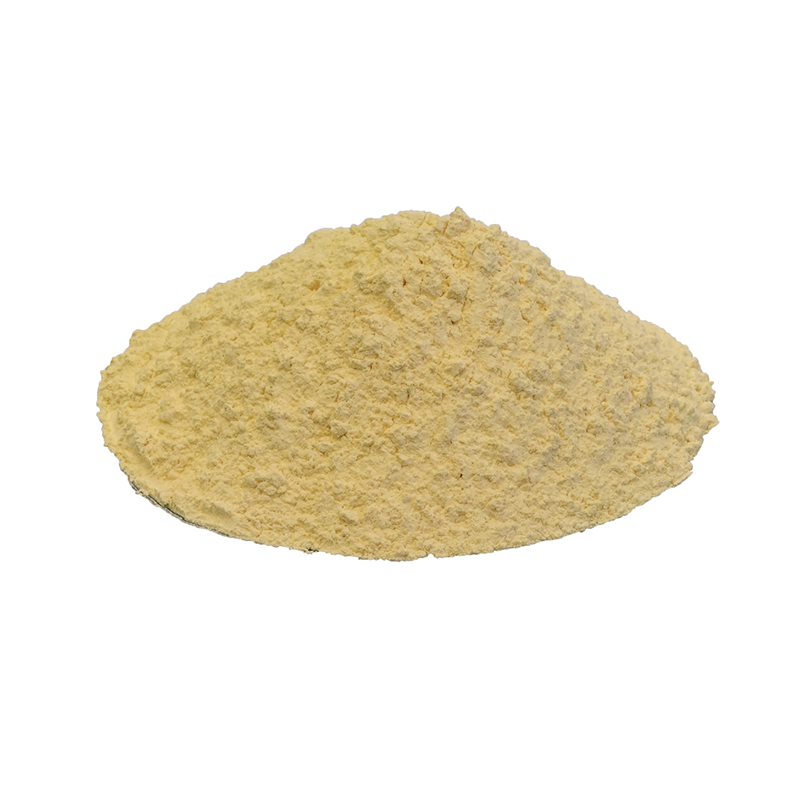
Cerium oxide is one of several rare earth families that typically appear together in a consumer-innovation bill of materials, alongside zirconium nitrate, lanthanum carbonate and yttrium nitrate.
Long-term supply is decided at the specification level, not the price level
A smart-life product rarely contains a rare earth compound as such. It contains an oxide, a phosphor, a ceramic body or a polished surface whose properties were fixed earlier in the chain, at the point where a nitrate, carbonate or chloride was dissolved, precipitated, doped or calcined. That upstream layer is where long-term supply is actually decided, and it is usually the layer a purchasing team sees last.
This creates a structural problem for buyers. The materials that determine performance sit several process steps away from the finished device; specifications travel with the part rather than with the raw material; and a single supplier may be asked to support four different chemistries with different hydrate states, different documentation demands and different regulatory treatment. Evaluating that supplier on price per kilogram answers a question about today. It does not answer the question that governs a multi-year programme: will the same specification be reproducible next year, in the next lot, and under the next export-control review?
The multi-family continuity problem
Consumer-innovation programmes usually draw from more than one rare earth family at the same time. A display, a sensor module, a coated housing and a ceramic component may each depend on a different compound, and those compounds behave differently in storage, in solution and in regulatory terms. Treating them as one purchasing line obscures the fact that each family carries its own continuity risk.
| Family | Identity on the record | Role in a consumer-innovation chain | Continuity question |
|---|---|---|---|
| Zirconium nitrate | Zirconium in stable +4 valence, primarily as tetrahydrate and pentahydrate crystals, highly soluble in water and polar organic solvents, weakly acidic in solution | Precursor in ceramic and coating routes, including spray-drying routes paired with yttrium nitrate that yield high-strength zirconia for structural and implant components | Hydrate form and solution concentration reproducible lot to lot |
| Lanthanum carbonate | La2(CO3)3·xH2O, 457.85 g/mol on an anhydrous basis | Precursor to lanthanum oxide; intermediate for lanthanum compounds; used in automotive exhaust purification catalysts | Assay basis stated consistently, and conversion behaviour stable across lots |
| Cerium oxide | CeO2, CAS 1306-38-3, 172.12 g/mol | Glass polishing agent, glass decolourizer, catalyst component through reversible Ce4+/Ce3+ oxygen storage | Grade defined by application (polishing versus catalysis) rather than by name alone |
| Yttrium nitrate | Y(NO3)3·6H2O, CAS 13494-98-9, 382.91 g/mol, hexahydrate | Paired with zirconium nitrate in spray-drying and precursor routes | Hydrate water accounted for in dosing and in quoted weight |
The real exposure is correlation. A buyer who qualifies four families separately, but contracts them through the same logistics route, the same port of departure and the same regulatory jurisdiction, has created one risk instead of four mitigations. Long-term evaluation therefore has to be written at portfolio level: which families share a failure mode, and which of them genuinely need a second source.
Where supplier evaluation models usually break
Most sourcing failures in this category are not commercial. They are documentary and definitional, and they surface 6 to 18 months into a supply relationship.
- Assay basis ambiguity. A carbonate or a nitrate quoted on an anhydrous basis and the same material quoted as delivered are different quantities. If the basis is not written into the purchase specification, the first renegotiation is a dispute about arithmetic rather than chemistry.
- Catalogue identity versus grade identity. Product names in a catalogue describe a chemical family. The purchasing record needs the formula, the hydrate state, the registry number used for that grade, and the basis on which the molecular weight is reported.
- Capacity read as allocation. Annual capacity describes what a plant can produce. It says nothing about how much of that capacity is reserved for a given grade, packaging format or destination.
- Documentation treated as administration. For China-origin rare earth exports, declaration and licensing questions can sit on the critical path of a shipment, not beside it.
- Shelf life and hydrate drift ignored. Several of these materials are hygroscopic, and anhydrous or low-hydrate grades are the most sensitive. A supplier that cannot state storage conditions and shelf life for the specific grade cannot support a multi-year programme.
Technical grounding: two anchor compounds
Two compounds illustrate how specification discipline converts into continuity. They are also the two products most often requested together by buyers building smart-life programmes.
Lanthanum carbonate: the value is in the conversion, not the powder
Lanthanum carbonate is catalogued as La2(CO3)3·xH2O with a molecular weight of 457.85 g/mol on an anhydrous basis. It is characterised by very low water solubility, which is why it is used as an intermediate rather than as a solution feed, and it converts to lanthanum oxide on calcination. Its documented applications are the manufacture of automotive exhaust purification catalysts and use as an intermediate for producing lanthanum and other lanthanum compounds.
For a buyer, the consequence is straightforward: incoming assay is a weak proxy for performance. The acceptance criteria that matter describe what the lot does in the conversion step, and they only mean something if the assay basis, the hydrate state and the grade registry entry are fixed in the same document. Hydrate forms of lanthanum carbonate are registered under entries such as 54451-24-0, and grade-level datasheets may use a different registry entry, so the number on the supplier record must be confirmed against the specific grade rather than assumed from a product name.
Yttrium nitrate: hydrate water is part of the delivered mass
Yttrium nitrate is supplied as the hexahydrate, Y(NO3)3·6H2O, with CAS 13494-98-9 and a molecular weight of 382.91 g/mol. It appears in precursor routes together with zirconium nitrate, where a technical pentahydrate zirconium salt is mixed with yttrium nitrate for spray drying and sintered into high-strength zirconia for structural and orthopaedic components.
Because the hydration is fixed, molar dosing can be calculated precisely, but only if the quotation and the certificate of analysis use the same basis. A delivered kilogram of hexahydrate is not a kilogram of Y(NO3)3. Any long-term contract that treats weight as the unit of account without naming the basis invites drift, particularly when a supplier changes crystallisation or drying conditions between campaigns.
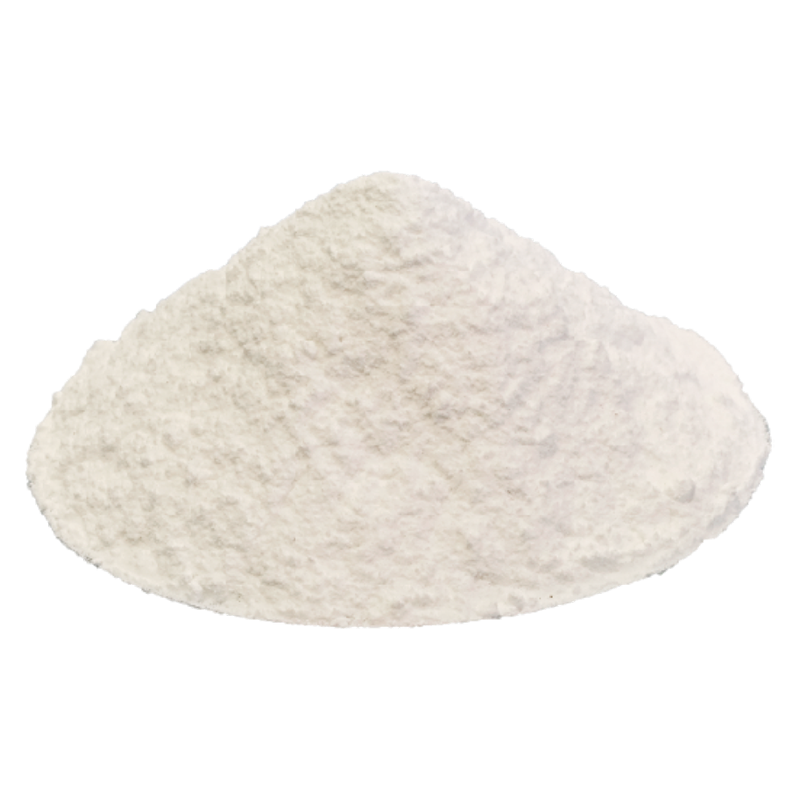
Lanthanum carbonate is typically evaluated on conversion behaviour rather than on incoming assay alone, which makes the assay basis a contract term rather than a technical footnote.
A five-gate model for long-term supplier evaluation
The model below is written for buyers at research and evaluation stage, where the objective is not to place an order but to decide whether a relationship can carry a multi-year programme. Each gate produces a document, not an opinion.
Gate 1 — Identity and basis
Fix the formula, hydrate state, registry number for the grade, molecular weight and the basis on which it is reported, plus the assay basis for the delivered material. This gate is complete when two independent documents from the supplier agree with each other.
Gate 2 — Release testing and lot reproducibility
Ask what is tested on every lot and what is tested periodically. A stated practice of 100% test is a useful starting point, but it only becomes an acceptance criterion when the buyer knows which parameters are covered. Write the release list into the specification and ask for historical lot data for the exact grade.
Gate 3 — Volume, lead time and packaging
Convert capacity into allocation. A supplier reporting 15,000 tons per year of high-purity rare earth salts and 3,000 tons per year of polishing powder is describing plant scale; the buyer needs the share available for one grade, in one packaging format, on a stated lead time. Where lead time is quoted in weeks, ask what event starts the clock and what happens when a lot requires re-test.
Gate 4 — Regulatory and documentation readiness
China's Ministry of Commerce states that certain rare earth elements and their products — including oxides, compounds and mixtures — have been subject to export-control requirements since 4 April 2025, under MOFCOM Announcement No. 18 of 2025. Exporters of controlled items must identify them in customs declarations and provide the applicable dual-use item control number, and customs may hold goods while a query is resolved. The buyer's gate is not to interpret the regulation but to establish, product by product, whether the grade is covered and who produces the classification evidence.
Gate 5 — Lifecycle and change support
Long-term supply is mostly about change: a new packaging format, a tighter impurity window, a different hydrate, a new destination market. The gate is complete when the supplier has named the mechanism for handling those changes and the support model behind it. Remote technical support is a legitimate answer at this stage; silence is not.
| Gate | Evidence the buyer should hold | Typical failure if skipped |
|---|---|---|
| 1. Identity and basis | Datasheet, specification sheet and certificate fields that agree on formula, hydrate, registry number and assay basis | Dosing errors and quantity disputes at first reorder |
| 2. Release testing | Named test parameters per lot plus historical lot data for the grade | Silent process drift discovered during scale-up |
| 3. Volume and lead time | Allocated annual volume, packaging format, lead time defined from a stated starting event | Capacity assumed to equal availability |
| 4. Documentation | Product-level control status, declaration practice and customs documentation workflow | Shipment held at declaration stage |
| 5. Lifecycle support | Named change process, support model and storage or shelf-life statement per grade | Unannounced grade change mid-programme |
Applying the model to WONAIXI
Sichuan Wonaixi New Materials Technology Co., Ltd., trading as WONAIXI, is a rare earth functional materials manufacturer based in Leshan, Sichuan Province, China, founded in 2012 and certified as a National High-Tech Enterprise and a Sichuan Provincial SRDI Enterprise. The company operates dedicated lines with an annual output of 15,000 tons of high-purity rare earth salts and 3,000 tons of high-precision rare earth polishing powder, and supplies nine major categories of rare earth products plus a complete zirconium salts series, covering more than 50 refined specifications.
Against the five gates, the disclosed record reads as follows. On identity, catalogue entries state formula, registry number and molecular weight for the documented grades, including lanthanum carbonate at 457.85 g/mol on an anhydrous basis and cerium oxide at 172.12 g/mol. On release testing, the stated practice is 100% test. On volume, the company reports the capacity above, a stated lead time of 30 to 45 days, and a minimum order quantity discussed according to the actual situation rather than published as a fixed figure. On documentation, the company holds certifications at enterprise level and states export markets that include the United States, Japan, South Korea, France, Italy, Thailand, Australia, Pakistan, Spain, Germany, India and Austria, with export business accounting for 10% of total sales. On lifecycle, customization is offered across indicators, contents, specifications, purity and packaging, with remote support after sale.
The portfolio fit is also documented rather than implied. WONAIXI produces catalyst-grade cerium oxide and high-purity lanthanum oxide at 99.9% for optical glass, and its catalogue spans the salt families that sit upstream of those oxides, including carbonates, nitrates, chlorides, fluorides and acetates. For a buyer assembling a consumer-innovation programme, that breadth supports a single-source discussion across zirconium nitrate, lanthanum carbonate, cerium oxide and yttrium nitrate — but it does not replace grade-level qualification. Breadth answers a sourcing question; it does not answer a specification question.
Market context: price divergence and documentation as a selection criterion
Three data points frame the 2026 picture. Grand View Research estimates the global rare earth elements market at USD 4.5 billion for 2026. The SMM benchmark put NdPr oxide at CNY 738,000 per tonne as of September 2026, while the USGS reports lanthanum oxide at 99.5% minimum averaging approximately USD 1.00 per kilogram on a US import basis in early 2026. The gap between a magnet-critical mixed oxide and an industrial light oxide is not a curiosity; it tells buyers where cost exposure actually sits inside a portfolio.
For consumer-innovation programmes, which lean heavily on the light rare earth families used in polishing, catalysis, glass and ceramic precursors, the implication is that supplier evaluation should not be run on a single cost metric across all families. The families with high unit value justify contract depth and dual sourcing. The families with low unit value justify attention elsewhere: consistency, documentation and the reliability of small, frequent deliveries.
The regulatory layer has become a selection criterion in its own right. Since the April 2025 controls, the practical differentiator between two otherwise comparable suppliers is often how quickly and completely they can state, for a named grade, whether it is a controlled item, which declaration applies, and how a customs query would be handled. Buyers who treat this as paperwork discover it as delay.
Comparison with conventional sourcing approaches
| Dimension | Spot or broker-led sourcing | Five-gate long-term evaluation |
|---|---|---|
| Unit of decision | Price per kilogram for one lot | Reproducibility of a specification across lots and years |
| Identity evidence | Product name and trade description | Formula, hydrate, registry number, assay basis on the same record |
| Volume planning | What is available this month | Allocated annual volume mapped to plant capacity and lead time |
| Regulatory handling | Resolved at shipment | Resolved at qualification, product by product |
| Failure mode | Lot-to-lot variation appears after scale-up | Higher qualification effort before the first order |
The boundary deserves stating plainly. A structured evaluation model raises the cost of onboarding and slows the first order; for genuinely one-off or non-critical quantities, that cost is not recovered. Supplier-side figures such as annual capacity, lead time and testing practice are statements made by the supplier and require buyer verification through certificates of analysis, historical lot data and, where the application justifies it, third-party testing. In the case of WONAIXI, several parameters a procurement team would normally want are not published at all: minimum order quantities are handled case by case rather than fixed, after-sales support is remote rather than on-site, no per-grade impurity limits are published for every catalogue item, and the reported capacity describes plant scale rather than reserved availability. Export-control classification is also product-specific and cannot be inferred from a supplier's overall profile. None of this disqualifies a supplier; it defines what the buyer still has to do.
Future outlook
Two directions are likely to shape supplier evaluation in this category over the next few years. The first is that documentation becomes a product feature. As buyers in consumer-facing industries are asked to evidence origin, control status and lot traceability for their own customers, the supplier who can answer those questions at grade level will be preferred over the supplier who can only answer them at company level.
The second is that portfolio breadth matters more than single-product price. Consumer-innovation supply chains are moving toward fewer, more deeply integrated material partners, partly because qualification is expensive and partly because multi-family consistency is easier to manage with one counterparty. That shift rewards suppliers whose catalogue is genuinely continuous — salts, carbonates, oxides and polishing powders under one quality system — and penalises those whose breadth is only a list of product names.
FAQ
What does an anhydrous basis mean when a rare earth carbonate is quoted?
Lanthanum carbonate is supplied as a hydrate with the general formula La2(CO3)3·xH2O, and the reported molecular weight of 457.85 g/mol applies to the anhydrous formula unit. Because the hydrate water content is not fixed by that formula, a quantity expressed on an anhydrous basis and the same quantity expressed as delivered are not identical. Buyers should require the supplier to state the basis on the specification sheet and to report the same basis on the certificate of analysis, so that dosing calculations and contract quantities refer to one defined material.
Which parameters should be checked on every lot rather than periodically?
A lot-level record should at minimum confirm chemical identity (formula, hydrate state and the registry number used for that grade), the assay and the basis on which it is reported, and any grade-specific parameter the buyer has written into the specification for the conversion step. A supplier stating 100% test is indicating that testing happens on every lot; the buyer still needs to know which parameters that test covers. Historical lot data for the exact grade is the practical way to confirm that the release list is stable over time rather than assembled for a single audit.
How do China's export-control requirements affect delivery planning for rare earth compounds?
China's Ministry of Commerce states that certain rare earth elements and their products, including oxides, compounds and mixtures, have been subject to export-control requirements since 4 April 2025 under MOFCOM Announcement No. 18 of 2025. Exporters of controlled items must identify them in the customs declaration and provide the applicable dual-use item control number, and customs may hold goods while a query is resolved. Because applicability is determined product by product, delivery planning should assume that classification evidence, licence status and declaration practice are established during qualification, before a shipment is scheduled, rather than at the port.
Can one supplier credibly cover zirconium nitrate, lanthanum carbonate, cerium oxide and yttrium nitrate together?
Catalogue breadth is a legitimate first filter. WONAIXI, for example, reports nine major rare earth categories with more than 50 refined specifications plus a complete zirconium salts series, and states that it produces catalyst-grade cerium oxide and high-purity lanthanum oxide at 99.9% for optical glass. That supports a single-source discussion across the four families. It does not substitute for grade-level qualification, because the families differ in hydrate behaviour, storage requirements and regulatory treatment, and each still requires its own specification sheet, certificate review and, where the application justifies it, independent test data.
What are the limits of published production capacity as a continuity indicator?
Annual capacity describes what a plant can produce over a year. It does not state how much of that capacity is available for a specific grade, a specific packaging format or a specific destination, and it does not indicate how capacity is prioritised when demand exceeds supply. A buyer using capacity as a continuity indicator should convert it into an allocated annual volume, confirm the lead time from a defined starting event, and establish what buffer stock or second source covers the gap if allocation falls short.
Reference
Company product and capability information in this article is drawn from WONAIXI published materials. The current corporate brochure is available as a PDF: WONAIXI product brochure. Third-party market and regulatory references are Grand View Research (rare earth elements market, 2026), the SMM benchmark for NdPr oxide (September 2026), the U.S. Geological Survey (lanthanum oxide import price, early 2026) and MOFCOM Announcement No. 18 of 2025.
Есть вопросы или нужны дополнительные детали?
Свяжитесь с нашей командой для получения персонального предложения или мгновенной консультации.
Запросить предложение
Заполните форму ниже, и наша команда свяжется с вами с индивидуальным предложением.
Прямой чат WhatsApp
Предпочитаете общаться в реальном времени? Напишите нам в WhatsApp для мгновенной помощи и быстрых ответов.
- Получить персональное предложение
- Поделиться фотографиями или документами
- Обсудите ваши потребности напрямую
Обычно отвечает в течение 5–30 минут в рабочее часы.