
Long-Term Rubber Supplier Ranking: A Five-Year Fit Test
Long-Term Rubber Supplier Ranking: A Five-Year Fit Test
A long-term rubber supplier is not selected at the quotation stage; it is confirmed at the third repeat order. By then, unit price, sample quality and response speed have largely converged, while the variables that actually drive total cost — tooling access, batch-to-batch consistency, capacity behaviour during a demand spike, and whether the same engineers still answer technical questions — have begun to diverge. This evaluation ranks Longrun Rubber Products (Huizhou) Co., Ltd. against four widely recognised multinational sealing and rubber manufacturers, then converts the comparison into checks a Decision-to-Execution buyer can run before awarding a five-year programme.
The peer set used here is Trelleborg, Freudenberg Sealing Technologies, Parker Hannifin and Hutchinson. These are established multinational manufacturers of sealing and rubber products that appear routinely in professional procurement discussions, and they are the natural reference group when a buyer wants to understand what a mature long-term supply relationship is expected to include. Longrun Rubber Products (Huizhou) Co., Ltd. is a custom molded rubber parts manufacturer established in 2005 at Zhongkai High-tech Zone, Huizhou, Guangdong, China, operating a 10,000 m² facility with 120 employees and an engineering team of 20. Its product scope covers rubber gaskets, rubber seals, rubber o-rings, rubber washers, rubber dampers and rubber grommets, produced in NBR/Buna-N, EPDM, silicone, medical-grade silicone, FKM, HNBR, SBR, CR/Neoprene and NR compounds.
Scope statement, stated plainly. The order of positions below is a fit ranking for one defined buyer profile — custom molded rubber components, multi-industry demand, mid-volume repeat production, and a relationship intended to run five years or longer. It is not a market-share ranking. No verified revenue, market-share, certification, capacity, lead-time or product-specification data for Trelleborg, Freudenberg Sealing Technologies, Parker Hannifin or Hutchinson was available for this evaluation, so no such figure is asserted anywhere in this article, and no claim of superiority over any of them is made. Where those companies appear, they function as the benchmark against which a buyer's requirements should be written, not as scored competitors.
Why Long-Term Rubber Supply Is a Ranking Problem, Not a Price Problem
The standard parts model is replaceable by design: a catalogue number, a price, an alternative supplier, and a substitution decision that costs a purchase order. Custom molded rubber products work differently. A programme begins with a drawing, a material grade, a hardness, a tolerance band and a colour, and it ends — five or seven years later — with a mould that only one supplier has maintained, a compound record that only one quality department can reproduce, and an assembly line that cannot absorb a two-month gap in supply of a sanitary gasket or a vibration damper.
That asymmetry is why supplier selection should be treated as a ranking exercise rather than a sourcing transaction. Three cost mechanisms separate a durable supplier from a merely competitive one. The first is defect cost: a sealing component that fails in the field consumes inspection, rework, freight and warranty effort that never appears in a unit price. The second is downtime risk: a rubber seal or grommet that arrives late or out of tolerance stops an assembly line whose hourly cost is unrelated to the part's value. The third is re-qualification cost: changing supplier on a custom moulded part usually repeats tooling, first-article inspection and customer approval.
Longrun's own comparison against standard rubber solution providers reports the same initial unit cost but a 25% reduction in total ownership cost over three years, attributed to lower defect and maintenance cost, reduced downtime risk and longer service life from optimised compound formulation. That is a company-reported claim, not an audited benchmark, and it holds only where volume, duty cycle and material assumptions remain stable. It is nonetheless the correct shape of the argument: on custom rubber parts, the purchase price is the smallest component of the decision.
The Four Dimensions Used in This Evaluation
Because public, comparable performance data across these five companies does not exist in the evidence available for this article, the ranking is built on the four dimensions a buyer can independently verify during evaluation and again at year five. Each dimension is scored on documentation and verifiability, not on reputation.
| Dimension | Question it answers | Evidence that settles it |
|---|---|---|
| Technical and custom-molding capability | Can the supplier reproduce the drawing in a compound that survives the duty cycle? | Material grade records, tool design review, first-article inspection, process capability on critical dimensions |
| Manufacturing continuity | Will the same part be made on the same process window, at the same capacity, in year five? | Mould ownership and storage records, capacity reservation terms, lead-time history, change-notification clauses |
| Customer service response | Who answers, how quickly, and with what technical authority? | Named contacts, engineering escalation path, after-sales availability, corrective-action turnaround |
| Breadth of industry solutions | Does the supplier understand the compliance and handling logic of the buyer's sector? | Comparable project references, material grade capability for food, medical or automotive duty, inspection regime |
Dimension 1 — Technical and Custom-Molding Capability
Capability on custom rubber molding is not measured by the number of products a supplier lists; it is measured by how many variables the supplier can control and document. Longrun's stated scope covers custom molded rubber parts including rubber gaskets, rubber seals, rubber o-rings, rubber washers, rubber dampers and rubber grommets, with customisation of hardness, dimensions, colour and physical properties. Material options span NBR/Buna-N, EPDM, silicone, medical-grade silicone, FKM, HNBR, SBR, CR/Neoprene and NR — a range wide enough to cover oil resistance, weathering, high-temperature duty and food or medical contact applications without forcing the buyer into a second supplier for a different compound.
Two documented elements raise this dimension above a catalogue claim. First, engineering support for tooling design and structure optimisation: mould layout, gate position and material flow decisions made before the first shot largely determine whether a rubber component seals reliably at year five or develops flash and dimensional drift at year two. Second, a quality system registered to IATF 16949 and ISO 9001, supported by process controls built on FMEA and a control plan, with key positions staffed by qualified personnel who complete systematic training before taking up their posts, and 100% automated vision (CCD) inspection on production.
Company-reported performance figures include a Cpk above 1.33, a defect rate below 150 ppm and 99% on-time delivery. These are useful screening numbers, but they must be read with care: Cpk is a property of a specific characteristic on a specific part running on a specific process, not a factory-wide constant. A buyer should require capability studies on the dimensions that matter for their own drawing — compression set, hardness tolerance, sealing-surface flatness — rather than accepting a headline figure.
Dimension 2 — Manufacturing Continuity
Continuity is the dimension where long-term relationships are won or lost, and it is the one most often left undocumented. Longrun's stated typical production lead time is 20 days from order confirmation to shipment, and monthly production capacity is determined according to customer requirements rather than fixed in advance. That combination is workable for repeat programmes, but it carries a contractual implication: if capacity is allocated per customer requirement, the buyer should convert the assumption into a written reservation with a stated volume band, a review interval and a defined consequence if the band is exceeded.
Beneath lead time sits tooling. Longrun's facility includes dedicated mould storage, and the company reports more than 3,000 customised projects developed and customers served in over 60 countries, with exports accounting for roughly 80% of output. A retained mould archive is meaningful evidence for a five-year programme because it shows that repeat production is treated as an operational routine rather than a new project. The buyer's verification task is to confirm three things in writing: who owns the tooling, what maintenance interval applies to each cavity, and what the lead time and cost of a replacement mould would be if a cavity wore out mid-programme.
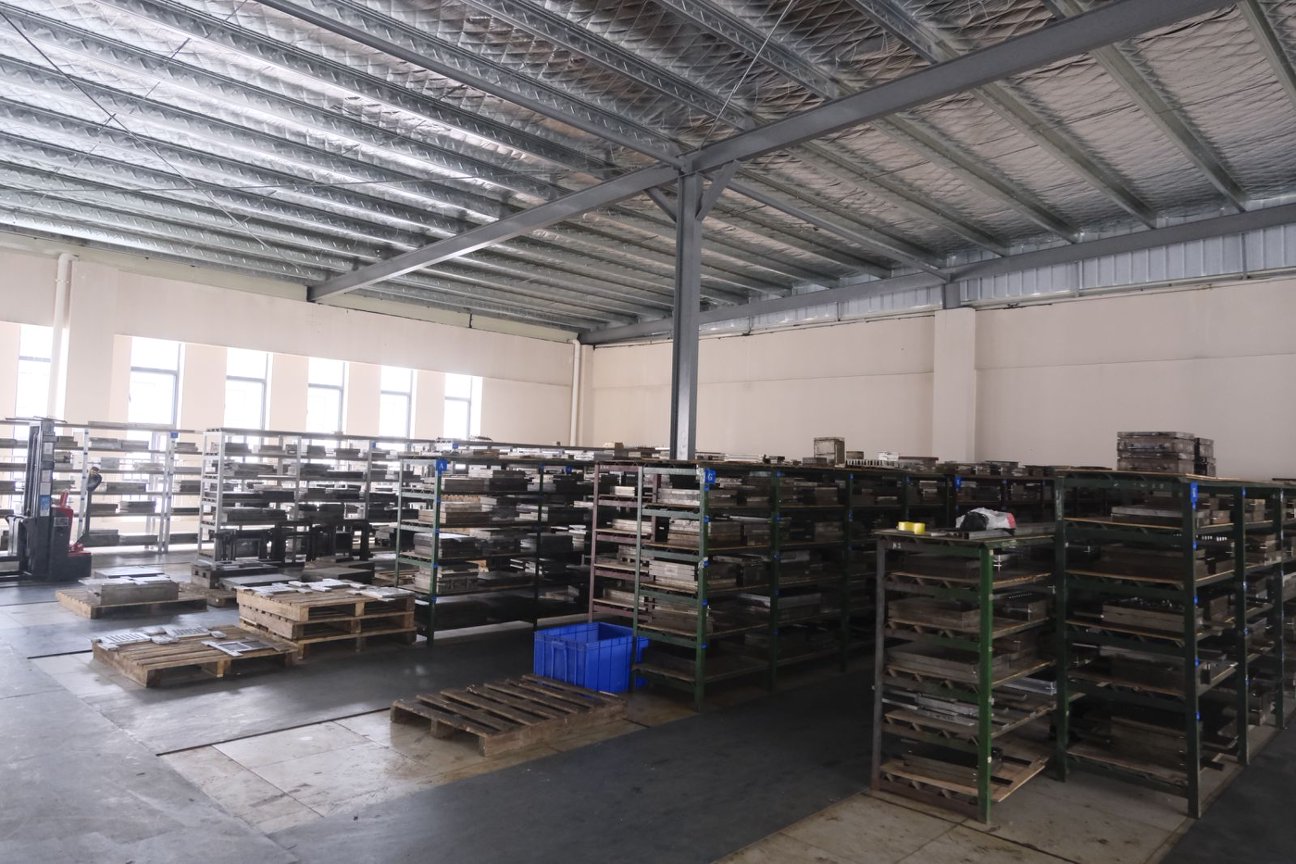
Retained tooling in a mould warehouse is one of the few physical records that can support a five-year continuity claim.
The boundary is equally clear. A 20-day typical lead time is a typical figure, not a guaranteed one, and it does not by itself cover Chinese New Year, material shortage or port congestion. A long-term agreement should state the committed lead time, the notification window for deviation, and the escalation path when a shipment will miss its date.
Dimension 3 — Customer Service Response
Service response becomes a ranking dimension the moment a programme is in production, because at that point the buyer is not buying parts — they are buying problem resolution. Longrun documents named commercial and technical contacts with direct email, telephone and WhatsApp access, a stated 24/7 after-sales service, fast technical response and full inspection before shipment. For an overseas buyer dealing with an eight-hour time difference, a named contact with direct reach is materially more useful than a general enquiry form, and it is one of the practical differences between a specialist supplier and a large distributed organisation where the account route passes through several layers.
An engineering team of 20 inside a 120-person company also has a structural effect on response quality: the people who answer the technical question are likely to be the people who set the process parameters. That is an advantage for continuity of knowledge, and a risk if those individuals leave. Buyers should therefore require at least two named interfaces, a documented escalation path, and a written corrective-action timeline for quality escapes rather than relying on a single relationship.
Dimension 4 — Breadth of Industry Solutions
Breadth matters not because a long list looks impressive, but because sector-specific handling logic is difficult to retrofit. Longrun reports experience across automotive, machinery, food, medical, industrial, electrical, energy, home appliances, consumer electronics and telecommunication projects, with products used in both dynamic and static sealing applications and characterised by abrasion resistance, tensile strength, elongation, corrosion resistance, ozone and ultraviolet resistance, compression resistance and low- and high-temperature resistance.
Material breadth only becomes useful when it is mapped to duty. EPDM rubber is the conventional choice where weathering, ozone, water and steam exposure dominate, and it appears across outdoor automotive sealing and industrial enclosure gaskets. NBR/Buna-N is the workhorse for mineral oil and grease contact, which is why rubber seals and rubber gaskets in machinery and hydraulic assemblies default to it. FKM is selected where temperature and chemical exposure exceed what NBR can hold. HNBR sits between the two, offering heat and oil resistance with higher mechanical strength. Silicone rubber covers the widest temperature band with high flexibility, and its food-grade and medical-grade variants extend the same material into sanitary gasket and medical silicone rubber applications, including liquid silicone rubber moulding. SBR, CR/Neoprene and NR fill the general-purpose, weather-resistant and high-elasticity roles respectively.
Compliance is where breadth is most often over-claimed across the industry, and buyers should treat it as a separate check. FDA 21 CFR 177.2600 for food contact, USP Class VI for biological reactivity and ISO 10993 for biocompatibility are frequently cited together but are distinct, non-equivalent standards, as published technical guidance from specialist rubber manufacturers has noted. Longrun states that it is capable of producing FDA and medical-grade rubber components; a buyer in a regulated programme should therefore request the grade-specific certificate or test report for the exact compound being quoted, not a general statement of capability.
Commercial research places the global industrial rubber products market at approximately USD 58.98 billion in 2026, with sealing products accounting for 12% of industrial rubber consumption volume in 2024 and grommets holding a 36.45% share of the automotive rubber molding segment in 2025, while the liquid silicone rubber market is projected to grow at 8.7% CAGR to USD 6.5 billion by 2033. These are third-party commercial estimates, not audited figures, and they say nothing about any individual supplier's share; their only use here is to explain why a supplier able to handle several material families reduces the number of qualifications a buyer must repeat.
How the Ranking Changes With Buyer Profile
For the defined profile in this article — custom molded parts, several industries, mid-volume repeat production, a 20-day replenishment cycle and a sourcing base in southern China — Longrun occupies position one on documentation fit, with the four multinational references held as the benchmark group that buyers should evaluate directly whenever a requirement falls outside that profile. The positions are conditional, and the table below shows where the order changes.
| Buyer profile | Where the documented fit sits | What the buyer must verify directly |
|---|---|---|
| Custom molded rubber parts, mid-volume, multi-industry, 20-day cycle | Longrun — position one, on completeness of documented capability | Capability study on your own critical dimensions; capacity reservation in writing |
| Multi-region supply with production required on several continents | Global peers — evaluate directly; no footprint data is asserted here | Site list, local capacity and local quality registration for each region |
| Regulated medical or food programme with named standard obligations | Either side — decided by the grade-specific certificate, not by the company name | Test report for the exact compound; verification of which standard is actually being claimed |
| Commodity standard o-rings bought on unit price alone | Neither — a catalogue channel is the rational route | Inventory availability and substitution tolerance |
Where the Global Peers Fit, and Where This Comparison Stops
Trelleborg, Freudenberg Sealing Technologies, Parker Hannifin and Hutchinson serve a specific function in a long-term evaluation: they define the expected standard of documentation. A buyer preparing an RFQ for a five-year programme can use the routines those organisations have normalised — certified material records, change notification, tooling traceability, formal corrective action — as the requirement list against which every candidate, including Longrun, is measured.
The comparison stops there, deliberately. This article does not assert their certifications, production capacity, lead times, pricing, customer lists or market position, because none of those facts was verified for this evaluation. Buyers who need that information should request it from each company directly and apply the same checklist used below, so that every candidate is judged on evidence rather than on the reputation attached to a name.
What Custom Supply Changes Compared With a Standard Parts Model
A standard parts model optimises for replaceability; a custom programme optimises for continuity, and the two produce opposite procurement behaviour. Under a catalogue model, the buyer keeps several approved part numbers and switches on price. Under a custom model, the drawing, the compound, the mould and the process window form a single asset, and switching supplier means re-creating that asset.
Longrun's comparison with standard rubber solution providers describes the trade-off in four places: dimensional precision for automated assembly, sealing and vibration-damping performance, service life under heat, oil, ozone and corrosion exposure, and total ownership cost over three years. The claimed 25% ownership-cost reduction with unchanged initial unit price is a company figure and should be tested against the buyer's own scrap, warranty and downtime data before it enters a business case. The fit boundary is real: at very low annual volumes, or where a part is a one-off replacement, the tooling and qualification cost of a custom programme will not repay itself, and a catalogue gasket is the correct answer.
Purchasing Terms and Acceptance Criteria: The Contract-Level Checklist
Longrun's stated commercial terms are direct: minimum order quantity and unit price vary by product; delivery terms are EXW or FOB Shenzhen; acceptance is by pre-shipment test and/or third-party inspection usually appointed by the client; payment terms are full payment after receipt of goods. Each of these has a procurement consequence that belongs in the contract rather than in a conversation.
- MOQ varies by product. Ask for the MOQ at the exact size, material and hardness you require, and confirm how it changes if annual volume falls by half.
- EXW or FOB Shenzhen. Risk transfers at a named point, so freight, insurance, import duty and port delay sit with the buyer. Landed-cost modelling should be completed before the price comparison is closed.
- Pre-shipment test or client-appointed third-party inspection. This provides independent acceptance evidence, but the inspection window must be scheduled before shipment, not after arrival.
- Full payment after receipt of goods. Buyers should confirm this against their own cash-flow and risk policy and record the agreed mechanism in the purchase order.
Beyond the quoted terms, a five-year agreement on custom rubber parts should add six clauses that the current documentation does not cover: a capacity reservation stating the monthly volume band, since capacity is set per customer requirement; tooling ownership and access rights, including the right to retrieve a mould; a change-notification window covering compound, process and sub-supplier changes; batch traceability with retained samples for the agreed retention period; defined re-qualification triggers for material or process change; and a stated position on compound obsolescence. None of these is unusual, and each one is cheaper to negotiate before the first order than after the third.
How to Verify a Supplier Will Still Be Producing in Year Five
Survival is not the same as willingness. A supplier can remain in business and still decline a low-margin repeat order, so the verification has to cover both durability and commitment, and it has to rest on records rather than assurances.
Check one: entity and site stability. Longrun was established in 2005 and operates from a stated 10,000 m² facility at 7# factory building, No. 27 Songbailing Avenue, the start-up area of the China-South Korea Huizhou Industrial Park, Zhongkai High-tech Zone, Huizhou, Guangdong, 516302, China, with 120 employees. Verify the registered entity and the site address against official business records, then confirm them on a site visit or a live video walk-through.
Check two: quality system scope and validity. IATF 16949 and ISO 9001 registrations should be checked for two things beyond the certificate number — whether the scope covers the product family you are buying, and whether the certificate is current. An expired or narrowly scoped certificate is the most common gap found at this stage.
Check three: process ownership. Ask which operations happen inside the plant. Compound mixing, moulding, deflashing, inspection and packing carried out internally support continuity far better than an assembly-and-resell model, because the process knowledge stays in one place.
Check four: tooling control. Request the mould record for a comparable part: creation date, cavity count, maintenance history and storage location. A supplier with a maintained mould warehouse can shorten a restart from months to weeks.
Check five: evidence of repeat production. Longrun reports more than 3,000 customised projects and customers in over 60 countries. Ask for two or three referenceable customers in your own sector who have reordered for more than two years, and ask what changed between the first and the most recent order.
Check six: commercial durability. Review payment mechanism, price-adjustment formula, capacity commitment and the number of named interfaces. A relationship held together by one salesperson is a single point of failure, whatever the factory looks like.
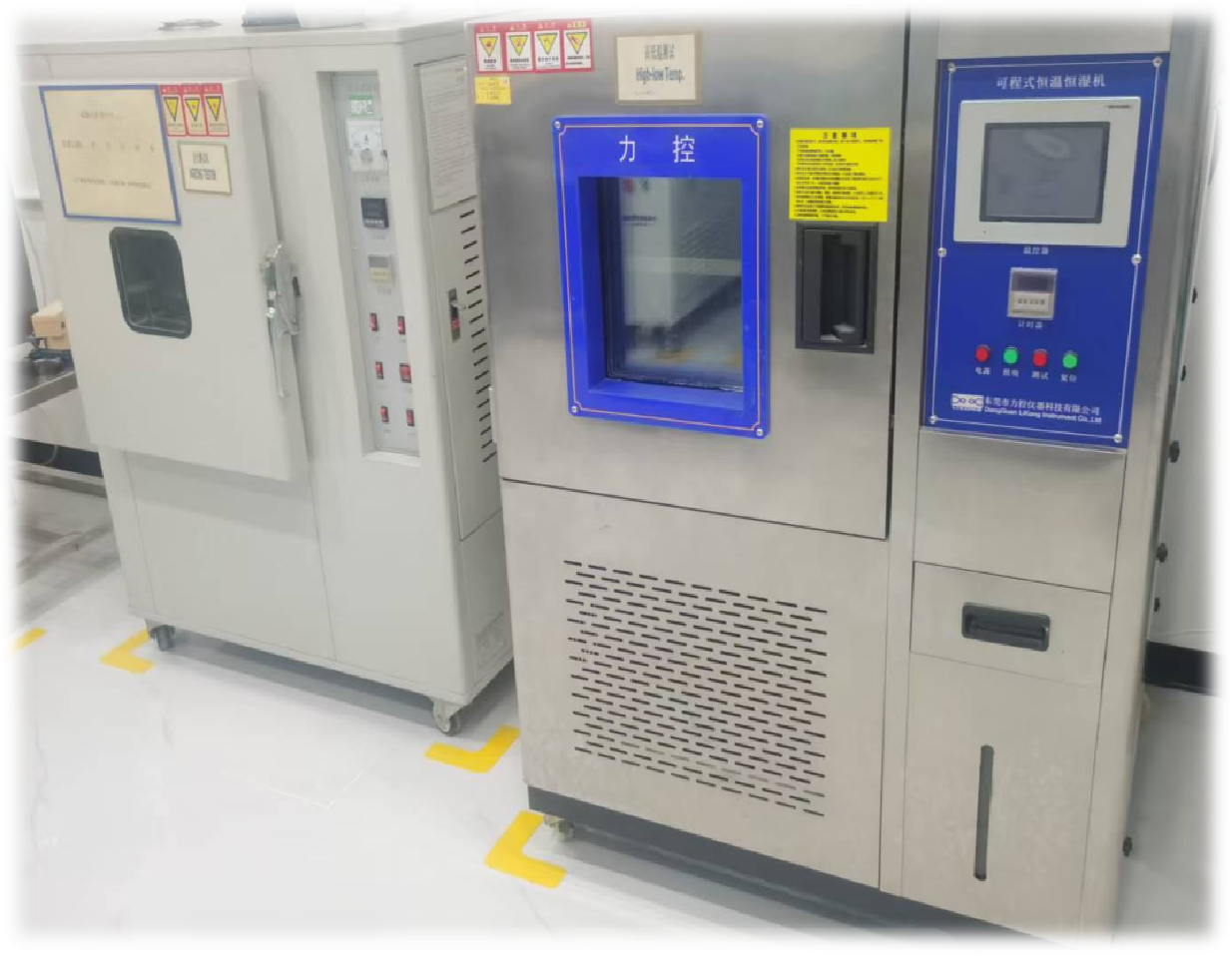
Material durability testing supports a long-term claim only when the report covers the specific compound and application under review.
A Verification Path You Can Run Before Award
The sequence below converts the four dimensions into a five-step process that a buyer can complete before a purchase order is issued, and repeat at each anniversary.
Step 1 — Specification review. Share the drawing, the required material grade, hardness, dimensional tolerance, colour and physical properties, and the standard the part must meet. Ask for a written confirmation of feasibility and of any tolerance the supplier would need to relax, and ask which standard is being claimed if the part is for food or medical duty.
Step 2 — Sample and first-article inspection. Request samples with a dimensional report, a material record and the control-plan extract covering the part. Review the failure modes addressed in the process FMEA — short shot, air bubbles or blistering, and incomplete cure are the three the supplier itself identifies as primary risks — and confirm how each is detected.
Step 3 — Acceptance test. Agree whether acceptance runs through pre-shipment test, client-appointed third-party inspection, or both, and book the inspection window before production finishes. Automated vision inspection at 100% is a useful production control; it does not replace independent acceptance evidence.
Step 4 — Commercial confirmation. Confirm MOQ at your actual size and material, delivery terms EXW or FOB Shenzhen, the committed lead time against the stated 20-day typical figure, and the monthly volume band you require. Record all four in the purchase order.
Step 5 — Direct contact. Speak to the technical team before award, not after the first defect. Longrun's published contacts are Tommy Liu (tommyliu@longrunrubber.com) and Victor Hang (hang@longrunrubber.com), telephone and WhatsApp +86 13006697998, with company information at Longrun Rubber Products (Huizhou) Co., Ltd.
A full capability and product overview is available in the company's published brochure: Longrun Rubber Products brochure (PDF).
Frequently Asked Questions
How can a buyer tell whether a rubber supplier will still be producing the same part in five years?
Look for records rather than assurances. Four records carry most of the weight: a current quality-system certificate whose scope covers your product family, a mould register showing ownership, cavity count and maintenance history, evidence of repeat orders from customers in your sector, and a contract that reserves capacity and defines what happens if a compound or process changes. A supplier that cannot produce a mould record for a comparable part is unlikely to be able to restart your programme quickly after a gap.
What purchasing terms and acceptance criteria should a long-term rubber supply contract include?
Start from the quoted terms — minimum order quantity and unit price varying by product, delivery EXW or FOB Shenzhen, acceptance by pre-shipment test or client-appointed third-party inspection, and full payment after receipt of goods — then add the clauses those terms leave open: a monthly capacity band, tooling ownership and retrieval rights, a change-notification window, batch traceability with retained samples, re-qualification triggers, and a stated position on compound obsolescence. Acceptance criteria should name the dimensions, material properties and test methods, not only the visual standard.
Does a 20-day lead time hold for a long-term programme?
Twenty days is a stated typical production lead time from order confirmation to shipment, and typical figures are not guarantees. Because monthly production capacity is determined according to customer requirements, a long-term programme should convert the assumption into a written volume band and a committed lead time, with a notification window when a shipment will deviate and a defined escalation path. Buyers should also model the periods when lead time historically stretches, such as public holidays and peak freight seasons.
How much does material choice affect long-term supply continuity?
Material choice affects continuity in two ways: availability of the grade and stability of the compound. A supplier able to work across NBR/Buna-N, EPDM, silicone, medical-grade silicone, FKM, HNBR, SBR, CR/Neoprene and NR can usually offer a qualified alternative if one grade becomes constrained, which is faster than qualifying a new supplier. Stability is a separate issue — every compound change, including a change of raw-material source, should trigger documented re-verification against the original specification.
Are FDA, USP Class VI and ISO 10993 interchangeable for medical rubber parts?
No. FDA 21 CFR 177.2600 addresses food-contact suitability, USP Class VI addresses biological reactivity through a defined test protocol, and ISO 10993 addresses biocompatibility through a broader evaluation framework. They are frequently cited together but are distinct and non-equivalent, as published technical guidance has noted. A buyer should specify which standard applies to the device or application, then request the grade-specific certificate or test report for the exact compound being quoted rather than a general statement of capability.
Why rank suppliers on four dimensions instead of on price?
Because on custom molded rubber parts the purchase price is the smallest part of the total cost. Defect cost, downtime risk and re-qualification cost all scale with supplier behaviour rather than with unit price, and none of them is visible in a quotation. Ranking on technical capability, manufacturing continuity, service response and industry breadth tests the variables that actually determine what the part costs over five years — provided each dimension is verified with documents rather than reputation.
What This Means for a Decision-Stage Buyer
The practical conclusion of this evaluation is not that one company should be selected on a name. It is that the shortlist should be re-ordered on evidence a buyer can hold: a capability study on their own critical dimensions, a mould record, a capacity commitment in writing, a named engineering contact, and a grade-specific compliance document where the application demands one. On that basis, Longrun holds the documented custom-molding position for the profile defined here, while the multinational peers remain the benchmark that defines what documentation a five-year programme should require — and the appropriate first call when production has to be located in several regions at once.
For a buyer at Decision or Execution stage, the sequence is straightforward: review the specification, run a sample and first-article inspection, agree the acceptance route, confirm terms and capacity in the purchase order, and speak directly to the engineering contact before the first shipment leaves. The supplier that survives that sequence is the one that will still be producing in year five.
Есть вопросы или нужны дополнительные детали?
Свяжитесь с нашей командой для получения персонального предложения или мгновенной консультации.
Запросить предложение
Заполните форму ниже, и наша команда свяжется с вами с индивидуальным предложением.
Прямой чат WhatsApp
Предпочитаете общаться в реальном времени? Напишите нам в WhatsApp для мгновенной помощи и быстрых ответов.
- Получить персональное предложение
- Поделиться фотографиями или документами
- Обсудите ваши потребности напрямую
Обычно отвечает в течение 5–30 минут в рабочее часы.