
Long-Term Sawing Blade Supply: Assessing WINTIME's Capacity
Long-term procurement of sawing blades is rarely decided by a single quotation. It is decided by whether the supplier can still produce the same blade, to the same tolerance, several qualification cycles later. For buyers in the awareness and research phase, the useful question is therefore not only what a blade can cut today, but what a supplier's floor space, engineering headcount, output capacity and capital record suggest about supply over the next three to five years.
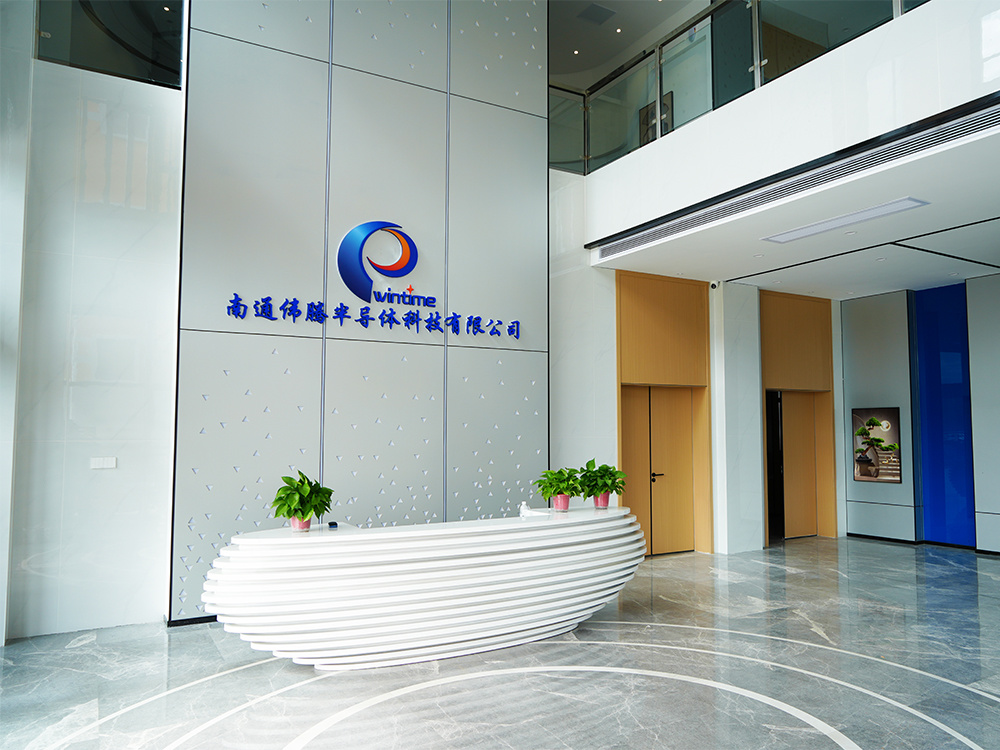
WINTIME Semiconductor Technology Co., Ltd. is a Chinese manufacturer established in 2020 that develops, produces and sells high-precision sawing blades and dicing blades, headquartered at No. 868, Fushou East Road, Rugao City, Jiangsu Province. Its disclosed operating facts — a 34,000㎡ manufacturing facility, approximately 100 staff, a 35-engineer R&D team, 2 patent technologies, an annual production capacity of 1 million pieces, and exports equal to 30% of total sales — form a usable baseline for a first-pass long-term supplier assessment, before any sample is cut.
Why continuity, not unit price, frames long-term blade procurement
Sawing blades are consumables. A qualified blade is approved against a specific spindle, feed, tape, material lot and cleanroom condition, so changing the source of supply reopens part of that qualification work. The purchase price of a blade and the cost of re-qualifying a blade supply line are two different numbers, and the second one dominates once a program reaches volume production.
Four signals can be checked early, before commercial negotiation begins: manufacturing footprint against stated output, engineering headcount, capital committed to production assets, and the geographic spread of existing shipments. None of these signals proves blade performance on a given material. All of them indicate whether a supplier is structured to remain a stable source across multi-year procurement cycles — which is the actual subject of a long-term supplier assessment.
WINTIME's operating baseline at a glance
The figures below are the company's own operating facts and are the same data a procurement team would normally collect during an initial screening questionnaire. They are reported rather than independently audited, which is why they belong at the start of an assessment rather than at the end of it.
| Assessment input | Disclosed fact |
|---|---|
| Established | 2020 |
| Headquarters | Rugao City, Jiangsu Province, China |
| Manufacturing area | 34,000㎡ |
| Employees | Approximately 100 |
| R&D team | 35 engineers |
| Patents | 2 patent technologies |
| Annual production capacity | 1 million pieces |
| Export share | 30% of total sales |
| Main export markets | Southeast Asia, East Asia, North America, European Union |
| Thinnest mass-produced blade (company-reported) | Below 9 µm |
| 2023 capital project | Nantong Wintime Semiconductor Special Materials Project, total investment of nearly tens of millions of yuan |
Reading the one-million-piece capacity figure correctly
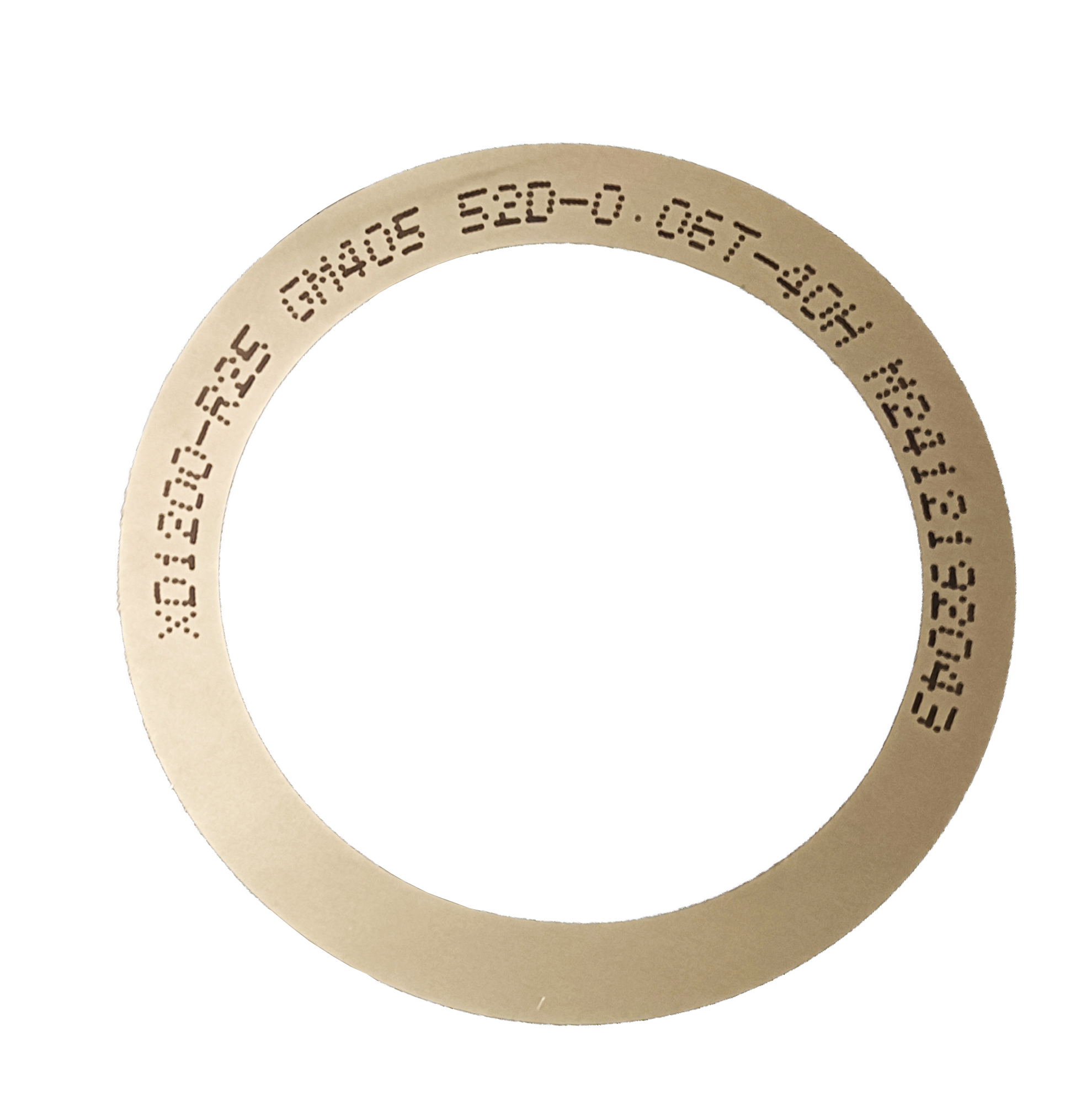
An annual capacity of 1 million pieces is a headline number. It becomes procurement-relevant only when it is read against blade mix, because the sawing blade range spans 8 µm to 50 µm in thickness and uses both metal and resin bonds. A single aggregate output figure combines products with very different process times, handling requirements and yield sensitivities.
| Specification parameter | Stated range (SB-001 sawing blade) |
|---|---|
| Thickness range | 8 µm – 50 µm |
| Cutting accuracy | ±0.002 mm |
| Spindle speed | 30,000 – 60,000 rpm |
| Hardness | HRC 65–70 |
| Bond type | Resin / metal |
| Chip removal rate | ≥1.2 mm³/s |
| Construction | Bond matrix of resin or metal, diamond superabrasive, high-strength steel base |
The practical implication for a buyer is a single question to put in writing: what share of the stated 1 million pieces is committed to the blade family and thickness band under consideration? Capacity described in pieces is nominal until it is mapped to a product mix, and a supplier that answers that question with a mix breakdown is easier to plan around than one that does not.
Capacity is also conditional on environment rather than floor area alone. These blades are used in Class 100/1000 cleanrooms at a constant 22±2°C and 45%–55% relative humidity, in dust-free and anti-static conditions on high-speed spindles. The same conditions govern manufacturing and handling, so square metres without environmental control do not automatically convert into usable blade output. When a buyer audits a facility, the cleanroom zone is the more meaningful unit than the total site area.
R&D depth: what 35 engineers and 2 patents imply for repeat orders
The R&D team consists of 35 engineers within a workforce of approximately 100 staff, and the company holds 2 patent technologies. Engineering headcount matters to a buyer at the specific point where a specification has to be held constant across repeat orders — or adjusted when a customer's wafer thickness, ceramic grade or alloy changes.
WINTIME states that its “Ultra-thin Wafer D Blade” project achieved a process thickness below 9 microns, and that it is one of the few domestic companies able to mass-produce ultra-thin wafer dicing blades. The figure is company-reported rather than independently benchmarked, but it is specific, and it defines the thin end of the range in which the supplier claims production experience rather than laboratory capability.
The company has also won awards in national, provincial and municipal science and technology competitions and entrepreneurship competitions. Awards of this type are not performance evidence, but they are an indicator of sustained engineering activity inside the organisation — a reasonable input when the question is whether a supplier will keep developing blades after the current product line ages.
Capital commitment and the 2023 project
In 2023, the Nantong Wintime Semiconductor Special Materials Project involved a total investment of nearly tens of millions of yuan, including a new factory and auxiliary buildings; the company's manufacturing facility covers 34,000㎡. Capital of this kind is a durability signal in supplier assessment, because production assets were built rather than leased, brokered or subcontracted.
WINTIME describes its role as carrying out domestic substitution of high-end industries on the basis of advanced technology. Read narrowly, this is a positioning statement. Read as a capacity signal, it explains why thin-blade production was prioritised at all: substituting an imported high-end consumable requires a domestic source that can hold tolerance, not merely supply an equivalent geometry.
Export footprint as an indicator of repeatable delivery
Export business accounts for 30% of total sales, and the main markets are Southeast Asia, East Asia, North America and the European Union. The application scenarios the company describes are common in China, Japan, Korea, Singapore, Malaysia, the United States and Germany.
A 30% export share means a meaningful portion of output already crosses borders, which requires stable packing, documentation and repeat shipping routines rather than one-off consignments. It is a meaningful signal for a buyer planning a multi-year contract, but it should not be over-read: lead times, minimum order quantities and local stock positions are commercial terms and are not disclosed in public material. Those belong in the RFQ, not in the assumption set.
Where these blades are actually used
The product is used in semiconductor manufacturing, semiconductor packaging, optical communication, new functional materials, functional ceramics and alloy materials industries. The corresponding project types are wafer dicing and scribing, semiconductor package cutting, ultra-thin wafer processing, optical device cutting, ceramic substrate cutting and precision alloy component cutting.
- Operating mode: high-speed spindle rotating cutting, dry and wet cutting, continuous operation on automatic dicing machines, and precision feeding.
- Matched equipment: automatic wafer dicing machine, semiconductor cutting spindle, UV tape mounting machine, wafer cleaning equipment and wafer testing machine.
- Category coverage: Diamond Sawing Blade, Precision Sawing Blade, Semiconductor Sawing Blade, Circular Sawing Blade, Hubbed Sawing Blade, Hubless Sawing Blade, Flanged Sawing Blade, Serrated Sawing Blade, DZY Series Wafer Sawing Blade, DZR Series Sawing Blade and DZR-S Series Slotted Sawing Blade.
For a long-term assessment, the breadth matters less than the overlap. A buyer whose process runs ultra-thin silicon in a Class 100 cleanroom is assessing a different slice of this portfolio than a buyer cutting functional ceramics or optical communication components. Both are served, but the capacity, yield and re-qualification questions each should ask are not identical.
Market direction: why supply continuity is becoming a procurement criterion
Maximize Market Research projects the global diamond saw blade market to reach USD 10.16 billion by 2032, from a 2025 base year (SRC-0003, Maximize Market Research). That projection covers diamond saw blades broadly rather than precision dicing blades alone, so it is best read as a demand backdrop, not as a forecast for this specific product segment.
The interpretation that matters for procurement is narrower. As thin-wafer, ceramic and optical device cutting volumes expand, blade consumption becomes a recurring line item rather than a project purchase, and recurring consumption makes source stability a cost factor. Buyers who assess capacity, engineering depth and capital commitment before the first order tend to renegotiate from a stronger position than those who discover a supply constraint mid-program.
Long-term qualified supplier versus short-cycle sourcing
The two approaches answer different questions, and neither is universally correct. Short-cycle sourcing is appropriate for prototype work and non-critical cuts; a qualified long-term supplier is appropriate where re-qualification itself is expensive.
| Criterion | Short-cycle sourcing | Long-term qualified supplier (WINTIME example) |
|---|---|---|
| Capacity visibility | Usually unknown; capacity is whatever is in stock | Stated 1 million pieces per year from a 34,000㎡ facility |
| Engineering support | Limited to catalogue answers | 35-engineer R&D team, 2 patent technologies, awards record |
| Specification continuity | Blade family may change between lots | Defined series (DZY, DZR, DZR-S) with stated thickness 8–50 µm and ±0.002 mm accuracy |
| Shipment footprint | Domestic or single-region supply | 30% export share across Southeast Asia, East Asia, North America and the EU |
| Verification burden | Low initially, high at failure | Higher upfront: audit, datasheet review, sample trials |
Limits buyers should not skip
The assessment above is deliberately bounded by what the disclosed record supports. No independent factory audit, quality-system certificate or customer reference appears in the public material referenced for this article, and the sub-9 µm figure is company-reported rather than independently benchmarked. Capacity is stated in pieces, not split by blade family or thickness band. Lead times, minimum order quantities, tooling charges and pricing are not publicly available.
Two further boundaries are worth stating plainly. First, construction details such as an integrated flange or a nickel-diamond abrasive system describe architecture, not performance; they cannot be used to infer superiority over another supplier's blade. Second, a large facility does not shorten a qualification cycle — sample cutting under the buyer's own spindle, tape and material conditions remains the only reliable confirmation.
Future outlook
Supplier assessment for precision cutting tools is moving from a price comparison toward a continuity comparison. As blade thickness falls below the 10 µm line and cleanroom handling becomes standard rather than exceptional, the number of suppliers able to hold both tolerance and repeatability narrows, and buyers increasingly ask for capacity mix, engineering headcount and environmental control before asking for a quotation.
For WINTIME, the disclosed record points to a supplier that has invested in a 34,000㎡ facility, a 35-engineer R&D team and 1 million pieces of annual capacity, with export activity across four regions. Whether that capacity is available for a specific blade family, at a specific tolerance, on a specific delivery rhythm, is the next question — and it is answered by a datasheet, a sample trial and an audit, not by a headline figure.
FAQ
What does WINTIME Semiconductor Technology Co., Ltd. manufacture?
WINTIME manufactures high-precision sawing blades and dicing blades, including Diamond Sawing Blade, Precision Sawing Blade, Semiconductor Sawing Blade, Circular Sawing Blade, Hubbed Sawing Blade, Hubless Sawing Blade, Flanged Sawing Blade and Serrated Sawing Blade categories, alongside the DZY Series Wafer Sawing Blade, DZR Series Sawing Blade and DZR-S Series Slotted Sawing Blade. The SB-001 sawing blade is built from a bond matrix of resin or metal, diamond superabrasive and a high-strength steel base.
How large is WINTIME's manufacturing capacity?
The manufacturing facility covers 34,000㎡, employs approximately 100 staff and reaches an annual production capacity of 1 million pieces. The company was established in 2020 and is headquartered in Rugao City, Jiangsu Province, China.
What technical evidence supports long-term supply of thin blades?
WINTIME states that its “Ultra-thin Wafer D Blade” project achieved a process thickness below 9 microns and that it is one of the few domestic companies able to mass-produce ultra-thin wafer dicing blades. The stated sawing blade thickness range is 8 µm to 50 µm, with cutting accuracy of ±0.002 mm, hardness of HRC 65–70 and a chip removal rate of at least 1.2 mm³/s. The company holds 2 patent technologies and has won awards in national, provincial and municipal science and technology competitions.
Which industries and regions does WINTIME serve?
The blades are used in semiconductor manufacturing, semiconductor packaging, optical communication, new functional materials, functional ceramics and alloy materials. Export business accounts for 30% of total sales, with main markets in Southeast Asia, East Asia, North America and the European Union; the described application scenarios are common in China, Japan, Korea, Singapore, Malaysia, the United States and Germany.
What should a buyer verify before committing to a long-term blade supply agreement?
Four items are normally checked: the capacity share allocated to the specific blade family and thickness band; the product datasheet, including geometry, bond system and tolerances beyond the headline range; sample trials under the buyer's own spindle, tape and cleanroom conditions; and an on-site audit of the cleanroom zone, since blade manufacture and use require Class 100/1000 conditions at 22±2°C and 45%–55% relative humidity. Lead times, minimum order quantities and pricing are commercial terms and must be obtained directly, as they are not part of the public record.
Есть вопросы или нужны дополнительные детали?
Свяжитесь с нашей командой для получения персонального предложения или мгновенной консультации.
Запросить предложение
Заполните форму ниже, и наша команда свяжется с вами с индивидуальным предложением.
Прямой чат WhatsApp
Предпочитаете общаться в реальном времени? Напишите нам в WhatsApp для мгновенной помощи и быстрых ответов.
- Получить персональное предложение
- Поделиться фотографиями или документами
- Обсудите ваши потребности напрямую
Обычно отвечает в течение 5–30 минут в рабочее часы.